The Aston Martin Valen Costs $2 Million and It’s Already Gone
The Aston Martin Valen starts at $2 million, packs a 838-hp twin-turbo V12, and sold out all 150 units before its official debut.
Is the Aston Martin Valen Worth It? Here’s Why It’s Already Sold Out
The Aston Martin Valen starts at $2,000,000, and all 150 units built were spoken for before the car’s official public debut on August 14, 2026, at The Quail during Monterey Car Week in California.
This isn’t a new generation or a facelift of an existing model. It’s a special-edition project built on the front-mid-engine V12 platform that also underpins the Vanquish, developed jointly by Q by Aston Martin and the newly formed Special Vehicle Operations (SVO) division.
The target buyer is a high-net-worth collector who wants a V12 with zero electric assistance, running counter to the hybridization trend that now dominates the hypercar segment.
Direct rivals include the Ferrari 812 Competizione and the Ferrari 12Cilindri, both of which also lean on large-displacement engines without hybrid support.
Deliveries to the 150 confirmed buyers begin in the second quarter of 2027.
Quick Specs
| Specification | Detail |
|---|---|
| Category | Front-mid-engine extreme hypercar/GT |
| Engine | 5.2L twin-turbo V12, gasoline |
| Horsepower | 838 hp / 625 kW at 6,500 rpm |
| Torque | 738 lb-ft (2,500–5,000 rpm) |
| Transmission | ZF 8-speed automatic transaxle |
| Drivetrain | Rear-wheel drive (RWD) with electronic limited-slip differential |
| 0–60 mph | 3.0 seconds |
| Top speed | 214 mph (electronically limited) |
| Fuel economy | Not officially disclosed |
| Range | Not officially disclosed |
| Release date | Revealed August 14, 2026; deliveries begin Q2 2027 |
With the numbers out of the way, here’s what actually shapes how the Valen looks, drives, and lives up to that price tag.
How Big Is the Aston Martin Valen?
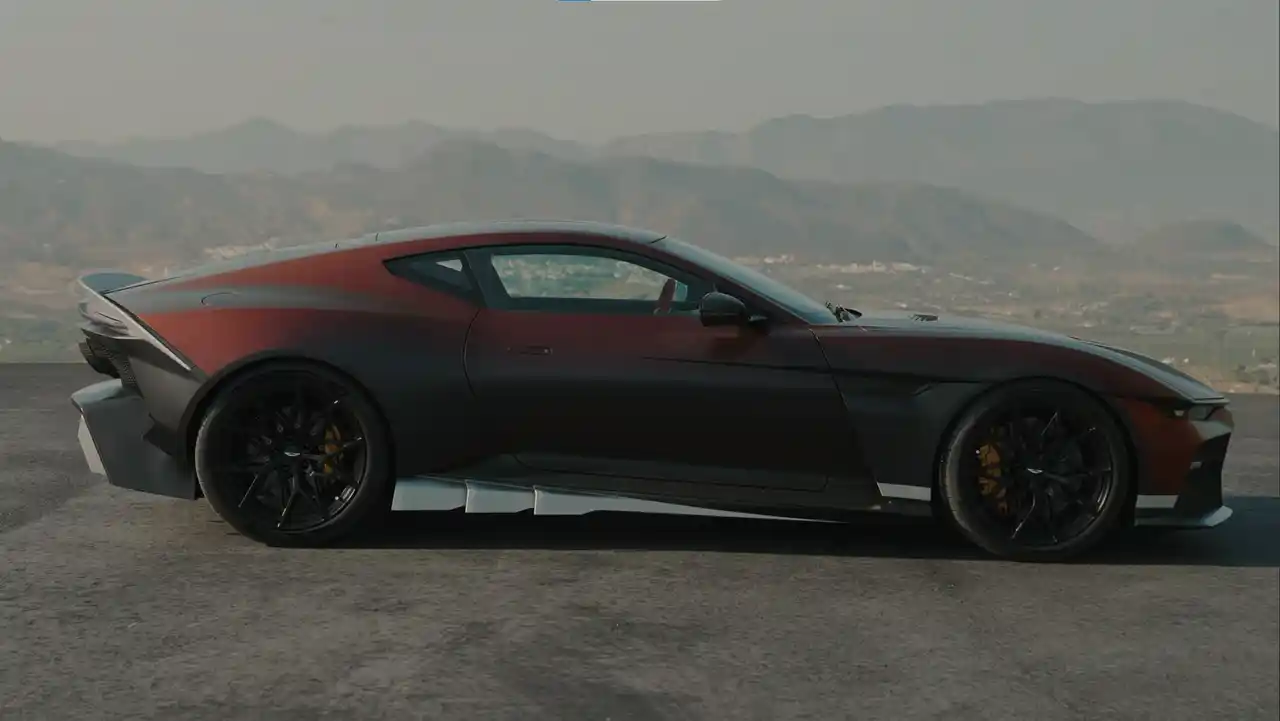
The Aston Martin Valen is a two-door coupe measuring 191.7 inches long in FED (US) spec, 83.5 inches wide with mirrors, and riding on a 113.6-inch wheelbase. Overall height comes in at 50.8 inches, and ground clearance is just 4.7 inches — low enough that speed bumps and steep driveway ramps require real caution.
The body is built entirely from carbon fiber over an extruded aluminum structure, which explains most of the roughly 242-pound weight savings claimed over the standard Vanquish.
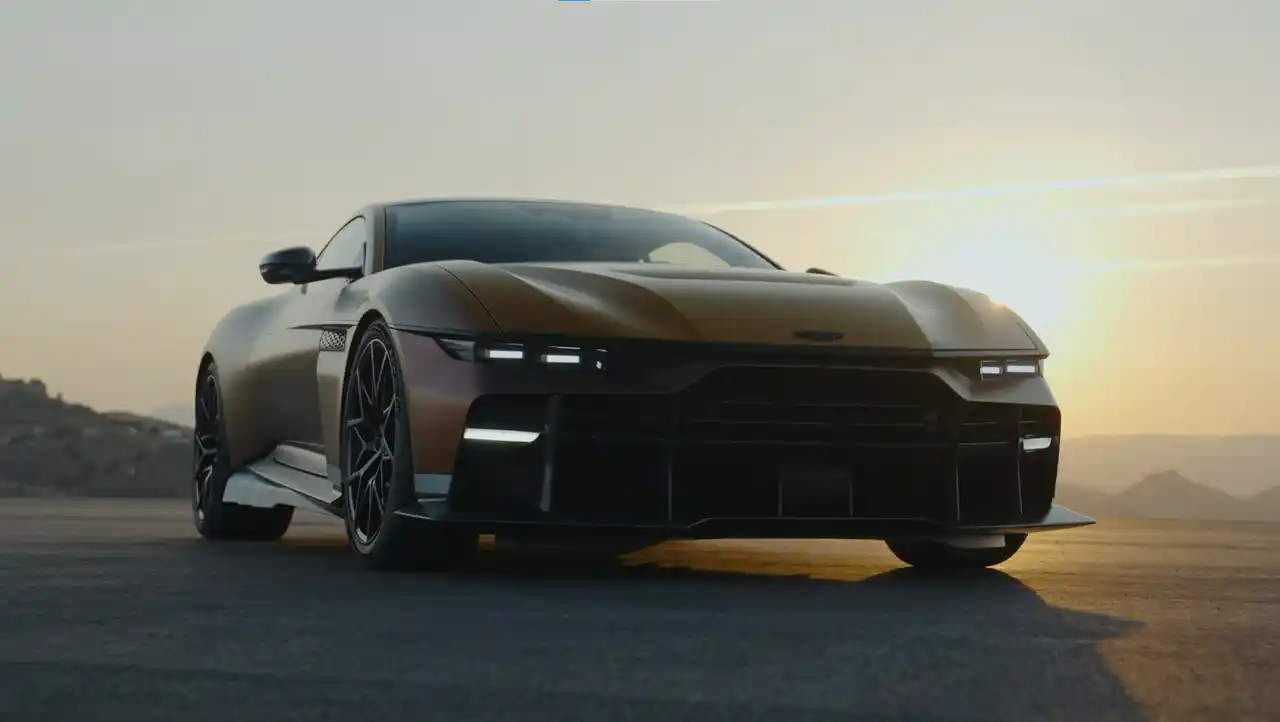
Up front, a long hood houses a deep vent that actively channels air over the structure, and the winged badge is molded directly into the carbon rather than mounted as a separate piece. The grille uses a geometric mesh flanked by thin headlights tucked under the hood’s lines.
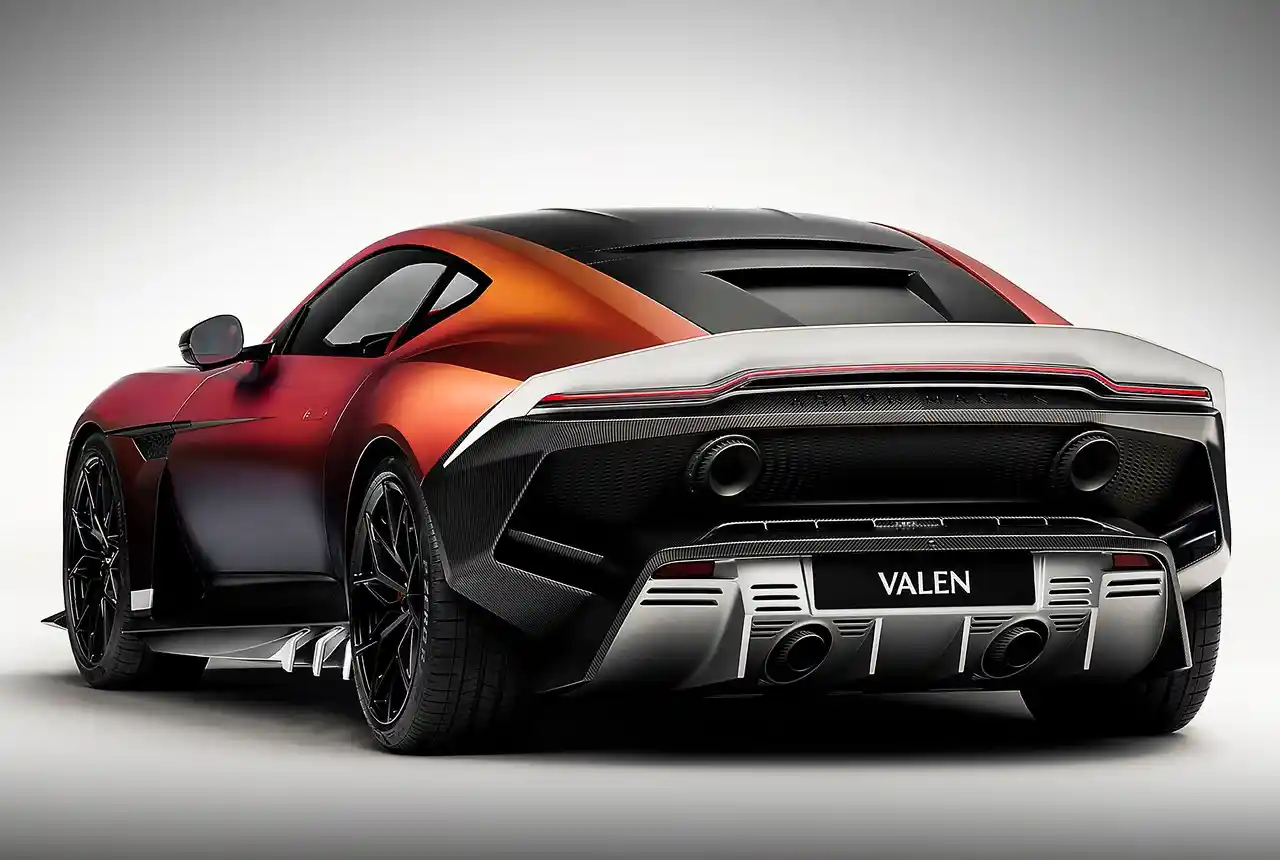
Along the sides, stepped rocker panels end in serrated vortex generators that pull high-speed air from underneath the car, cutting aerodynamic lift at speed — a functional detail, not a styling flourish.
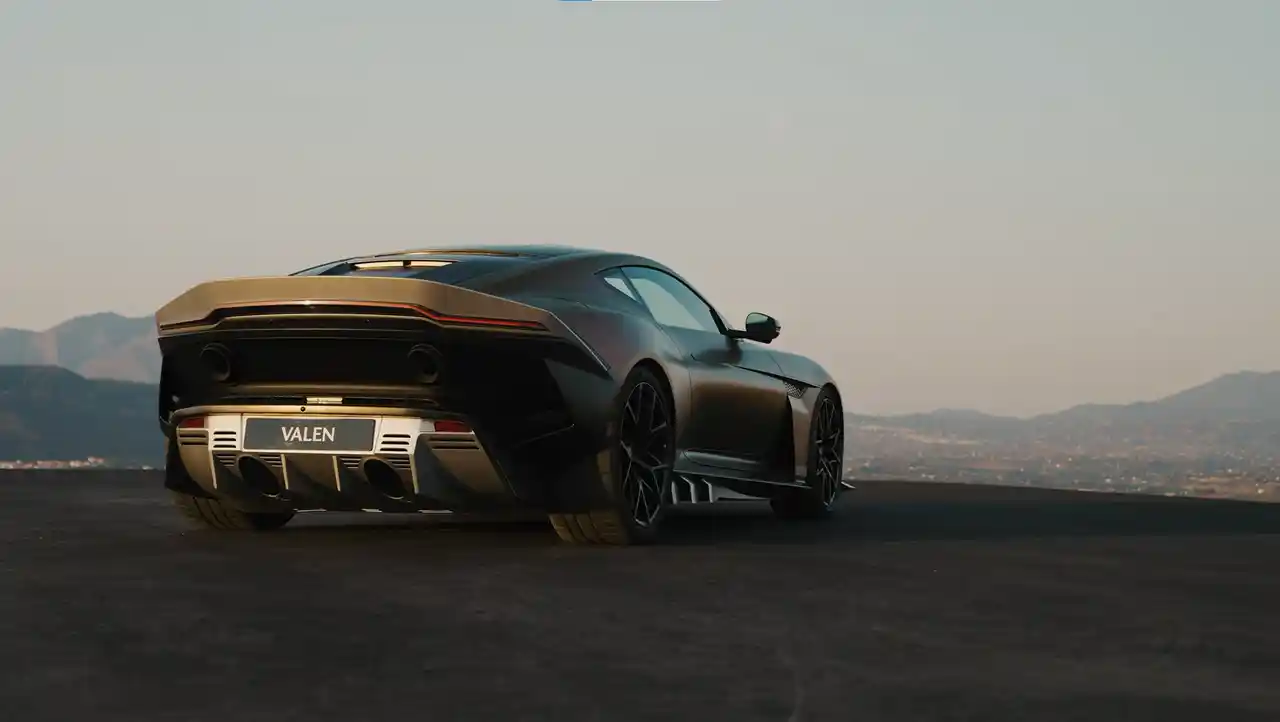
The biggest visual break from the Vanquish is out back, where the rear glass disappears entirely. A solid carbon-fiber deck lid replaces it, boosting torsional rigidity, while high-definition cameras take over for a conventional rearview mirror — meaning there’s no direct rear visibility at all.
How Many Seats Does the Aston Martin Valen Have?
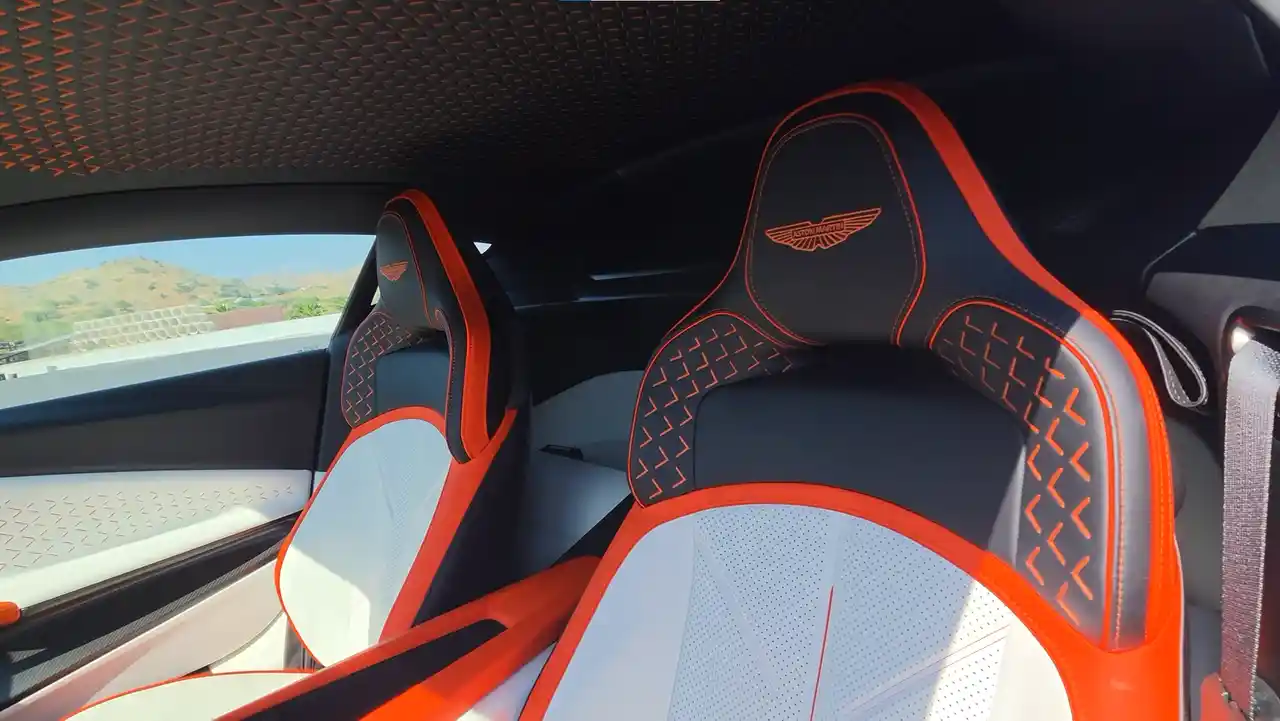
The Aston Martin Valen seats two, in a strict 2+0 layout, with no rear bench or higher-capacity option offered.
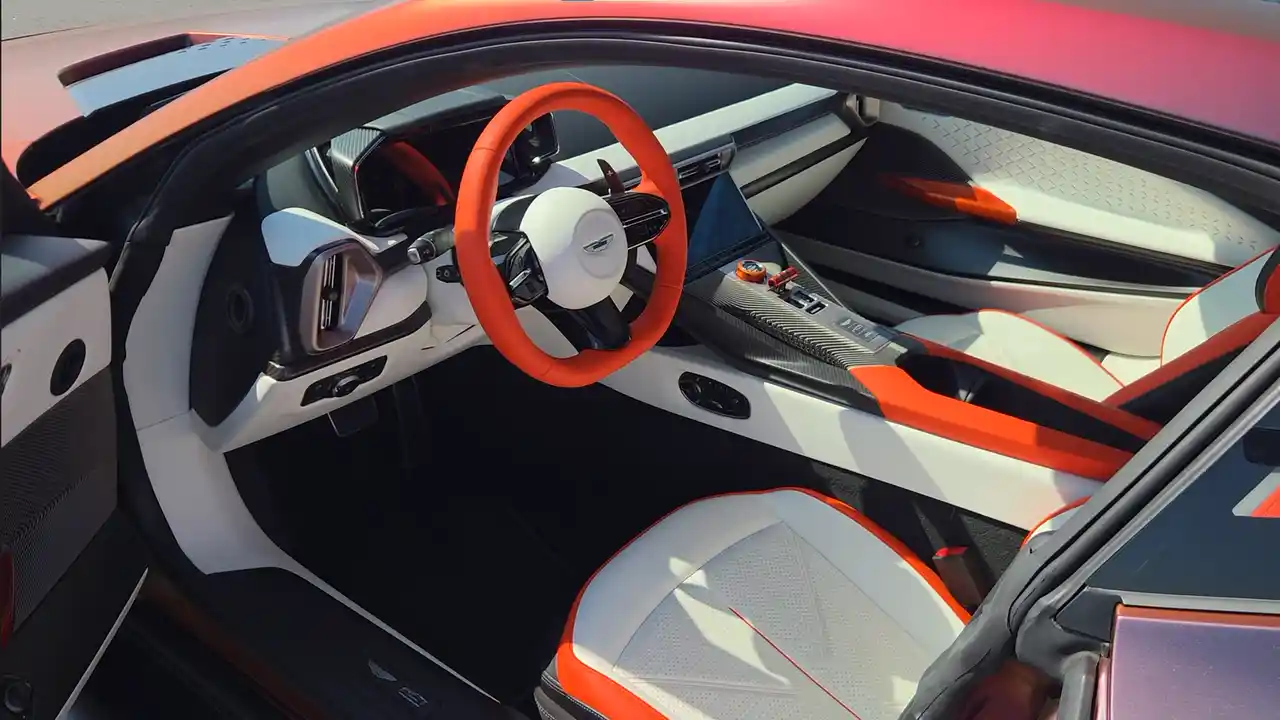
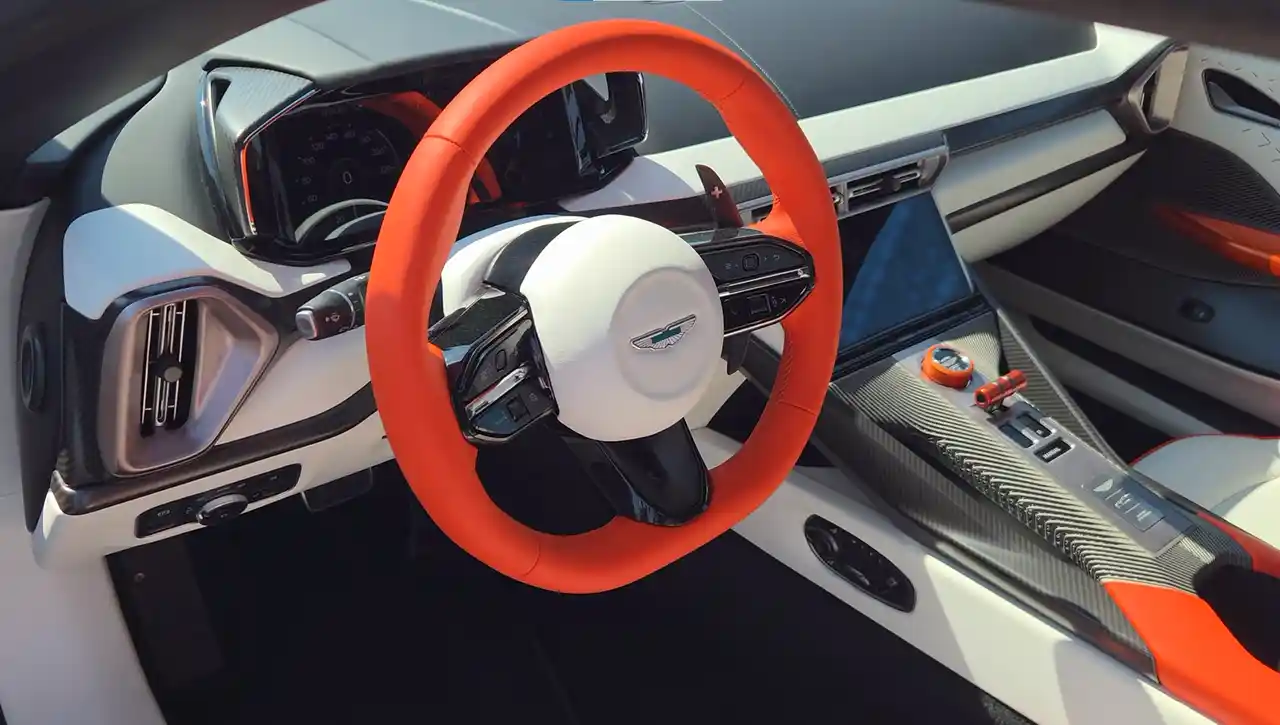
The dashboard was redesigned around machined lightweight aluminum trim and Alcantara upholstery. The climate vents are produced using 3D printing, a detail that underscores just how bespoke each build is, since every car is finished to order by the Q division.
The Sports Plus bucket seats prioritize lateral hold in corners, which typically comes at the expense of long-haul comfort — a fairly common trade-off in cars built around track capability rather than road-trip duty.
How Much Cargo Space Does the Aston Martin Valen Have?
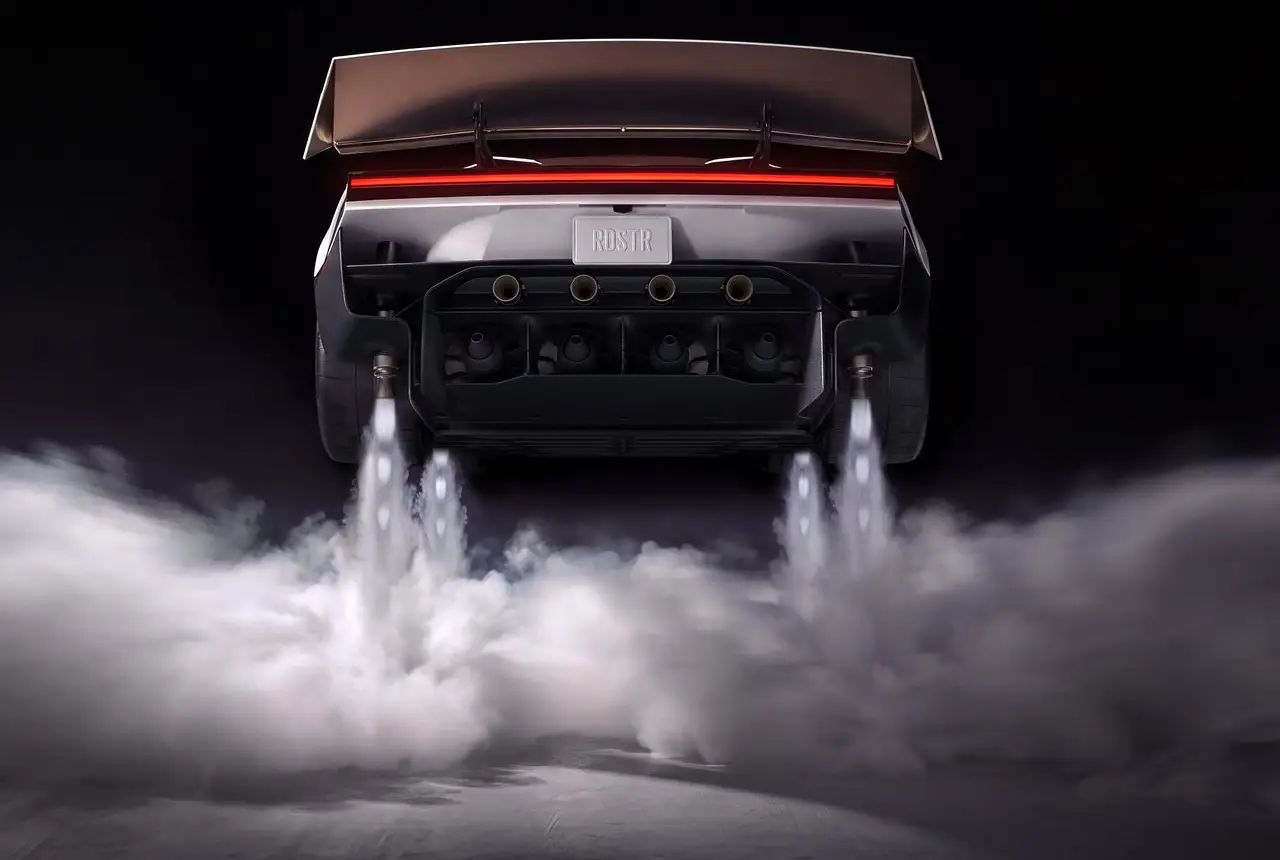
The Aston Martin Valen offers 6.0 cubic feet of cargo space, a figure squeezed down by the quad titanium exhaust system that eats into the rear of the car.
The infotainment setup runs through a 10.25-inch touchscreen borrowed from the Valhalla, with wired Apple CarPlay, Android Auto, and active navigation. Sound comes from a Bowers & Wilkins system with 15 speakers and 1,170 watts of output.
On driver-assist tech, the available information doesn’t spell out which ADAS features are included, and the car hasn’t been crash-tested by the NHTSA, IIHS, or Euro NCAP — typical for a production run this small, which qualifies for low-volume regulatory exemptions.
One genuine strength is the Pirelli Cyber Tyre technology, co-developed with Bosch, which embeds sensors directly in the tread to read temperature, load, and wear in real time, sharpening braking and traction response. The clearest downside is the combination of that tiny cargo hold and the missing rear window, which makes the Valen impractical for luggage and forces reliance on cameras just to back out of a parking spot.
What Is the Engine in the Aston Martin Valen?
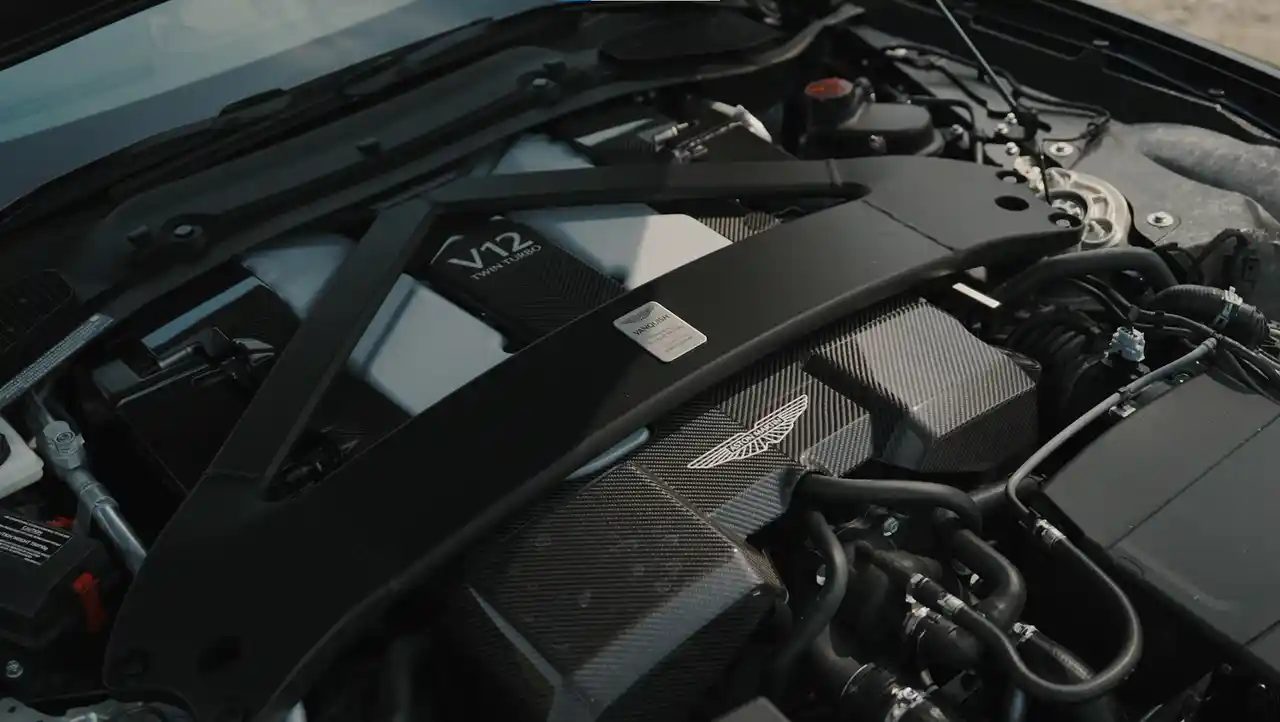
The Aston Martin Valen runs a 5.2-liter twin-turbo V12, gasoline-only with zero electrification, producing 838 hp and 738 lb-ft of torque through a ZF 8-speed automatic transaxle mounted at the rear axle.
That combination gets the car from 0 to 60 mph in 3.0 seconds and on to a 214-mph top speed, capped electronically to protect tire integrity during sustained high-speed running. In practice, that puts the Valen’s acceleration in the same league as far more mechanically complex hybrid hypercars, achieved here purely through displacement and boost — without the low-end torque fill that electric assistance usually provides.
Peak torque of 738 lb-ft holds flat between 2,500 and 5,000 rpm, a wide band that lets the car pull hard without constant downshifting — useful on the highway, even on a car built primarily for track work.
Power goes to the rear wheels only, through an electronic limited-slip differential that redistributes torque in under 135 milliseconds, and the quad titanium exhaust runs 50% louder than the standard Vanquish’s — a track-car trait that could get old fast in daily stop-and-go traffic.
What Is the MPG of the Aston Martin Valen?
Not officially disclosed. EPA fuel economy figures haven’t been finalized, since the car is still working through certification ahead of the first customer builds set to begin in 2027.
The fuel tank holds 21.6 gallons, but without an official EPA rating, there’s no reliable way to calculate real-world range yet. Given the profile of the engine — a twin-turbo V12 pushing 838 hp with no electric assist — expect fuel economy on the lower end for the segment, though that can only be confirmed once certification wraps up.
How Much Does the Aston Martin Valen Cost?
The Aston Martin Valen carries an official MSRP of $2,000,000, though every one of the 150 allocated builds sold before the car was even shown to the public, so there’s no dealer inventory to shop from at this point.
Pricing climbs from there based on Q division options — special paint finishes like the color-shifting Satin Andromeda Red, exposed pigmented carbon trim, or the Lightweight Pack that shaves additional weight — none of which are reflected in the base MSRP.
Insurance, maintenance costs, and depreciation haven’t been officially disclosed. Limited-run hypercars like this one have historically appreciated on the secondary market rather than losing value, purely because of how few examples exist, though that pattern isn’t guaranteed for any specific car.
Against rivals like the Ferrari 812 Competizione and Ferrari 12Cilindri, both of which sit meaningfully lower on price and are actually available to order, the Valen’s positioning is less about value and more about scarcity — you’re paying for one of 150 slots, not just the hardware.
The right buyer here already owns several performance cars and wants a pure, non-hybrid V12 as a mechanical statement piece. Anyone who wants a hypercar they can still track down and actually buy today, or one with usable cargo space and predictable running costs, should look elsewhere — including within Aston Martin’s own lineup.
Frequently Asked Questions About the Aston Martin Valen
Is the Aston Martin Valen sold in the US?
Yes. The US is one of the official markets, with an MSRP of $2,000,000, though all 150 units are already allocated to buyers.
Does the Aston Martin Valen have a hybrid or electric motor?
No. It runs a gasoline-only 5.2-liter twin-turbo V12 with no hybrid assistance or electric motor of any kind.
How many Aston Martin Valen units will be built?
150 units worldwide, all of which were claimed by buyers before the car’s official reveal in August 2026.
Does the Aston Martin Valen have any recalls?
No. Since customer deliveries don’t start until the second quarter of 2027, there’s no recall history for the model yet.
Verdict: Is the Aston Martin Valen Worth It?
Buying the Aston Martin Valen is an emotional decision, not a rational one. There’s no practical case for 6.0 cubic feet of cargo space, a non-hybrid V12 in the middle of the industry’s electrification push, or a $2 million MSRP.
It’s the right call for a collector who values a V12 with no electric assistance as an end in itself. It’s the wrong call for anyone who wants a daily driver, usable interior space, or predictable running costs.
The Valen comes down to raw output and numerical scarcity, with no real concession made to comfort or practicality.
Between the $2 million price tag and the 6.0-cubic-foot trunk, which one do you think is harder to justify on a hypercar this size?

Por: Danniel Bittencourt
14/08/2026
Related posts