Is the Nissan Kicks Rock Creek Worth the Extra Cost?
The 2027 Nissan Kicks Rock Creek starts at $30,385 MSRP and comes standard with all-wheel drive, a first for the Kicks nameplate in the US market.
Is the 2027 Nissan Kicks Rock Creek Worth It? Here’s What Sets It Apart
The Rock Creek trim starts at $30,385 including destination, and its biggest advantage over the rest of the Kicks lineup is standard all-wheel drive. That alone changes what this small SUV can handle compared to every other Kicks on the lot.
This isn’t a new model. It’s a rugged-styled trim built on the second-generation Kicks, which switched to the CMF-B HS platform and gained AWD as an option for the first time. Nissan built it for buyers who want light off-road capability without stepping up to a body-on-frame SUV or truck.
Its closest rivals are the Subaru Crosstrek Wilderness and the Jeep Renegade Trailhawk, both of which chase the same buyer: someone who wants a compact SUV that can handle gravel, light snow, or a muddy trailhead without breaking a sweat.
Quick Specs
| Spec | Info |
|---|---|
| Segment | Subcompact SUV |
| Engine | 2.0L MR20DD, 4-cylinder, naturally aspirated, gas |
| Horsepower | 141 hp @ 6,000 rpm |
| Torque | 140 lb-ft @ 4,000 rpm |
| Transmission | Xtronic CVT |
| Drivetrain | Intelligent AWD (standard) |
| 0-60 mph | 9.0 seconds |
| Top speed | 115 mph |
| Fuel economy | 30 mpg combined (EPA) |
| Range | 421 miles |
| On sale | August 2026 (2027 model year) |
Those are the numbers Nissan quotes for the Rock Creek specifically. Every other spec below breaks down what that means once you’re actually driving it.
How Big Is the Nissan Kicks Rock Creek?
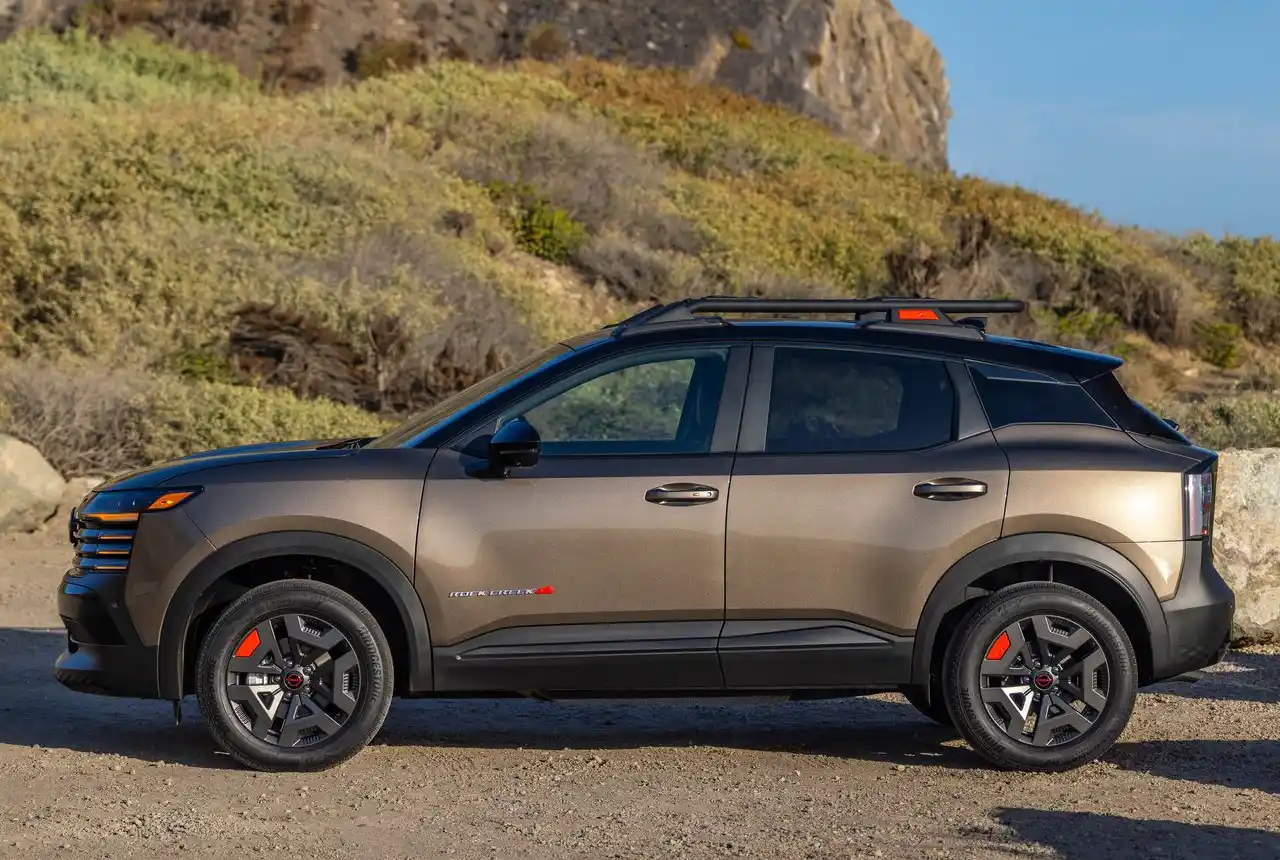
The Rock Creek measures 171.9 inches long and 70.9 inches wide, the same footprint as every other Kicks trim, since they all share the same CMF-B HS platform. The difference shows up in height and wheelbase.
Because the AWD system needs an independent rear suspension, the wheelbase stretches slightly to 104.9 inches, compared to 104.6 inches on front-wheel-drive trims. Ride height drops just a touch in exchange, at 64.0 inches versus 64.2 inches for FWD models.
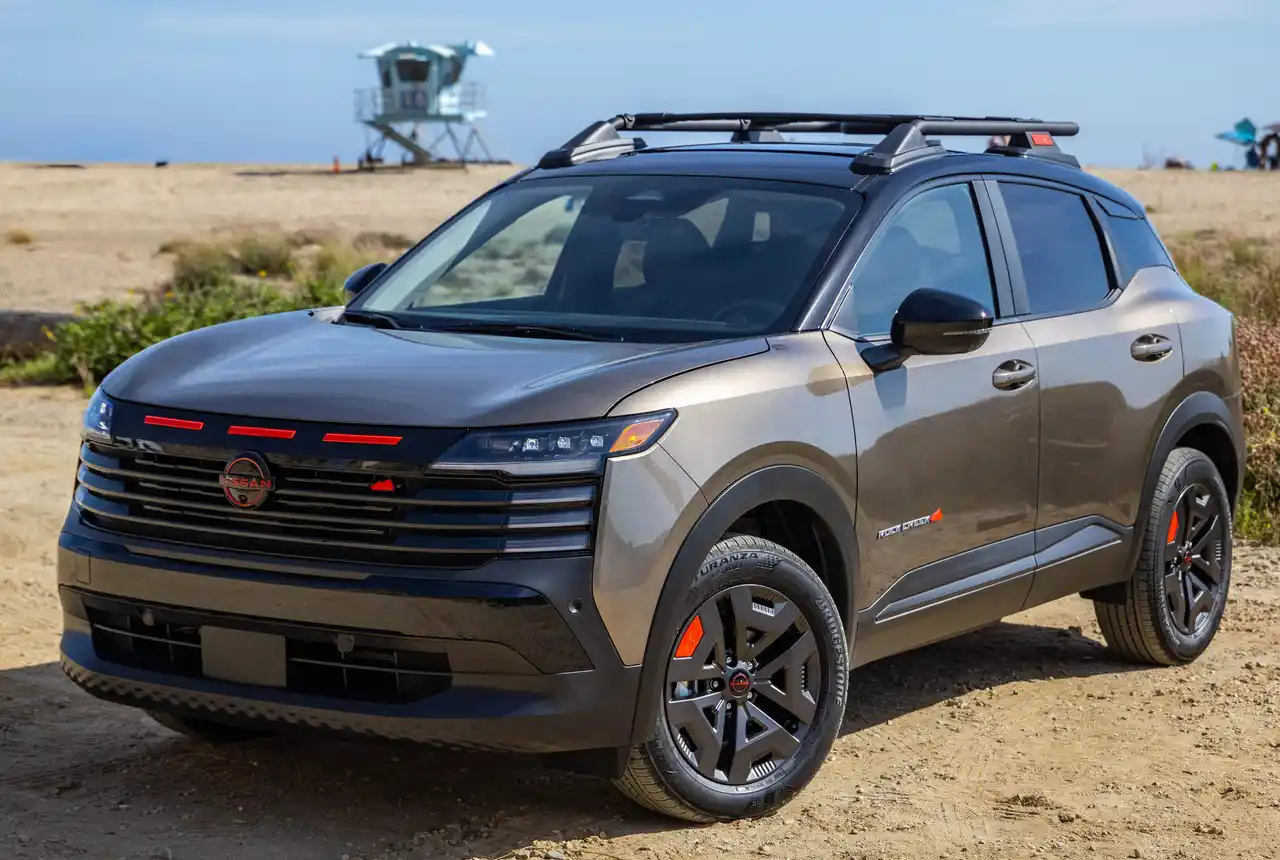
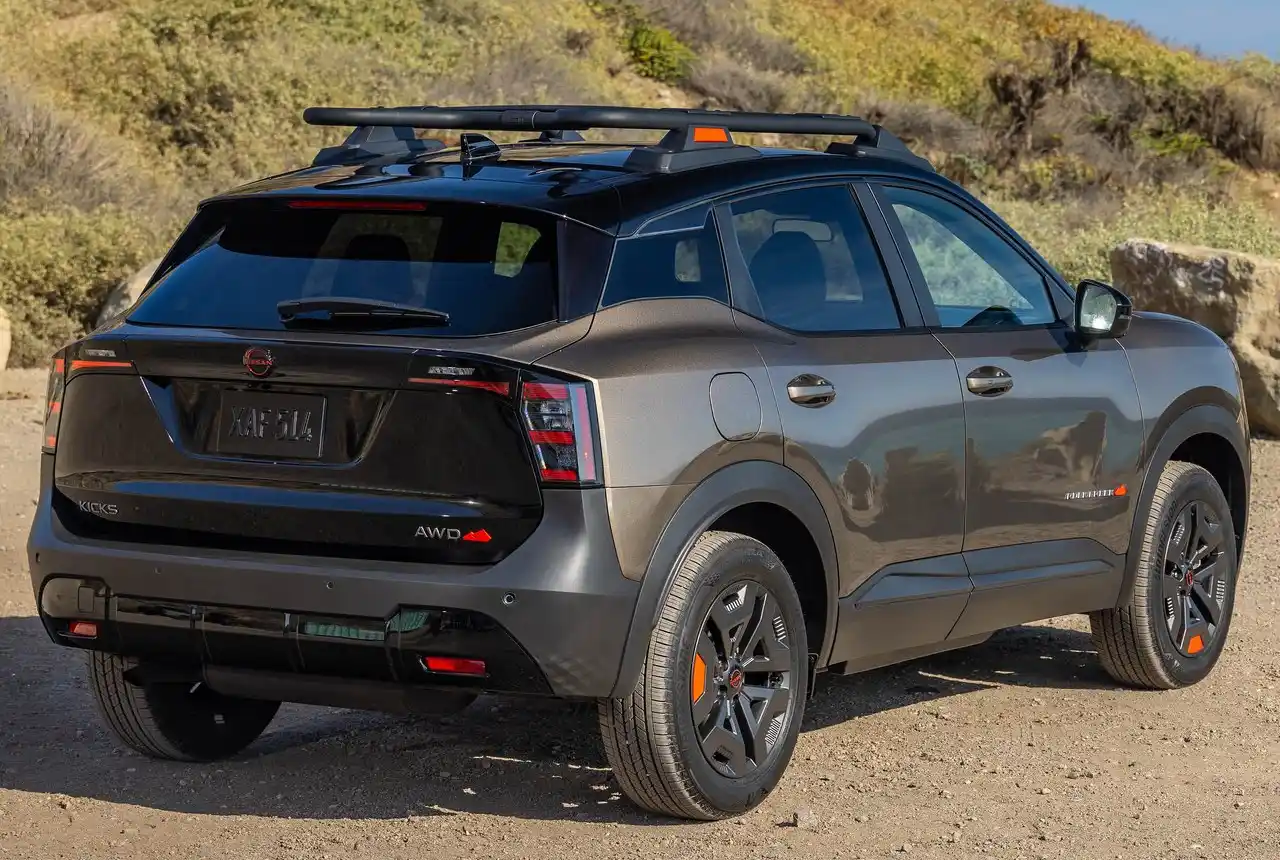
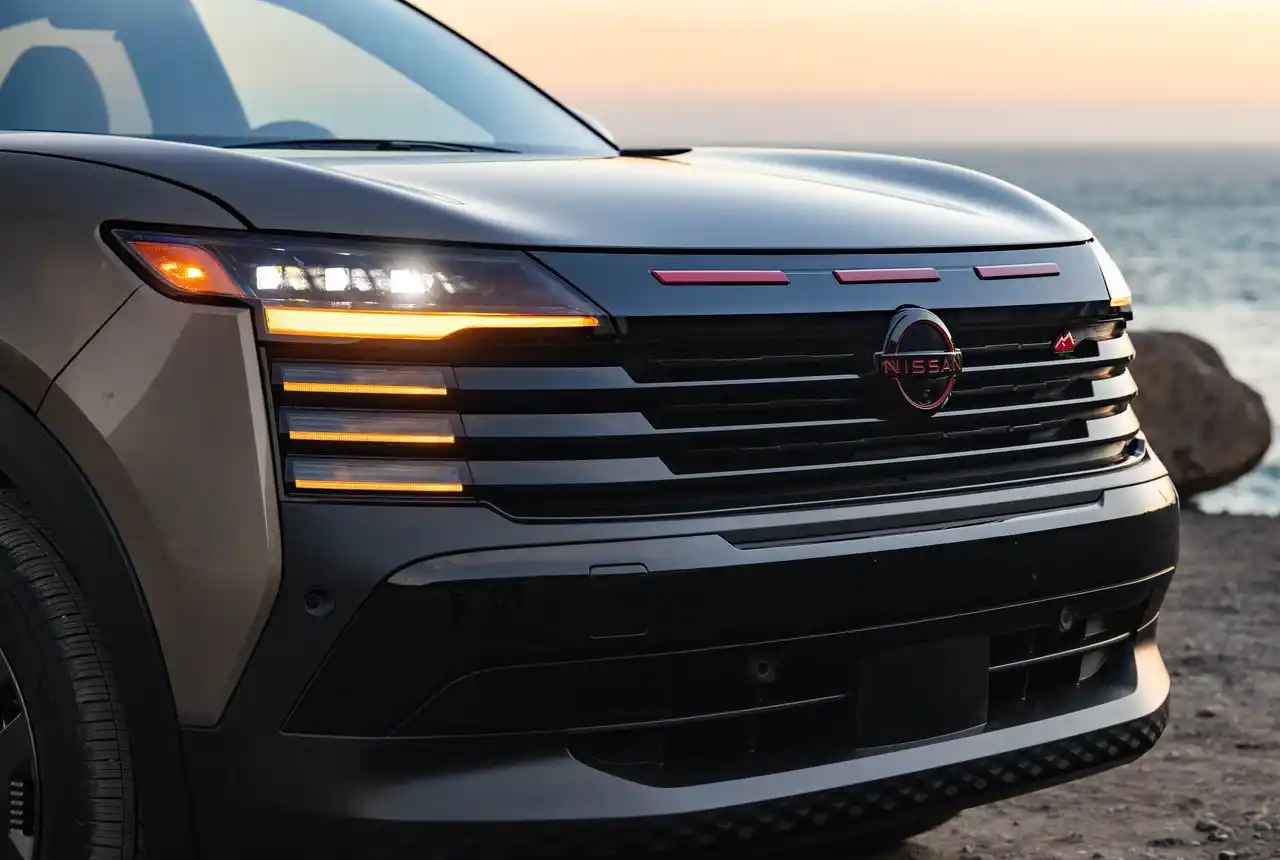
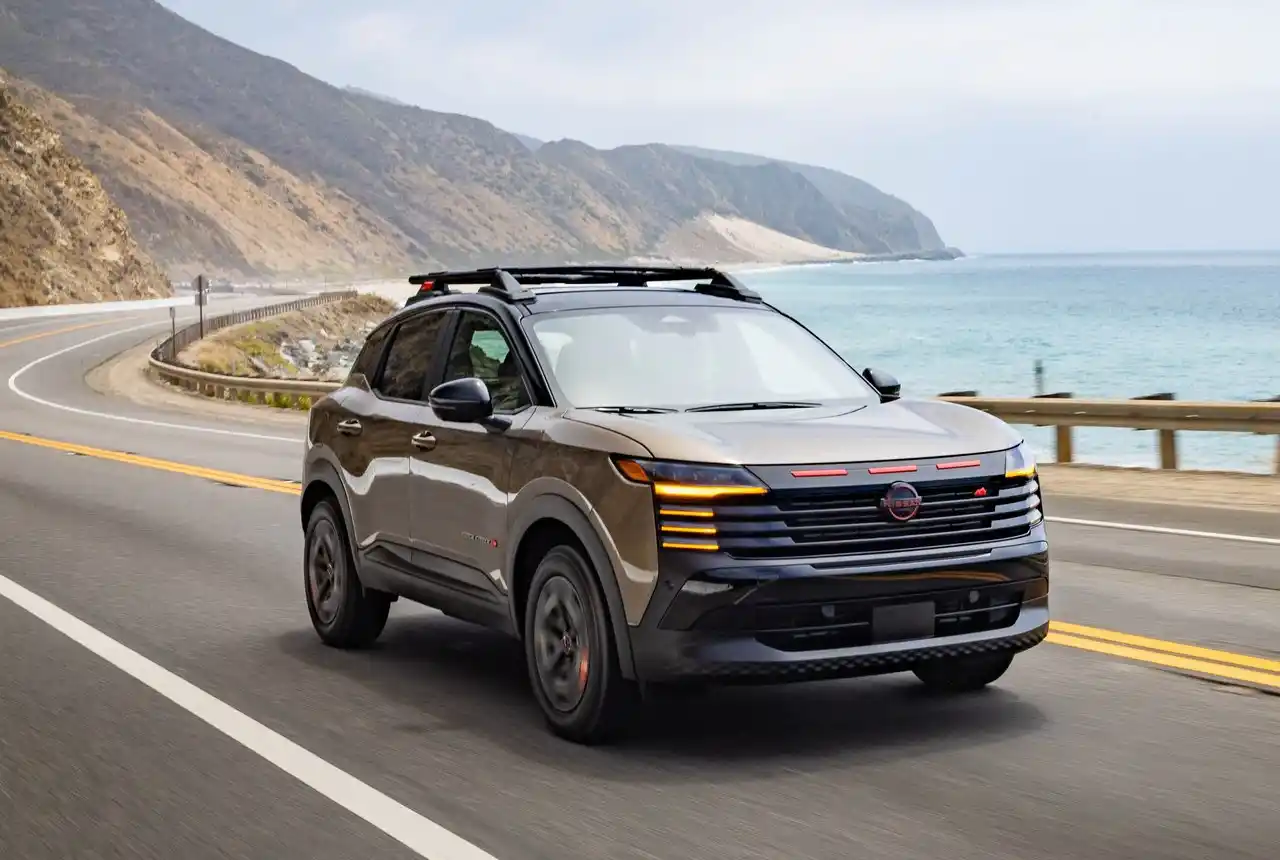
Visually, the Rock Creek stands out with gloss black trim on the grille, mirror caps, and lower bumpers, set against amber daytime running lights. The wheel arches wrap around 17-inch wheels finished in a darker paint and wrapped in 215/60R17 all-terrain-style tires.
The tubular roof rack isn’t just for looks, either. It’s rated to carry 165 pounds, enough for a rooftop cargo box or a couple of bikes, which matters if you’re actually using this trim for what it’s built for.
How Much Interior Space Does the Nissan Kicks Rock Creek Have?
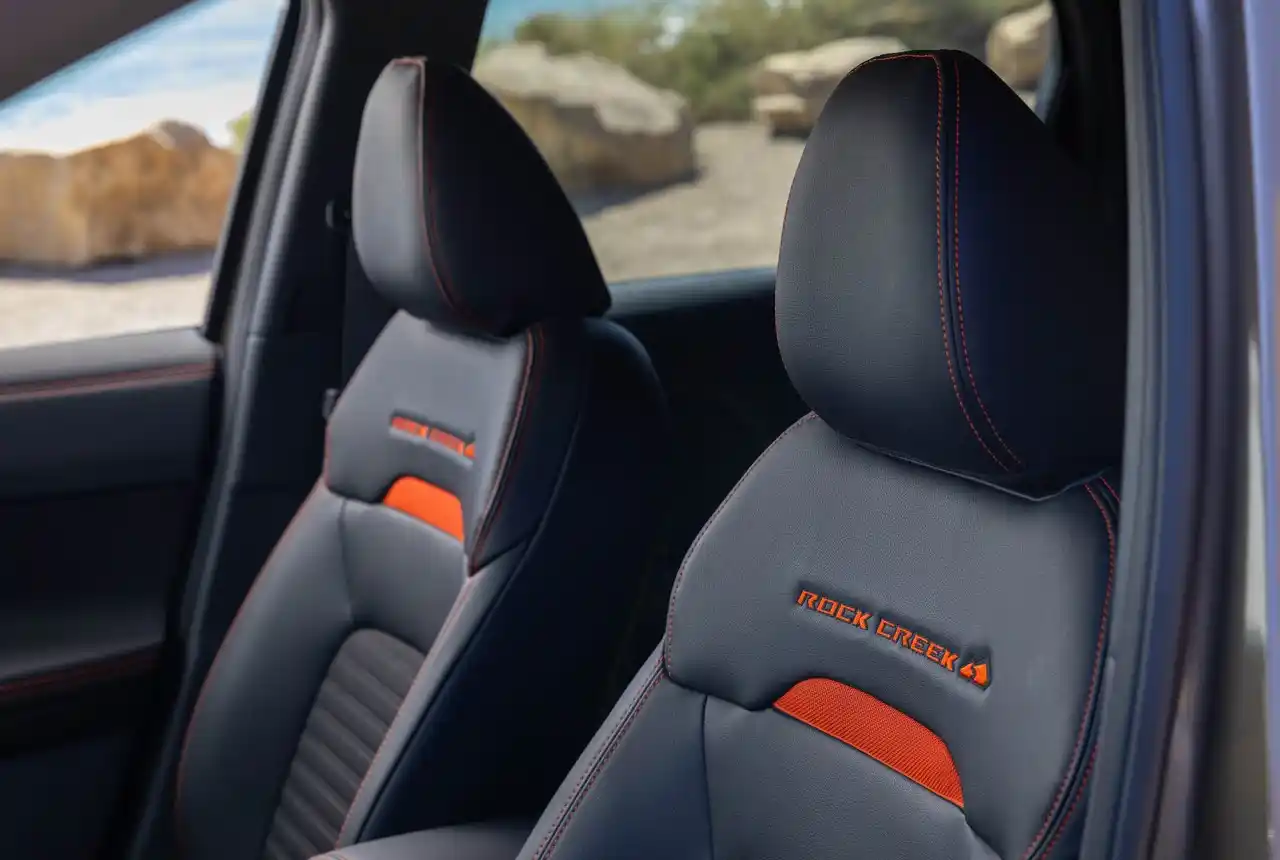
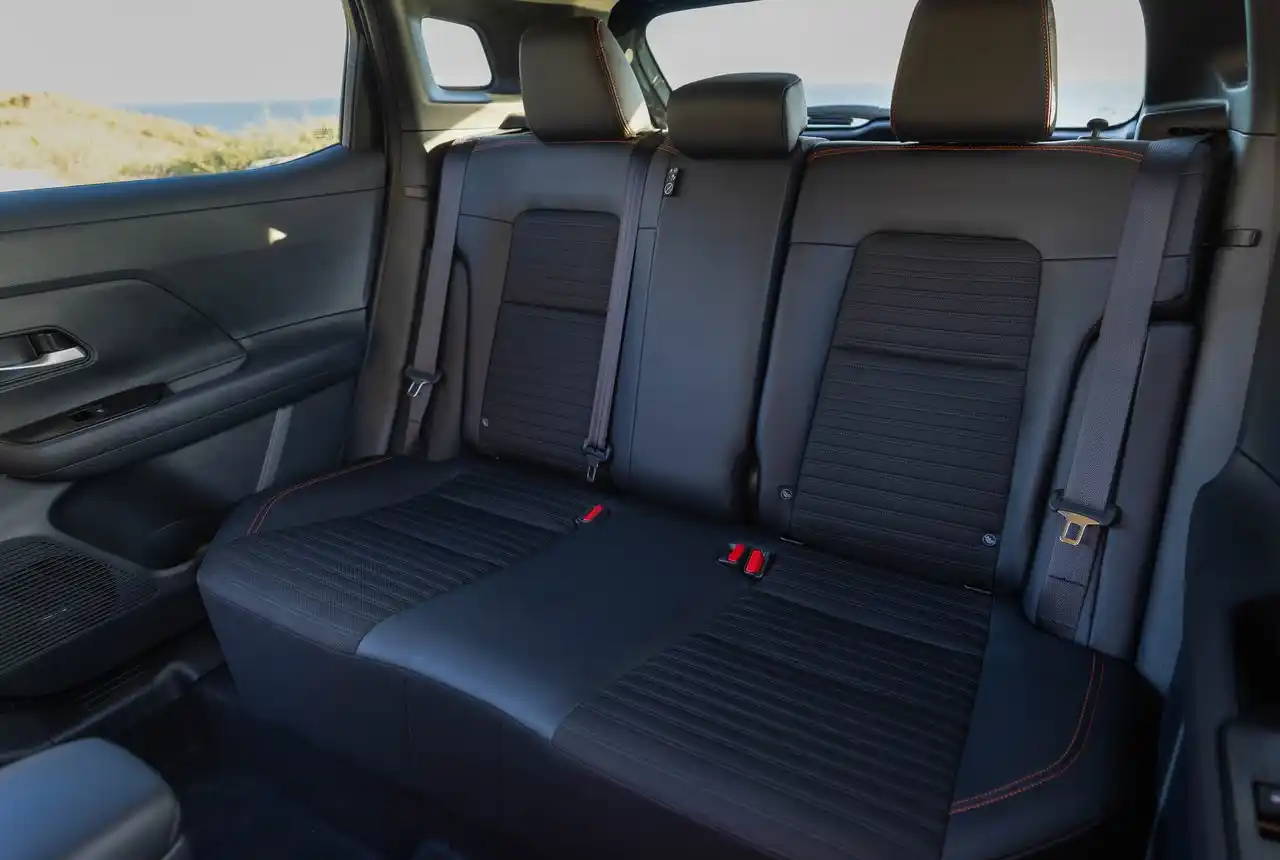
The Rock Creek seats five and uses Zero Gravity seat technology in both rows, an upgrade over the last generation, which limited that feature to the front seats only.
Zero Gravity draws on NASA research into neutral body posture, aiming to cut fatigue on longer drives by supporting the body from the pelvis through the chest. It’s the kind of thing you don’t notice until you’re three hours into a road trip and your back doesn’t ache.
Rock Creek seats get synthetic TailorFit upholstery with embroidered logos and orange contrast stitching, plus a water-repellent surface. That last part matters more than it sounds, since it’s built for owners who get in the car straight from a hike or a muddy trailhead.
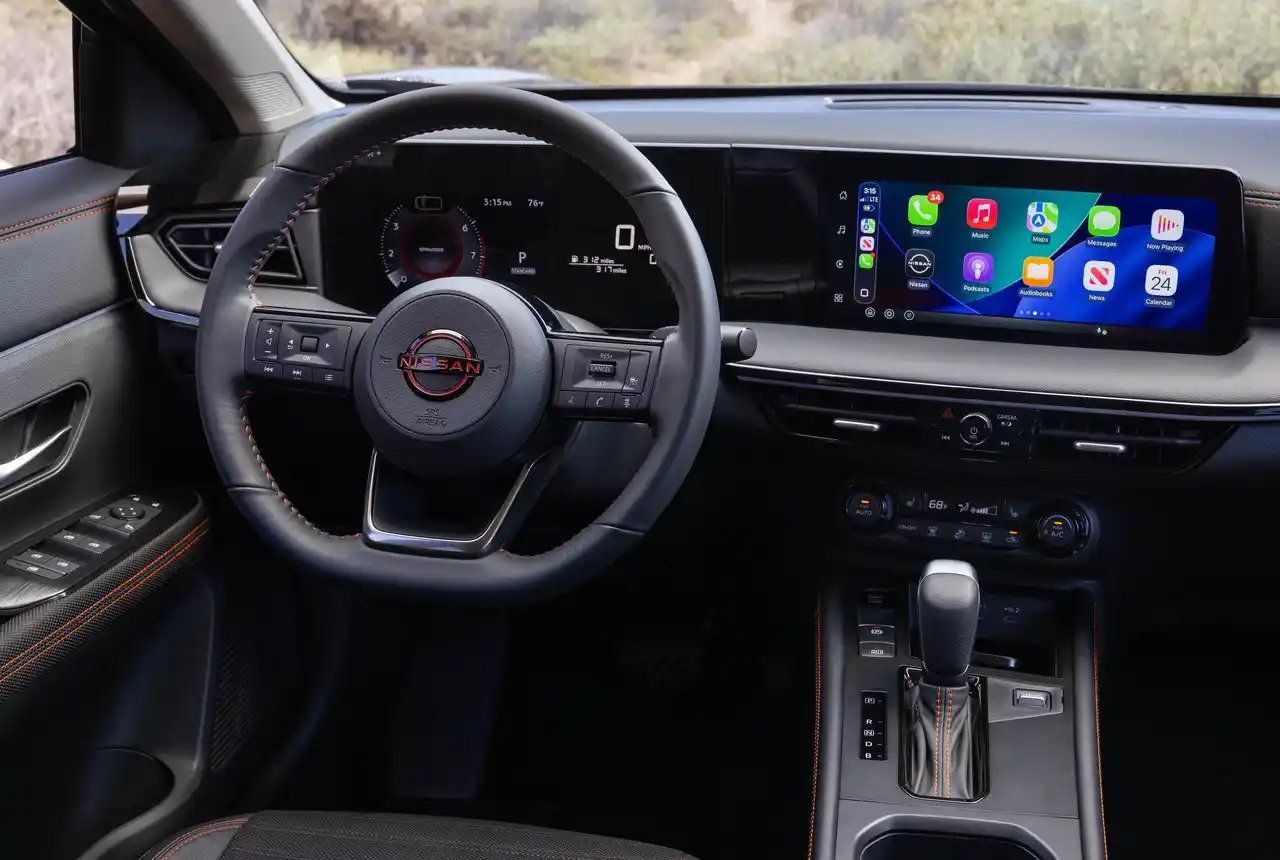
The dashboard runs dual 12.3-inch displays for the gauge cluster and infotainment. On higher trims, climate controls move to touch-capacitive buttons, a design choice that pulls your eyes off the road more than a physical knob would.
How Much Cargo Space Does the Nissan Kicks Rock Creek Have?
Cargo space behind the rear seats comes in at 23.9 cu-ft, expanding to 50.1 cu-ft with the seats folded down. That’s solid for the segment, but it’s actually smaller than what you get on front-wheel-drive Kicks trims.
The AWD hardware, specifically the rear differential, eats into space under the cargo floor. FWD trims, which Nissan still sells alongside the Rock Creek, offer 30.0 cu-ft standard and 60.0 cu-ft with the seats down, nearly 10 cubic feet more.
On connectivity, the Rock Creek supports wireless Apple CarPlay and Android Auto, with USB-C ports up front and in the rear console. For driver assistance, Safety Shield 360 bundles automatic emergency braking with pedestrian detection, lane departure warning, and blind spot monitoring.
Top trims add ProPILOT Assist, which combines adaptive cruise control with lane centering for Level 2 assisted driving on the highway. It’s genuinely useful on long interstate stretches, though it doesn’t replace an attentive driver.


What Is the Engine in the Nissan Kicks Rock Creek?
The Rock Creek runs a 2.0-liter naturally aspirated four-cylinder, code MR20DD, making 141 hp at 6,000 rpm and 140 lb-ft of torque at 4,000 rpm, paired with a CVT and standard Intelligent AWD.
That combination gets the Rock Creek from 0 to 60 mph in 9.0 seconds, an average time for the class. The soft spot shows up at highway speed: owners consistently report the engine straining and the CVT droning during passing maneuvers above 70 mph.
The Intelligent AWD system defaults to front-wheel drive and only sends power rearward when it detects slip, a setup built more for efficiency than for aggressive off-road use. For wet pavement, light snow, or gravel, it does the job it’s designed for.
What Is the MPG on the Nissan Kicks Rock Creek?
- City: 27 mpg
- Highway: 34 mpg
- Combined: 30 mpg
- Estimated range: 421 miles (12.4-gallon tank)
Those figures come straight from EPA testing. In real-world highway driving at sustained 75 mph, long-term owner logs put the Rock Creek closer to 33 mpg, actually slightly ahead of the official highway rating.
For context, that combined number sits in line with rivals like the Subaru Crosstrek, though it trails what Nissan’s own hybrid e-Power powertrain delivers overseas, where the AWD version rates around 45 mpg combined. The gas-only Rock Creek trades some of that efficiency for a simpler, more familiar drivetrain.
Is the Nissan Kicks Rock Creek Worth the Price?
The Rock Creek starts at $30,385 MSRP, including the $1,545 destination charge, and that price puts standard AWD, off-road-tuned suspension, and unique interior trim on the table for buyers who’d otherwise have to shop a size class up.
Against its closest rivals, the math holds up reasonably well. The Subaru Crosstrek Wilderness and Jeep Renegade Trailhawk both compete in similar territory, and the Rock Creek undercuts them while offering comparable ground clearance and standard AWD.
Nissan backs the Kicks with a 3-year/36,000-mile basic warranty and a 5-year/60,000-mile powertrain warranty. J.D. Power rated the second-generation Kicks 82 out of 100 for quality and reliability, a “Great” score that suggests manageable ownership costs, though the AWD Rock Creek trim is still too new for long-term resale data.
Insurance costs should land close to other subcompact AWD SUVs in the class, though final premiums depend on driver history and location. Buyers who actually use the AWD system and roof rack for outdoor trips get real value here. Anyone who mainly drives in the city, and wants maximum cargo room, is better served by a front-wheel-drive Kicks trim at a lower price point.
Frequently Asked Questions About the Nissan Kicks Rock Creek
Does the Nissan Kicks Rock Creek have all-wheel drive?
Yes. The Rock Creek comes standard with Intelligent AWD, including a dedicated Off-Road Mode for low-traction surfaces.
Has the Nissan Kicks Rock Creek been recalled?
Yes. Recent recalls covered a dashboard software glitch, insufficient front seat welds, and incorrect tire and weight labeling, all filed with NHTSA.
What engine does the Nissan Kicks Rock Creek use?
A 2.0-liter naturally aspirated four-cylinder making 141 hp and 140 lb-ft of torque, paired with a CVT transmission.
How much cargo space does the Nissan Kicks Rock Creek have?
23.9 cu-ft behind the rear seats, expanding to 50.1 cu-ft folded down, less than the FWD Kicks trims because of the AWD hardware.
Verdict: Is the Nissan Kicks Rock Creek Worth Buying?
This is a trim for a specific kind of buyer, not a blanket upgrade. It makes sense for anyone who drives in snow, gravel, or rough weather often enough to use the AWD system for real.
It’s a tougher sell for buyers who stay in the city and want maximum trunk space, since the standard Kicks trims cost less and carry more. The Rock Creek delivers exactly what its badge promises: a small SUV that’s genuinely more capable off the pavement, without pretending to be something it isn’t.
Would you pay the premium for standard AWD, or stick with a front-wheel-drive Kicks and save the cash?
Share this article

Por: Danniel Bittencourt
13/08/2026
Related posts