2027 Toyota Sequoia TRD Pro Review: Power, Price, and Cargo Room
The 2027 Toyota Sequoia TRD Pro adds new FOX shocks, a standard 14-inch touchscreen, and a hybrid V6 rated at 583 lb-ft — but its third-row cargo room stays tight, and pricing pushes toward $85,000.
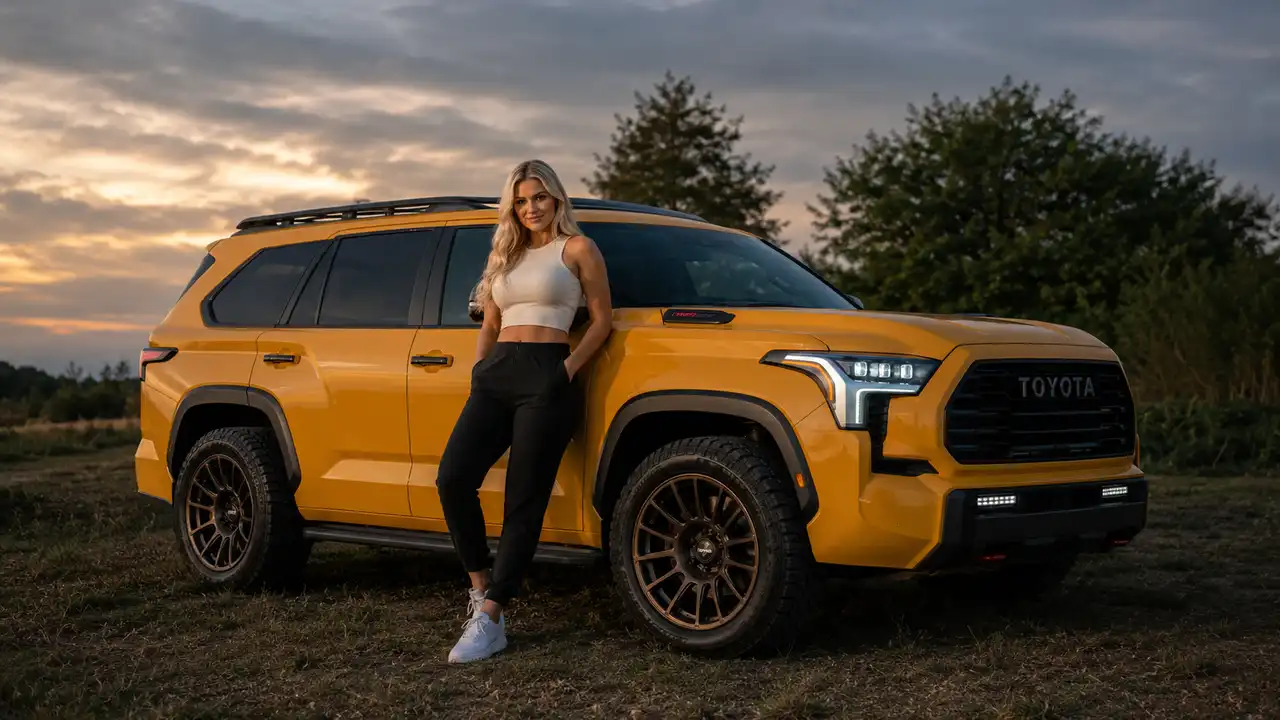
The 2027 Toyota Sequoia TRD Pro Gets a Tech Refresh — Its Biggest Weakness Stays Put
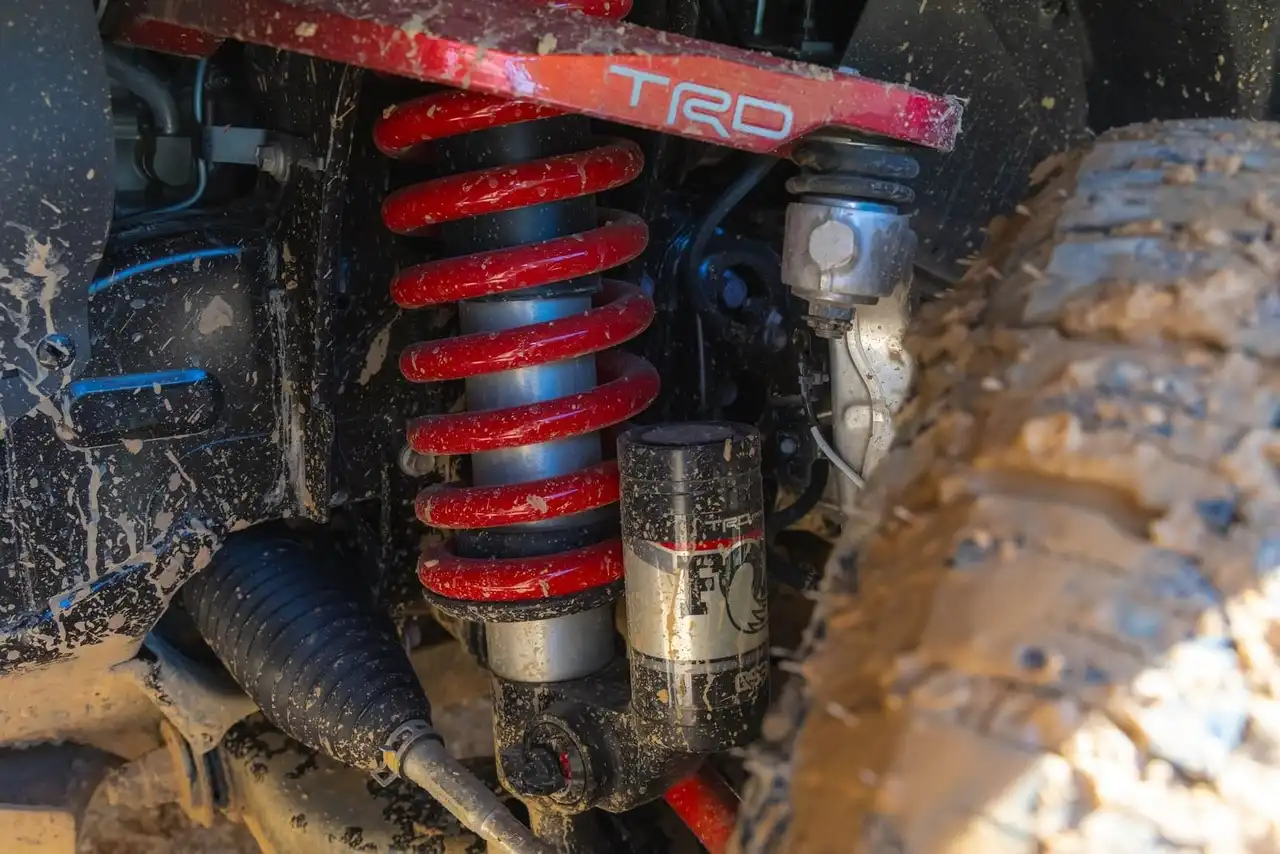
The 2027 Toyota Sequoia TRD Pro is a mid-cycle update, not a new generation. The underlying XK80 platform dates back to the truck’s 2022 redesign, but this model year brings styling tweaks, new technology, and revised suspension hardware for the off-road trim.
Toyota built the Sequoia for buyers who tow heavy loads — boats, enclosed trailers, horse trailers — and for truck owners who want an enclosed cabin without giving up serious capability. In this segment, it competes head-on with the Chevrolet Tahoe and the Ford Expedition.
Dealer arrivals are expected this fall. Here’s what’s actually changed, and what buyers should know before signing.
Quick Specs
| Spec | Detail |
|---|---|
| Category | Full-size, body-on-frame SUV, three rows |
| Engine | 3.4L twin-turbo hybrid V6, i-FORCE MAX (V35A-FTS) |
| Horsepower | 437 hp (466 hp with the TRD Performance Package) |
| Torque | 583 lb-ft at 2,400 rpm |
| Transmission | 10-speed automatic (Aisin AWR10L65) |
| Drivetrain | Part-time 4WD with 4Hi/4Lo transfer case (2WD also available) |
| 0-60 mph | Roughly 5.5 to 5.6 seconds (TRD Pro with Performance Package) |
| Top speed | Not officially disclosed |
| Fuel economy | 20 mpg combined (4WD TRD Pro, EPA-rated) |
| Range | Approximately 450 miles |
| Availability | 2027 model year, arriving at dealers this fall |
Those numbers only tell part of the story. Here’s how they play out once you’re actually driving the thing.
A Wider Grille and Reworked Headlights Mark the 2027 Refresh
The Sequoia keeps its body-on-frame construction, the same basic layout as a heavy-duty pickup, which explains both its towing capacity and its stiffness over rough terrain.
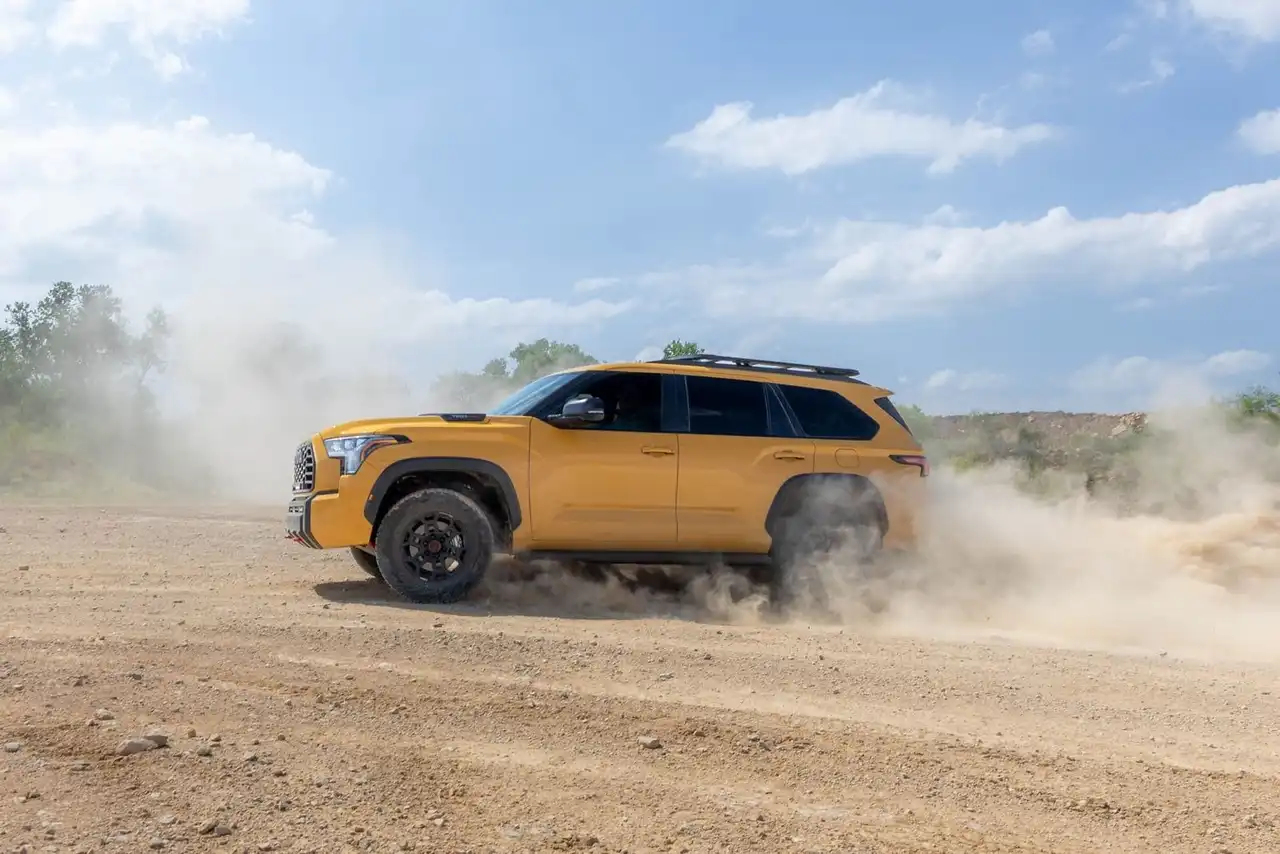
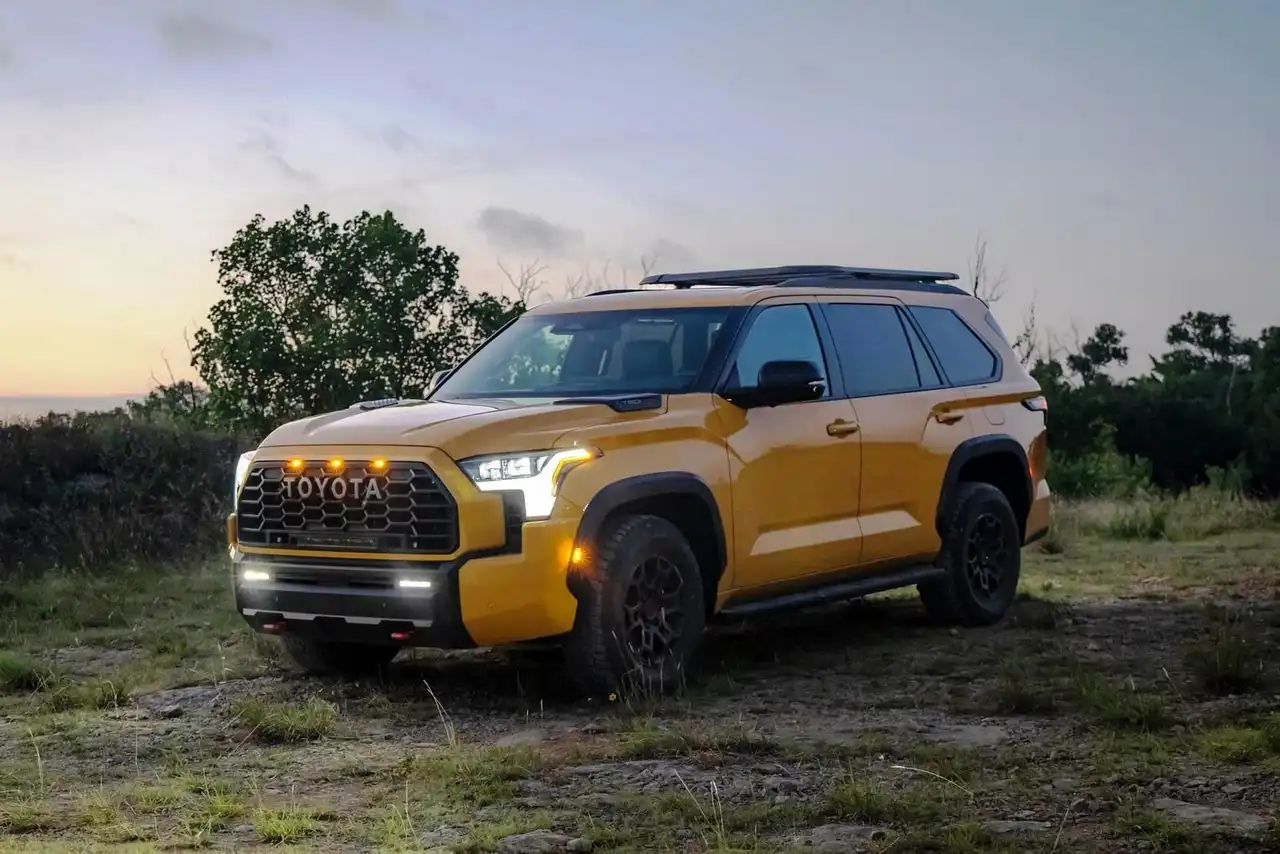
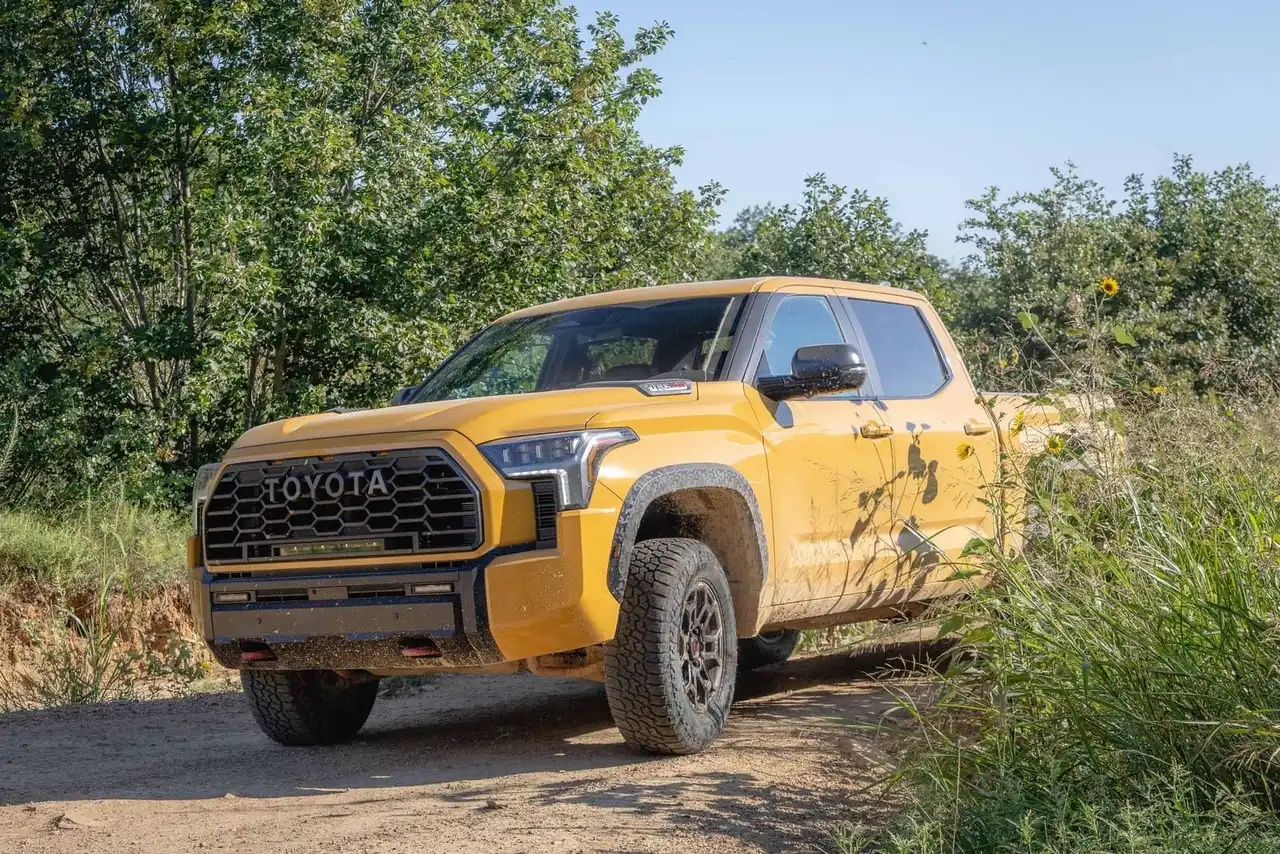
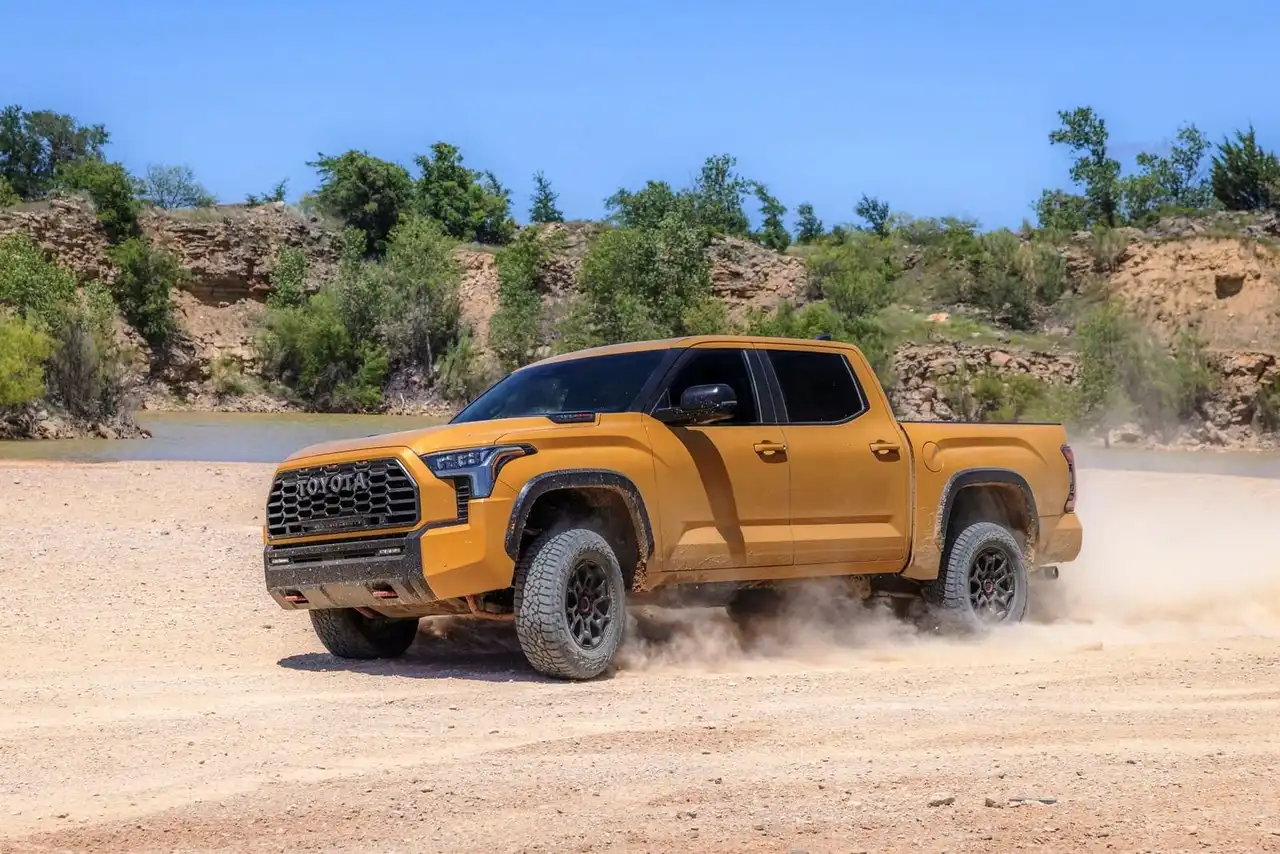
Up front, the grille is more prominent and the intake openings have been reshaped. The fog lights lose their old circular housings for rectangular units built into the lower bumper, giving the nose a sharper, more angular look.
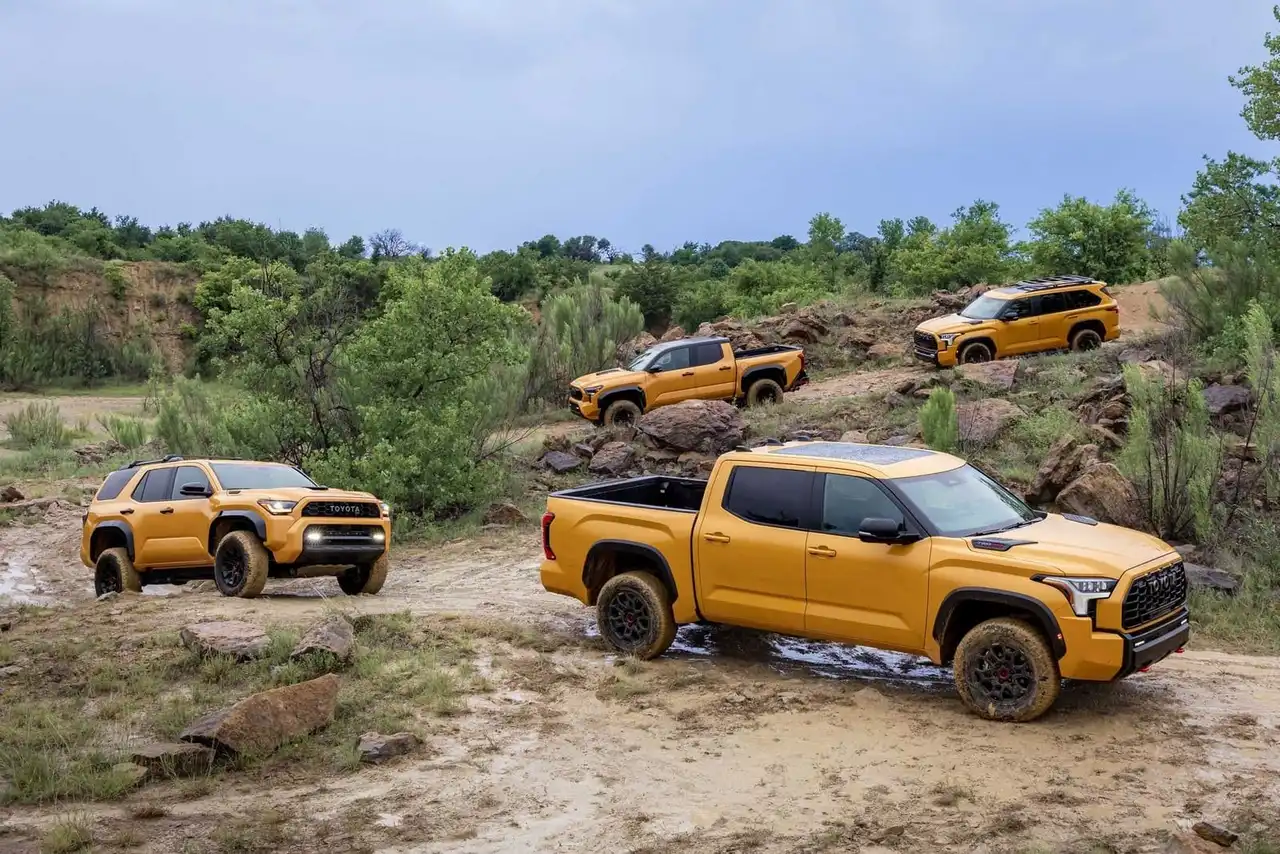
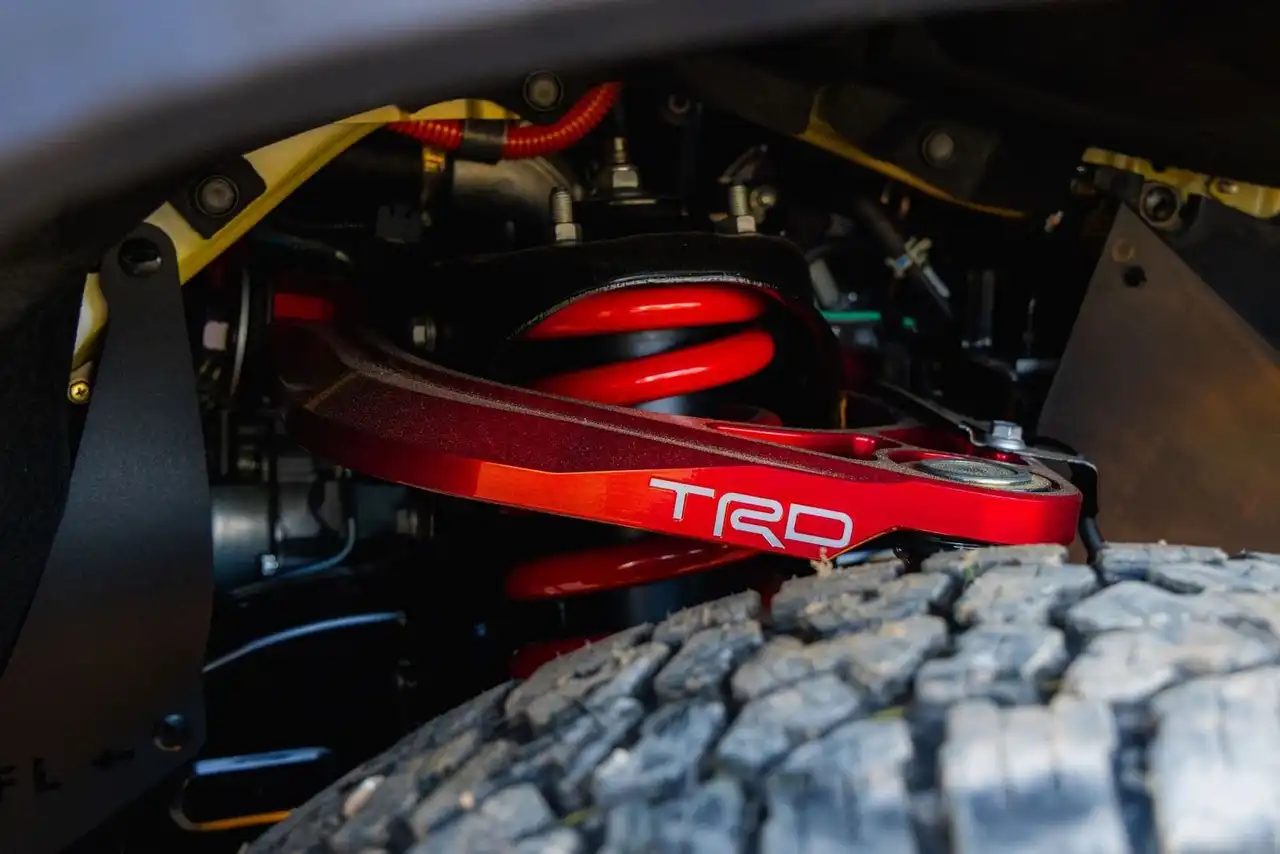
Toyota calls the new side profile “horizontal architecture,” which translates to a wider, lower-slung stance over the wheels. On the TRD Pro, forged BBS 18-inch wheels and 33-inch Falken Wildpeak tires reinforce the off-road intent.
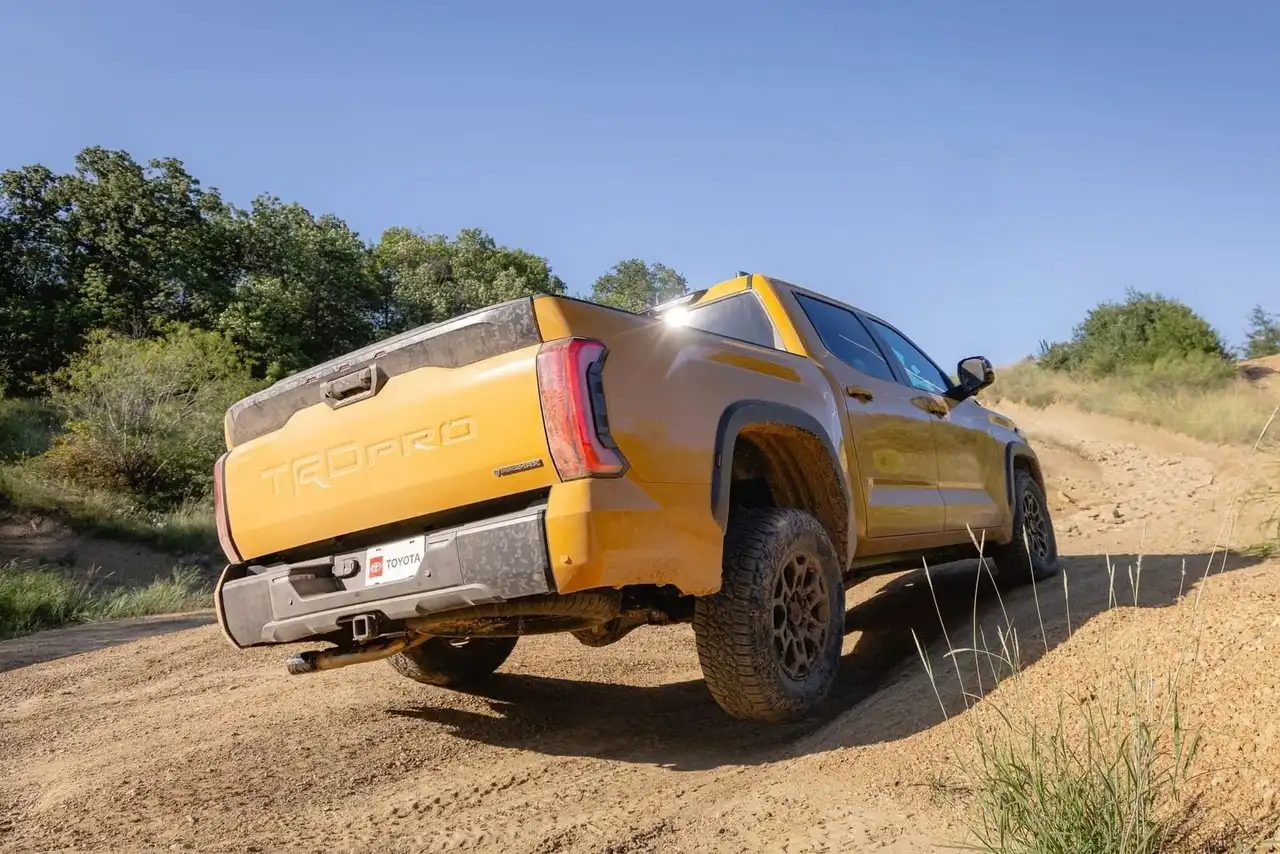
Around back, the 2027 TRD Pro adds functional red tow hooks and a grille-integrated LED light bar brighter than the outgoing version’s. These are targeted updates rather than a full redesign, and they nudge the truck’s look forward without touching its core identity.
Leather, Walnut Trim, and a Space Problem Engineering Never Solved
Interior materials scale sharply with trim level. The base SR5 uses hard plastics and cloth seats, while the Limited steps up to leather with contrast stitching. At the top, the 1794 Edition and Capstone bring semi-aniline leather and genuine American walnut trim.
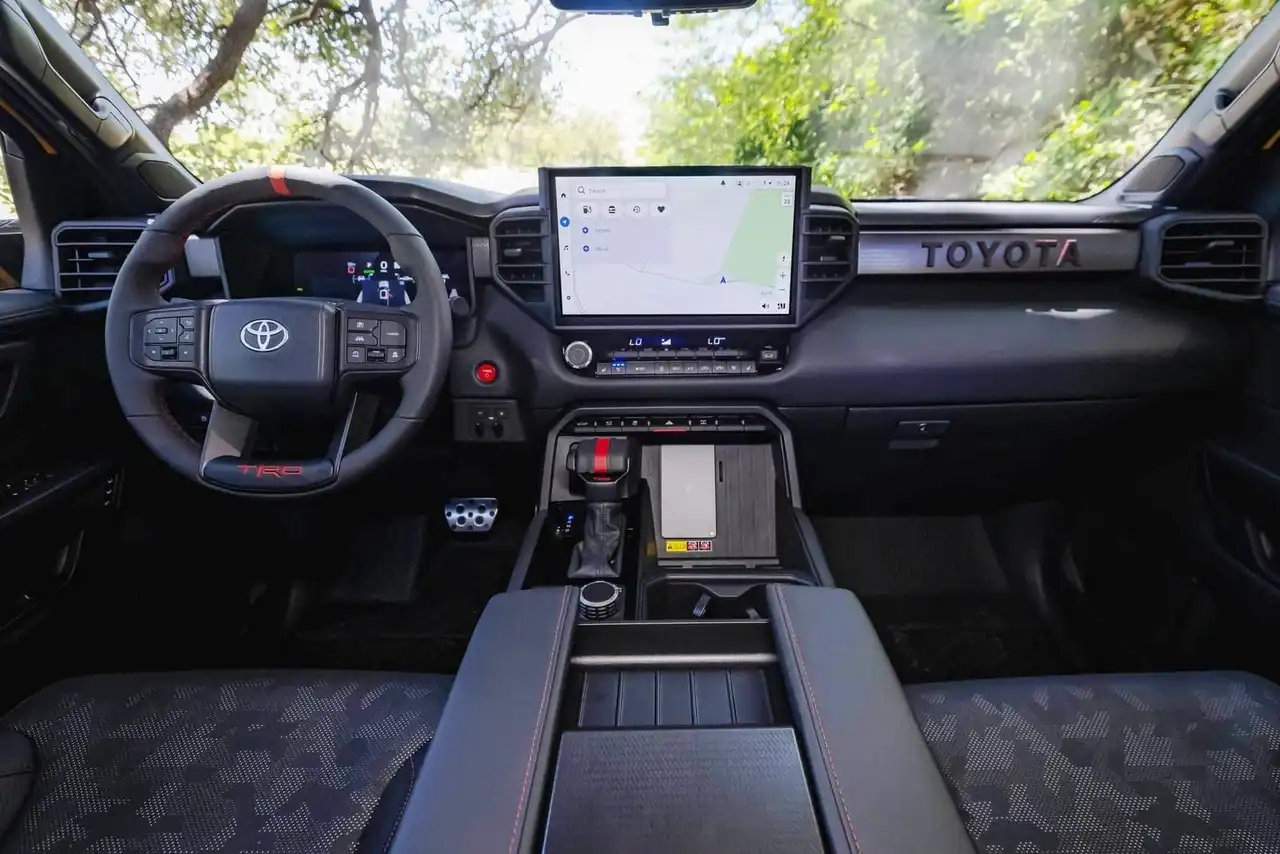
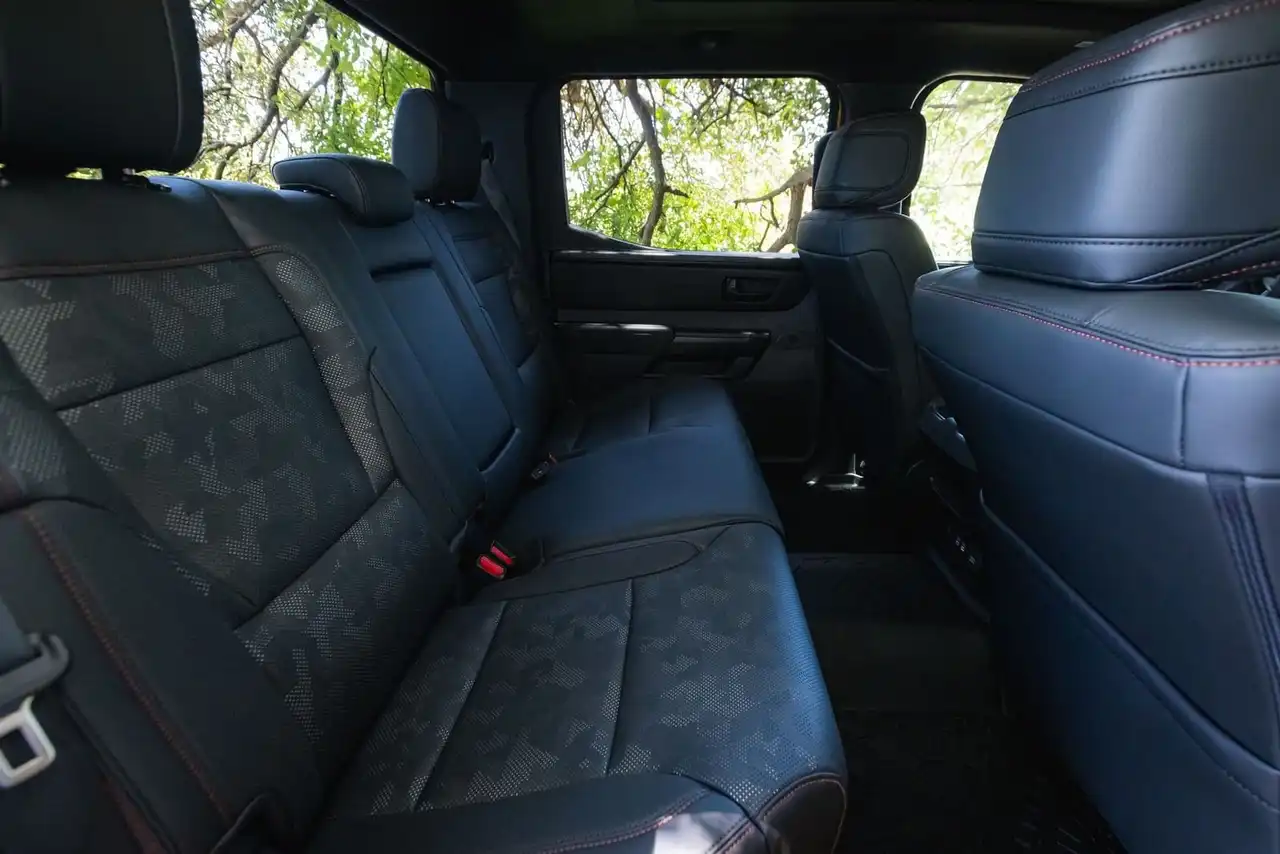
On the TRD Pro, front seats are wrapped in SofTex with a technical camo pattern, a more rugged look than the plusher trims aimed at families.
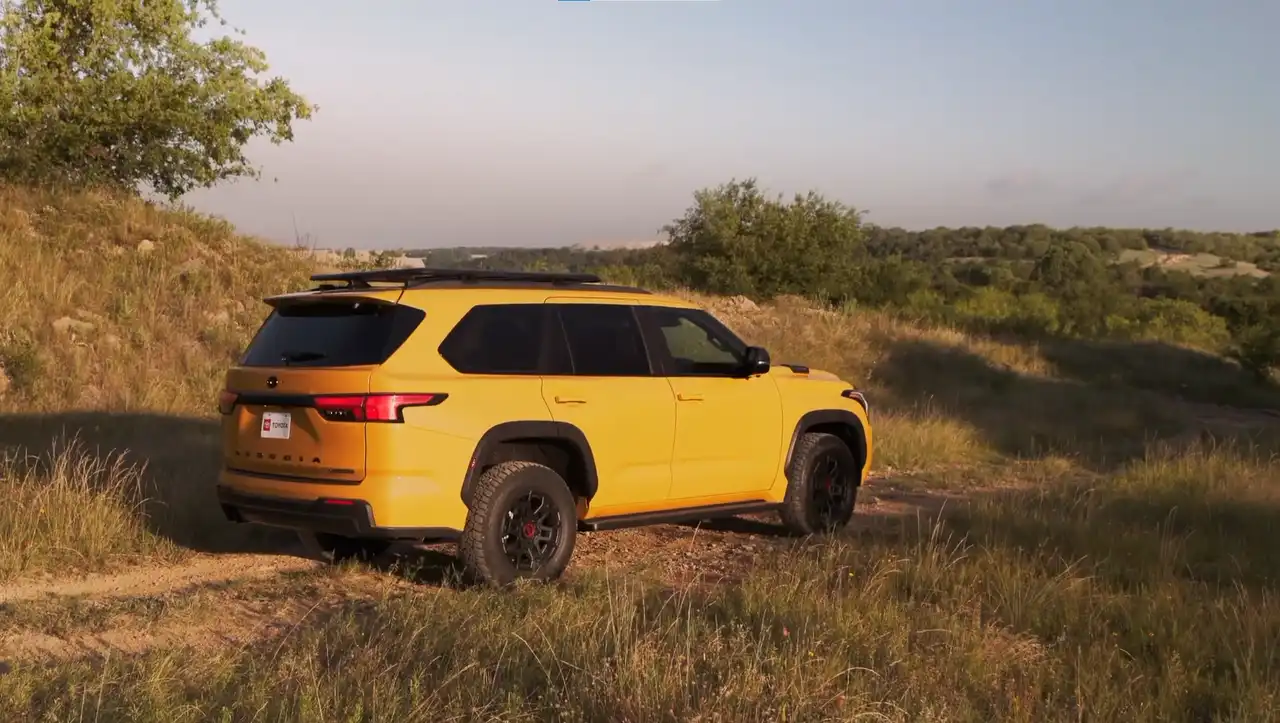
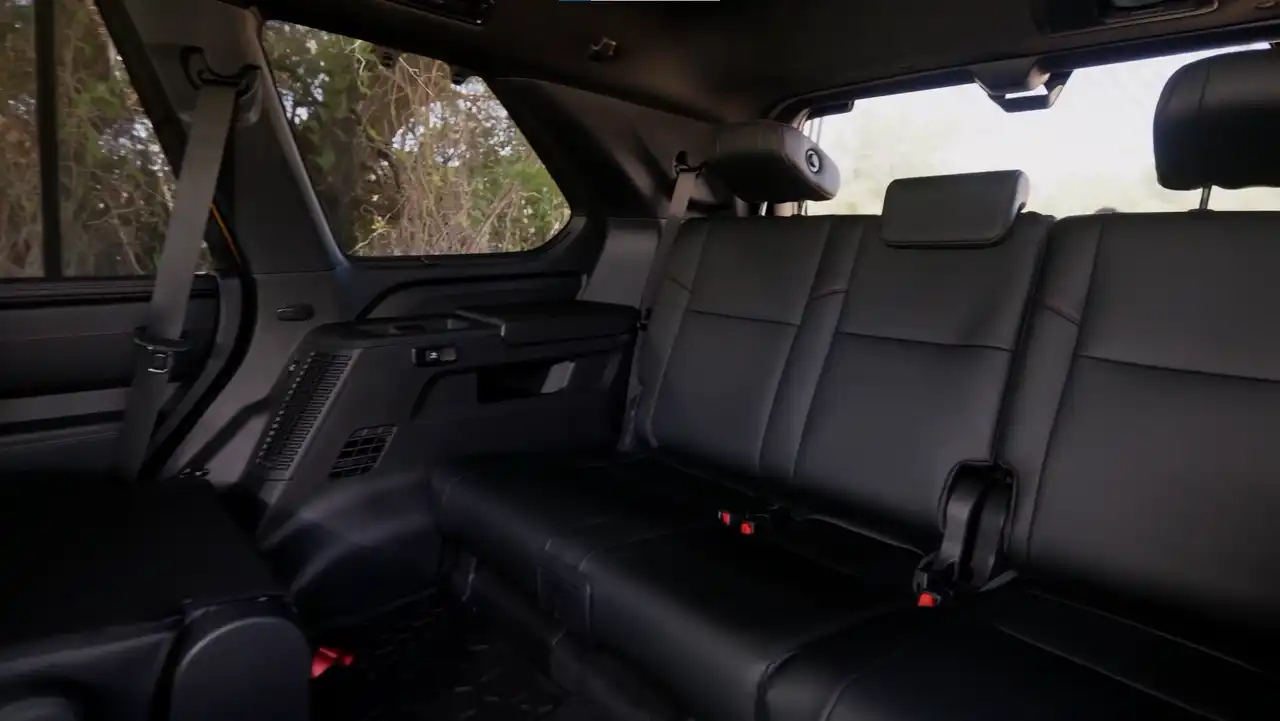
Second-row seating comes as either a bench, for eight-passenger capacity, or captain’s chairs, for seven. It’s the third row where the platform’s trade-offs show up: the solid rear axle and the hybrid battery’s placement raise the floor and cut into legroom back there.
A Bigger Screen Comes Standard, But Cargo Room Is Still the Weak Point
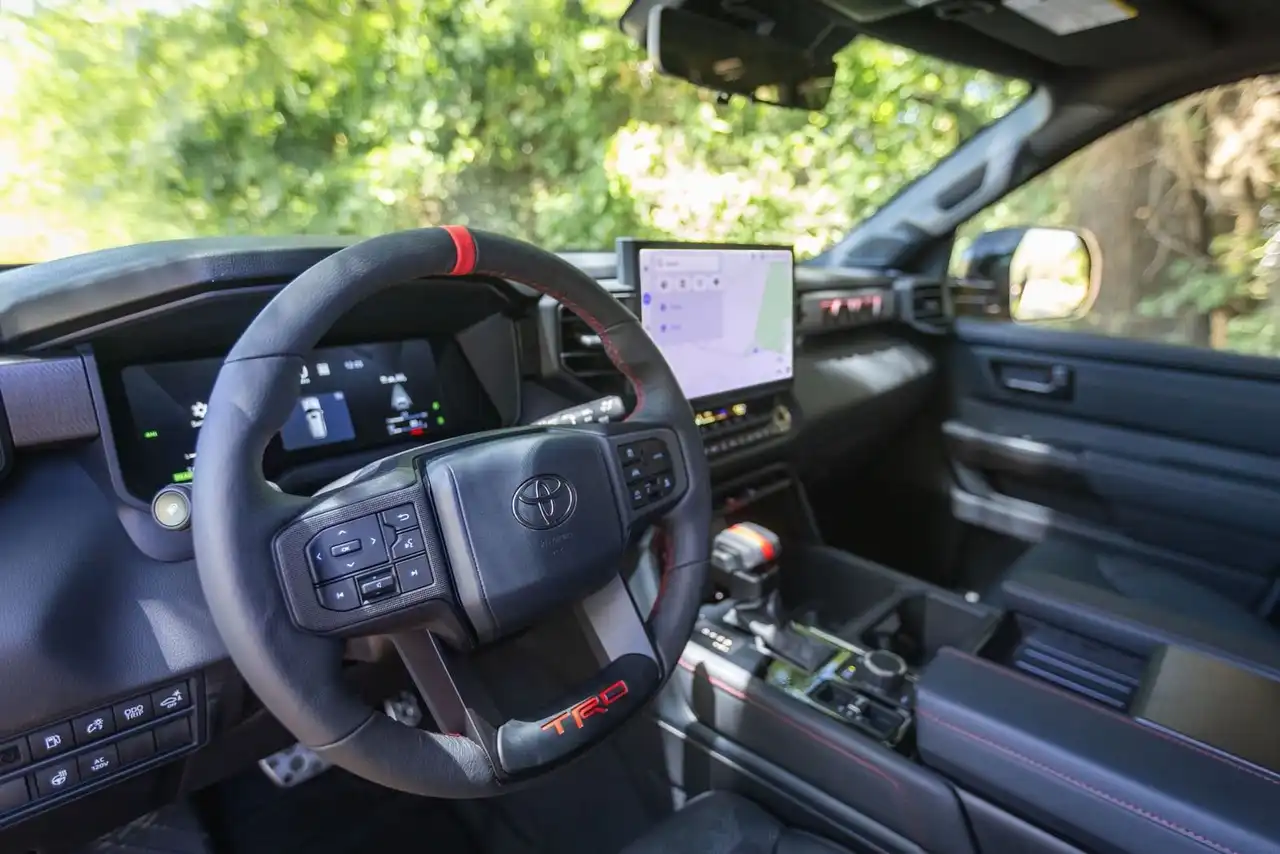
For 2027, Toyota standardized the 14-inch touchscreen across the entire lineup, retiring the 8-inch unit that lower trims used before. The system runs on cloud software, connects over 5G, and responds to voice commands with the “Hey Toyota” wake phrase, alongside wireless Apple CarPlay and Android Auto.
The gauge cluster is a 12.3-inch digital display, and a 10-inch head-up display is available on higher trims. On the safety side, Toyota Safety Sense 4.0 is now standard across the lineup, replacing the previous TSS 2.5 suite.
The cabin’s strongest improvement is the tech overhaul — the touchscreen upgrade fixes a real, long-standing complaint about this truck. The weak point remains cargo space: with the third row up, you’re looking at roughly 11.5 cubic feet, tight for a vehicle this size, a direct result of the rear axle design and the battery pack sitting under the floor.
Low-End Torque Feels Like a Truck’s — the Brakes Still Take Some Getting Used To
The Sequoia TRD Pro runs a 3.4-liter twin-turbo hybrid V6 badged i-FORCE MAX, with an electric motor sandwiched between the engine block and the 10-speed Aisin automatic. In standard form, the combo makes 437 hp, rising to 466 hp with the optional TRD Performance Package.
Horsepower isn’t the headline here — torque is. All 583 lb-ft arrive at just 2,400 rpm. In practice, that means the truck doesn’t need to rev to respond during passing maneuvers or grades with a trailer hooked up, something the old naturally aspirated V8 couldn’t match.
0-60 mph comes in around 5.5 to 5.6 seconds on higher-spec models, quick for an SUV pushing past 6,100 lbs. Toyota hasn’t published a top speed figure.
Combined fuel economy lands around 20 mpg on the EPA cycle for 4WD models, good for roughly 450 miles of range on a full tank. Real-world numbers drop noticeably under heavy towing, since both turbochargers work harder in those conditions. One recurring complaint among owners: the handoff between regenerative braking and the hydraulic brakes doesn’t always feel natural, particularly in hard stops.
Where the Sequoia TRD Pro Actually Fits in the Full-Size SUV Market
Pricing for the 2027 lineup starts near $64,000 for the SR5, climbing toward $89,000 for a loaded Capstone — before destination fees and options like the $2,299 TRD Performance Package. The TRD Pro itself is expected to land around $84,000 to $85,000. That puts it above the Tahoe and Expedition in comparable trims, and closer to where the Chevrolet Suburban and GMC Yukon Denali sit.
Ownership costs work in the Sequoia’s favor. ToyotaCare covers the first two scheduled maintenance visits over two years or 25,000 miles at no charge, and the hybrid battery carries a 10-year, 150,000-mile warranty that transfers to future owners. Insurance premiums on a full-size hybrid SUV in this price bracket typically run higher than on a comparable gas-only model, largely due to repair costs tied to hybrid components (Estimativa de Mercado).
Depreciation is where the Sequoia separates itself from the pack. Kelley Blue Book data puts it in the top 10 percent of SUVs for value retention, with three-year-old units losing an average of just 17 percent — a fraction of what many luxury full-size SUVs shed in the same span.
Buying at launch makes sense for shoppers who need towing capacity now and plan to keep the truck long-term; the strong resale numbers reduce the usual risk of buying into a mid-cycle refresh. It’s a harder sell for buyers who prioritize third-row cargo space or a softer on-road ride — the Tahoe and Expedition remain better fits on both counts. Financing terms will vary by lender, but the Sequoia’s high residual value tends to support competitive lease pricing relative to rivals.
Frequently Asked Questions About the 2027 Toyota Sequoia TRD Pro
How much can the 2027 Sequoia TRD Pro tow?
The TRD Pro is rated to tow up to 9,020 lbs, while the SR5 2WD tops out at 9,520 lbs, thanks to the hybrid powertrain’s low-end torque.
Why is the Sequoia’s cargo space so limited?
The solid rear axle and the hybrid battery’s placement under the cabin raise the floor, cutting third-row legroom and rear cargo volume to about 11.5 cubic feet.
Has the Sequoia’s engine been recalled?
The non-hybrid version of the V35A-FTS, used in the Tundra and some Lexus models, was recalled over manufacturing debris affecting engine bearings — a issue that shook confidence in the engine family even though the hybrid version wasn’t covered by the same recall.
Is the 2027 Sequoia TRD Pro worth it over a Tahoe or Expedition?
It depends on priorities: the Sequoia wins on towing torque and resale value, but the Tahoe and Expedition offer significantly more cargo room.
The Verdict
The 2027 Sequoia TRD Pro is a rational buy for anyone who tows heavy loads regularly and values mechanical durability over trunk space. It’s not the right call for families who need maximum cargo room or a softer ride around town.
Strong resale value and a long hybrid warranty back up the higher price tag, but the third-row trade-off is real and won’t work for everyone.
It’s a tow rig with a touchscreen, wearing an SUV’s clothes.
Would you pay Tahoe-plus money for a truck with less trunk space — or does the towing capability make it worth it? Let us know in the comments.
2027 TOYOTA TUNDRA TRD PRO
Share this article

Por: Danniel Bittencourt
31/07/2026
Related posts