2027 Mercedes-Benz C-Class EV: Full Specs and Pricing
The Mercedes-Benz C-Class EV arrives as the sedan’s first fully electric version, packing dual motors, 482 hp and an estimated range of up to 472 miles. Here’s the full spec sheet, pricing outlook and how it stacks up against rivals.
2027 Mercedes-Benz C-Class EV: Full Specs and Pricing
Mercedes-Benz Builds Its First C-Class Around an 800-Volt Platform
Mercedes-Benz took the wraps off the next-generation C-Class in April 2026, and for the first time, the sedan comes as a fully electric model. It’s the first C-Class variant to skip the EQ sub-brand entirely, running instead under the familiar C-Class name.
Sales are expected to begin in the first half of 2027, with the U.S. market among the first to get the car. No pricing has been locked in yet, but the automaker has confirmed one launch variant: the C 400 4Matic Electric.
The car targets buyers who already drive a gas-powered C-Class, or something like it, and are ready to go electric without stepping outside the Mercedes-Benz lineup. On paper, it lines up against the upcoming electric BMW i3, higher-trim versions of the Tesla Model 3, and the Polestar 2.
Quick Specs
| Spec | Detail |
|---|---|
| Segment | Compact luxury electric sedan |
| Motors | Dual electric motors (front and rear) |
| Horsepower | 482 hp |
| Torque | 590 lb-ft |
| Transmission | 2-speed automatic (rear axle) |
| Drivetrain | All-wheel drive (4Matic) |
| 0-60 mph | 3.9 seconds |
| Top speed | 130 mph (electronically limited) |
| Efficiency | Not yet disclosed |
| Range | Up to 472 miles (WLTP estimate); 350-400 miles (conservative EPA estimate) |
| On sale | Revealed April 2026; U.S. and European sales begin first half of 2027 |
Those numbers only tell part of the story. Here’s what they actually mean once the car is parked in your driveway, starting with the way it looks.
A Body Shaped for Range, Not Just Looks
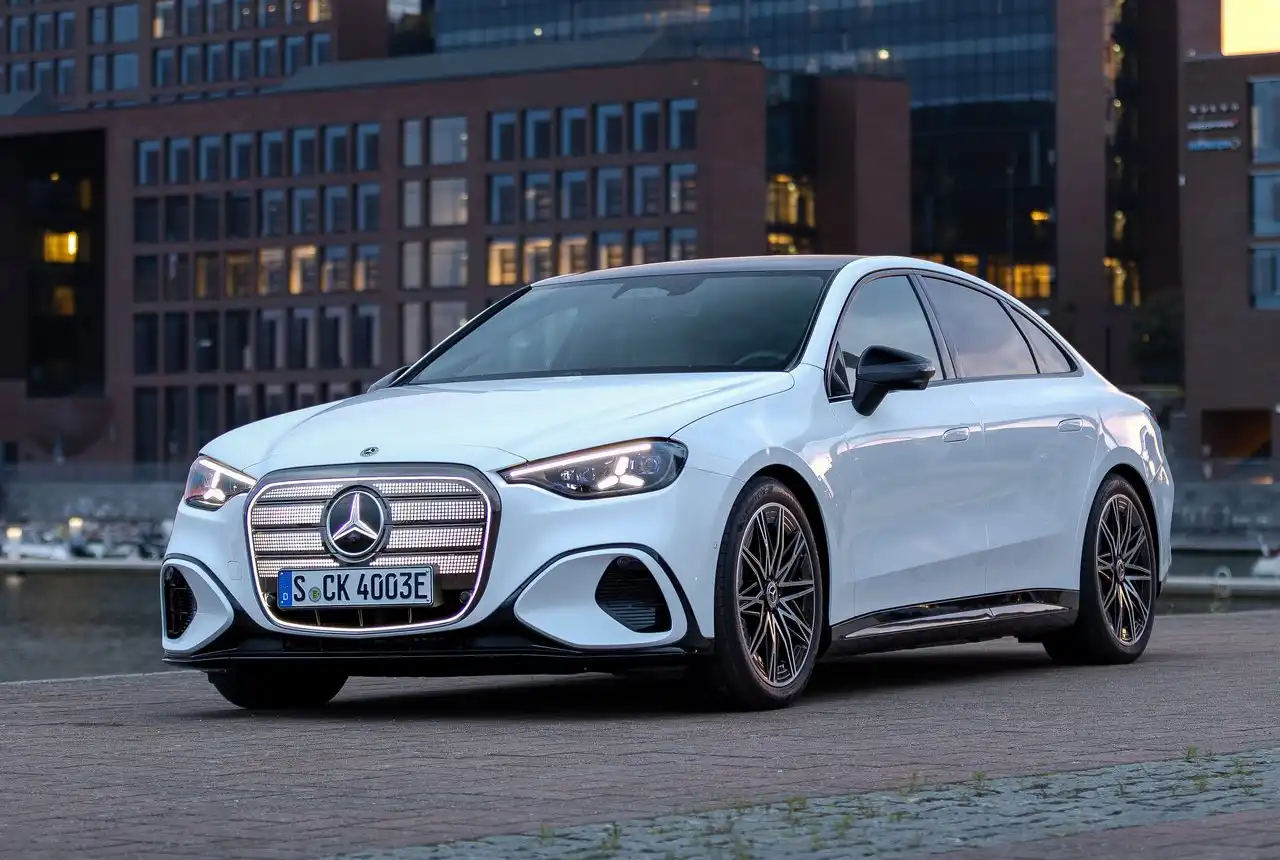
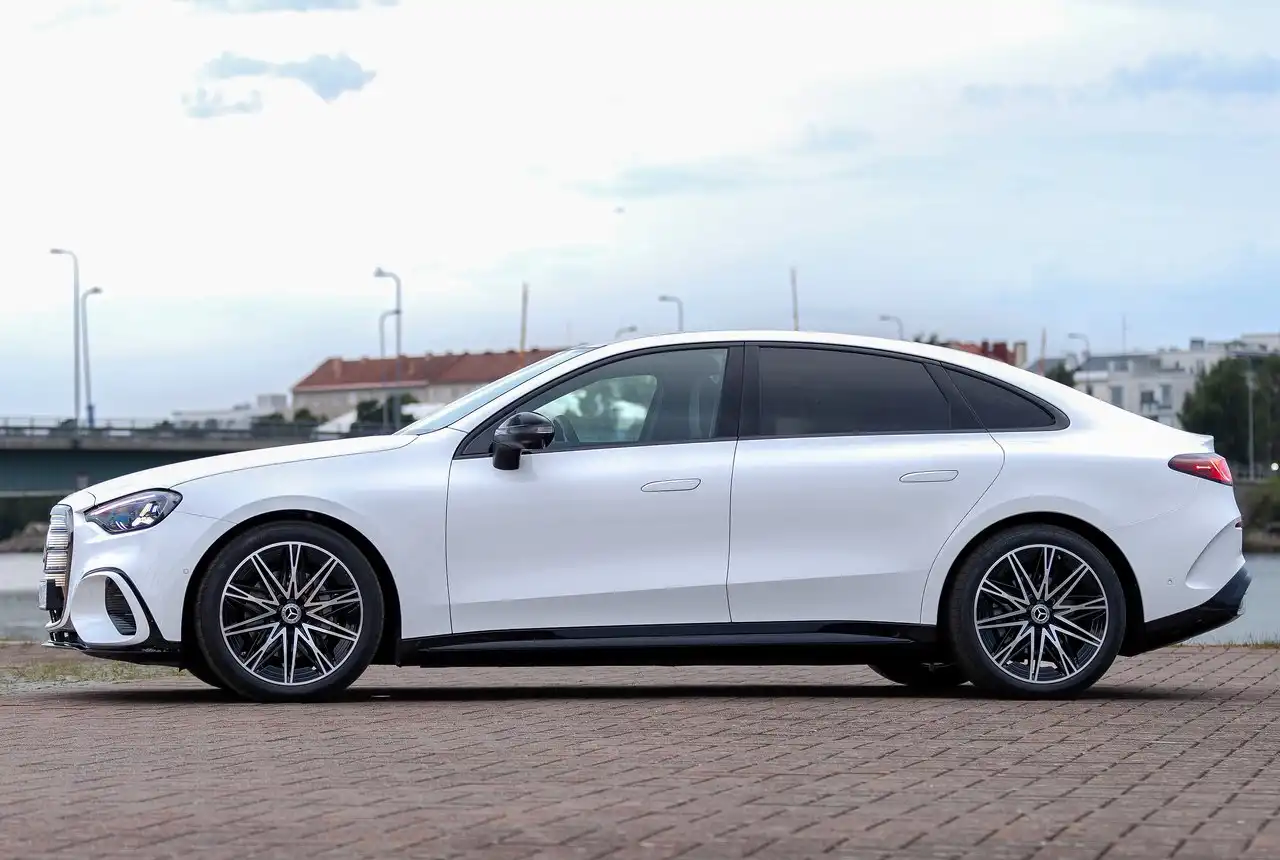
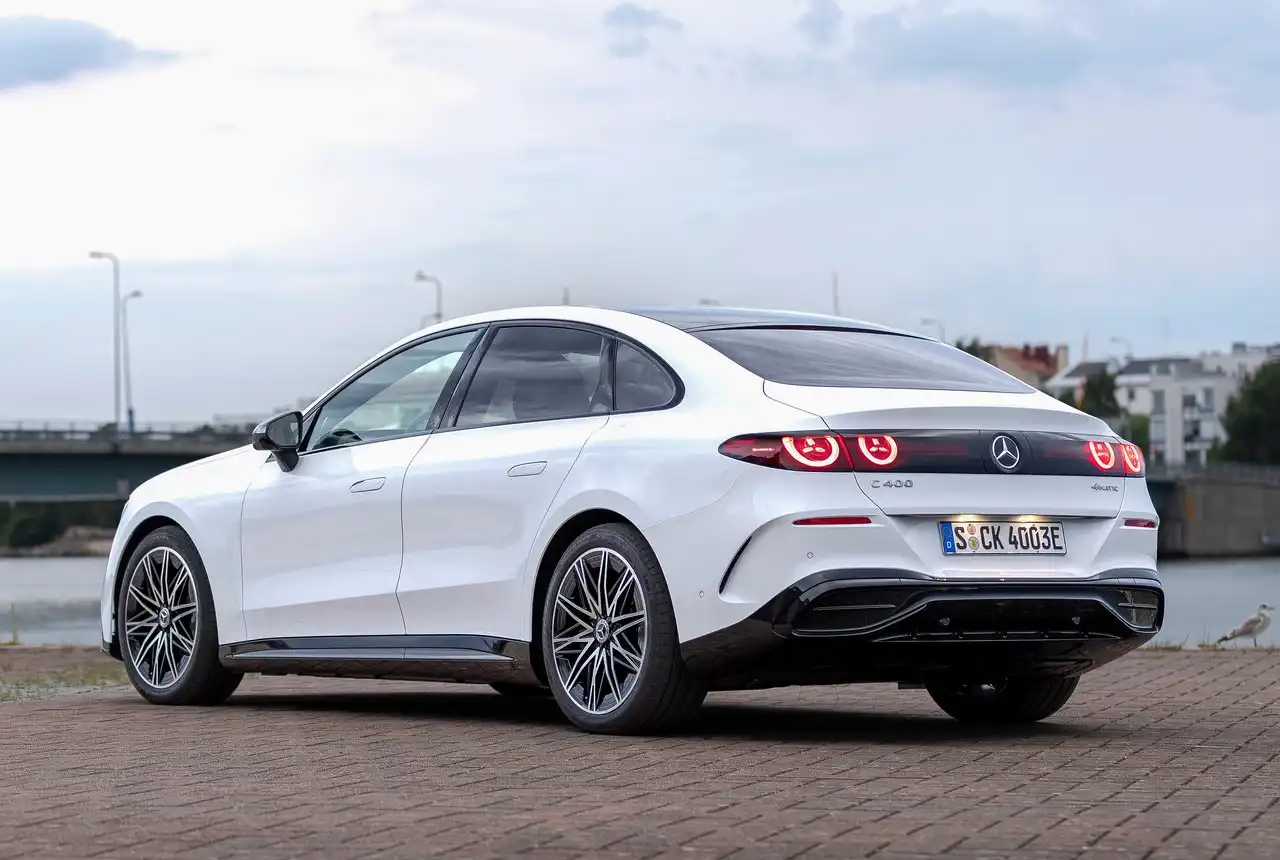
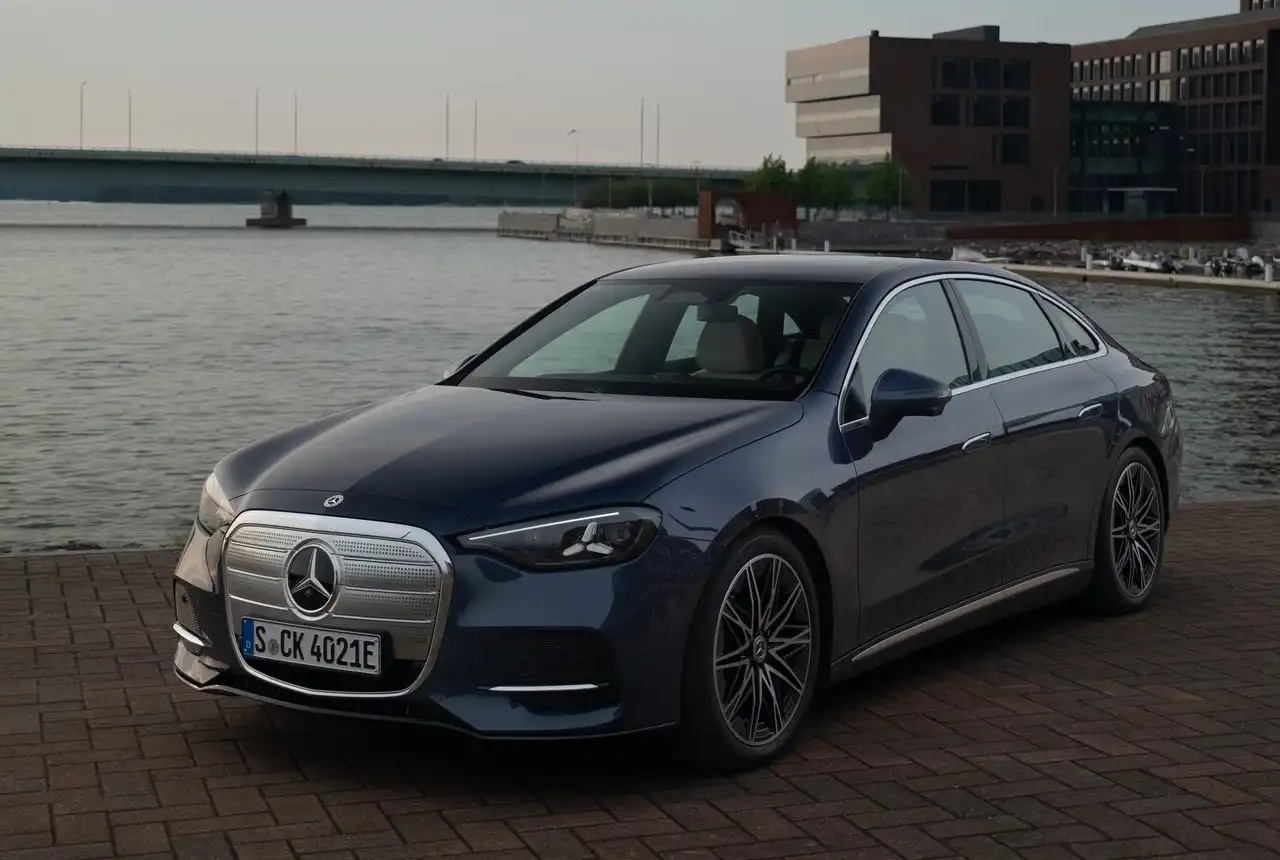
The C-Class EV keeps the traditional four-door sedan layout, but the front end is rounder and softer than the gas C-Class, a change aimed squarely at cutting wind resistance. On an EV, less drag translates directly into more range per charge.
The wheelbase is longer than the combustion C-Class as well, a shift that also shows up inside the cabin, which we’ll get to below.
Mercedes hasn’t released a drag coefficient, exact exterior dimensions, or full profile and rear-end photos yet. What’s clear from what has been shown is the intent: this is a sedan designed around an EV platform, not a combustion car with a battery bolted underneath.
A Cabin Built Around One 39-Inch Screen
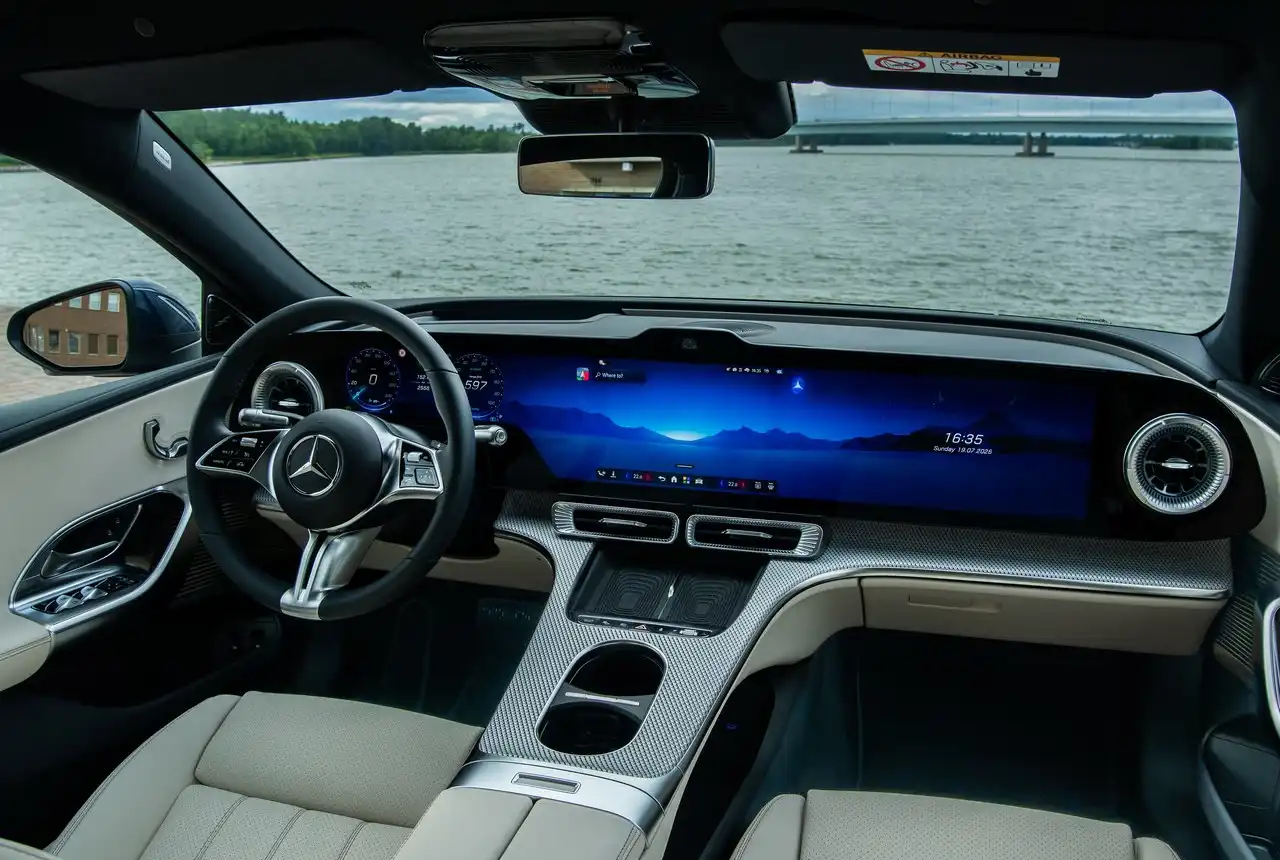
Inside, the C-Class EV leans on the MBUX Hyperscreen, a 39.1-inch display that spans the entire width of the dashboard, with separate brightness zones for the driver and front passenger. That’s a real shift in daily driving: fewer physical buttons, more information on a single surface.
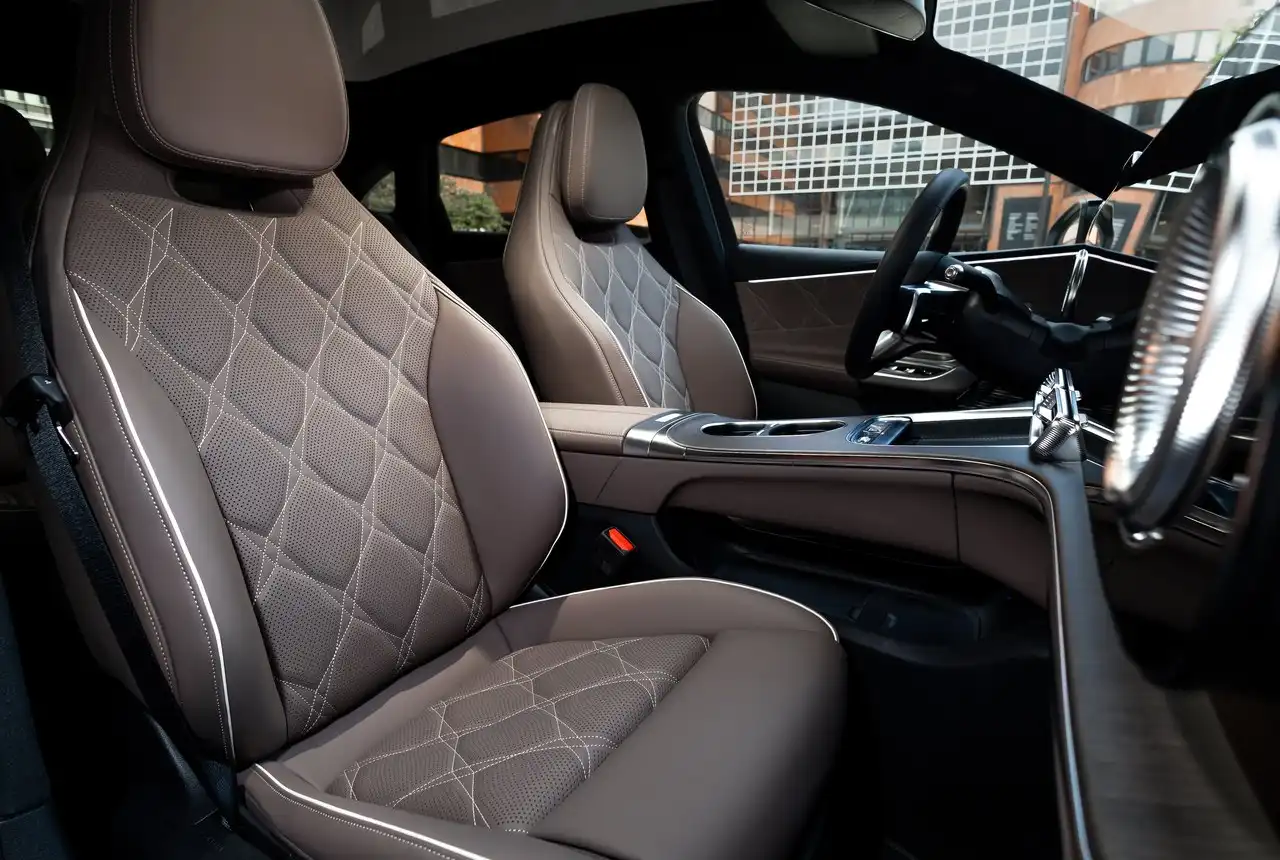
Buyers can also spec a fully vegan interior, an option more luxury brands are offering as leather alternatives improve. A panoramic Sky Control glass roof rounds out the cabin, with nine segments that can switch between clear and opaque.
Beyond those confirmed features, Mercedes hasn’t detailed ergonomics, front seat materials, or overall build quality yet.
Cabin Tech, Rear-Seat Room and Trunk Space
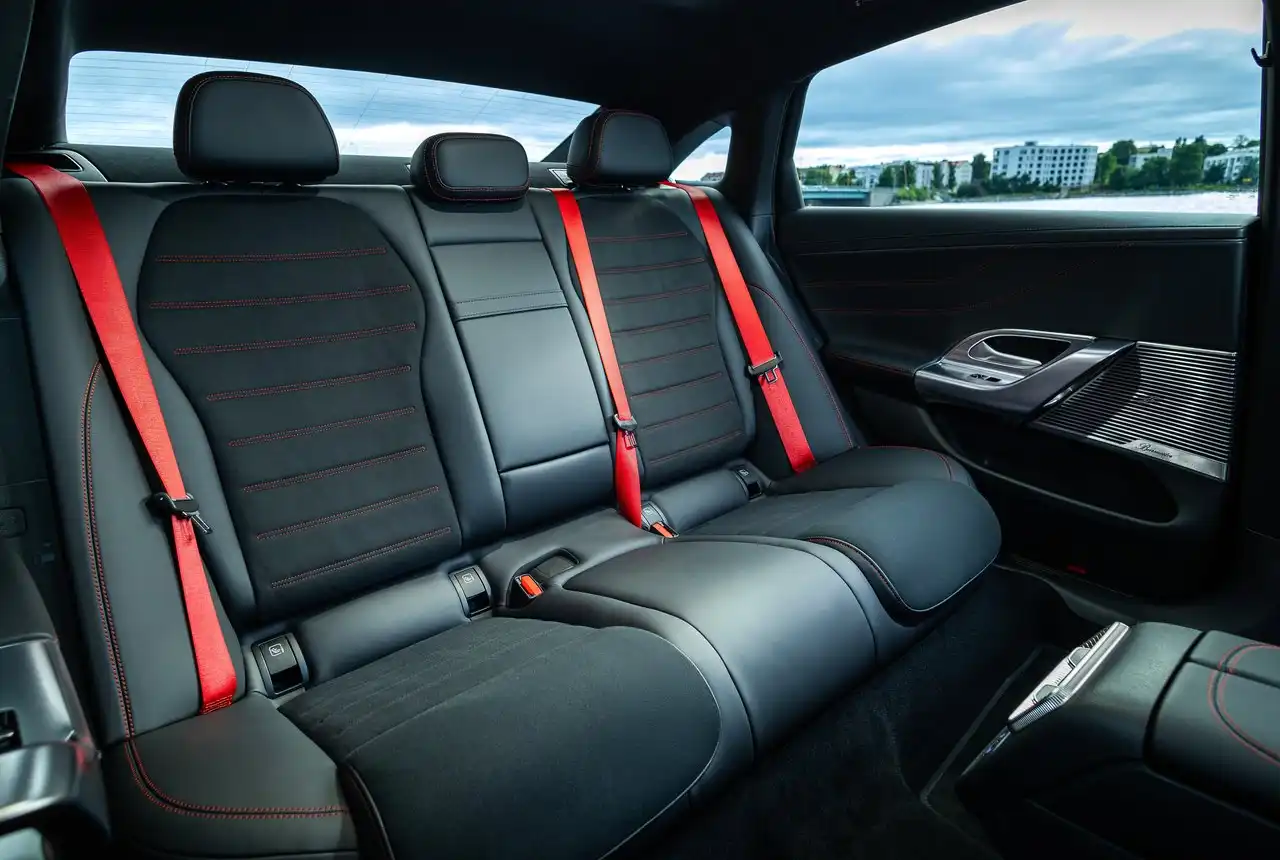
That longer wheelbase pays off in rear-seat legroom and headroom, and trunk capacity is expected to grow over the gas-powered C-Class as well, though Mercedes hasn’t released exact cubic-foot figures.
The Airmatic air suspension pairs with a predictive regenerative system that pulls in map data to adjust ride height and damping before the car hits rough pavement, a feature normally reserved for larger, pricier models. The full driver-assist (ADAS) package hasn’t been confirmed, though Mercedes typically ships its newest tech across new launches.
The standout here is a Hyperscreen included as standard equipment, something rivals in this class often charge extra for. The real gap is cargo and rear-seat measurements, which buyers won’t have confirmed numbers on until closer to launch.
What the C-Class EV Feels Like Behind the Wheel
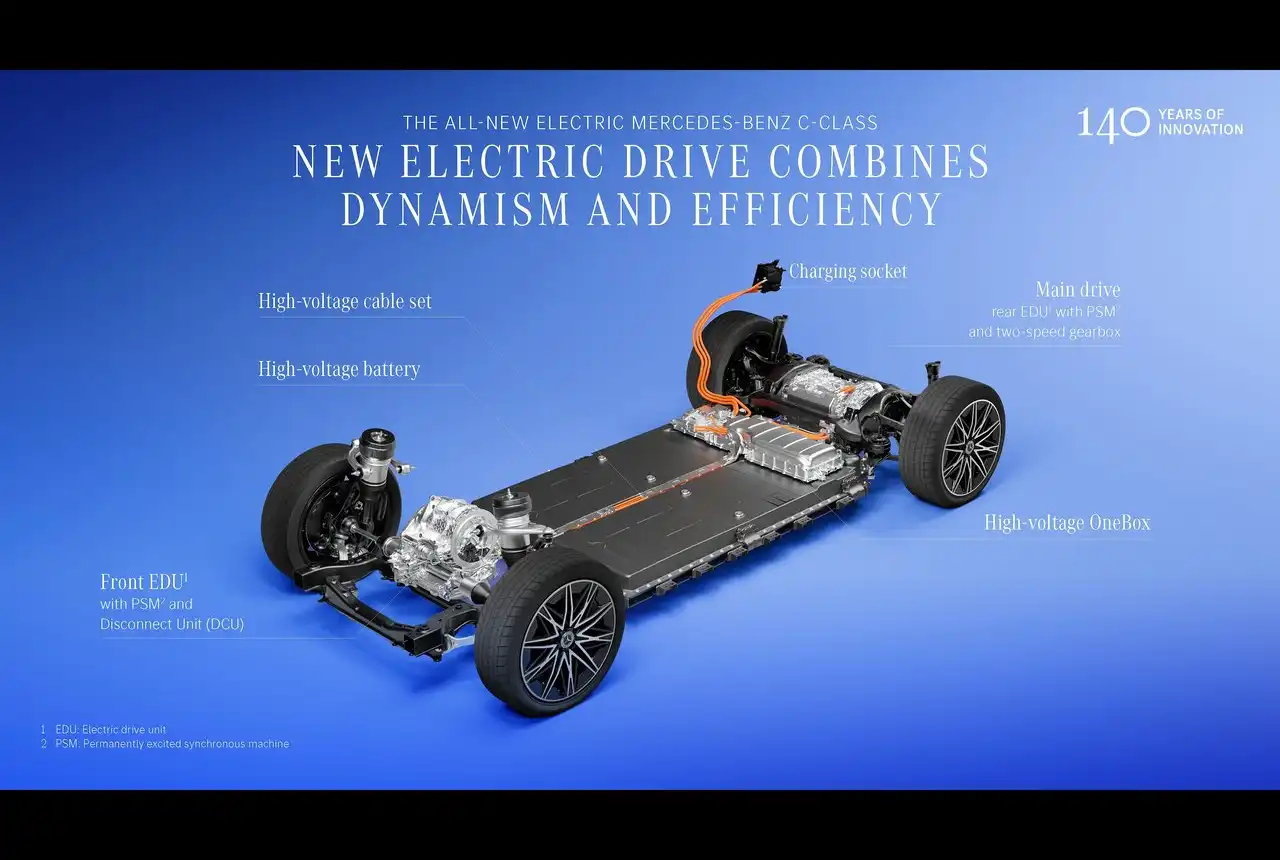
Under the sheet metal, the C 400 4Matic Electric runs two electric motors, one per axle, giving it standing all-wheel drive. That’s the standard formula for a performance EV, and here it’s good for 482 hp and 590 lb-ft of torque available instantly.
That instant torque is what gets the car to 60 mph in 3.9 seconds. More important than the sprint number, though, is what that response means on the highway: no downshift needed to pass, no lag waiting for the powertrain to catch up.
One detail that sets the C-Class EV apart is its 2-speed transmission on the rear axle, a rarity among EVs, which typically run a single fixed gear. The second gear helps the motor stay efficient at higher speeds, when a single-ratio EV setup usually starts losing efficiency.
Top speed caps out at 130 mph, electronically limited — lower than some high-performance rivals, but in line with a car built for daily driving rather than track days.
On range, the 94.5-kWh battery is rated for up to 472 miles under Europe’s WLTP cycle, historically the more generous of the two standards, or 350 to 400 miles under the more conservative EPA estimate — the number that will likely track closer to real-world highway driving. DC fast charging tops out at 330 kW, adding roughly 200 miles in 10 minutes, with a 10-80% charge taking about 22 minutes, made possible by the car’s 800-volt architecture.
Does the C-Class EV Make Financial Sense?
Mercedes hasn’t confirmed an MSRP yet. Market estimates put it above $60,000, which would place it well into territory currently occupied by higher-trim Tesla Model 3 configurations and ahead of where the Polestar 2 starts.
That price puts the C-Class EV in direct competition with the upcoming electric BMW i3, and its main selling point against both rivals is coming from Mercedes’ mainstream lineup rather than a standalone EV sub-brand.
Insurance premiums and maintenance costs haven’t been published, but as a general market estimate, expect premiums on the higher end given the vehicle’s price and battery replacement cost, alongside lower routine maintenance than the gas C-Class, since there’s no oil changes or combustion components to service. Financing terms will depend on the final MSRP once Mercedes confirms it closer to launch.
Being an all-new model in its first year, buying at launch typically means paying full price before any of the depreciation that tends to hit first-year EVs once incentives, lease deals, or a lightly updated version arrive. Buyers set on staying in the Mercedes-Benz ecosystem while going electric get a fully equipped option here; buyers willing to wait may see better pricing once the rumored single-motor, longer-range variant is confirmed.
Mercedes-Benz C-Class EV: Frequently Asked Questions
What is the range of the Mercedes-Benz C-Class EV?
Mercedes estimates up to 472 miles under Europe’s WLTP cycle, or 350 to 400 miles under the more conservative EPA estimate.
How much does the Mercedes-Benz C-Class EV cost?
Official pricing hasn’t been announced. Market estimates put it above $60,000.
Is the Mercedes-Benz C-Class EV replacing the EQ lineup?
Mercedes hasn’t confirmed this officially, but using the C-Class name instead of EQC points to the brand folding its EV lineup into its traditional model names.
When does the Mercedes-Benz C-Class EV go on sale?
It was revealed in April 2026, with U.S. and European sales expected to begin in the first half of 2027.
The CarrosBemMontados Verdict
The C-Class EV is a rational buy for anyone already committed to going electric who doesn’t want to leave the Mercedes-Benz badge behind. Fast charging and standing all-wheel drive work in favor of drivers who put in real highway miles.
It’s not the right call for anyone chasing the lowest entry price in the luxury EV segment, or for drivers who care more about top speed than efficiency. Mercedes traded outright power for range and cabin tech here.
An electric sedan built for buyers who already know what they want, not for anyone still on the fence about going electric.
Do you think Mercedes made the right call dropping the EQ name for its electric C-Class, or does that just confuse buyers?
Share this article

Por: Danniel Bittencourt
29/07/2026
Related posts