Zenvo Aurora: 1,876 HP Without Giving Up the V-12
The Zenvo Aurora arrives in two forms, Agil and Tur, with a hybrid V-12 pushing up to 1,876 hp. Here’s how the specs, pricing, and versions break down.
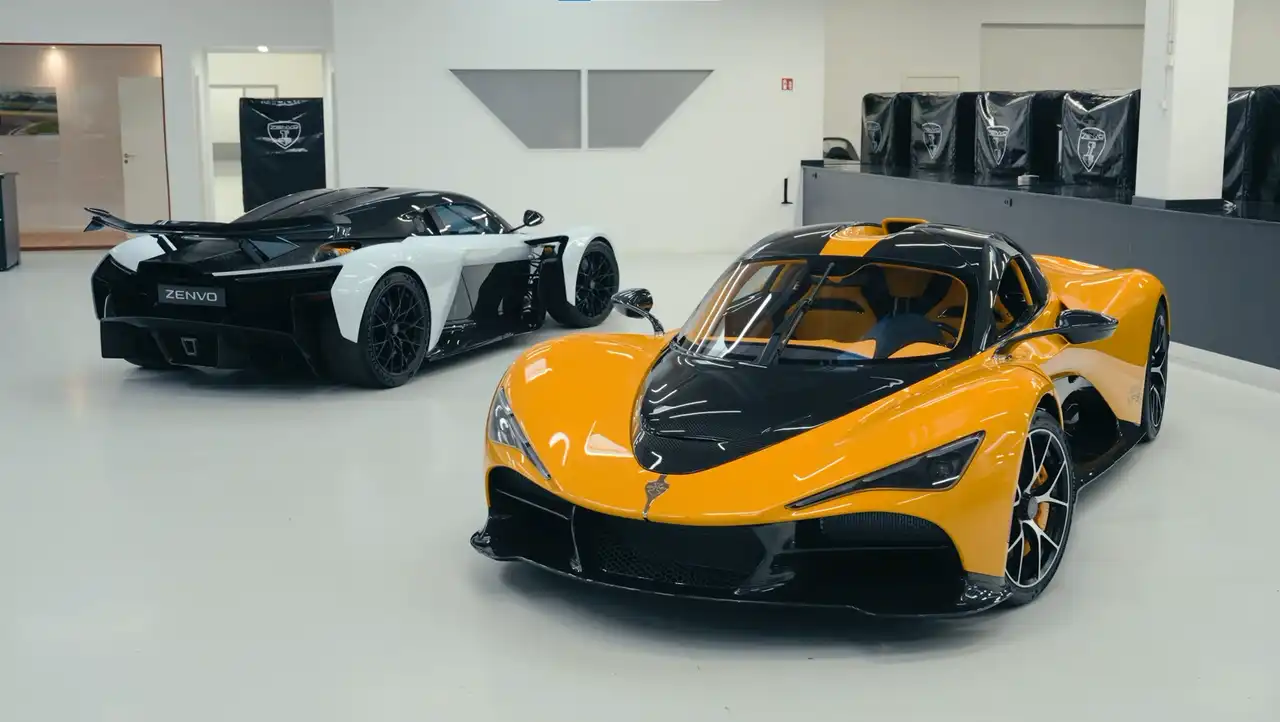
The Zenvo Aurora Is a Hypercar That Refuses to Go All-Electric
Zenvo Automotive is positioning the Aurora as the start of a new chapter for the brand, one insiders are calling “Zenvo 2.0.” The project is led by Jens Sverdrup and marks a clean break from the rawer styling of the Danish automaker’s earlier models.
The car splits into two distinct versions: Agil, built for track work, and Tur, tuned for high-speed touring. Both share the same 6.6-liter hybrid V-12, nicknamed Mjølner.
Direct rivals include the Bugatti Tourbillon, Koenigsegg Jesko, Pagani Utopia, Aston Martin Valkyrie, and Gordon Murray T.50. Zenvo hasn’t confirmed an official U.S. sales channel, so American buyers interested in the Aurora would likely need to go through the same import or show-and-display routes used for other ultra-limited European hypercars.
The Zenvo Aurora Splits Into Two Cars So Neither Has to Compromise
Quick Specs
| Specification | Details |
|---|---|
| Category | Limited-production hybrid hypercar |
| Engine | 6.6L Mjølner V-12, quad-turbo, hot-V layout + electric motor(s) |
| Power | 1,470 hp (Agil) / 1,876 hp (Tur) |
| Torque | 1,033 lb-ft (Agil) / 1,254 lb-ft (Tur) |
| Transmission | Ricardo hybrid sequential, 7 or 8 speeds (sources conflict) |
| Drivetrain | RWD (Agil) / AWD (Tur) |
| 0-60 mph | 2.5 sec (Agil) / 2.3 sec (Tur) |
| Top speed | 227 mph, electronically limited (Agil) / 280 mph target (Tur) |
| Fuel economy | Not officially disclosed |
| Electric range | About 21 miles |
| Launch date | Unveiled August 2023, deliveries targeted for second half of 2027 |
Before getting into the details of each version, it’s worth understanding why Zenvo went with two such different approaches on one platform.
The Bodywork Puts the Engineering on Display Instead of Hiding It
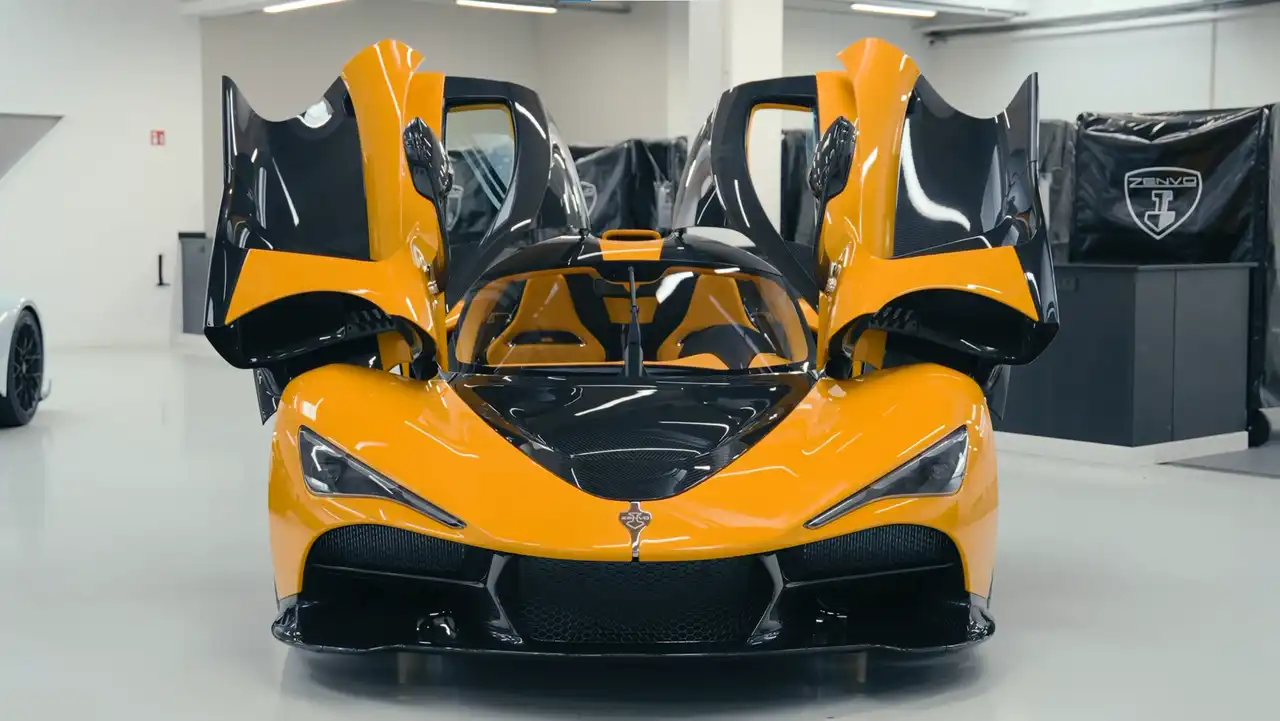
Roughly 70% of the Aurora’s carbon-fiber monocoque is left exposed. Zenvo’s stated intent is to treat the body as a showcase for the engineering underneath, rather than just an aerodynamic shell.
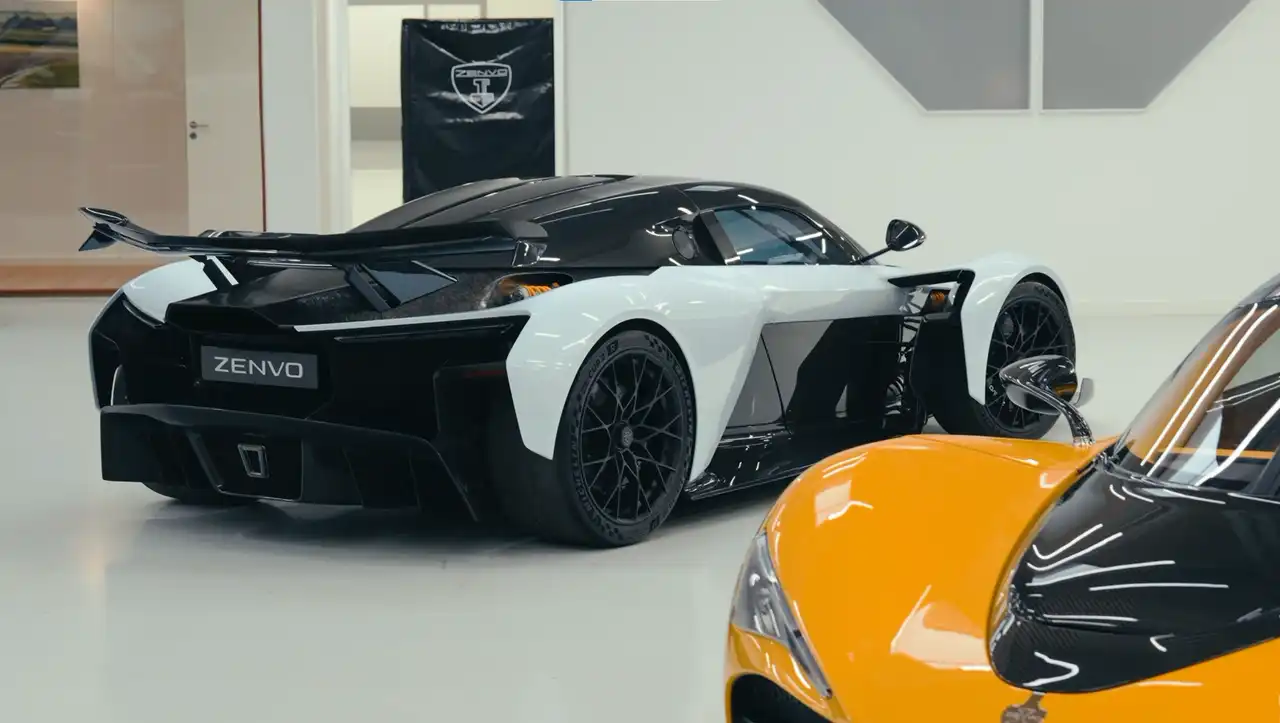
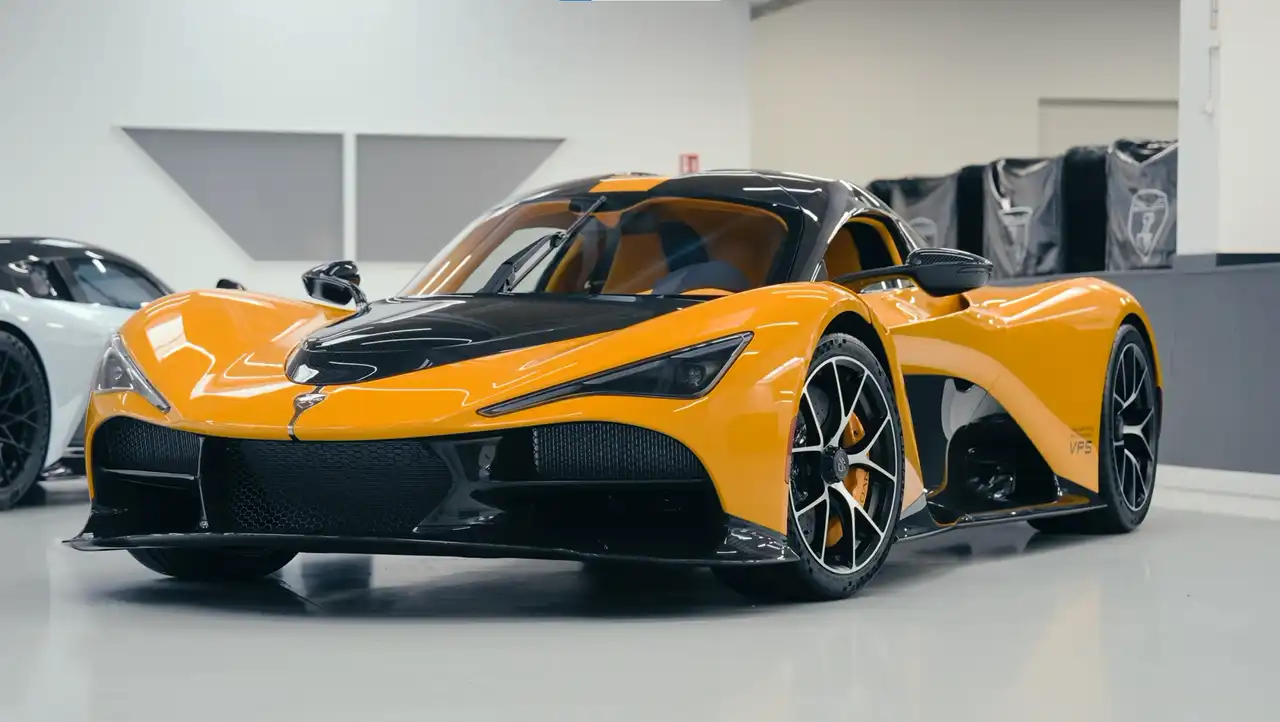
Up front, the two versions already diverge. The Agil bares its radiators and rear mechanical bay in a rawer, more industrial way, while the Tur adopts smoother lines meant to slice through air with less turbulence.
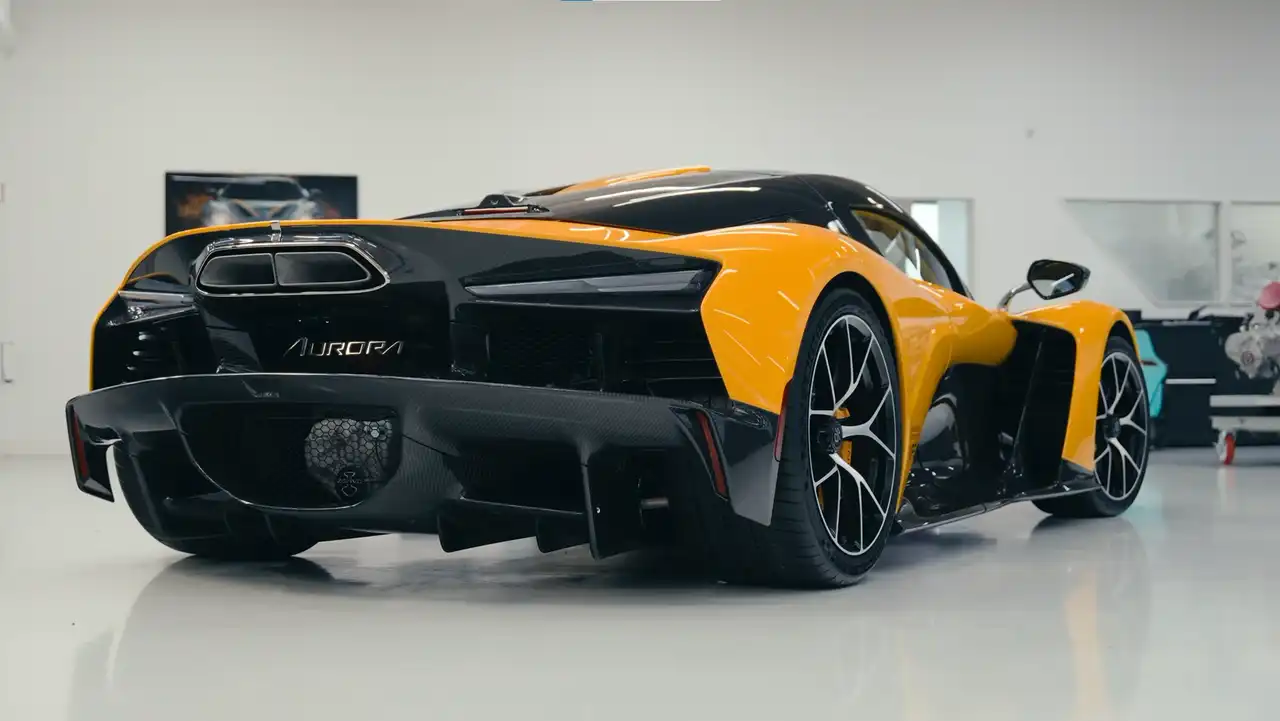
Out back, the Agil gets a large active rear wing that doubles as an air brake. The Tur skips that piece entirely, relying on active underbody ducts to generate stability at speed without adding drag.
That visual split reflects two different jobs: one body chases downforce in corners, the other chases efficiency at sustained high speed. It’s not just a styling choice — it’s a response to two separate engineering problems.
No Center Touchscreen Is the Aurora’s Boldest Move
Cabin and Comfort
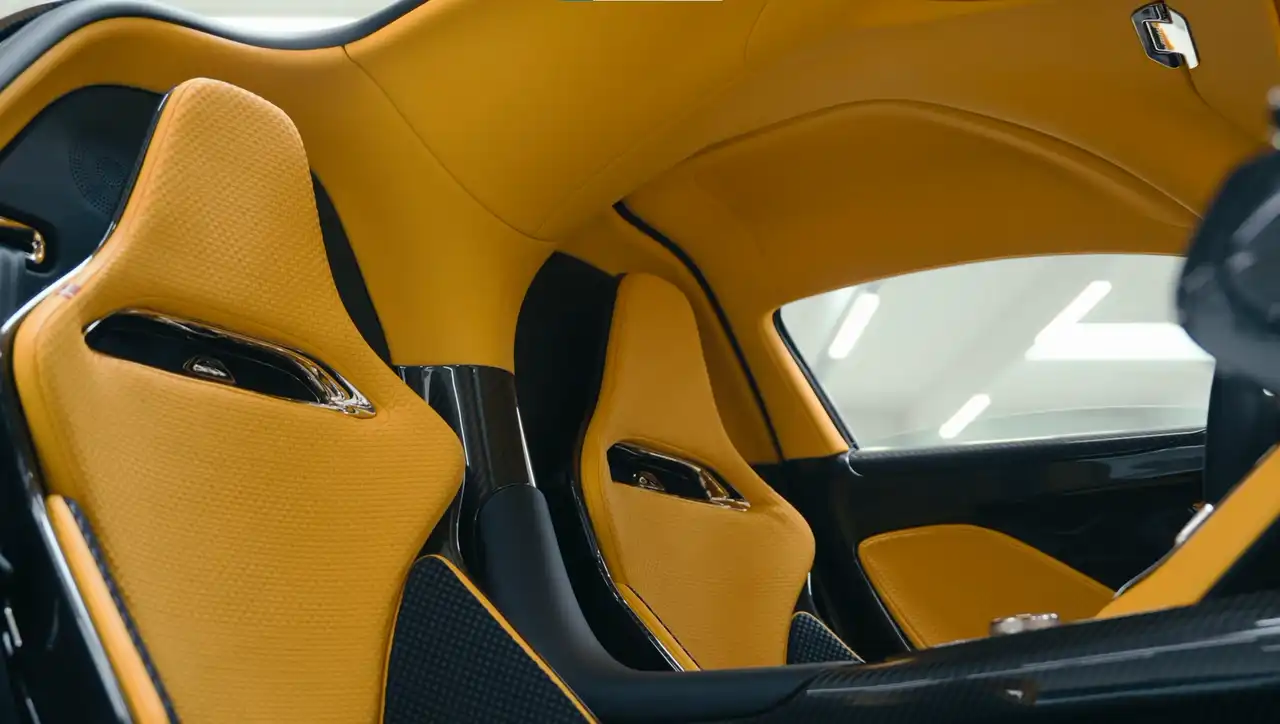
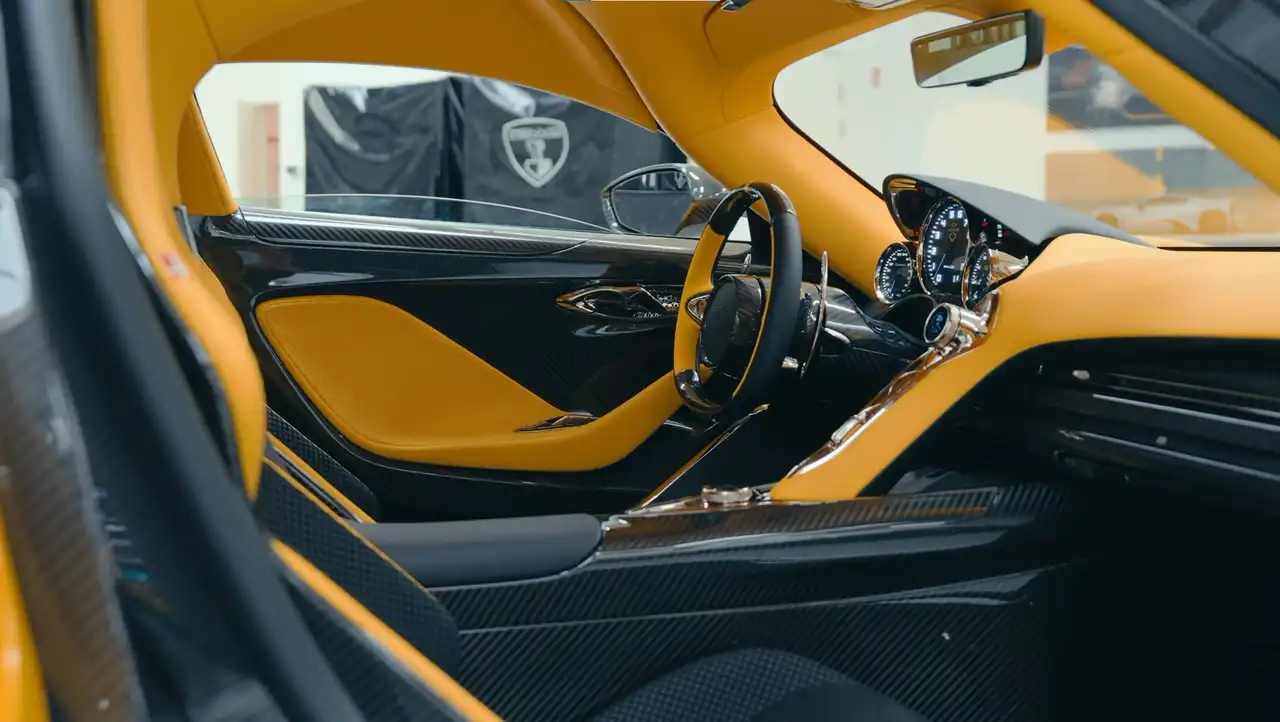
The most talked-about detail inside the Aurora isn’t a material or a finish — it’s what’s missing. Where most modern hypercars mount a large touchscreen front and center, the Aurora keeps three traditional analog gauges in that spot.
Seating differs by version. The Agil uses competition-style bucket seats trimmed in Alcantara and technical fabric to keep weight down. The Tur goes with seamless Scandinavian leather and sound-deadening materials aimed at long-distance comfort.
Tech, Cabin Space, and Where Practicality Runs Out
The side gauges rotate 180 degrees on a mechanical actuator, revealing compact LCD screens that run Apple CarPlay, Android Auto, navigation, and track telemetry. When not needed, they tuck away, leaving the driver facing analog dials.
On the safety side, the Aurora includes track-tuned ABS, electronic stability control, automatic emergency braking, blind-spot alerts, and cross-traffic warnings, plus front-axle torque vectoring — a feature exclusive to the Tur.
The cabin’s real strength is that it won’t age the way touchscreen-heavy interiors do; without a central display to look dated in five years, the design should hold up better over time. The clear tradeoff is cargo space — just 19.8 gallons’ worth of trunk, which undercuts even the Tur’s grand-touring pitch for anything beyond an overnight trip.
A 9,800-RPM V-12 With Electric Help Where It Counts
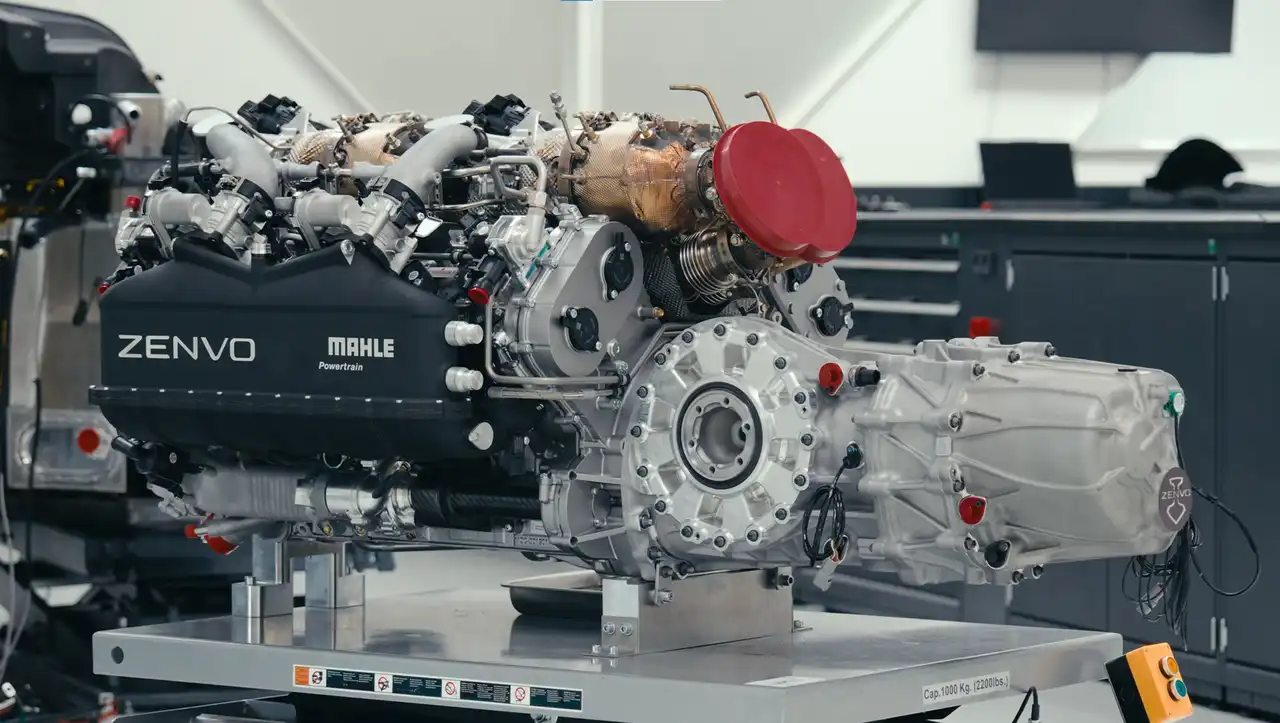
The engine is identical across both versions: a 6.6-liter V-12 with a hot-V layout, four turbochargers, and a 9,800-rpm redline, good for 1,267 hp on its own. What separates Agil from Tur is how the hybrid system builds on that foundation.
The Agil pairs a single electric motor at the rear axle, bringing combined output to 1,470 hp with rear-wheel drive only. It’s built for a sharper throttle response and less weight over the front axle — traits that matter more on a track than in daily traffic.
The Tur uses three electric motors — one integrated into the transmission and one at each front wheel — for a combined 1,876 hp with all-wheel drive. That setup favors stability during high-speed passing maneuvers and adds front-axle torque vectoring, which should help both on-ramp merges and rougher pavement.
The 0-60 mph numbers reflect that drivetrain difference: 2.5 seconds for the Agil versus 2.3 for the Tur, even though the Tur is the heavier car. Top speed flips the script — the Agil is electronically capped at 227 mph due to rear-wing loading, while the Tur targets 280 mph without that aerodynamic restriction.
Zenvo hasn’t released fuel economy figures. Electric-only range sits around 21 miles — enough for a quiet trip through town, but not a meaningful fuel-saving tool day to day.
Buying an Aurora Is a Decision for a Very Small Pool of Buyers
Zenvo’s base price runs between roughly €2.59 million and €2.8 million before regional taxes. Converted directly and without accounting for U.S. import duties or taxes, that lands somewhere around $2.8 million to $3.1 million (Market Estimate). Zenvo has not confirmed an official U.S. sales program.
At this price point, the real comparison isn’t to everyday sports cars — it’s to other limited-run hypercars like the Bugatti Tourbillon or Pagani Utopia. The meaningful differences tend to come down to engineering philosophy — pure combustion, hybrid, or full-electric — more than any single spec on a sheet.
Insurance and maintenance costs haven’t been published, but this segment historically runs into six-figure annual insurance premiums, with factory-dispatched technicians handling service rather than local shops (Market Estimate). Traditional financing isn’t the norm here; purchases typically happen through cash payment or early production reservations.
Buying at launch makes sense for anyone who already holds one of the 100 reservation slots and wants the car closest to its original concept. Waiting doesn’t offer a clear upside — limited-run hypercars like this one tend to appreciate on resale rather than depreciate. It’s a car built for collectors and engineering enthusiasts, not for buyers who need cargo room or daily usability.
Frequently Asked Questions About the Zenvo Aurora
What’s the difference between the Zenvo Aurora Agil and Tur?
The Agil is track-focused with rear-wheel drive and less weight. The Tur is built for high-speed touring with all-wheel drive and more power.
How many Zenvo Aurora units will be built?
Zenvo plans 100 units total: 50 Agil and 50 Tur.
What’s the top speed of the Zenvo Aurora?
The Agil is capped at 227 mph. The Tur has a stated target of 280 mph.
When will Zenvo Aurora deliveries begin?
Zenvo is targeting the second half of 2027 for global deliveries.
The Verdict
The Zenvo Aurora is an emotional purchase, not a rational one. It exists for buyers who want the sound and response of a high-revving V-12, even at the cost of practicality and cargo space.
It’s not the right pick for anyone who needs versatility, predictable running costs, or daily usability. It makes sense for collectors willing to wait until 2027 for a driving experience full electrification can’t replicate.
A V-12 spinning to 9,800 rpm, and making no apologies for it.
Which appeals to you more — the Agil’s raw track focus, or the Tur’s high-speed comfort?
Share this article

Por: Danniel Bittencourt
21/07/2026
Related posts