
Apollo Evo: The World’s Craziest Hypercar
Limited to just 10 units, the Apollo Evo combines a Ferrari-sourced V12, 800 horsepower, and extreme aerodynamics to deliver one of the most exclusive track-only hypercars ever built.

The Apollo Evo Moves From One-Off Prototype to Limited-Run Production
The Apollo Evo is a hypercar limited to just 10 units worldwide, and it’s homologated for track use only. It started life as a single prototype and now stands as the brand’s first production model, succeeding the Apollo IE.
The car featured here is the first unit delivered to a customer, nicknamed “The Caribbean Dragon.”
This isn’t a car built for daily driving. It’s aimed at collectors who want extreme exclusivity and exposed mechanical hardware over everyday usability. There’s no confirmed U.S. availability, and pricing here would depend heavily on import and compliance costs on top of the base figure.
Quick Specs
| Specification | Detail |
|---|---|
| Category | Track-only hypercar |
| Engine | Naturally aspirated 6.3-liter V12 |
| Horsepower | 800 hp (789 bhp) at 8,500 rpm |
| Torque | Approximately 564 lb-ft |
| Transmission | 6-speed sequential, paddle-actuated |
| Drivetrain | Rear-wheel drive |
| 0-60 mph | Not officially tested; 0-62 mph rated at 2.7 seconds |
| Top speed | 208 mph (335 km/h), manufacturer estimate |
| Fuel economy | Not officially disclosed |
| Range | Not officially disclosed |
| Release date | Not officially disclosed |
Those numbers only tell part of the story. Here’s what’s actually going on underneath the bodywork.

A 75-Panel Body That Generates More Downforce Than the Car Weighs
The Evo’s body is built from 75 individual carbon fiber panels. For context, McLaren got the P1 down to just 5 panels to save weight — Apollo went the opposite direction, prioritizing aerodynamic geometry over assembly simplicity.
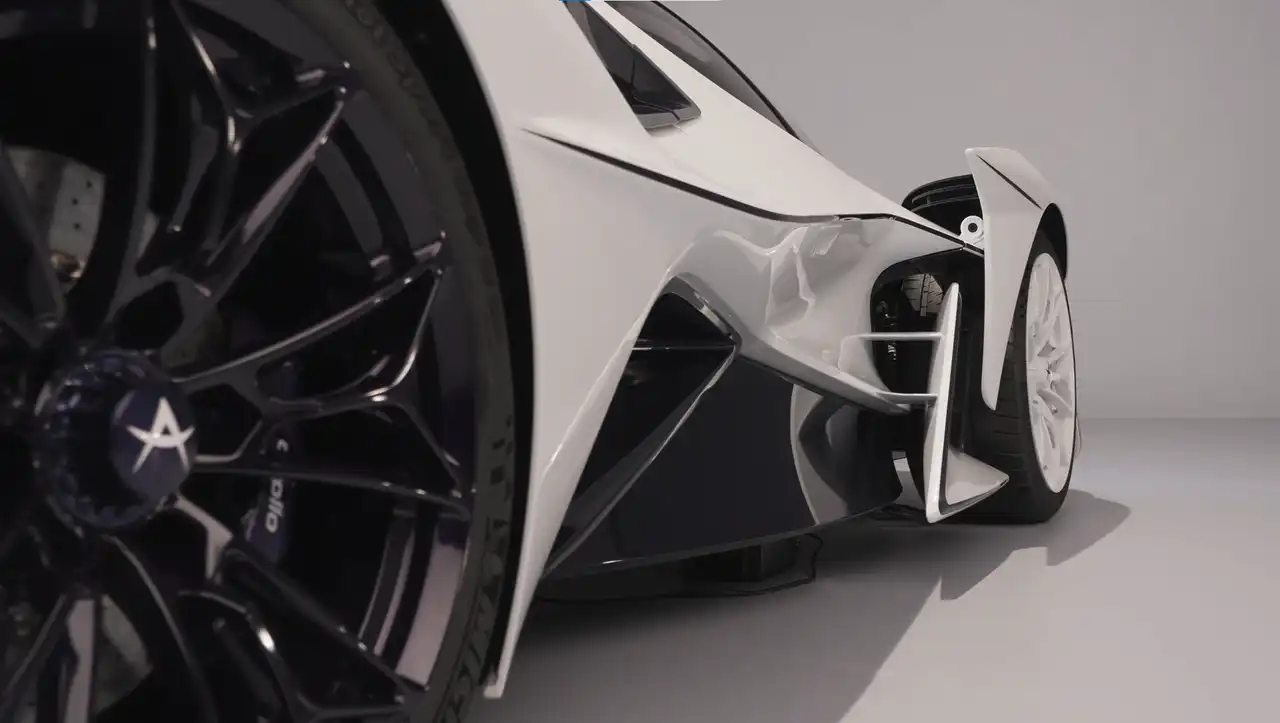
Up front, there’s a split dual splitter divided by a center bar, headlights tucked into recessed cavities, and crossed daytime running lights.
Along the sides, oversized triangular intakes sit above and below the character lines to feed the engine. Radiators, sections of the tires, suspension linkages, and barge boards are all left exposed — a look borrowed straight from endurance racing prototypes.
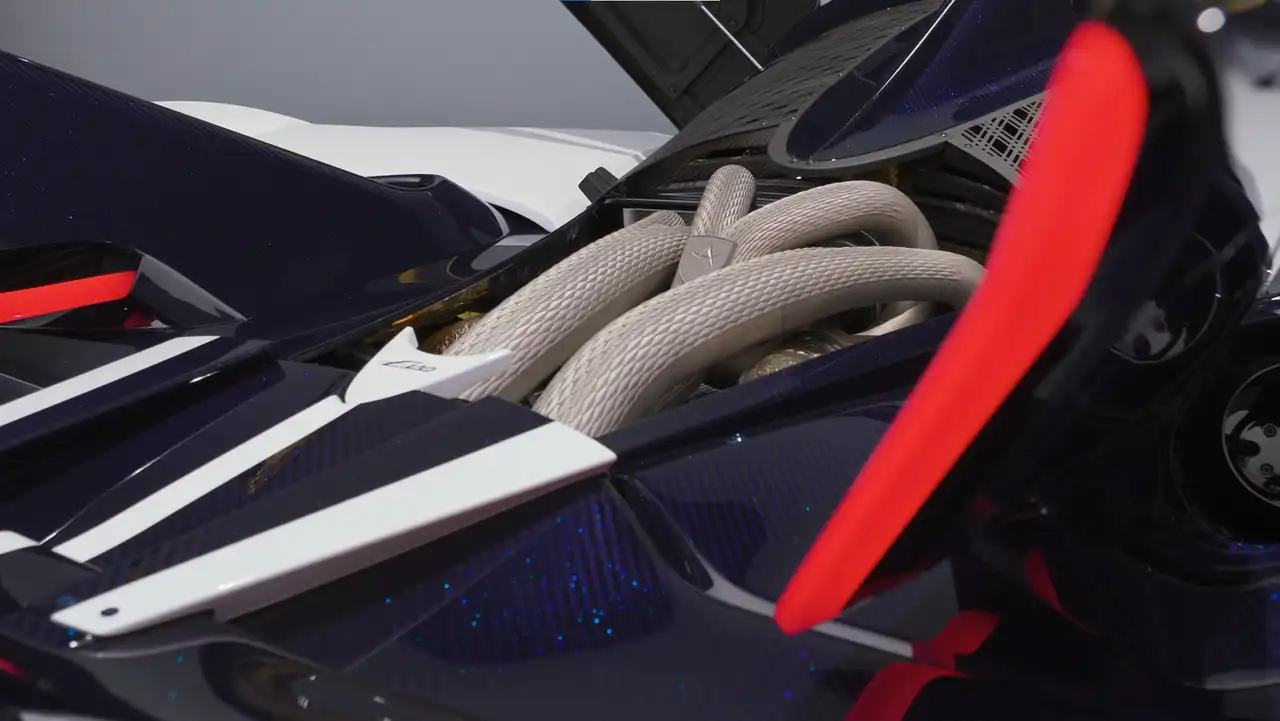
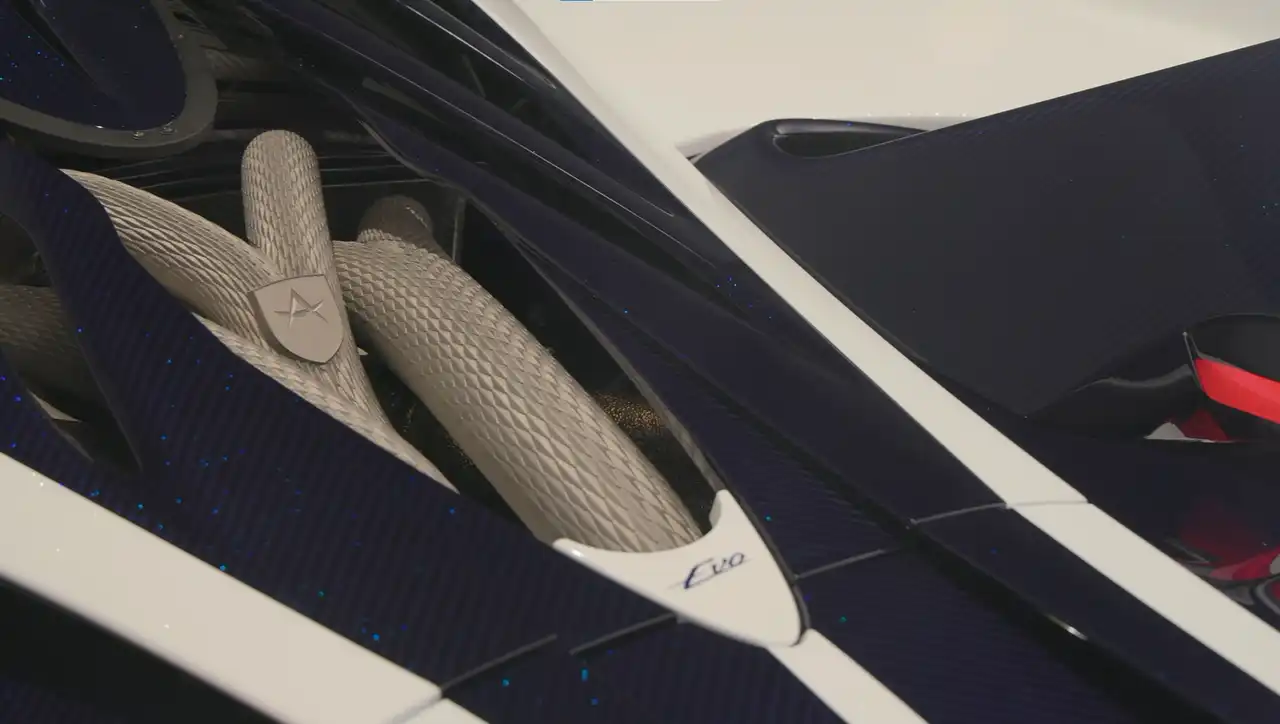
Around back, the standout piece is a 3D-printed exhaust system, reportedly the largest ever produced this way in the auto industry, requiring 123 hours to manufacture. Its scale-textured finish can be color-matched to whatever the buyer wants.
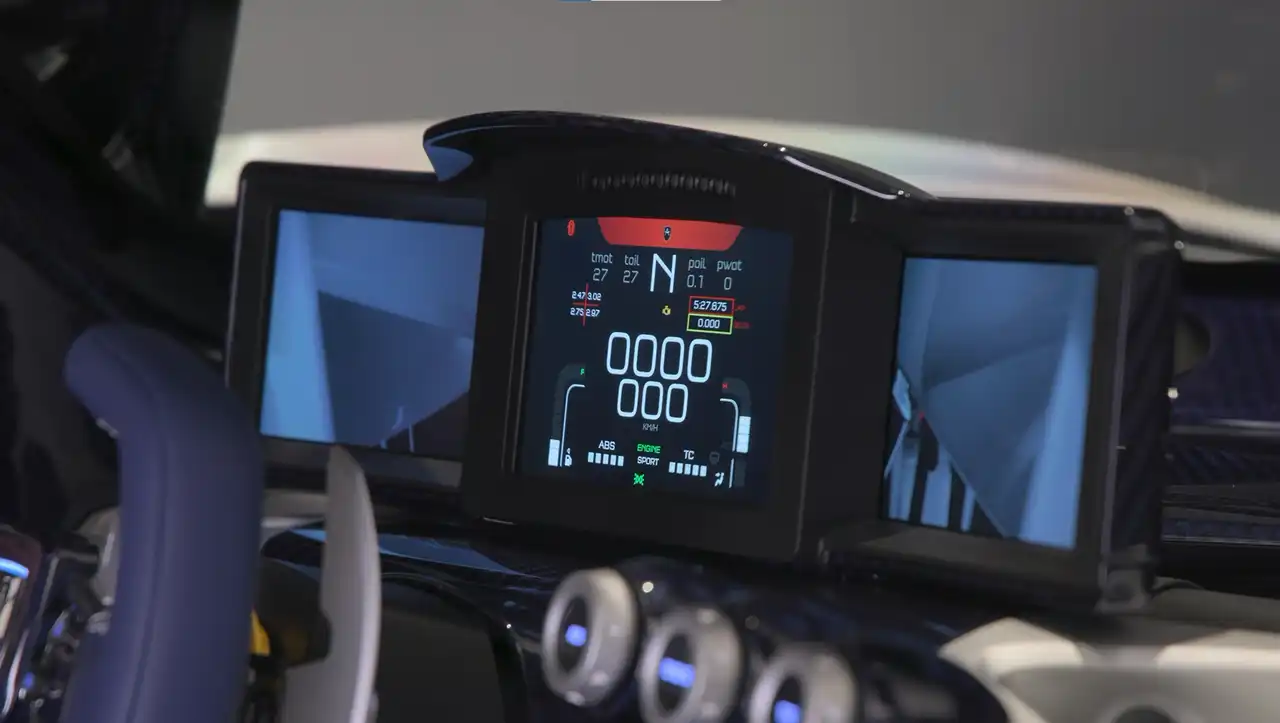
There are no traditional side mirrors — external cameras feed interior displays instead.
According to Apollo, the body generates 1,350 kg (about 2,976 lbs) of downforce at 133 mph. Since the car’s dry weight is only 1,300 kg (about 2,866 lbs), that downforce actually exceeds the car’s own weight by roughly 110 lbs at that speed — meaning, in theory, it could stick to the ceiling of a tunnel if it were carrying less than about 110 lbs combined in fuel and fluids. It’s a number that exists to illustrate how hard the design leans into high-speed cornering grip, not something anyone will actually try.
The paint job on this particular car, in the “Caribbean Dragon” color, took 1,000 hours of hand labor and eight layers of finish over the carbon fiber. The exterior design was penned by Jowyn Wong, who also styled the Apollo IE and the De Tomaso P72.

A Cockpit Built Around the Driver, Not Around Comfort
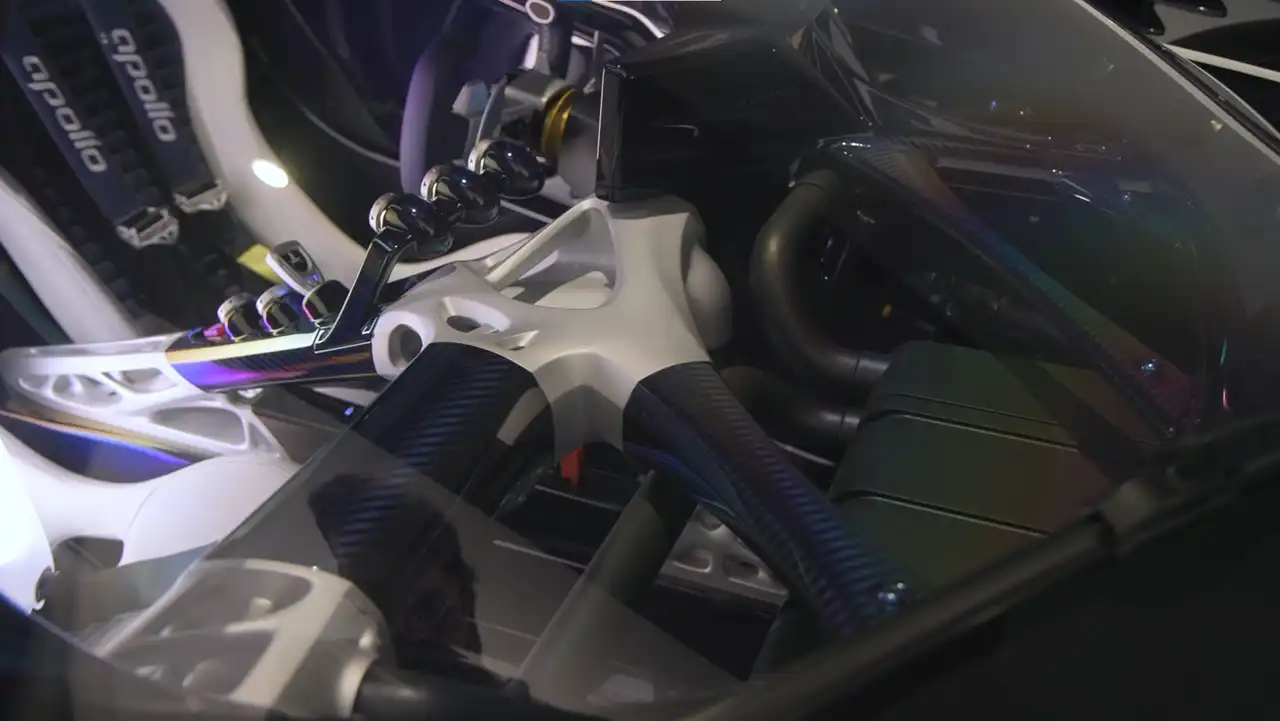
Instead of a conventional dashboard, the Evo uses a horizontal structural bar of carbon fiber and aluminum, linked by 3D-printed connector pieces. The closest reference point mentioned is the Lamborghini Sesto Elemento’s cabin.
There are no airbags, no cupholders, no infotainment screen. The one nod to practicality is a small, discreet phone mount built into the cabin.
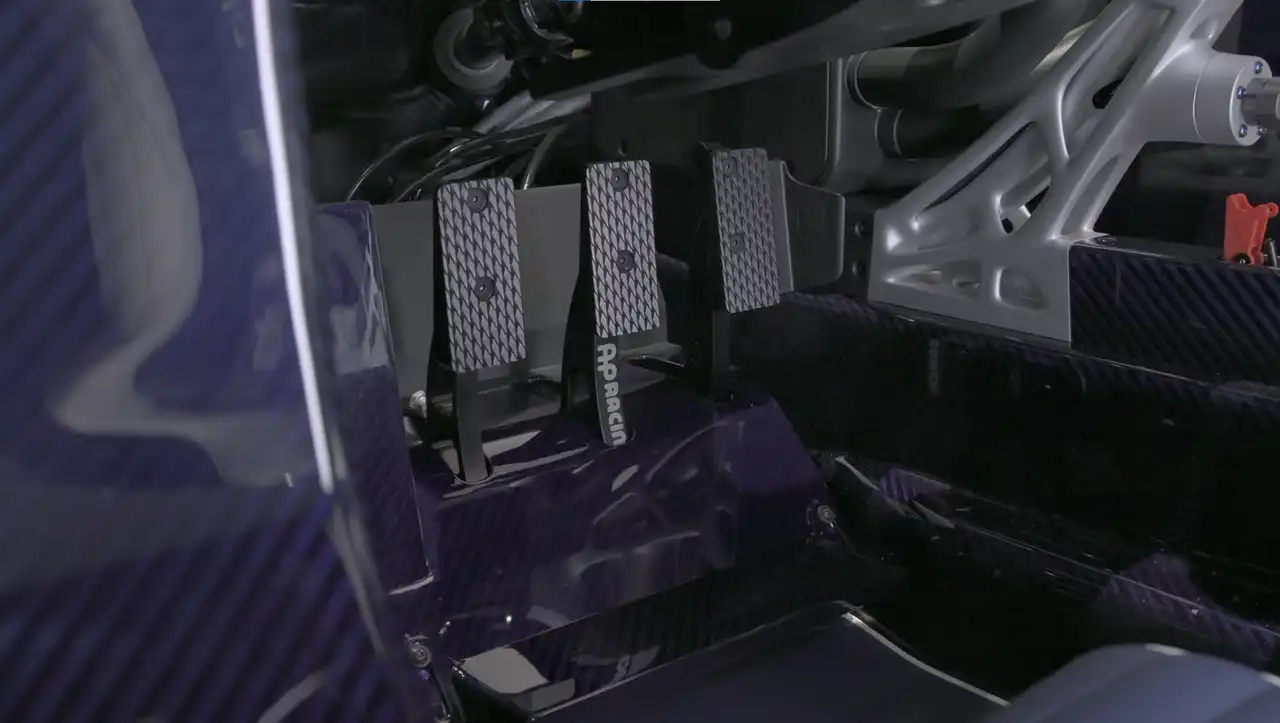
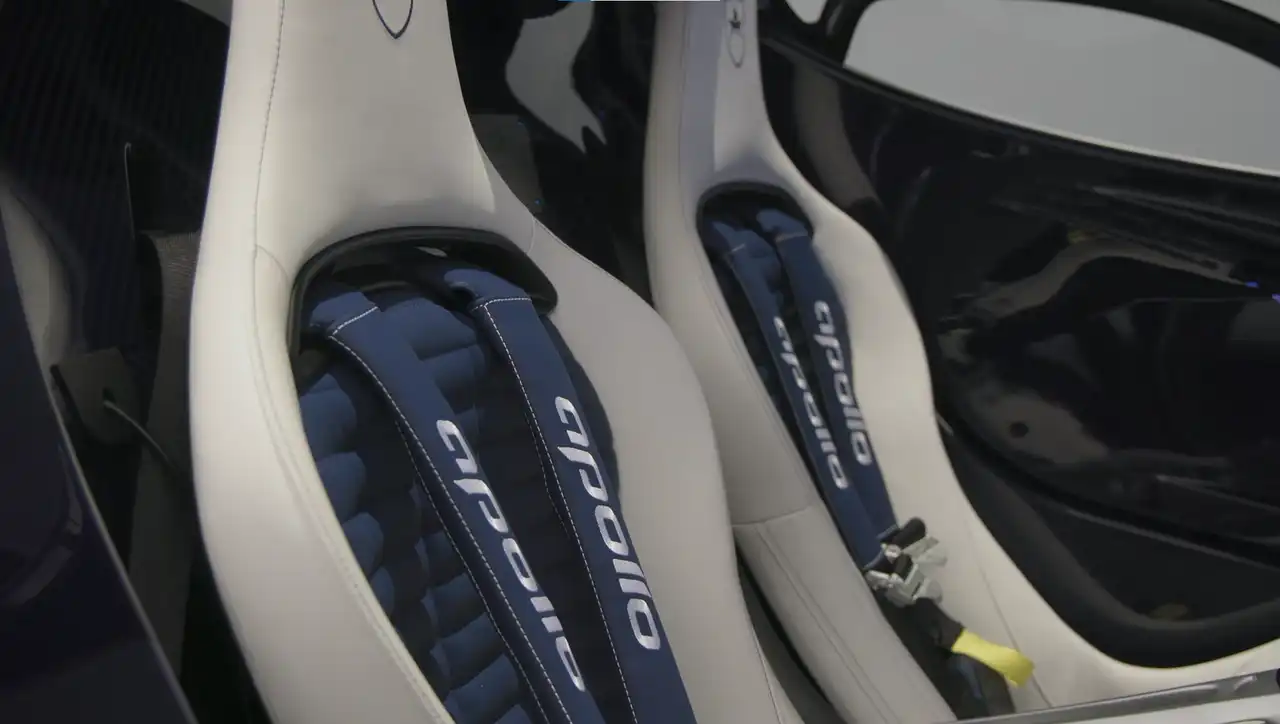
The carbon fiber seats are separate from the chassis and can be adjusted, which makes fitting different drivers easier than it is in a lot of similarly extreme machinery. The pedals sit elevated on their own carbon base, putting the driver in a high-feet, low-hip position — the same layout used in formula cars.
The small, quick-release steering wheel handles nearly every function in the car: neutral, reverse, pit lane speed limiter, wipers, lights, turn signals, and menu navigation for the center display.
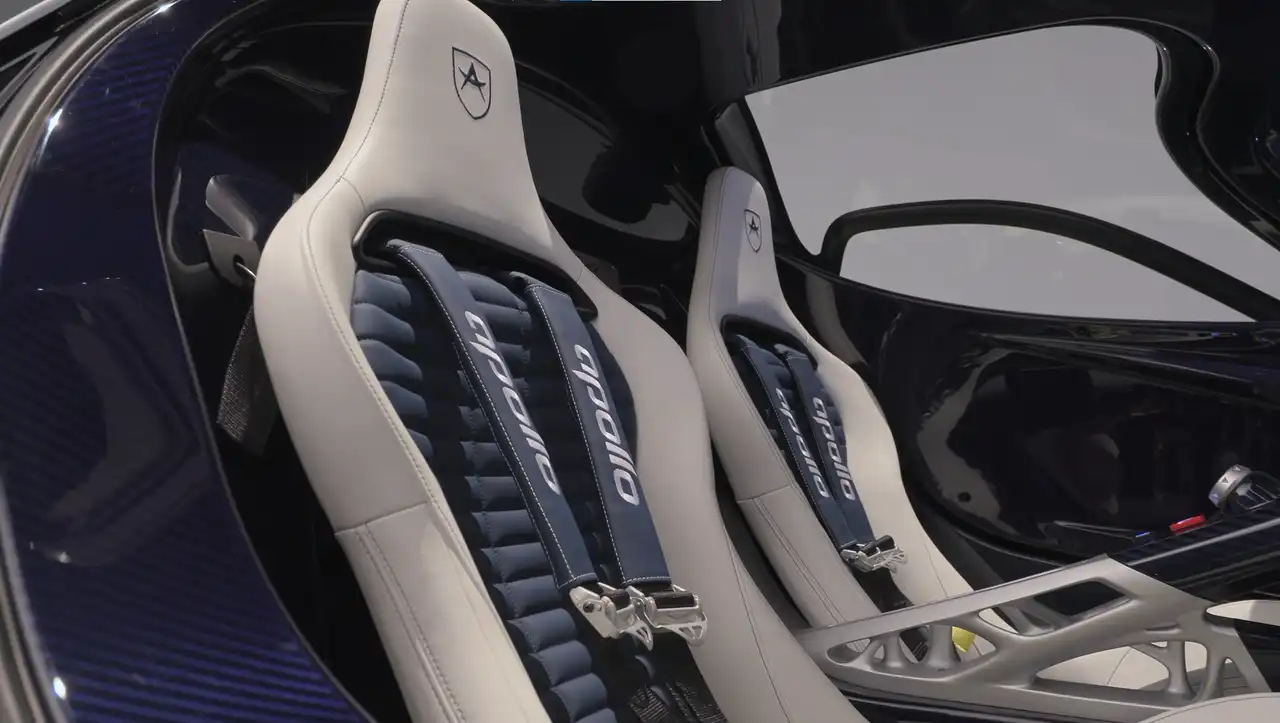
Displays, Real-Time Adjustments, and Zero Interior Space to Spare
The instrument cluster is digital and shows rpm, gear, speed, temperatures, and lap times. Two smaller side displays function as the car’s mirrors, since there aren’t any physical ones.
From the center console, the driver can adjust ABS levels, engine maps, traction control, brake bias, and even air conditioning fan speed on the fly. There’s also a dedicated ride-height lift button, used to load the car onto trailers and tow trucks without scraping the carbon fiber underside.
There’s no mention of any driver-assist systems, which tracks for a car that isn’t street-legal to begin with. Rear seating and cargo space aren’t addressed either, since the Evo is a strict two-seater built for the track.
The strong point of the cabin is how much control is packed within reach of the steering wheel. The trade-off is a complete absence of everyday comfort features, which rules this car out for anything beyond track days or static display.



A V12 That Revs to 8,500 RPM — With a Notable Family Tree
The Evo’s engine is a naturally aspirated 6.3-liter V12 — no turbos, no hybrid assistance. That’s an increasingly rare setup among modern hypercars, most of which lean on electrification to fill in low-end torque.
The block itself starts life as a Ferrari F140. Ferrari doesn’t sell complete engines to outside manufacturers, so Apollo sources the blocks, has them fully disassembled, and rebuilds them through HWA, the German motorsport specialist. That process is a big part of why the car costs what it does and why production is capped so low.
With 800 hp going exclusively to the rear wheels and a redline near 8,500 rpm, the Evo is tuned to reward high-rpm driving — great on a track, but it means leaning harder on the throttle to access torque during roll-on acceleration, unlike a turbocharged rival that delivers power lower in the rev range.
Around 564 lb-ft of torque, paired with rear-wheel drive and a clutchless sequential gearbox, adds up to a car that demands real driver input. There’s no dual-clutch automation smoothing out shifts here, which means a steeper learning curve than you’d get from a comparably quick DCT-equipped hypercar.
The 2.7-second 0-62 mph time and 208 mph top speed put the Evo among the quickest-accelerating road-legal-adjacent hypercars out there, even with its track-only status. Fuel economy and range aren’t published, which makes sense — nobody shopping in this segment is cross-shopping mpg figures.

Who Actually Buys a Car Like the Apollo Evo
Apollo prices the Evo starting at roughly $3.2 million per unit (converted from its €3 million euro base price), and that figure doesn’t include import duties, compliance work, or any personalization — all of which push the real-world cost meaningfully higher for each of the 10 buyers.
There’s no indication the Evo will be sold through official U.S. channels. A track-only car built in this small a run typically doesn’t go through conventional NHTSA and EPA certification; if units do land stateside, they’d likely follow the same low-volume import or track-toy exemptions used by cars like the Pagani Zonda R.
Because Apollo sells directly in such a limited run, the usual first-year depreciation curve that applies to higher-volume exotics doesn’t really apply here. Scarcity tends to hold values up over time in this segment.
Market Estimate: insurance premiums, maintenance costs, and financing on a car like this run well above what owners of higher-volume hypercars deal with, since specialized parts — like the HWA-rebuilt engine — mean any repair work is a custom, made-to-order process rather than something handled through a standard dealer network.
This car fits a collector who already owns other extremely limited-production hypercars and wants something rare for occasional track use. It’s not a fit for anyone looking for a usable second car or a predictable return on investment.

Frequently Asked Questions About the Apollo Evo
Can the Apollo Evo be made street legal?
Officially, it’s track-only. Like the Ferrari FXX and Pagani Zonda R before it, owners often find legal workarounds to register cars like this for road use.
Where does the Apollo Evo’s engine actually come from?
The block starts as a Ferrari F140 V12, which Apollo sources, fully disassembles, and rebuilds through HWA — Ferrari doesn’t sell complete engines to outside manufacturers.
Could the Apollo Evo really drive upside down?
In theory, yes: at 133 mph, its downforce exceeds the car’s dry weight, provided it’s carrying less than about 110 lbs combined in fuel and fluids.
How many Apollo Evo units will be built?
Just 10 total, each starting around $3.2 million before import costs, duties, or any personalization.







The Verdict
The Apollo Evo is an emotional purchase, not a rational one. There’s no cost-benefit case for a car that isn’t street-legal and doesn’t publish fuel economy figures.
It’s built for the collector who values exposed engineering, a naturally aspirated V12, and extreme scarcity over any kind of daily usability.
It’s not for anyone looking for a usable second car or a predictable return. This is an exception-built machine made for very few people — and even fewer tracks.
Would you give up every bit of daily comfort for a Ferrari-sourced V12 and a body that can theoretically fight gravity?
Share this article

Por: Danniel Bittencourt
21/07/2026
Related posts