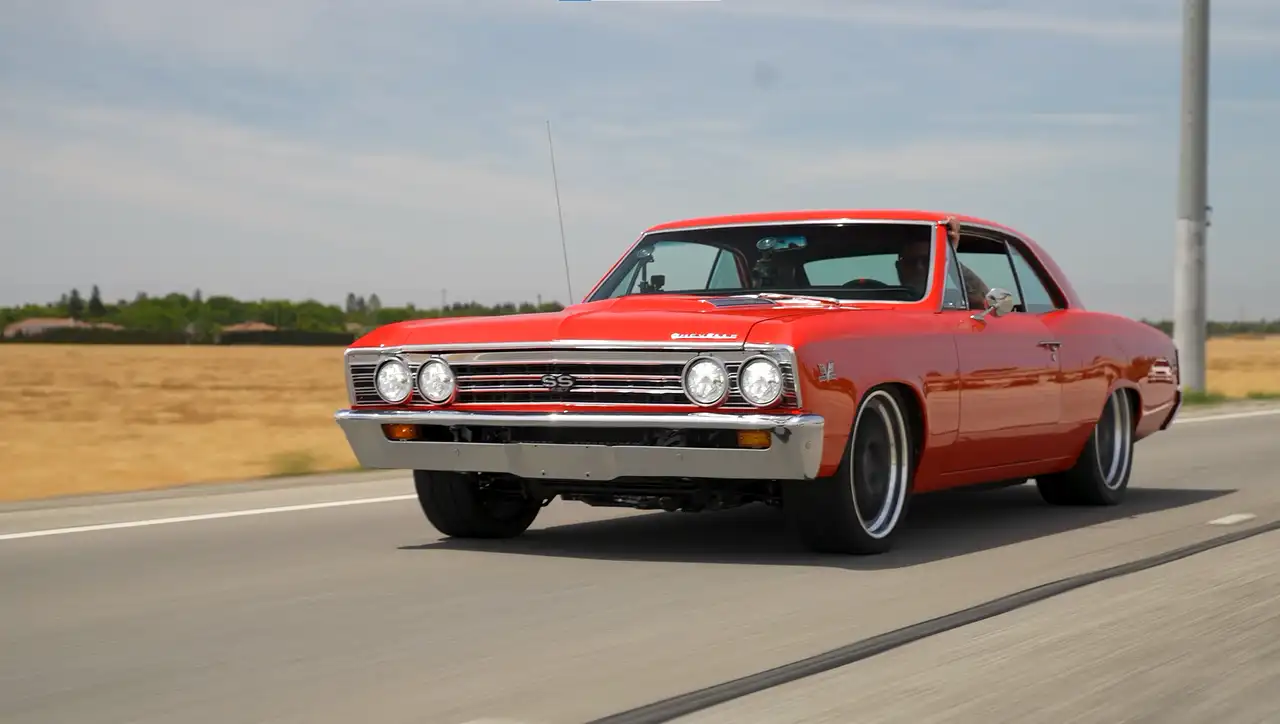
What Changed Between the ID. Cross Concept and the Real Thing
Volkswagen unveils the ID. Cross, a compact electric SUV rated up to 265 miles of WLTP range, with a projected starting price near €28,000 in Germany. Here’s the full spec breakdown, trim details, and what’s still unconfirmed for the U.S.
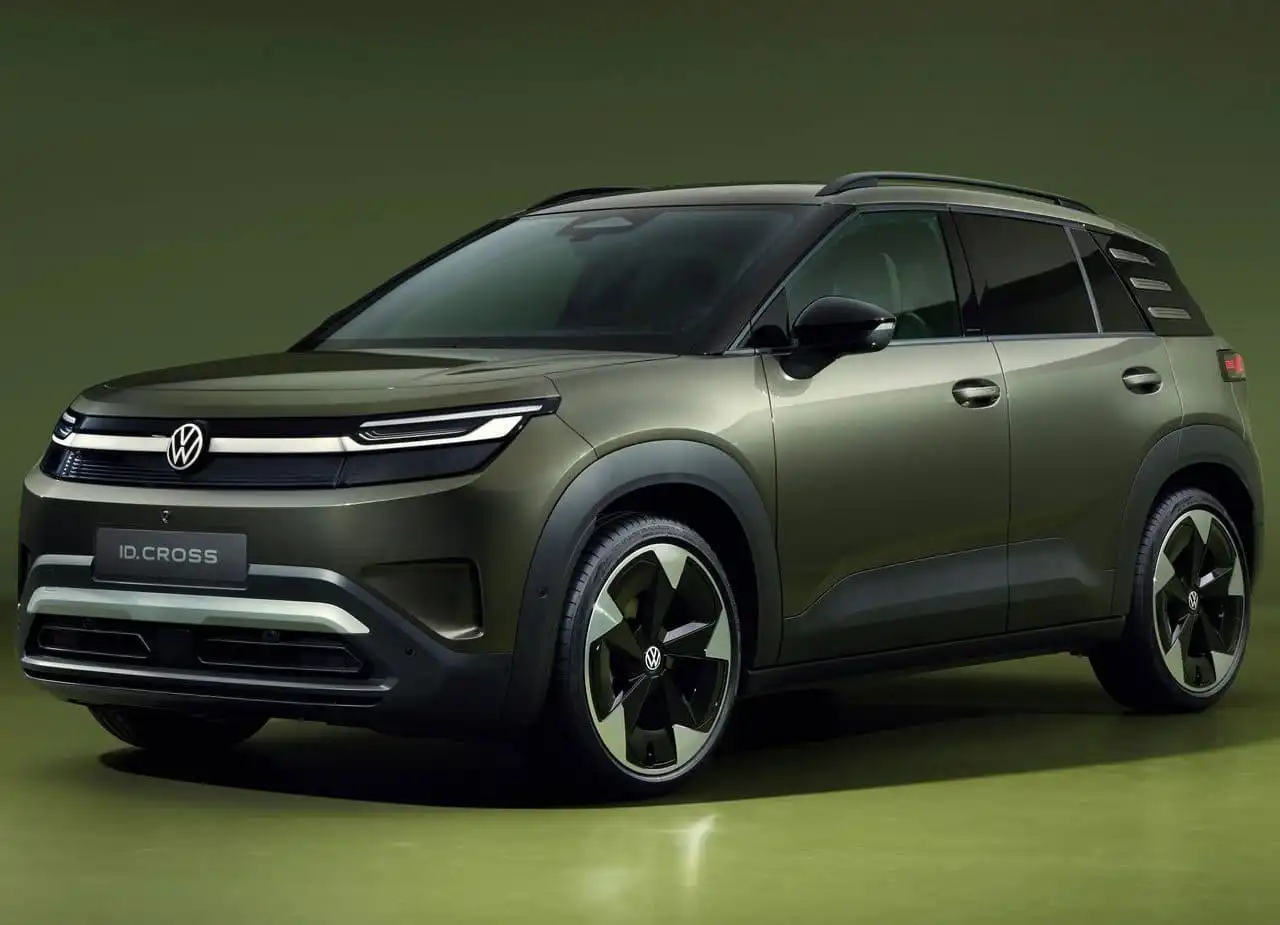
Volkswagen ID. Cross: The Compact Electric SUV Aimed at Replacing a Gas-Powered Favorite
Volkswagen officially unveiled the ID. Cross on July 14, 2026. It’s the production version of the ID. CROSS Concept shown back in 2025, and it’s set to reach European dealerships this fall.
Built on the MEB+ platform, the SUV targets buyers who’d otherwise shop a gas-powered compact crossover like the T-Cross, but are ready to go electric. Volkswagen also points to outdoor enthusiasts and towing customers as part of the intended audience.
For American shoppers, there’s no confirmation yet that the ID. Cross is coming to the U.S. at all. Nothing has been announced regarding pricing, trims, or availability stateside.
Quick Specs
| Specification | Details |
|---|---|
| Category | Compact electric SUV (BEV) |
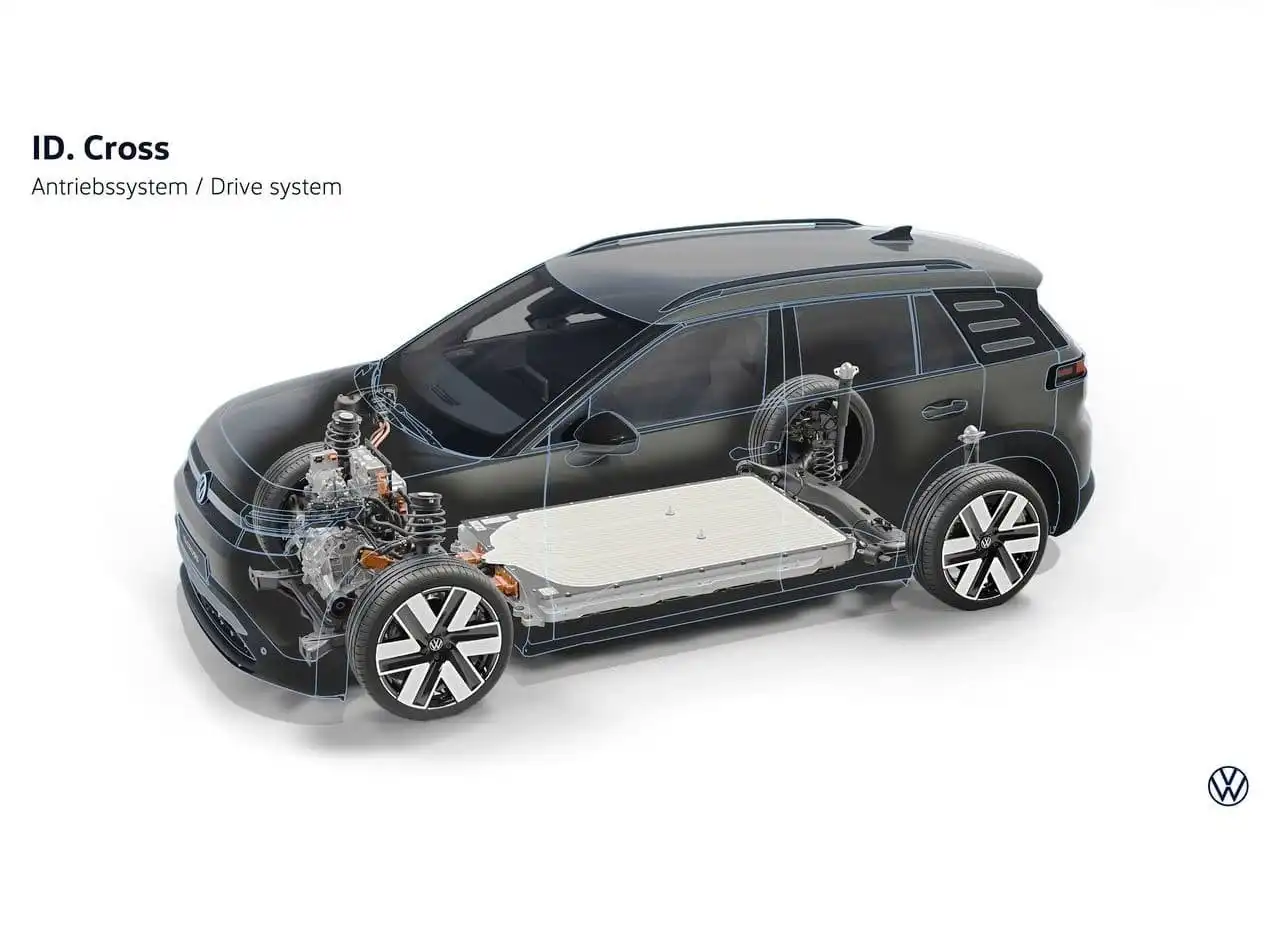
| Powertrain | Front-mounted electric motor, MEB+ platform |
| Power | 116 hp; 135 hp; 211 hp |
| Torque | 214 lb-ft (confirmed only for the 211-hp APP290 variant) |
| Transmission | Single-speed reduction gear |
| Drivetrain | Front-wheel drive |
| 0-60 mph | Not officially disclosed |
| Top speed | 93 mph (116 hp and 135 hp versions); 99 mph (211 hp version) |
| Efficiency | Roughly 3.7 to 4.3 mi/kWh (211-hp version) |
| Range | Up to 196 miles (37 kWh battery); up to 265 miles (52 kWh battery), WLTP cycle |
| Launch timing | Fall 2026 (Europe); no U.S. timeline confirmed |
With the basics out of the way, it’s worth digging into how Volkswagen shaped this SUV on the outside, and what’s actually new compared to the concept that came before it.
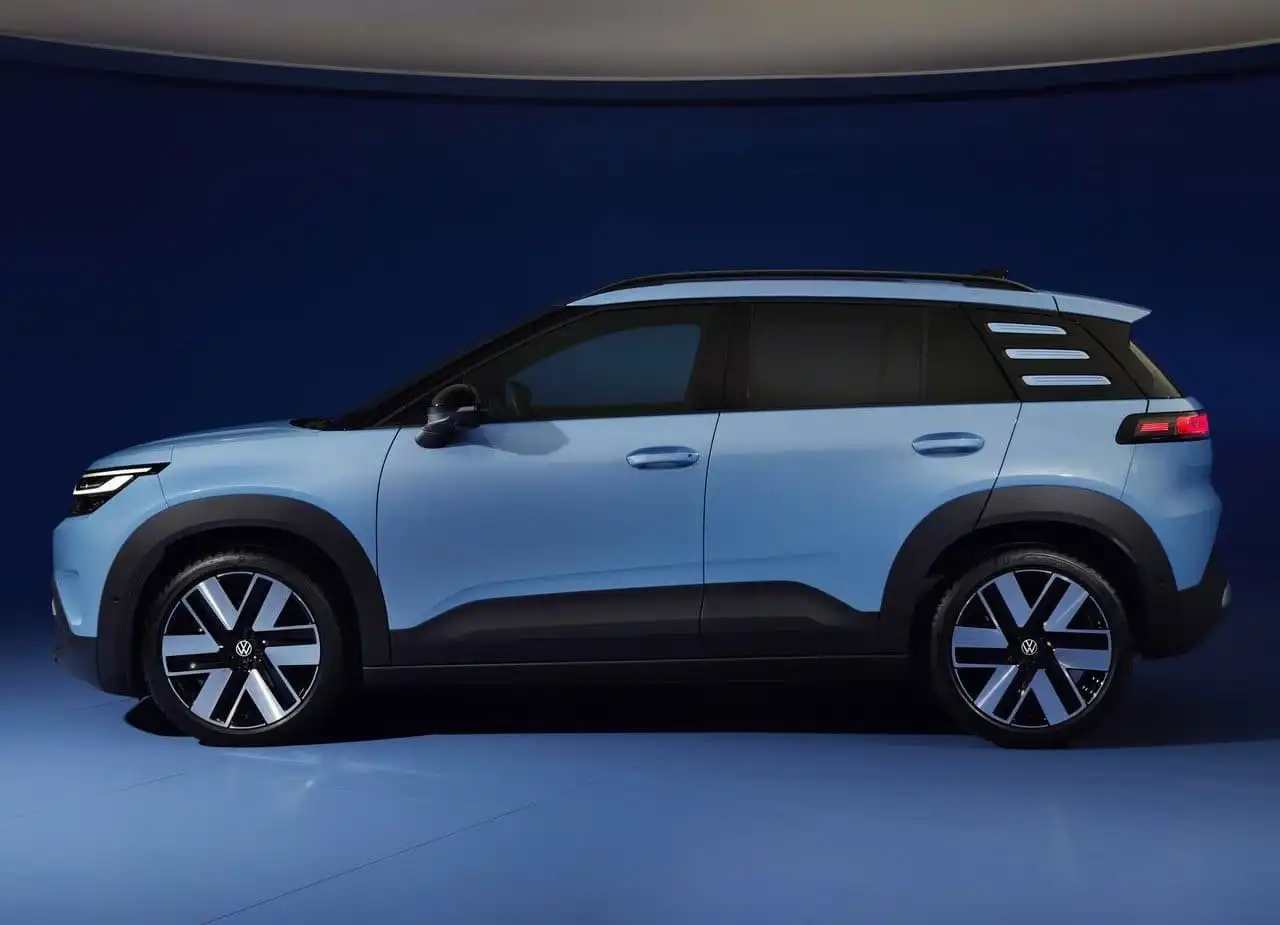
Volkswagen ID. Cross: The Sheet Metal Behind the “Pure Positive” Look
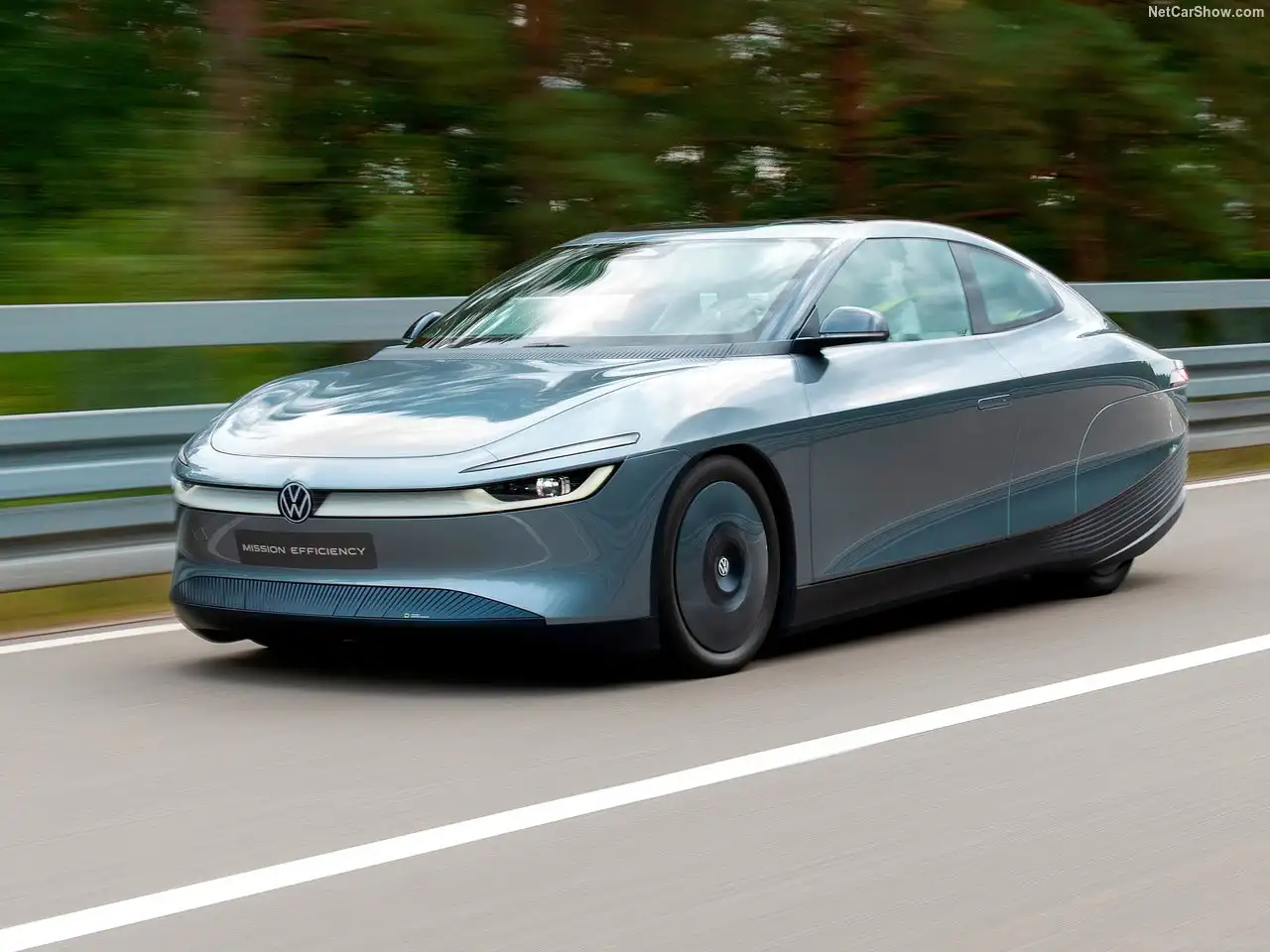
The ID. Cross is a five-seat SUV built around what Volkswagen calls its Pure Positive design language — a shift toward flatter surfaces and fewer sharp creases than the brand’s earlier crossovers.
Up front, narrow headlights sit above horizontal bars that stretch across the nose, with an illuminated VW badge depending on which lighting package is fitted. It’s a look that tracks closely with Volkswagen’s other recent EVs rather than breaking new ground.
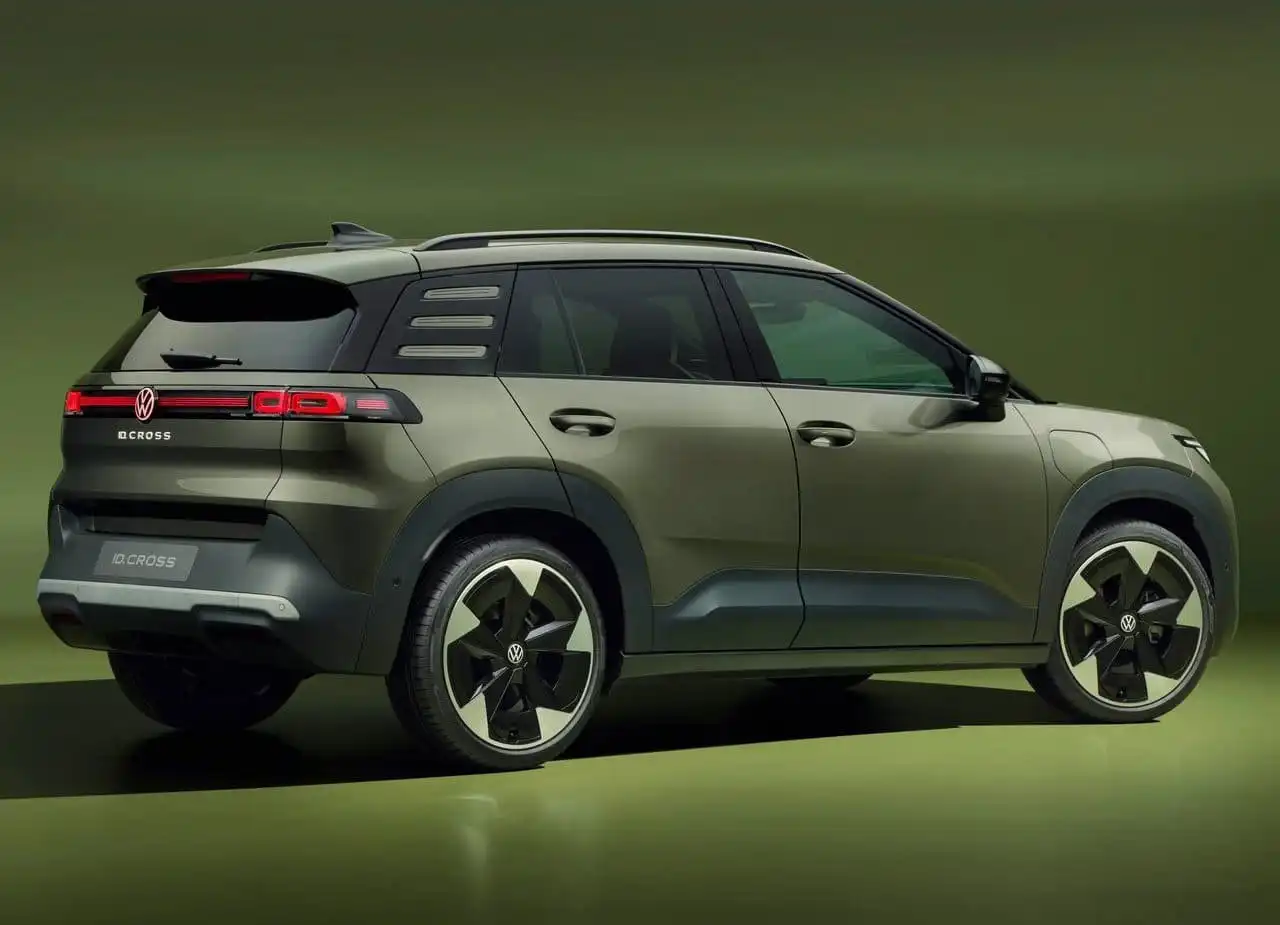
Details on the profile and rear haven’t gone much further than what was shown on the concept, which limits how much can be said about those areas right now.
One thing worth flagging: the production model actually shrank compared to the 2025 concept. Length dropped from 163.8 inches to 163.5 inches, and width went from 72.4 inches down to 70.6 inches. Small differences, but they show Volkswagen fine-tuned the proportions between showcar and showroom.
Inside the ID. Cross: A Digital Cockpit With Real Buttons Left Intact
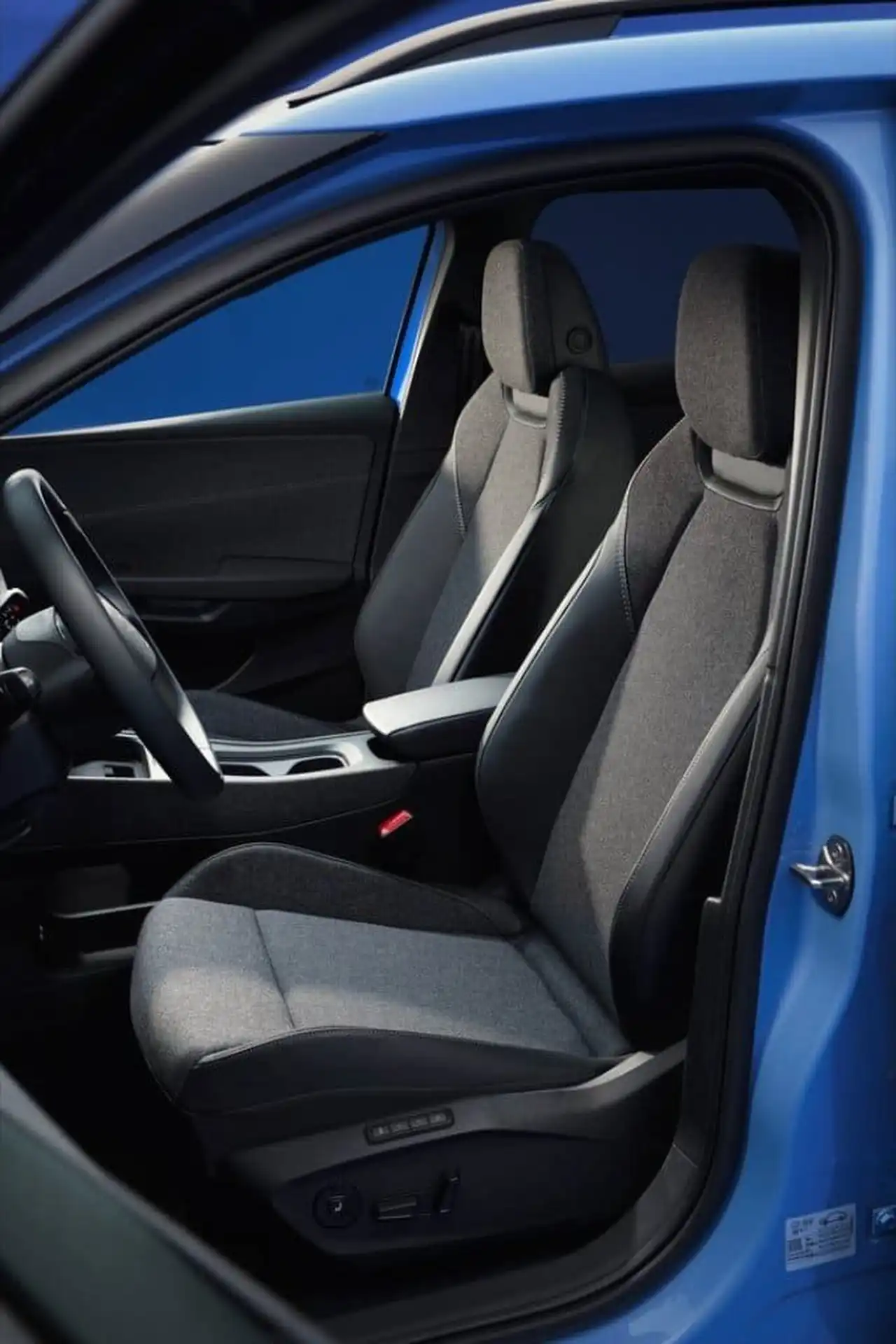
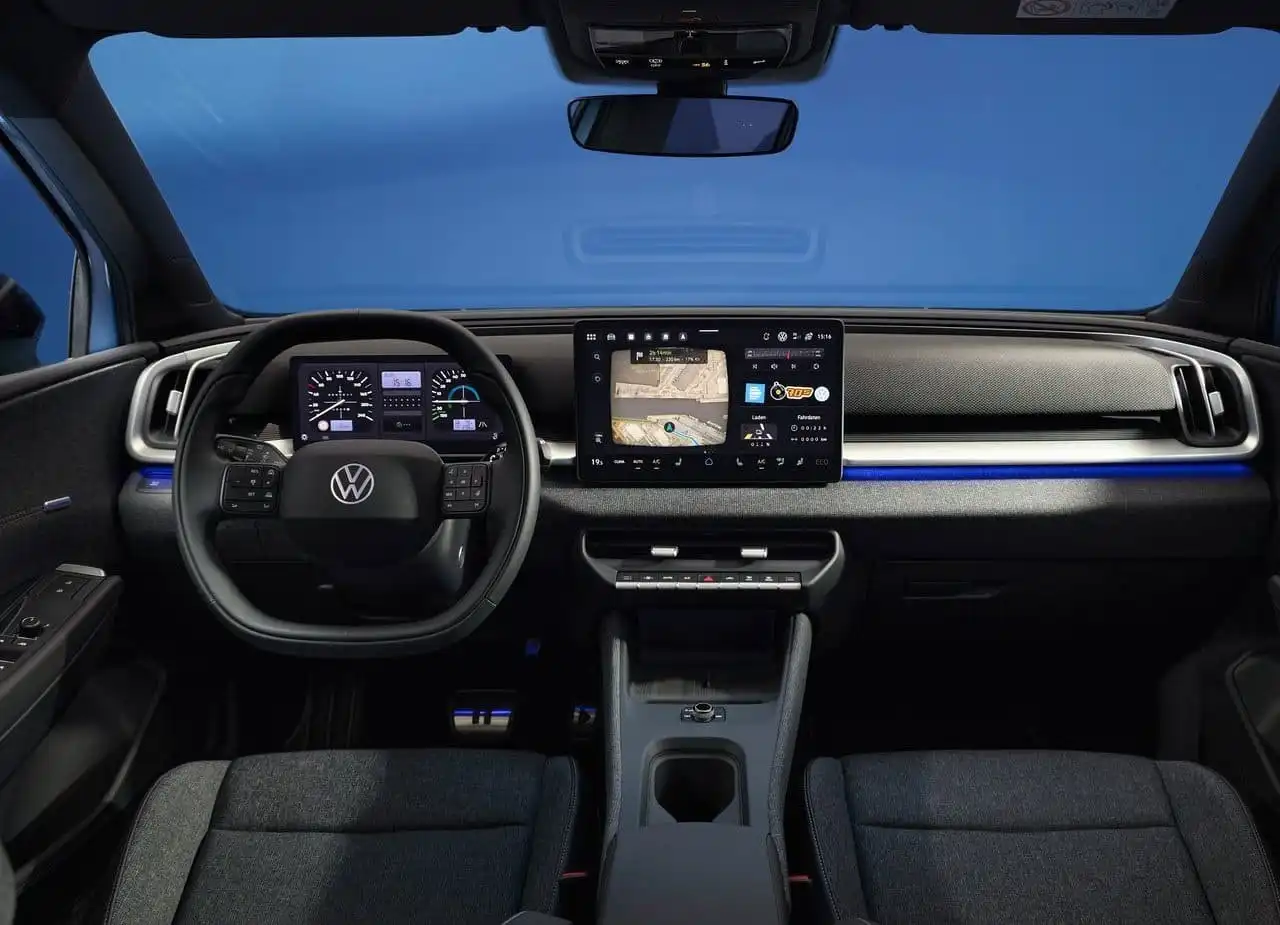
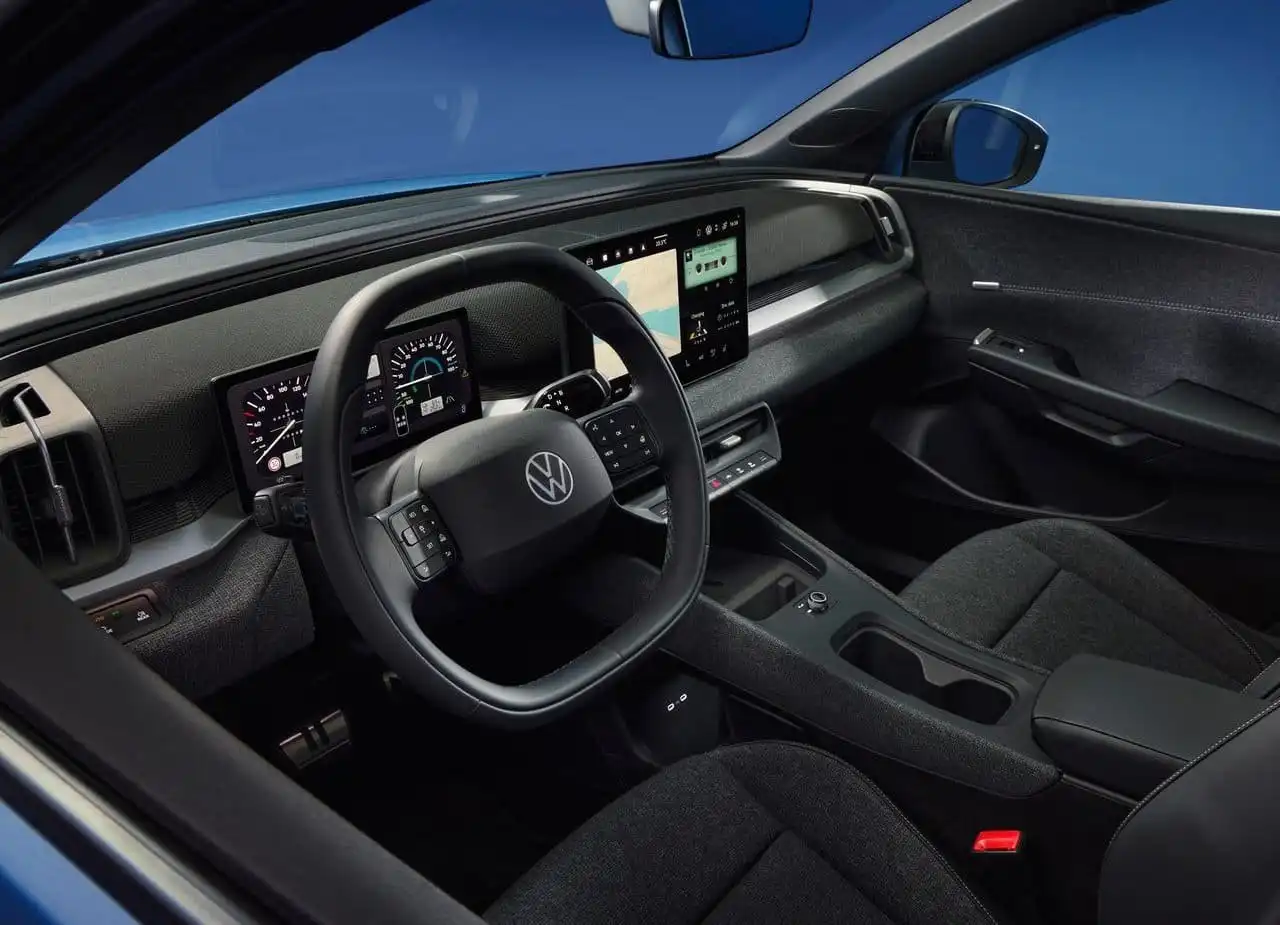
The cabin uses a fabric-wrapped dash, and Volkswagen says overall material quality is a step up from what the brand has offered in this segment before. The SUV is five-seat only — no third row.
The main gauge cluster is a 10.25-inch Digital Cockpit Pro, paired with a 12.9-inch touchscreen. For anyone tired of touch-only controls creeping into new EVs, Volkswagen kept physical buttons and a dedicated volume knob.
Options include 12-way power front seats with massage function, plus a panoramic glass roof. There’s no direct comparison available yet against the brand’s outgoing crossovers, so it’s hard to say definitively how much of a leap this really is.
Tech, Cabin Space, and What’s Still Missing
The touchscreen handles most functions, and an ambient lighting strip (ID.Light) wraps into the front doors to reinforce alerts. Confirmed driver-assist features include adaptive cruise control, traffic sign recognition, Connected Travel Assist, and automatic traffic light recognition.
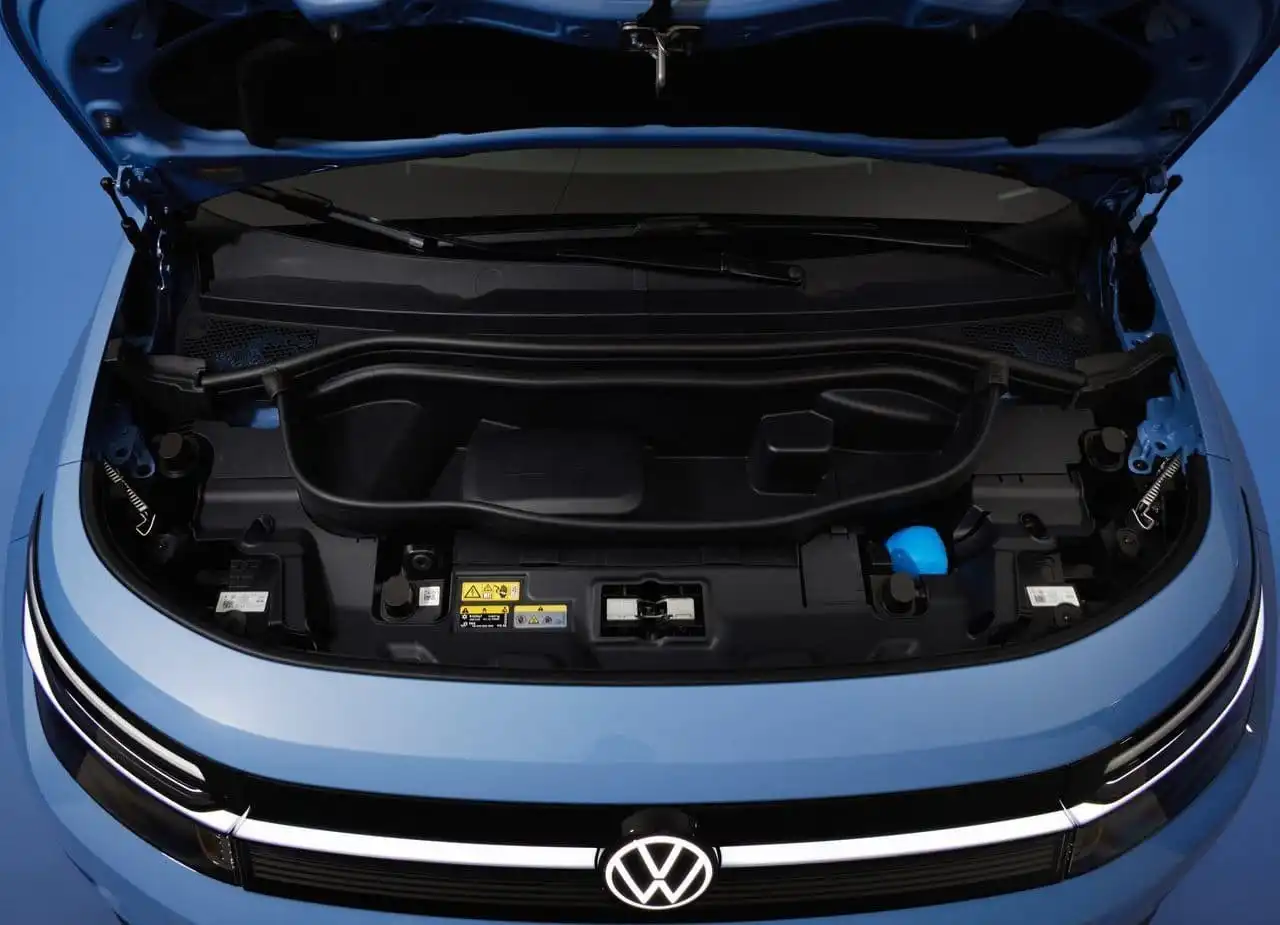
Cargo space comes in at 16.8 cubic feet, expanding to 47.3 cubic feet with the rear seats folded, plus a 0.9-cubic-foot front trunk — useful numbers for anyone hauling luggage or gear regularly.
The clear strength here, based on what’s been released, is pairing a big screen with buttons that didn’t get deleted for the sake of looking minimalist. The gap is rear-seat legroom and confirmation of Apple CarPlay/Android Auto support — both details that matter to shoppers and that Volkswagen hasn’t detailed yet.
Behind the Wheel: What the Powertrain Numbers Actually Mean
The ID. Cross launches in Europe with three power outputs, all front-motor, front-wheel drive. Buyers can choose between 116 hp, 135 hp, and a top-spec 211-hp version internally labeled APP290.
In practice, the two entry-level versions cap out at 93 mph, which won’t matter around town but leaves less margin on the highway compared to the top trim’s 99 mph.
The 214 lb-ft torque figure has only been confirmed for the 211-hp variant. Without that number for the lower trims — likely the volume sellers — it’s tough to gauge real-world response off the line for the versions most buyers will actually choose.
Volkswagen hasn’t released a 0-60 mph time for any version yet, a notable gap for anyone cross-shopping against electric rivals that already publish that figure.
On efficiency, the 211-hp version lands around 3.7 to 4.3 mi/kWh depending on driving conditions. Range depends heavily on which battery you pick: up to 196 miles with the 37 kWh pack, or up to 265 miles with the 52 kWh pack — a gap of nearly 70 miles that should weigh heavily on any buying decision.
DC fast charging comes standard across the lineup, topping out between 90 kW and 105 kW depending on battery choice, with a 10-80% charge taking roughly 23 to 24 minutes — competitive, but not in the same league as the 800-volt architectures now showing up on pricier EVs.
Is the ID. Cross Worth It? A Look at Pricing and Positioning
In Germany, Volkswagen is projecting a starting price around €28,000 — roughly translating to the low-$30,000s before factoring in U.S.-specific costs, though no American pricing exists since the car isn’t confirmed for sale here. German pre-orders opened July 15, 2026, with deliveries expected this fall.
For U.S. shoppers, there’s no announced plan for the ID. Cross to arrive at all. Anyone hoping to cross-shop it against something like a Chevrolet Equinox EV or Hyundai Kona Electric will have to wait and see whether Volkswagen brings it here — and if so, whether it lands closer to European pricing or gets adjusted for the U.S. market the way the ID.4 was.
Insurance, maintenance, and financing figures haven’t been published for any market yet, which makes a full cost-of-ownership picture impossible to build right now.
Shoppers already sold on downsizing to a compact electric SUV can treat the European rollout as an early preview, but there’s no reason to make a purchasing decision based on it yet. For U.S. buyers specifically, this is a wait-and-see situation — there’s no timeline, and any assumption about American availability would be getting ahead of the facts.
Frequently Asked Questions About the Volkswagen ID. Cross
Is the Volkswagen ID. Cross coming to the U.S.?
There’s no official confirmation of a U.S. launch at this time.
What’s the range on the Volkswagen ID. Cross?
It depends on the battery: up to 196 miles with the 37 kWh pack, or up to 265 miles with the 52 kWh pack, on the WLTP cycle.
How much does the Volkswagen ID. Cross cost?
Volkswagen projects a starting price around €28,000 in Germany; no U.S. pricing exists since the model isn’t confirmed here.
Does the Volkswagen ID. Cross come with all-wheel drive?
No. Every confirmed version so far uses front-wheel drive only.
The Verdict
The ID. Cross is a rational pick for anyone already committed to going electric who values cargo space and standard fast charging. It’s not the right call for buyers who want strong performance or all-wheel drive.
Key numbers are still missing — final pricing, acceleration, and crash-test results chief among them. It’s a promising SUV on paper, but the story isn’t finished yet.
An electric SUV promising affordability that still has to prove it with hard numbers.
Do you think Volkswagen should commit to bringing the ID. Cross to the U.S., or is it better off letting the model mature in Europe first?
Share this article

Por: Danniel Bittencourt
16/07/2026
Related posts