Venom F5-M: The Most Radical Manual Hypercar Ever Built
Hennessey has unveiled the Venom F5-M, a 2,031-hp manual hypercar limited to just 12 units, built for drivers who want to feel every gear change in a car capable of over 300 mph. Here’s why it sold out before it even hit the track.
Hennessey Venom F5-M: The Manual Hypercar Defying the Automatic Era
Hennessey has introduced the Venom F5-M, a manual version of its most extreme hypercar, rated at 2,031 hp and limited to just 12 units. The car arrives as a 2027 model, with its global debut set for the Goodwood Festival of Speed.
It’s a two-seat roadster built around a twin-turbo V8 and, notably, a six-speed manual transmission — a rare choice in a segment now dominated by automated dual-clutch gearboxes.
Its natural rivals are the Rimac Nevera R and the Koenigsegg Gemera, both electric or hybrid hypercars with comparable output. The Venom F5-M goes the opposite direction, betting entirely on internal combustion.
Hennessey Venom F5-M: The Big News Is a Manual Gearbox Behind 2,031 HP
Quick Specs
| Specification | Details |
|---|---|
| Category | Hypercar / Sports Roadster |
| Engine | 6.6L twin-turbo “Fury” V8, gasoline/E85 |
| Power | 2,031 hp |
| Torque | Not officially disclosed |
| Transmission | 6-speed manual, gated billet shifter |
| Drivetrain | Rear-wheel drive (RWD) |
| 0-60 mph | Not confirmed by the manufacturer |
| Top speed | Not officially disclosed |
| Fuel economy | Not officially disclosed |
| Range | Not applicable (combustion engine) |
| Release date | 2026, model year 2027 |
Those numbers already turn heads on paper, but it’s on track where this combination actually makes sense. Let’s break down what each detail means in practice.
A Roadster Shaped to Cut Through the Air
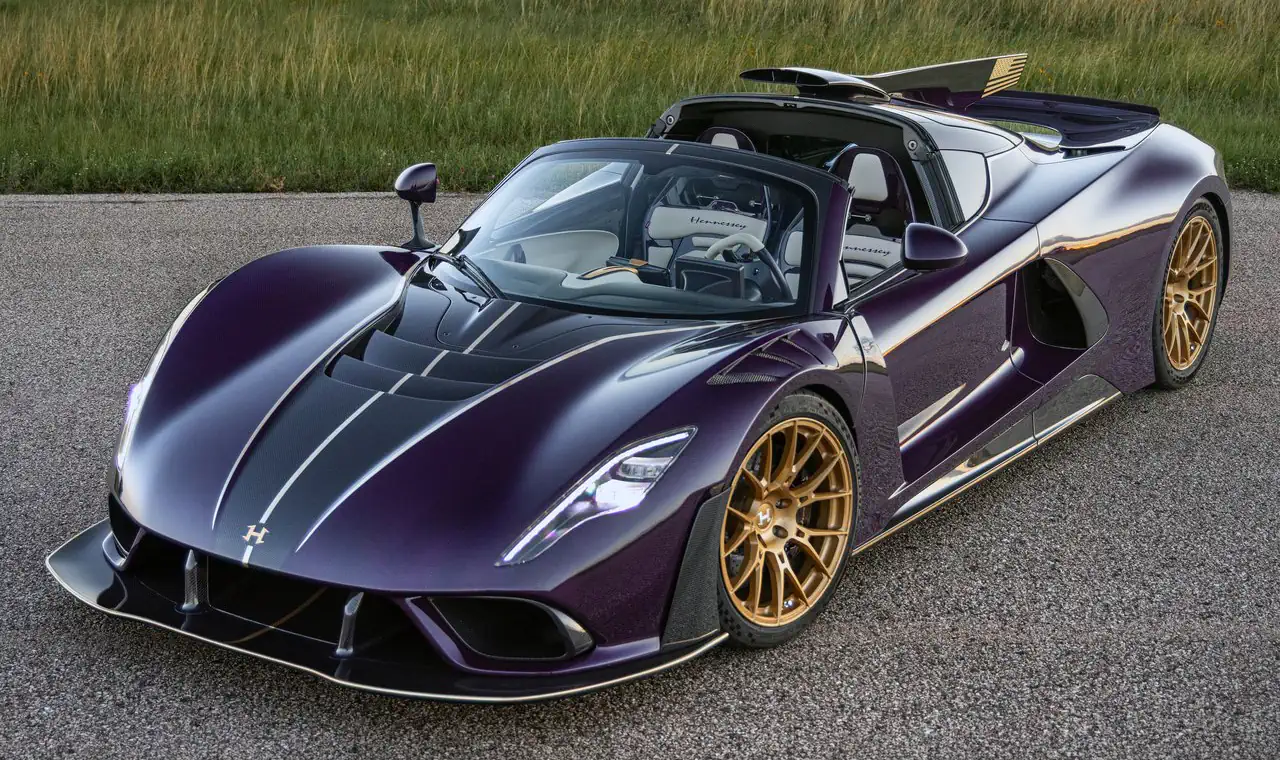
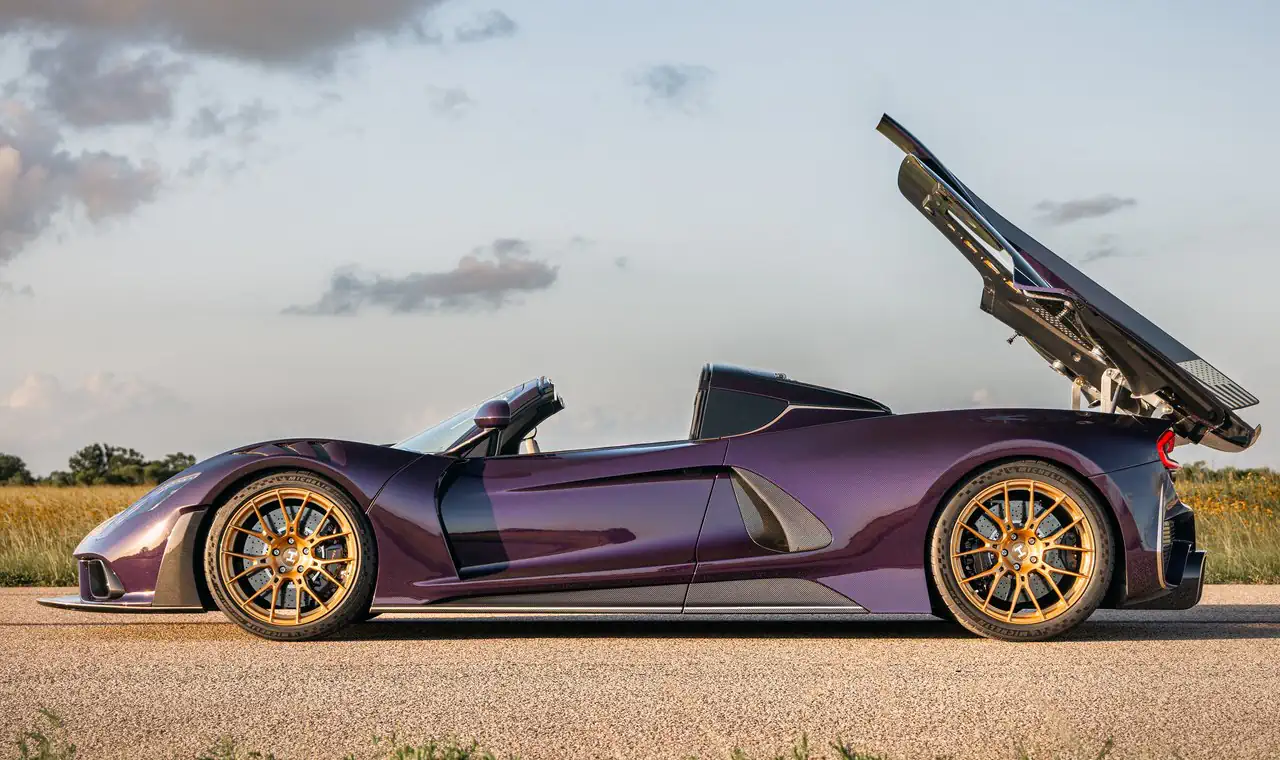
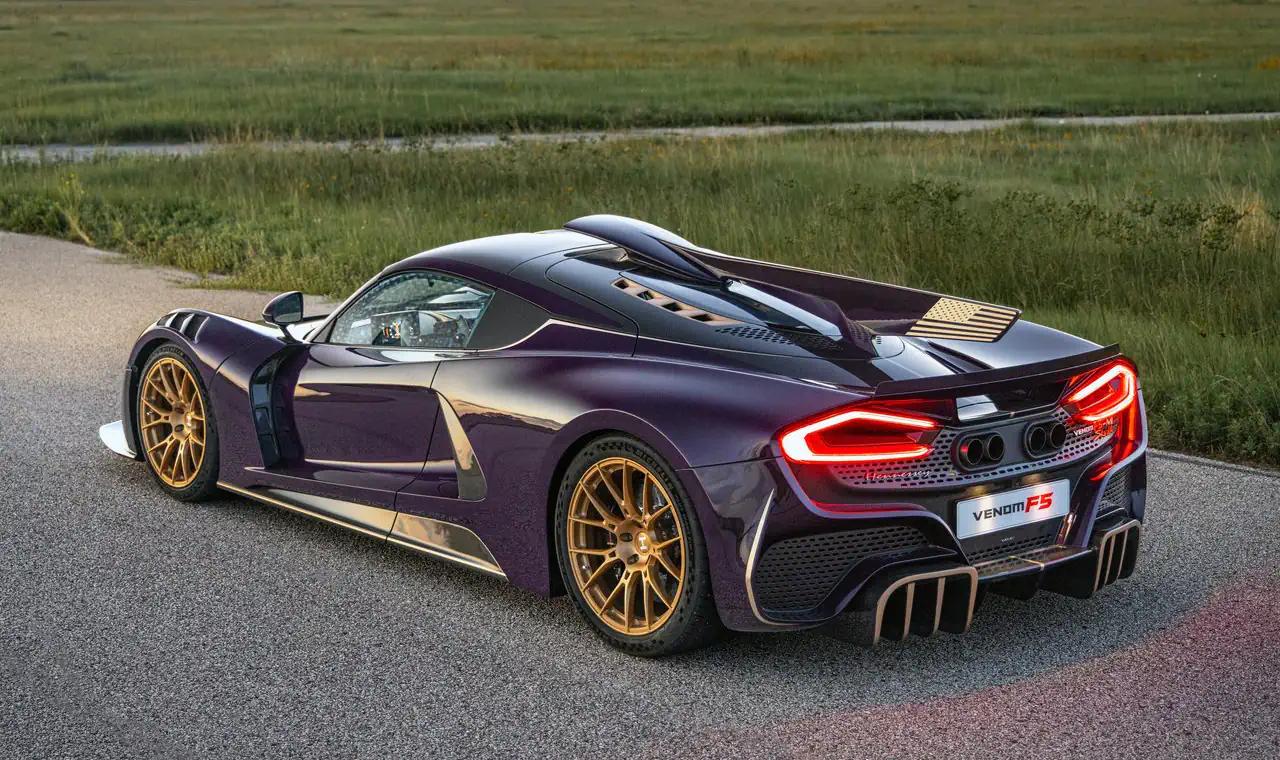
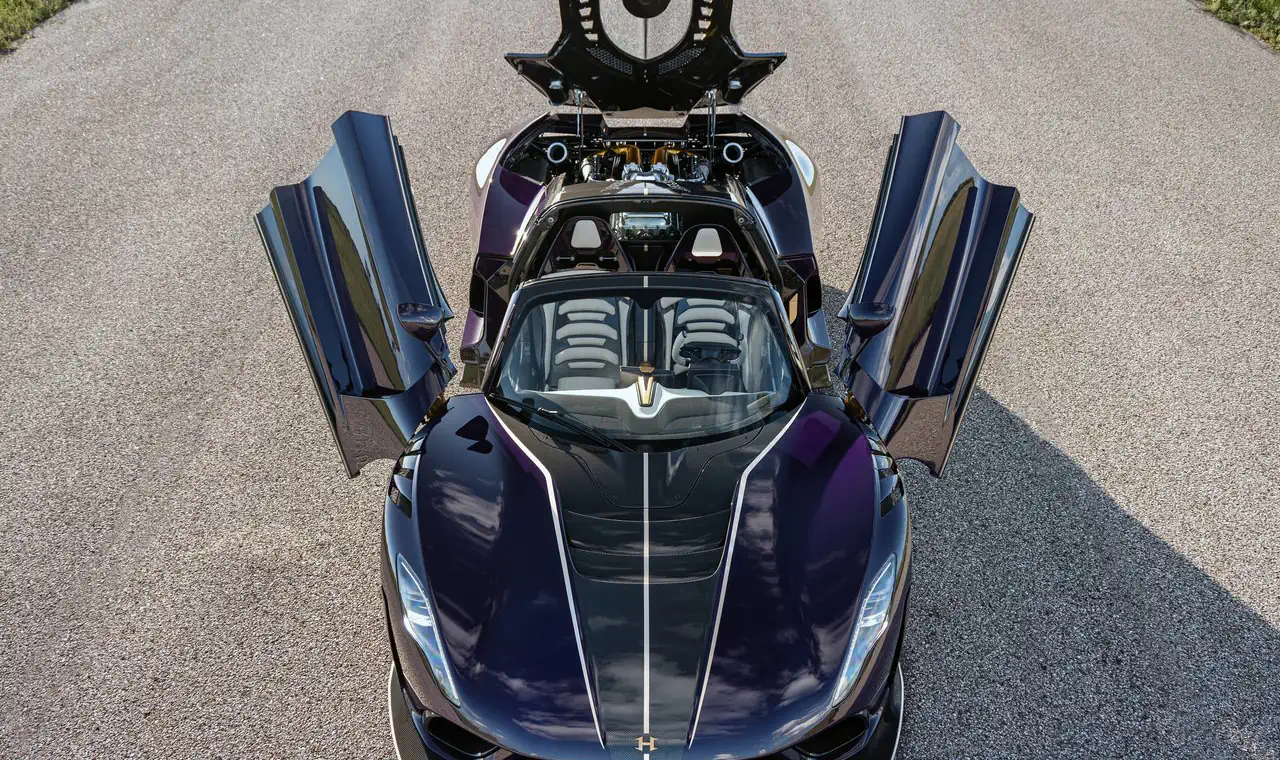
Head-on, the Venom F5-M keeps the low, aggressive stance typical of the F5 family, with a roof scoop that dominates the silhouette. It’s a design that leaves no doubt about its purpose: pure performance, no compromise.
From the side, the standout feature shows up: a 55-inch dorsal fin running from the roof to the tail, there to boost aerodynamic downforce at high speed. It’s unusual, but it’s functional.
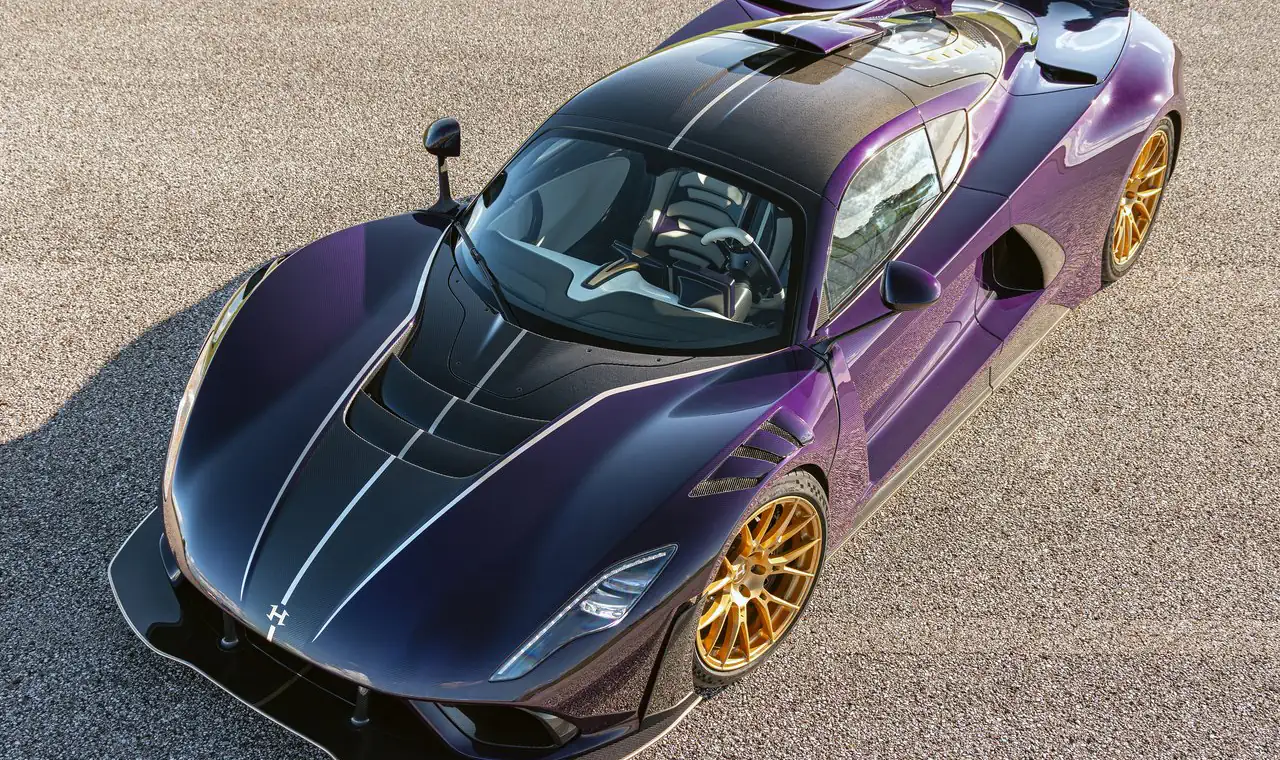
Around back, the exposed carbon-fiber bodywork reinforces the car’s handbuilt character. The first unit delivered wears an exclusive purple finish with 24-karat gold accents from Hennessey’s Maverick customization program.
In person, the effect is of a track car that happens to be street legal. It follows the F5 family’s existing visual language but pushes everything further with the Evolution aero package.
A Cabin Built Around a Single Shift Lever
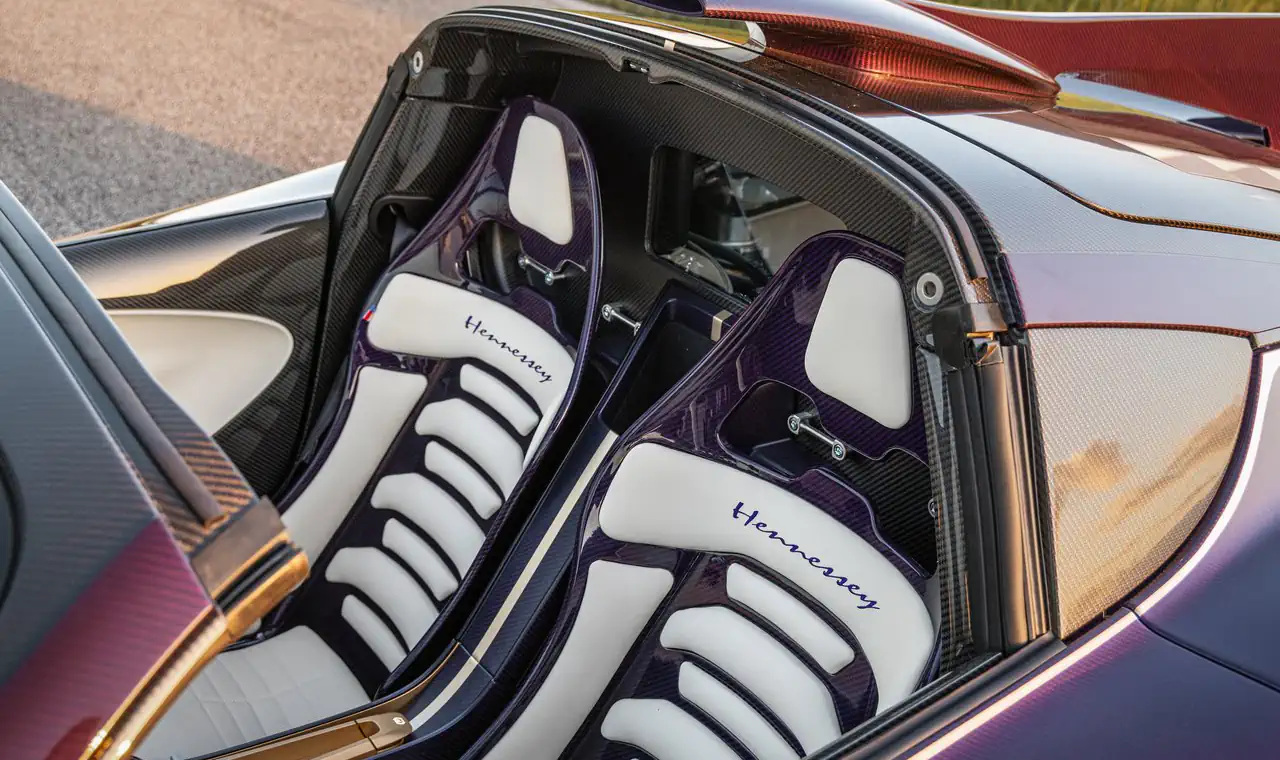
The Venom F5-M’s interior was reworked to make room for the star of this version: a billet-aluminum shift knob paired with a precision-machined gated shifter. It’s a console built for drivers who want to row their own gears, not for anyone chasing comfort.
Materials mix exposed carbon fiber with premium metals, including gold detailing on the Maverick-customized car. Each unit gets bespoke stitching, badging, and trim panels, underscoring the car’s handcrafted nature.
There’s no pretense of traditional luxury here. Hennessey describes the cabin as more physical, prioritizing driving position over everyday amenities.

Lean Tech in the Name of Pure Driving Feel
Hennessey hasn’t detailed a specific infotainment setup for the F5-M, and the digital gauge cluster is built around clear readouts of speed and rpm at high velocity, with no screen specs released. ADAS features like lane-keep assist or automatic emergency braking aren’t part of the package.
Interior space is what you’d expect from a two-seat roadster: no rear seats, and cargo capacity hasn’t been disclosed. The clear strength here is ergonomics built entirely around the driver; the real limitation is the absence of any electronic safety net to manage that much power.
The V8 That Skips the Robots
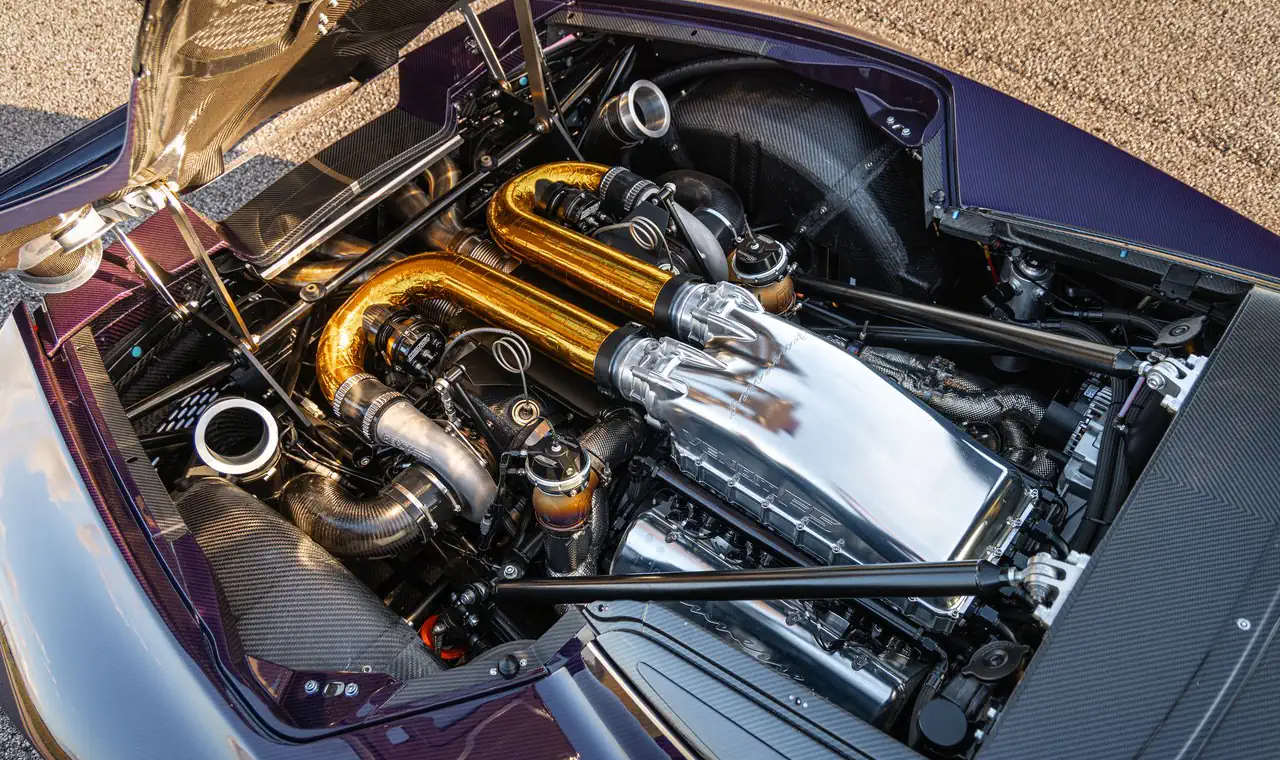
At the heart of the Venom F5-M sits the Fury V8, a 6.6-liter twin-turbo engine built in-house by Hennessey and calibrated to run on E85 as well as pump gas. Power goes exclusively to the rear wheels, with no all-wheel-drive assist of any kind.
Output is rated at 2,031 hp, sent through a six-speed manual transmission — meaning every gear change is on the driver, not the electronics. In practice, that means more control, but also a much steeper skill requirement behind the wheel.
Hennessey hasn’t released 0-60 mph or top-speed figures for the F5-M specifically. For reference, the broader F5 lineup claims sub-3-second runs to 60 mph in automatic form, but that number can’t be assumed to carry over to the manual variant.
Fuel economy and range aren’t published either — unsurprising for a car built around outright performance rather than efficiency.
The Price Tag That Separates Collectors From Everyone Else
In the U.S. and other key markets, the Venom F5-M starts at $2.65 million before options, and all 12 planned units are already spoken for. That puts it alongside rivals like the Rimac Nevera and Koenigsegg Gemera.
At that price point, financing isn’t really part of the conversation — deals like this typically move through direct relationships with the factory rather than conventional lenders. Insurance is handled the same way: carriers treat a car like this as an individual risk, with premiums negotiated case by case and typically running well above what a standard supercar would command.
Maintenance costs follow the same pattern — there’s no published service menu, since support is handled directly by Hennessey’s team in Texas.
Given the extremely limited production run, the car is more likely to appreciate than depreciate. Buying now, rather than waiting, is arguably the smarter move for anyone actually in position to own one. This is a car built for global hypercar collectors, not for buyers looking for a daily-driven sports car.
Frequently Asked Questions About the Hennessey Venom F5-M
How many Venom F5-M units will be built?
Just 12, all of which sold out before the car’s official Goodwood debut.
How much horsepower does the Venom F5-M have?
2,031 hp, making it the most powerful manual production car in the world, according to Hennessey.
Is the Venom F5-M street legal?
Yes — it’s designed as a road-legal hypercar, though Hennessey emphasizes track use and events like Goodwood.
How much does the Venom F5-M cost?
Starting at $2.65 million before options, in the United States.
The Verdict
The Venom F5-M is an emotional purchase, not a rational one. Nobody buys a 2,031-hp manual hypercar chasing cost-per-mile logic.
It’s not built for comfort, practicality, or daily use — that’s the entire point. This is a car for someone who already has a garage full of exotics and wants the rawest possible experience behind the wheel.
The Venom F5-M proves that even in the electric era, there’s still room for a gear lever between a driver and 2,031 horsepower.
Do you think Hennessey got it right by building a manual hypercar in the middle of the EV era, or is this just nostalgia for the few who can afford it?
Share this article

Por: Danniel Bittencourt
06/07/2026
Related posts