Škoda Epiq 2026: Everything You Need to Know About the New Czech EV
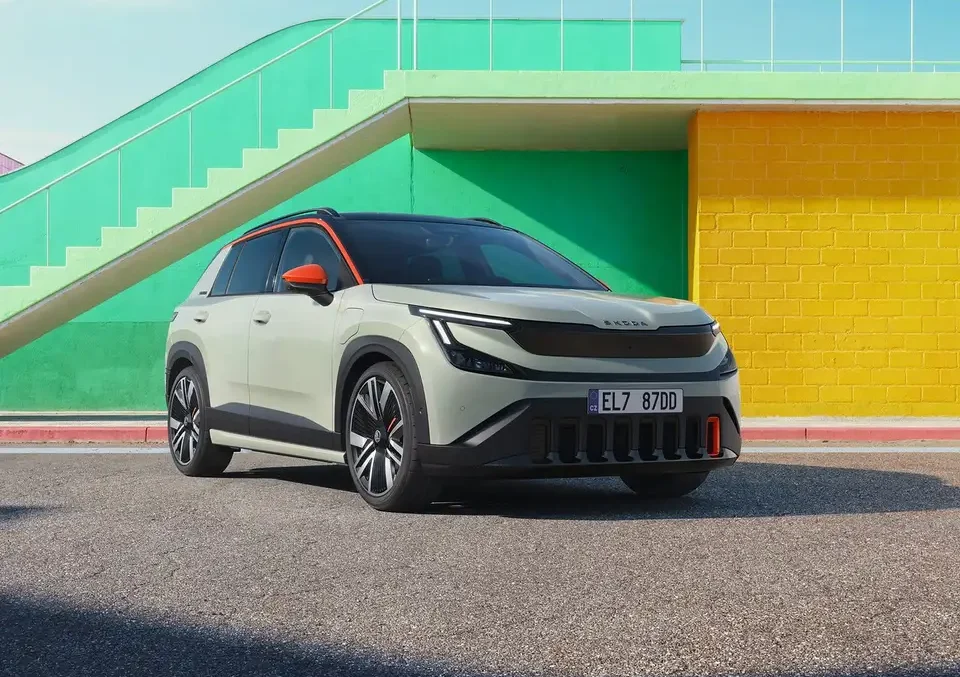
The Škoda Epiq arrives with 16.8 cu-ft of cargo space, up to 274 miles of range, and a starting price that rivals a gas-powered equivalent. What’s hiding under the sheet metal is worth far more than the sticker suggests.

Por: Danniel Bittencourt
02/06/2026
Škoda Epiq: The Electric SUV Priced Like a Gas Car That Delivers More
Škoda wants to eliminate the biggest excuse for not going electric: the high entry price. The Epiq is a 100% electric B-SUV engineered to cost roughly the same as its gas-powered sibling, the Kamiq.
This is a clean-sheet design, not a carryover. Built on the Volkswagen Group’s MEB+ platform, it debuts the brand’s new “Modern Solid” design language in high-volume production for the first time.
Its direct rivals are the Renault 4 E-Tech, Citroën ë-C3, and the Kia EV3. In the U.S. market, Škoda has no official distribution network, but the platform underpinning the Epiq is shared with the upcoming Volkswagen ID.2, which may eventually reach North American shores.
Škoda Epiq — Quick Specs
| Spec | Details |
|---|---|
| Category | Compact Electric SUV (B-SUV) |
| Powertrain | Synchronous electric motor, front-wheel drive (FWD) |
| Output | 114 HP / 133 HP / 208 HP |
| Torque | 197 lb-ft (LFP versions) / 214 lb-ft (NMC version) |
| Transmission | Single-speed fixed reduction |
| Drive | Front-Wheel Drive (FWD) |
| 0–60 mph | ~10.5 s (Epiq 35) / ~9.2 s (Epiq 40) / ~6.8 s (Epiq 55) |
| Top Speed | 93 mph (LFP versions) / 99–110 mph (NMC version) |
| Efficiency | 13.0–13.1 kWh/100 km (161 MPGe) |
| Range | Up to 196 miles (LFP) / Up to 274 miles (NMC) |
| Battery | 37.0 kWh net (LFP) / 51.5 kWh net (NMC) |
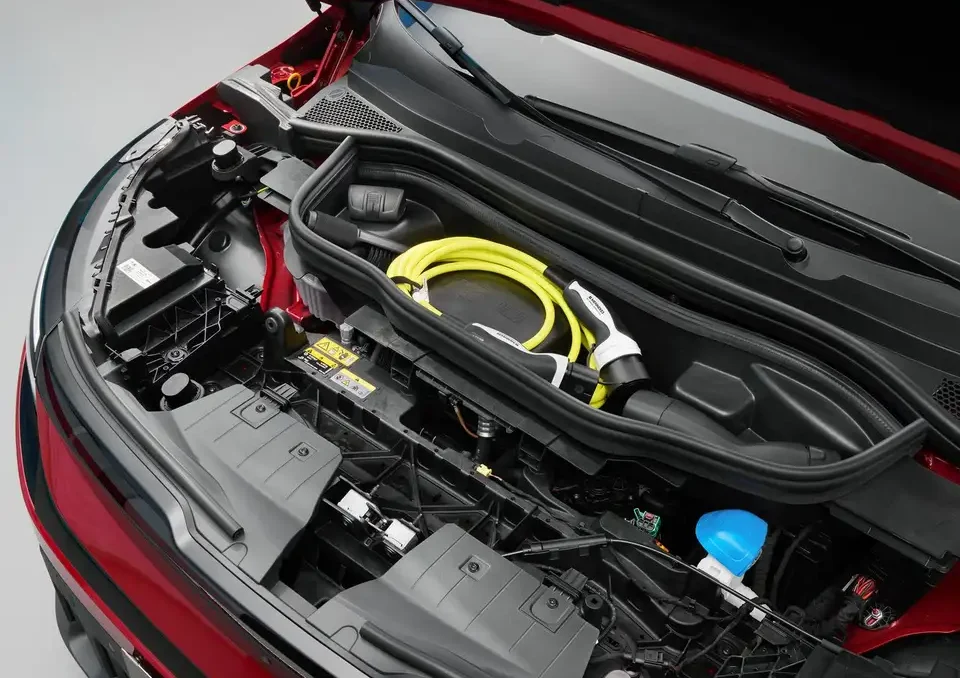
| DC Fast Charging | 50 kW (Epiq 35) / 90 kW (Epiq 40) / 133 kW (Epiq 55) |
| AC Charging | 11 kW (all versions) |
| Curb Weight | 3,400 lbs (LFP) / 3,567 lbs (NMC) |
| Length | 164.2 inches |
| Wheelbase | 102.4 inches |
| Cargo Volume | 16.8 cu-ft / 47.5 cu-ft (seats folded) |
| Frunk | 1.5 cu-ft |
| European MSRP | From €26,000 / £24,950 |
| U.S. Market Estimate | $27,500–$31,000 (Market Estimate — no official U.S. pricing confirmed) |
| On Sale | 2026/2027 |
The numbers already tell a compelling story for an entry-level electric. But the real engineering decisions behind the Epiq only become clear when you dig into how Škoda actually built it.
The Boldest Face on Any Compact Electric SUV Right Now
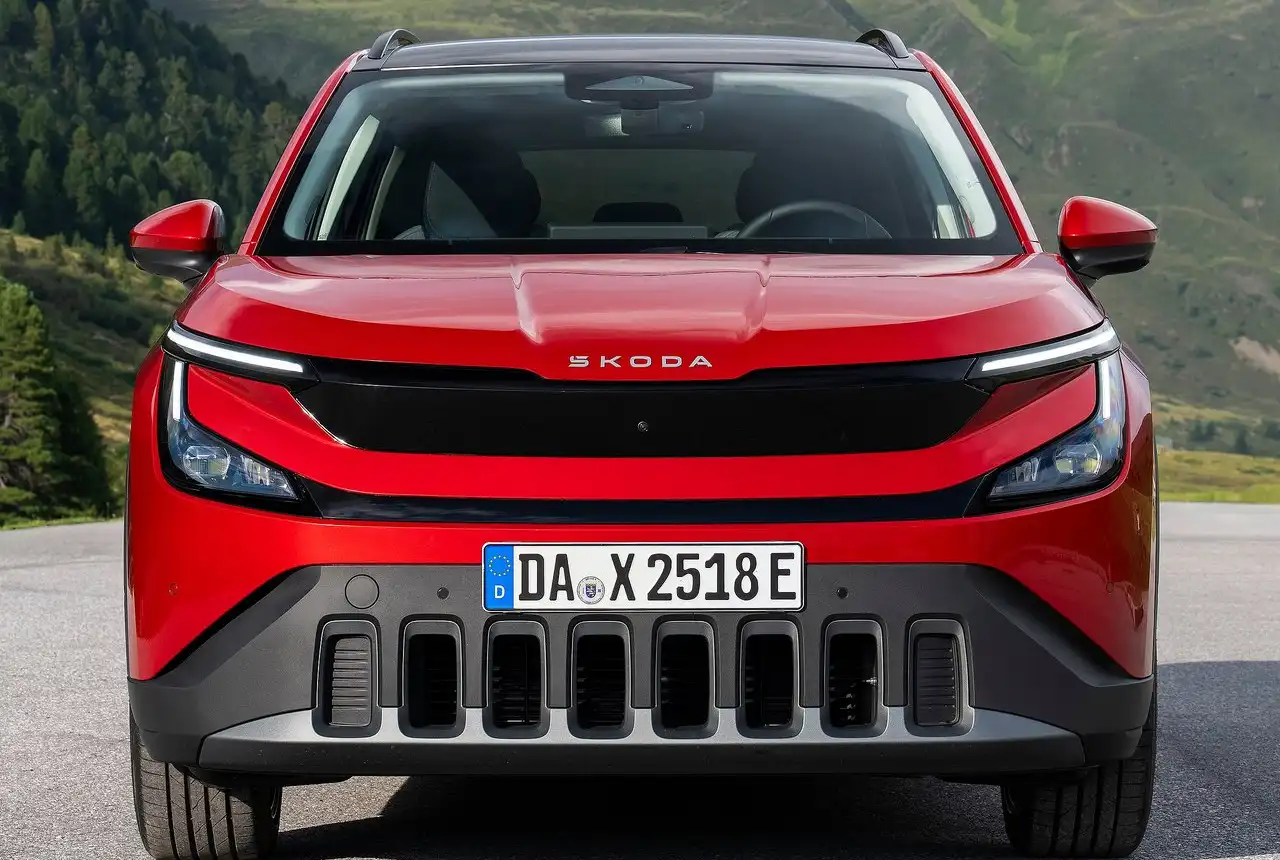
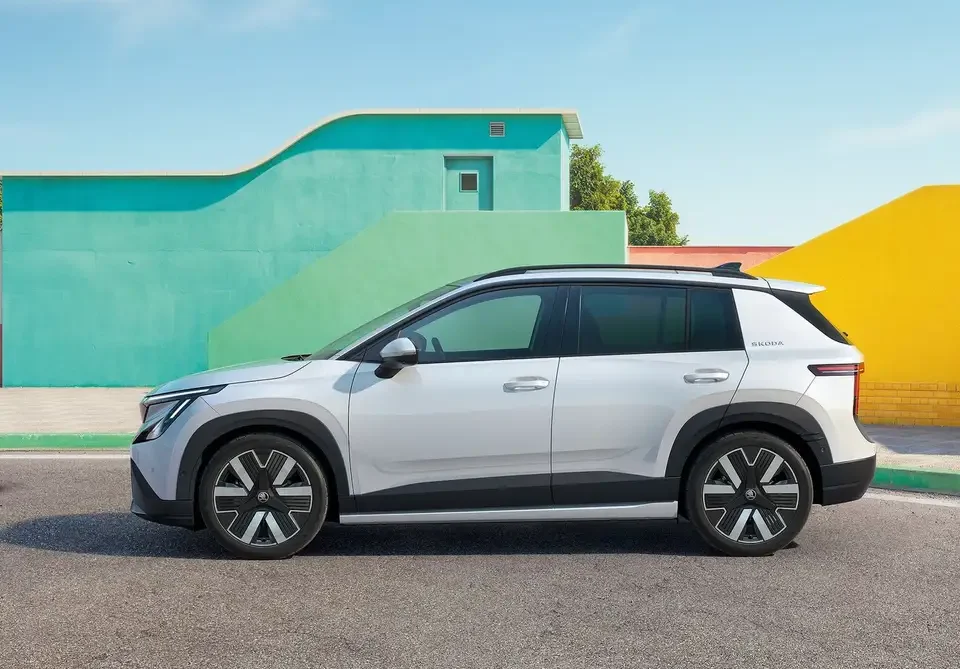
The first thing you notice walking up to the Epiq is that it makes no attempt to look futuristic. It’s geometric, solid, and deliberate — the bodywork is the argument, not just the packaging.
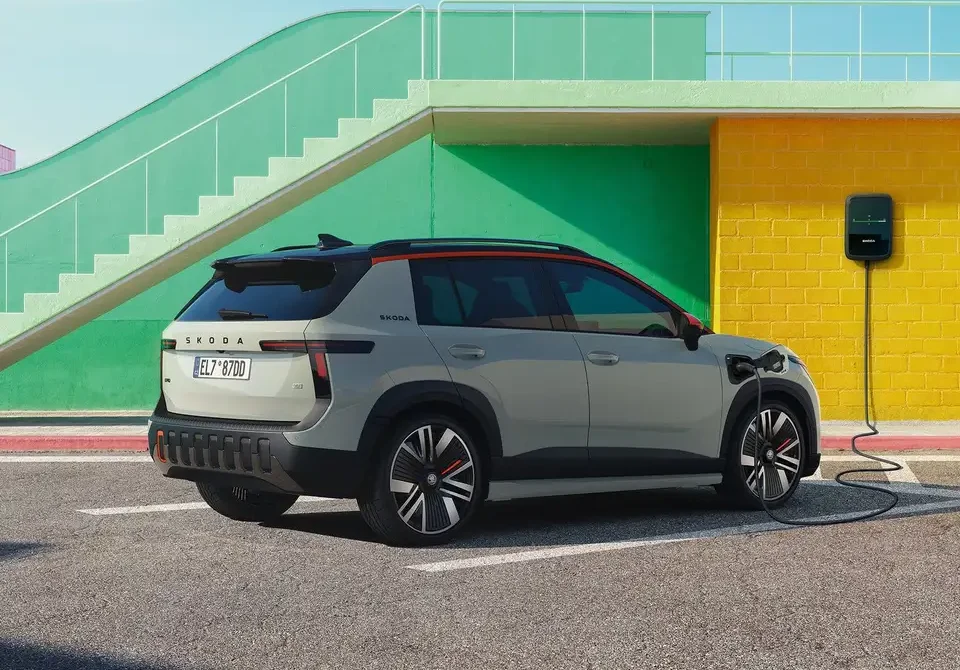
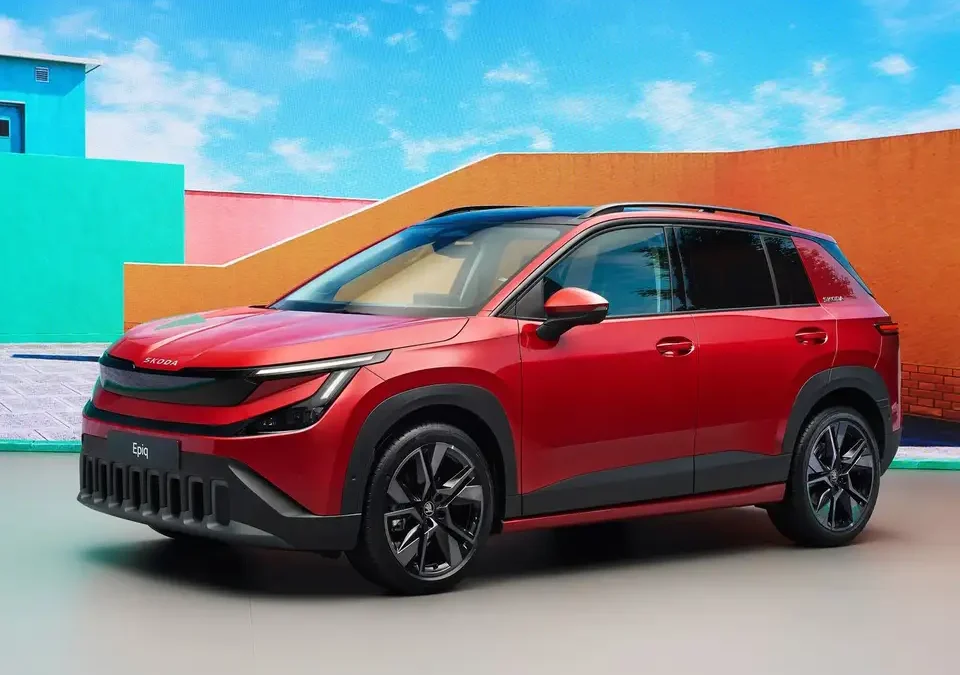
Up front, the traditional grille is gone entirely. In its place sits a flat, glossy black panel called the “Tech-Deck Face,” housing all the radar sensors and ADAS hardware behind a smooth, aerodynamically clean surface. The lighting signature uses T-shaped LED daytime running lights at the hood corners, with the main headlights recessed in a darkened lower pocket — a look that references a hockey stick more than anything else in the segment.
From the side, the proportions are intentionally short and tall. Front and rear overhangs were trimmed to the absolute minimum to push usable space inward. Wheel options run from 17 to 20 inches, all featuring closed aerodynamic designs.
At the rear, small winglets on the wheel arches do double duty: reducing turbulent airflow separation and deflecting road debris away from trailing vehicles. Door handles are conventional and physical — a deliberate call to ensure cold-weather reliability and eliminate electrical failure points.
All of this aerodynamic discipline results in a drag coefficient of 0.275, an outstanding number for a tall-roofed, truncated-tail crossover.
A Cabin That Finally Moves Past Hard Plastic
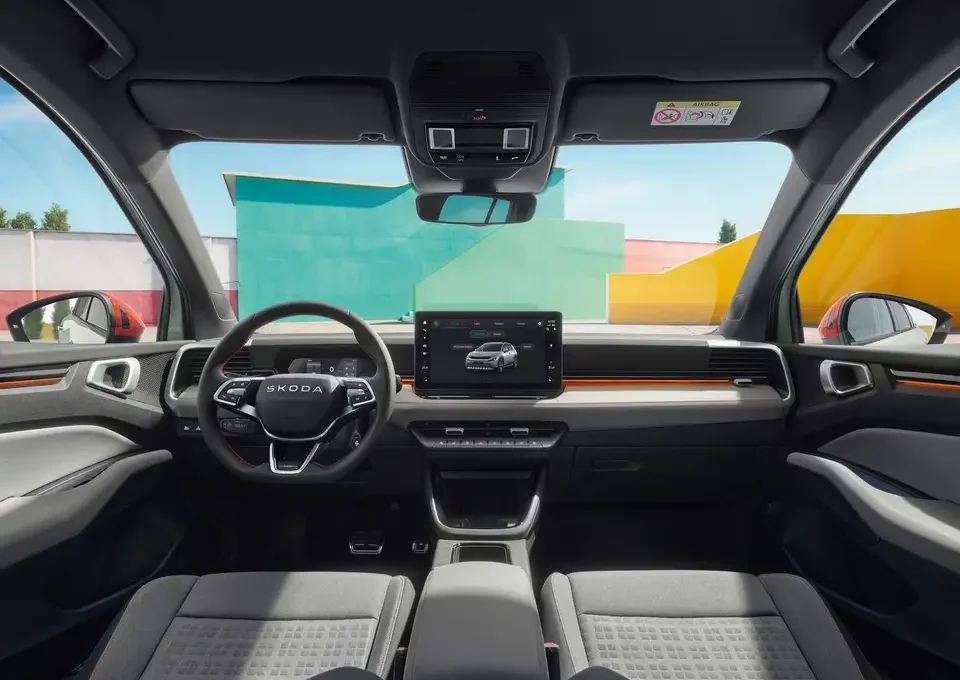
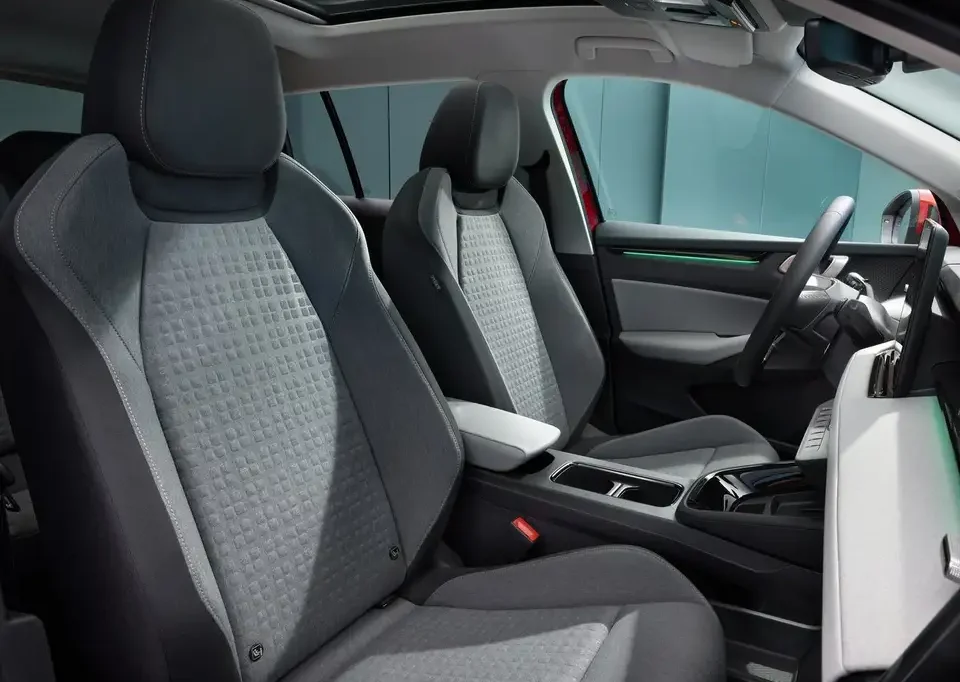
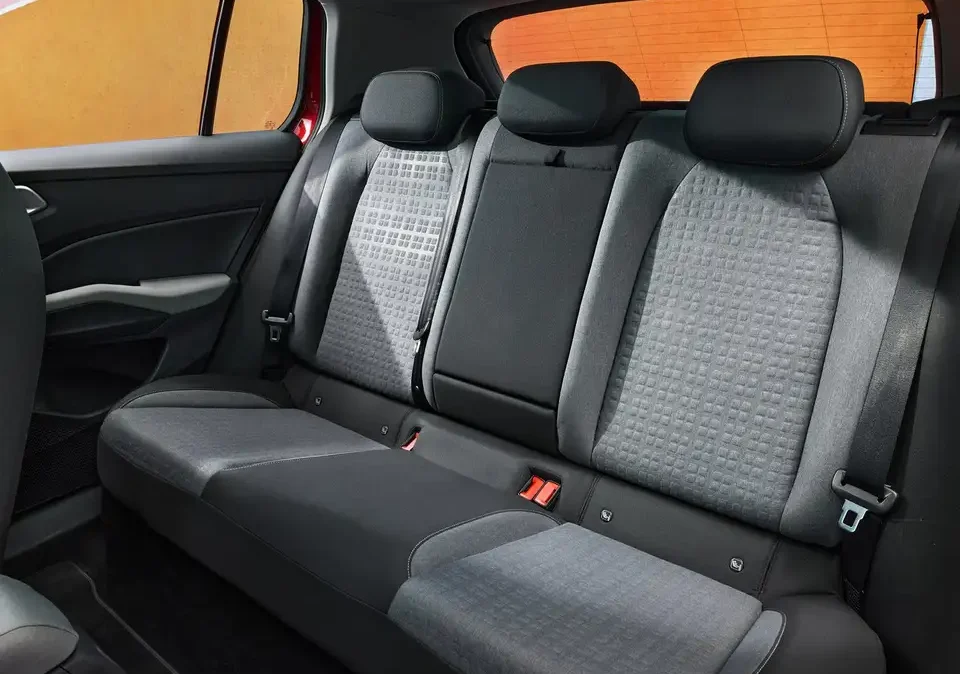
Anyone who has criticized the hard-plastic interiors of early VW Group EVs will notice the difference the moment they sit inside the Epiq. Škoda replaced the brittle surfaces with three-dimensional textured soft-touch panels, and nearly all seat upholstery is made from recycled PET fabric. The dashboard uses a high-resistance synthetic mesh called “Techtona” across its main visual areas.
Interior themes come in three packages: Studio, Loft, and Suite, with accent options in white, mint green, bronze, or Navajo Orange — the latter exclusive to the limited First Edition launch series.
The instrument cluster is intentionally minimal: a 5.2 to 5.3-inch screen dedicated to the essentials — speed, state of charge, remaining range, and primary navigation cues. That small size isn’t a compromise. It keeps the top of the dashboard low, widening the forward sight line in tight urban intersections where it matters most.
Big Screen, Real Buttons and Rear Seat Space That Shocks
The infotainment system runs on a 13-inch floating touchscreen powered by Google-based automotive software — a meaningful leap in fluidity and touch responsiveness over the MIB3 and MIB4 systems the VW Group previously used.
Directly below the air vents, a row of physical shortcut buttons handles the functions you reach for constantly: climate control, drive mode selection, seat and steering wheel heating, defrosting. Nothing buried three menus deep.
The center console holds 26 liters of useful storage and a dual wireless charging pad with active air-cooling to prevent phone overheating during GPS navigation sessions. In the rear, the MEB+ architecture delivers genuine head and legroom for four adults standing 6’1″ without compromise. Cargo volume stands at 16.8 cu-ft with seats up, expanding to 47.5 cu-ft with the rear seats folded.
The cabin’s undeniable strength is spatial efficiency: no direct competitor in this segment comes close to 16.8 cu-ft. The real-world limitation is the base Epiq 35, which caps DC fast charging at 50 kW — a bottleneck that makes highway charging stops significantly longer than those of the upper trims.

Performance, Range and the Version That Actually Defines the Epiq
The Epiq comes in three versions, and the gap between them goes well beyond horsepower.
The Epiq 35 and Epiq 40 use a Lithium Iron Phosphate (LFP) battery with 37.0 kWh of usable capacity. LFP chemistry eliminates cobalt and nickel from the equation, cutting cost and extending long-term durability. Owners can charge to 100% daily without accelerating electrode degradation. The tradeoff is reduced performance in extreme cold, and the base version’s 50 kW DC ceiling.
The Epiq 35 delivers 114 HP and 197 lb-ft of torque, hitting 0–60 mph in approximately 10.5 seconds with a WLTP range of up to 196 miles. Perfectly adequate for daily urban driving. For road trips, that DC charging limit hurts.
The Epiq 40 carries the same battery but with the inverter remapped to 133 HP. The 0–60 drops to around 9.2 seconds and DC charging rises to 90 kW, covering 10% to 80% state of charge in 28 minutes. It’s the sweet spot of the lineup.
The Epiq 55 is a different machine entirely. Its NMC battery delivers 51.5 kWh of usable capacity, 208 HP, 214 lb-ft of torque, and a 0–60 time of approximately 6.8 seconds. Range extends to 274 miles and DC charging peaks at 133 kW, reaching 80% in roughly 25 minutes. The cost is extra weight — 3,567 lbs versus 3,400 lbs for the LFP versions — and a battery chemistry that demands discipline: frequent 100% charges will accelerate degradation over time.
Across all versions, efficiency holds remarkably steady at 13.0 to 13.1 kWh/100 km — the equivalent of 161 MPGe by U.S. measurement standards.
Pricing and Market Reality: What the Epiq Means for American Buyers
In Europe, the Epiq opens at £24,950 in the UK and approximately €26,000 on the continent, with the First Edition topping out at £31,450. The pricing strategy is straightforward: match the cost of a comparable gas-powered SUV.
For the U.S. market, the picture is more complicated. Škoda has no American distribution network, and the brand’s cars have not been federalized for sale in the United States. If the Epiq were hypothetically imported and homologated, Market Estimate pricing would land between $27,500 and $31,000, depending on battery variant — a range that puts it uncomfortably close to the Tesla Model 3 after federal EV tax credits under the Inflation Reduction Act.
Critically, because the Epiq is manufactured in Spain and uses non-North American battery supply chains, it would not qualify for the $7,500 IRA federal tax credit, effectively pricing it out of competitiveness against credit-eligible domestic and Mexican-assembled rivals.
In its actual competitive landscape, the Epiq’s closest U.S.-market analogs would be the Chevrolet Equinox EV, the Hyundai Kona Electric, and the Nissan Ariya base trim — all of which carry either IRA credit eligibility or established dealer networks.
Insurance premiums for an imported European EV in this class would realistically run $1,400 to $2,000 annually depending on the driver profile and state. Maintenance costs are structurally lower than a combustion equivalent — no oil changes, no clutch — but parts sourcing and specialized labor for a European EV without a U.S. dealer network add real risk to long-term ownership.
For financing, lenders typically treat imported vehicles without official U.S. distribution as higher-risk collateral, which can mean less favorable loan terms. Buying at launch without an established service infrastructure rarely makes financial sense.
The Epiq makes the most rational case for buyers with home charging already in place, primarily urban driving patterns, and a priority on interior space above all else.
Frequently Asked Questions About the Škoda Epiq
What is the real-world range of the Škoda Epiq?
LFP versions are rated up to 196 miles under WLTP. The NMC version reaches 274 miles. Expect 15–20% less in real-world conditions depending on speed and temperature.
Does the LFP battery in the Epiq 35 and 40 last longer than the NMC?
Yes. LFP chemistry handles daily 100% charges without accelerated degradation. The NMC battery in the Epiq 55 should be kept at an 80% daily limit to preserve long-term cell health.
Who are the Škoda Epiq’s main competitors?
In Europe: Renault 4 E-Tech, Citroën ë-C3, Peugeot E-2008, and Kia EV3. In a U.S. context: Chevrolet Equinox EV base, Hyundai Kona Electric, and Nissan Ariya entry trim.
Is the Škoda Epiq sold in the United States?
No. Škoda has no U.S. distribution network. The brand’s vehicles are not federalized for the American market, and no official launch has been announced for North America.
Does the Škoda Epiq Earn Its Place?
The Epiq is a rational buy built around one argument that nobody can dispute: no electric compact in this price bracket delivers more usable cargo space. Getting 16.8 cu-ft into a 164-inch vehicle is a genuine engineering achievement, not a marketing claim.
The Epiq 40 is the version that makes the most sense — balancing purchase price, charging speed, and battery longevity in a way neither the 35 nor the 55 fully achieves.
For maximum range and the fastest charging, the 55 NMC is the answer, as long as the owner respects the 80% daily charge discipline.
This car is not for buyers who need frequent highway fast charging on the base trim, nor for anyone without a home charging setup.
The Epiq is proof that affordable and spacious don’t have to be mutually exclusive in the electric age.
What do you think — does the Škoda Epiq’s pricing make sense against the Hyundai Kona Electric and the Chevy Equinox EV, or does the lack of IRA credit eligibility kill the deal before it starts? Drop your take in the comments below.
Share this article
Related posts