What Actually Changes in the 2026 Toyota HiLux
The 2026 Toyota HiLux arrives with a revised diesel engine, a new 48V mild-hybrid system, and for the first time, a fully electric variant. Here’s what’s new, the full specs, and how it stacks up.
2026 Toyota HiLux: A Pickup That’s Hedging Its Bets on Three Different Powertrains
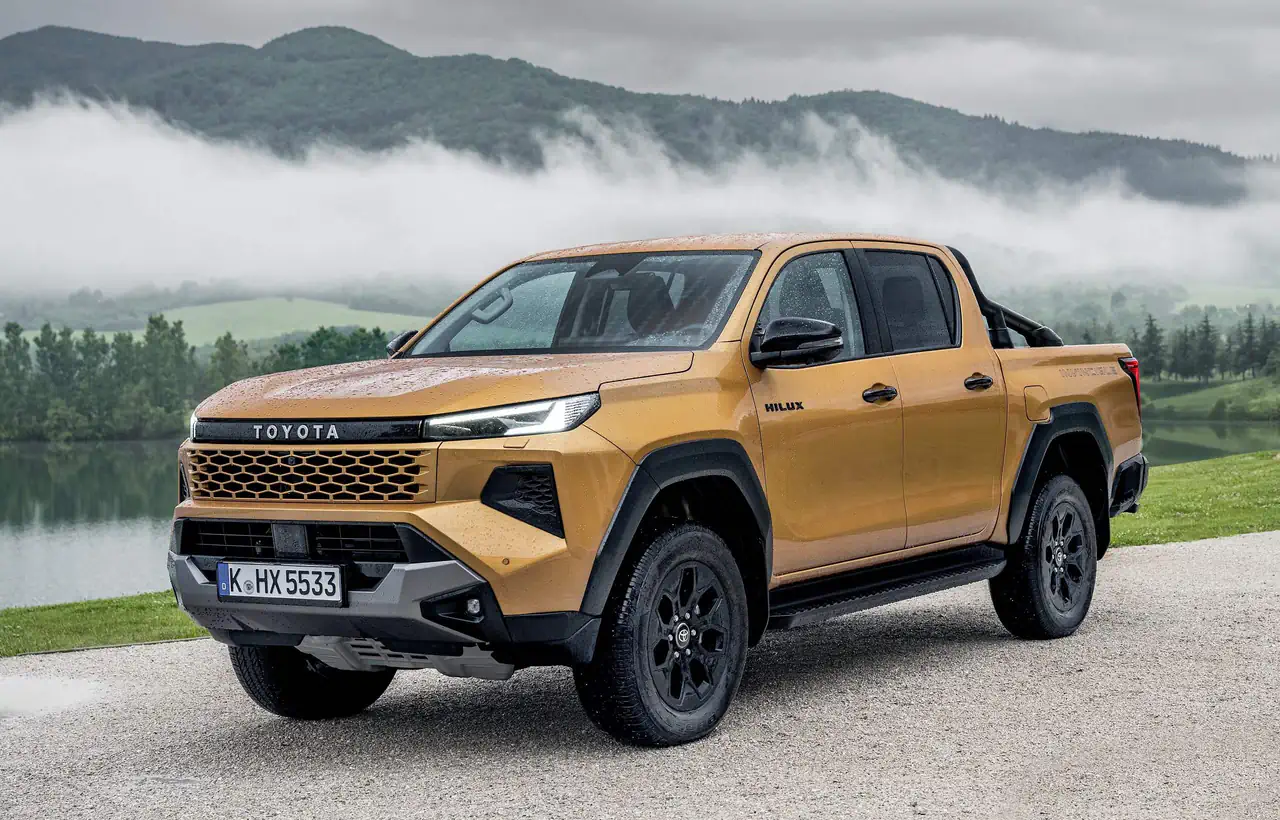
Toyota didn’t pick a single direction for the 2026 HiLux. Instead, the lineup now spans three powertrains: the familiar 2.8-liter diesel, a new 48V mild-hybrid setup, and for the first time, a fully electric HiLux.
This marks the ninth generation of the model, and it’s far more than a styling refresh. Toyota reworked the chassis structure, the suspension, and a good chunk of the onboard electronics.
In international markets, the HiLux goes head-to-head with trucks like the Ford Ranger and the Volkswagen Amarok, both of which have leaned hard into more power and updated tech in recent years.
The diesel and 48V hybrid versions are rolling out first in markets where those powertrains make the most sense, while the electric variant is positioned for regions pushing toward zero-emission fleets and low-emission zones.
Quick Specs
| Specification | Details |
|---|---|
| Category | Mid-size pickup (double cab) |
| Powertrain | 2.8L 1GD-FTV diesel / 48V mild-hybrid and BEV (international versions) |
| Power | 204 hp (diesel) / 282 hp combined (BEV) |
| Torque | 369 lb-ft (diesel) / 348 lb-ft (BEV) |
| Transmission | 6-speed automatic or 6-speed manual |
| Drivetrain | 4×4 (diesel) / permanent AWD (BEV) |
| 0-60 mph | approx. 10.2-10.4 sec (diesel) / approx. 9.4-9.6 sec (BEV) |
| Top Speed | 112 mph (diesel) / 87 mph (BEV, electronically limited) |
| Fuel Economy | approx. 22-26 mpg combined (diesel) |
| Range | 159 miles combined / up to 236 miles in urban driving (BEV, WLTP) |
| Launch Date | 2026 model year, with the electric variant arriving in select markets mid-year |
Before getting into how each powertrain drives, it’s worth looking at how Toyota reshaped the HiLux’s body and cabin to fit all this technical variety under one roof.
A Redesigned Body for the Next Generation of Mid-Size Trucks
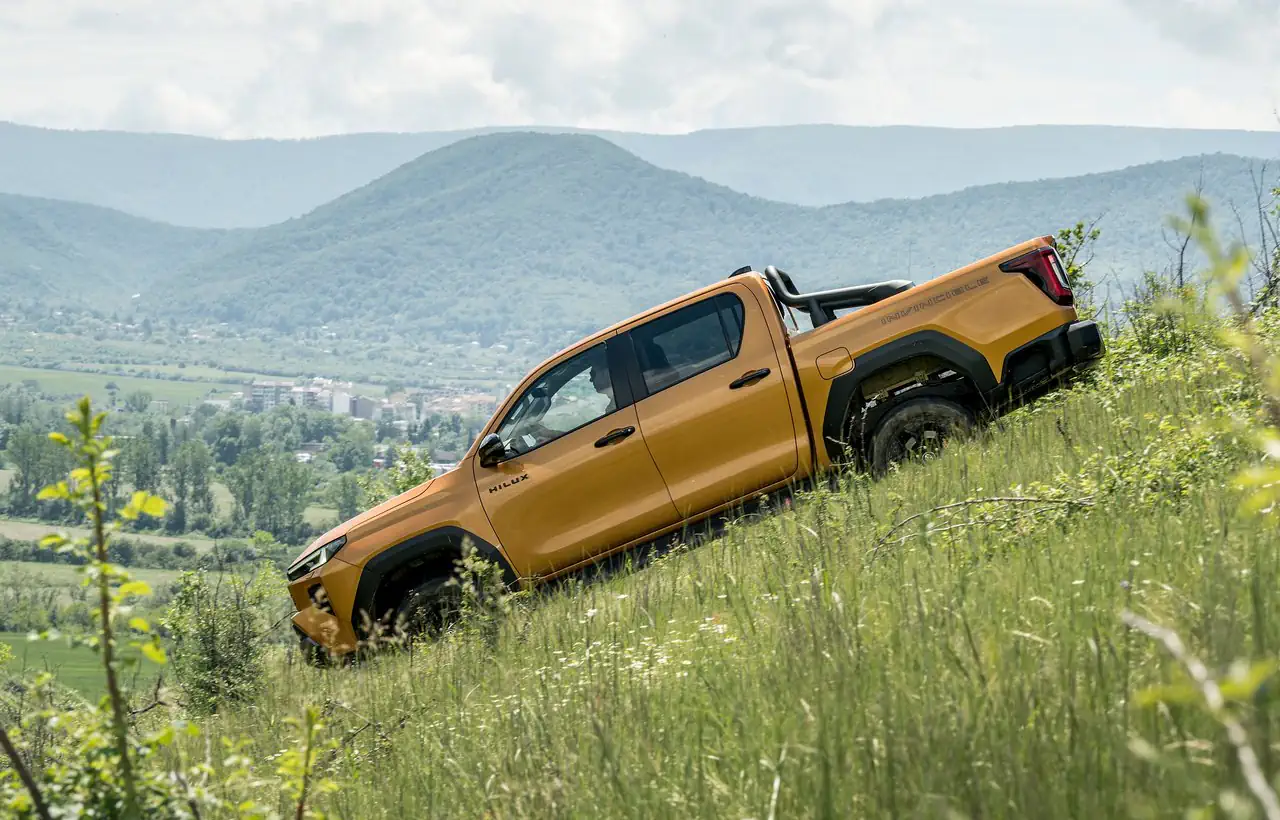
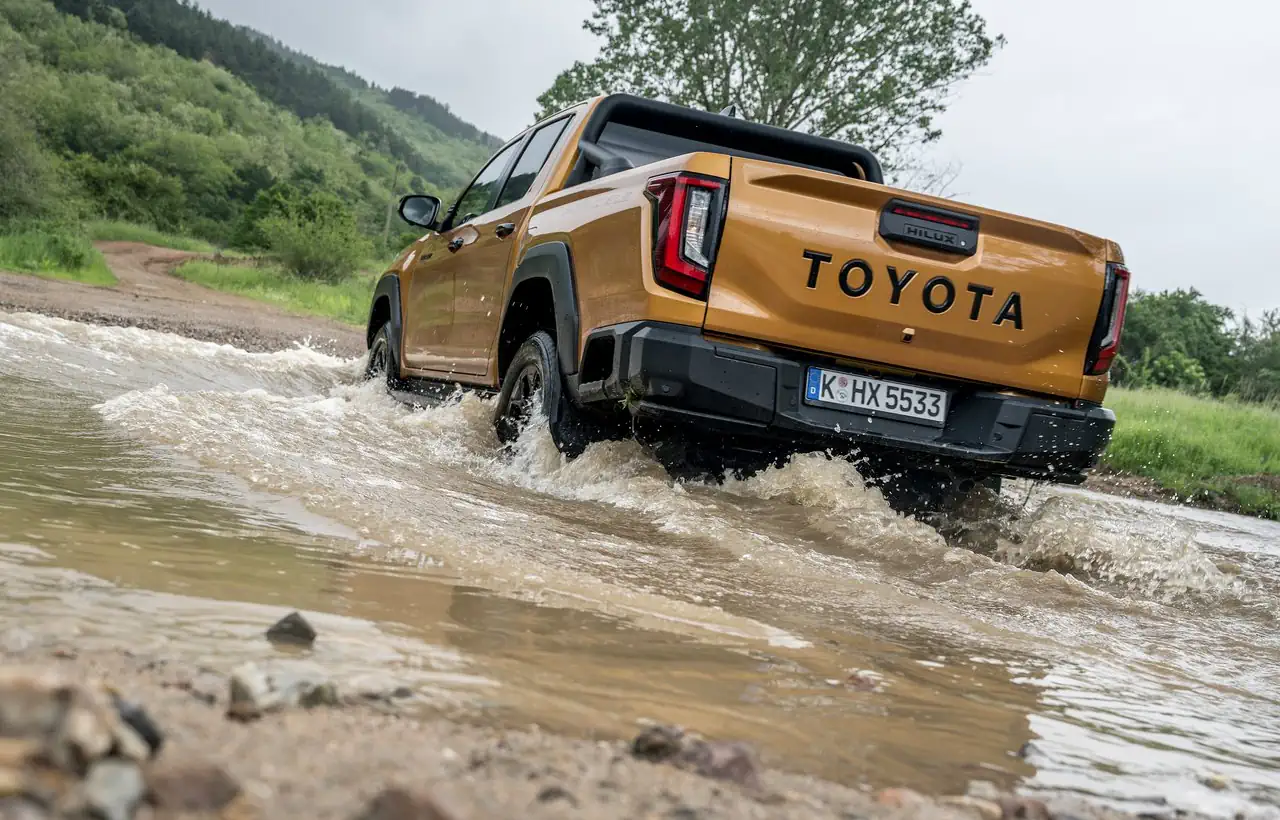
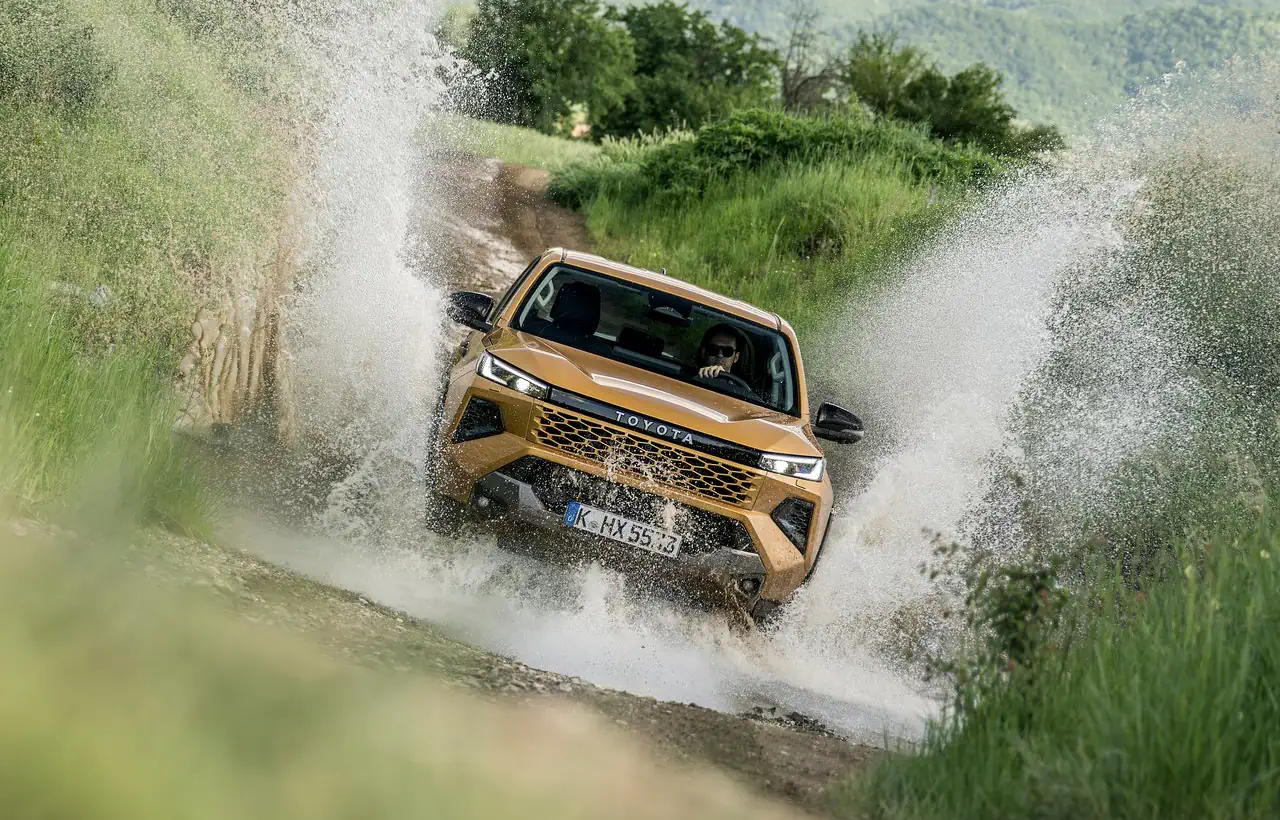
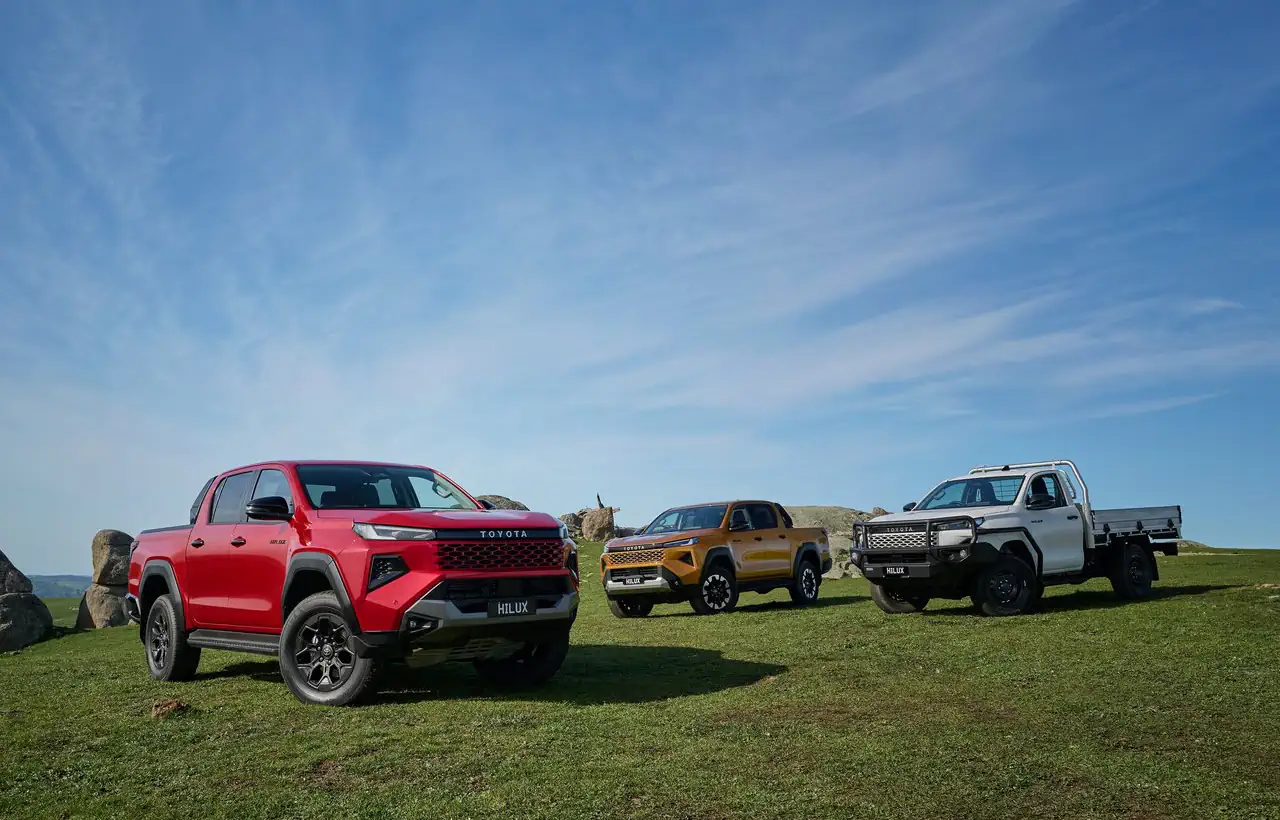
The front end of the 2026 HiLux is bolder, with a larger trapezoidal grille and sharper full-LED headlights. The look borrows a bit from the design language of the Land Cruiser Prado.
On diesel versions, the grille has noticeably larger openings, since the 2.8-liter engine needs more airflow to cool the intercooler and radiator. The electric version, by contrast, has a nearly closed-off front fascia.
Along the sides, the BEV also drops the plastic wheel arch trim found on diesel models. That’s a deliberate move to cut aerodynamic drag and squeeze out a bit more range.
For buyers who want a more aggressive stance, the wide-track variant adds body-colored fender flares and 18-inch diamond-cut wheels, giving the truck a noticeably wider footprint.
Dimensions stay consistent across the lineup: 209.4 inches in length and a 121.4-inch wheelbase for every version. Width varies slightly, from 73.0 inches on the BEV to 74.2 inches on diesel models with the wider fender trim.
In the end, this is still a truck built around the same toughness Toyota is known for, just with details that make it obvious which powertrain sits under the hood.
A More Refined Cabin With Added Tech for the 2026 HiLux
Cabin Quality Pushes the HiLux Closer to SUV Territory
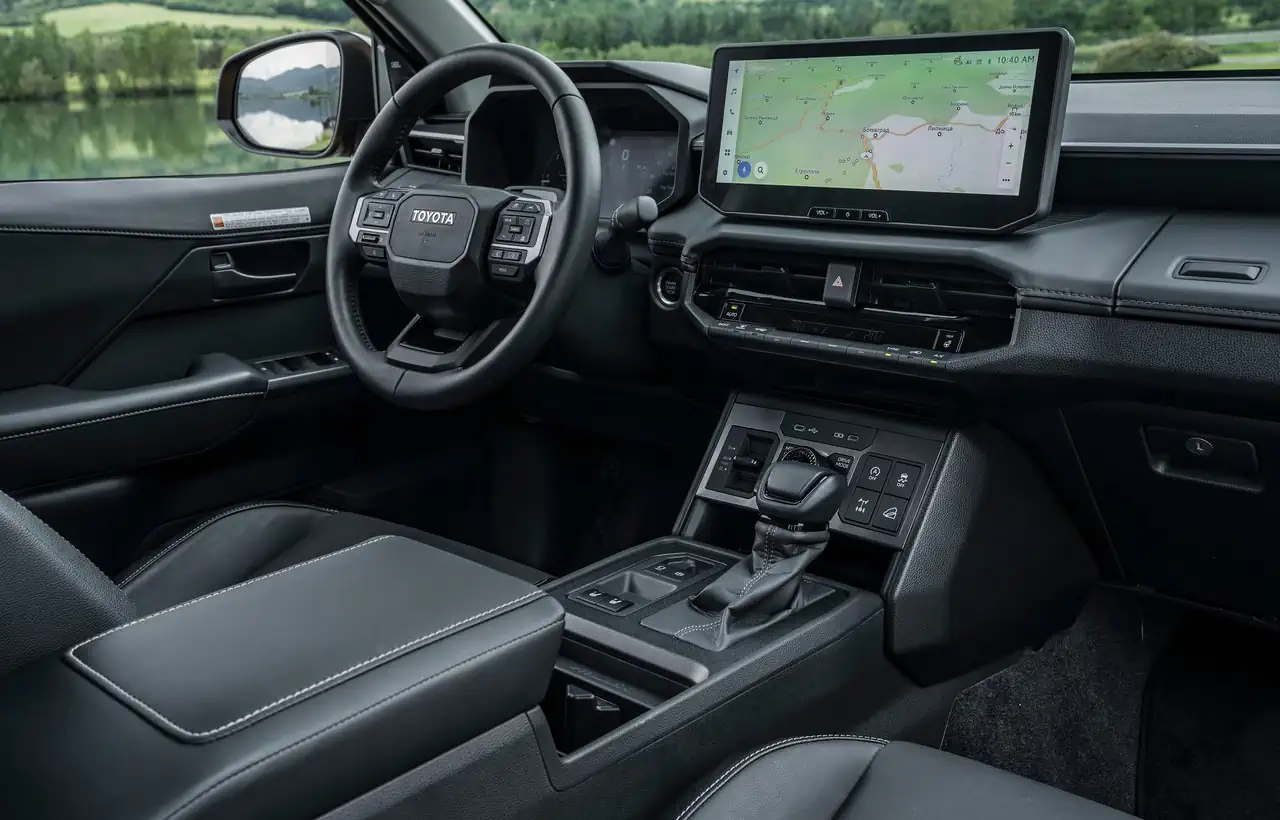
The dashboard on the new HiLux gets soft-touch plastics across the top, with piano black trim on the center console. On base trims, the plastics lower in the cabin remain harder and more durable, built for buyers who need to hose down the interior after a day of work.
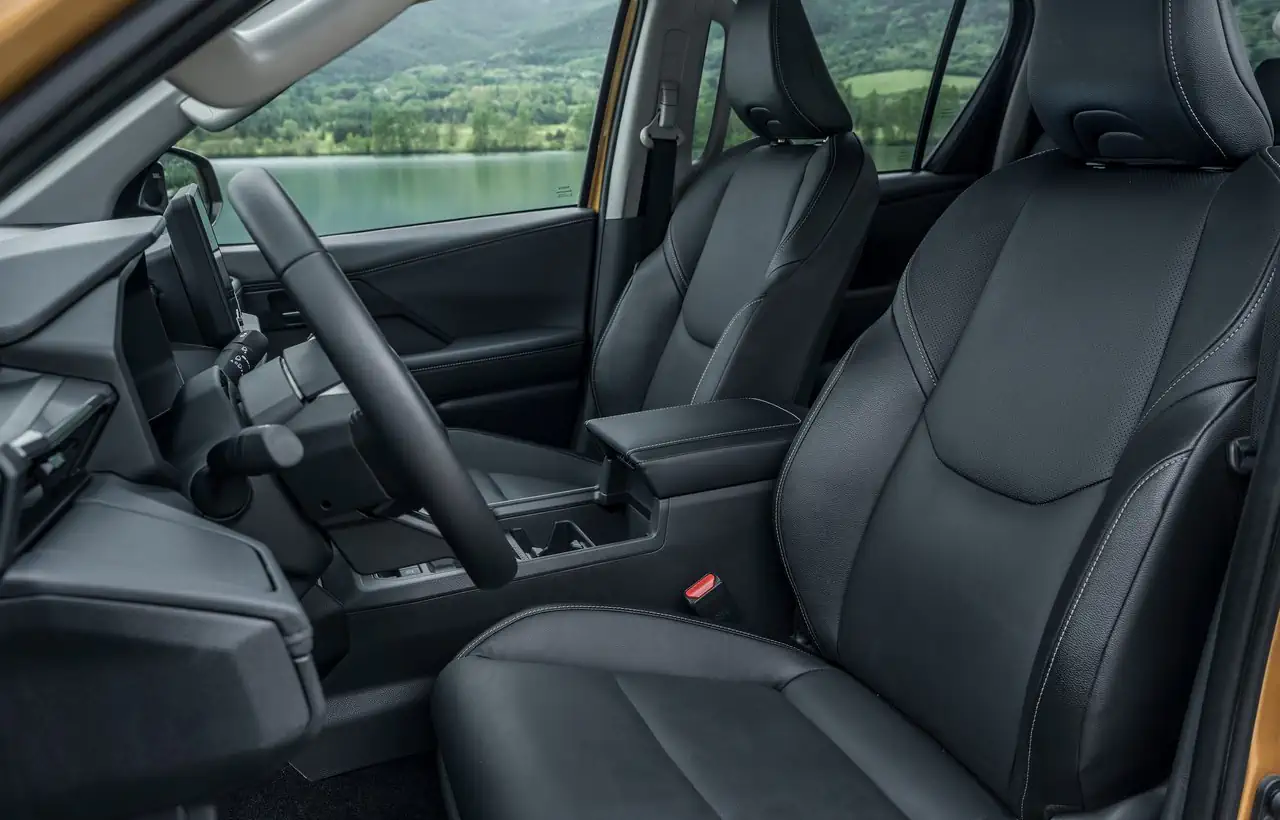
Front seats now come available in perforated synthetic and genuine leather, with power adjustments starting on mid-level trims. The top-spec wide-track variant adds ventilated front seats, a welcome feature for buyers in hot climates.
The steering column adjusts for height and reach, and higher trims get a heated steering wheel. Overall, the cabin has moved well past purely utilitarian and now competes more directly with pricier trucks and SUVs.
Screens, Connectivity, and Rear-Seat Space
The touchscreen tops out at 12.3 inches on Mid, High, Invincible, and top trims, with wireless Apple CarPlay and Android Auto standard. The digital instrument cluster matches that size and offers four different display modes.
On the safety side, Toyota Safety Sense 3.0 brings radar- and camera-based automatic emergency braking, adaptive cruise control, and lane departure alerts.
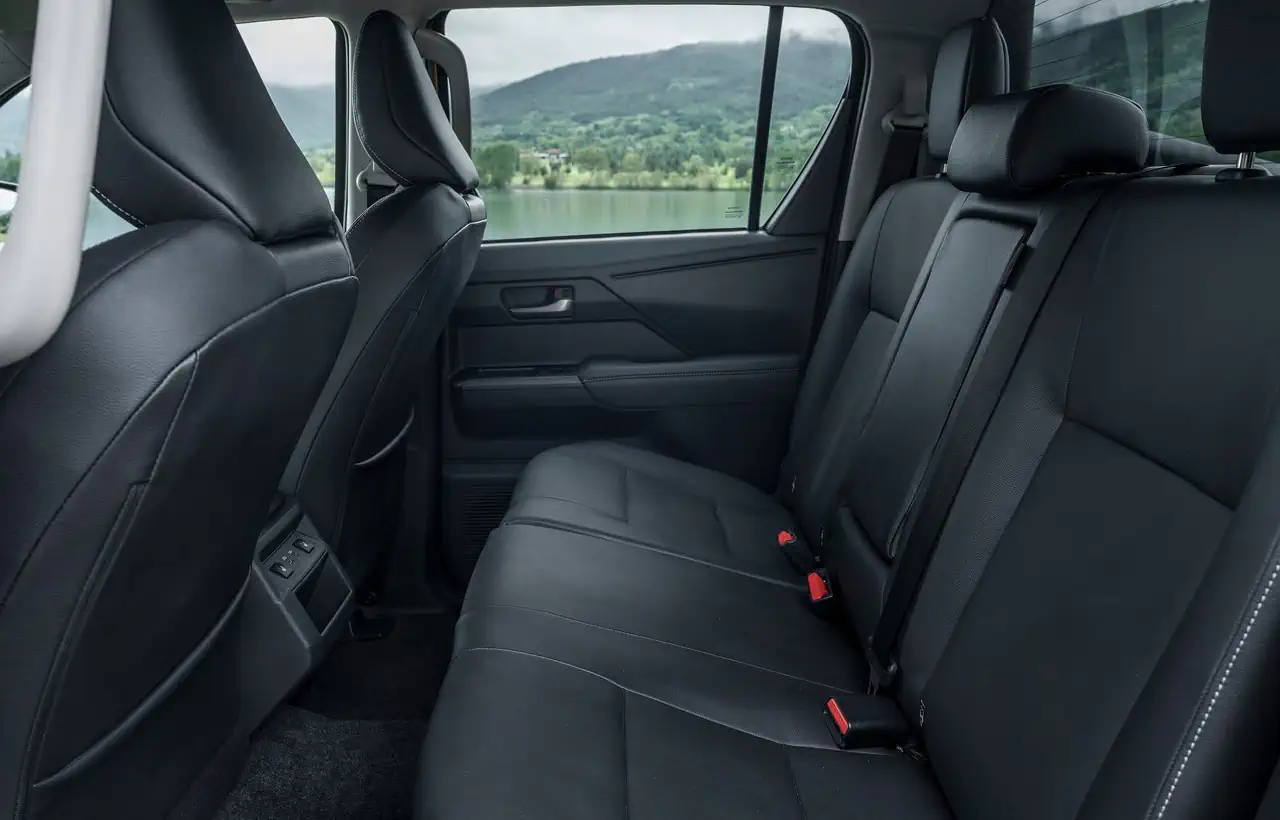
The rear bench seats three adults with three-point belts and ISOFIX child seat anchors. The weak point here is the center tunnel, which is still tall on diesel versions and eats into legroom for the middle passenger.
On the plus side, the touchscreen is quick and well-integrated. The real downside is that center rear passenger legroom, a common tradeoff in trucks with mechanical 4×4 hardware.
Under the Hood: Diesel, 48V Hybrid, or Electric, Which One Makes Sense?
The 2.8-liter 1GD-FTV diesel remains the backbone of the lineup in most markets. It’s a four-cylinder with direct injection and a variable-geometry turbo, putting out 204 hp and 369 lb-ft of torque between roughly 1,600 and 2,800 rpm.
In practical terms, that torque shows up early, which helps a lot when towing or climbing grades with a loaded bed. The 0-60 mph run takes around 10.2 to 10.4 seconds, and top speed is electronically capped at 112 mph.
For markets outside the Americas, Toyota added a 48V mild-hybrid system that helps the diesel engine get moving from a stop with less effort and smooths out the stop-start system in traffic. That setup hasn’t been confirmed for North American availability yet.
The BEV is a different story altogether. With two electric motors, one up front and one in the rear, it produces a combined 282 hp and 348 lb-ft of torque available instantly. That drops the 0-60 mph time to roughly 9.4 to 9.6 seconds, though top speed is limited to 87 mph to protect battery life.
On fuel economy, the wide-track diesel variant returns about 22 mpg in city driving and 25 mpg on the highway, based on official testing. The BEV’s WLTP-rated range comes in at 159 miles combined, stretching to as much as 236 miles in mostly urban driving thanks to regenerative braking.
For long highway hauls with a loaded trailer, the diesel still makes more sense. For urban fleets and city-based delivery work, especially in regions with emissions restrictions, the electric variant has a clearer advantage.
Pricing and Ownership Costs: Does the 2026 HiLux Make Financial Sense?
In markets where Toyota trucks hold their value well, the HiLux’s resale strength remains a major selling point, something that factors heavily into the decision for buyers planning to keep a truck for years.
Based on UK pricing as a reference point, the base diesel Active 4WD trim starts around US$ 57,900, while the range-topping Invincible BEV comes in around US$ 82,000 before any EV incentives or clean-air zone exemptions.
Toyota’s scheduled maintenance program covers service intervals from 10,000 miles up to about 37,000 miles, helping keep costs predictable. The base warranty runs 5 years or roughly 93,000 miles, extendable to 10 years or 124,000 miles for owners who stick to dealer-network service.
On the insurance side, premiums for a mid-size truck like this typically land in a moderate range compared to full-size pickups, though the BEV variant may carry higher comprehensive coverage costs due to battery replacement values.
For buyers considering financing, the HiLux’s reputation for low depreciation tends to work in favor of resale value down the line, which can offset a higher MSRP over a typical loan term.
Early in the launch cycle, expect MSRP to sit at the higher end for top trims. Buyers willing to wait a few months often see better deals on mid-range configurations once initial demand settles.
The truck still makes the most sense for buyers who need serious towing and payload capability for work, fleet use, or rural routes, where reliability and dealer support matter more than cutting-edge tech.
Frequently Asked Questions About the 2026 Toyota HiLux
What’s the real-world fuel economy on the 2026 HiLux?
The wide-track diesel variant returns about 22 mpg in city driving and 25 mpg on the highway, according to official figures.
Is the electric version coming to the U.S.?
There’s no confirmed timeline yet for the BEV’s availability in North America.
Who are the HiLux’s main competitors?
In international markets, its biggest rivals are the Ford Ranger and the Volkswagen Amarok, both offering more powerful range-topping trims.
Is maintenance expensive on the HiLux?
Toyota’s scheduled maintenance program helps keep costs predictable, though diesel-specific parts can add up over the long run.
Does the 2026 HiLux Still Earn Its Spot at the Top?
The 2026 HiLux is more of a rational buy than an emotional one, especially while the diesel variant remains the dominant option in most lineups.
Buyers who prioritize durability, reliability, and strong resale value will find plenty to like here. Those hoping for cutting-edge EV or hybrid tech right away may need to wait a bit longer for availability to catch up.
This isn’t the right pick for someone looking to be first in line for an electric pickup, at least not yet.
The 2026 HiLux proves a truck can be both traditional and forward-looking at once, just maybe not on the same continent on the same day.
So, should Toyota prioritize bringing the 48V hybrid to more markets sooner, or is sticking with diesel for now the smarter call? Let us know what you think in the comments.
Share this article

Por: Danniel Bittencourt
15/06/2026
Related posts