Kia EV5: The Detail That Could Change Your Mind
Kia’s first global electric SUV packs a panoramic display, a full suite of driver-assist tech, and nearly 350 miles of range in some configurations. But does it really stack up against the Model Y? Here’s the full breakdown.
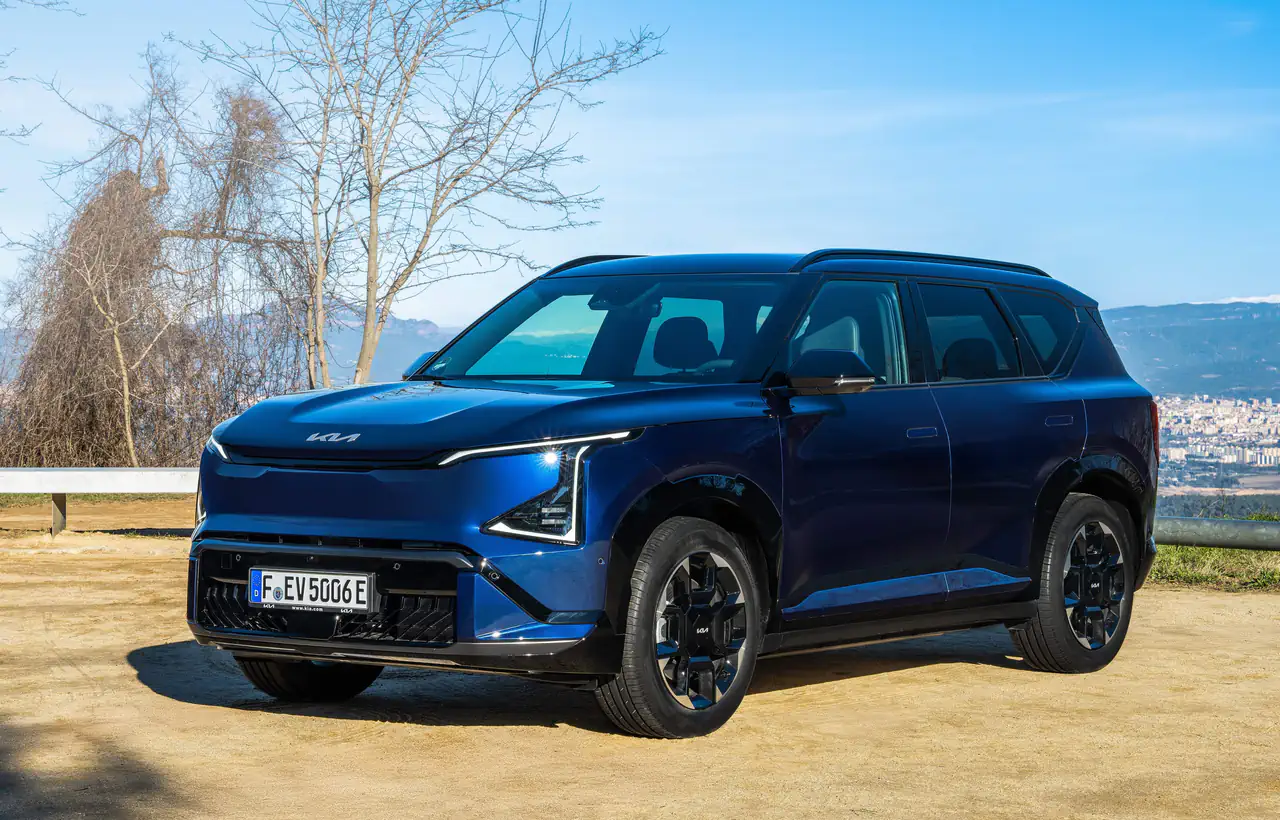
Kia EV5: Kia’s First Global Electric SUV Brings a Full ADAS Suite to the Segment
The Kia EV5 isn’t a facelift or a concept—it’s Kia’s first purpose-built electric SUV aimed squarely at families shopping in the midsize crossover space.
It first hit the road in China back in 2023, and export versions built in Korea have since rolled out to markets across Australia, Europe, and beyond, each with its own mix of battery sizes and drivetrain layouts.
For American shoppers, the EV5 lands in a crowded segment, going head-to-head with the Tesla Model Y, the Hyundai Ioniq 5, and the Toyota bZ4X—three vehicles that already have loyal followings.
Quick Facts
| Spec | Details |
|---|---|
| Category | Compact-to-midsize electric SUV |
| Powertrain | Permanent-magnet synchronous motor(s) with LFP battery; available in single-motor FWD or dual-motor AWD |
| Horsepower | 215 hp (FWD) / approx. 308 hp combined (AWD) |
| Torque | 229 lb-ft (FWD) / approx. 354 lb-ft combined (AWD) |
| Transmission | Single-speed reduction gear (automatic) |
| Drivetrain | FWD or AWD, depending on configuration |
| 0-60 mph | Approx. 8.5 sec (FWD Standard Range) to approx. 6.1 sec (AWD Long Range) |
| Top Speed | 115 mph (electronically limited) |
| Efficiency | Approx. 3.3 to 3.8 mi/kWh depending on configuration |
| Range | 249 to 345 miles (WLTP-rated, varies by battery pack and drivetrain) |
| Launch | First introduced in China in 2023; export versions arriving in international markets as 2025/2026 model years |
Those numbers only tell part of the story. What the EV5 actually feels like from the driver’s seat—and where it falls short—is where things get interesting.
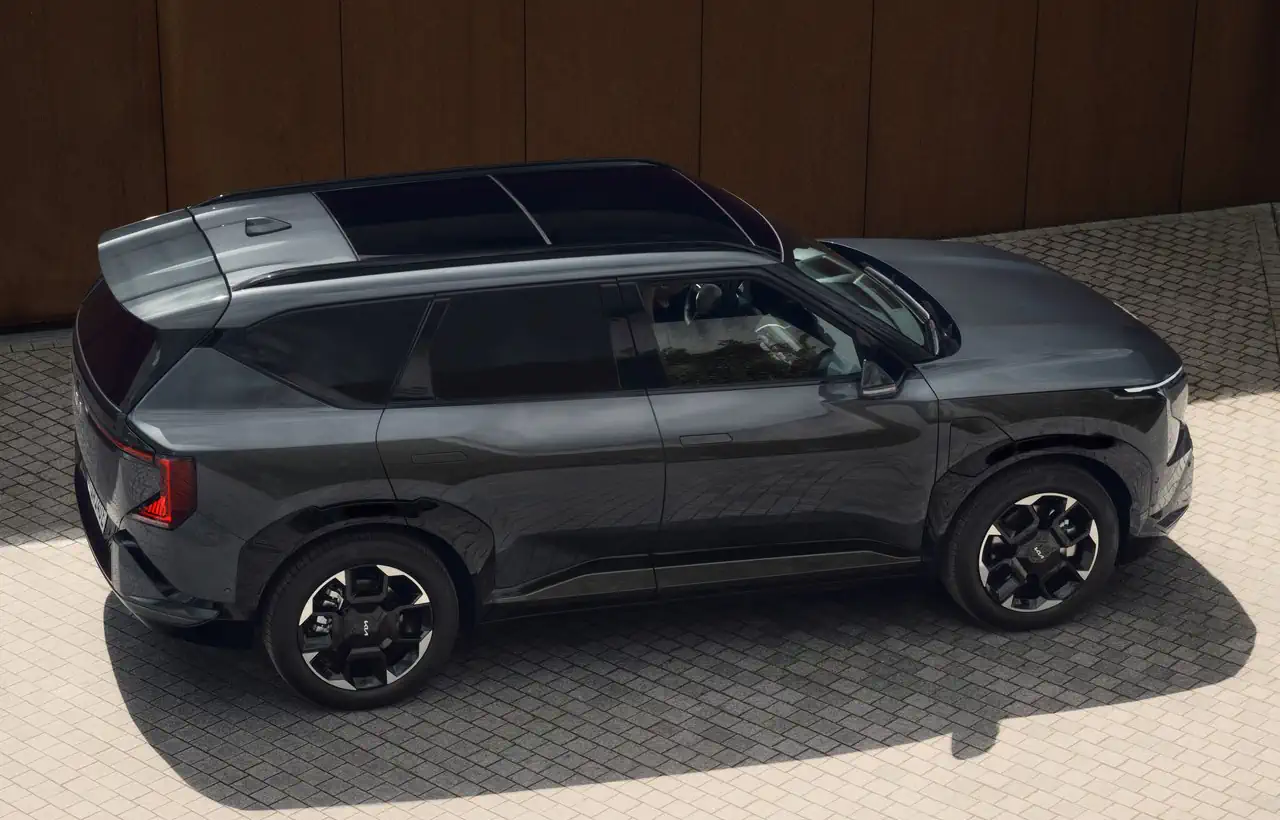
First Impressions: What This Crossover Looks Like in Person
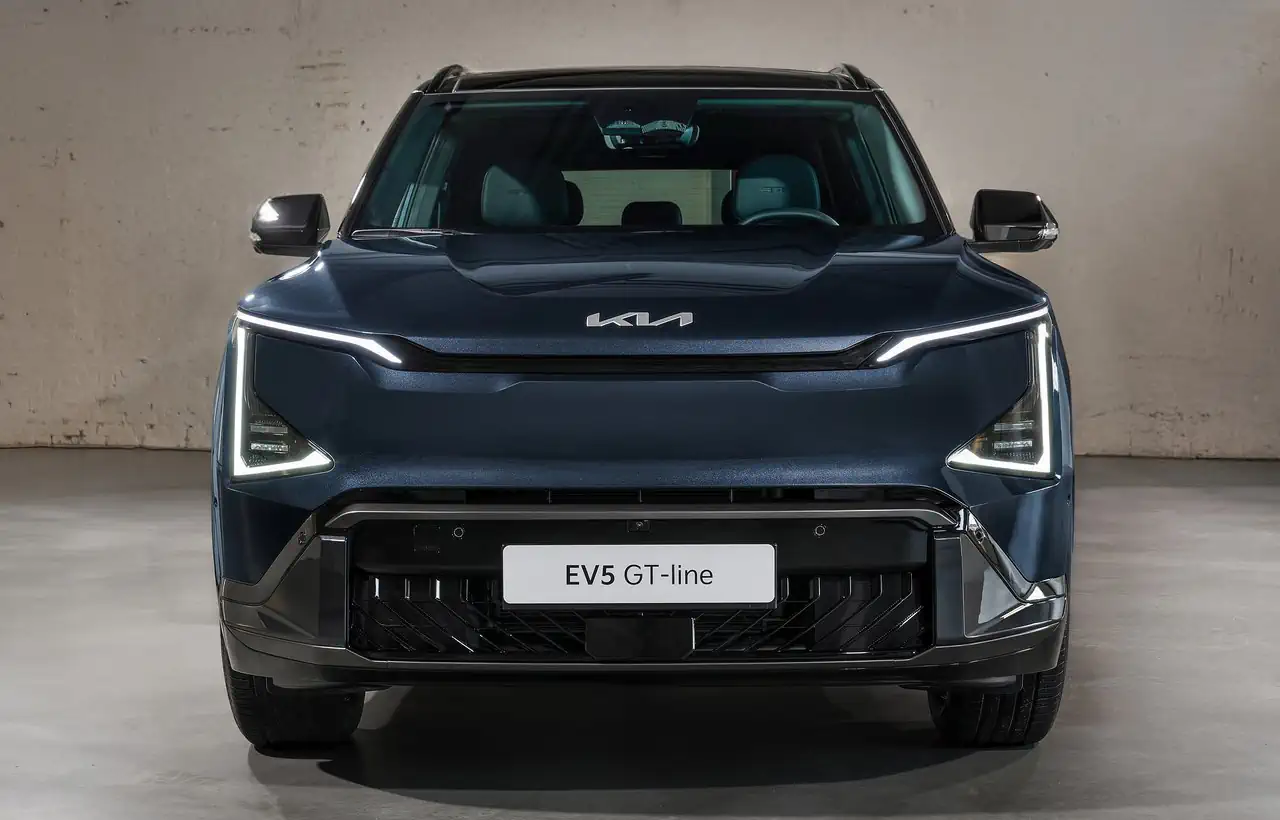
Up front, the most distinctive element is a set of LED daytime running lights arranged in what Kia calls a “Star Map” pattern, part of the brand’s current design language. The grille and hood lean into boxy, upright proportions rather than anything sporty.
From the side, the lines stay flat and deliberate, with the rear pillar cutting a sharp line down to the tailgate. This is a vehicle clearly built around interior volume, not aerodynamic flair.
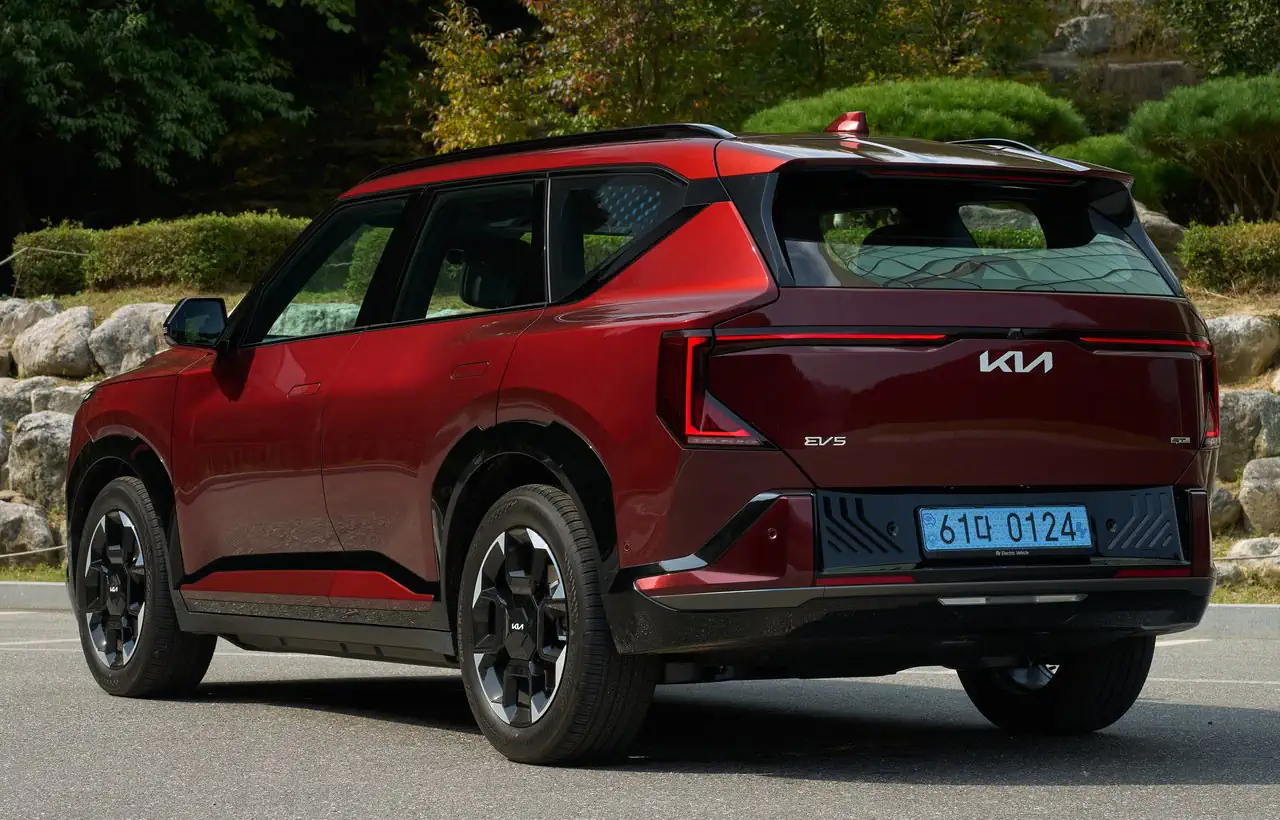
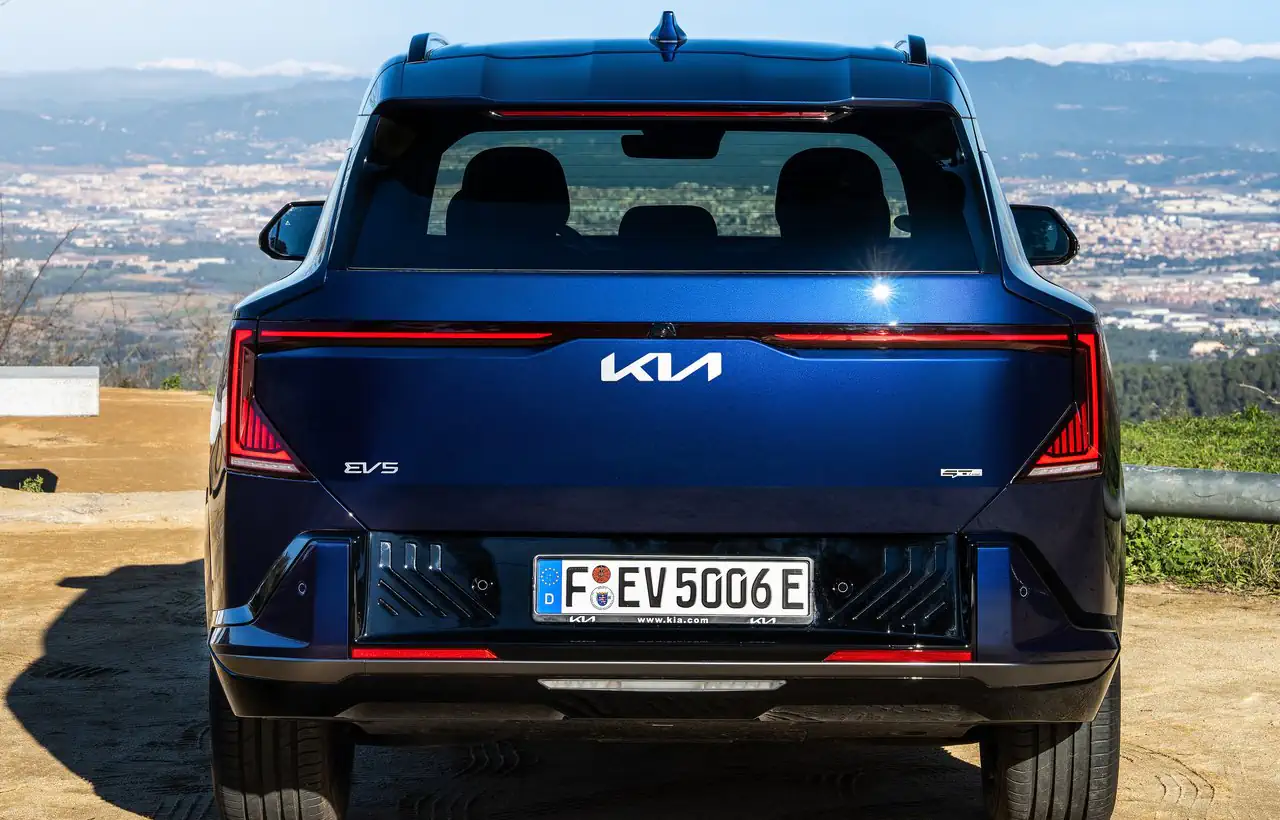
Around back, LED taillights wrap partway around the body, adding visual width and a sense of solidity to the rear end.
The overall feel leans toward “retro-futuristic” rather than sporty or sleek—reviewers have described it as a refreshing departure from the sea of look-alike crossovers on the road.
Design-wise, the EV5 builds on Kia’s “Opposites United” language seen on other recent models, but pushes it further, making it one of the vehicle’s strongest selling points against more conservative rivals.
Inside the Cabin: Materials, Seats, and First Impressions
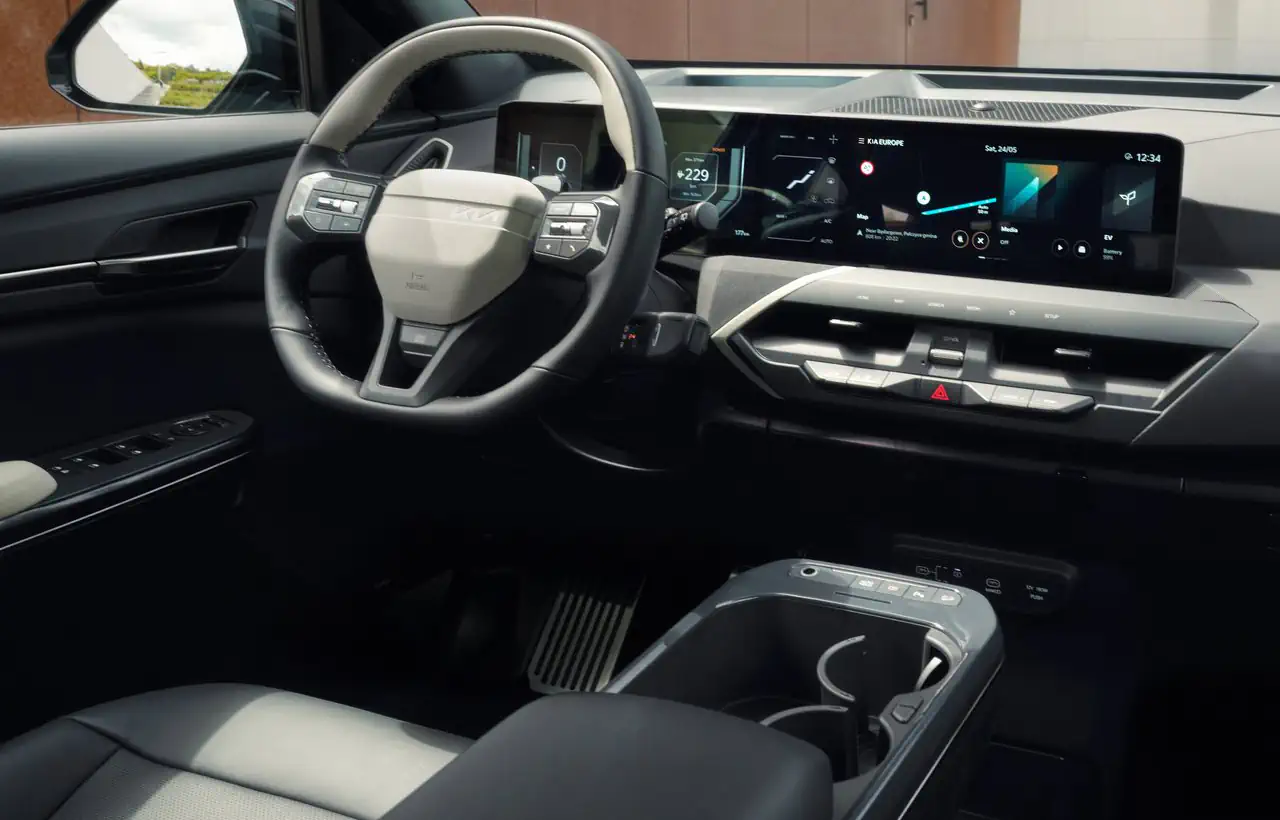
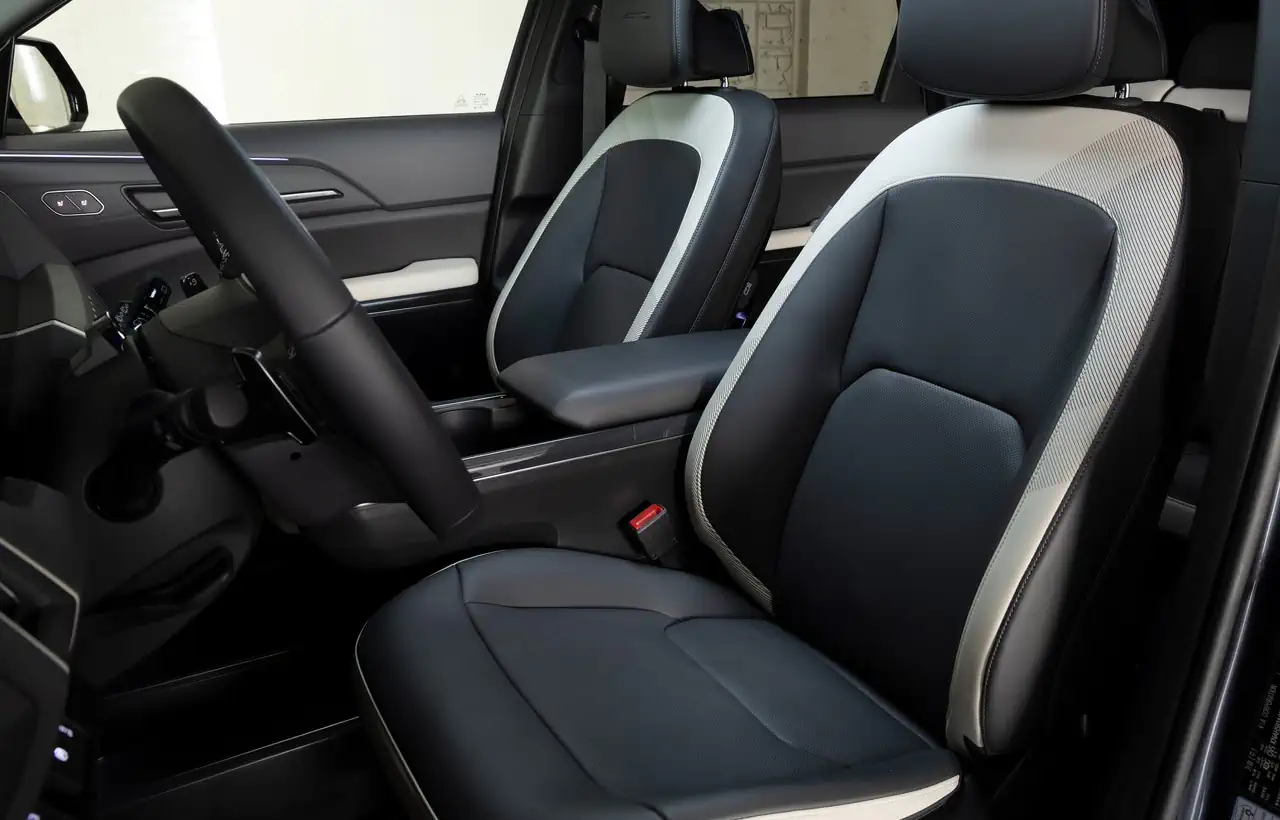
The dashboard layout is clean and horizontal, with minimal visual clutter. Some upholstery uses recycled PET fabric and bio-based leather on higher trims, reflecting Kia’s broader sustainability push across its lineup.
Ergonomics get high marks, with plenty of storage cubbies and a sense of roominess that reviewers compare to Kia’s own Sportage. The front seats stand out in particular, offering generous power adjustment and a massage function on higher trims.
That said, it’s not a flawless cabin. Some reviewers point to hard plastics on the dashboard and a somewhat plain finish in certain spots—a contrast to the more thoughtful design of the seats and door panels. It doesn’t break new ground for Kia interiors, but it doesn’t disappoint either.
Screens, Connectivity, and Rear-Seat Space
The tech centerpiece is a curved 29.9-inch display housing a 12.3-inch digital instrument cluster, a 12.3-inch infotainment touchscreen, and a separate 5.3-inch panel for climate controls.
Wireless Apple CarPlay and Android Auto are standard, along with a wireless phone charger on higher trims. The driver-assist package is extensive, covering driver attention monitoring, blind-spot collision avoidance, lane-keeping assist, forward collision avoidance with pedestrian and cyclist detection, adaptive cruise control, automatic high beams, rear cross-traffic alert with braking, and a 360-degree camera system.
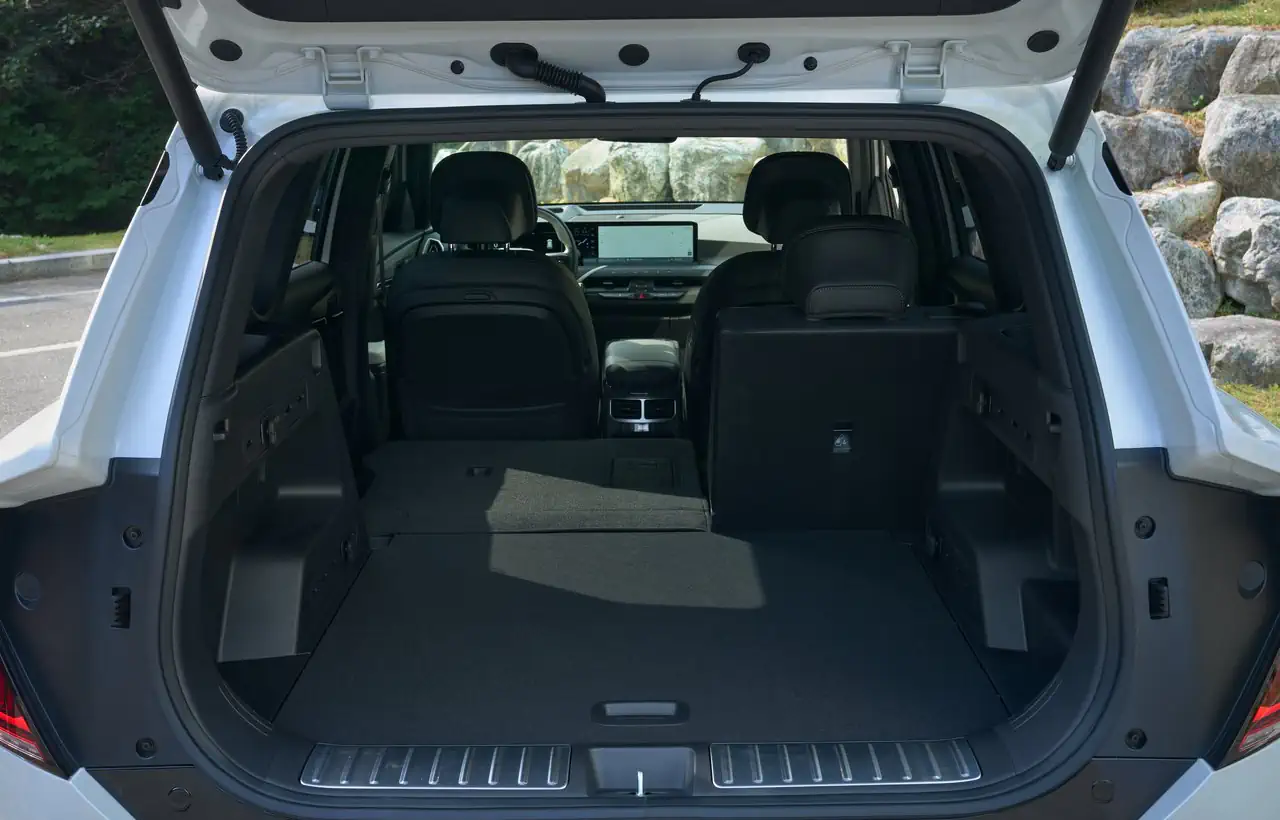
In the back seat, the standout feature is a reclining seatback, paired with 18.1 cubic feet of cargo space (expanding to roughly 60.5 cubic feet with the seats folded) plus a 2.4-cubic-foot front trunk.
The clearest strength here is the infotainment system itself—reviewers consistently praise its speed and lack of lag. The clearest weakness is that climate controls live on that secondary screen, which means more glances away from the road than some drivers will be comfortable with.



How the Kia EV5 Drives: Power, Range, and Real-World Numbers
The EV5 lineup splits into three configurations: a single-motor Standard Range FWD with a 64.2 kWh battery, a single-motor Long Range FWD with an 88.1 kWh battery, and a dual-motor Long Range AWD that adds a rear motor for a combined output increase.
In the FWD versions, output sits at 215 hp and 229 lb-ft of torque—numbers that translate to instant, linear acceleration typical of EVs, with 0-60 mph times of roughly 8.5 seconds for the Standard Range and 8.9 seconds for the Long Range. Neither will feel quick in a straight-line sense, but both deliver the kind of effortless low-speed response that makes city driving and highway merges feel relaxed.
Step up to the AWD Long Range and the picture changes: combined output reaches roughly 308 hp and 354 lb-ft, dropping the 0-60 mph time to about 6.1 seconds. Top speed across the lineup is electronically capped at 115 mph.
On efficiency, the Standard Range returns about 249 miles of WLTP-rated range at roughly 3.7-3.8 mi/kWh, while the Long Range FWD stretches to about 345 miles. The AWD variants land between 292 and 311 miles, with efficiency dropping to roughly 3.3 mi/kWh. Long-term testing of an AWD model recorded real-world consumption close to those ratings—solid, but a step behind class leaders like the Model Y. Reviewers also note the front wheels can spin under hard acceleration, a reminder that even the AWD setup is fundamentally front-biased.
Pricing and Ownership: Where the EV5 Lands Against the Competition
The EV5 already has a track record overseas. It launched in China in 2023 at a price equivalent to roughly $20,000, then arrived in export markets like Australia with pricing in the $37,000 to $47,000 range (Market Estimate, based on converted overseas pricing) depending on battery size and drivetrain.
Official US pricing hasn’t been confirmed, but based on how the EV5 is positioned against the Tesla Model Y and Hyundai Ioniq 5 overseas, a realistic Market Estimate for a US launch would land somewhere in the $40,000 to $50,000 range before incentives, with higher trims and AWD pushing toward the top of that band.
On the cost-of-ownership side, insurance premiums for EVs in this class tend to run higher than for comparable gas-powered SUVs, largely due to battery replacement costs—expect a Market Estimate in the $1,400 to $2,000 per year range for a typical driver profile, with AWD trims trending toward the higher end. Maintenance costs are where the EV5 could have an edge: Kia’s prepaid service plans in other markets run noticeably higher than what Tesla owners typically pay, since the Model Y has no fixed service intervals, so US buyers should factor maintenance costs into any financing comparison rather than assume EVs are maintenance-free across the board.
As for timing, the EV5 is still a relatively new nameplate outside China, so there’s no solid depreciation data yet. Established brands like Kia tend to hold value better than newer Chinese EV entrants, though likely not as well as the Model Y in resale markets. The buyer this makes the most sense for is a family upgrading from a gas-powered SUV who wants interior space, a loaded tech package, and the backing of an established dealer network—not someone chasing maximum range or resale value.
Frequently Asked Questions About the Kia EV5
What’s the real-world range of the Kia EV5?
Depending on configuration, WLTP-rated range runs from about 249 miles (Standard Range FWD) to roughly 345 miles (Long Range FWD), with AWD models landing between 292 and 311 miles.
Is the Kia EV5 expensive to maintain?
Compared to the Tesla Model Y’s no-fixed-interval approach, Kia’s prepaid maintenance plans in overseas markets run higher—expect ownership costs to factor in more regular service visits.
What are the Kia EV5’s main competitors?
In the US, the closest rivals are the Tesla Model Y, the Hyundai Ioniq 5, and the Toyota bZ4X—all established players in the electric SUV space.
Does the Kia EV5 come with all-wheel drive?
Yes, in international markets the EV5 is offered with both FWD and AWD, with the AWD Long Range adding a rear motor for roughly 308 hp combined.
Is the Kia EV5 Worth Considering?
This is more of an emotional buy than a spreadsheet decision. The bold styling and loaded tech package carry more weight here than raw efficiency numbers.
Buyers chasing maximum range per kWh, or the lowest possible price, will find sharper options elsewhere in this segment—this isn’t the EV for someone optimizing for efficiency above all else.
But for families who want interior space, a tech-heavy cabin, and the reassurance of an established automaker’s dealer network, the EV5 delivers exactly what it promises, without major surprises.
A crossover that trades a few efficiency points for space, presence, and a genuinely different look.
So, does the Kia EV5’s design and tech package justify going up against the Model Y and Ioniq 5 on price—or would you rather wait for a Kia incentive? Let us know in the comments.
Share this article

Por: Danniel Bittencourt
15/06/2026
Related posts