BMW Just Showed Us the Electric M3 — and It Has Four Motors, One Per Wheel
BMW’s M Concept Neue Klasse previews the first all-electric M3 with four independent motors, up to 1,000 hp, advanced AI systems, and supercar-level performance targeting a 2027 launch.
BMW M Concept Neue Klasse: The Four-Motor Electric M3 That Changes Everything
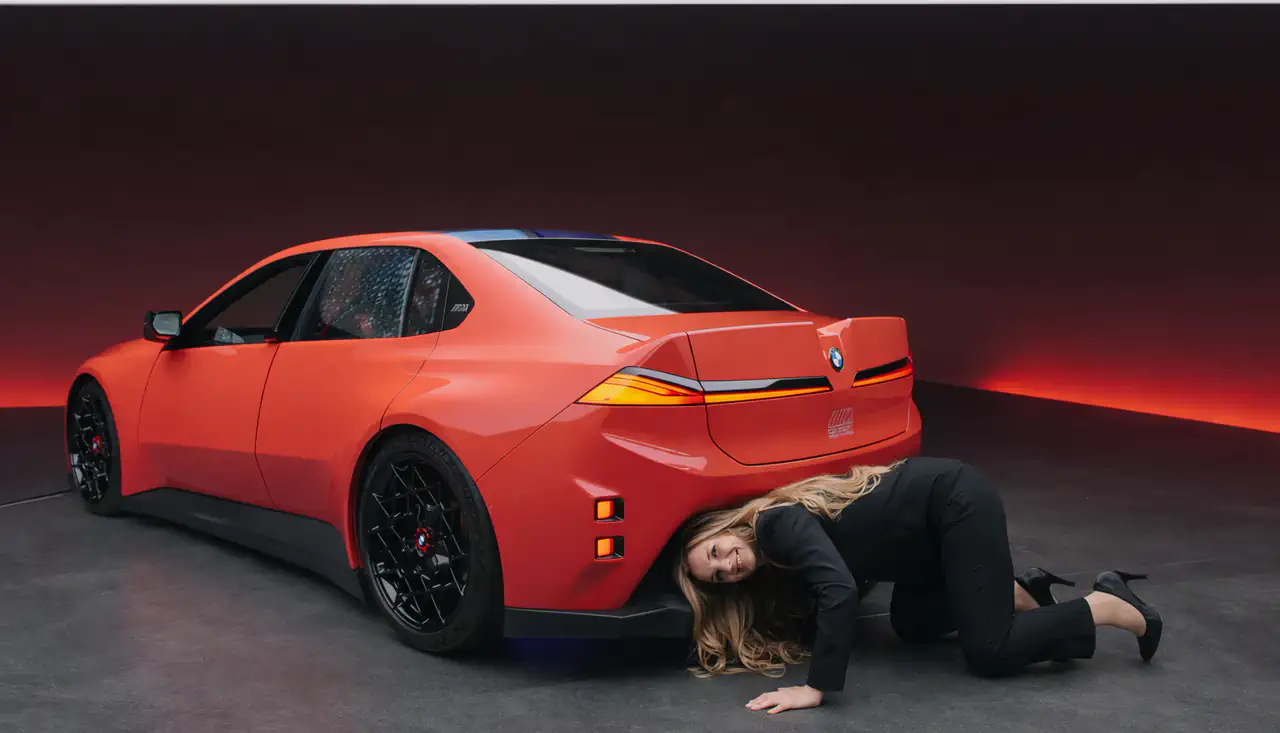
BMW pulled the wraps off the M Concept Neue Klasse at the 24 Hours of Le Mans on June 12, 2026 — and it’s not a facelift or a limited edition. It’s the concept car previewing the first fully electric M3 in BMW history, built on a ground-up EV architecture with four independent motors, one driving each wheel.
This isn’t an adaptation of an existing platform. The Neue Klasse was engineered from scratch for battery-electric vehicles, and BMW M has used it to build what may be the most technically ambitious performance car the brand has ever produced.
The closest rivals in the American market are the Tesla Model S Plaid for raw acceleration and the Porsche Taycan Turbo S for the luxury performance category. The production version is expected to reach U.S. dealerships as a 2027 or 2028 model year vehicle.
Quick Facts
| Spec | Details |
|---|---|
| Category | High-performance electric sedan |
| Powertrain | 4 BMW M eDrive Gen6 motors (one per wheel) |
| Output | 800 to 1,000 hp (estimated, not confirmed) |
| Torque | Over 738 lb-ft at the axle (estimated) |
| Transmission | 1-speed fixed reduction with software-emulated shifts |
| Drive | Independent AWD with dynamic RWD mode |
| 0–60 mph | ~2.4 to 2.7 sec (estimated, not confirmed) |
| Top Speed | ~180 mph (estimated, not confirmed) |
| Energy Use | ~28 to 36 kWh/100 mi (estimated) |
| Range | ~310 to 372 miles WLTP (estimated) |
| On Sale | Production targeted for 2027 |
The specs on paper are striking, but the real story here is in the layers of technology underneath them — starting with how BMW is rethinking what a performance car’s chassis can be.
The Most Aggressive BMW Body Since the M1
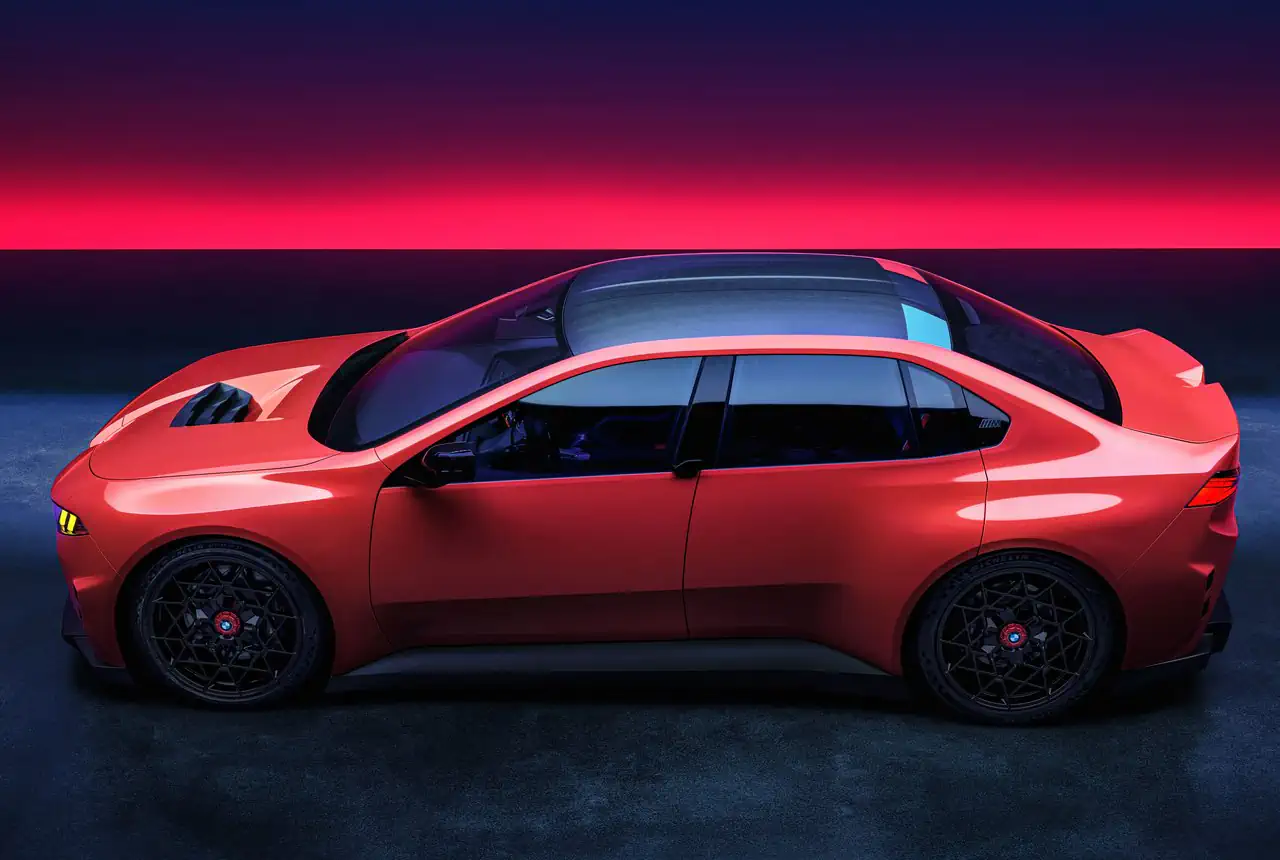
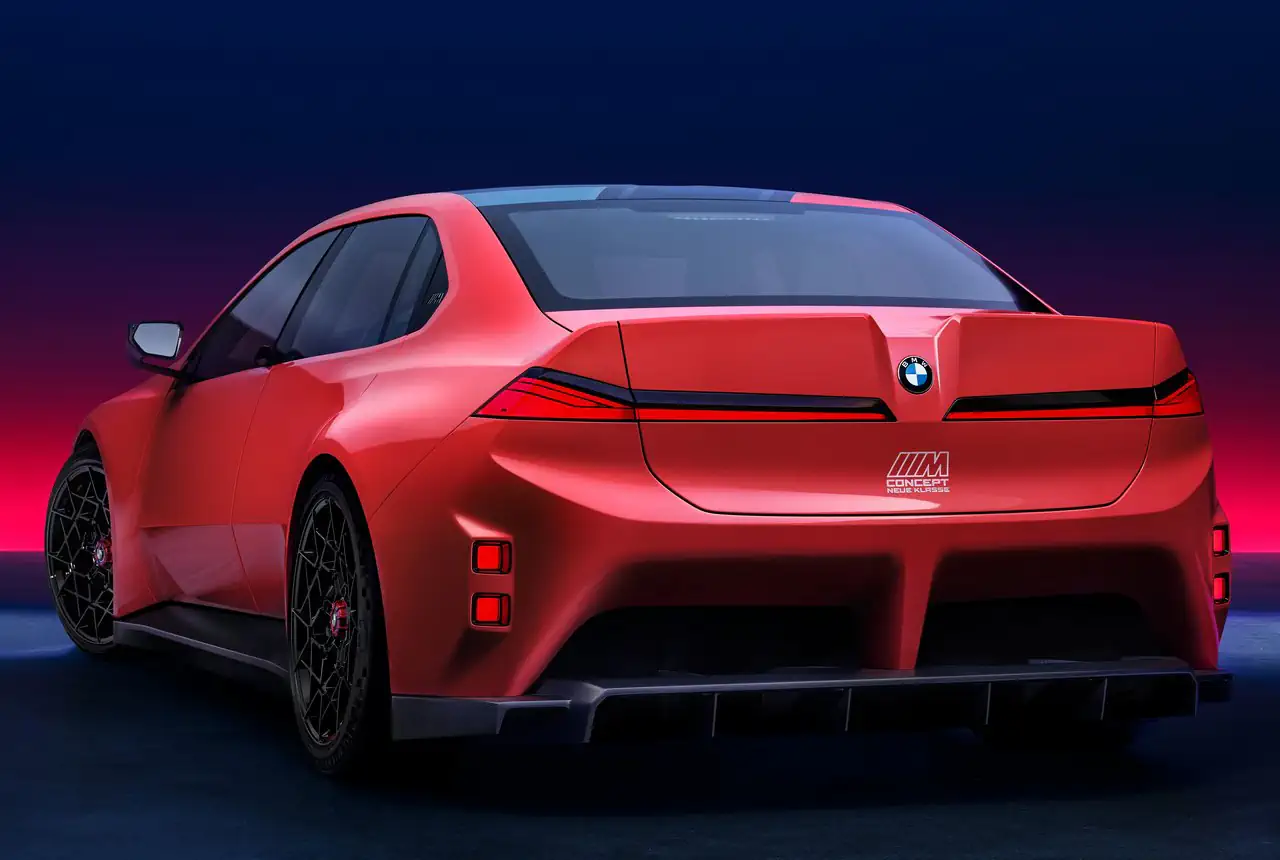
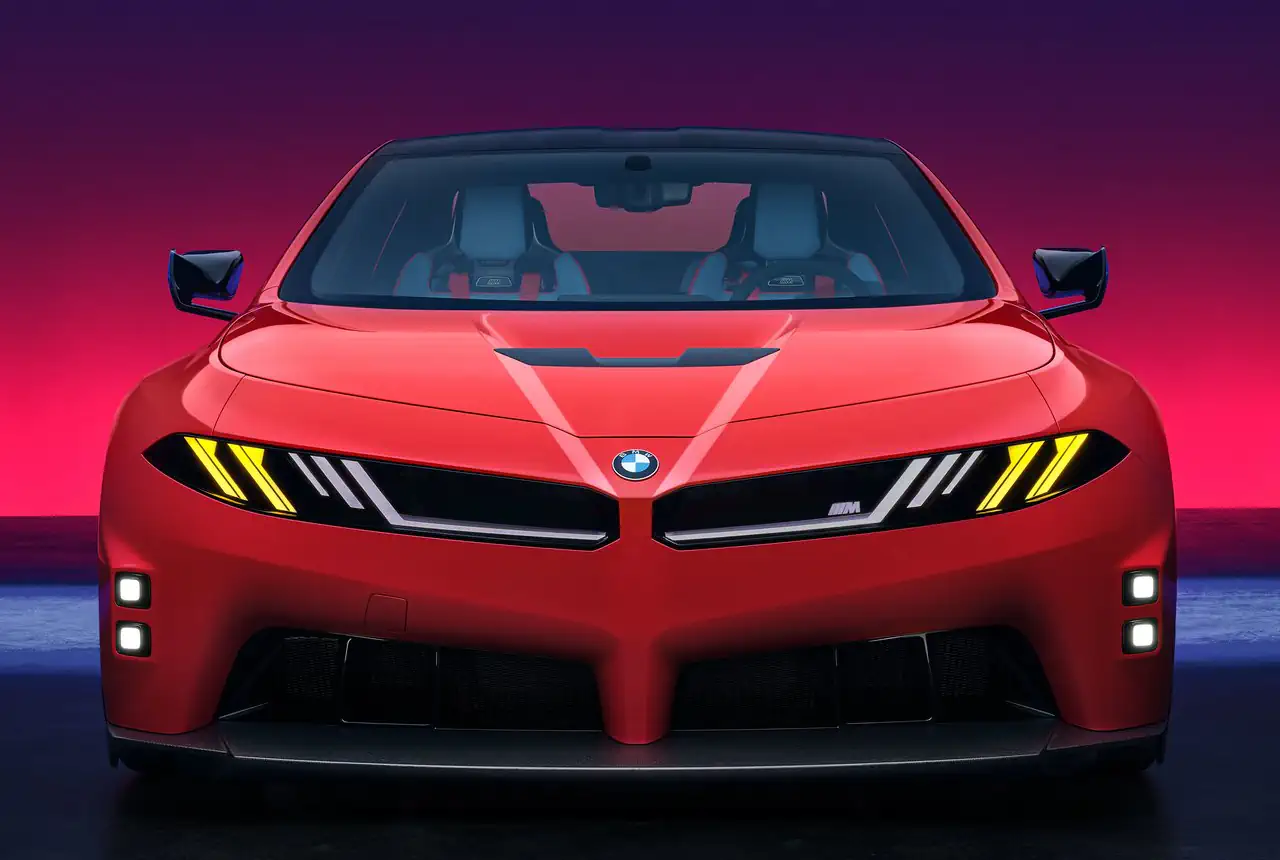
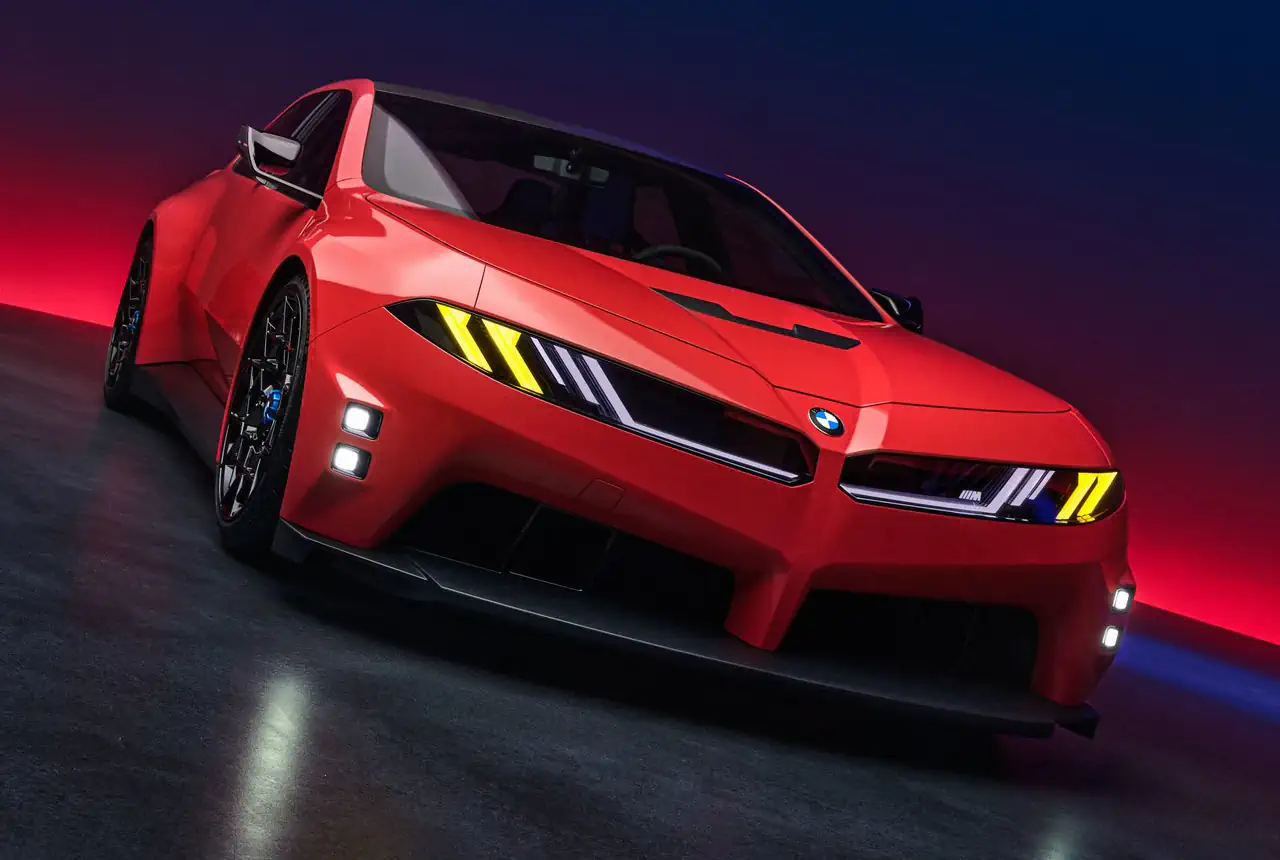
Walk around the M Concept Neue Klasse and the first thing you notice is that nothing about it looks like a compromise. The Monza Red metallic finish wraps a body with genuinely muscular proportions — wide fenders, an aggressive shoulder line, and flared wheel arches that make the current M3 look restrained by comparison.
Up front, the traditional kidney grilles have merged with the headlights into a single horizontal unit BMW calls the shark nose. The bumper takes its cues from high-speed racing hull design, with a structural splitter underneath that’s doing real aerodynamic work. The hood features a deep V-shaped vent cut specifically to exhaust heat from the power electronics and front motors — which is also why there’s no front trunk.
The headlights carry M Yellow DRLs, a direct visual reference to the BMW M Hybrid V8 prototypes racing at Le Mans. In each corner of the front and rear bumpers, three-dimensional Track Lights add another layer of motorsport vocabulary to the design.
Out back, a floating diffuser works alongside a ducktail spoiler to actively reduce rear lift at speed. There’s no decorative bodywork here — every panel is solving a thermal or aerodynamic problem. After years of criticism over the brand’s oversized grille direction, this concept represents the clearest design reset BMW M has delivered in a long time.
A Cockpit Built Around the Driver, Not the Showroom
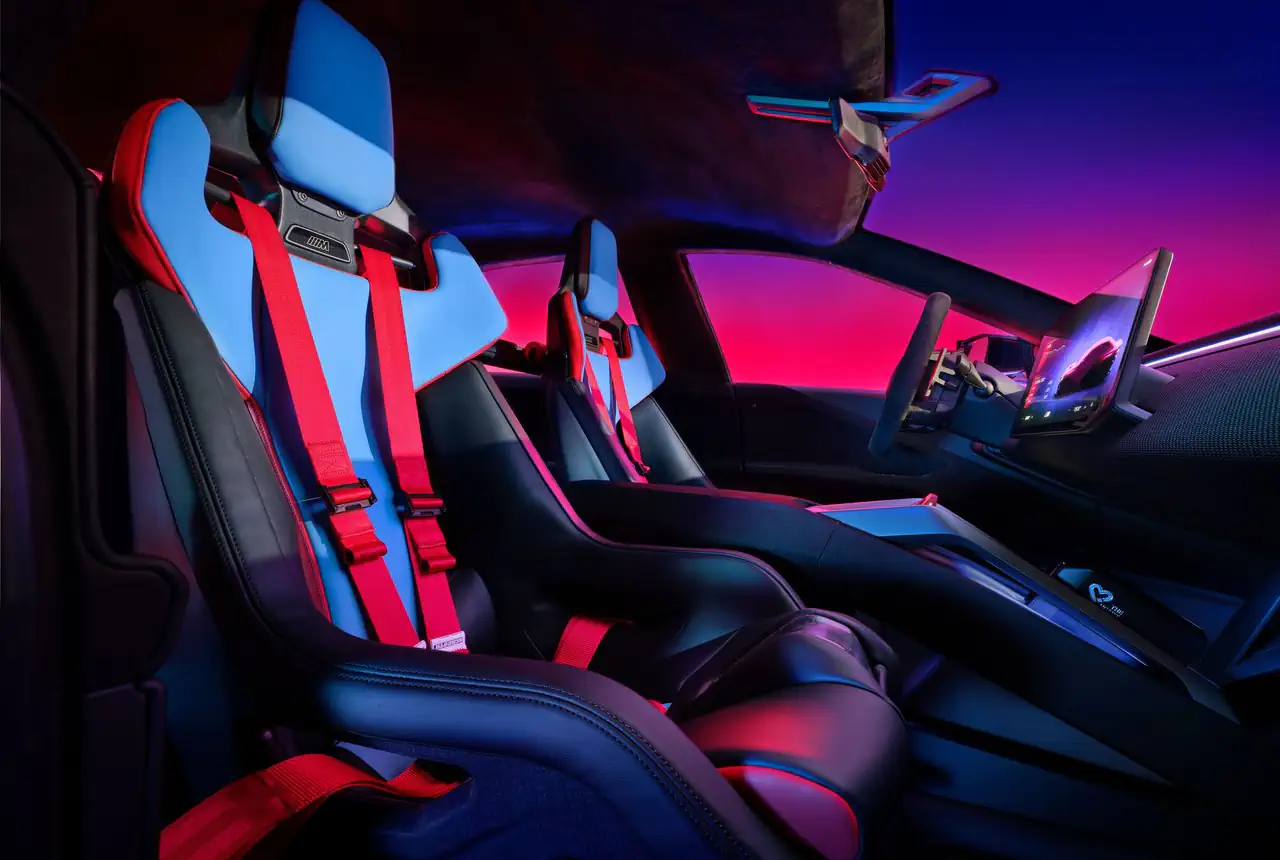
Step inside and the cabin makes its priorities clear immediately. Four individual bucket seats — structured with natural fiber composites and trimmed in Merino leather in a two-tone Bathurst Blue and Berry Red combination — replace the conventional rear bench. Red five-point harnesses are standard. The reference to motorsport isn’t aesthetic; it’s structural.
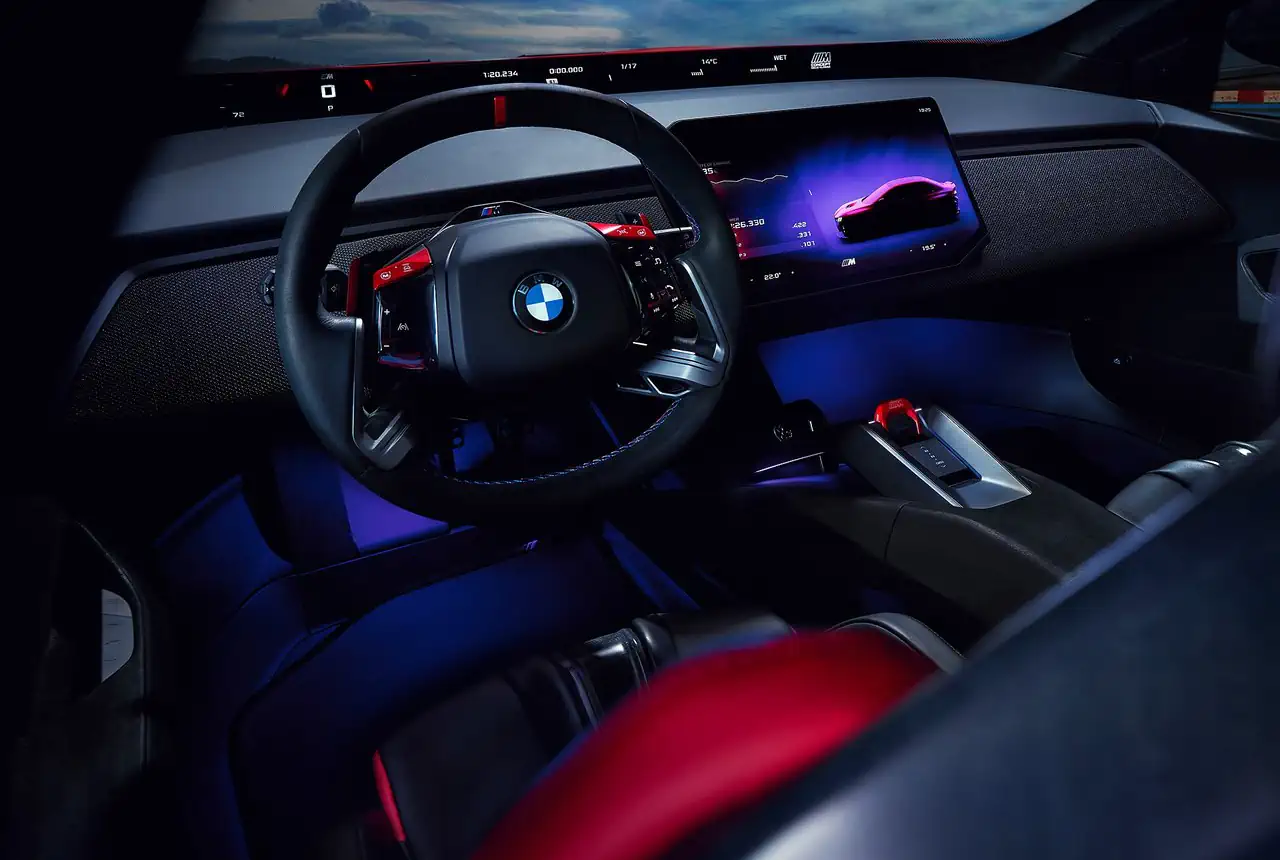
The floating dashboard, door panels, flat-bottomed steering wheel, and roll bar are all wrapped in black nubuck leather. The matte, suede-like texture kills reflections and keeps your hands planted during hard cornering. The material choice is a genuine departure from BMW’s recent interiors, and it outperforms most of what you’d find in the Taycan or AMG GT at this price point.
Screens, AI, and the End of the Traditional Instrument Cluster
The infotainment setup ditches the rectangular paired-display layout from iDrive 8. BMW’s new OS X runs on a parallelogram-shaped central touchscreen angled directly toward the driver — designed for one-handed interaction at speed.
The instrument cluster is gone entirely. In its place, BMW Panoramic Vision runs a matrix display integrated into the base of the windshield, spanning the full width of the cabin. It projects lateral G-forces, temperatures, lap times, and vehicle data into your peripheral vision without requiring you to look away from the road. A 3D head-up display adds floating corner-entry markers and braking points projected ahead of the car.
ADAS covers SAE Level 2+ automation with hardware ready for eventual Level 3 certification, including autonomous collision avoidance and predictive cruise control via cloud mapping. An Amazon Alexa integration with large language model support lets you adjust chassis settings by voice. For U.S. buyers specifically, the Neue Klasse platform adopts native NACS (Tesla-standard) charging compatibility.
Standout strength: The Panoramic Vision system keeps critical data in your sightline during track work without a traditional gauge cluster getting in the way. It’s a genuinely useful innovation, not a styling exercise.
Real limitation: The thin display architecture and extensive sensor network are flagged internally as susceptible to occasional software glitches — the kind resolved by OTA updates, but still an early-ownership reality worth knowing about.
Four Motors, Sub-3-Second Launches, and a Computer Running It All
The M Concept Neue Klasse doesn’t use one or two electric motors like virtually every EV performance rival on the market. Each wheel has its own dedicated synchronous motor based on BMW’s sixth-generation eDrive technology, which means torque delivery — and torque reduction, or reversal — happens independently at all four contact patches simultaneously.
Estimated output sits between 800 and 1,000 hp with over 738 lb-ft of torque at the axle. For context, the current M3 Competition makes 503 hp. All of it flows through a central supercomputer BMW calls the Heart of Joy, which reads vehicle telemetry in under one millisecond — ten times faster than the previous generation of BMW M stability systems.
In real-world terms, that processing speed means the car can catch an understeer event and redistribute torque between wheels before a driver physically perceives the slip. When the front begins to push wide in a corner, the Heart of Joy applies regenerative braking to the inside wheel and amplifies torque to the outside — without dumping energy through the mechanical brakes. The front motors can also be electrically decoupled in hundredths of a second, putting 100 percent of the power to the rear axle for a proper RWD drift mode.
Estimated 0–60 mph runs land between 2.4 and 2.7 seconds. Top speed is projected near 180 mph with the electronic limiter active. Each wheel uses a fixed single-speed reduction gear, but the Heart of Joy software simulates gear changes with torque interruptions and acoustic modulation through the speakers — BMW’s answer to the engagement question that plagues most electric performance cars.
Estimated energy consumption falls between 28 and 36 kWh per 100 miles in mixed driving. Projected range is 310 to 372 miles on the WLTP cycle. On a track, that number collapses fast — drivers testing the VDX mule reported that full-power sessions drained the pack in roughly 30 minutes.
The Price Is Real, the Depreciation Risk Is Realer
Internationally, automotive media in the UK and U.S. is pricing the quad-motor ZA0 production variant around $130,000 to $150,000 MSRP. That places it directly against the Porsche Taycan Turbo S and the top-spec Tesla Model S Plaid — both of which have established dealer networks, known reliability records, and existing resale data.
The financing picture for a car in this range will look familiar to anyone who’s bought a six-figure vehicle before: manufacturer captive lending at competitive rates, typically with substantial down payment expectations. Monthly payments on a $140,000 vehicle over 72 months at current rates land well above $2,000 before taxes and fees.
Insurance premiums deserve a specific conversation. The pack-to-open-body architecture — where the battery casing is a load-bearing structural element — creates a total-loss scenario in moderate collisions. Insurers are already pricing this risk into policies for structurally integrated battery platforms. Expect annual premiums significantly above what the current M3 Competition commands, and get quotes before you commit.
Maintenance costs tell a split story. The turbocharged inline-six’s service schedule disappears entirely — no M-spec synthetic oil changes, no DCT fluid, no timing chain tensioners. But Ultra-High Performance tire wear will be relentless given the torque figures involved. Carbon-ceramic brake pads last well in daily driving thanks to regenerative braking, but track sessions with a 5,000-plus pound machine will cycle through them faster than expected.
Buy at launch or wait? The math favors waiting. High-tech EVs depreciate sharply in years one and two as battery chemistry improves and new model variants enter the market. The gas M3 running parallel to this platform will likely hold stronger residual value among collectors and driving purists. If track performance at the limit is the priority and the budget is firm, the case exists — but patience has historically rewarded buyers in this segment.
The buyer profile here skews 35 to 50, working in tech, finance, or engineering, already attending track days, and more interested in lap time data than rev-matching feedback.
Frequently Asked Questions
What is the real-world range of the BMW M Concept Neue Klasse?
Estimated at 310 to 372 miles on the WLTP cycle in mixed driving. On track at full power, expect roughly 30 minutes of run time before the pack is depleted.
Are maintenance costs lower than a gas M3?
Engine servicing disappears, but UHP tire costs will be high and constant. Insurance premiums are expected to run above the current M3 Competition due to the structural battery architecture.
Who are the main competitors in the U.S. market?
The Tesla Model S Plaid for outright acceleration, the Porsche Taycan Turbo S for the luxury performance segment, and — at a lower price point — the Tesla Model 3 Performance for volume comparison.
Does the BMW M Concept Neue Klasse make engine sounds?
There is no combustion engine. The car uses speaker-based acoustic modulation and software-simulated gear changes through the Heart of Joy system. Several test drivers and critics have described this as unconvincing compared to a naturally revving inline-six.
Does the BMW M Concept Neue Klasse Justify the Price?
This is an emotional purchase with a technical argument built around it. The projected performance figures beat the gas M3 in nearly every measurable category. The torque vectoring architecture is genuinely without equal in the segment right now.
But a $140,000-plus MSRP, aggressive depreciation tied to battery technology cycles, and elevated insurance costs make the financial case difficult to close cleanly. The parallel gas M3 will almost certainly hold stronger residual value for collectors.
Who should skip it: anyone who drives for the sound, the feel of a mechanical gearbox, or the analog connection a high-revving six-cylinder provides. This car was not engineered for that experience.
The M Concept Neue Klasse doesn’t evolve the M3 — it replaces everything the M3 stood for with something entirely different.
What do you think — does an electric BMW M3 with four motors and a six-figure price tag make sense, or does the gas M3 still win where it counts? Drop your take in the comments below.
Share this article

Por: Danniel Bittencourt
12/06/2026
Related posts