The Wagon Kia Built in Mexico That Europe Gets and America Doesn’t
Kia revealed a 21-cubic-foot wagon with a turbocharged engine and a three-screen cockpit — built in Mexico, sold only in Europe. North America isn’t on the list. Here’s what the K4 Sportswagon delivers and why that matters.
Kia K4 Sportswagon Arrives in Europe With Class-Leading Cargo and a Three-Screen Cockpit
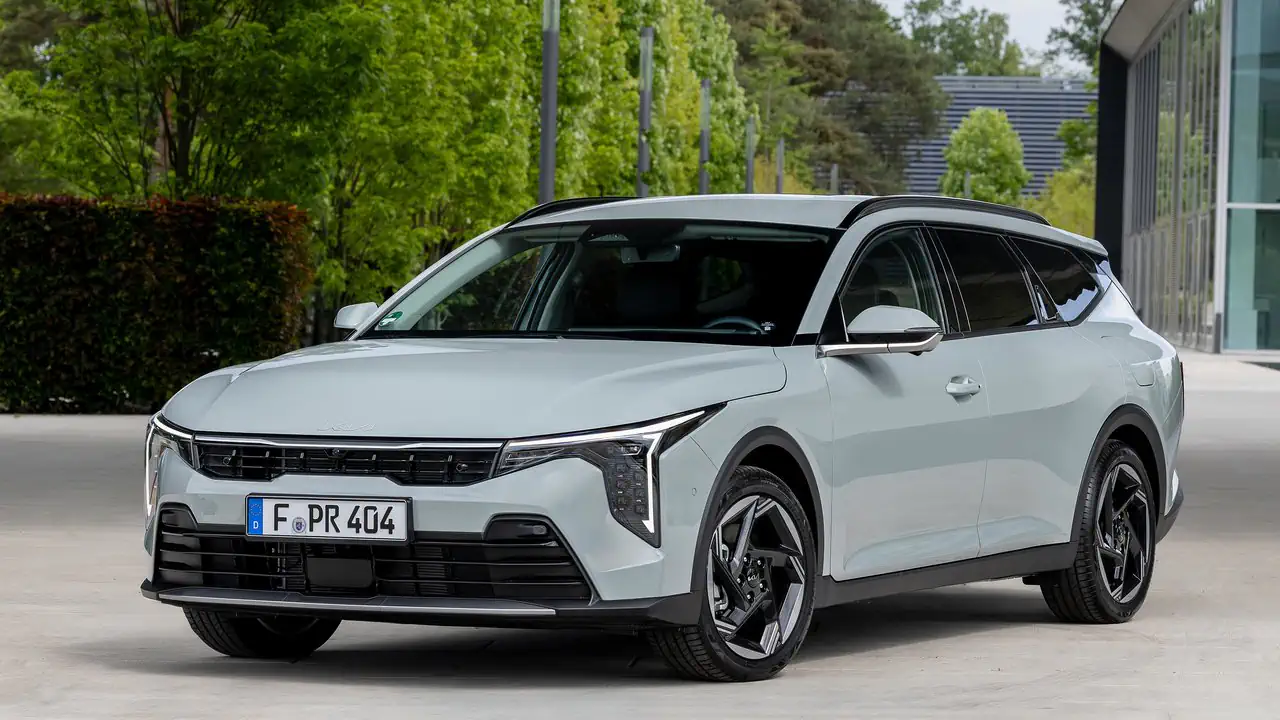
Kia officially revealed the K4 Sportswagon in January 2026 — a third body style for the K4 family, stretching nearly 185 inches in length with 21.3 cubic feet of cargo space and turbocharged gasoline engines producing up to 177 hp.
The model is the brand’s answer to the shrinking but still relevant European family wagon segment, stepping in as the indirect successor to the Ceed and Proceed wagon lineup. It competes head-to-head with the Toyota Corolla Touring Sports and the Volkswagen Golf Variant — two benchmarks in that space.
For the US market, the answer is straightforward: the K4 Sportswagon is not coming. Kia has confirmed no plans to bring the wagon stateside, keeping North American K4 availability limited to the sedan body style.
Quick Facts
| Spec | Details |
|---|---|
| Category | Station wagon / family wagon |
| Engine | 1.0T turbo inline-3 / 1.6T turbo inline-4 (gasoline and 48V mild hybrid) |
| Output | 113 hp (1.0T) / 148 hp or 177 hp (1.6T) |
| Torque | 148 lb-ft (1.0T) / 184–195 lb-ft (1.6T) |
| Transmission | 6-speed manual or 7-speed dual-clutch (DCT) |
| Drive | Front-wheel drive (FWD) |
| 0–60 mph | ~12.4 sec (1.0T MHEV) / ~8.4 sec (1.6T – 177 hp) |
| Top Speed | ~116 mph (1.0T) / ~130 mph (1.6T – 177 hp) |
| Fuel Economy | ~41 mpg combined (1.0T MHEV) / ~33 mpg combined (1.6T) — WLTP cycle |
| Range | Technical estimate: 410–520 miles per tank — not officially confirmed |
| On Sale | Europe: late 2026 / early 2027 |
The numbers above frame the conversation, but they don’t tell the whole story. Where the K4 Sportswagon earns its keep is in the balance between real-world utility and the kind of tech package you’d expect from a much pricier vehicle — and that’s where things get genuinely interesting.
A Wagon That Doesn’t Apologize for What It Is: Long Roof, Clean Lines and Vertical Taillights
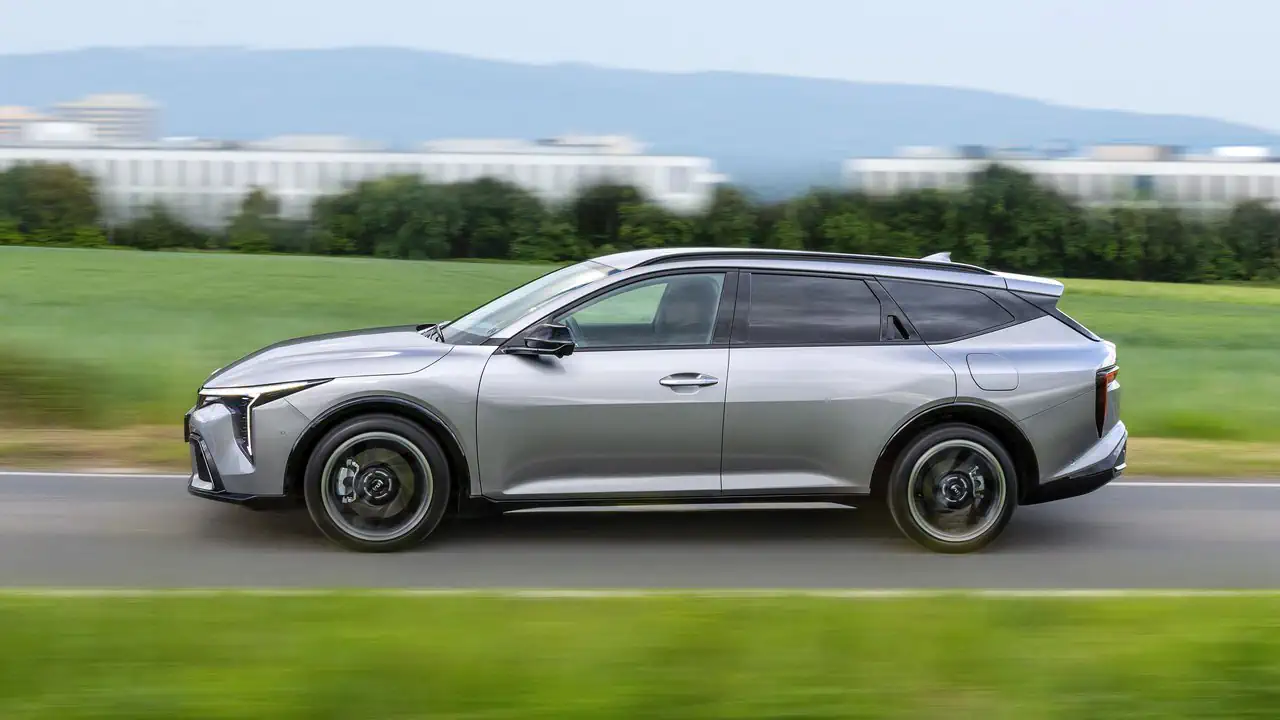
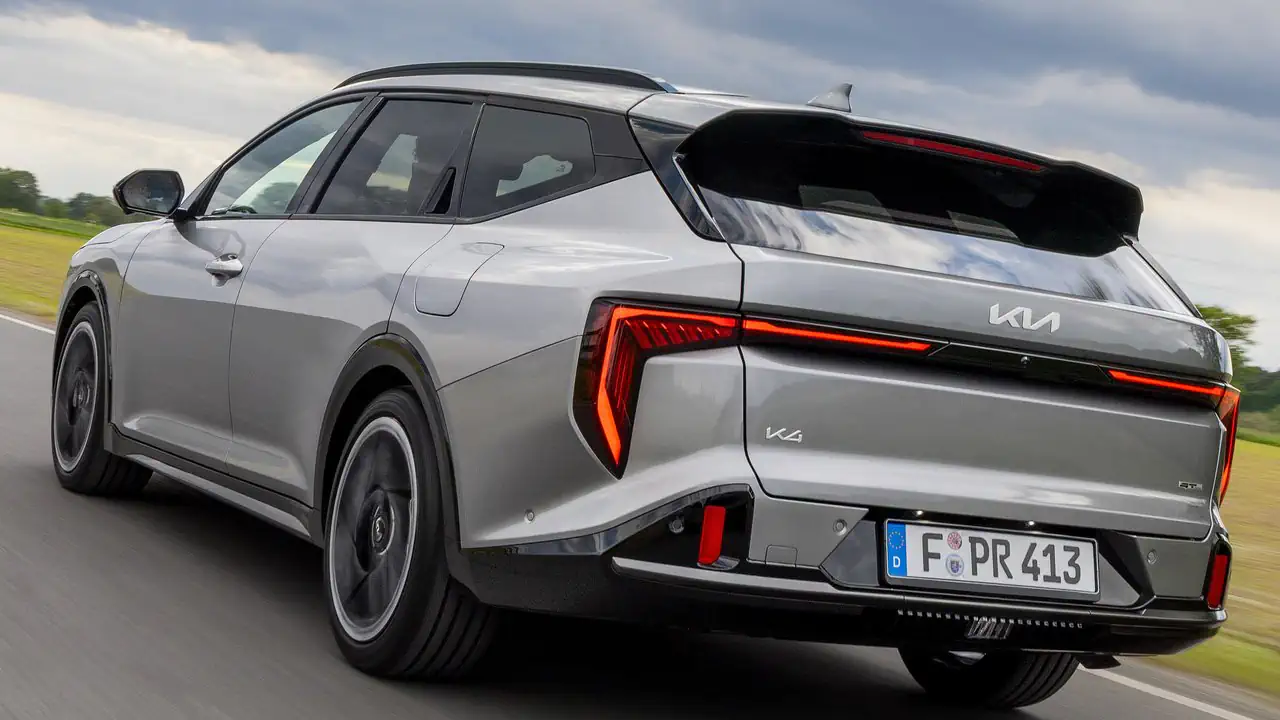
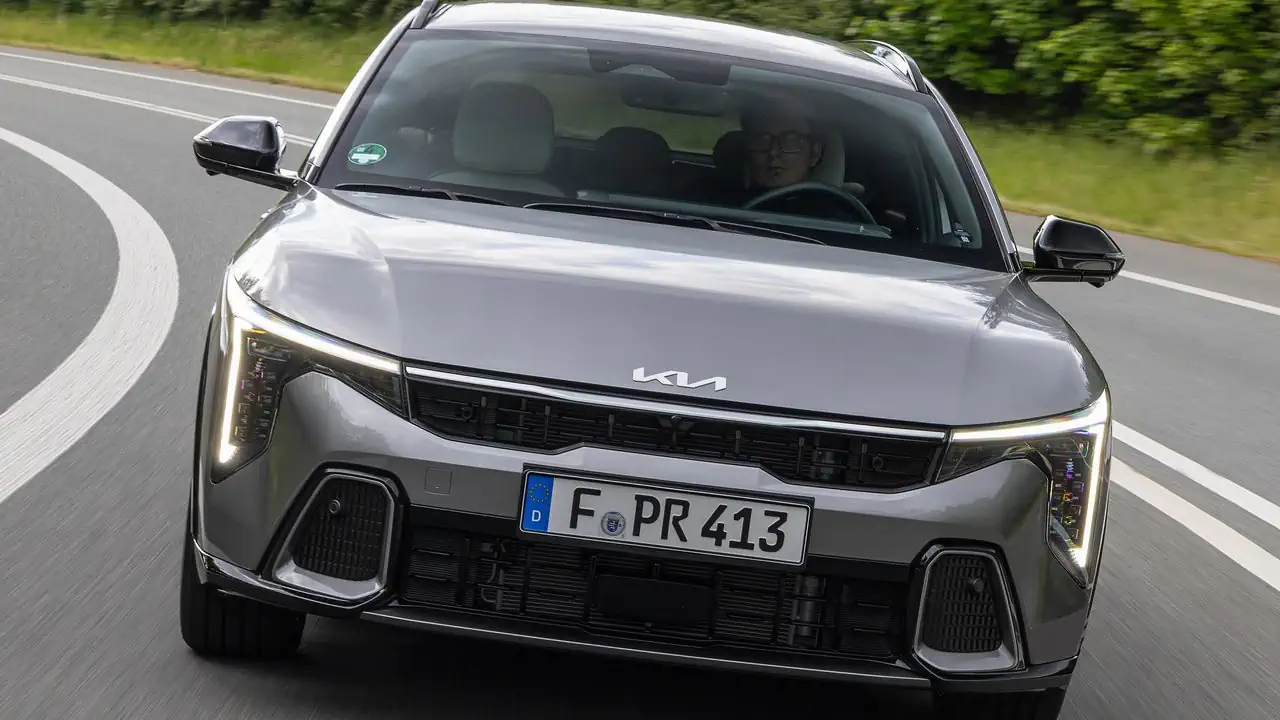
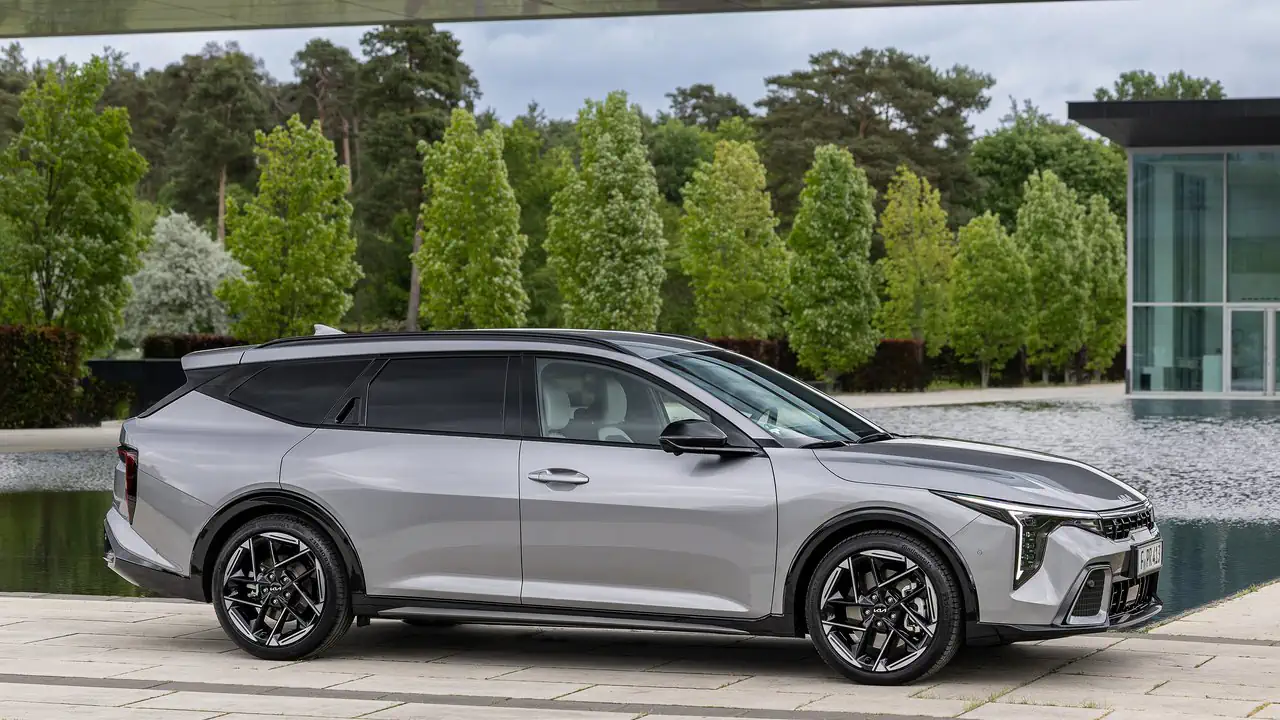
The K4 Sportswagon’s silhouette doesn’t leave room for ambiguity. The front end carries over the same face found on the K4 hatch and sedan — horizontal grille, LED headlights with a defined signature, relatively flat hood — but the eye moves naturally toward the rear, where the roofline extends in a gradual, shooting brake-style slope.
Along the side, the beltline runs uninterrupted from the A-pillar all the way to the tail, which gives the wagon a stretched, composed look without appearing bloated. The wheel arches have enough definition to keep the profile from going soft. GT-Line versions get larger-diameter wheels with a sportier design and gloss black trim around the windows and fenders.
The rear is where the Sportswagon makes its clearest statement: vertical taillights with Kia’s “Star Map” LED signature — the same graphic language used across the current lineup — and a power liftgate that comes standard on European models.
In person, automotive press has consistently called the Sportswagon the better-proportioned K4 compared to the sedan, with the longer rear overhang actually helping the overall balance rather than hurting it. The result is a car that reads as aerodynamic and purposeful without trying too hard.
Kia‘s “Opposites United” design language — seen on the EV6 and the Sportage — shows up here in a more restrained, commercially minded execution. Less polarizing, but no less cohesive.
A Cabin Built Around the Screen Stack — With Materials That Are Good, Not Flawless
The Interior Architecture Europe’s Wagon Buyers Wanted
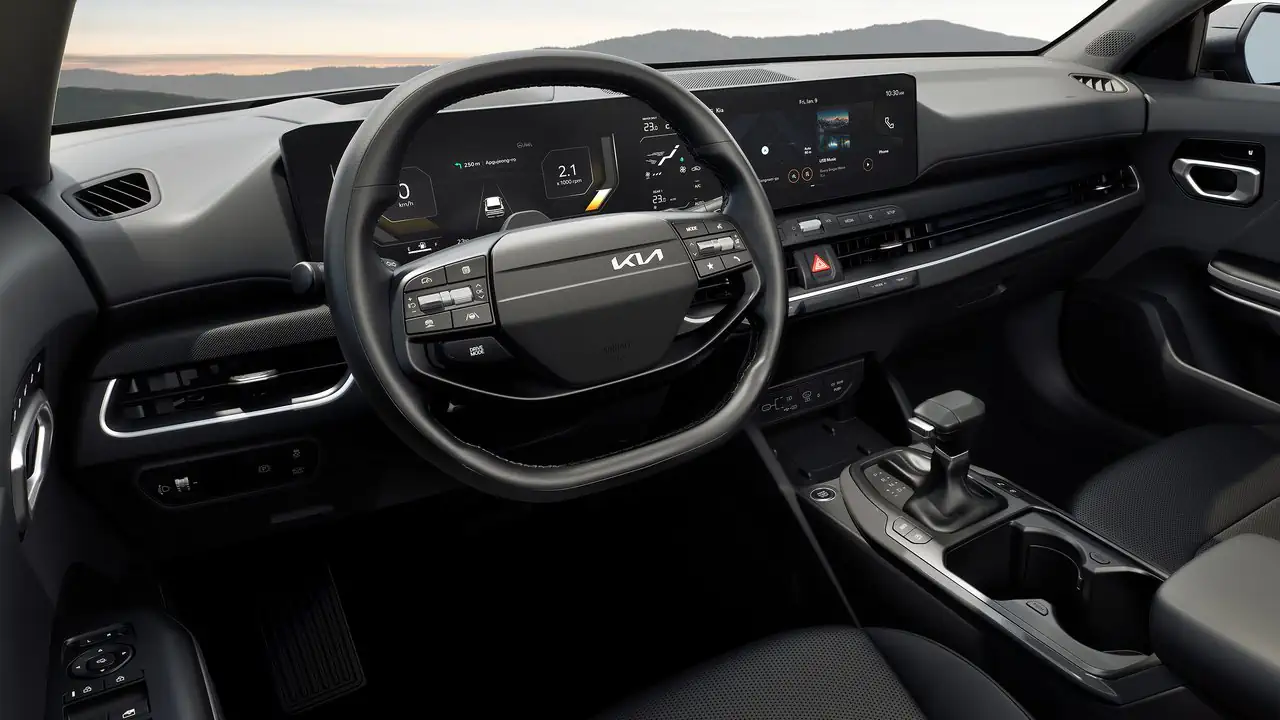
Step inside the K4 Sportswagon and you’re looking at the same “tech lounge” dashboard layout shared across the K4 family. The design is horizontal and uncluttered: a wide, curved display panel dominates the dash, ambient lighting runs along the lower trim, and there’s a deliberate mix of soft-touch surfaces in the high-contact zones with gloss black accents across the center stack.
Material quality is competitive for the class — but not without caveats. European automotive press has flagged hard plastics on the lower door panels and below the knee line in entry-level trims. That’s not unusual for wagons in this price bracket, but buyers cross-shopping near the top of the range might notice it.
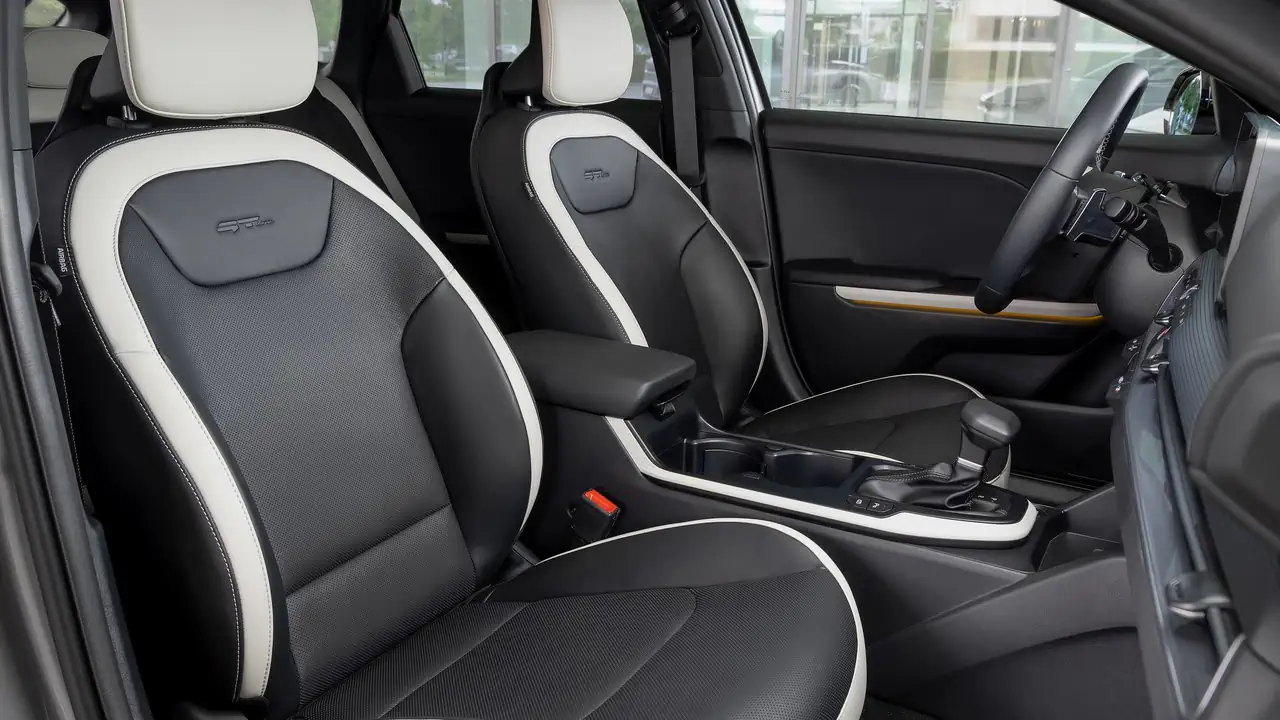
Front seats offer heating and ventilation on upper trims, with an option for a leather-and-recycled-fabric blend depending on the market. Support is described as solid for longer drives, with enough lateral hold to keep things comfortable without feeling bolstered for track use.
Three Screens, Full Connectivity and a Cargo Hold That Justifies the Body Style
The infotainment setup is built around Kia’s ccNC platform, integrating three separate displays into one curved panoramic panel: a 12.3-inch digital instrument cluster, a 12.3-inch touchscreen for infotainment and a 5.3-inch display dedicated to climate controls. The system supports over-the-air software updates, connected navigation, wireless Apple CarPlay and Android Auto and full Kia Connect integration.
The driver assistance package puts the Sportswagon at SAE Level 2 capability: Highway Driving Assist 2.0, adaptive cruise control, autonomous emergency braking (FCA2), blind-spot monitoring with in-mirror display, a surround-view camera system and rear cross-traffic alert with automatic braking.
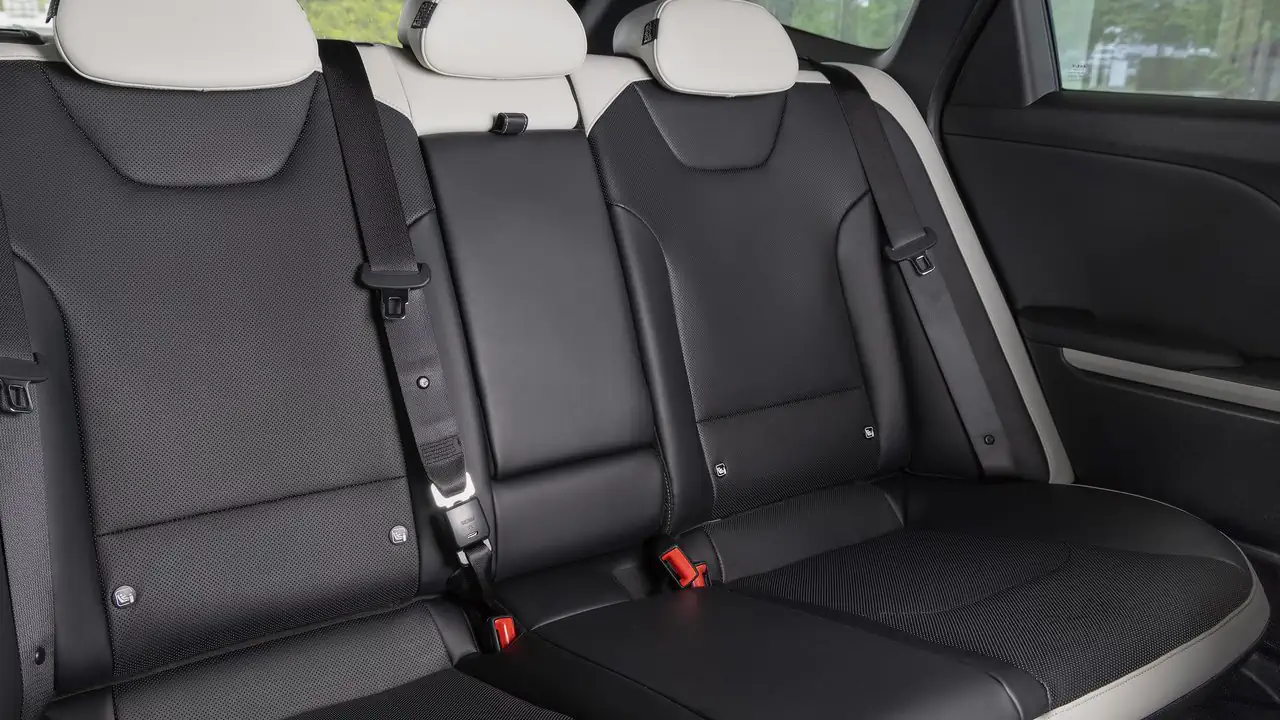
Rear passenger space benefits from the 107.1-inch wheelbase — there’s genuine legroom and headroom for two adults, with a third seat that works for shorter trips. But the real argument for the wagon body is the cargo hold: 21.3 cubic feet with the rear seats up, expanding to 50.8 cubic feet with them folded flat.
Clear strength: cargo volume beats both the Golf Variant and the Corolla Touring Sports by a meaningful margin in standard configuration.
Real limitation: mild-hybrid versions lose 4.3 cubic feet of that space — dropping from 21.3 to 17.0 cubic feet — because the 48V battery pack sits under the cargo floor. For buyers who need maximum volume, that’s a genuine trade-off worth knowing before signing.
Two Turbos, One Clear Winner: How the K4 Sportswagon Actually Performs
The K4 Sportswagon’s engine lineup is entirely gasoline-powered, split between two turbocharged families. The base option is a 998cc turbocharged three-cylinder producing 113 hp and 148 lb-ft of torque between 2,000 and 3,000 rpm. It pairs with either a 6-speed manual or a 7-speed dual-clutch in mild-hybrid form.
In real-world use, the 1.0T does the job in city traffic and flat highway cruising — but it asks for some planning when the car is fully loaded. A 0–60 mph time in the neighborhood of 12.4 seconds tells you what you need to know: this engine is about efficiency, not urgency.
The 1.6T inline-four is a different conversation. Available in 148 hp and 177 hp configurations — both with 7-speed DCT and front-wheel drive — the stronger version covers 0–60 mph in approximately 8.4 seconds, a figure confirmed by independent testing. On the highway, it pulls cleanly through passing situations without needing a manual downshift, which matters more in daily driving than any dyno number.
Fuel economy lands around 41 mpg combined for the 1.0T mild hybrid on the WLTP cycle. The 1.6T 177 hp version comes in around 33 mpg combined under the same standard, with at least one real-world test recording slightly better — around 35 mpg in mixed driving. Neither figure is exceptional by modern hybrid standards, but both are reasonable for a nearly 185-inch wagon with this much interior volume.
All variants are front-wheel drive. No all-wheel-drive option is listed in current European specs.
European Pricing, No US Plans and What This Wagon Would Cost If It Arrived Stateside
In Europe, pricing is already public in several markets. In Germany, the K4 Sportswagon starts at approximately €29,890 for 1.6T configurations, climbing to around €38,490 for fully loaded trims.
For the US, the status is simple: the Sportswagon isn’t coming. Kia has made no announcement suggesting North American availability, and the wagon was positioned from the start as a European-market product.
As a market estimate, if the model were imported to the US through individual or gray-market channels, a European wagon with this tech package — three screens, Level 2 ADAS, turbocharged engine — would likely land somewhere between $38,000 and $45,000 after duties, compliance costs and shipping. That is an analytical estimate, not a published MSRP.
From an insurance standpoint, a turbocharged import wagon with a high replacement parts cost would likely carry above-average premiums in the US market. Buyers going the import route should budget accordingly.
Maintenance costs in Europe benefit from a well-established Kia dealer network and powertrains already shared across multiple group models — both factors that tend to keep scheduled service costs in line with other mainstream imports. Kia’s 7-year/150,000-kilometer warranty, offered in several European markets, is a meaningful ownership cost argument that US buyers don’t currently have access to for this vehicle.
Financing for US consumers is not applicable — there are no authorized sales channels stateside.
Buying at launch in Europe makes sense for buyers who want the full 7-year warranty coverage from day one. The used-wagon market in Europe does tend to depreciate faster than equivalent SUVs, but limited new wagon supply and the extended factory warranty could slow that curve for early K4 Sportswagon owners.
The buyer this wagon is built for drives long distances regularly, carries gear or passengers frequently and has no interest in the ride height of a crossover. For strictly urban use, the K4 sedan delivers similar technology at lower cost. For the family that puts real miles on a car, the Sportswagon makes the more rational case.
What to Know Before Getting Excited About the K4 Sportswagon
Is the Kia K4 Sportswagon coming to the United States?
No. Kia has confirmed no North American plans for the Sportswagon. The K4 is available in the US as a sedan only.
What is the real-world fuel economy of the K4 Sportswagon 1.6T?
Independent tests recorded between 33 and 35 mpg in mixed driving — consistent with the official WLTP figure of approximately 33 mpg combined for the 177 hp version.
Who are the K4 Sportswagon’s main competitors in Europe?
The direct rivals are the Toyota Corolla Touring Sports, Volkswagen Golf Variant and Skoda Octavia Combi — all family wagons targeting similar buyers in the compact-to-midsize segment.
Does the mild-hybrid version really lose that much cargo space?
Yes, and it’s worth taking seriously. The 48V MHEV battery pack sits under the cargo floor and reduces load capacity from 21.3 to 17.0 cubic feet — a loss of 4.3 cubic feet that could matter for buyers who use every inch of a wagon’s luggage area.
A Competent Wagon That the US Market Will Never Get to Decide On
The K4 Sportswagon delivers on its core promise: serious cargo volume, a current-generation technology package and turbocharged engines that balance performance and efficiency in a rational, well-proportioned body.
The 177 hp 1.6T with DCT is the version that makes the strongest case — enough performance for relaxed highway driving, fuel economy that doesn’t punish you for it and a cargo floor that genuinely competes with the Golf Variant and Corolla Touring Sports.
This wagon is not for buyers who need AWD, want a full hybrid powertrain now or are willing to wait for the HEV version.
A well-executed wagon released for the right market at the right time — just not ours.
Would you consider trading your compact crossover for a wagon like the K4 Sportswagon if Kia brought it to the US? Or is the SUV formula still the only one that makes sense for American buyers? Drop your take in the comments below.
Share this article

Por: Danniel Bittencourt
15/06/2026
Related posts