The Wagon That Put the Q8 on Notice: 2027 Audi A6 Allroad Arrives Wider and Sharper
The 2027 Audi A6 Allroad arrives wider, smarter and with an RS6-inspired body. But can a $75K wagon convince American buyers to skip the SUV altogether? The answer might surprise you.

2027 Audi A6 Allroad Quattro: The Widebody Wagon Taking On Luxury SUVs
The biggest story about the new Audi A6 Allroad isn’t a new engine or a revised infotainment system — it’s the body. Audi widened the C9 generation by 4.37 inches compared to the standard A6 Avant, added flared fenders from the factory and gave the whole thing a stance that looks like it borrowed its wardrobe from the RS6. This isn’t a refresh. It’s a full redesign built on Volkswagen Group’s new Premium Platform Combustion (PPC) architecture.
The C9 generation was officially revealed in mid-2026 for European markets and arrives in the United States as a 2027 model year vehicle. On American soil, its two closest rivals are the Mercedes-Benz E-Class All-Terrain and — increasingly irrelevant — the Volvo V90 Cross Country, which has been discontinued in several markets.
For U.S. buyers, the expected MSRP lands between $66,000 and $80,000 depending on trim level. Volume will be low, exclusivity will be high and the waiting list at your local Audi dealer is likely already forming.
QUICK SPECS
| Spec | Details |
|---|---|
| Category | Luxury adventure wagon (soft-roader) |
| Engine | 3.0L V6 Turbo + 48V MHEV (U.S.) / 2.0L I4 Turbo PHEV e-hybrid (International) |
| Horsepower | 362 HP (both versions, combined output on PHEV) |
| Torque | 406 lb-ft (V6 TFSI) / 369 lb-ft (PHEV combined) |
| Transmission | 7-speed S tronic dual-clutch automatic |
| Drivetrain | quattro all-wheel drive |
| 0–60 mph | ~4.5 sec (V6 TFSI) / ~5.2 sec (PHEV) |
| Top Speed | 130 mph (V6 TFSI, U.S. limited) / 155 mph (PHEV, electronically limited) |
| Fuel Economy | ~23 MPG combined (V6 TFSI, estimated) |
| Electric Range | 59 miles WLTP (PHEV version only) |
| On Sale | 2026 (Europe) / 2027 (U.S. market) |
The numbers above set the stage, but the real story of the A6 Allroad C9 lives in the details — the way that wider track changes the silhouette at a glance, the air suspension that erases rough pavement without drama and the off-road modes that no Q8 can match with this level of refinement. Keep reading.
The Wagon That Finally Looks as Capable as It Actually Is
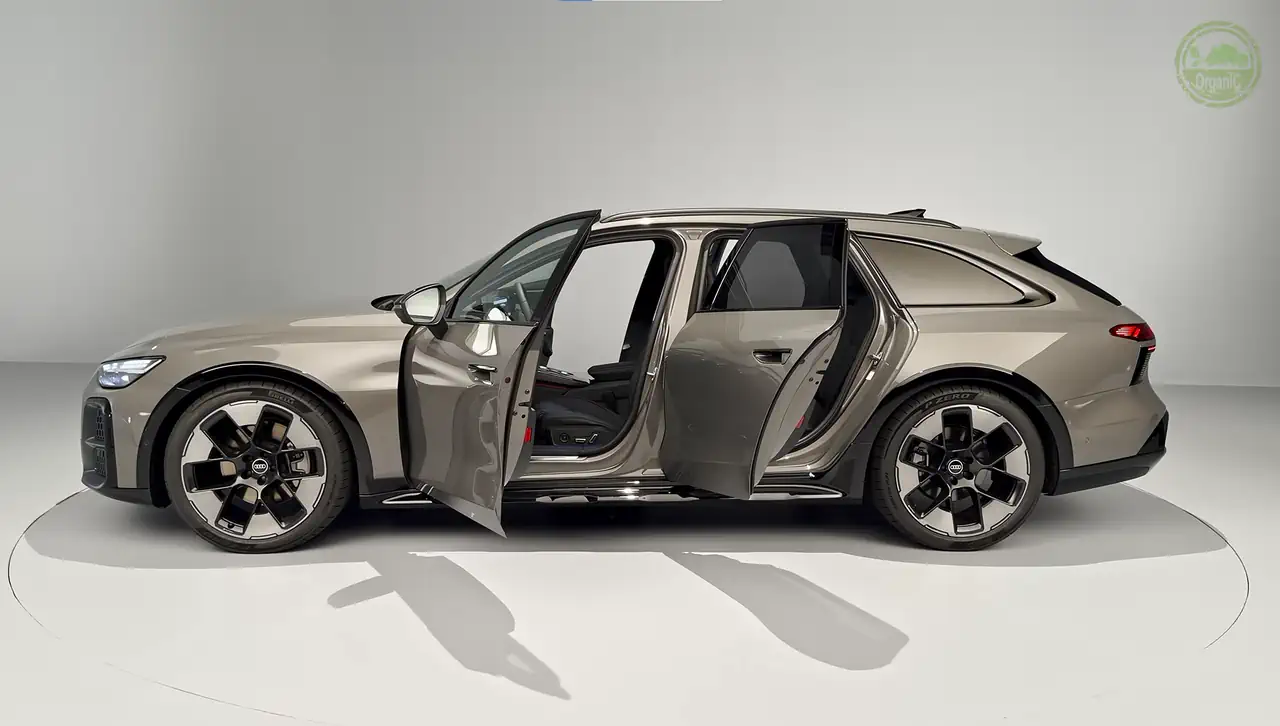
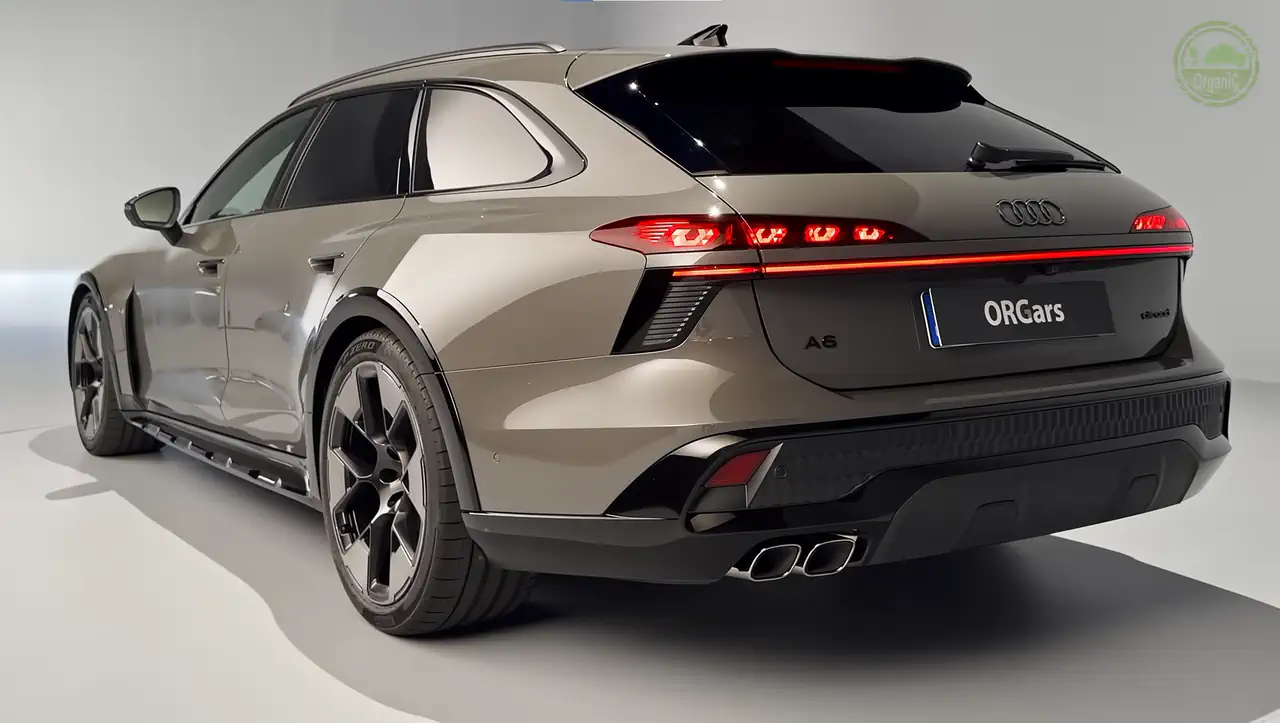
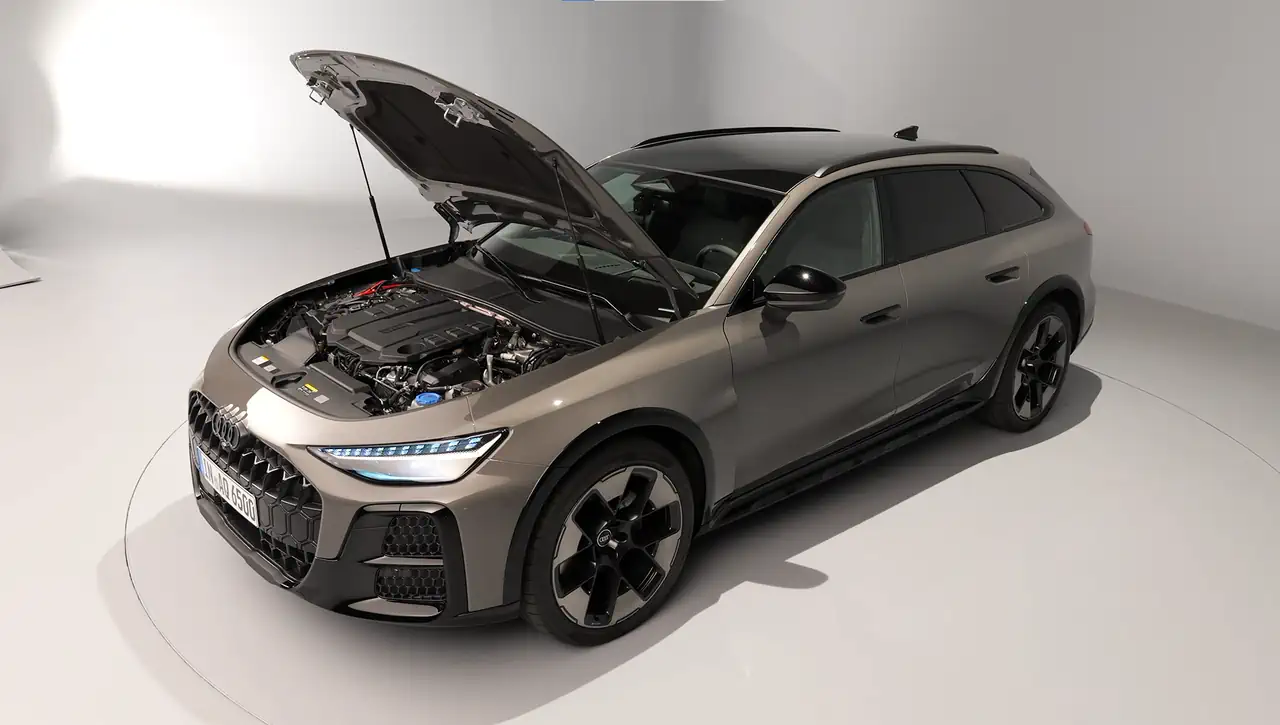
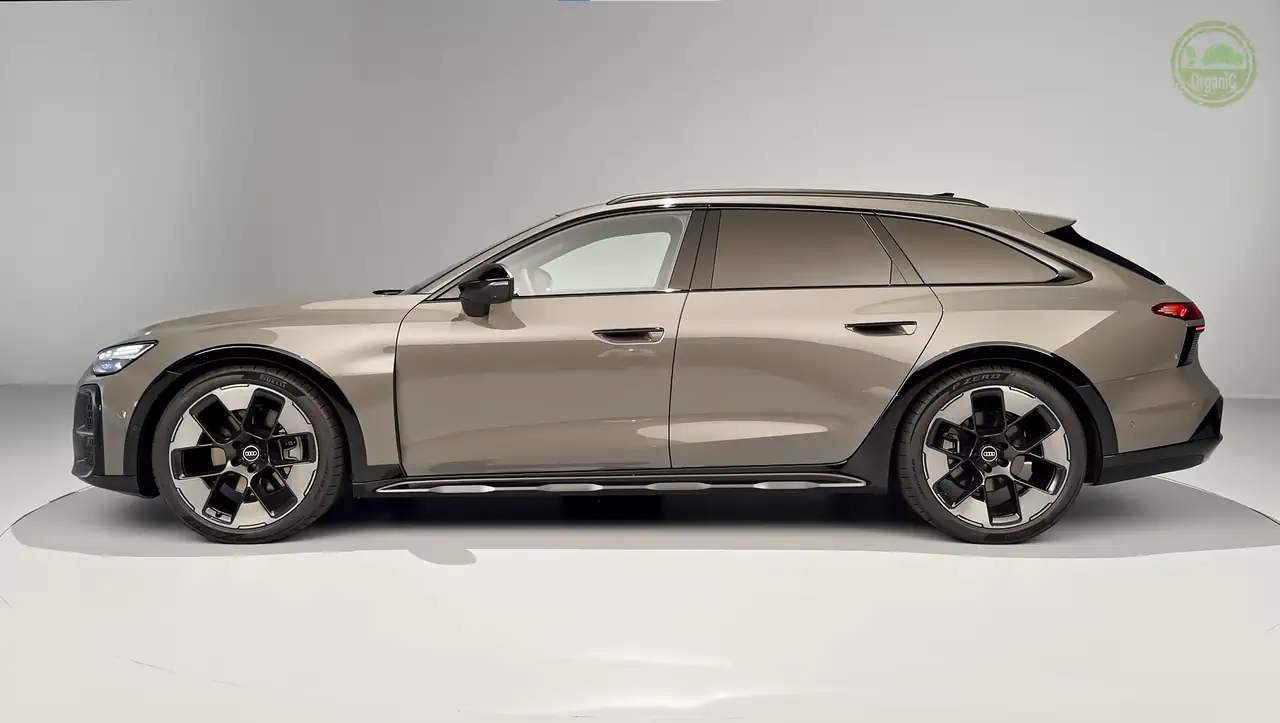
Start at the front and the single-frame grille immediately reads as more aggressive than any previous allroad. The hexagonal mesh pattern is exclusive to this model, darker and more sculptural than what you’ll find on the standard A6 Avant. The digital Matrix LED headlights are slim and precise, and they do something no other production car has done before — they project symbols onto the road surface to warn oncoming drivers of hazards like black ice ahead.
Walk around to the side and that’s where the C9 generation really separates itself. Audi stretched the body to 78.2 inches wide without mirrors — 82.6 inches with them — thanks to 4.37 inches of added width over the standard wagon. The result is a set of muscular fender flares and sculpted lower body cladding that looks factory-built rather than bolted on as an afterthought. Wheel options start at 19 inches with 265/45 tires and scale up to forged 21-inch units wearing 285/35 rubber. The larger tires use polyurethane foam inserts inside the cavity to suppress resonance noise at highway speeds.
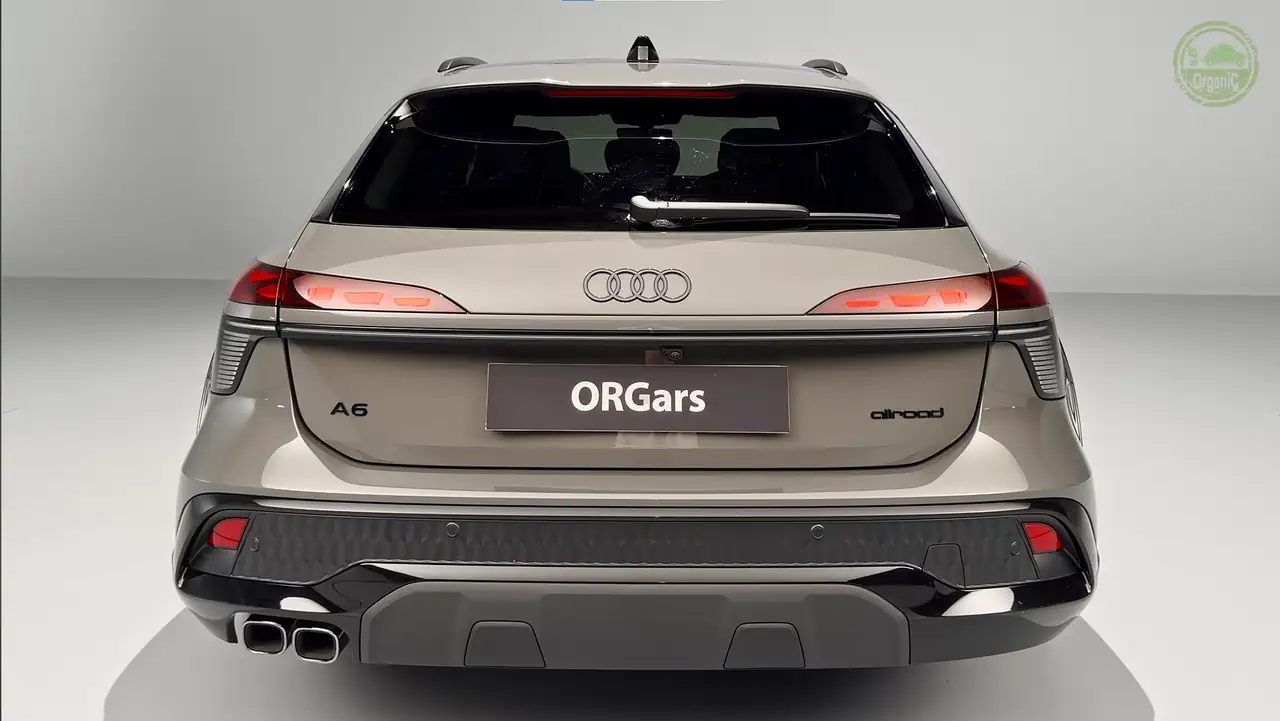
Around back, the OLED 2.0 taillights support eight different light signatures and double as a vehicle-to-vehicle communication system — an active safety feature that’s more than just aesthetic. The lower rear bumper carries integrated skid plate styling that reinforces the off-road credibility without looking overdone.
In person, the A6 Allroad reads less like a station wagon and more like something Audi Sport would build for a customer who still needs to pick up the kids on Monday.
A Cabin That Justifies the Price Before You Turn the Key
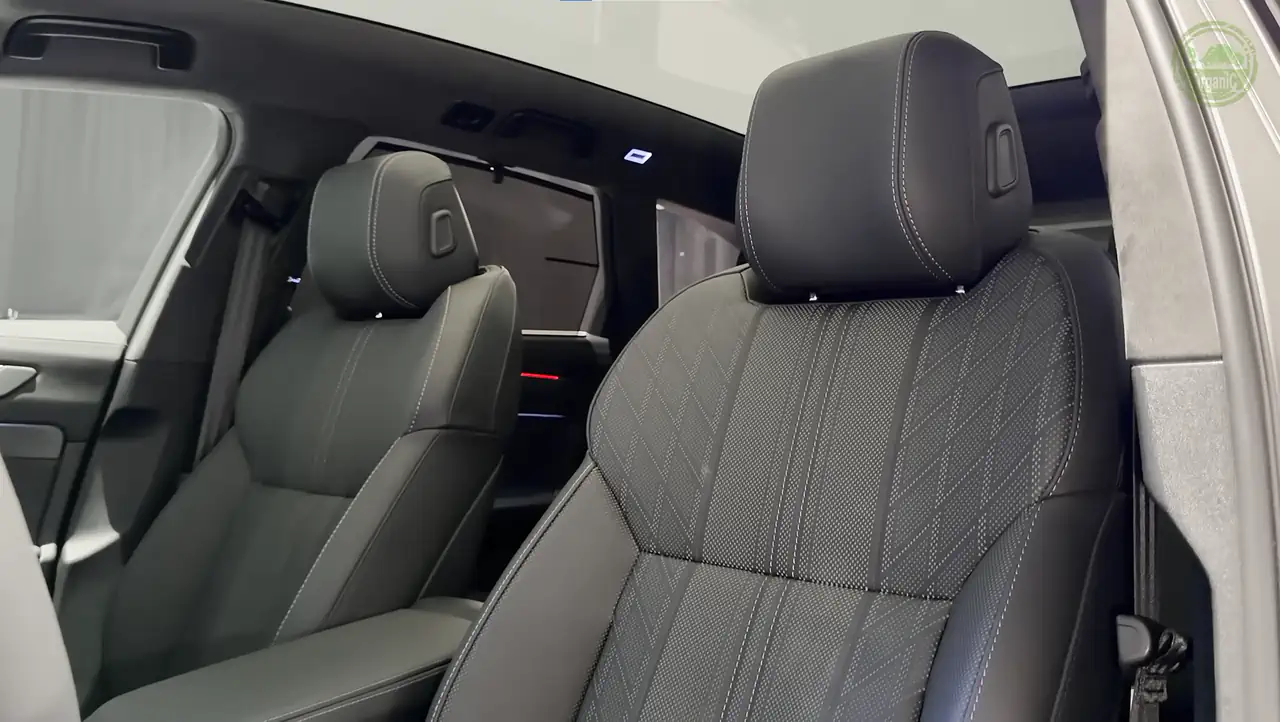
Audi calls the interior design philosophy “softwrap,” and it’s exactly what the name implies — premium materials flow from the door panels across the dashboard without a single visual break. Genuine Valcona leather is available, along with Dinamica microfiber for buyers who prefer a sustainable alternative. Prestige trim wraps the entire dash and center console in leather with contrast stitching throughout.
The front seats are contoured with electric adjustment and, in top configurations, multi-program pneumatic massage systems. Acoustic double-layer glass comes standard and the result is a cabin environment that genuinely isolates road noise at a level that feels closer to a luxury sedan than a practical wagon. Coming from any SUV, the difference is immediately noticeable the first time you open it up on the highway.
The one complaint that surfaces consistently from early evaluations: every single climate control function has been moved to the touchscreen. The rotary dials are gone entirely.
Screens, Driver Assistance and the Space Your Family Will Actually Use
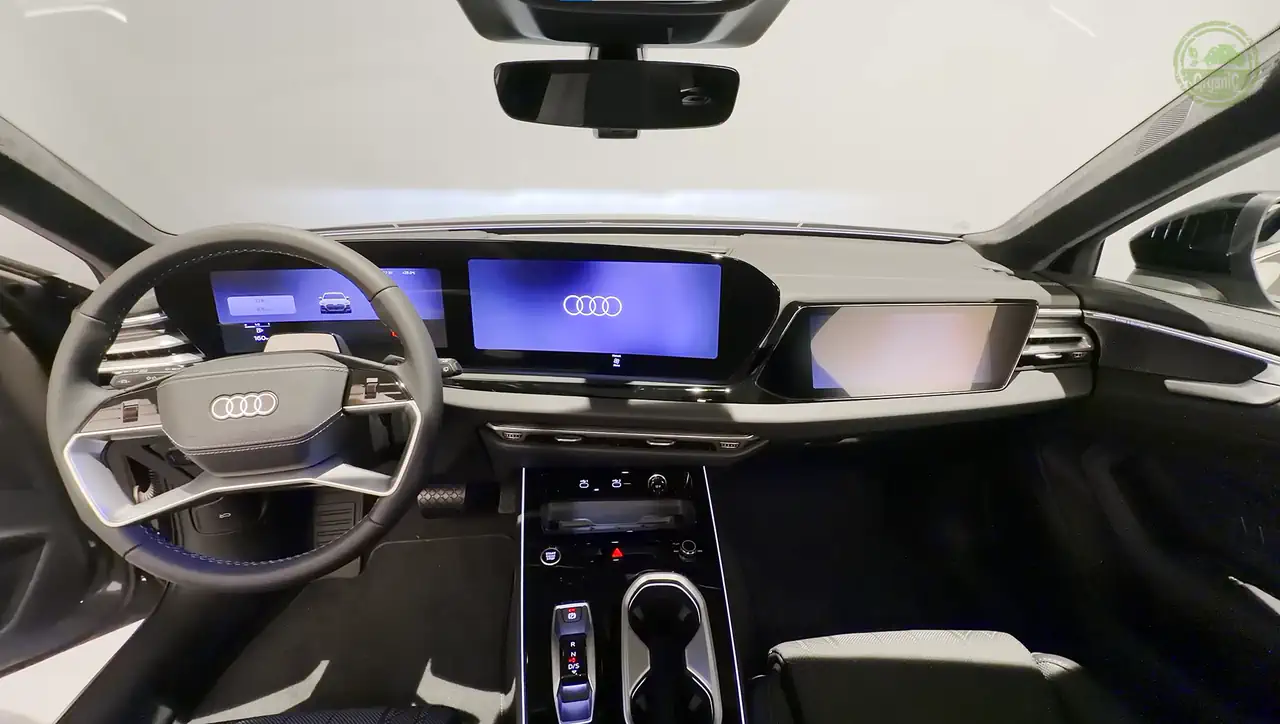
The MMI panoramic display clusters two curved OLED screens under one continuous piece of glass — an 11.9-inch Virtual Cockpit for the driver and a 14.5-inch primary touchscreen for infotainment and climate, both with haptic feedback. An optional 10.9-inch passenger display integrates seamlessly into the dash with an active privacy mode that prevents the driver from seeing the screen while moving — so your co-pilot can stream video independently during the drive.
The native voice assistant now runs ChatGPT-based AI, allowing full natural language commands for everything from suspension adjustments to complex navigation requests. Wireless Apple CarPlay and Android Auto are supported via native 5G connectivity.
On the safety side, the ADAS suite operates at Level 2+ and includes Intersection Assist with emergency braking for cross-traffic scenarios and an optional integrated 4K dashcam with inertial logic that preserves footage around detected incidents.
Rear seat space is generous for a wagon at this length — 197.5 inches overall. Cargo starts at 14.3 cubic feet and expands to 50.2 cubic feet with the rear seats folded.
Clear strength: the acoustic isolation and system integration set a new benchmark for the segment.
Real limitation: the fully touch-based controls force your eyes off the road more often than they should for routine tasks.


Under the Hood: What 362 HP Actually Feels Like in the Real World
For the U.S. market, the engine under the hood is a 3.0-liter turbocharged V6 paired with a 48-volt mild-hybrid system — 362 HP and 406 lb-ft of torque sent through a 7-speed S tronic dual-clutch transmission and quattro all-wheel drive with ultra technology.
On paper, the 0–60 mph time sits around 4.5 seconds. In practice, the delivery is smooth and immediate rather than dramatic — this isn’t a car trying to feel fast. It simply is fast, in the composed and unhurried way that makes long highway stretches feel effortless. The quattro ultra system decouples the rear axle during relaxed cruising to trim fuel consumption, then reengages in milliseconds the moment traction demands it. For a vehicle this wide and this tall, the handling response is genuinely surprising.
Estimated fuel economy lands around 23 MPG combined — an honest number for 362 HP and nearly two tons of vehicle. Buyers who want better efficiency in daily driving can opt for the e-hybrid PHEV, which covers up to 59 miles on electricity alone before the 2.0-liter four-cylinder takes over. That range handles most round-trip commutes without burning a drop of fuel.
The adaptive air suspension handles the full dynamic range. In Dynamic mode, the chassis drops 0.6 inches. In Offroad mode, it rises 0.6 inches. Activate the Lift function below 21 mph and you get an additional 0.8 inches of clearance — enough ground clearance to handle unpaved forest service roads, gravel driveways and light trail use without flinching.
Pricing and Ownership Costs: What the A6 Allroad Actually Costs to Own in America
In Germany, the C9 generation starts at the equivalent of roughly $84,000 for the base diesel configuration — a powertrain that doesn’t come to the U.S. The American market receives the V6 TFSI or the e-hybrid PHEV, with projected MSRP figures ranging from $66,000 to $80,000 across the Premium, Premium Plus and Prestige trim levels.
That pricing puts the Audi A6 Allroad in direct competition with the Mercedes-Benz E-Class All-Terrain, which occupies the same $70,000–$85,000 window and targets an essentially identical buyer. The Volvo V90 Cross Country, the other traditional name in this segment, has been pulling back from several markets and no longer represents the same competitive threat it once did.
Insurance premiums for the A6 Allroad will fall into the highest tier for imported luxury vehicles. The widened aluminum body panels, the integrated Matrix LED units with onboard processors and the OLED 2.0 rear lights make even low-speed collision repairs expensive. Replacing a single headlight assembly can run well into four figures given the Car-to-X communication hardware built into the unit.
Maintenance costs are manageable by the standards of this segment — the 3.0L V6 and S tronic gearbox have a proven durability record from previous generations when fluid service intervals are respected. That said, any shop working on the MHEV system or the PHEV battery pack will need Audi-certified technicians. The Audi Signature Care package covers the first three years or 30,000 miles in several markets as a standard purchase benefit.
Financing a vehicle in this range means monthly payments that rival luxury SUV territory, often exceeding $1,200 to $1,500 per month on standard 60-month terms. Depreciation is the more significant risk: European-style wagons have historically lost value faster than comparable SUVs in the U.S. market, where the body style remains a minority preference. Expect 30 to 40 percent depreciation in the first three years.
Buying at launch makes sense only if availability is the priority. Waiting 18 to 24 months for a lightly used example is the better financial move — though the buyers this car is built for rarely think about it that way.
What to Know Before Buying the A6 Allroad
Is the 2027 Audi A6 Allroad coming to the United States?
Yes. The C9 generation is confirmed for the U.S. market as a 2027 model year vehicle. The diesel V6 available in Europe won’t make the trip — American buyers will get the V6 TFSI MHEV or the e-hybrid PHEV.
What’s the real difference between the A6 Allroad and the Audi Q7?
The allroad runs a lower center of gravity, cleaner aerodynamics and sharper on-road handling. The Q7 offers more ground clearance and heavier off-road capability, but it pays for that with more body roll, higher fuel consumption and an aerodynamic penalty the wagon doesn’t carry.
Are maintenance costs high on the A6 Allroad?
Higher than average for the segment, yes. The 48V MHEV system, air suspension components and advanced lighting assemblies all require specialized service. The Audi Signature Care package helps offset those costs in the early ownership years.
What is the real-world fuel economy of the A6 Allroad?
The V6 TFSI is estimated around 23 MPG combined. The e-hybrid PHEV can cover daily commutes on electricity alone with up to 59 miles of EV range, but fuel economy drops noticeably on longer trips once the battery depletes and the combustion engine carries the extra weight of the battery pack.
Does the A6 Allroad Make Sense at This Price?
For the right buyer, absolutely. This is a vehicle built for someone who understands what they’re giving up — resale value, mainstream recognition, ease of service — and has made peace with all of it in exchange for a driving experience no SUV in this price range can match.
It’s not the right choice for someone who wants a recognizable status symbol, a predictable resale market or a simple ownership experience. The fully digitized controls will also frustrate anyone who prefers tactile feedback for everyday functions.
The A6 Allroad C9 is, at its core, the most capable car that most people in a parking lot will walk right past. That’s exactly the point — and exactly why the people who want it won’t consider anything else.
Does a $75,000 wagon make more practical sense than a same-price luxury SUV — or does the American market still belong to the high-riders? Drop your take in the comments below.
Share this article

Por: Danniel Bittencourt
16/06/2026
Related posts