The Kia XCeed 2027 Is the European Crossover Americans Are Missing Out On
The 2027 Kia XCeed arrives refreshed with a 48V mild-hybrid engine, dual 12.3-inch screens and Level 2 driver assistance tech. So why isn’t Kia bringing it stateside?
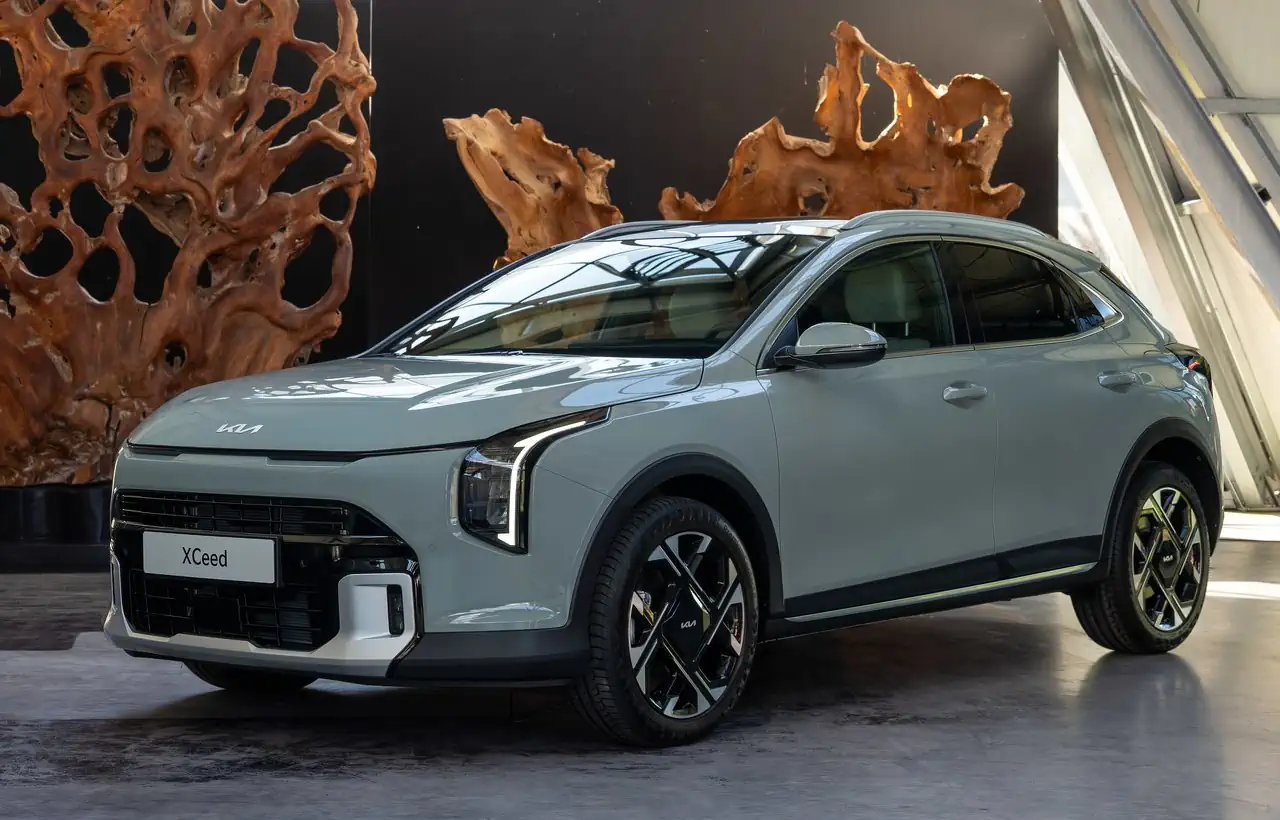
Kia XCeed 2027: The Crossover That Survived by Getting Smarter
The 2027 Kia XCeed isn’t a new generation. It’s something more calculated than that.
Kia took a platform that already worked, dropped what wasn’t selling, added 48-volt mild-hybrid technology and redesigned nearly everything you can see. The result is a compact crossover that goes head-to-head with the Mazda CX-30, Toyota Corolla Cross and Volkswagen Taigo across European showrooms.
In the U.S., there’s no official plan to bring it over.
Quick Specs
| Spec | Details |
|---|---|
| Category | Compact crossover (CUV) |
| Engine | 1.0T MHEV 48V / 1.5T / 1.6T gasoline turbo |
| Horsepower | 113 hp / 158 hp / 178 hp |
| Torque | 148 lb-ft / 187 lb-ft / 195 lb-ft |
| Transmission | 6-speed manual or 7-speed dual-clutch (DCT) |
| Drivetrain | Front-wheel drive (FWD) |
| 0–60 mph | 8.5 sec (1.6T) / 12.2 sec (1.0T MHEV DCT) |
| Top Speed | 130 mph (1.6T) / 113 mph (1.0T) |
| Fuel Economy | Up to 39.2 mpg combined (1.0T) / 35.1 mpg (1.6T) — WLTP cycle |
| Range | Over 500 miles (1.0T MHEV, 13.2-gallon tank) |
| On Sale | Model year 2027 — currently available in Europe |
The numbers alone tell part of the story. What’s more interesting is how Kia managed to pack near-premium technology into a crossover that competes against far more basic products. Stick around — the full picture is worth it.
A Crossover Designed to Look Like Kia’s EVs
The first thing the 2027 XCeed communicates on the street is that it has no interest in being confused with the previous generation.
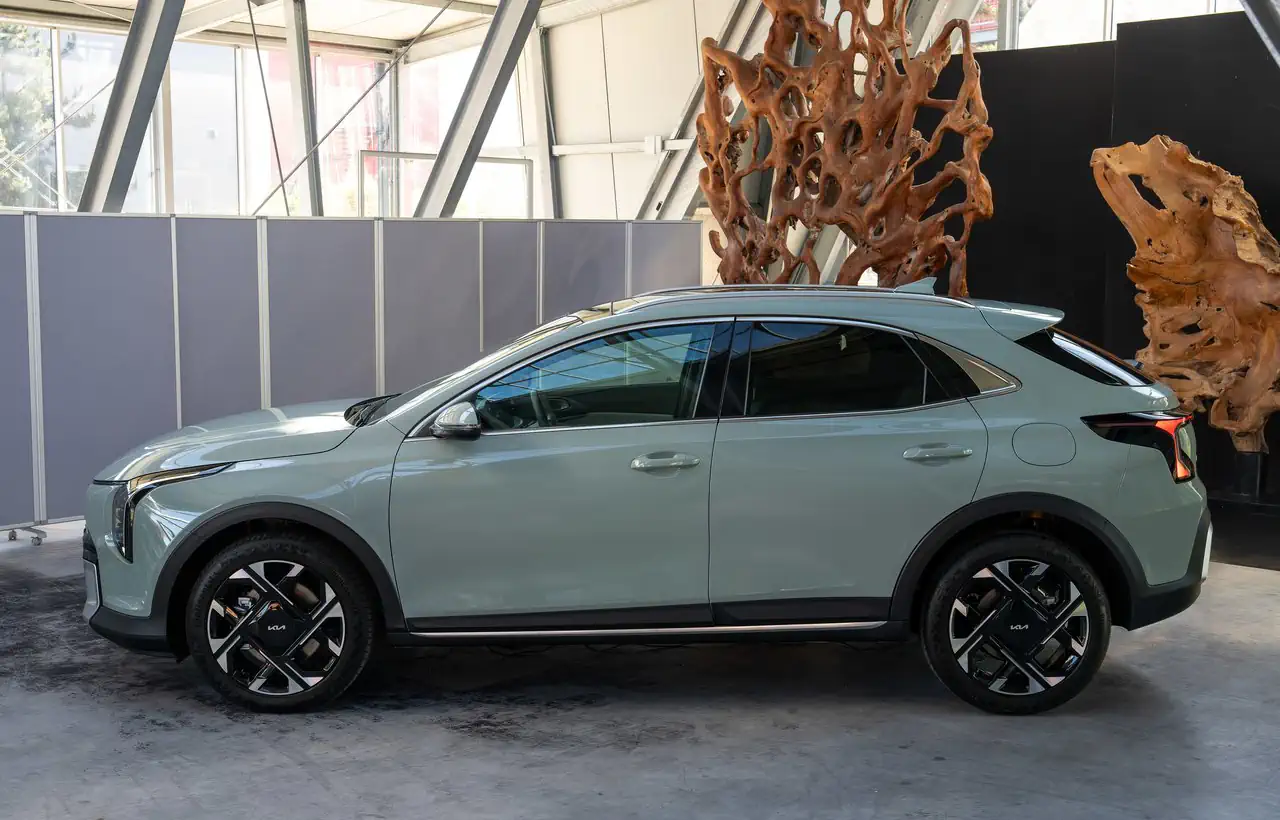
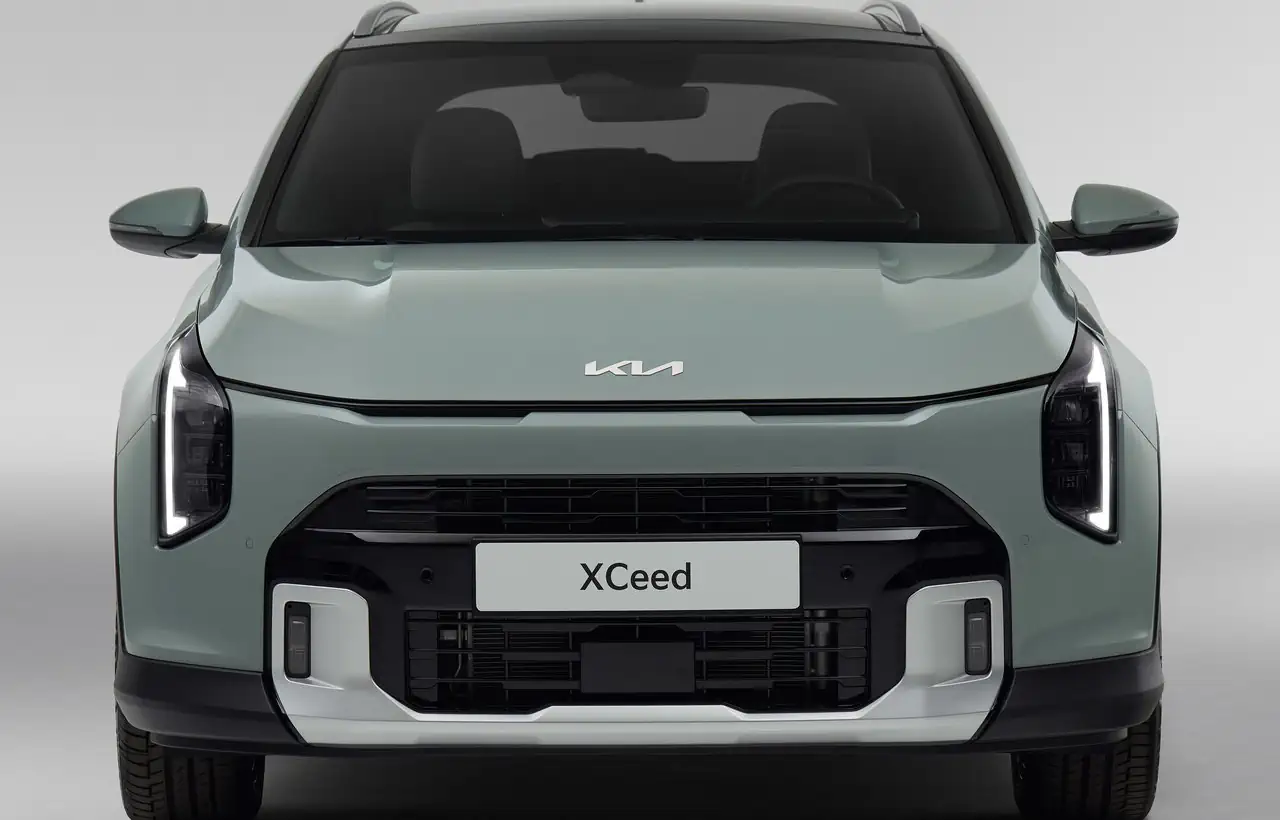
Up front, it gets full-LED headlights with a vertical light signature Kia calls “Star Map” — a set of daytime running lights spread across the outer edges of the headlight clusters. The tiger-nose grille got narrower, finished in gloss black and satin chrome, and the front bumper was redesigned with wider air intakes and skid plate-style trim that hints at something more rugged.
From the side, the fastback roofline flows smoothly down to an aggressively raked rear hatch. That shape isn’t just aesthetic — it produces a 0.33 drag coefficient, which contributes directly to real-world fuel economy. Black plastic cladding around the wheel arches and along the lower sills reinforces the utility look without being loud about it.
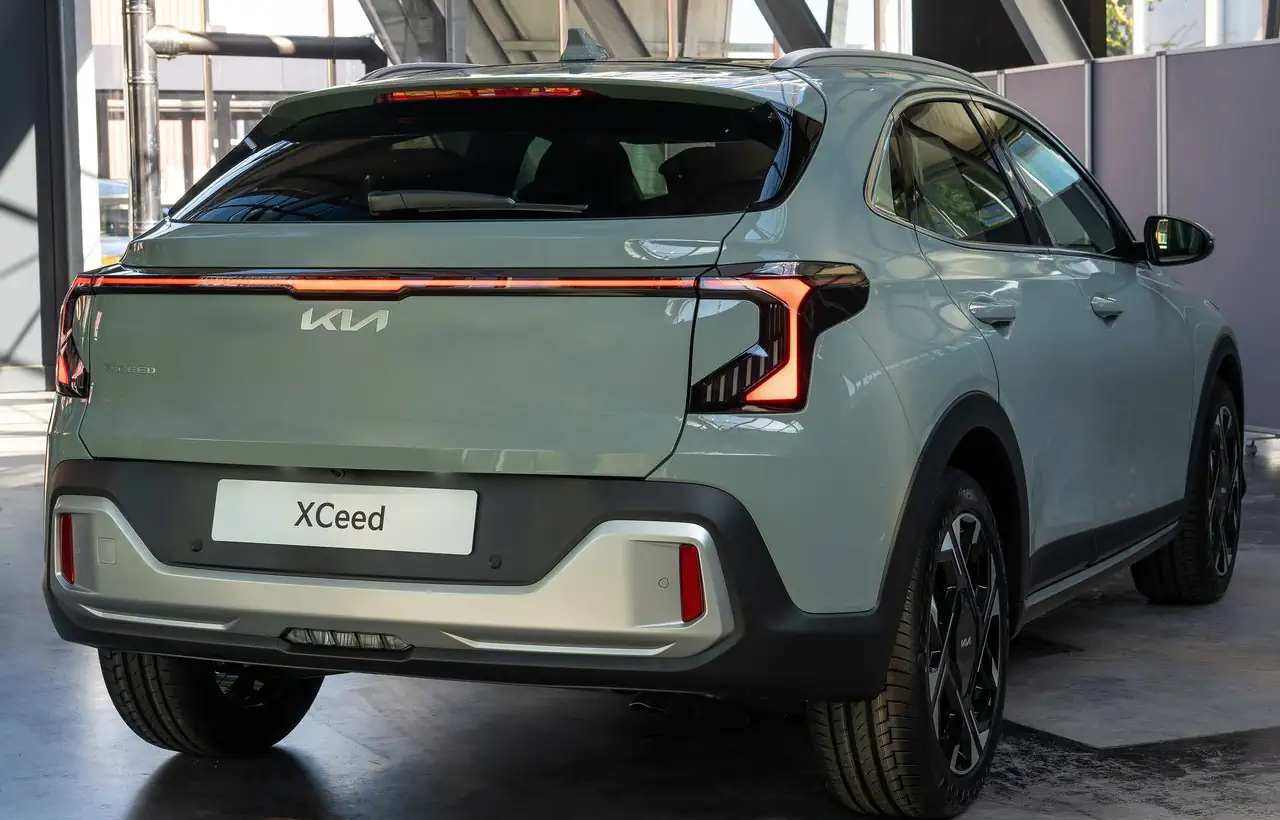
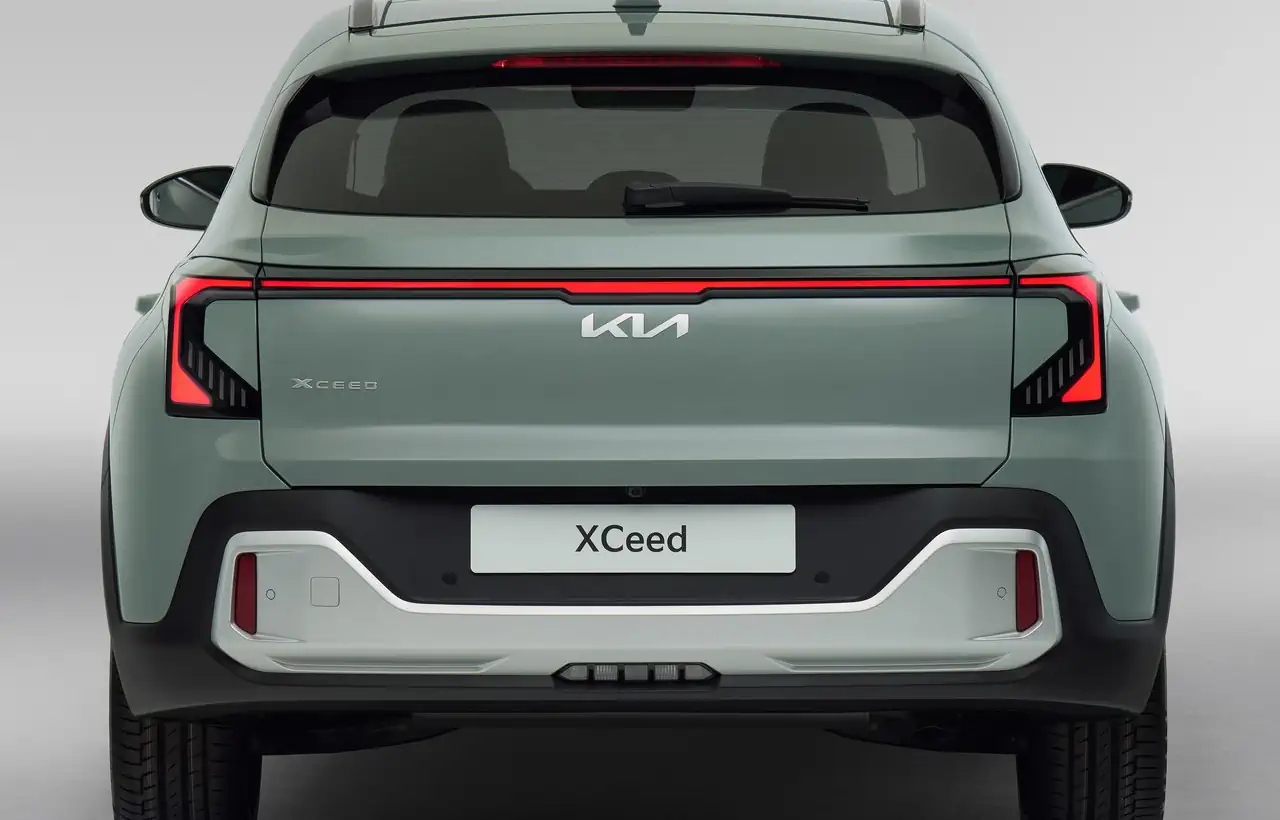
At the rear, honeycomb-pattern LED taillights and sequential turn signals on GT-Line trims round out a bumper that’s wider and more sculpted than before, giving the car a broader, more planted stance.
The “Opposites United” design language ties the XCeed visually to Kia’s electric lineup — the EV3, EV5 and EV9. It’s a deliberate move: standing next to the combustion-engine crossover, you recognize the same family as the brand’s full EVs.
An Interior That Doesn’t Feel Like a Budget Crossover
The XCeed’s dashboard has a subtle driver-oriented tilt. It’s not dramatic, but it gives the impression the car was designed with the person behind the wheel in mind.
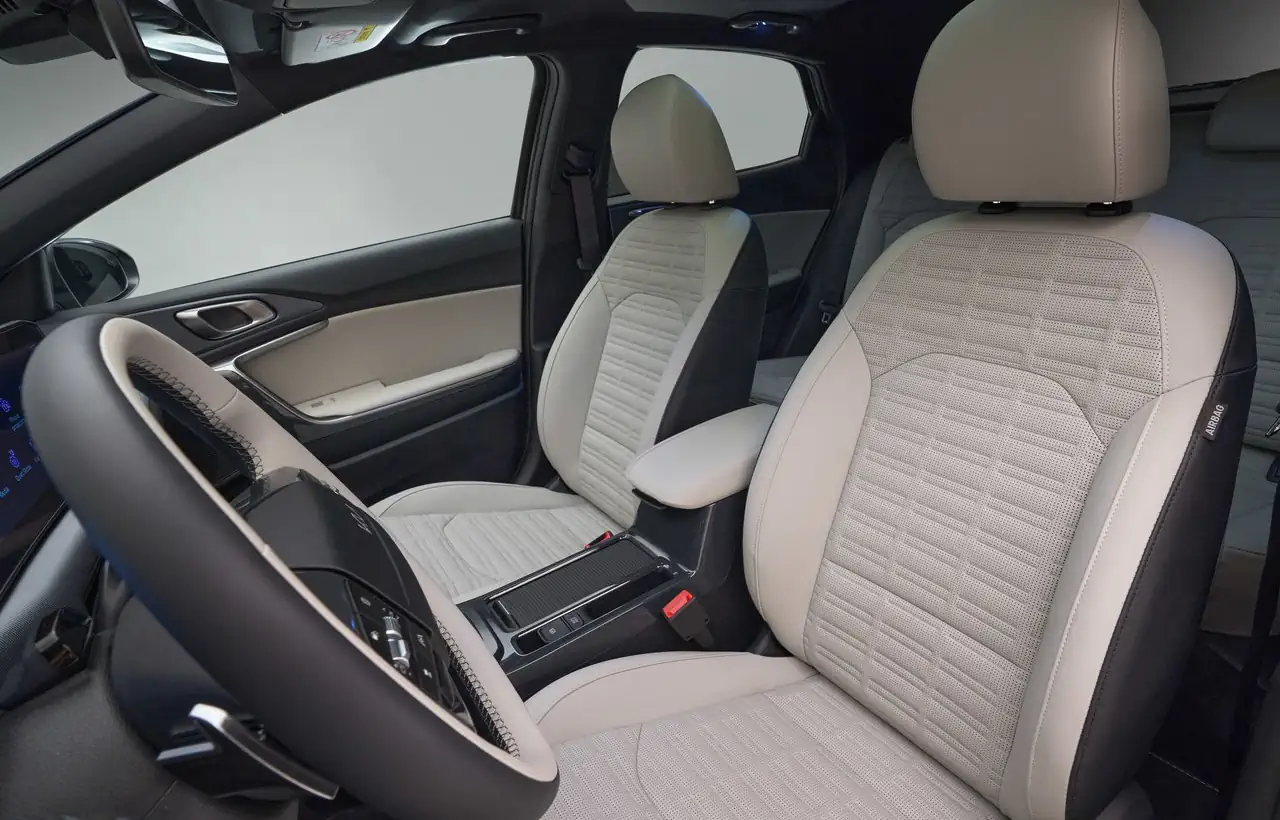
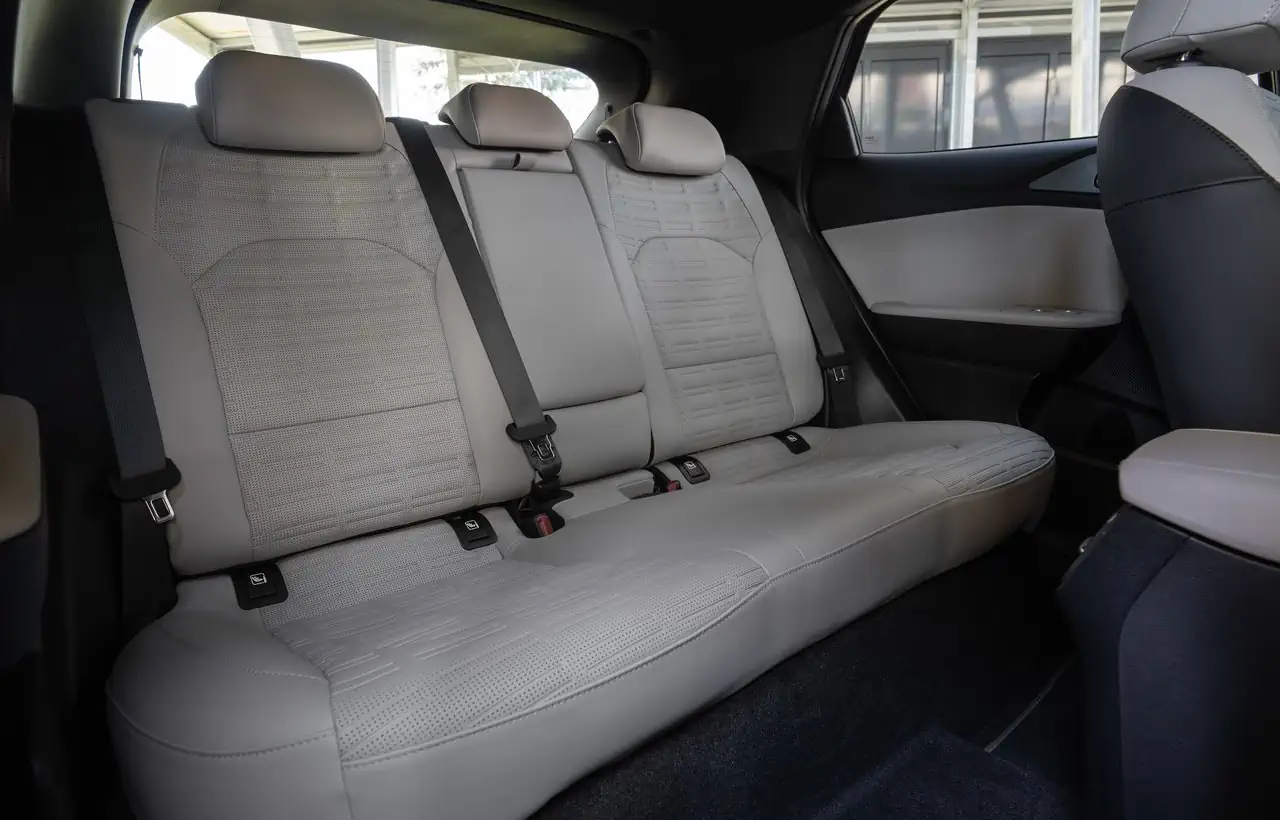
Soft-touch materials cover the upper sections of the dashboard and front door panels. Base trims get cloth and synthetic leather seating. Step up to GT-Line or GT-Line S and the atmosphere shifts — a flat-bottom heated steering wheel, aluminum pedals and anatomically contoured seats change the feel considerably. Perforated synthetic leather, suede and contrast stitching are available depending on the package.
The seating position sits 1.7 inches higher than the old hatchback it replaced, which improves sightlines and makes getting in and out noticeably easier.
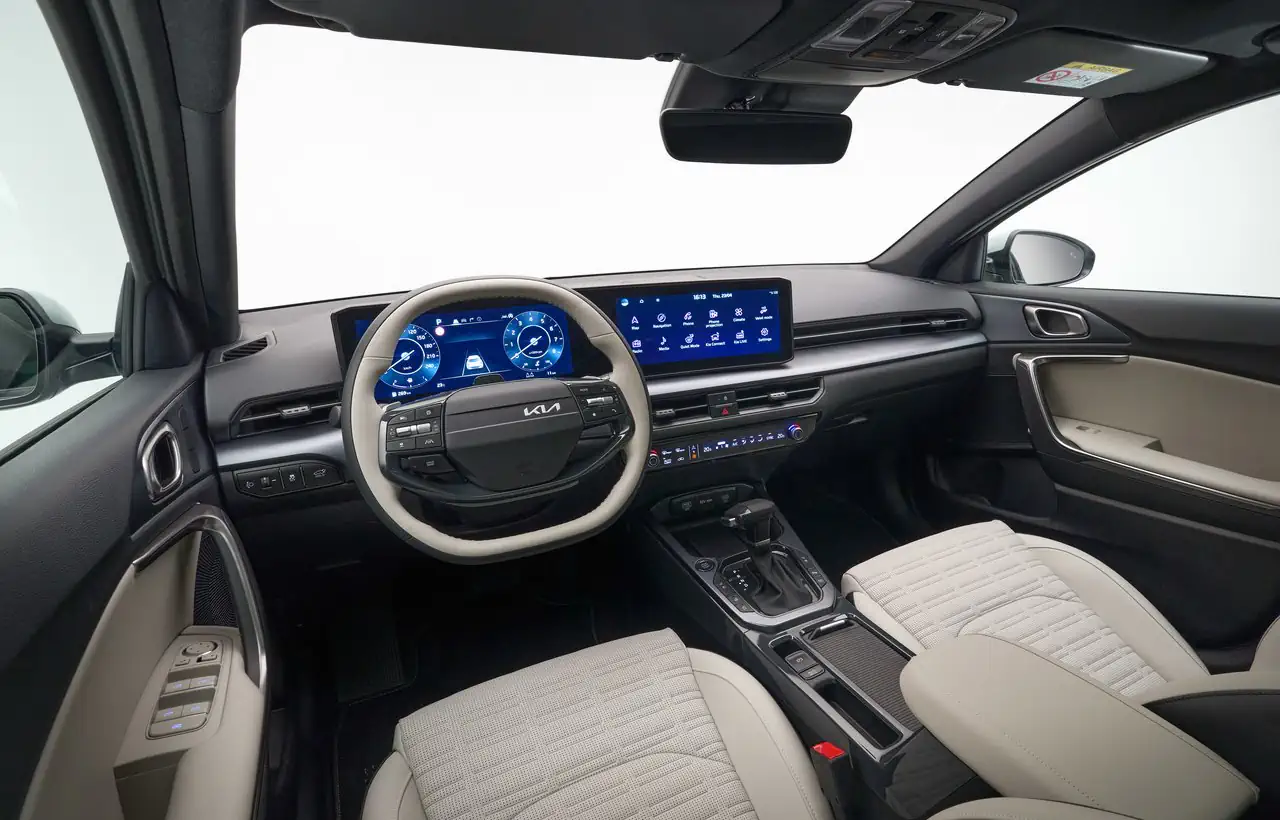
Dual 12.3-Inch Screens — and a Button That Solves a Real Problem
The infotainment setup pairs two 12.3-inch displays side by side: one for the instrument cluster, one for navigation and media. The digital cluster adjusts its layout based on whichever drive mode the driver selects.
The standout feature is the Multimode Touch Display — a capacitive touch panel in the lower center console that toggles between full climate control and media shortcuts with a single tap. No buried submenus, no extended eyes-off-road time. It’s the kind of solution that makes you wonder why more automakers haven’t figured this out yet.
Wireless Apple CarPlay and Android Auto come standard. Wireless charging, rear USB-C ports and Digital Key 2.0 via Ultra-Wideband technology — compatible with both Apple and Android devices — round out the connectivity package.
Cargo space is 15.0 cubic feet with the rear seats up, expanding to 48.7 cubic feet flat when folded in a 40:20:40 split. For rear passengers taller than 6’1″, the fastback roofline does eat into headroom on longer trips. It’s a real trade-off, not a minor inconvenience.


Three Engines, One Character: How the XCeed Actually Drives
Kia streamlined the XCeed’s powertrain lineup for 2027. Diesel and plug-in hybrid are gone. The focus shifted entirely to turbocharged gasoline engines, with 48-volt mild-hybrid tech on the entry option.
The base engine is a three-cylinder 1.0-liter turbo with 113 hp and 148 lb-ft of torque, delivered between 1,500 and 3,000 rpm. The sprint to 60 mph takes 12.2 seconds in DCT form — not quick, but the torque curve keeps city driving from feeling sluggish. The 48V mild-hybrid system adds a “Sailing” mode that cuts the engine at steady highway speeds up to 78 mph, then restarts it seamlessly when the driver touches the throttle. In real-world testing, owners consistently report fuel economy near 38 mpg on mixed routes, close to the official WLTP figure of 39.2 mpg.
The mid-range 1.5-liter four-cylinder delivers 158 hp and 187 lb-ft, hitting 60 mph in around 9.2 seconds. It’s smoother and quieter than the three-cylinder — the balanced point in the lineup.
The performance option is the 1.6-liter turbo with 178 hp and 195 lb-ft available from 1,500 rpm all the way to 4,500 rpm. Paired exclusively with the 7-speed DCT, it covers 0–60 mph in 8.5 seconds. On open roads and highways, the torque makes passing lanes feel effortless. The drawback is the DCT’s familiar hesitation in stop-and-go traffic, especially on inclines. It’s a known limitation of dry dual-clutch gearboxes, and the XCeed isn’t immune to it.
Pricing, Insurance and Ownership: What the XCeed Actually Costs
In Europe, the 2027 XCeed starts around £23,970 — roughly $30,000 at current exchange rates — for the base Pure trim with the 1.0T and manual gearbox. The GT-Line S with the 1.6T DCT climbs to approximately £34,165, which puts it in direct competition with entry-level premium brands.
The XCeed isn’t officially sold in the United States. As a market estimate, factoring import duties, compliance costs and Kia’s North American pricing structure, a U.S. MSRP would likely land somewhere between $28,000 and $36,000 depending on trim — if it were ever brought over. At that range, it would face the Mazda CX-30, Honda HR-V and Toyota Corolla Cross directly.
Insurance premiums in the UK fall between groups 11E and 21A depending on engine choice — roughly moderate to upper-moderate risk ratings. In a U.S. context, a compact imported crossover with this technology profile would likely carry insurance costs comparable to the Mazda CX-30 or Volkswagen Taos, varying by driver profile and state.
Scheduled maintenance in Europe runs between $270 and $440 per service interval. The timing belt replacement — mandatory between 56,000 and 75,000 miles — adds $440 to $880 in parts and labor. Kia’s 7-year/100,000-mile warranty transfers to subsequent owners, which meaningfully reduces the risk calculation when buying used.
Depreciation runs around 49–50% over five years, in line with the broader market. Buying at launch makes sense if you plan to hold the car long enough to use those remaining warranty years. Waiting for a three- or four-year-old example with factory coverage still intact is also a legitimate strategy.
Common Questions Before You Consider the XCeed
What is the real-world fuel economy of the 2027 Kia XCeed?
European owners with the 1.0T MHEV report consistent averages of 37–39 mpg on mixed driving, which aligns closely with the official WLTP figures.
Is the Kia XCeed expensive to maintain?
Routine service intervals run $270–$440. The biggest scheduled expense is the timing belt replacement at 56,000–75,000 miles, costing between $440 and $880 in parts and labor.
Who are the main competitors of the 2027 Kia XCeed?
In Europe: Mazda CX-30, Toyota Corolla Cross and Volkswagen Taigo. In the U.S., the XCeed is not officially sold.
Does the 2027 Kia XCeed offer all-wheel drive?
No. Every available configuration is front-wheel drive only. There is no AWD option in the lineup.
Verdict: The XCeed Is Built for Drivers Who Don’t Want a Generic SUV
The 2027 XCeed is largely an emotional purchase. Buyers who choose it aren’t optimizing for cargo volume per dollar or maximum rear headroom. They want a crossover that stands out in a parking lot full of identical tall wagons — and one that delivers a genuinely tech-forward cabin without requiring a luxury-brand budget.
Families who need comfortable rear seating for adults over six feet will find the fastback roofline a real compromise. Drivers in regions with snow or rough terrain will feel the absence of AWD every time conditions get serious.
For urban commuters who want EV-adjacent styling, Level 2 driver assistance and seven years of factory coverage without going fully electric, the XCeed delivers exactly what it promises.
It knows what it is. That’s rarer than it sounds.
Do you think Kia is making the right call by keeping the XCeed out of the U.S. market, or is there a real gap here that rivals like the Mazda CX-30 and Honda HR-V aren’t filling? Drop your take in the comments.
Share this article

Por: Danniel Bittencourt
17/06/2026
Related posts