The Electric SUV That Put the Kia EV9 on Notice Has a Name: Meet the Škoda Peaq 2027
The Škoda Peaq 2027 is the brand’s boldest move yet: 7 seats, up to 398 miles of range and tech that rivals six-figure SUVs. The price tag, though, changes the entire conversation.
Škoda Peaq 2027: The Three-Row Electric SUV That Rewrites What the Brand Stands For
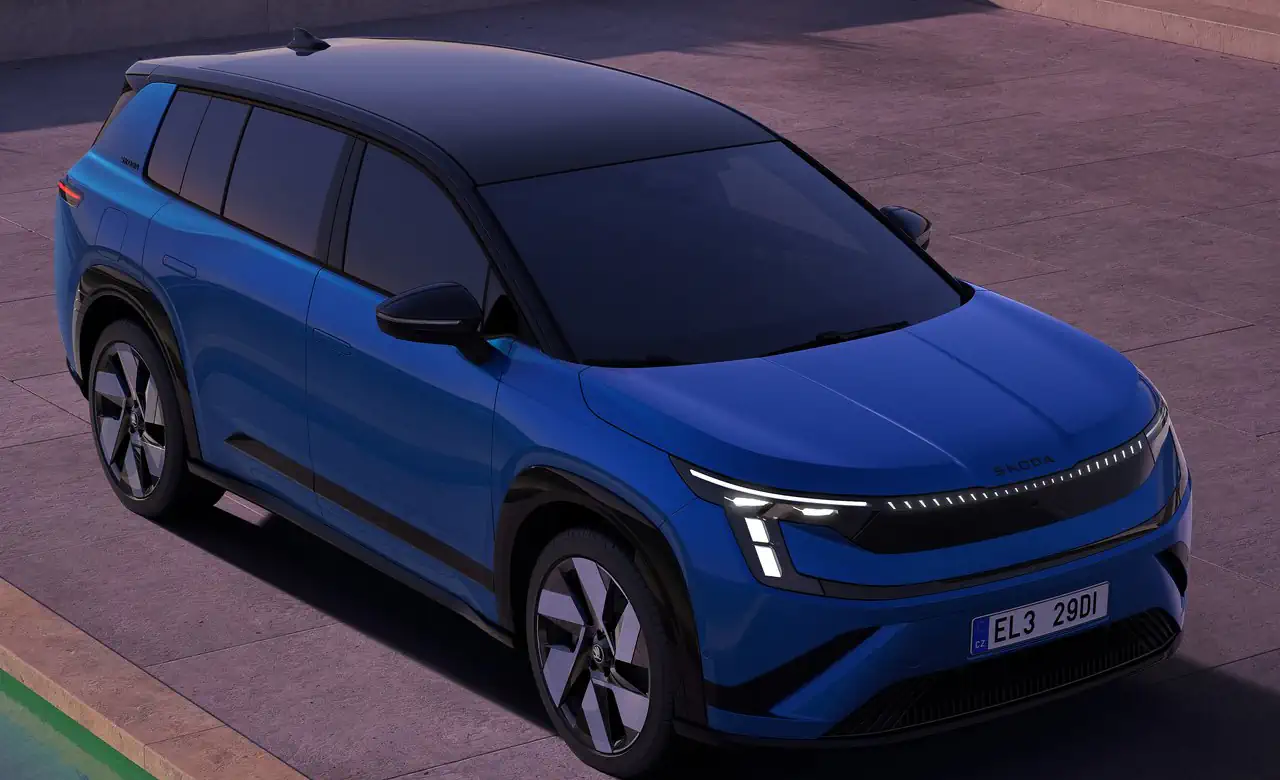
Škoda has never built anything like this. The Peaq is the brand’s first three-row electric SUV, and it steps directly into the ring with the Kia EV9 and the Hyundai Ioniq 9 — two of the most talked-about launches in the large EV segment right now.
This is a fully new model, derived from the Vision 7S concept unveiled in 2022. The global debut is scheduled for the summer of 2026, with European deliveries expected between late 2026 and early 2027 — hence the 2027 model year designation.
There is no confirmed US launch date at this time.
Quick Facts
| Spec | Details |
|---|---|
| Category | Large three-row electric SUV |
| Powertrain | Permanent magnet synchronous motor (RWD) or synchronous + asynchronous (AWD) |
| Output | 201 hp (Peaq 60) / 282 hp (Peaq 90) / 299 hp (Peaq 90x) |
| Torque | 258 lb-ft (Peaq 60) / Not officially disclosed (90 and 90x) |
| Transmission | Single-speed fixed ratio |
| Drivetrain | RWD (60 and 90) / AWD (90x) |
| 0–60 mph | ~8.1 s (60) / ~6.8 s (90) / ~6.4 s (90x) est. |
| Top Speed | 99 mph (60) / 112 mph (90 and 90x) |
| Efficiency | ~15.0 kWh/100 km — no official MPGe figure published yet |
| Range | Up to 398 miles WLTP (Peaq 90) |
| Launch Date | Late 2026 / early 2027 (Europe) |
The table above reflects European specifications. Those numbers only scratch the surface — what matters is what they mean when you’re actually behind the wheel with a full load of passengers. Let’s get into it.
An SUV That Commands Attention From Across the Parking Lot
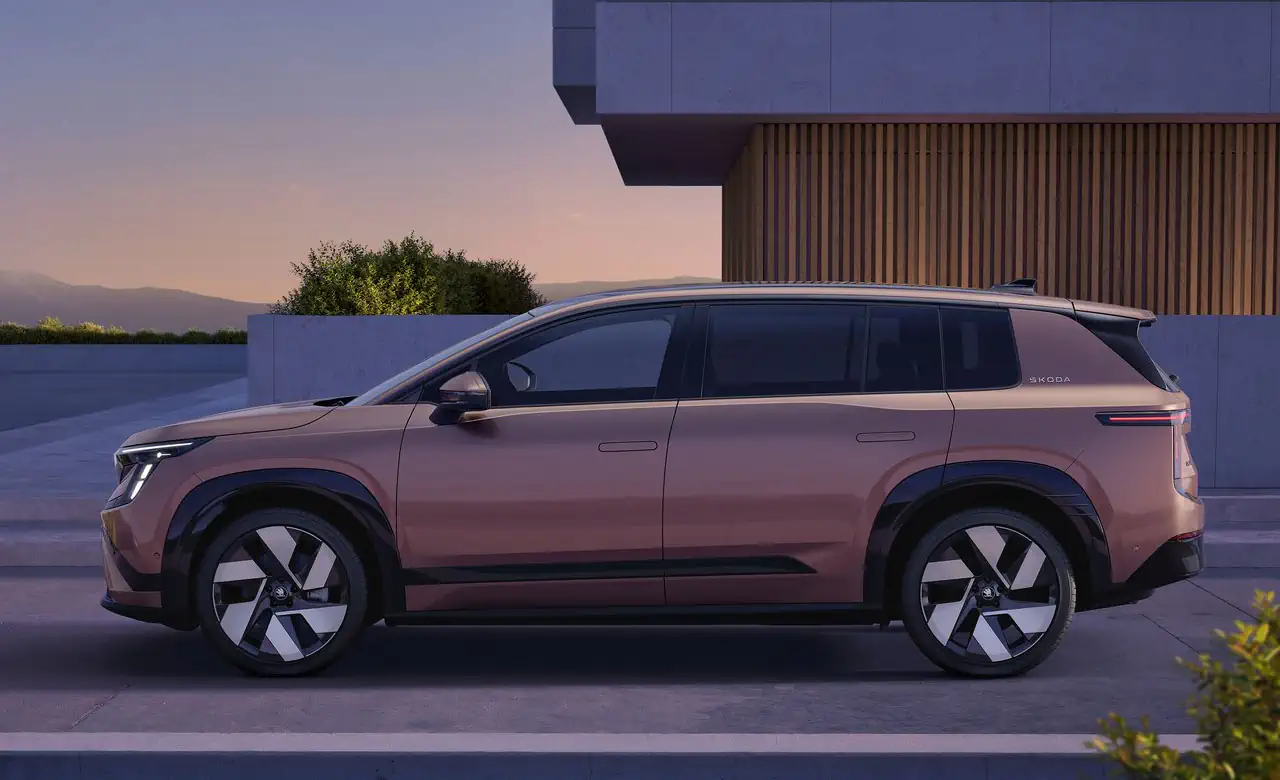
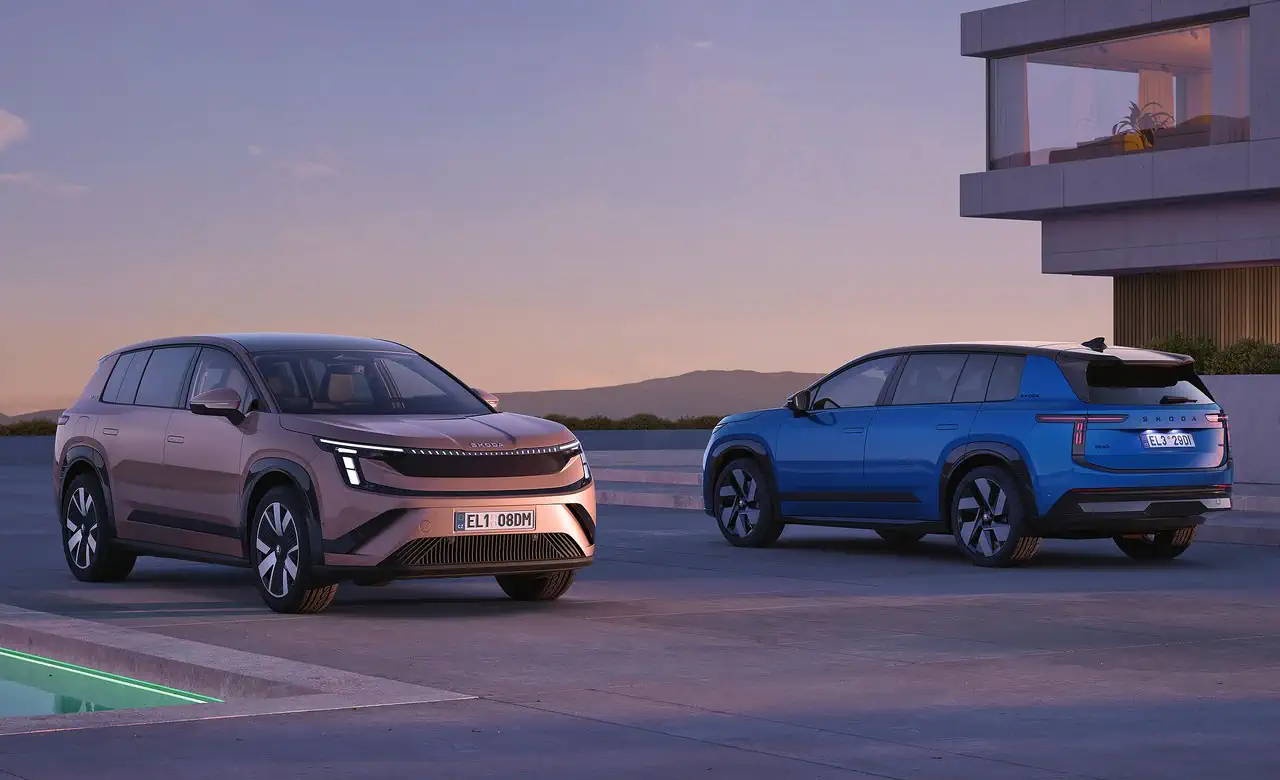
The first thing you notice about the Peaq is how much space it takes up. At just over 192 inches long, it carries itself with the kind of physical presence that makes minivans feel nervous. High beltline, square proportions and a wide stance — this is not a vehicle trying to look delicate.
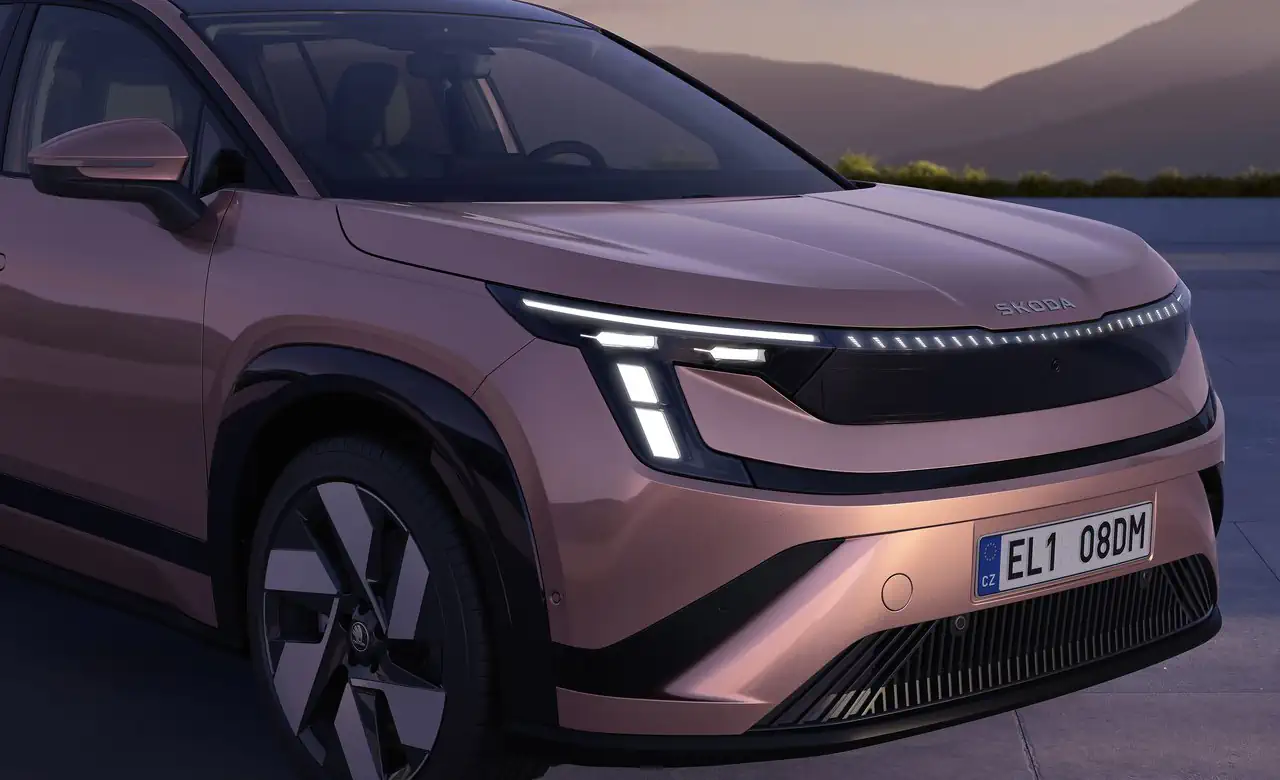
Up front, Škoda uses the closed-face design typical of modern EVs, with T-shaped DRLs and a hood that pushes forward with visual purpose. The brand calls it “Modern Solid” design language, and on this scale it lands more convincingly than on smaller models. Nothing here feels forced or over-styled.
Along the side, sharp character lines and a gently sloping roofline keep the silhouette from reading as a pure box. The greenhouse is tall and wide, which pays dividends both inside and out — the Peaq looks airy without looking soft.
Around back, the taillights and bumper pull directly from the Vision 7S concept with clean, angular shapes and no nostalgic references to older Škoda models. The message is clear: this is a different kind of vehicle for this brand — deliberate, confident and built to stand its ground against established three-row competition.
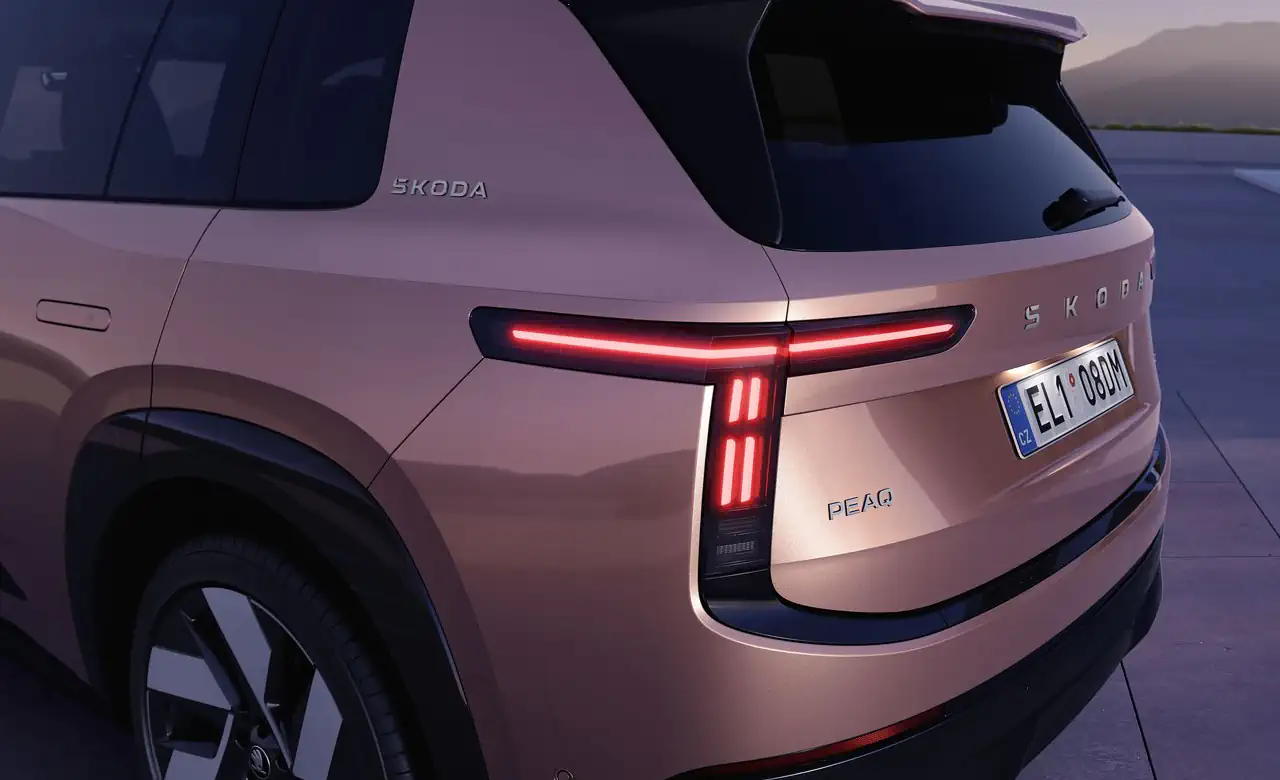
Inside, It Feels Less Like a Cabin and More Like a Living Room
Step inside the Peaq and the first impression isn’t technology — it’s calm. Škoda calls the interior approach “Lodge,” and the execution leans into soft-touch fabrics, easy-clean surfaces and more than 110 lbs of recycled content built into some configurations. There’s no animal-derived leather in those trims, which increasingly matters to a segment of buyers in this price range.
The dashboard is deliberately horizontal in its layout, widening the perceived interior space from the driver’s seat. High-contact surfaces use quality materials throughout, and the ergonomics are clearly tuned for long highway miles rather than commuter quick trips.
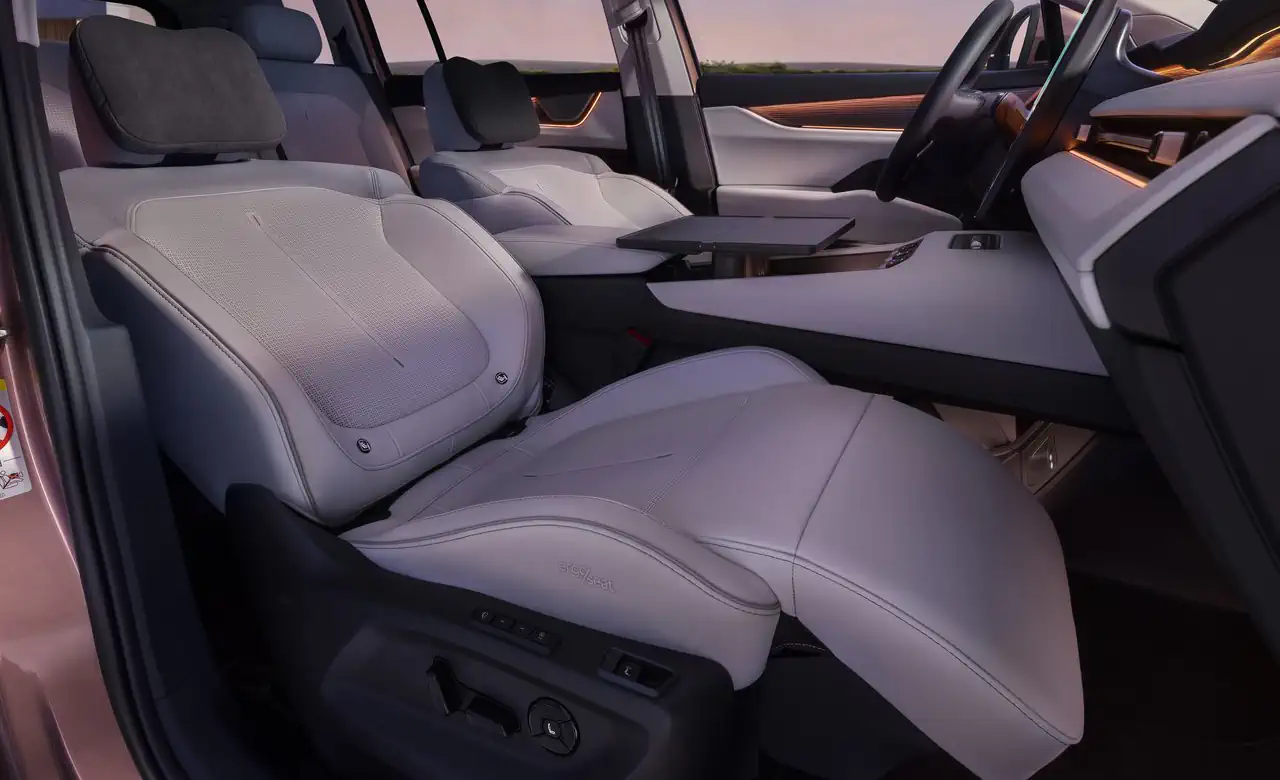
The optional Relax package equips the front seats with AGR certification, power adjustment, massage function and extendable leg supports. That’s the kind of feature list you’d expect from a Volvo or a well-specced German luxury SUV — not historically from Škoda.
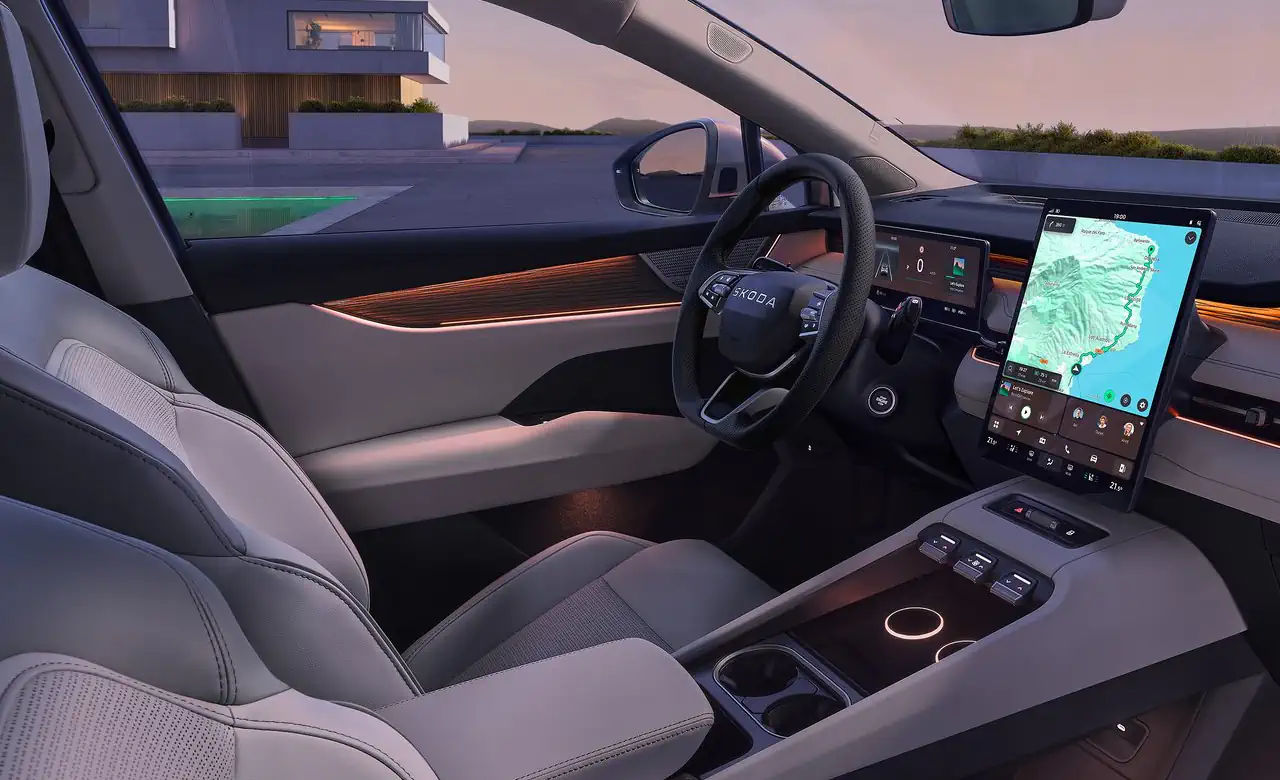
The Tech Stack: Screens, Assistants and Real-World Usability
The centerpiece of the dash is a roughly 13.6-inch vertical touchscreen running Android, with native support for Spotify, YouTube and Google Maps baked in from the factory. More importantly, Škoda kept dedicated physical controls for climate and volume — a practical decision that separates the Peaq from EVs that went all-touch and frustrated owners as a result.
The driver gets a roughly 10-inch digital instrument cluster, with an optional augmented reality head-up display that projects navigation cues and driver assist information directly into the windshield sightline. It keeps your eyes where they belong on the highway.
On the ADAS side, Škoda confirms lane keeping assist, adaptive cruise control and semi-autonomous driving functions. A full system list hasn’t been published yet.
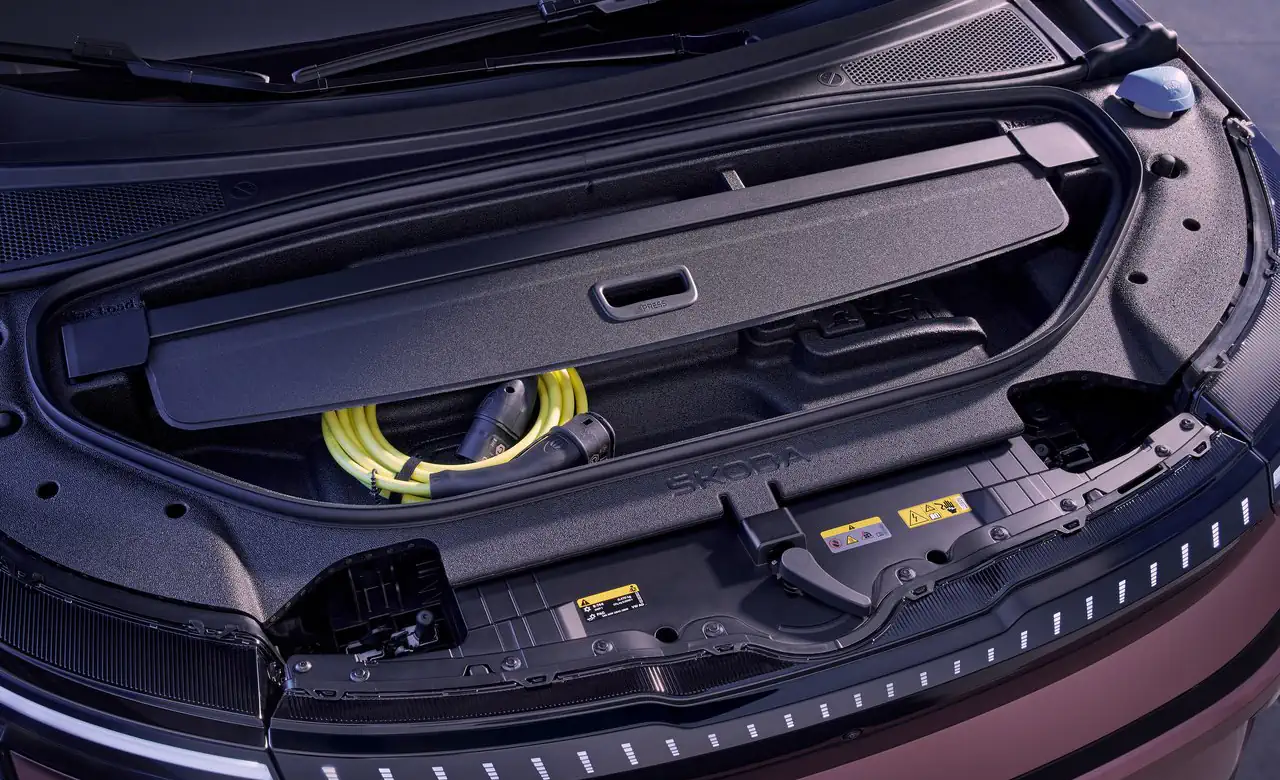
Second-row passengers get genuinely usable legroom, and the third row works for adults on shorter trips. Cargo space in the five-seat layout runs between approximately 33 and 35.7 cubic feet — competitive for the class. In seven-seat configuration that drops to around 10.6 cubic feet behind the third row, plus a front trunk adding roughly 1.3 cubic feet.
Standout strength: The combination of second-row space and the Relax package makes the Peaq a legitimate long-haul family vehicle, not just a school-run hauler with extra seats bolted on.
Real limitation: Choosing the third row costs you the cargo floor. Anyone planning a road trip with all seven seats occupied will need to pack strategically.


How It Actually Drives: Power, Range and Real-World Efficiency
The Peaq isn’t a performance vehicle, and Škoda isn’t pretending otherwise. The entry-level Peaq 60 runs a rear-mounted permanent magnet synchronous motor producing 201 hp and 258 lb-ft of torque, with an estimated 0–60 mph time around 8.1 seconds. That’s appropriate pace for a large family hauler — enough to merge confidently, not enough to impress at a stoplight.
The Peaq 90 steps up to 282 hp with the same rear-drive layout and cuts that 0–60 figure to an estimated 6.8 seconds. Top speed climbs to 112 mph. More relevant for most buyers: this is the version that unlocks the full WLTP range claim of up to 398 miles on a charge, paired with DC fast charging that takes the battery from 10 to 80 percent in roughly 27 to 28 minutes. On a cross-country trip with a family of five, that’s a meaningful number.
The all-wheel-drive Peaq 90x adds an asynchronous front motor, pushing combined output to 299 hp and pulling the 0–60 estimate down to around 6.4 seconds. A “Traction” mode keeps both motors engaged at low speeds for maximum grip on slippery or uneven surfaces — a genuinely useful feature rather than a marketing checkbox.
Efficiency sits around 15.0 kWh per 100 kilometers on the WLTP cycle for the Peaq 90. In real-world urban testing with a prototype, one publication recorded approximately 3.6 miles per kWh — slightly below the official figure, but respectable for an SUV approaching 5,100 lbs. No official MPGe rating has been published yet for any US market configuration.
What Ownership Actually Costs: Price, Insurance and the Financial Reality
In Europe, the Peaq 90 opens at approximately €50,000 and the 90x comes in around €53,300 — still pending final confirmation from Škoda. That puts it squarely alongside the Kia EV9 and Hyundai Ioniq 9, two three-row EVs that already have established footholds in the market and, crucially, dealer networks and service infrastructure in the United States.
For the US market, no official MSRP or sales timeline has been announced. Should the Peaq eventually reach American showrooms, a Market Estimate based on comparable European EVs entering the US — accounting for shipping, compliance, duties and dealer margin — would place it somewhere in the $57,000 to $65,000 range before any applicable federal EV tax credits. That figure is speculative and not confirmed by Škoda or any distributor.
Insurance premiums for a vehicle in this category and price range typically land on the higher end of the large SUV bracket — driven by replacement part costs, battery valuation and the limited repair network that still exists for newer European EV platforms in the US. Expect rates closer to what you’d see on a Volvo EX90 or Genesis GV80 than on a mainstream three-row like the Kia Telluride.
Maintenance costs should run lower than equivalent gas or hybrid SUVs of this size. The MEB platform has already accumulated real-world reliability data across hundreds of thousands of ID.4 and Enyaq units globally, which reduces the uncertainty that typically surrounds new EV architectures. No oil changes, reduced brake wear from regenerative braking and fewer mechanical components add up over time.
Financing a Peaq in the US — if and when it becomes available — would go through whatever import or dealer arrangement brings the vehicle stateside, without the manufacturer-backed financing programs that typically lower effective APR on mainstream models. That’s a practical disadvantage worth factoring into any purchase decision.
Buying at launch rarely makes financial sense with any European EV entering the US market. First-year depreciation can be steep, and early adopters absorb any initial quality surprises. For buyers who can wait, the smarter move is to let the first wave of owners report back.
The Peaq makes rational sense for families that drive serious highway miles, need a third row that adults can actually occupy and want to reduce long-term fuel costs. It does not make sense for urban-only use, anyone with a tight parking situation or buyers still expecting Škoda’s traditional value positioning.
Frequently Asked Questions: What Buyers Actually Want to Know
What is the real-world range of the 2027 Škoda Peaq?
The Peaq 90 claims up to 398 miles WLTP. Real-world testing with a prototype logged roughly 3.6 miles per kWh in urban conditions — putting realistic range between roughly 305 and 330 miles depending on driving style and conditions.
Will the Škoda Peaq 2027 be sold in the United States?
No official US launch has been announced. Any unit arriving in the US would come through independent importers, without factory warranty support or an established dealer service network.
Who are the Peaq’s main competitors?
The Kia EV9 and Hyundai Ioniq 9 are the most direct rivals in the three-row electric SUV space. The Rivian R1S and Volvo EX90 also compete for the same buyer in the US market.
Are maintenance costs high on the Škoda Peaq?
Lower than a comparable gas-powered SUV — no oil changes, reduced brake wear and a mature EV platform. Škoda has not published an official maintenance schedule or cost breakdown for the Peaq specifically.
Verdict: Does the Peaq Justify What Škoda Is Asking For It?
The Peaq is the most ambitious product Škoda has ever put its badge on. The space is real, the range is competitive and the technology punches well above the brand’s historical price point. But it also costs more than the brand has ever charged — and that tension is the whole story.
This is a rational purchase for highway-heavy families who need genuine third-row utility and want lower long-term energy costs. It is not the right vehicle for buyers expecting traditional Škoda value, city-primary use cases or anyone who needs established US dealer support today.
The Peaq isn’t Škoda playing it safe. It’s the brand betting that what it built is worth the price it’s asking.
What do you think — does the Škoda Peaq earn its price tag against the Kia EV9 and Rivian R1S, or is the brand asking too much for a nameplate that doesn’t have the recognition it needs in the US market yet? Drop your take in the comments below.
Share this article

Por: Danniel Bittencourt
23/06/2026
Related posts