
1,200-HP Twin-Turbo ’67 Camaro Built to Hook and Rip

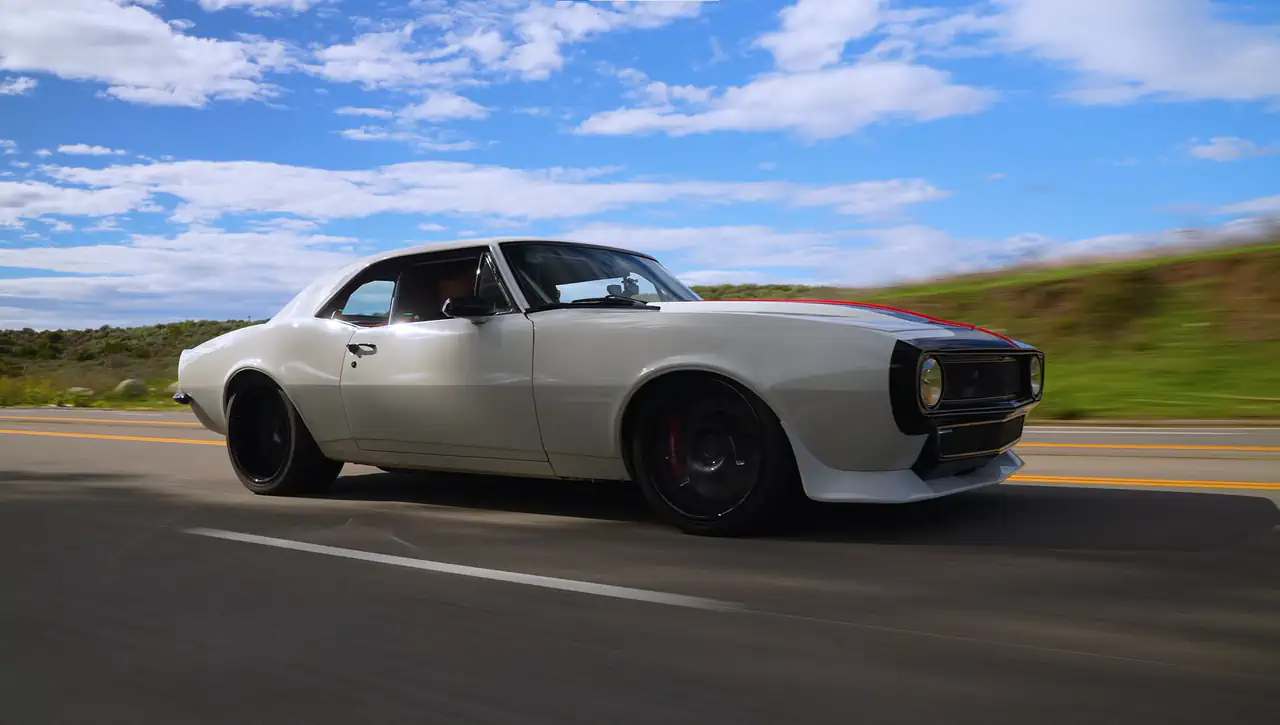
LSX 434 twin-turbo ’67 Camaro making more than 1,000 horsepower at the wheels, with a Roadster Shop chassis and a street/drag attitude. Classic muscle, modern violence.

67 Camaro

1,200 HP and a Serious Setup

This 1967 Camaro is all about real power. It clears 1,000 horsepower at the wheels and was built to deliver the kind of performance that feels brutal, not just impressive on paper.

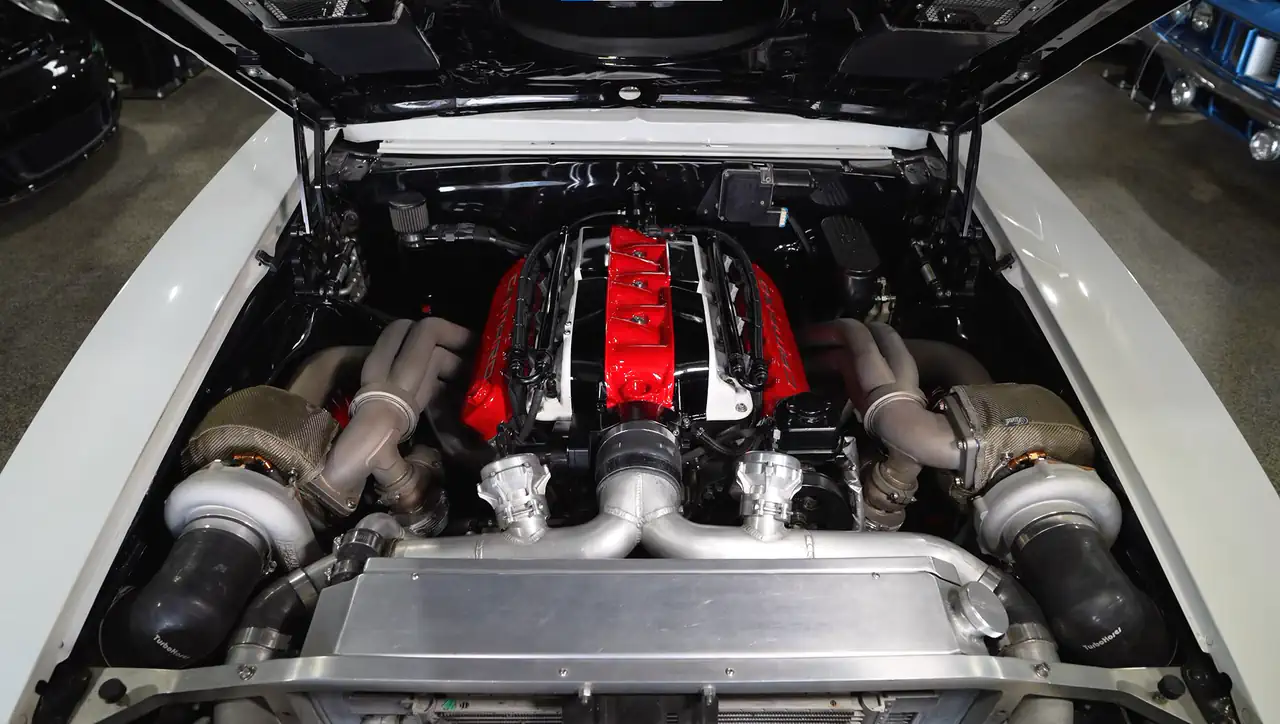
At the center of the build is an LSX 434 with a full prep job and a twin-turbo setup using 66 mm turbos. The car was originally run with a different turbo combination, but the current setup was chosen for faster response and less boost needed to make the same kind of power.

Engine and Build

The engine is an LSX 434 built with a Texas Speed bottom end and ported LS7 heads. It was assembled with enough headroom to handle far more power than the current tune, with the build said to be capable of supporting roughly 2,500 hp.

That makes the current power level feel almost restrained by comparison. The car is tuned to be usable on the street, but the hardware underneath is clearly serious enough for much more.

Chassis and Behavior

One of the biggest parts of the build is the Roadster Shop chassis. That upgrade gave the Camaro the foundation it needed to put big power down and stay composed under load.

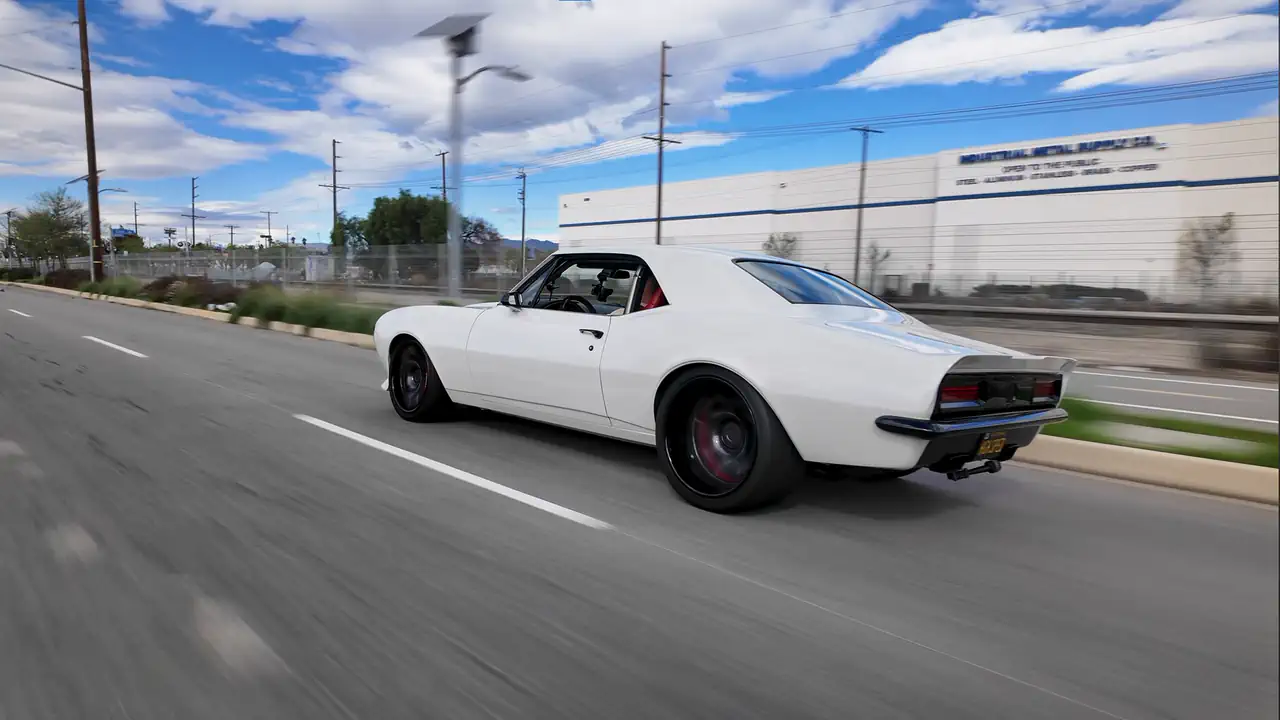
The end result is a classic that behaves like a real performance car. The suspension and chassis setup were chosen to balance stance, traction, and control, so the car feels planted instead of loose or exaggerated.

Brakes, Wheels, and Tires

Braking comes from a C6 Corvette Brembo setup with electronic ABS. The car also runs a T56 transmission from RPM Transmissions, which matches the rest of the build’s performance-first focus.

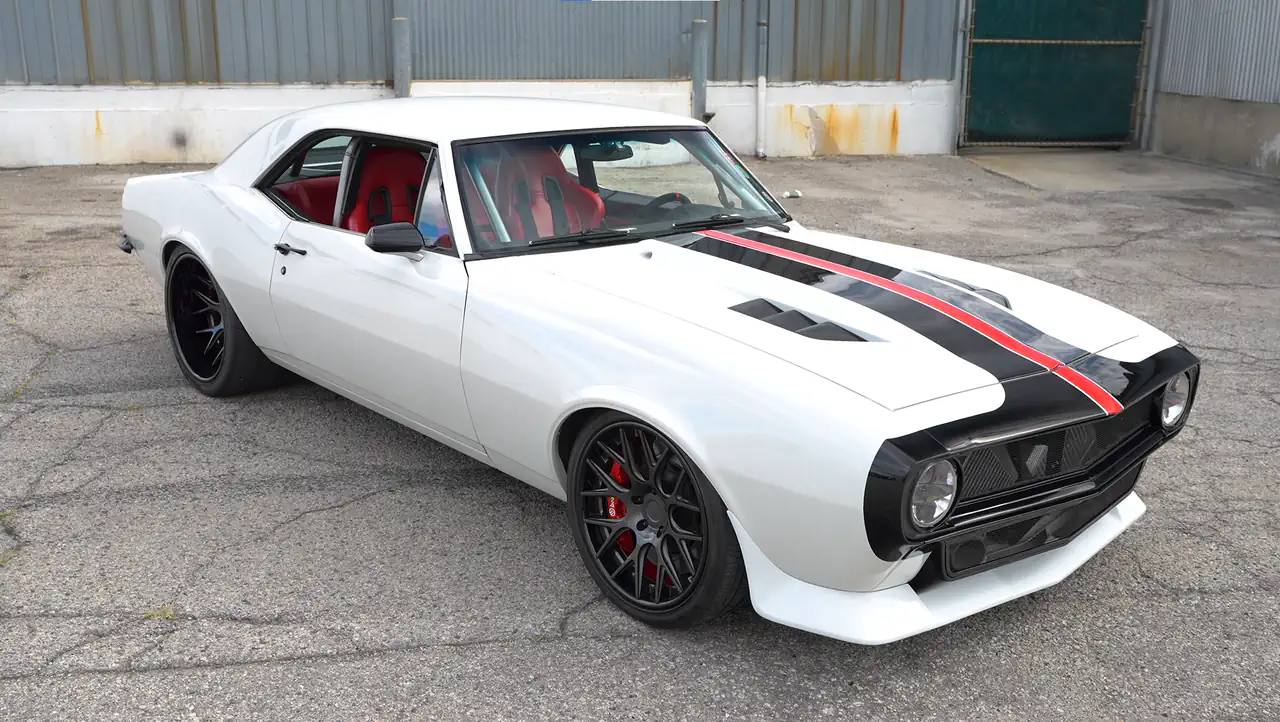
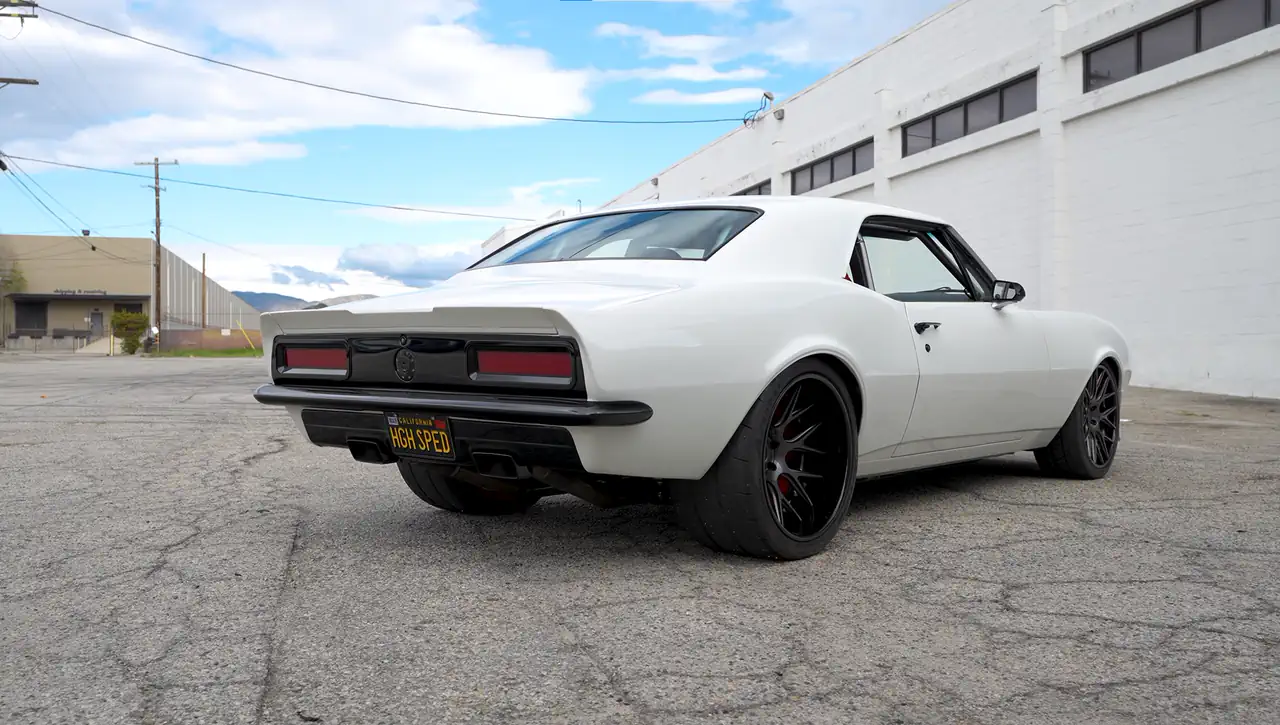
The wheels are Niche three-piece units, with a 20×14 setup in the rear and 19×8.5 up front. Out back, the car wears 335 drag radials, and that tire choice plays a big role in how well the Camaro actually puts the power down.

Exterior and Finish

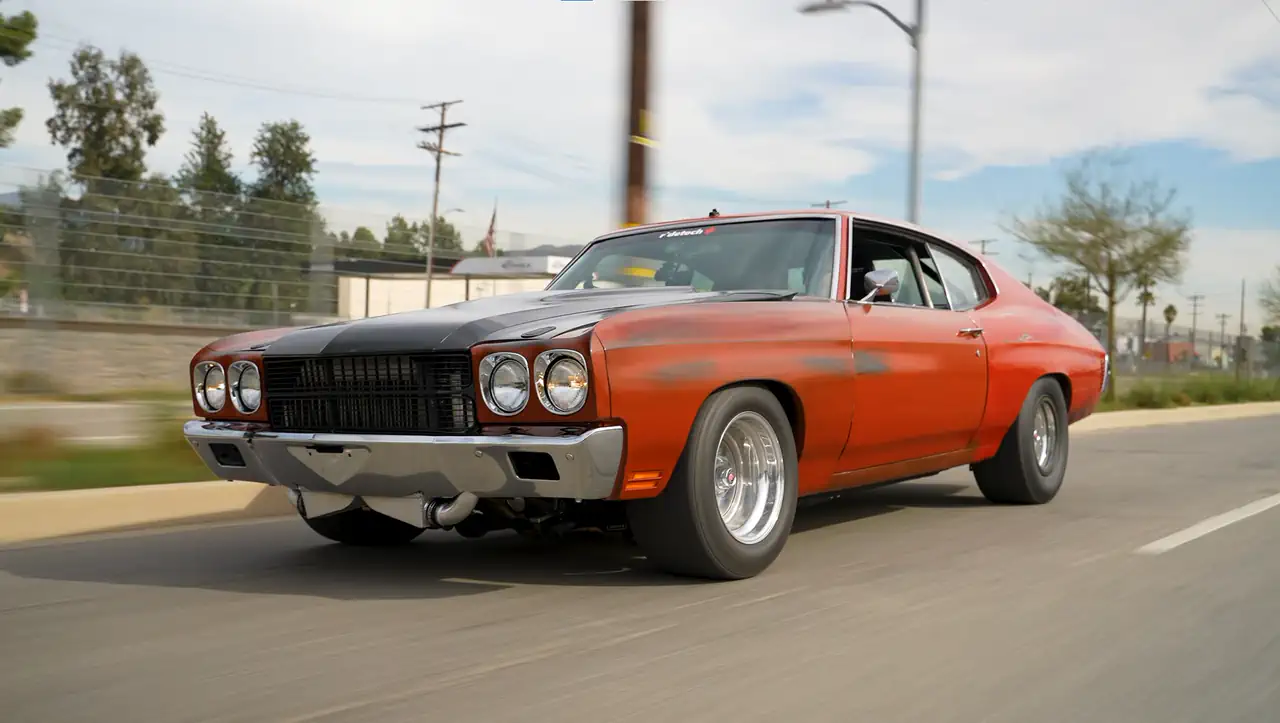
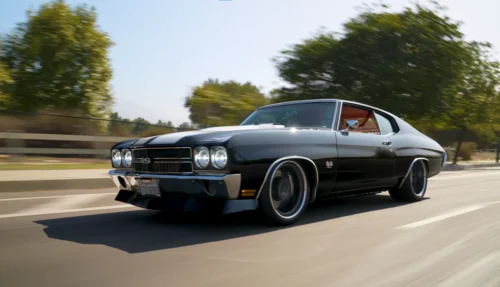
Visually, the Camaro keeps its classic identity but gets a sharper, more aggressive look. It wears BMW Alpine White paint, a red stripe, and black accents that break up the body lines and give the car a more serious presence.

The body still keeps key old-school details like drip rails, door handles, and glass trim. At the same time, it adds functional pieces like a vented hood, a Ferrari F8-inspired splitter, and air inlets for the turbo filters.

Interior and Electronics

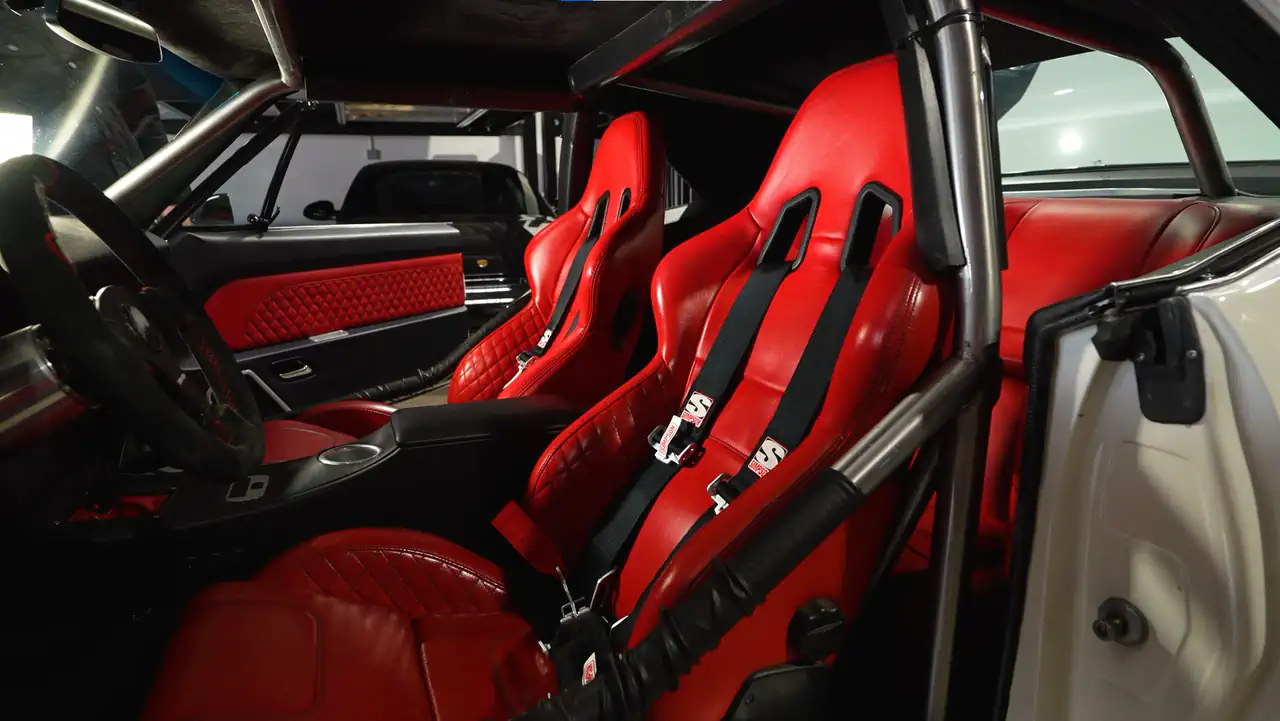
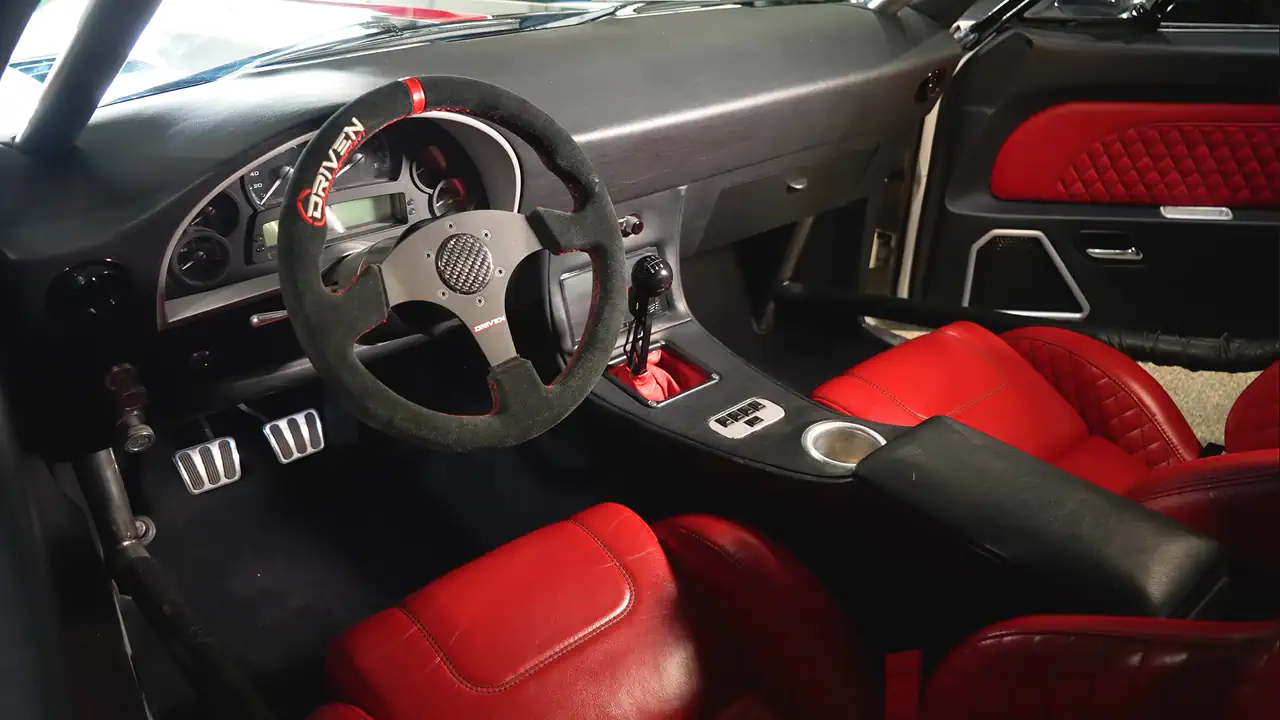
Inside, the build stays clean but fully modern. The Camaro uses a Holley Dominator, traction control, boost-by-gear, line lock, and a Dakota Digital gauge cluster, plus a full audio system.

The goal here is control, not just raw numbers. The throttle mapping and traction calibration were set up to make the power usable, with less wheelspin and more consistent delivery.

What engine does it have?
An LSX 434 with a full twin-turbo setup.

How much horsepower does it make?
More than 1,000 whp, with the build described as a 1,200-hp car.

How much torque does it make?
No exact torque number was given.

What transmission does it use?
T56 built by RPM Transmissions.

What drivetrain does it have?
Rear-wheel drive.

What kind of fuel economy does it get?
Not stated, and with this kind of setup, economy is not the point.

What does it do from 0–60 mph?
No figure was provided.

What is the top speed?
Not stated.

Is it more of a street or drag build?
It leans hard toward a street-and-drag personality, with enough chassis and tire to make the power usable.

What stands out most?
The mix of big power, proper chassis work, and classic Camaro style.

Se quiser, eu também posso transformar isso em uma versão mais jornalísticamais agressiva tipo blog de performance, ou mais curta para SEO.

Share this article

Related Posts