2027 Audi Q9: Seven Seats, Two Engines, One Big Bet
Audi’s new flagship packs up to 591 hp, seats seven, and gets doors that open themselves — but skips electrification entirely. Here’s what the 2027 Audi Q9 actually offers.
2027 Audi Q9: Audi’s Biggest SUV Ever Takes Aim at the BMW X7 and Mercedes GLS
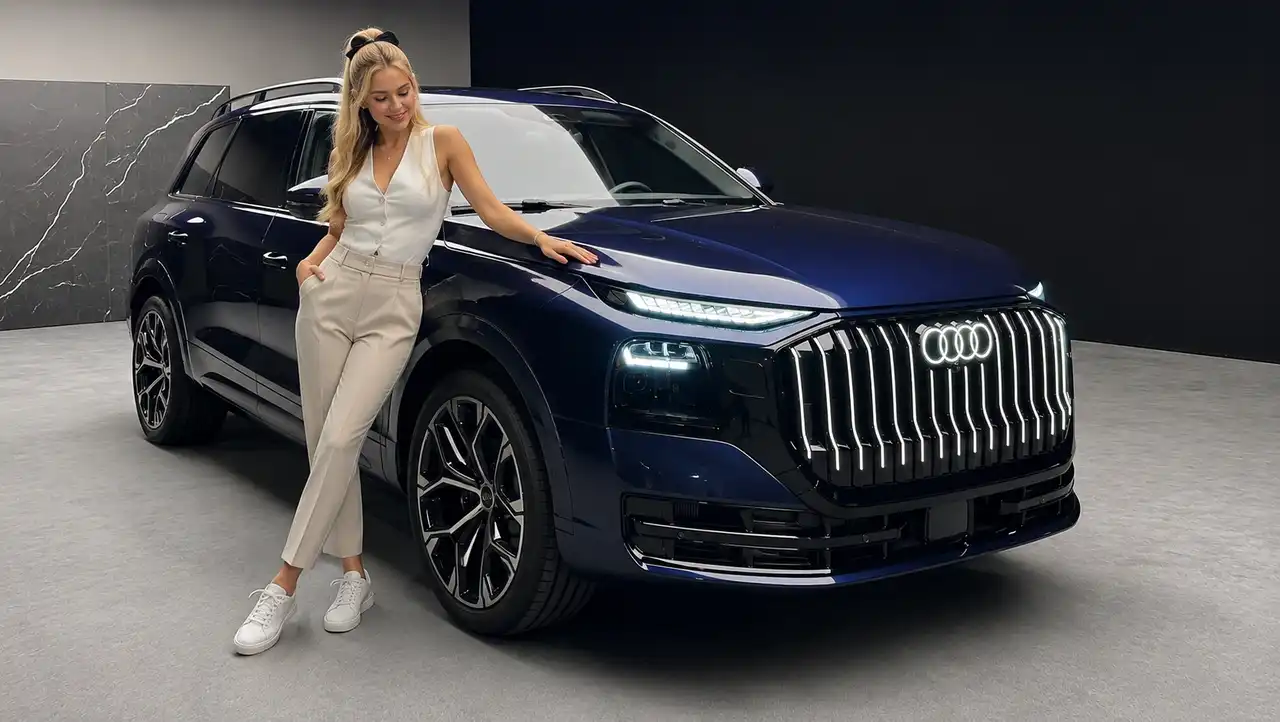
The 2027 Audi Q9 is the largest SUV Audi has ever built. It’s not a stretched Q7 or a taller Q8 — it’s a brand-new model built to compete in a segment Audi has never directly entered.
The vehicle was developed primarily for the US market, aimed at families who need real three-row seating and serious towing capability. It also targets buyers who care more about being chauffeured comfortably than about driving dynamics.
Direct rivals include the BMW X7, Mercedes-Benz GLS, Cadillac Escalade and Lincoln Navigator. Audi hasn’t confirmed any plans for markets outside the US, Europe, China and the Middle East at this time.
Quick Specs
| Spec | Info |
|---|---|
| Category | Full-size luxury SUV |
| Engine | Q9: 2.9L twin-turbo V6 (gas); SQ9: 4.0L twin-turbo V8 |
| Horsepower | Q9: 429 hp; SQ9: 591 hp |
| Torque | Q9: 442 lb-ft; SQ9: 590 lb-ft |
| Transmission | 8-speed automatic (Tiptronic) |
| Drivetrain | Quattro all-wheel drive |
| 0-60 mph | Q9: approx. 4.9 sec; SQ9: approx. 3.8 sec |
| Top speed | Q9: 130 mph (limited); SQ9: 155 mph (or 130 mph on all-season tires) |
| Fuel economy | Not officially released for US models; European diesel variant rated 29.4-31.8 mpg combined (WLTP) |
| Range | Not officially disclosed |
| Release date | Global reveal on July 28-29, 2026; US deliveries begin Q4 2026 |
With the numbers on the table, it’s worth looking at what actually stands out first — the way this thing looks.
A Body That Breaks From Audi’s Busy Design Language
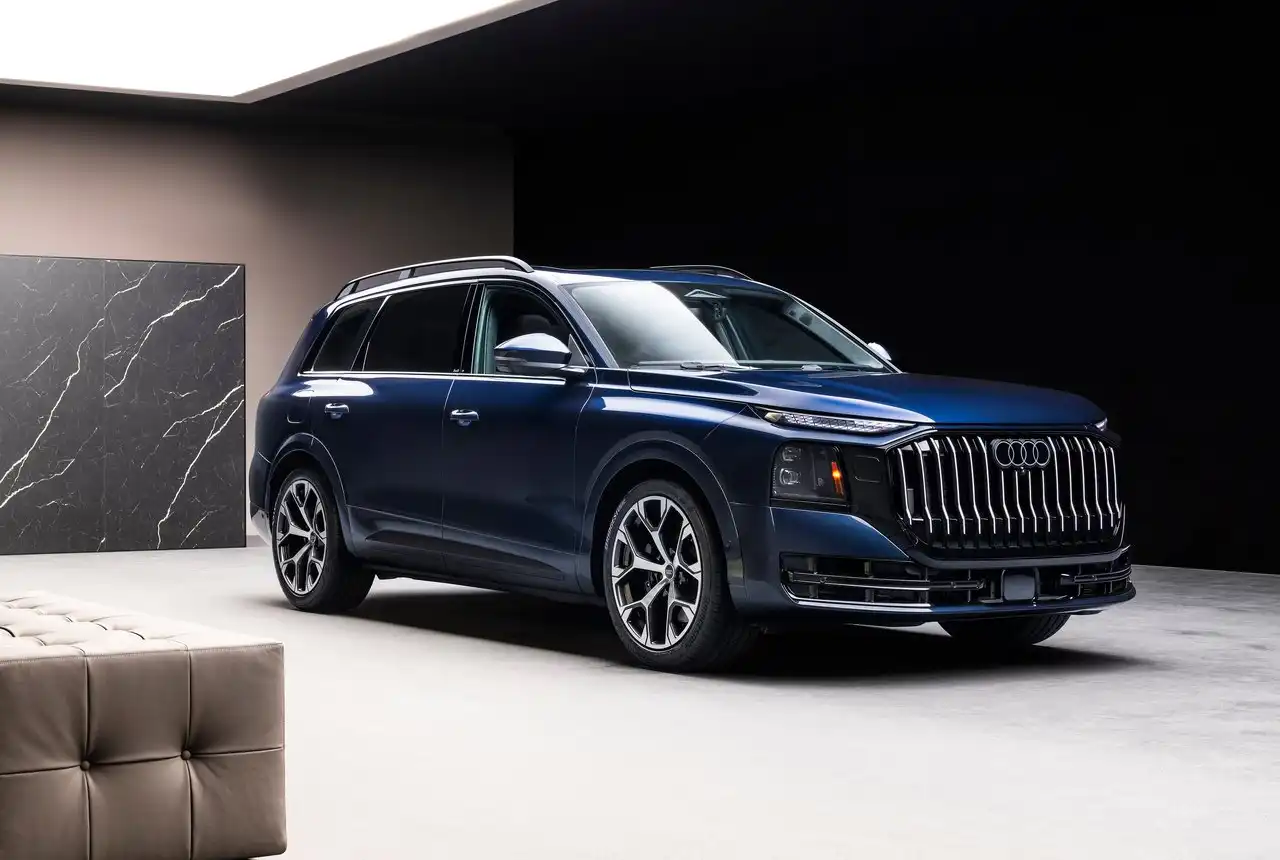
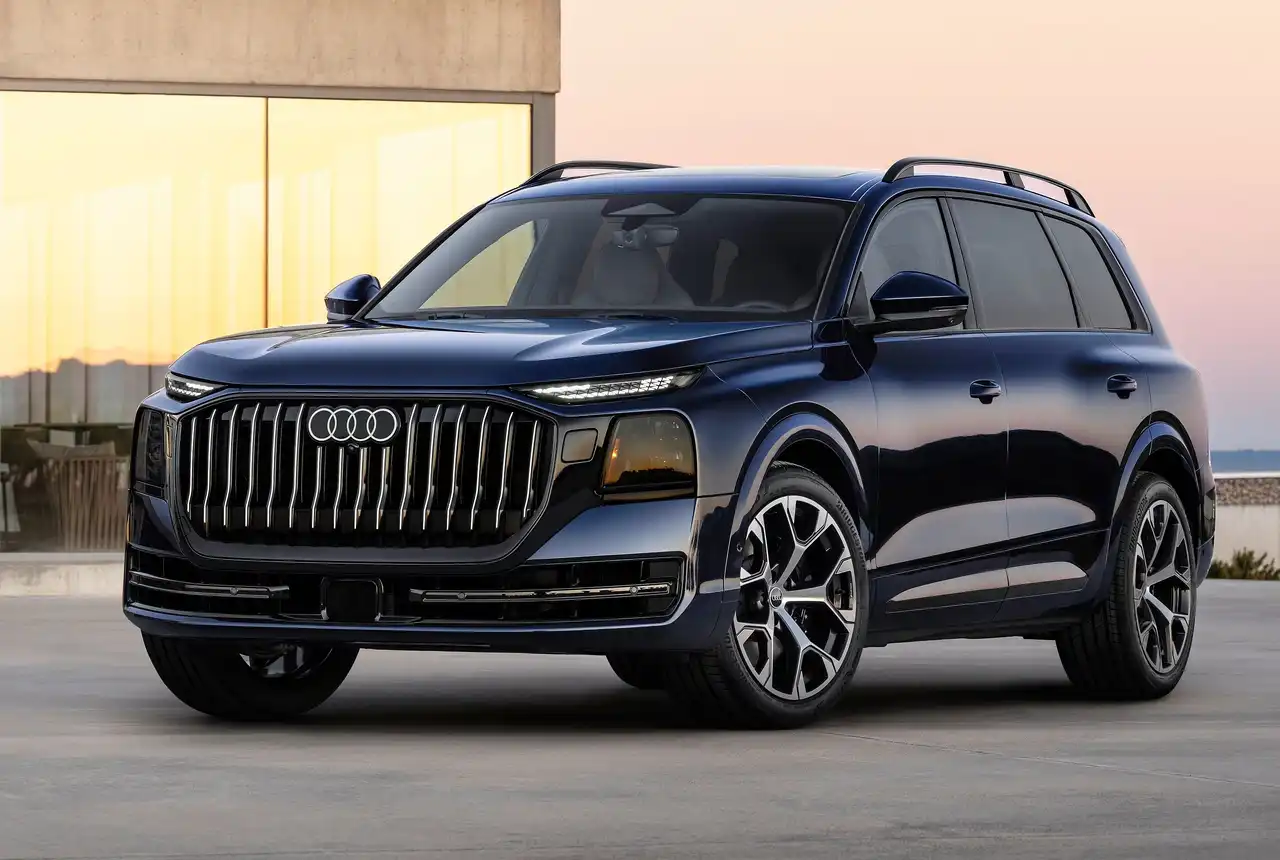
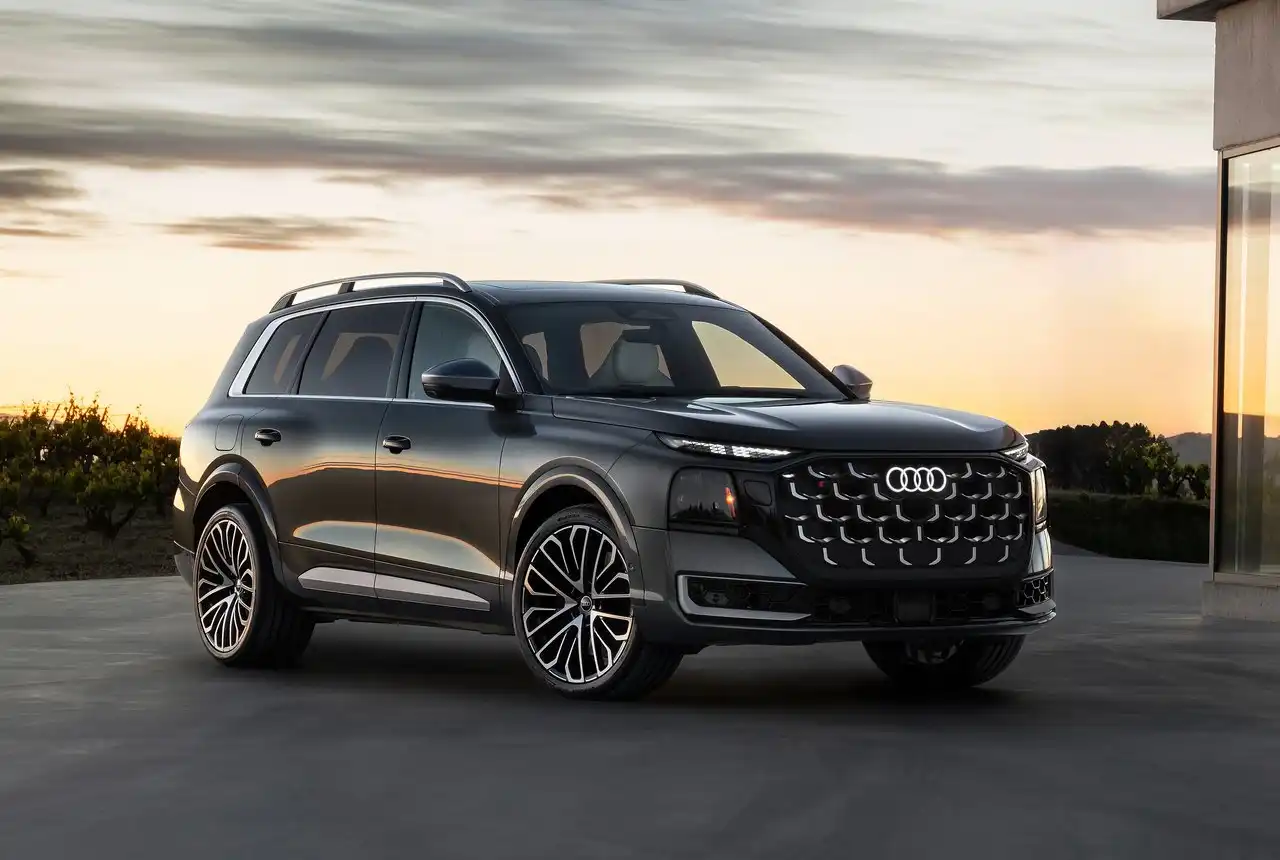
The Q9 trades Audi’s recent taste for sharp creases and multiple lines for something cleaner. The surfaces are more organic, more continuous, less fussy.
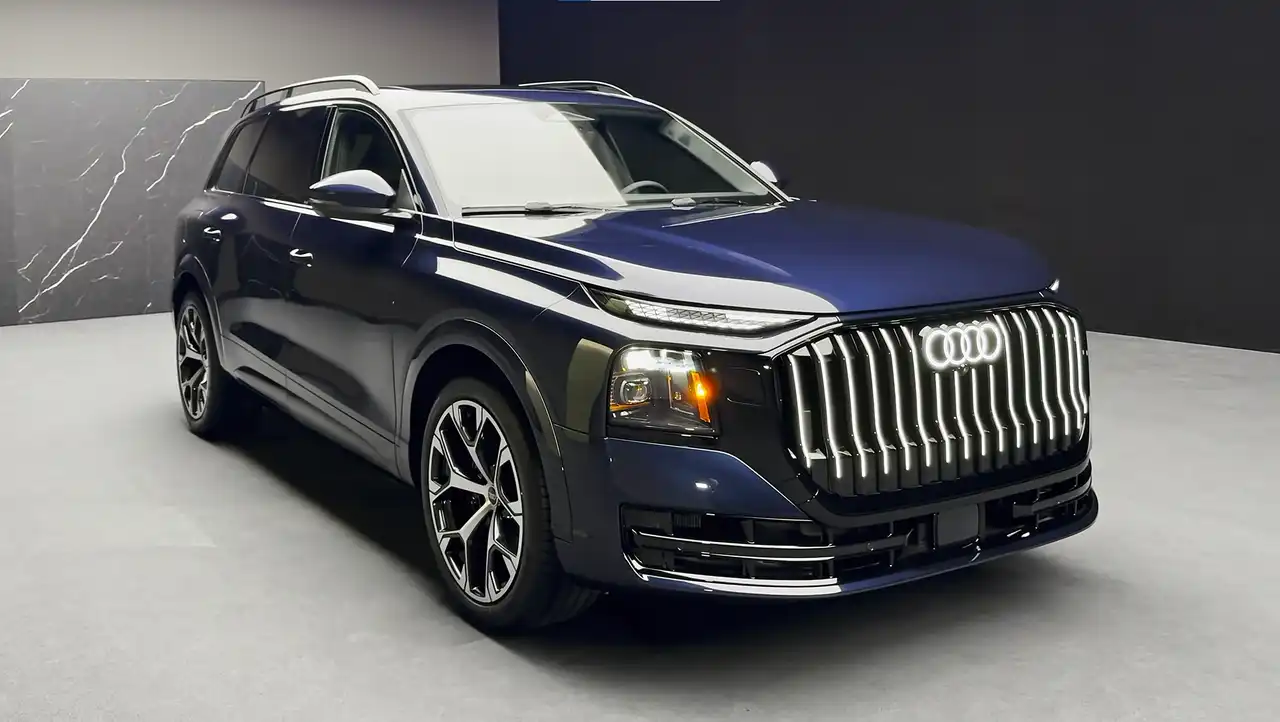
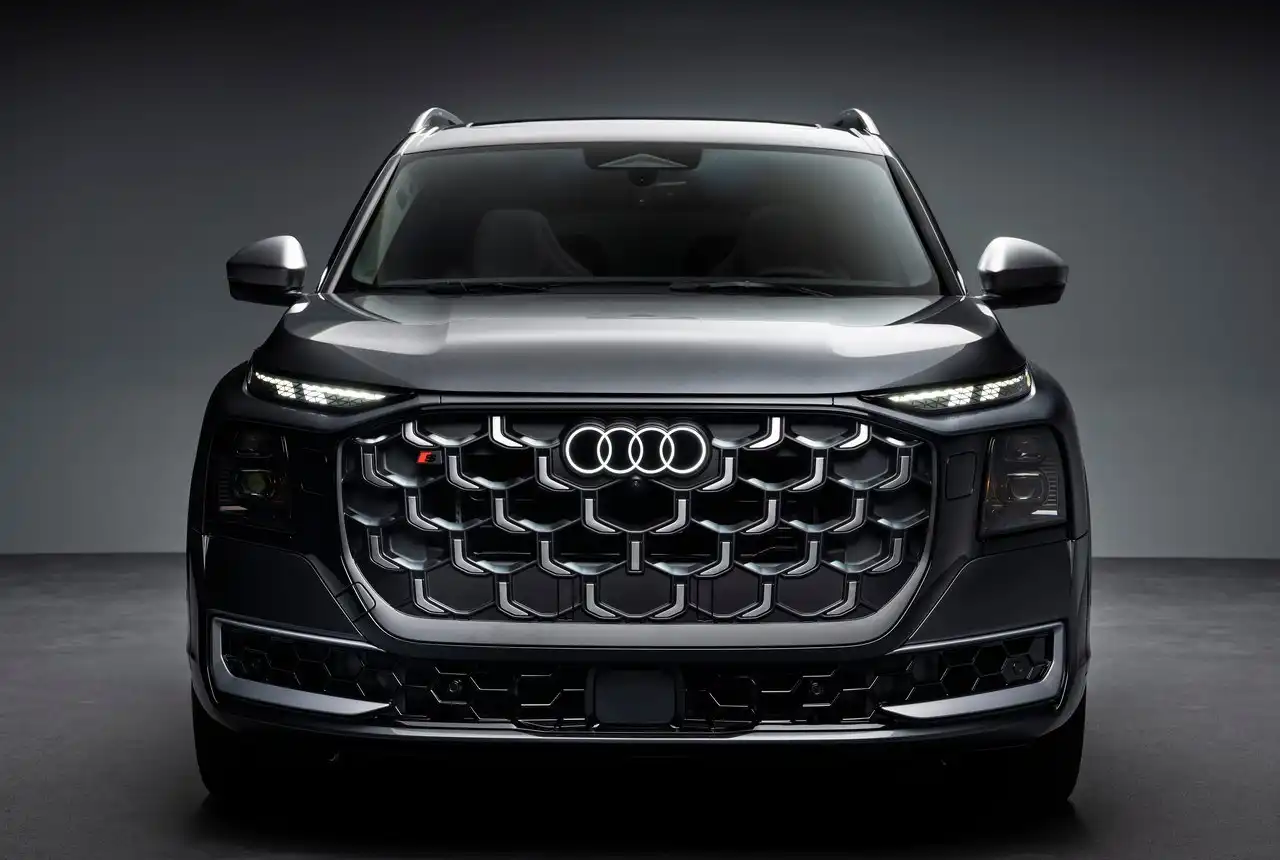
Up front, the Singleframe grille changes shape depending on trim. Premium and Premium Plus models get a more upright, formal look, while Prestige and SQ9 variants push a sportier stance. Digital Matrix LED headlights, standard from Premium Plus up, reshape the beam in real time so oncoming drivers never get blinded.
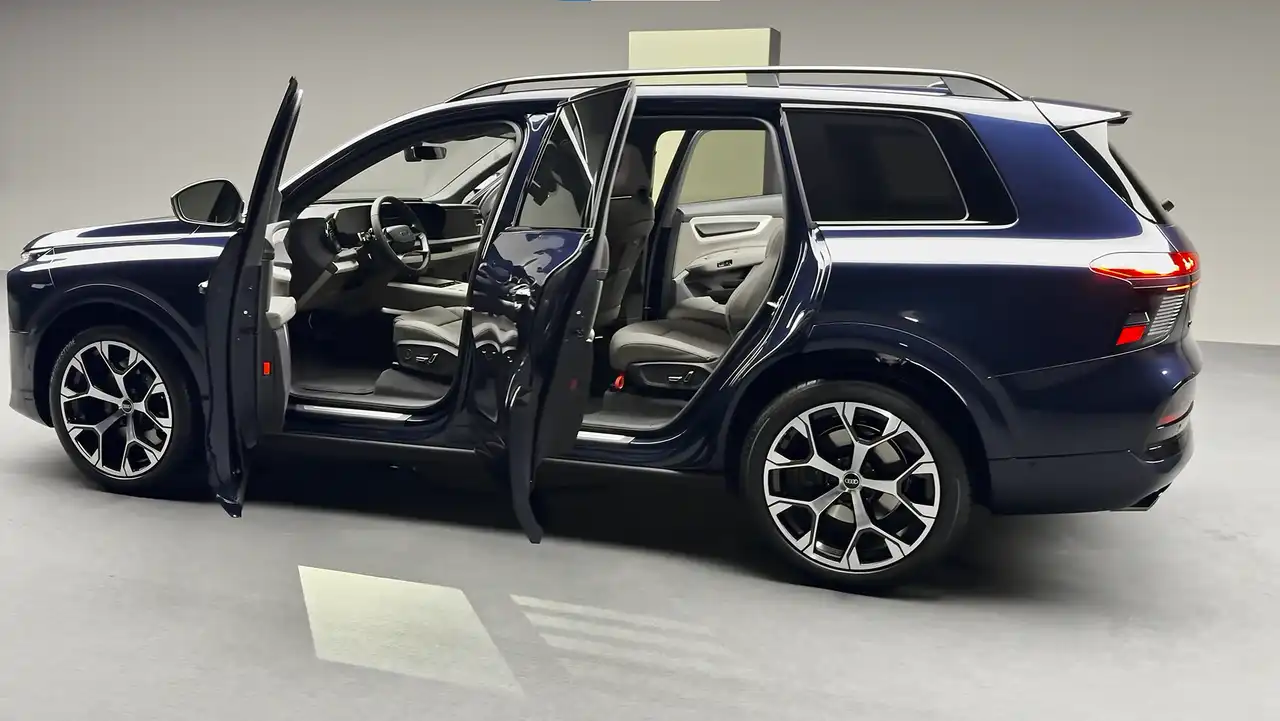
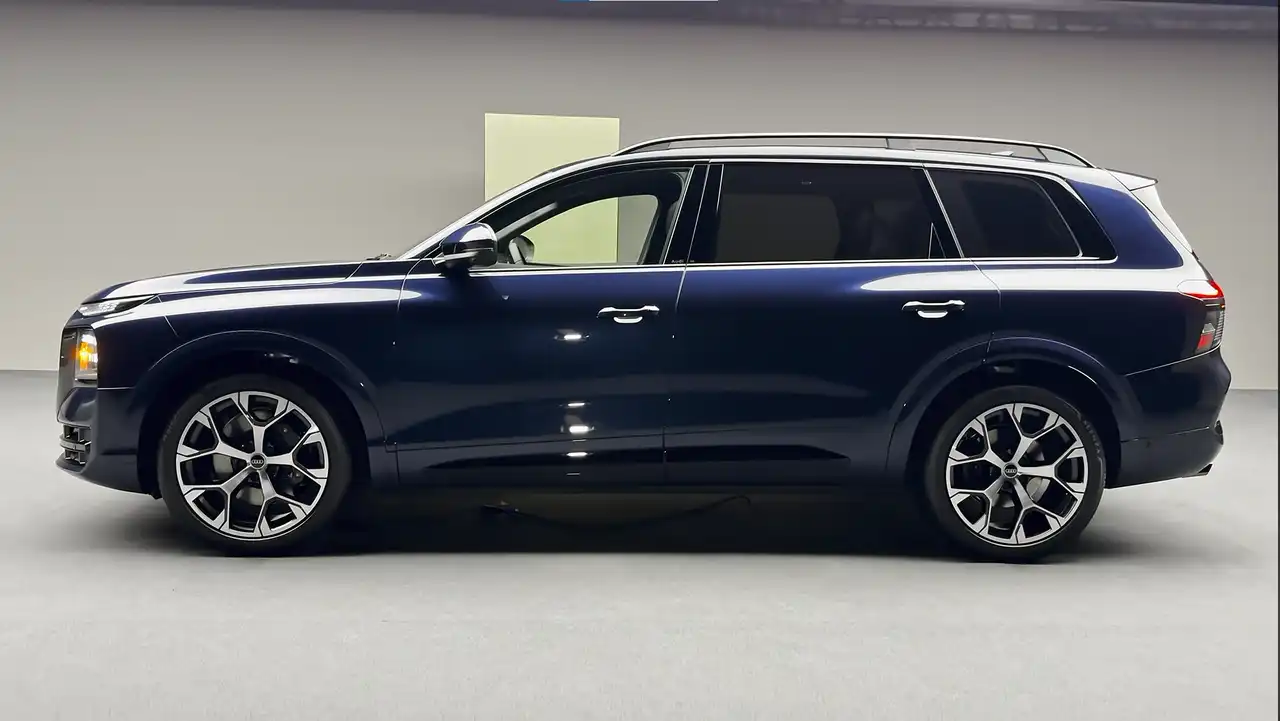
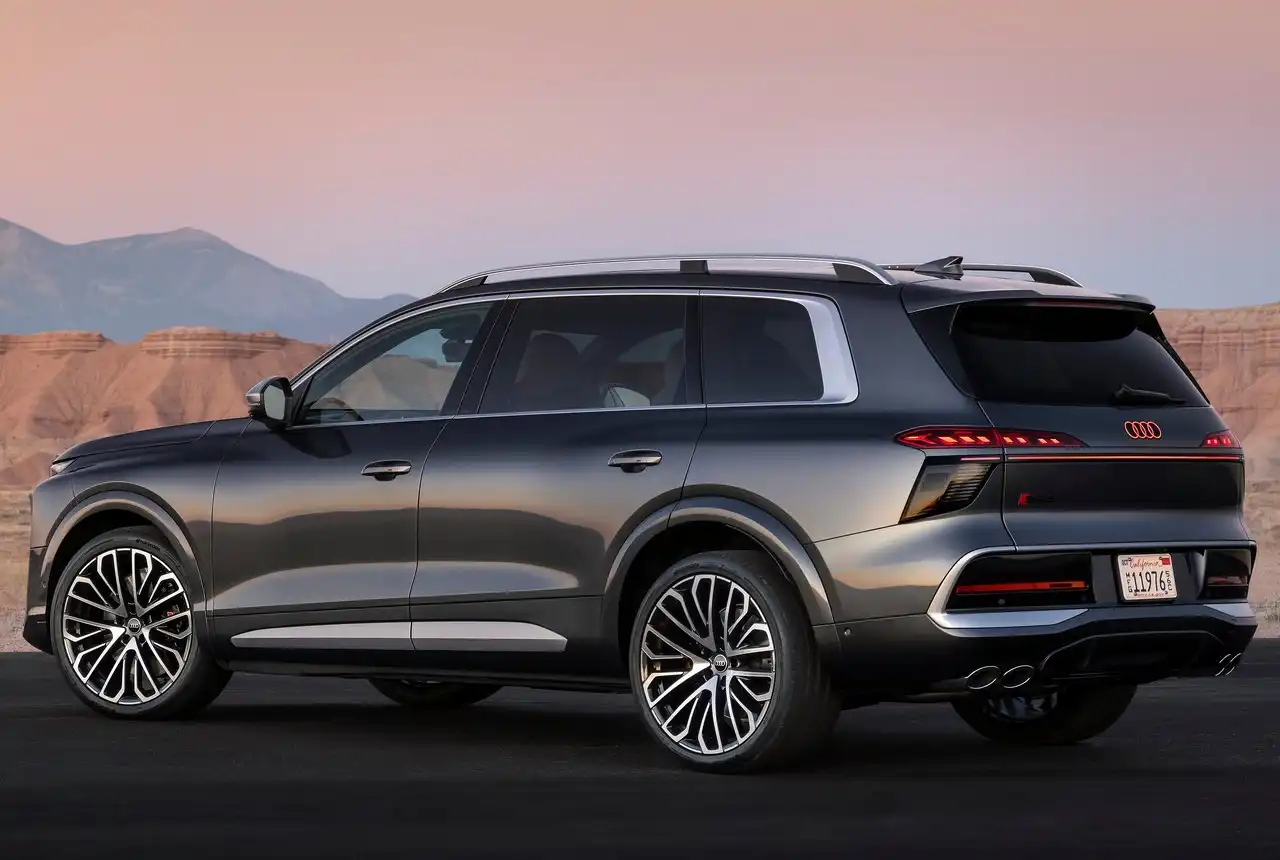
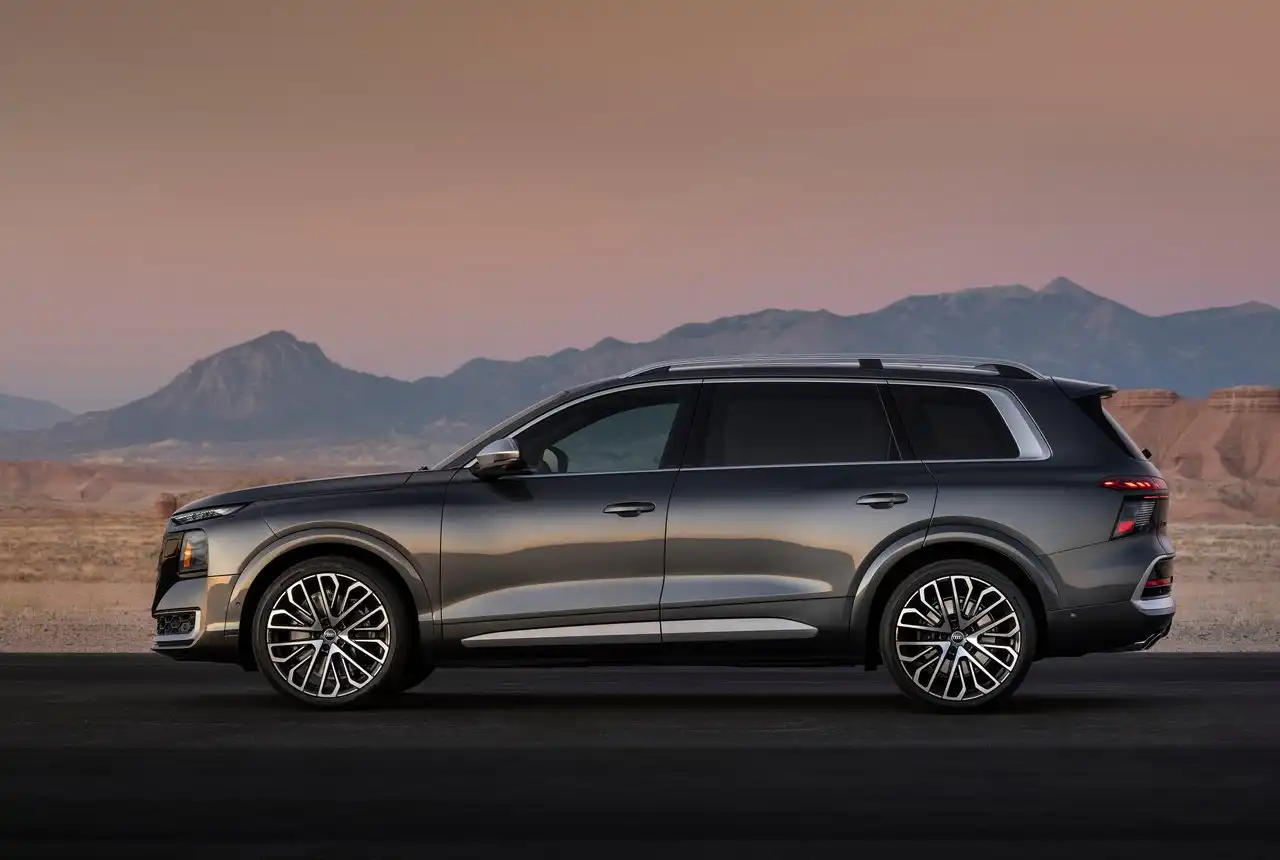
From the side, the roofline is the detail that stands out. Audi kept it slightly raised toward the rear specifically to protect third-row headroom — a tradeoff that matters more than it sounds, since sloped rooflines are exactly what kill third-row comfort in most three-row SUVs.
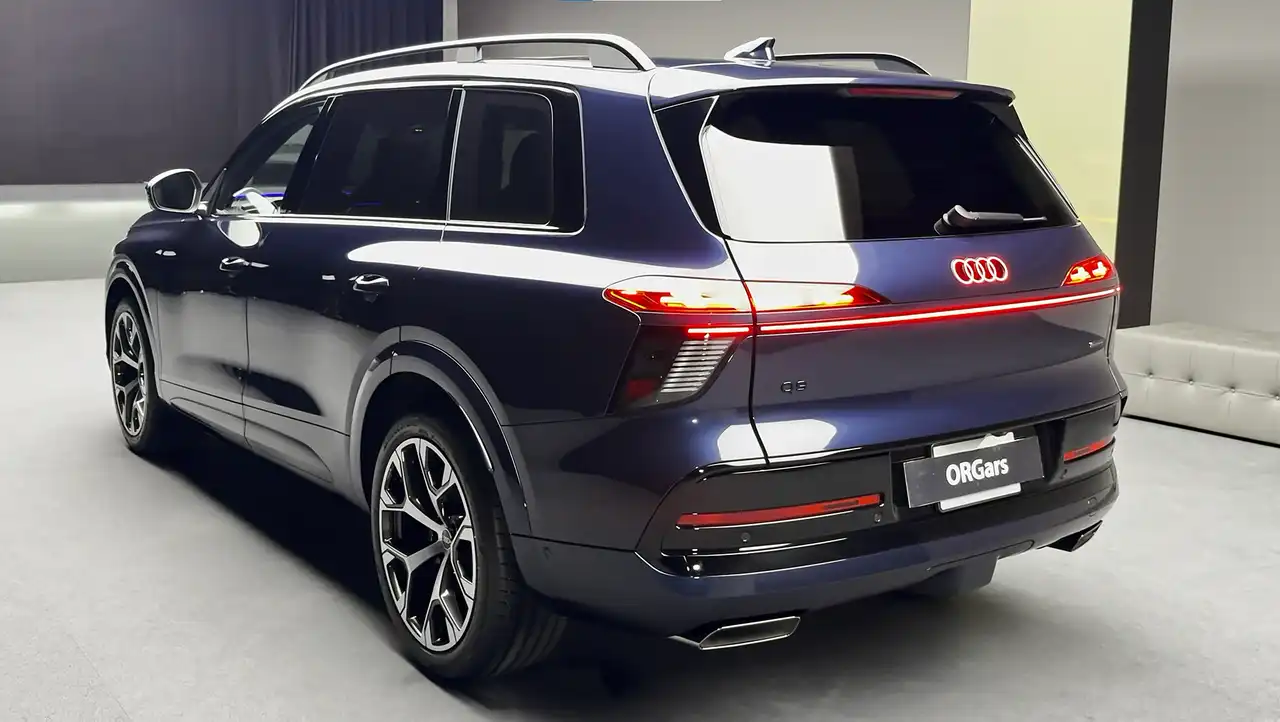
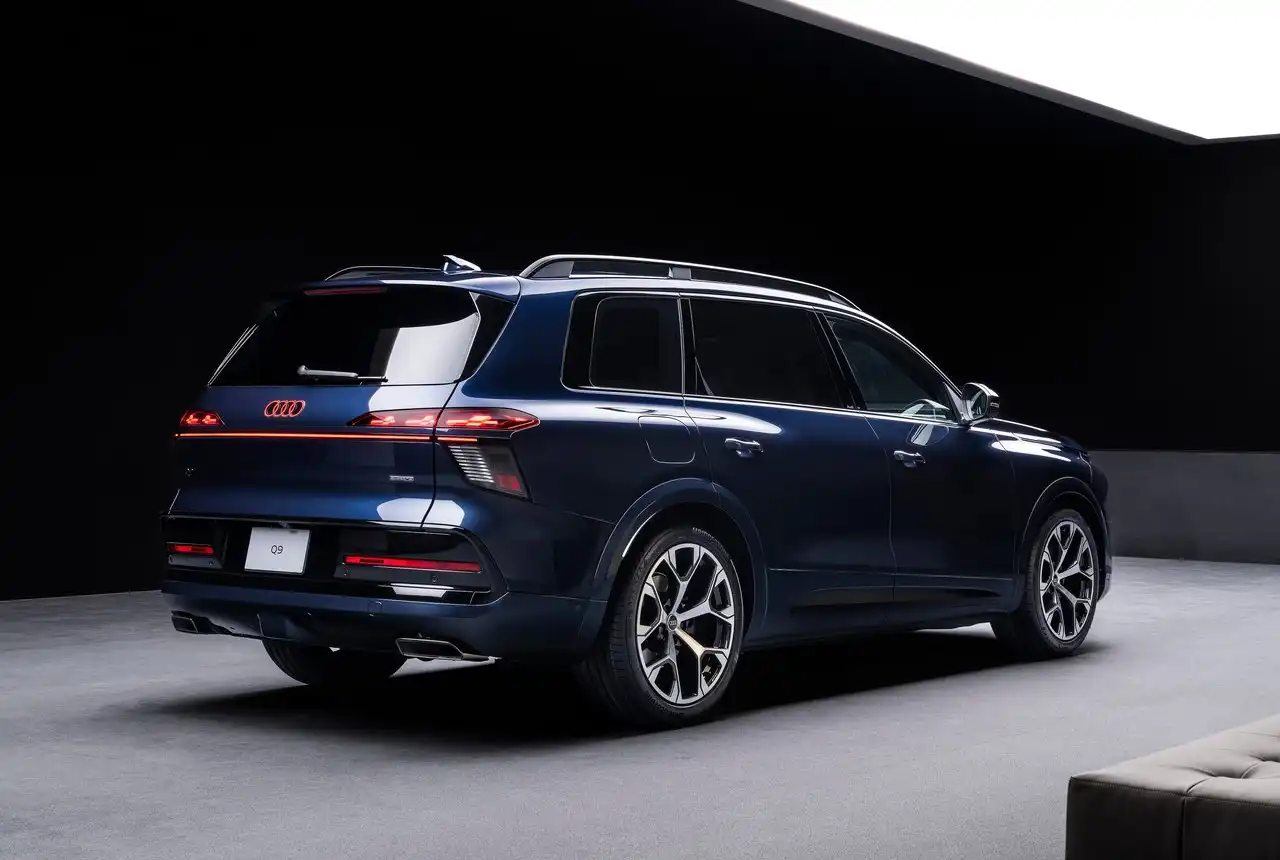
The rear is where the real news is. The taillights use curved OLED panels — just 0.1 mm of glass, shaped to follow the body’s contours. Audi says it’s the first production vehicle to use curved OLED lighting like this. Beyond signaling turns and braking, the system can flash a red warning triangle when the SUV brakes hard, alerting traffic behind it.
Overall, the design is trying to balance the sheer bulk of a 209-inch SUV with Audi’s traditionally elongated proportions. It’s not a quiet car, but it’s also not chasing shock value — the goal here is presence, not spectacle.
A Cabin Built Like a Stage — With Real Tradeoffs in Everyday Comfort
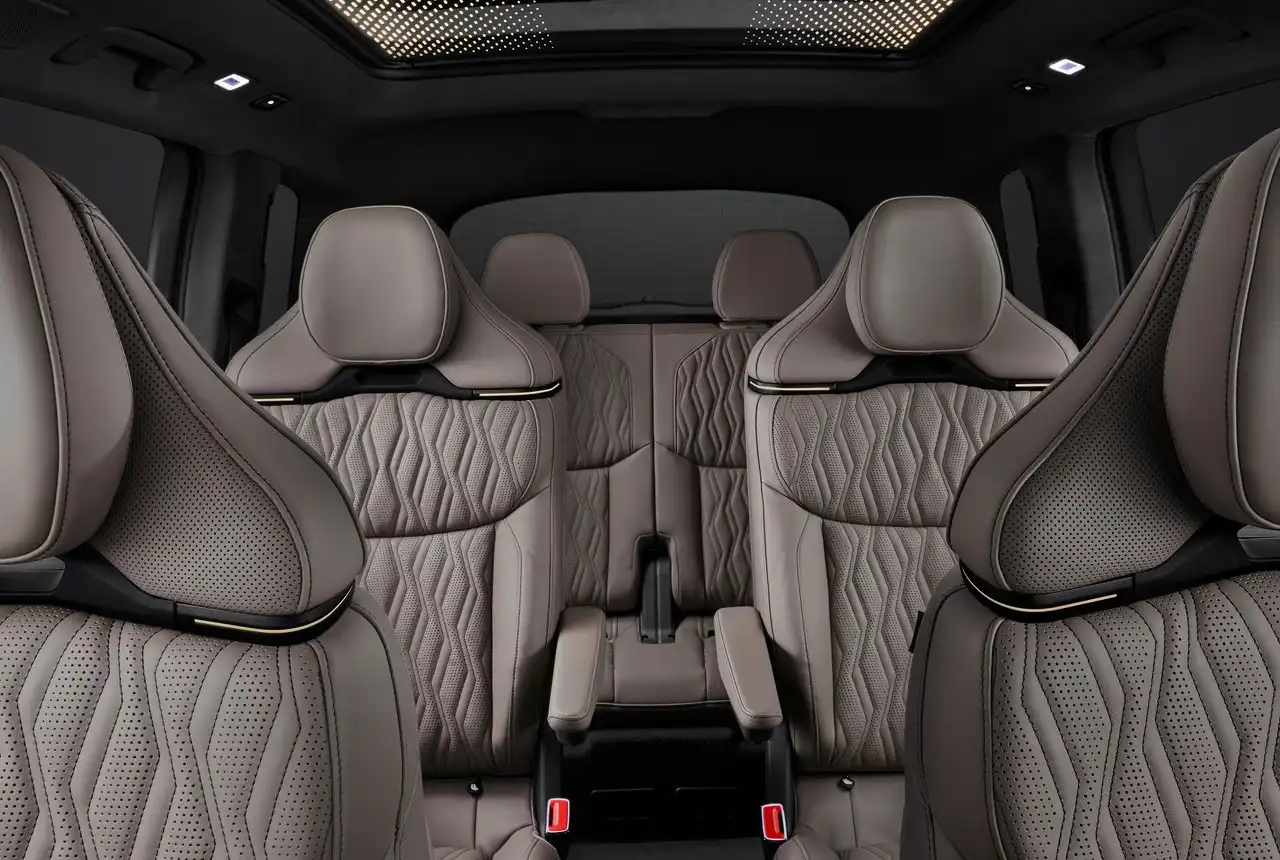
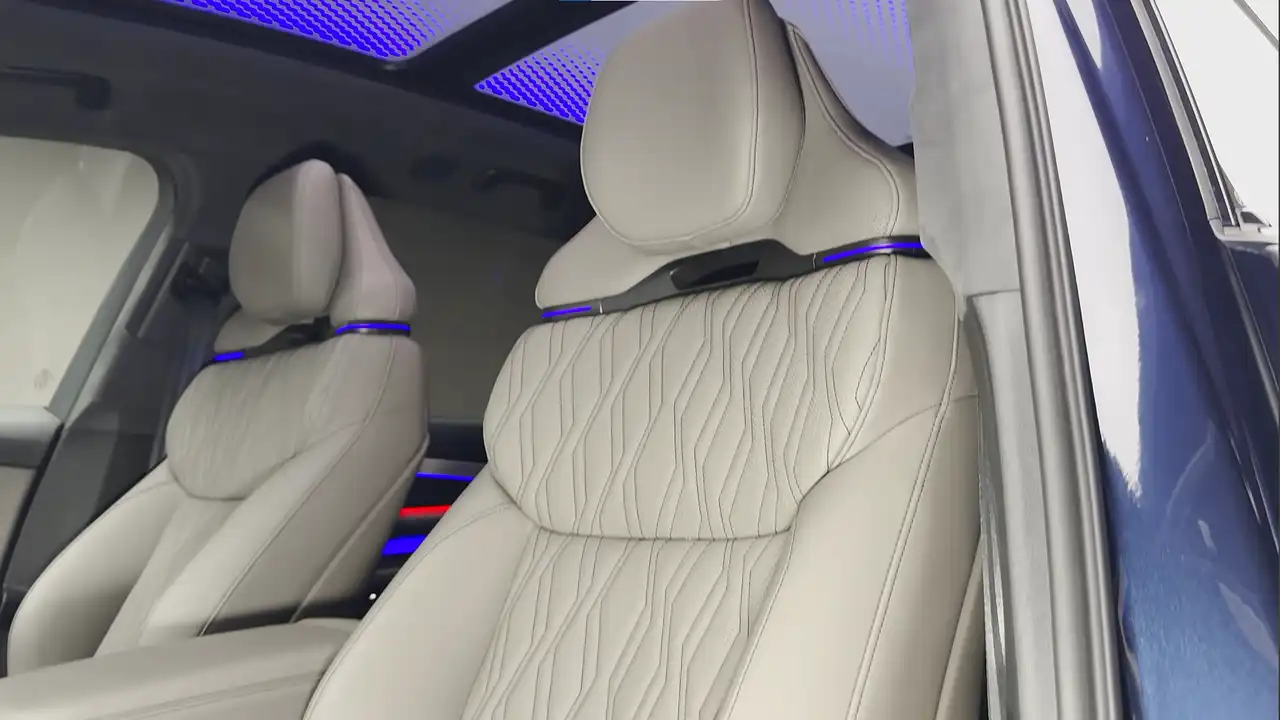
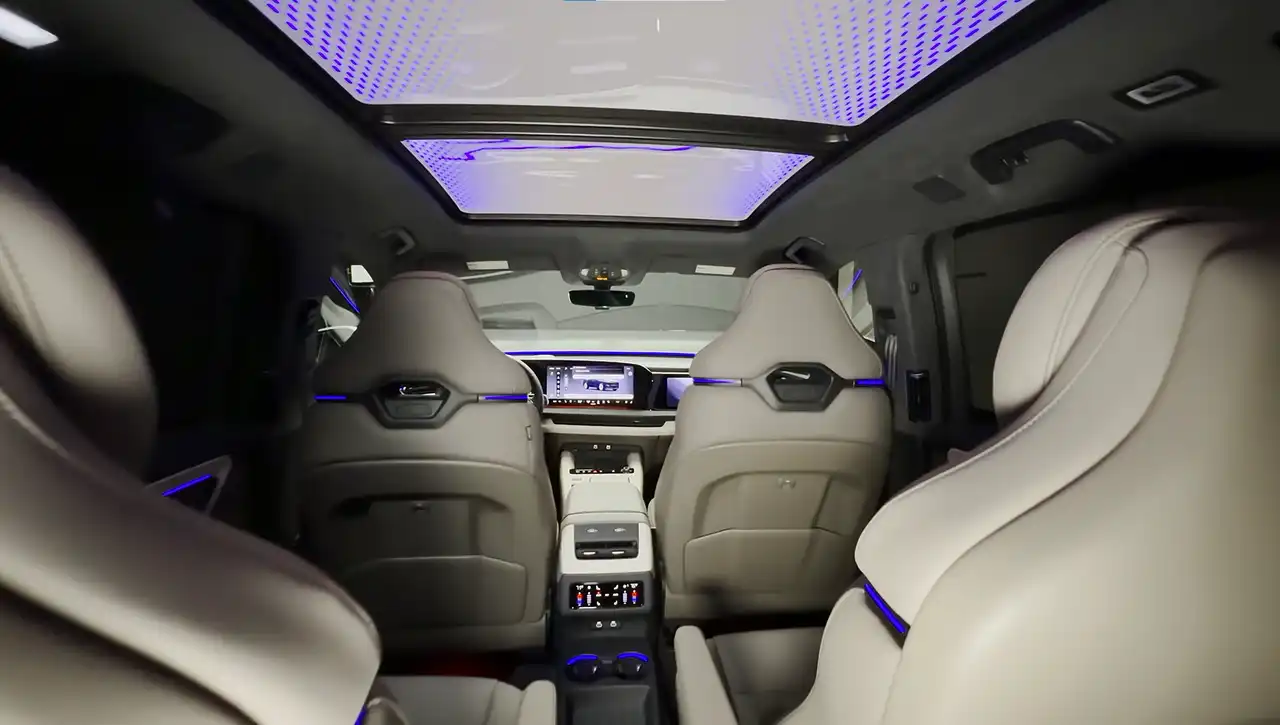
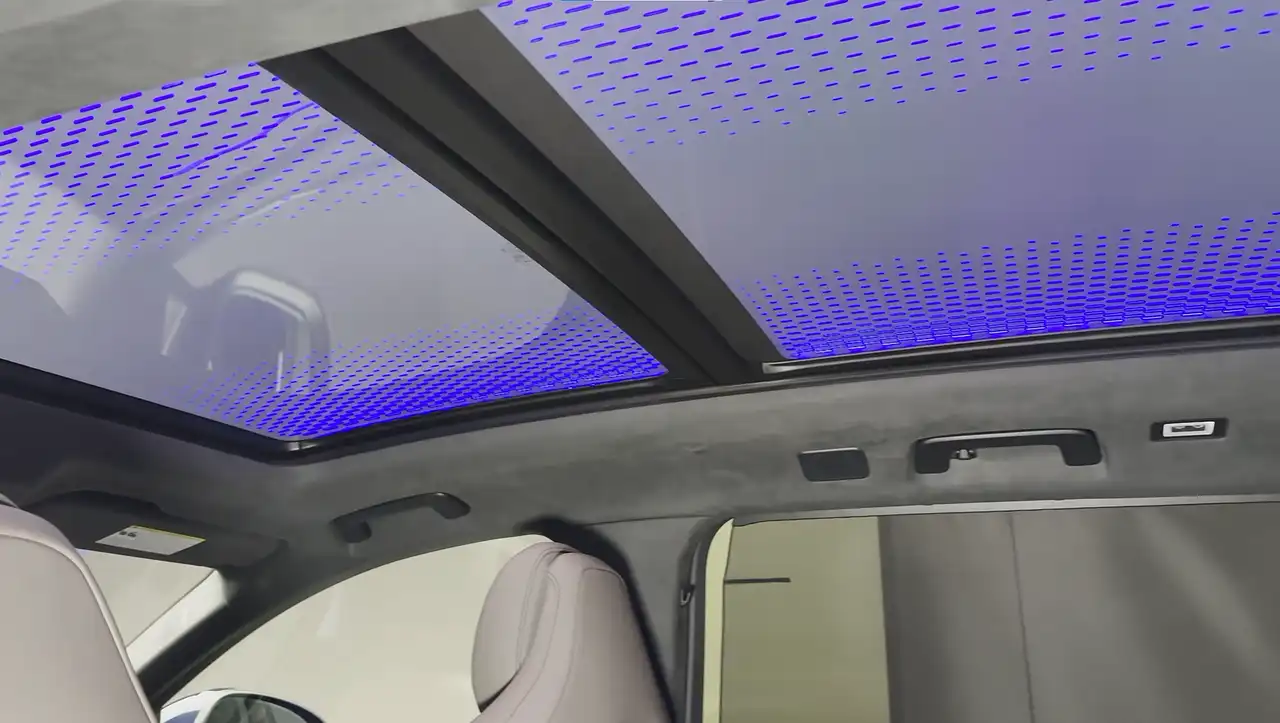
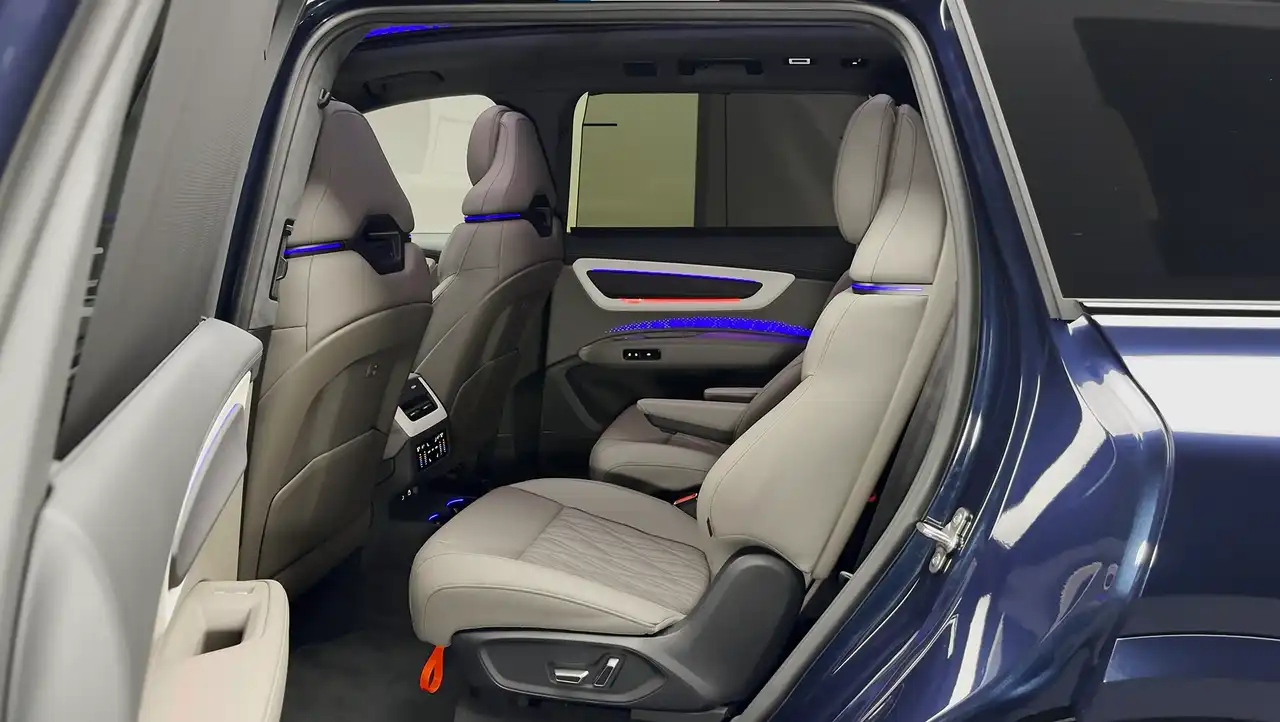
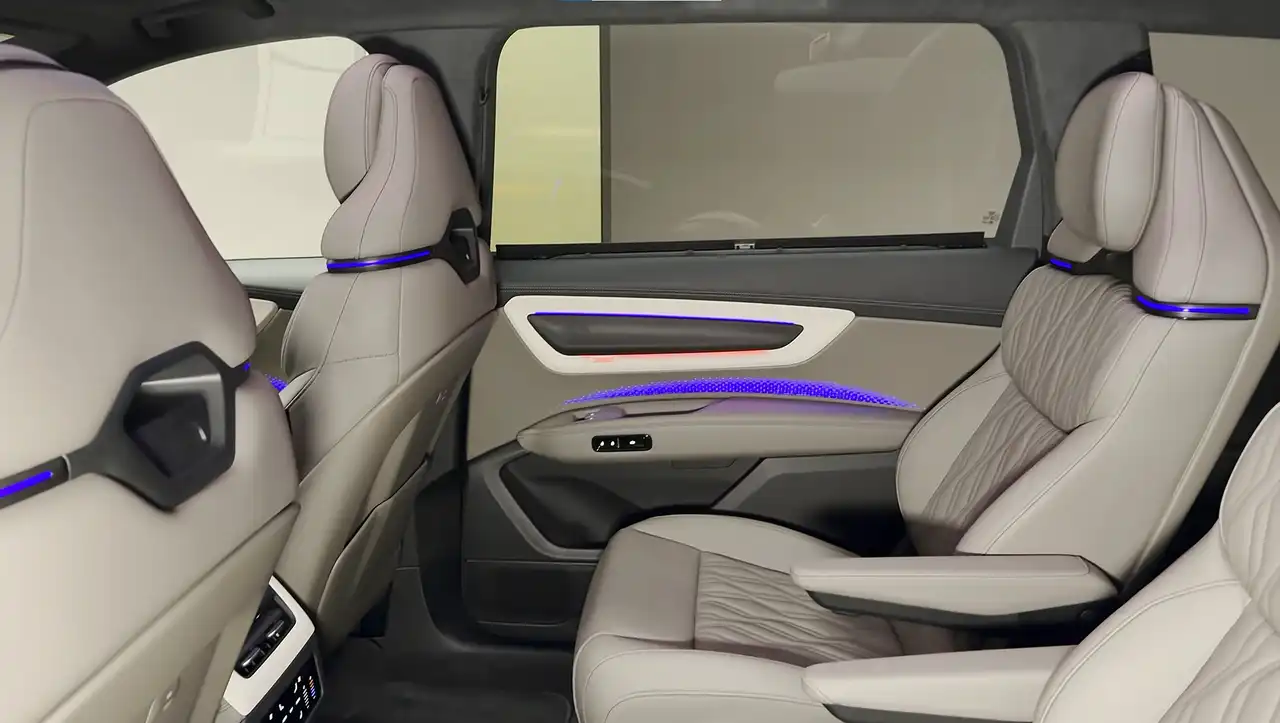
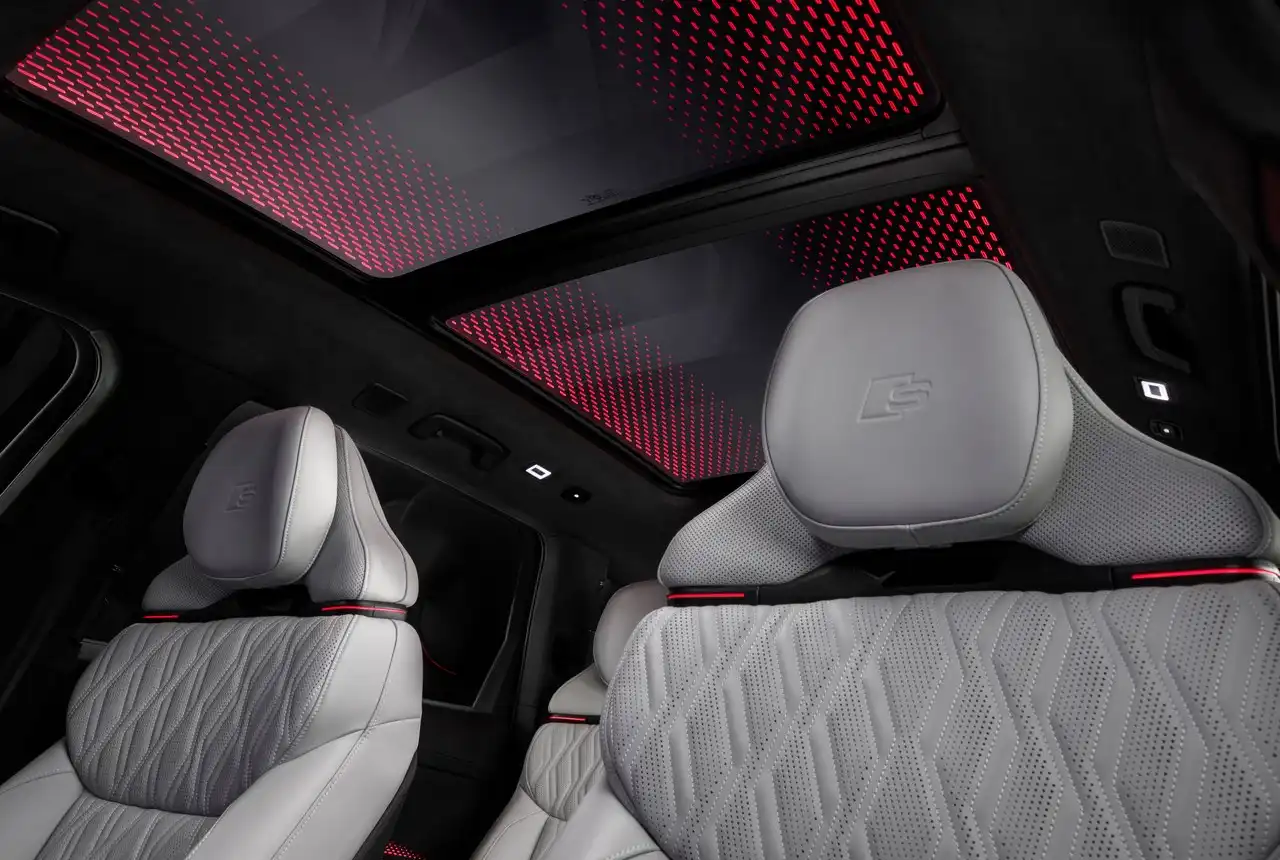
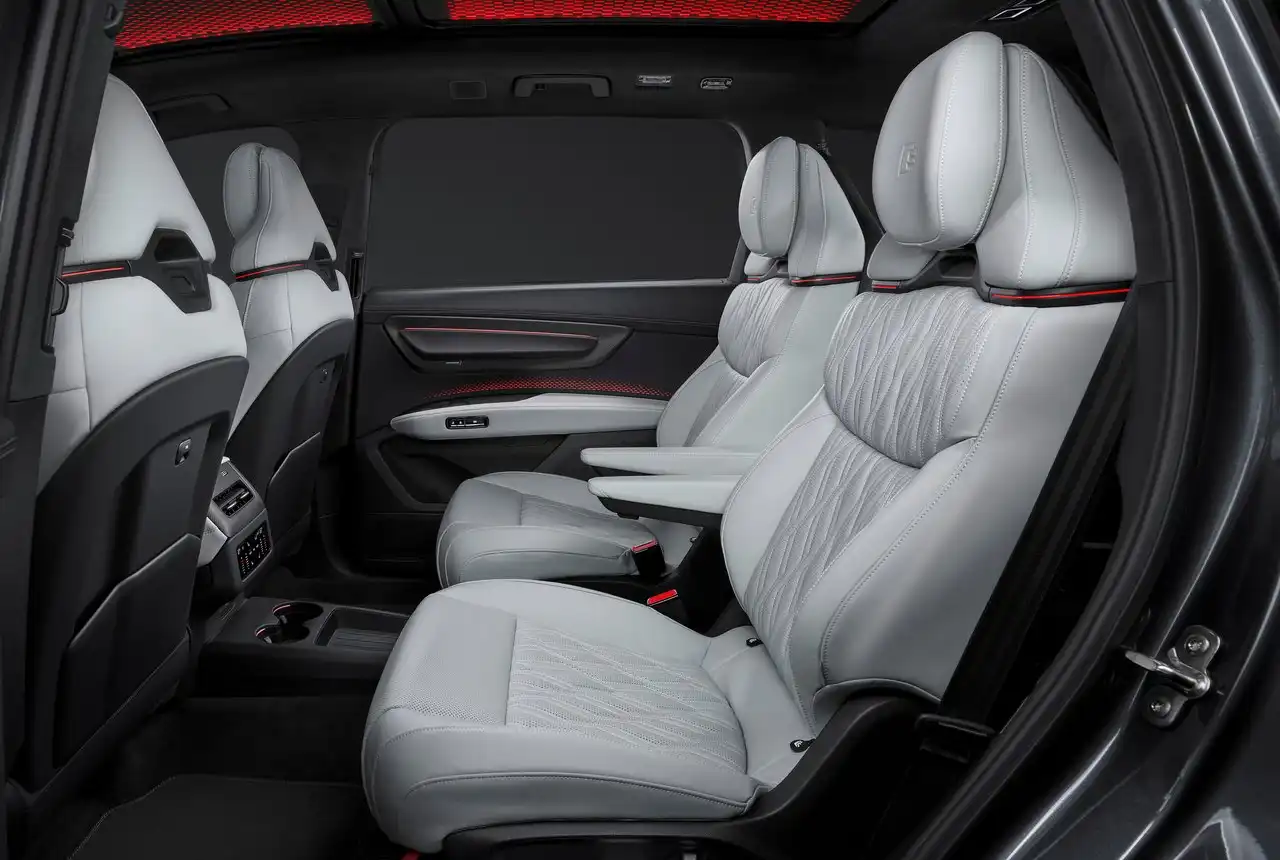
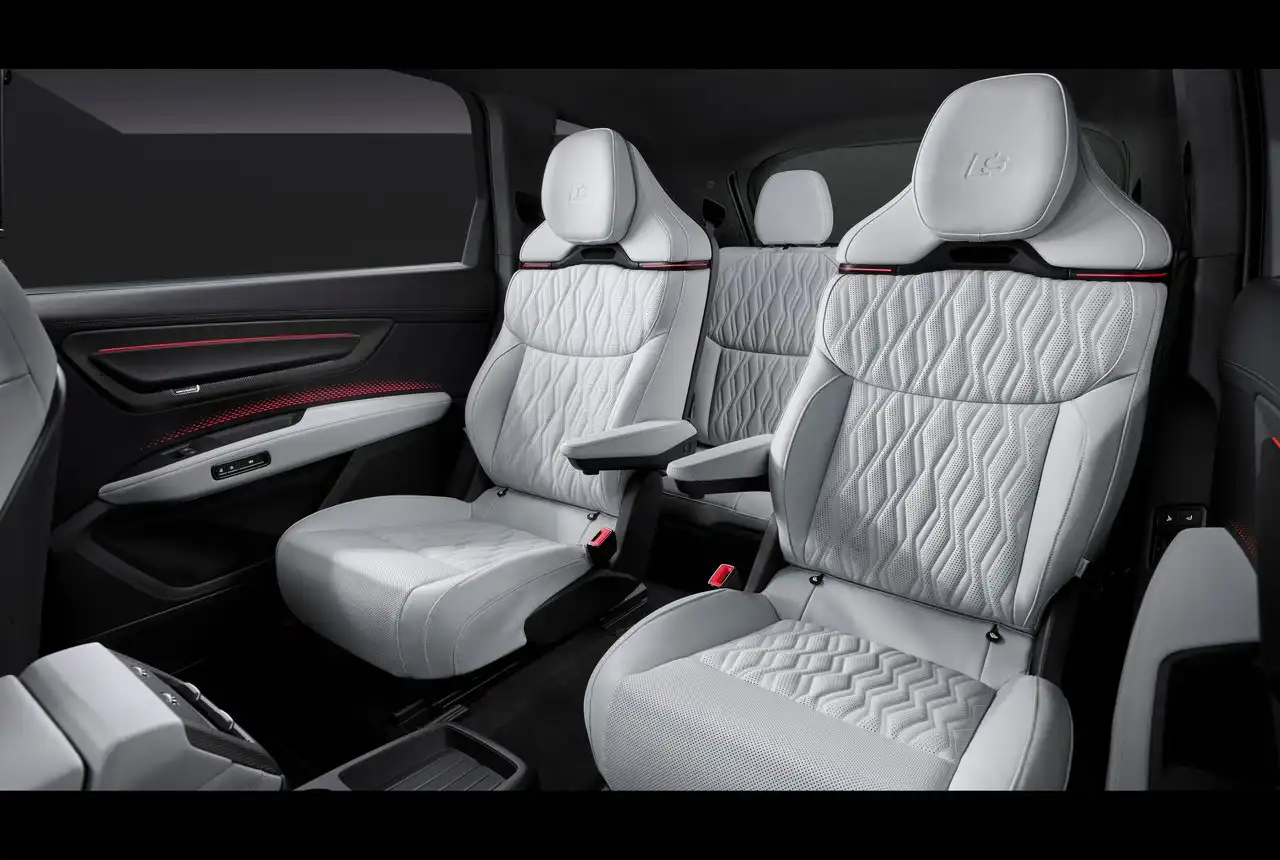
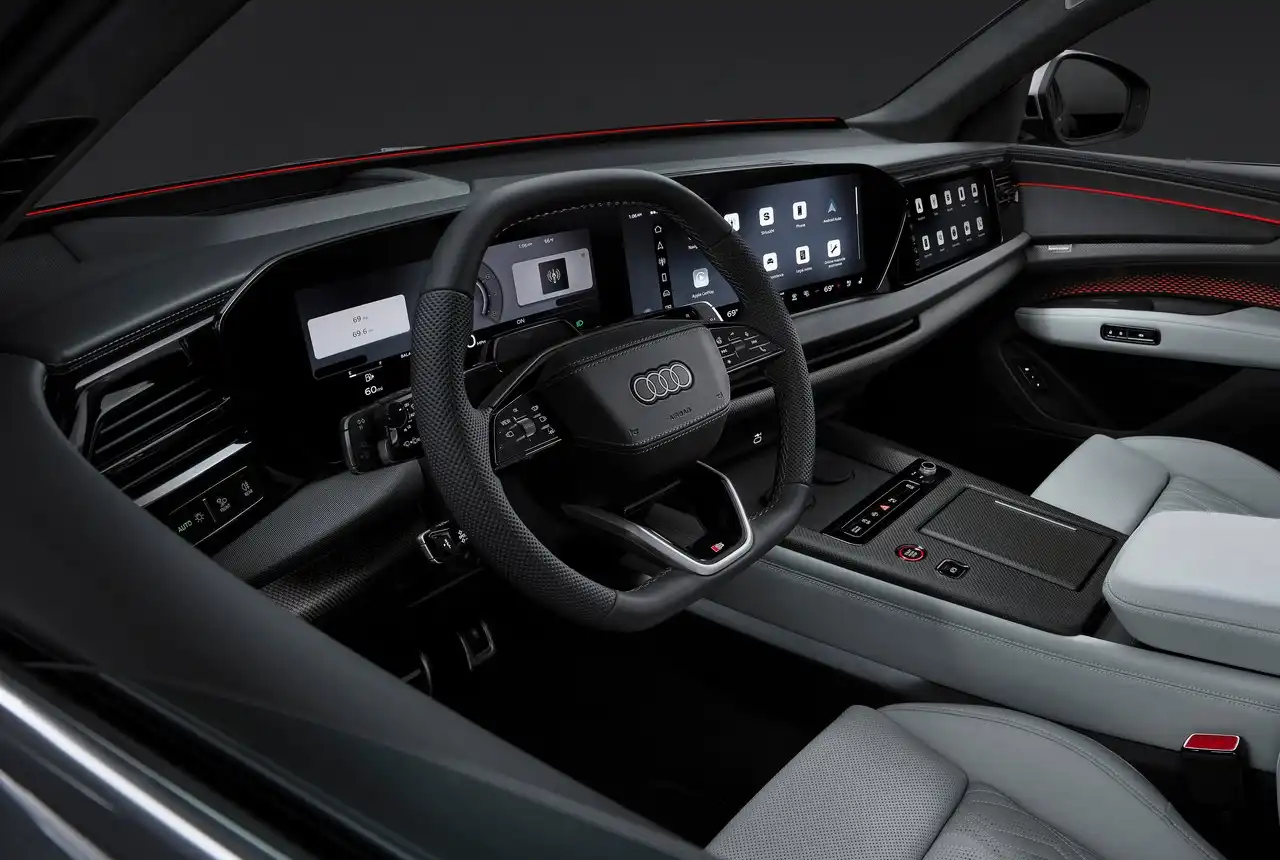
Inside, the Q9 drops most of the piano-black plastic that defined earlier Audi interiors. In comes Nappa leather, Dinamica microfiber suede, open-pore wood, and — in select packages — alpaca wool trim.
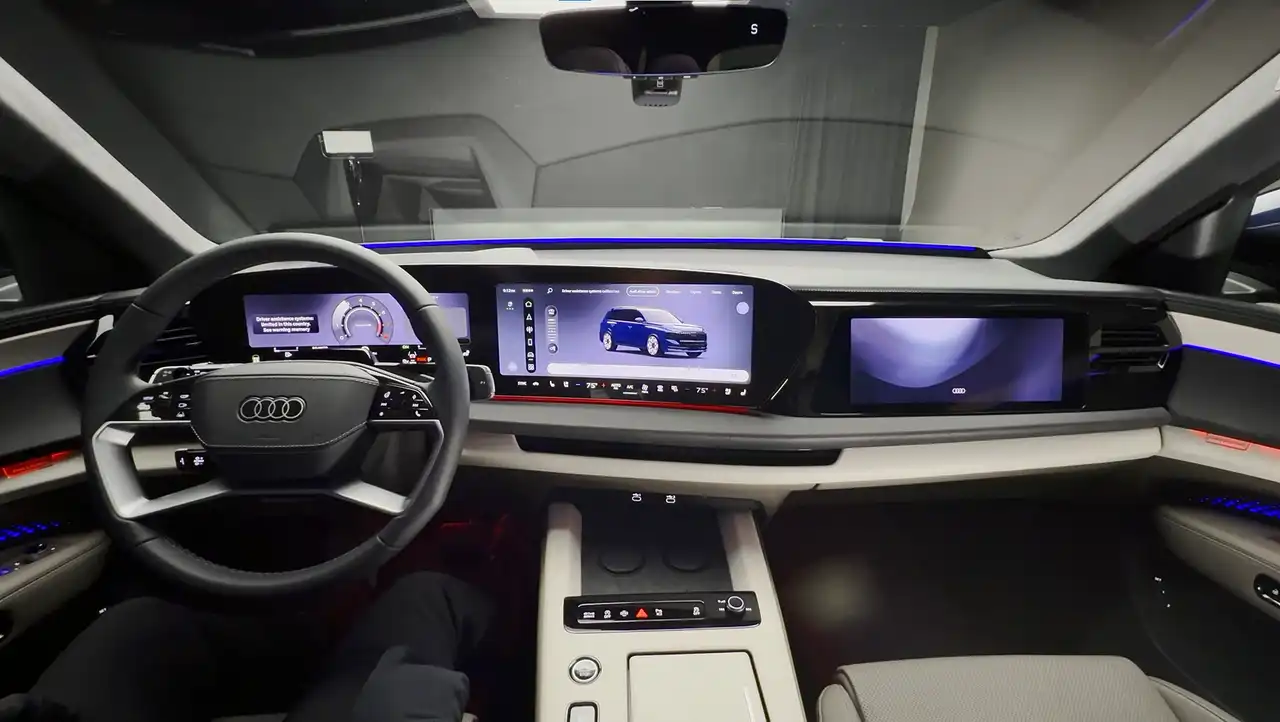
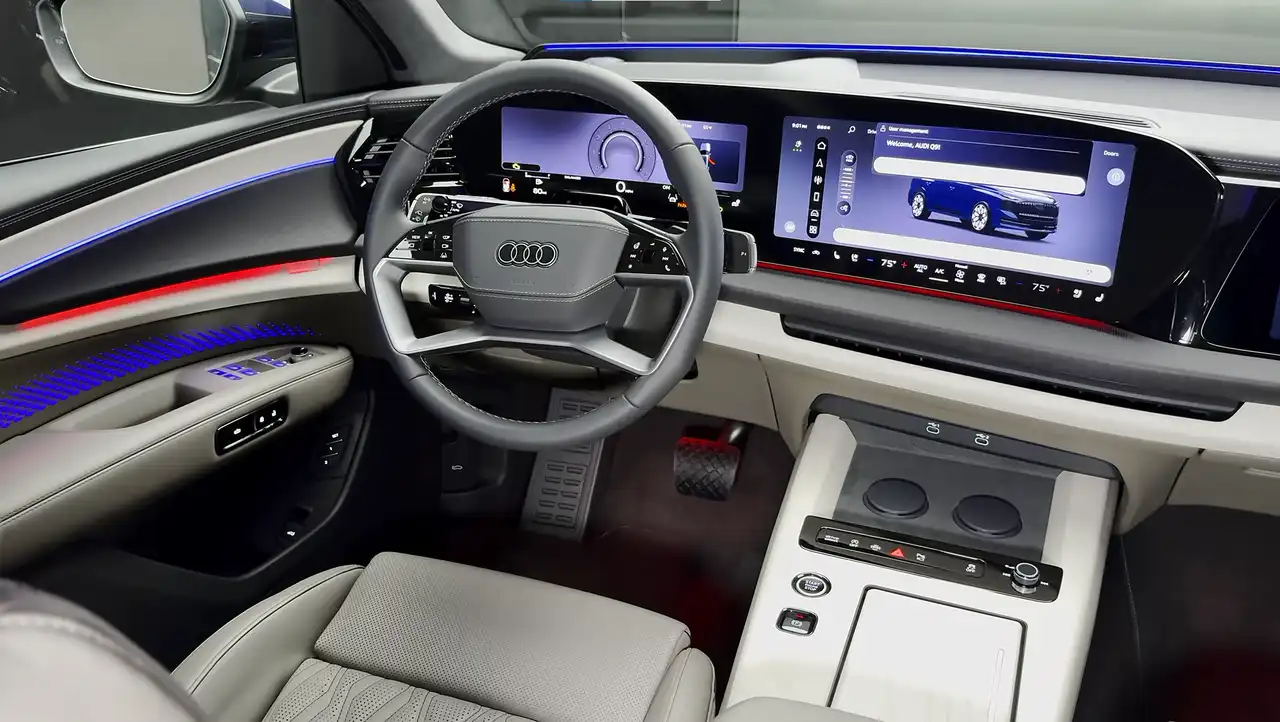
The dashboard follows what Audi calls its Digital Stage layout: a curved band of OLED displays merging the instrument cluster and infotainment screen into one visual sweep, without breaking the sense of openness inside the cabin.
The layout leans hard into touch controls and fewer physical buttons. That’s a plus for tech-forward buyers, but it could frustrate drivers who prefer hard switches for basics like climate control.
Front seats get full power adjustment, and the optional Bang & Olufsen sound system adds physical actuators that let occupants feel bass through the seat itself. It’s a niche feature — genuinely useful only for buyers who care deeply about audio, not a must-have for most owners.
Tech, Safety Features and Cargo Room
The infotainment system runs on Android Automotive OS, with a built-in app store and a voice assistant powered by ChatGPT integration for more natural commands. A dedicated 12.3-inch front passenger display includes a privacy mode that blocks the driver from seeing content while the vehicle is moving.
On the safety side, the standout feature is Adaptive Cruise Assist Plus — a Level 2+ system that allows hands-free driving on pre-mapped highways in the US, Canada and Germany, at speeds up to 85 mph. The SUV also gets exit warning sensors for cyclists and a trailer maneuvering assist system for owners who tow.
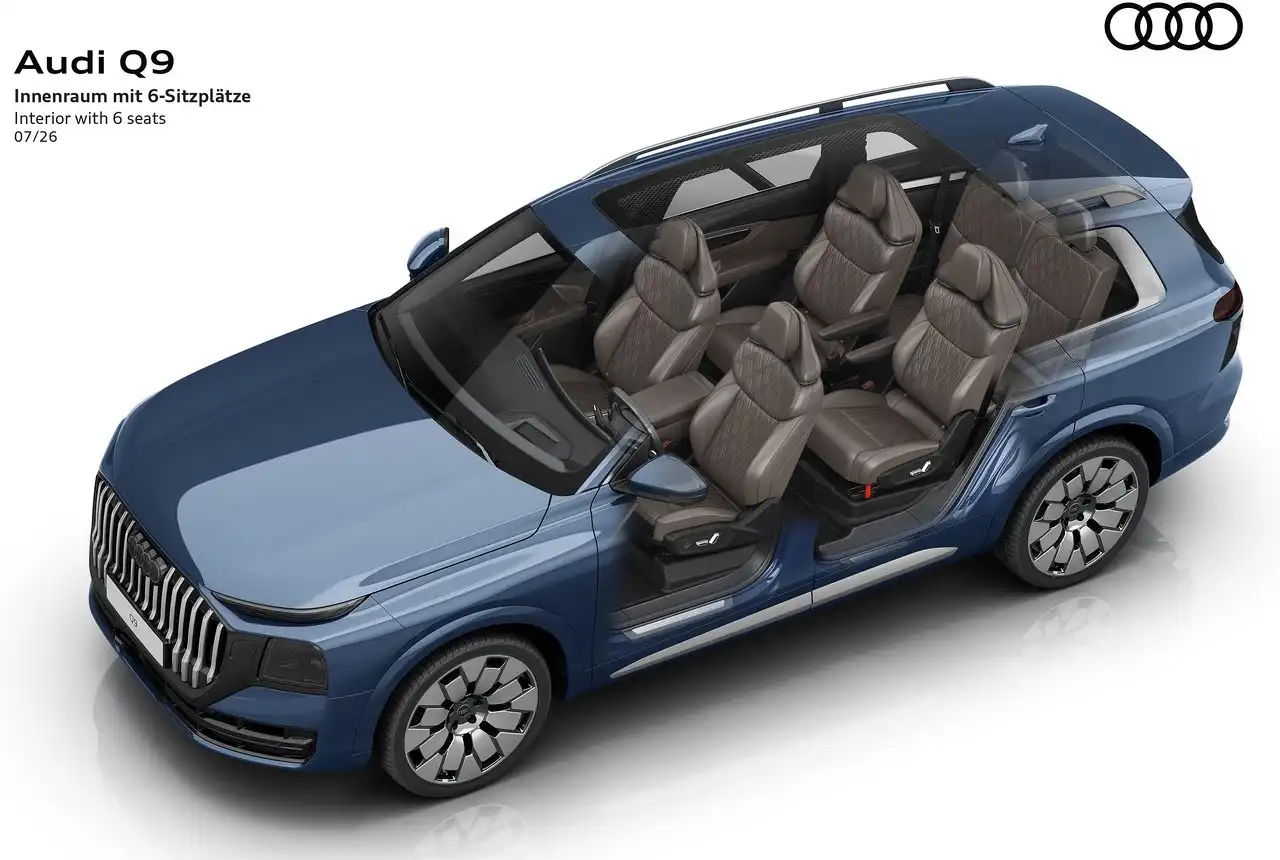
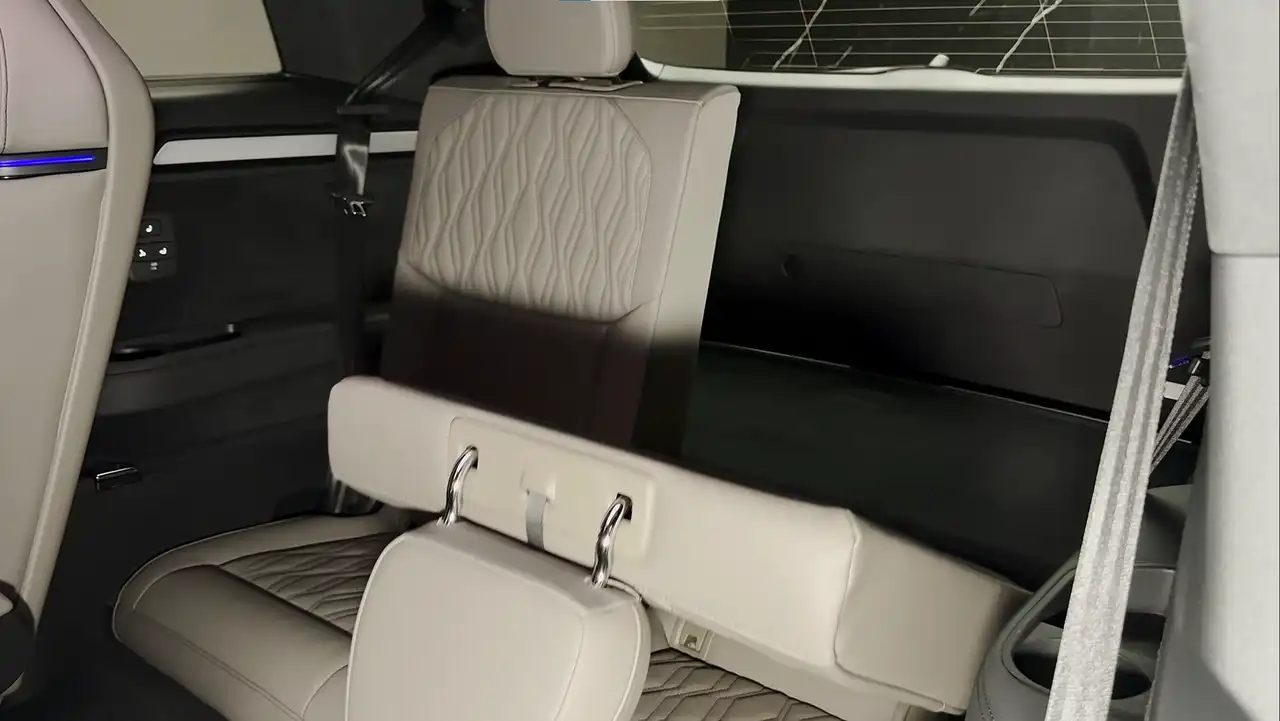
Rear-seat space is the Q9’s biggest selling point. A 123.5-inch wheelbase makes room for actual adults in the third row — something rare in this segment. Cargo space comes in at 19.3 cubic feet behind the third row and 87.7 cubic feet with the second and third rows folded.
The real strength here is space paired with driver-assist tech. The tradeoff is a near-total reliance on touchscreens for daily functions — something drivers coming from more button-heavy vehicles will need time to adjust to.

Plenty of Power, Not Much Room to Save on Gas
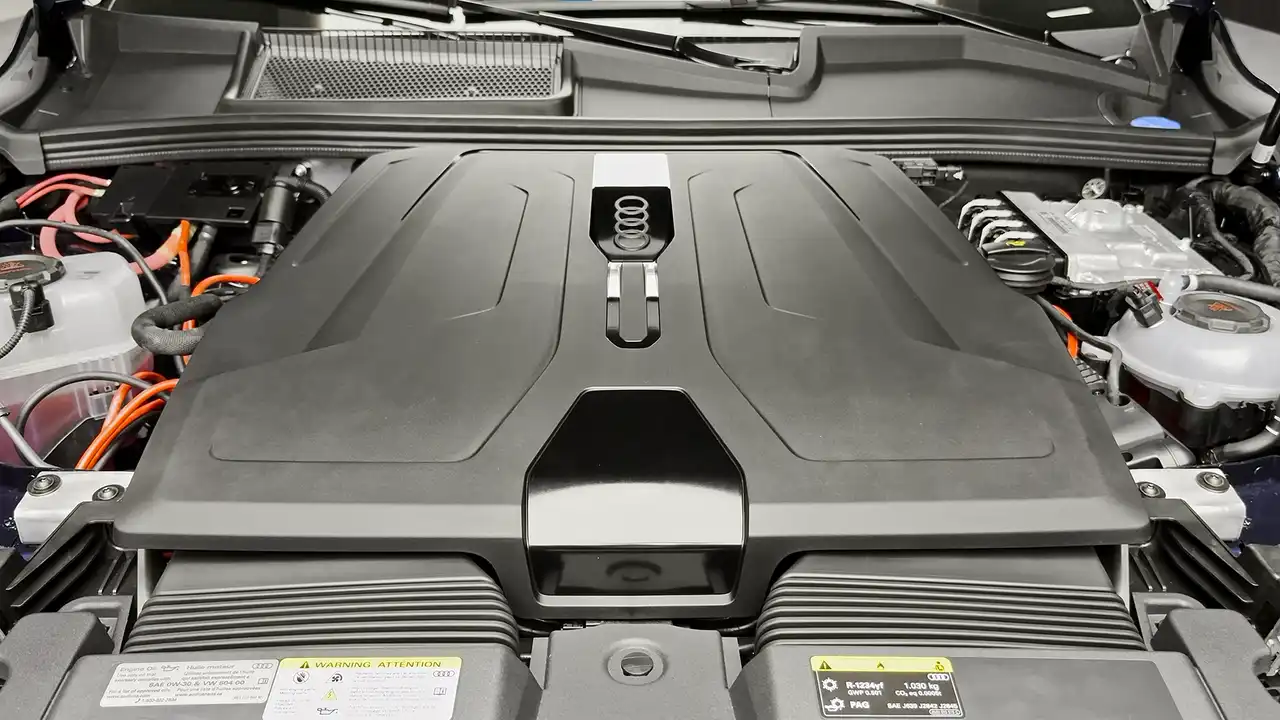
US models come exclusively with a 2.9L twin-turbo V6 making 429 hp and 442 lb-ft of torque, paired with an 8-speed automatic and standard quattro all-wheel drive. Peak torque arrives from 2,000 rpm, meaning the engine doesn’t need to be revved hard to feel responsive.
In practice, that translates to quick throttle response both around town and at highway speeds, without needing to bury the pedal to get the SUV moving. The 0-60 mph run lands around 4.9 seconds — quick for a vehicle tipping the scales at over 5,300 lbs.
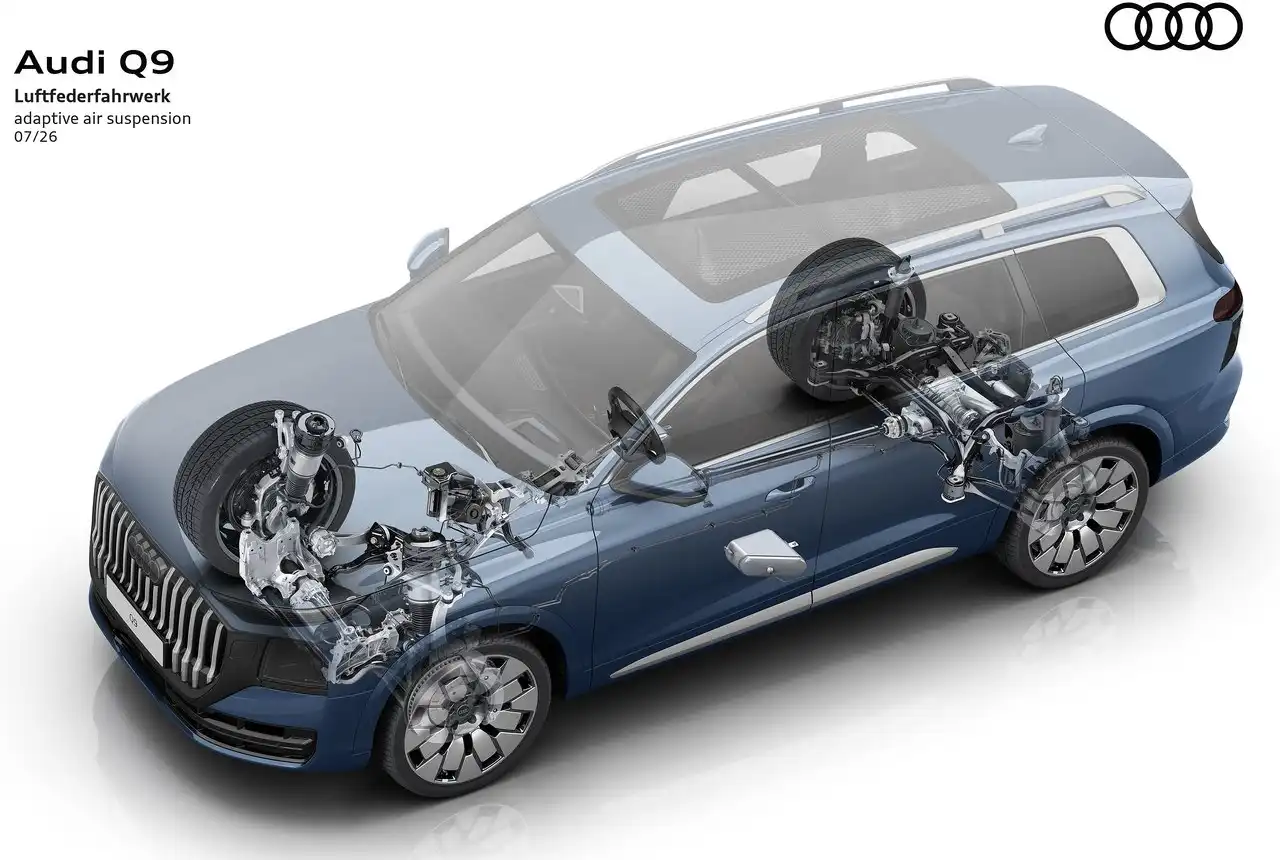
The SQ9 steps up to a 4.0L twin-turbo V8 with 591 hp and 590 lb-ft, cutting that sprint to 3.8 seconds. That’s sports-sedan-level acceleration wrapped in a full-size SUV body — a combination that puts real demands on the air suspension and rear-wheel steering system to keep things composed through corners.
Audi hasn’t released EPA fuel economy figures for either engine yet, as certification is still pending closer to the on-sale date. For context, Audi’s European diesel-hybrid variant of the Q9 is rated between 29.4 and 31.8 mpg combined — but that engine isn’t offered in the US.
Worth noting: despite the hybrid tech Audi is using overseas, there’s no plug-in hybrid or electric version of the Q9 planned for the US at launch. Buyers prioritizing fuel efficiency will likely need to look elsewhere.
Who Should Actually Spend This Kind of Money
In the US, the Q9 starts at $89,095 including destination, climbing to $103,795 for the Prestige trim. The SQ9 starts at $119,395. Those numbers put it squarely against the BMW X7, Mercedes-Benz GLS and higher trims of the Cadillac Escalade — not the entry-level end of the segment.
Audi’s Signature Care program covers scheduled maintenance for the first 3 years or 30,000 miles, backed by a 4-year/50,000-mile warranty on the powertrain and bumper-to-bumper coverage. Insurance premiums and depreciation data aren’t available yet, since the vehicle hasn’t hit real-world fleets or resale markets.
Financing a vehicle in this price range typically means budgeting for a higher monthly payment than most three-row SUVs on the market, even before factoring in insurance costs that tend to run higher on vehicles with this much horsepower and this little sales history.
Buying at launch makes sense for buyers who need the space now and don’t mind paying full price for an unproven first-year model. Buyers who can wait may benefit from early fixes to any first-year issues, plus real depreciation and reliability data that simply doesn’t exist yet.
Frequently Asked Questions About the 2027 Audi Q9
Is the 2027 Audi Q9 available with all-electric or plug-in hybrid power?
No. At launch, the Q9 is gas-only in the US, with a diesel mild-hybrid available only in Europe.
What’s the difference between the Q9 and SQ9?
The SQ9 gets a more powerful V8 engine, a retuned sport suspension, and exclusive trim details, prioritizing performance over pure comfort.
How many people can the Audi Q9 seat?
Seven, standard. A six-seat configuration with individual second-row captain’s chairs is also available.
When does the 2027 Audi Q9 go on sale?
US deliveries are scheduled to begin in the fourth quarter of 2026.
The CarrosBemMontados Verdict
The Q9 is a rational buy for anyone who genuinely needs three rows of real adult-sized seating and values driver-assist tech. It’s not the pick for buyers focused on fuel economy or already eyeing an electric SUV.
It makes sense for larger families with the budget to match. It won’t satisfy buyers chasing efficiency or planning to go electric soon.
The Q9 is betting everything on combustion engines at the exact moment the market is moving the other way.
Is there still room in 2027 for a 5,300-pound SUV that runs entirely on gas or diesel?
Audi SQ9 2027
Share this article

Por: Danniel Bittencourt
29/07/2026
Related posts