2027 Kia Seltos Hybrid: Everything You Need to Know Before Buying
Kia rebuilt the Seltos from scratch — new hybrid powertrain, a cabin that shames pricier rivals and real-world fuel economy that reportedly tops 40 MPG. But does it actually deliver?
The Seltos Goes Hybrid — and Suddenly the Compact SUV Segment Gets a Lot More Interesting
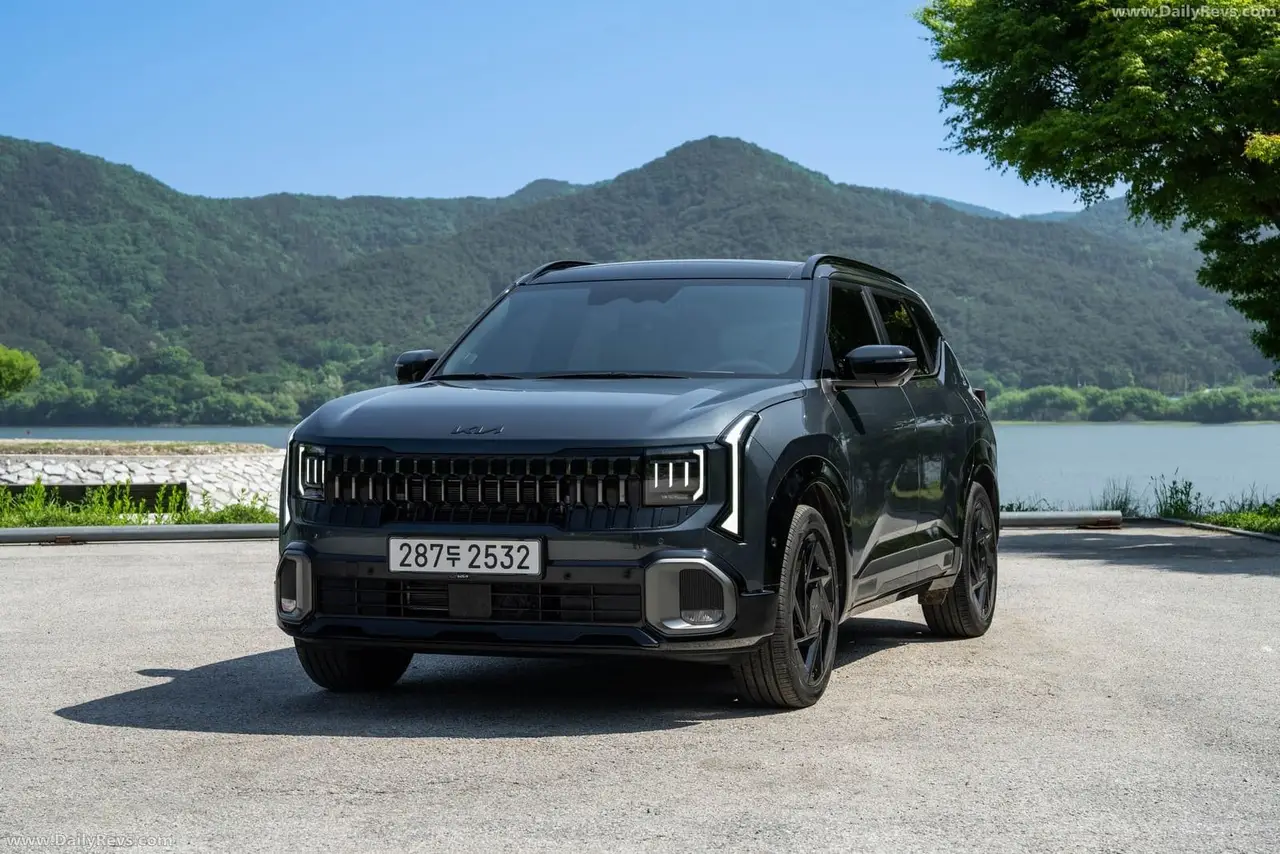
The biggest news about the 2027 Kia Seltos isn’t the bolder styling or the roomier cabin — it’s the powertrain. For the first time, Kia is dropping a hybrid drivetrain into the Seltos, and the HEV X-Line version pairs that efficiency-focused engine with an off-road-adjacent look that puts it squarely against the Toyota Corolla Cross Hybrid and Honda HR-V.
This is a full second-generation redesign, not a refresh. Longer, wider, more tech-loaded — and now available with a hybrid system that reportedly delivers close to 46 MPG in official Korean testing.
US pricing hasn’t been confirmed yet, but Car and Driver estimates the Seltos Hybrid will land somewhere between $28,500 and $35,500 depending on trim. Sales are expected to begin in late 2026.
Quick Stats
| Spec | Details |
|---|---|
| Segment | Compact SUV |
| Powertrain | 1.6L four-cylinder hybrid (HEV) — Atkinson cycle + electric motor(s) |
| System Output | 141 hp (Korea) / est. 155 hp FWD, 179 hp e-AWD (US — not officially confirmed) |
| System Torque | ~195 lb-ft (combined) |
| Transmission | 6-speed dual-clutch (6DCT) |
| Drive | FWD or e-AWD depending on trim |
| 0–60 mph | ~8.6 sec (media estimate — not officially confirmed) |
| Top Speed | Est. 118–130 mph (not officially confirmed) |
| Fuel Economy | Up to ~46 MPG combined (Korea official) / ~40–43 MPG real-world |
| Range | N/A — standard hybrid, not plug-in |
| On Sale | Korea: 2026; US/Europe: late 2026 |
Those fuel economy numbers are the headline, but the full story is more nuanced than a single MPG figure. The Seltos Hybrid trades some performance for efficiency — and whether that trade works for you depends heavily on how you drive.
A Design That Stops Playing It Safe
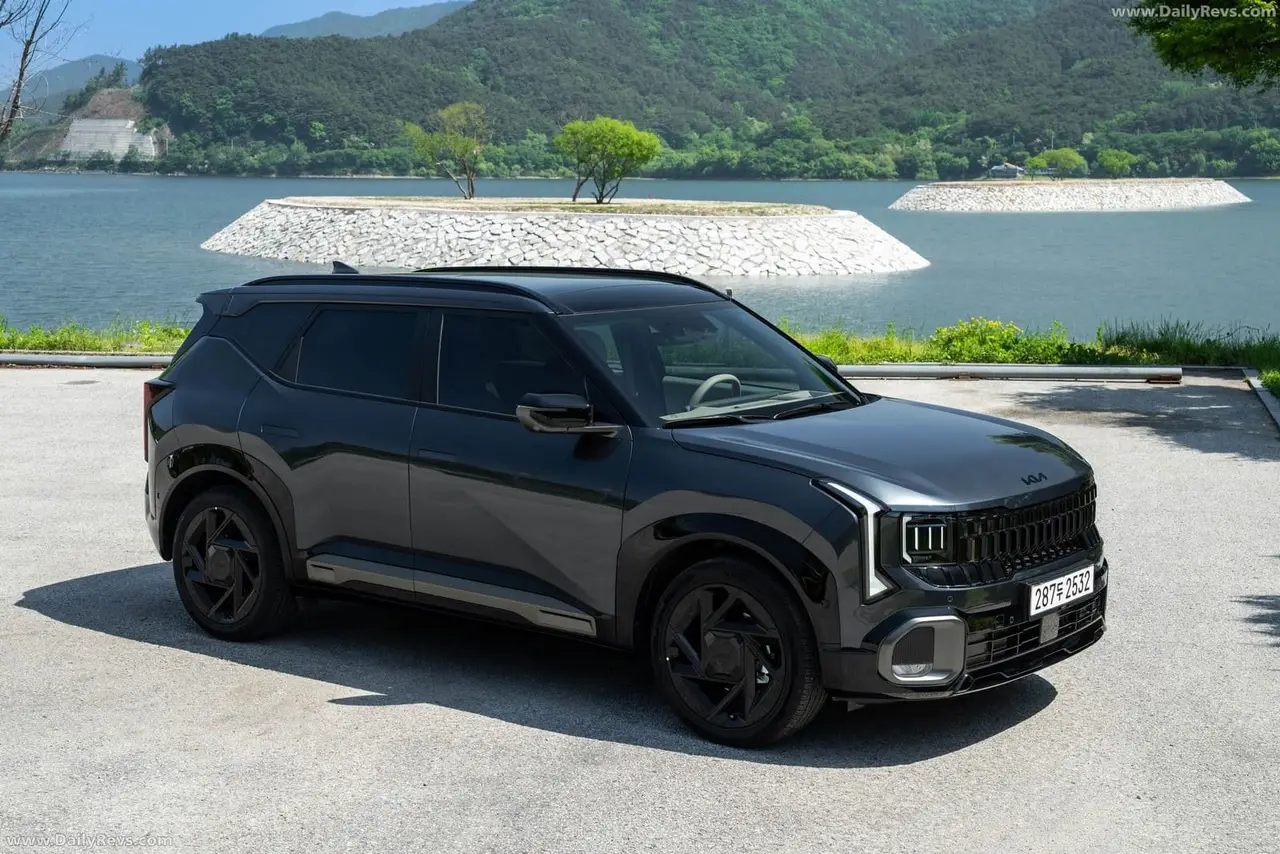
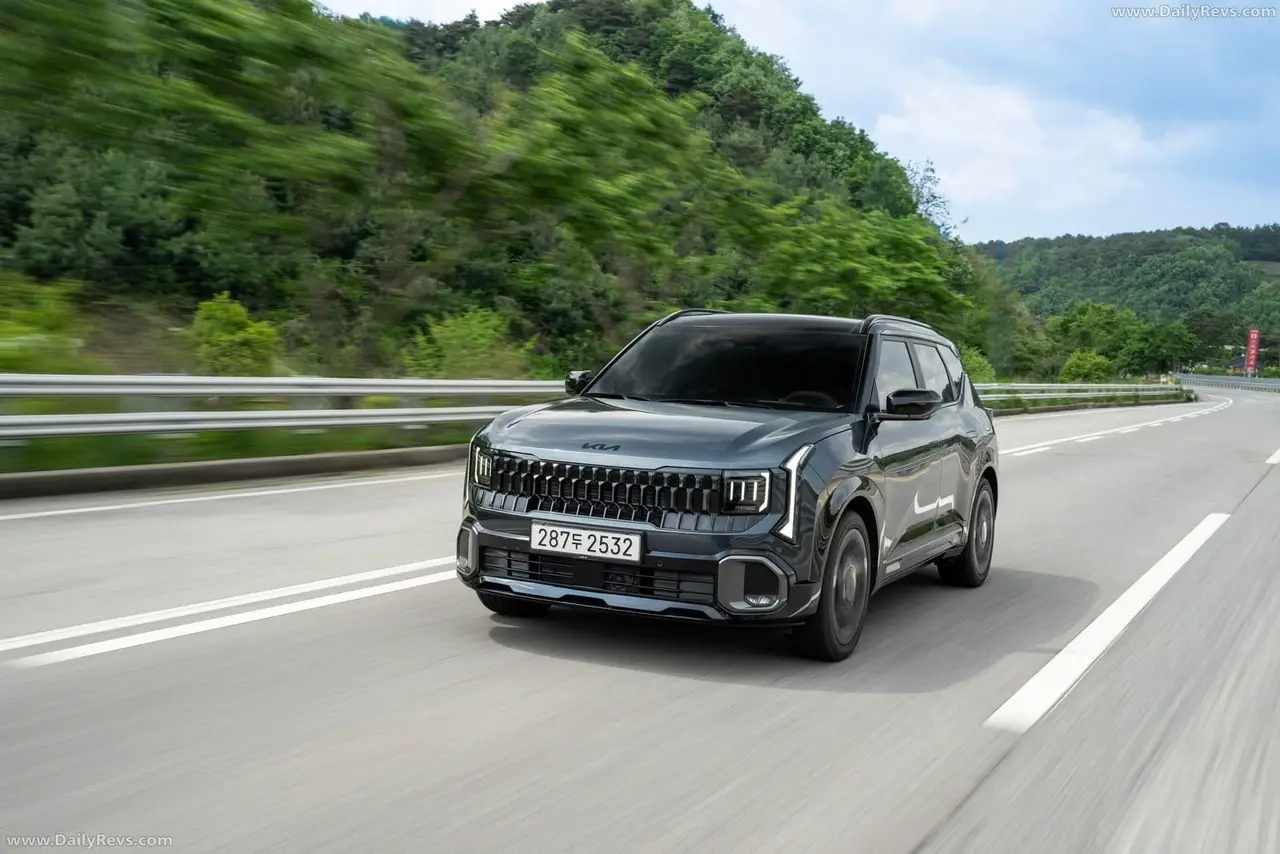
Pull up next to a first-gen Seltos and the difference is immediate. The 2027 model has presence — a wide grille, a structured hood and Kia’s Star Map LED signature up front that makes the car recognizable day or night. The overall profile is more upright, more confident, and closer in spirit to the brand’s larger Telluride than to any subcompact hatchback.
On the X-Line, the aggressive cues stack up: blacked-out trim, unique 19-inch wheels, beefier front and rear bumpers and darkened badges throughout. It reads as trail-ready without actually being a trail vehicle — and that’s the point.
The rear carries the same intentional design language: wide horizontal taillights, a structured rear bumper with matte black accents on the X-Line and an overall stance that communicates solidity. Nothing here feels borrowed or accidental.
Compared to the Honda HR-V’s more restrained styling or the Corolla Cross’s conservative approach, the Seltos makes a clear statement: Kia is done playing it safe in this segment.
The Interior That Makes Pricier Rivals Look Ordinary
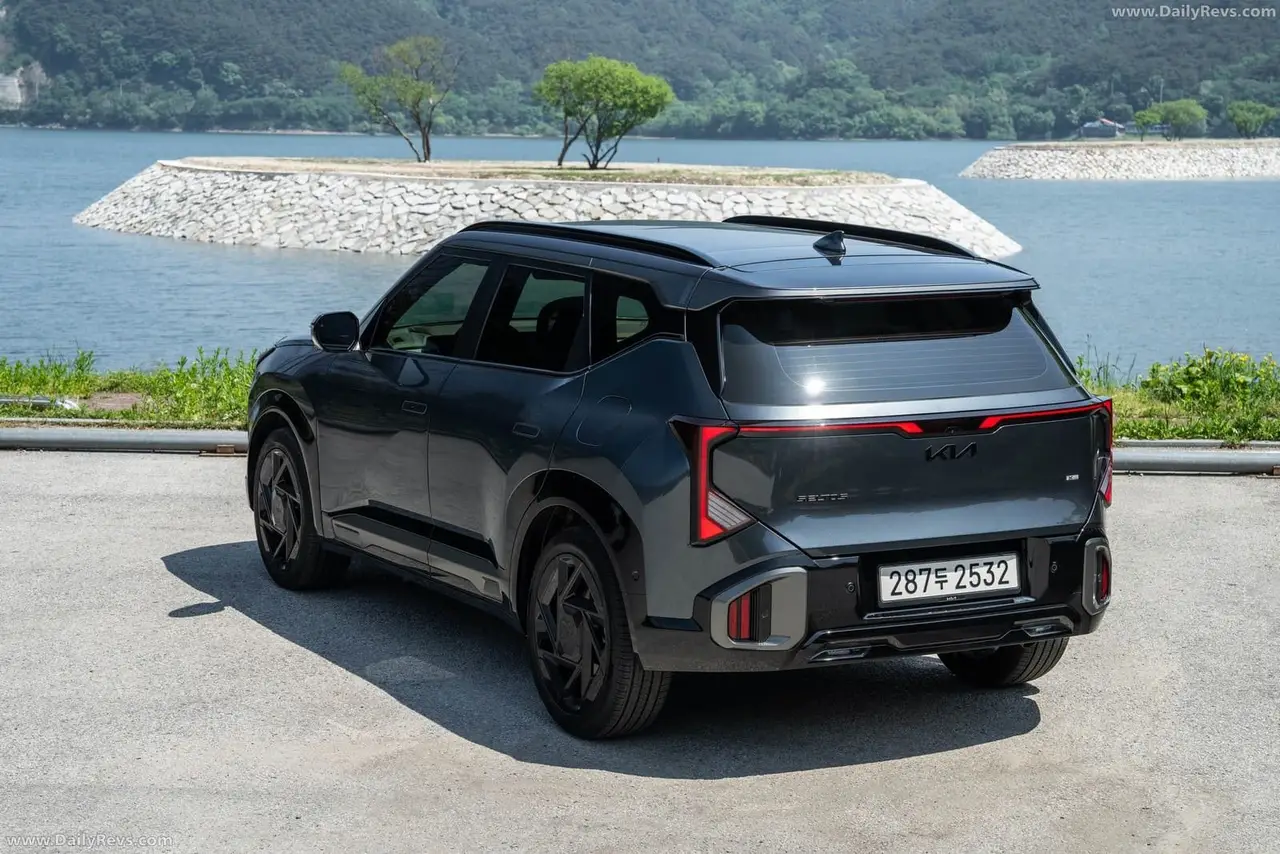
Step inside and the cabin layout immediately distinguishes itself from the segment average. A sweeping horizontal dashboard hosts twin 12.3-inch screens — digital gauge cluster and infotainment display — in one unified panel. The effect is clean, modern and genuinely upscale-feeling for a compact SUV.
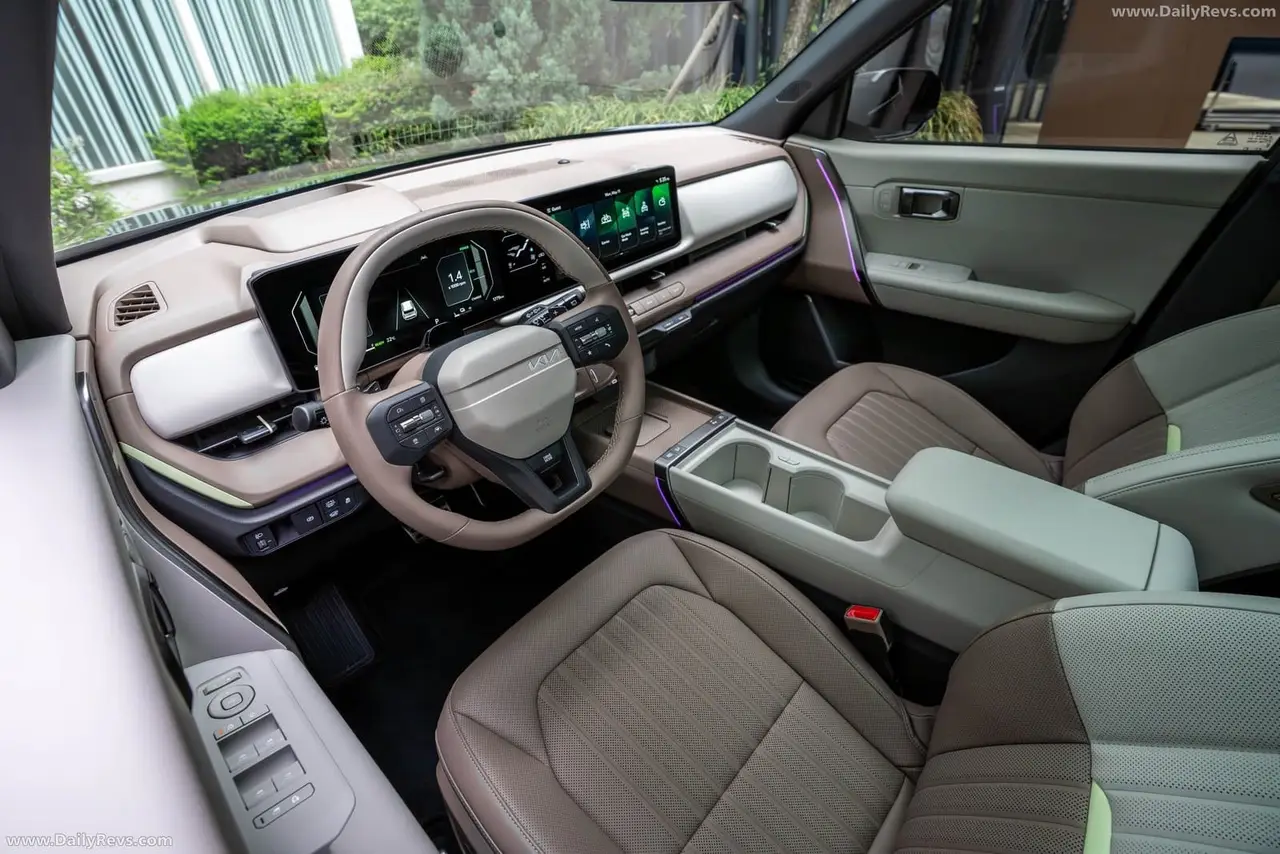
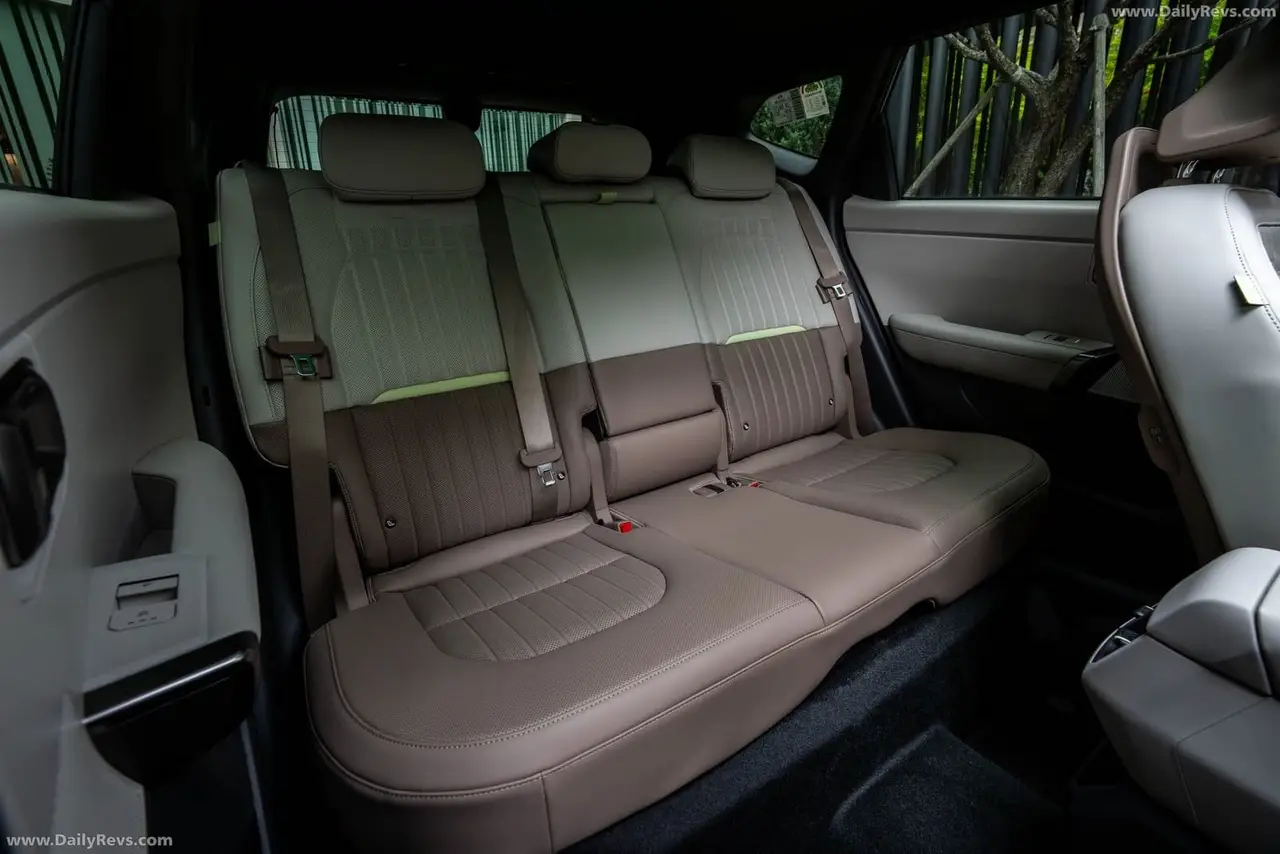
Material quality is mostly solid, though reviewers at MotorTrend and Edmunds note hard plastics in secondary touch points — lower door panels and the base of the dash. It’s a reminder of the vehicle’s price point, but those areas don’t define the experience. What does stand out are the two-tone interior options, available in brown/beige, gray/light and green/black combinations, alongside mesh headrests in X-Line trims that push the cabin closer to premium territory.
Physical climate and volume controls remain — a meaningful choice at a time when many brands bury everything behind touchscreens. Ergonomics are well thought out.
Screens, Safety Tech and Rear-Seat Space That Actually Impresses
The infotainment system supports wireless Android Auto and Apple CarPlay, onboard Wi-Fi and — on the hybrid — a Vehicle-to-Load (V2L) function with an internal 110V outlet capable of up to roughly 3.5 kW. That means you can power a laptop, a fan or a portable cooler directly from the car’s high-voltage battery while parked, without running the engine.
A head-up display of approximately 12 inches is available in higher trims, projecting speed, navigation and driver-assist alerts onto the windshield. In the hybrid, the instrument cluster also displays real-time energy flow — useful for understanding when the system is charging the battery versus drawing from it.
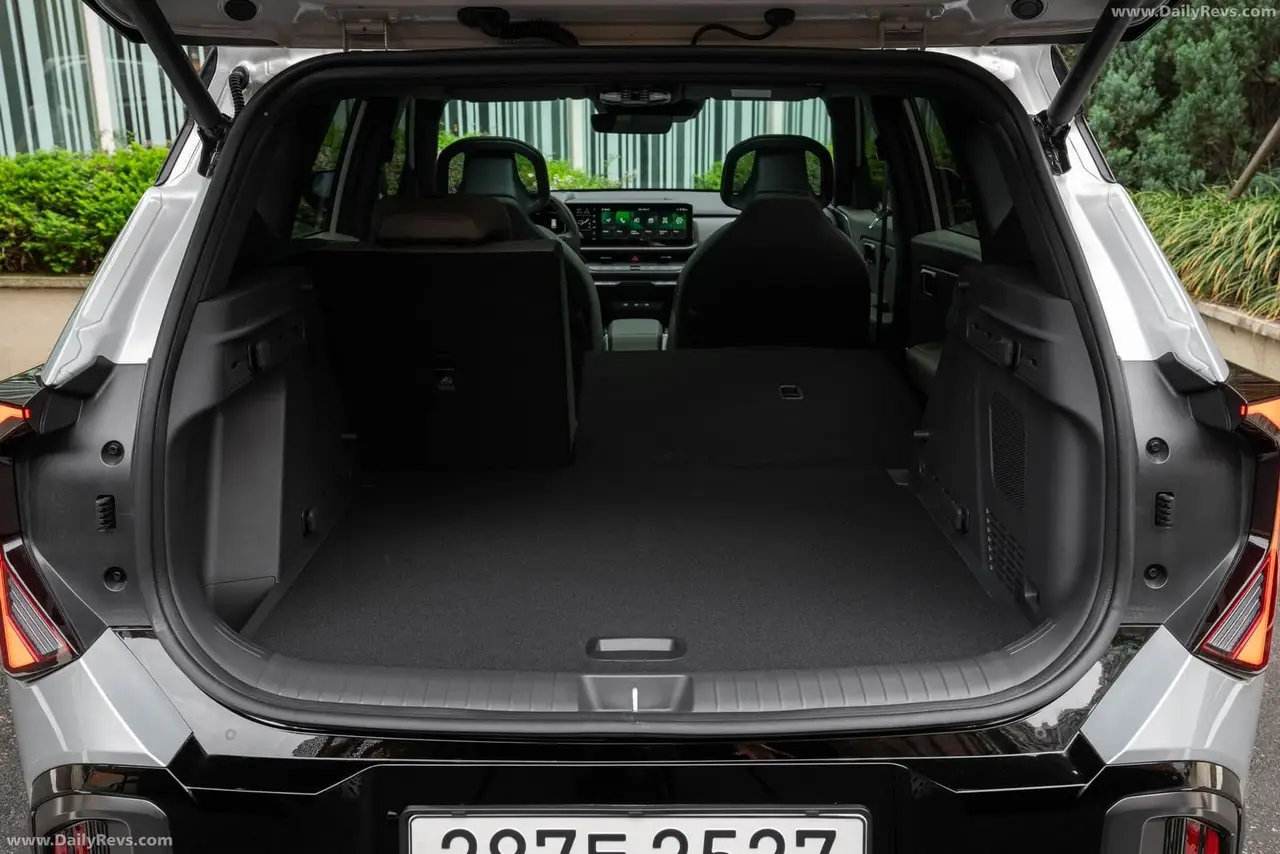
Rear-seat legroom benefits directly from the longer wheelbase — now approximately 105.9 inches. The seatback reclines up to about 24 degrees, and cargo capacity on the Korean-spec hybrid measures 536 liters, or roughly 18.9 cubic feet to the tonneau. US-market measurements using the roof-line method come in at 27.8 cubic feet behind the second row — competitive for the class.
Clear strength: the technology package — dual 12.3-inch screens, HUD and a comprehensive ADAS suite — ranks among the most complete in any compact SUV at this price point.
Real limitation: the Seltos Hybrid ships without a spare tire. Only a tire mobility kit is included, which Consumer Reports flagged as a notable downside — especially for buyers who cover long distances on less-traveled roads.

Under the Hood: How Does the Hybrid System Actually Perform?
The Seltos HEV uses a 1.6-liter four-cylinder running on the Atkinson cycle, paired with one electric motor in FWD configuration or two motors in the e-AWD setup. Official Korean output is rated at 141 hp and approximately 195 lb-ft of combined system torque. For the US, Car and Driver estimates 155 hp in FWD trim and 179 hp with e-AWD — though neither figure has been officially confirmed by Kia America.
The transmission is a 6-speed dual-clutch unit developed specifically for the hybrid system — separate from the CVT used in the naturally aspirated 2.0-liter and the 8-speed automatic paired with the turbocharged 1.6T.
In practice, testers consistently describe the hybrid as smooth and composed, particularly in city driving and at steady highway speeds. But nobody’s calling it quick. The 0–60 mph estimate from Car and Driver sits around 8.6 seconds — workable for daily commutes and road trips, but noticeably slower than the turbocharged 1.6T, which is estimated closer to the low 7-second range.
Where the hybrid earns its keep is at the pump. Real-world testing in Korea returned approximately 41 MPG in mixed driving, versus roughly 28 MPG for the 1.6 turbo under similar conditions. A Canadian road test showed the hybrid averaging around 43 MPG compared to the turbo’s approximately 25 MPG on the same route — a difference of nearly 40 percent.
If driving excitement is the priority, the 1.6 turbo is the more engaging choice. If the daily grind involves stop-and-go traffic and frequent fill-ups, the hybrid makes a compelling case for itself.
MSRP, Insurance and Maintenance: The Ownership Picture Before You Sign
Globally, the Seltos Hybrid is shaping up to be priced competitively. In Korea, the HEV X-Line retails at the equivalent of roughly $27,600 at current exchange rates. For the US market, Car and Driver estimates an MSRP range of $28,500 to $35,500 depending on trim and drivetrain — neither figure is official yet.
For context, the Toyota Corolla Cross Hybrid starts around $28,000 and the Honda HR-V — which does not offer a hybrid in the US — tops out near $34,000 in its best-equipped form. If Kia lands the Seltos Hybrid near the lower end of those estimates, it would be a straightforward value play.
On the insurance side, no consolidated premium data exists yet for the 2027 Seltos. Based on the model’s profile — moderate power output, family-oriented positioning and a comprehensive active safety suite — insurance costs are likely to come in below those of performance-focused crossovers. But that remains a market projection, not a quoted figure.
Maintenance costs follow Kia’s standard service intervals — annual or mileage-based, with no confirmed complimentary maintenance program for the hybrid. The powertrain warranty in the US covers 10 years or 100,000 miles, which meaningfully offsets long-term ownership costs compared to brands with shorter coverage.
For financing, buyers in the compact SUV segment typically work with 60- to 72-month terms. Given that this is a freshly redesigned second generation, early adopters should expect steeper initial depreciation compared to established nameplates like the RAV4 or CR-V. Waiting 12 to 18 months after launch could be a smarter financial move for budget-conscious shoppers.
The target buyer is someone cross-shopping the Corolla Cross Hybrid or top-trim HR-V who wants more technology, a bolder design and real hybrid efficiency — without needing genuine off-road capability.
What to Know Before You Visit the Dealership
What is the real-world fuel economy of the 2027 Seltos Hybrid?
Independent tests returned between 40 and 43 MPG in mixed driving — close to the official Korean figure of ~46 MPG and significantly better than the 1.6 turbo at roughly 25–28 MPG under similar conditions.
Who are the closest competitors to the Seltos HEV X-Line in the US?
The Toyota Corolla Cross Hybrid and Honda HR-V are the most direct rivals. The Kia Niro Hybrid also competes in a similar space and comes from the same brand.
Is the 2027 Seltos Hybrid expensive to maintain?
No official maintenance cost data has been published yet. The 10-year/100,000-mile powertrain warranty is a meaningful differentiator that helps offset long-term ownership costs.
Does the 2027 Seltos Hybrid come with a spare tire?
No. It ships with a tire mobility kit only — no full spare or compact spare. Consumer Reports flagged this as a drawback, particularly for buyers who drive in rural or remote areas.
Does the 2027 Kia Seltos HEV X-Line Make Sense in Your Driveway?
The 2027 Seltos is a rational purchase wrapped in an emotional package. The hybrid’s real-world fuel economy, the genuinely impressive technology suite and a design that reads a full segment above its price tag all build a strong argument — particularly for buyers considering the Corolla Cross Hybrid or a loaded HR-V.
That said, it’s not the right fit for everyone. Drivers who want real acceleration will be better served by the turbocharged variant. Anyone who puts serious miles on rural highways should think twice about the missing spare tire. And the 19-inch wheels on the X-Line, while sharp-looking, do compromise ride comfort on broken pavement.
The Seltos Hybrid isn’t trying to be the fastest compact SUV. It’s trying to be the most sensible one — and it comes very close.
What’s your take — does the Seltos Hybrid’s efficiency and tech package justify the price, or would you rather have the turbocharged version for the extra punch? Drop your honest opinion in the comments below.
Share this article

Por: Danniel Bittencourt
08/06/2026
Related posts