Porsche 911 RT by Talos Vehicles: The $1M Restomod Built for 20 People
Built entirely from exposed carbon fiber with 547 horsepower and a worldwide production run of just 20 units, the Porsche 911 RT by Talos Vehicles sets a new benchmark for what a bespoke commission in 2026 can actually look like.

Por: Danniel Bittencourt
14/05/2026
Porsche 911 RT by Talos Vehicles: The British Restomod That’ll Cost You Over $1 Million
British engineering firm Talos Vehicles, based in Dewsbury, Yorkshire, pulled the wraps off its most ambitious project yet in May 2026. The Porsche 911 RT isn’t a simple performance package — it’s a near-complete rebuild of a GT3 RS, designed specifically around each individual buyer.
The pitch is straightforward: take the most capable platform Porsche has ever put on public roads, then push it somewhere no factory catalog ever could.
The closest competitors in the high-end restomod space are Singer Vehicle Design and Gunther Werks — but both work with air-cooled engines from generations past. Talos goes a different direction entirely, building on the modern water-cooled flat-six that spins to 9,000 rpm and sits inside a current-spec racing chassis.
The target buyer is a very specific type of collector — someone with ultra-high net worth who has already worked through Porsche’s full lineup and wants something that simply doesn’t exist anywhere else. Production is capped at 20 units, worldwide, total.
Full Carbon, No Compromises: How Talos Reshaped the 911 RT’s Body
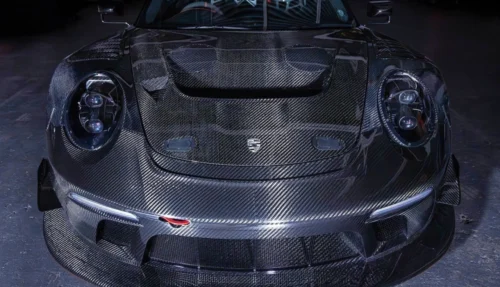
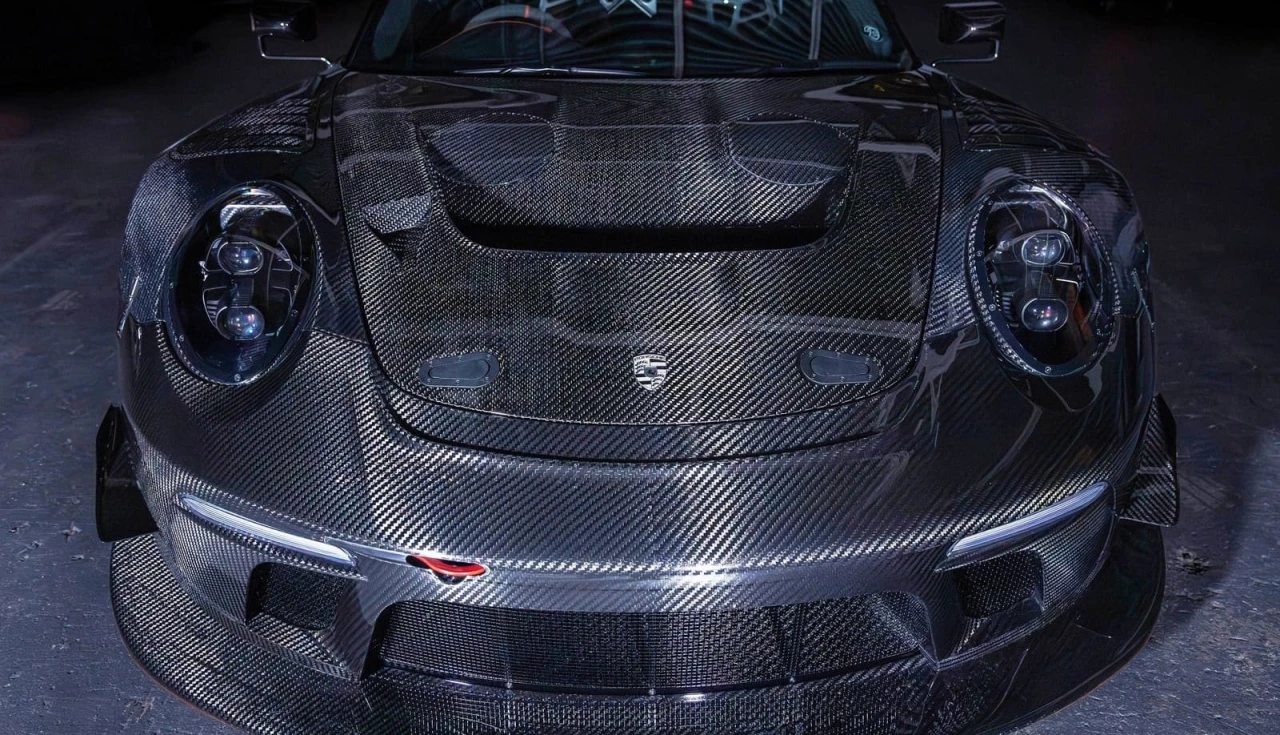
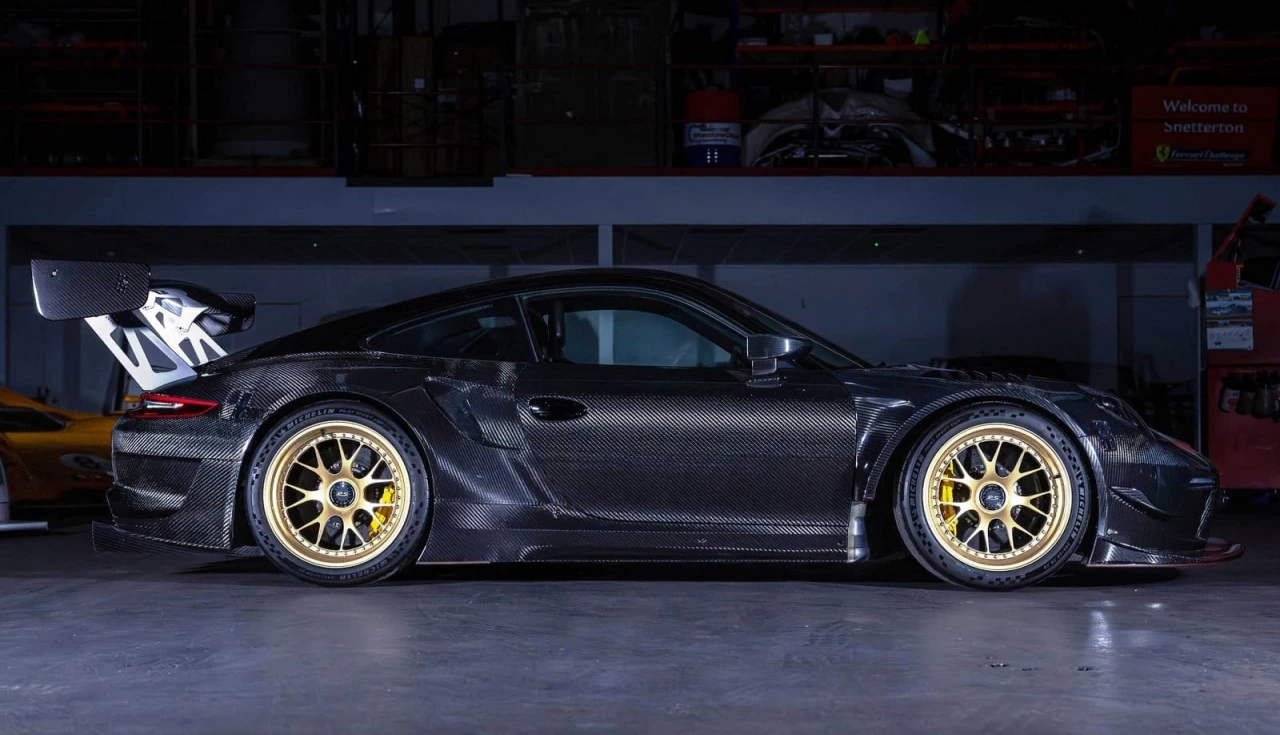
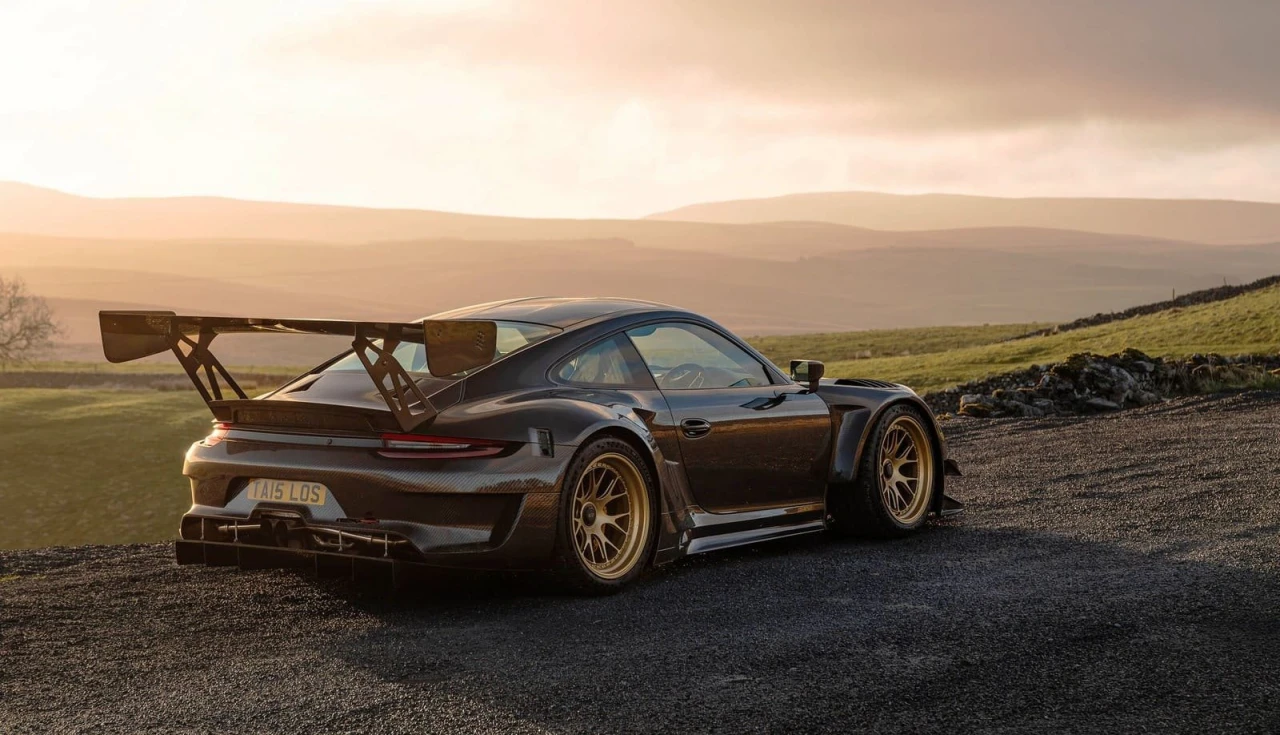
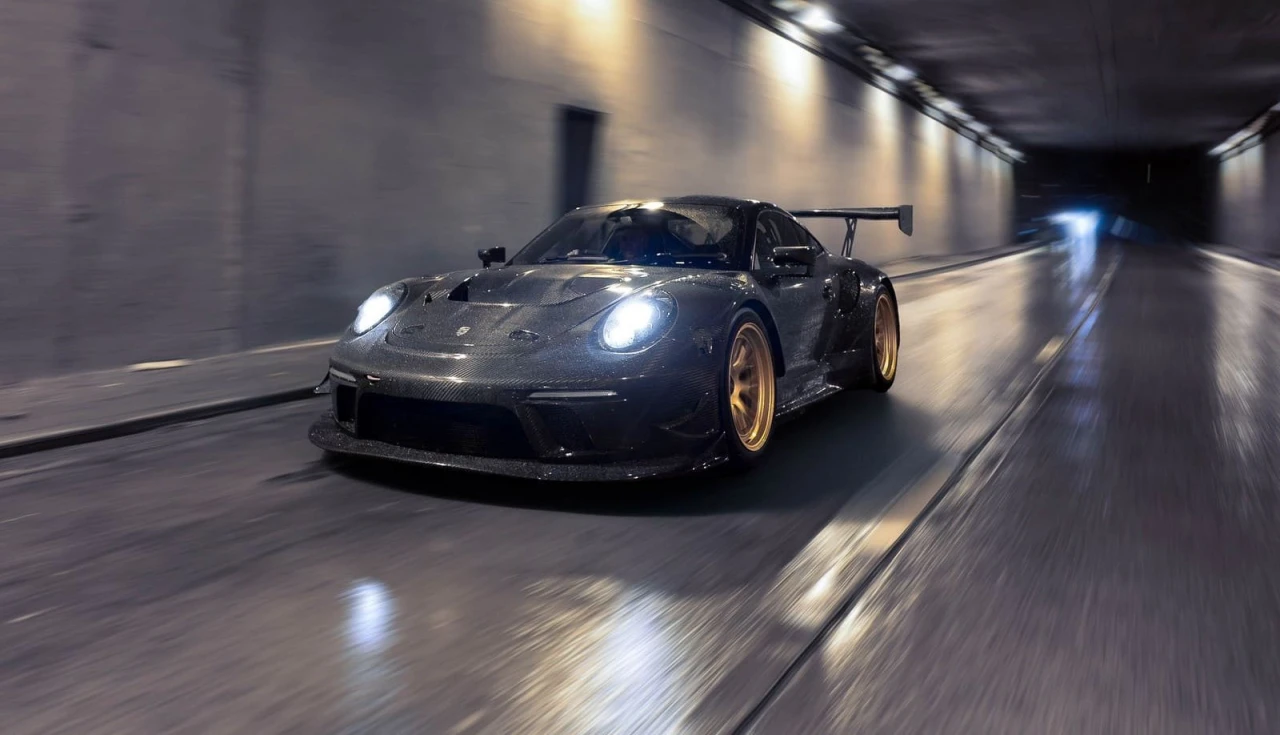
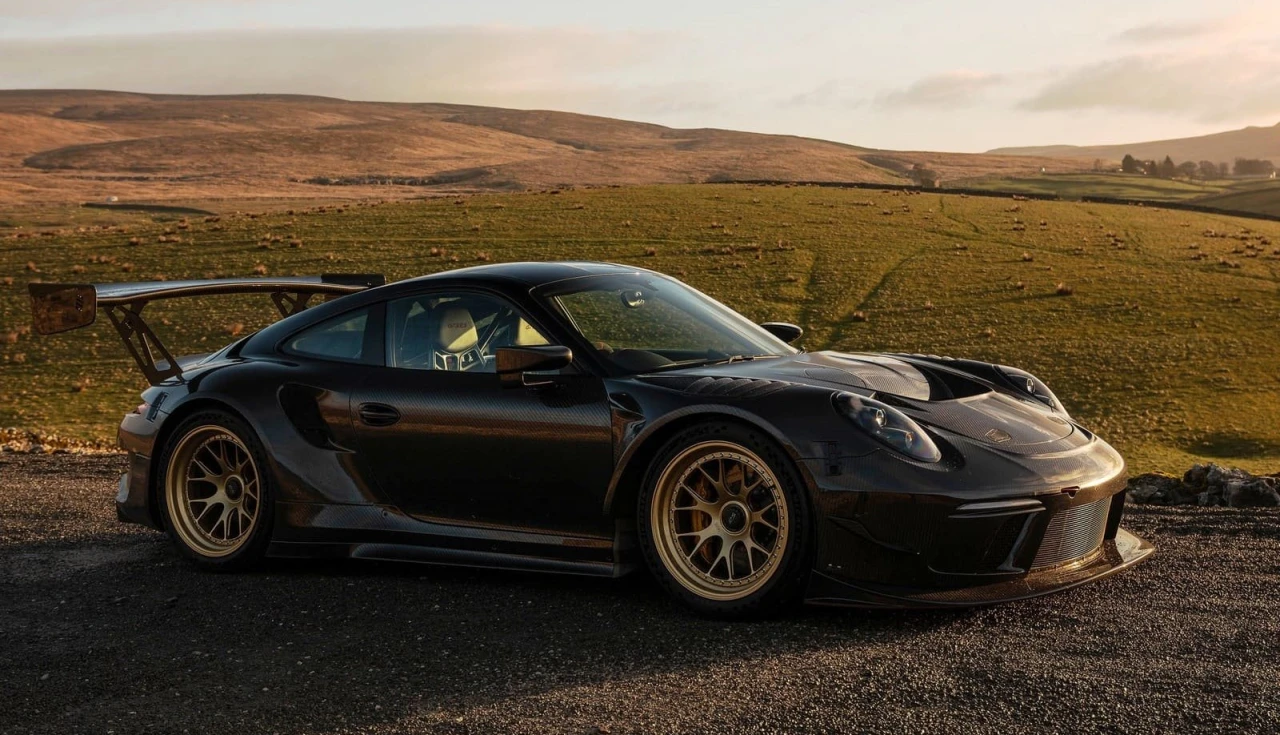
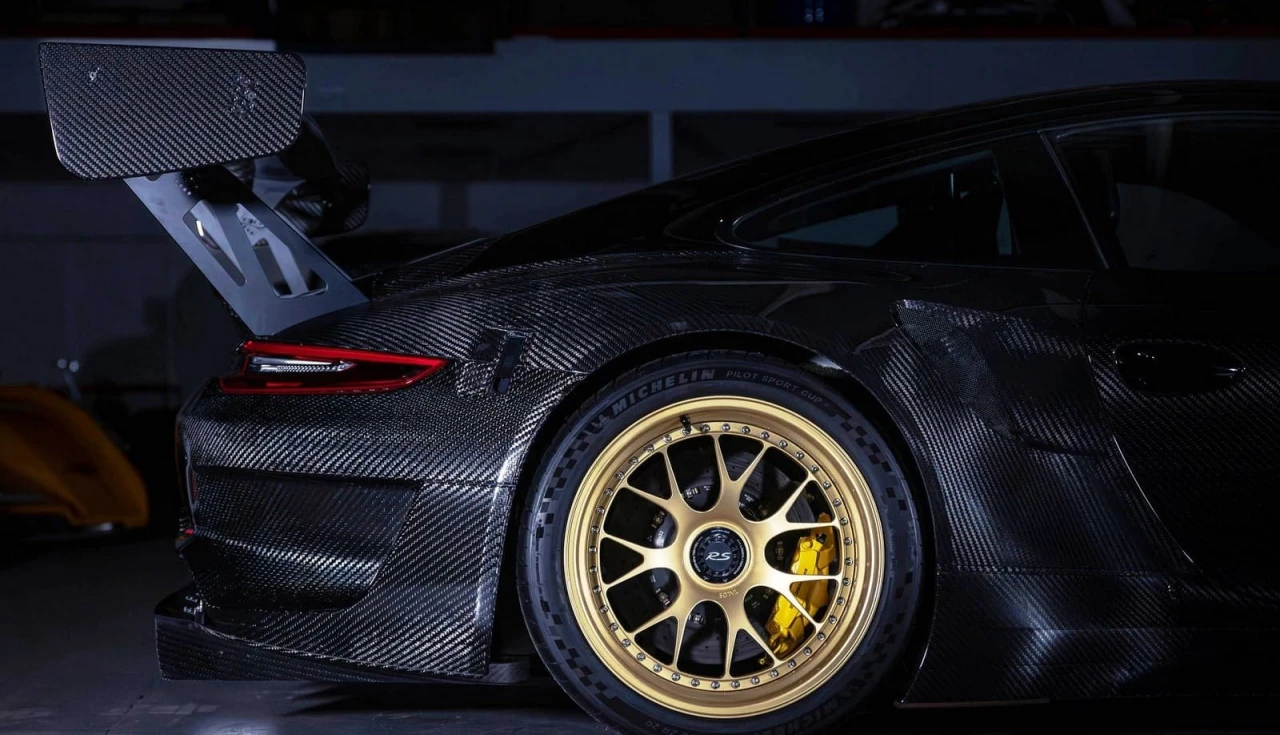
The first thing that hits you about the Porsche 911 RT isn’t the engine note. It’s the way it looks. Nearly every original GT3 RS body panel has been replaced. Working alongside MCT Carbon — a British materials specialist that supplies components to Formula 1 teams and WEC prototypes — Talos swapped the entire outer shell for pre-impregnated carbon fiber, autoclave-cured to aerospace-grade standards.
Up front, the silhouette echoes the iconic 911 R, but the body was digitally re-engineered using 3D laser scanning to match the wider 991 chassis dimensions. What you get is a prominent front splitter, enlarged radiator intakes and a sculpted hood featuring NACA ducts for hot air extraction — form following function at every point.
Along the sides, flared fenders wrap around forged magnesium wheels, a material that cuts unsprung mass more aggressively than traditional aluminum. The stance is wide, low and wound tight.
Out back, the 911 RT makes no attempt to be subtle. A large fixed rear wing and a serious rear diffuser replace the clean tail of the original 911 R. That combination creates real aerodynamic drag — which is exactly why the top speed sits at 297 km/h (185 mph) instead of pushing past 186. The car trades terminal velocity for corner-speed grip, and that’s a deliberate engineering trade-off.
For buyers who prefer a cleaner look, Talos offers full custom paint in any color on request.
Inside the 911 RT: A Cockpit Built Specifically for the Person Buying It
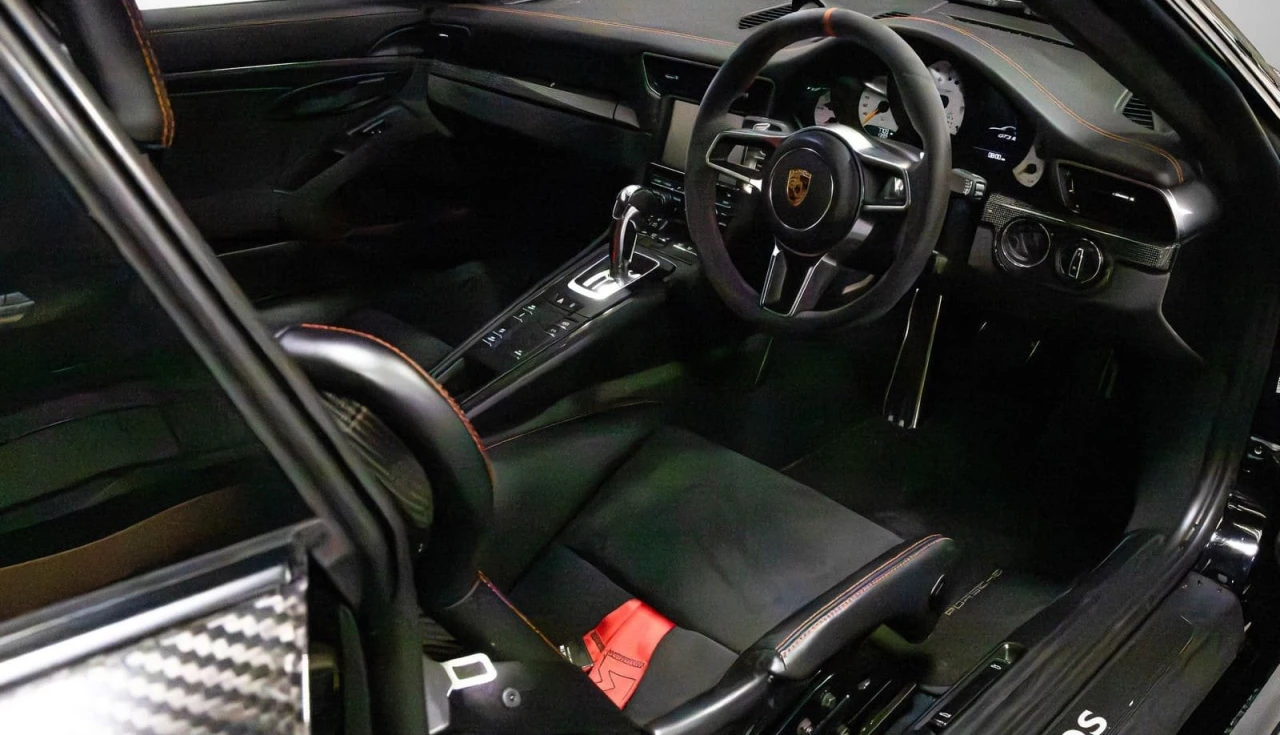
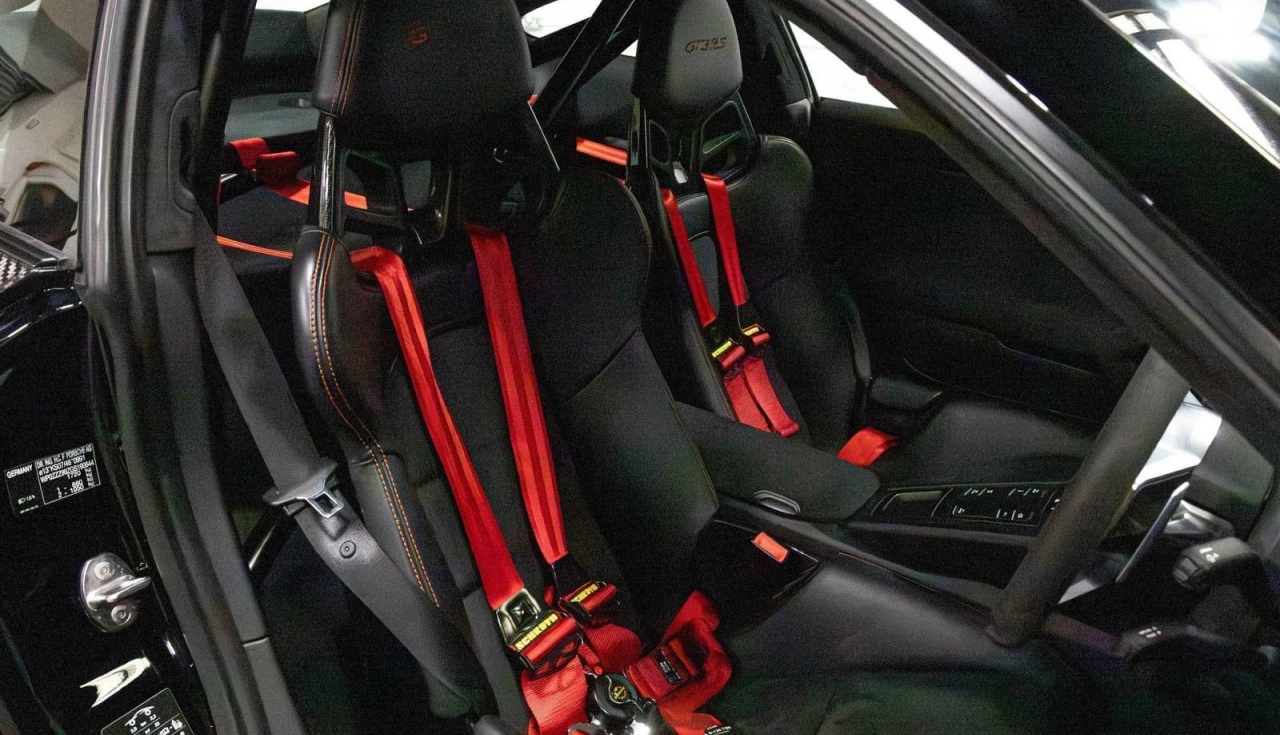
Step inside the 911 RT and the cabin tells its own story. The structural bones come straight from the GT3 RS, but every surface you actually touch has been reworked. Talos covers the interior with high-grade leather and, more prominently, Alcantara — the same material used throughout motorsport because it’s lighter than animal leather and provides significantly more grip, keeping the driver planted in the carbon fiber bucket seats during hard cornering loads.
The dashboard keeps the oversized central analog tachometer that Porsche purists demand, surrounded by peripheral gauges delivering the telemetry data a performance driver actually needs. The ergonomics are built around focus, not leisure.
Every buyer works directly with the Talos team to configure their cabin: stitch color, leather perforation pattern, Alcantara tone and panel trim are all custom selections. No two 911 RTs will ever share the same interior spec.
Tech, Safety Systems and Connectivity: What the 911 RT Keeps and What It Drops
The base electrical architecture from the GT3 RS carries over, which means the PCM (Porsche Communication Management) system is present and accounted for. That includes satellite navigation, GPS-based telemetry integration — particularly useful for logging lap times and lateral G data at the track — plus smartphone mirroring.
What Talos deliberately leaves out is the full suite of modern ADAS features. No adaptive cruise control, no lane-keep assist, no blind-spot monitoring. That’s not an oversight — it’s a calculated call. Each of those systems adds sensors, radar modules and wiring harness weight that directly contradicts everything this build stands for.
What stays in are the dynamic safety systems: Porsche Stability Management (PSM), traction control and ABS calibrated specifically for performance compound tires. All of them are tunable, and all of them can be switched off completely by an experienced driver.
The cabin’s biggest strength is the level of personalization it offers. The real limitation is the deliberate absence of driver-assistance technology — buyers who rely on automated highway aids will need to adjust their expectations.
A 9,000 RPM Flat-Six With No Turbos and No Apologies: The 911 RT’s Engine Story
The heart of the Talos 911 RT is a naturally aspirated 4.0-liter flat-six boxer engine — and it’s one of the last truly pure internal combustion units being built into a street-legal performance car at this level. This block comes directly from Porsche’s motorsport program: titanium connecting rods, a dry-sump lubrication system with multiple scavenge pumps to handle extreme cornering G-forces, and a solid valve train engineered to hold together at a screaming 9,000 rpm.
In stock GT3 RS 991.2 trim, the engine produces 520 hp. Talos applied precision-level remap work and improved volumetric breathing to push output to 547 hp, while deliberately preserving the power delivery character — progressive, linear, never unpredictable. There’s no turbo spike, no sudden surge. The curve builds cleanly across the entire rev range, which makes the car far more exploitable at the limit than a forced-induction setup pushing north of 760 hp ever could be.
Estimated peak torque sits at ~470 lb-ft, calculated against the base engine’s 341 lb-ft at 6,300 rpm. That tells you everything: this is a high-revving engine that rewards commitment, not a low-end torque monster designed to mask chassis limitations.
The standard transmission is Porsche’s 7-speed PDK dual-clutch — millisecond upshifts, seamless downshifts, zero torque interruption. For buyers who want the visceral connection of a 6-speed manual, Talos will build that conversion on request, keeping the spirit of the original 911 R alive.
With 2,976 lbs and 547 hp, the power-to-weight ratio works out to 10.84 lbs/hp. The result: 0 to 60 mph in under 3.0 seconds.
Specs — Porsche 911 RT by Talos Vehicles (2026)
| Item | Specification |
|---|---|
| Engine | 4.0L naturally aspirated flat-six boxer |
| Output | 547 hp |
| Torque | ~470 lb-ft (estimated) at ~6,300 rpm |
| Transmission | 7-speed PDK dual-clutch (6-speed manual available) |
| Drive | Rear-wheel drive (RWD) |
| Curb Weight | 2,976 lbs (1,350 kg) |
| 0–60 mph | Under 3.0 seconds |
| Top Speed | 185 mph (297 km/h) |
| Suspension | Öhlins TTX Twin-Tube, app-controlled damping |
| Fuel Economy | ~18 mpg combined (estimated) |
| Production Run | 20 units worldwide |
What Does the Porsche 911 RT Actually Cost — and Can You Even Afford to Own One?
Talos Vehicles prices the conversion itself at £850,000 — roughly $1.08 million USD at current exchange rates. That number doesn’t include the donor car. Sourcing a clean 991-generation GT3 RS on the enthusiast market currently runs between £125,000 and £150,000, pushing the all-in entry point comfortably past £1,000,000 before a single option is selected.
For American buyers, factor in international shipping, import duties and any state-level registration requirements on top of that. The realistic landed cost in the US sits well above $1.3 million, and that’s before Talos’s bespoke options — titanium or Inconel exhaust systems, full lightweight carbon door conversions or unlimited interior customization — push the number further. These are market estimates; Talos does not publish a standardized pricing sheet.
Maintenance sits firmly in the high-cost category across the board. The engine and drivetrain follow Porsche’s motorsport service intervals — expensive but predictable, with support available through independent Porsche specialists globally. The real financial wildcard is the exposed carbon fiber body. Any contact with a parking garage curb, a road pebble at speed or a misjudged track corner could require a full panel replacement — new autoclave layup, custom weave matching — with repair bills that rival the cost of a mainstream sports car.
Insurance requires going through high-net-worth specialty markets — think Lloyd’s syndicates or carriers like Chubb — under an agreed-value policy near the seven-figure mark. Track day coverage is always separate and priced accordingly.
Is it worth buying? For serious collectors familiar with the Singer and Gunther Werks appreciation curves, the 911 RT has real long-term upside. For anyone running a pure performance-per-dollar calculation, a 992-generation GT3 RS delivers 95% of the experience at less than a third of the investment.
The Most Common Questions About the Porsche 911 RT — Answered Straight
What is the price of the Talos 911 RT? The conversion alone starts at £850,000 (~$1.08M USD). Add the donor GT3 RS and the realistic all-in figure exceeds £1,000,000 — well above $1.3M for US buyers once import costs are factored in.
Is the 911 RT expensive to maintain? Yes, significantly. Engine and transmission costs are high but manageable through Porsche specialist networks. The bigger risk is the exposed carbon body — any panel damage requires custom autoclave repair that can cost as much as a complete sports car.
Who are the main competitors to the 911 RT? Singer Vehicle Design and Gunther Werks are the closest rivals, but both work exclusively with air-cooled, older-generation Porsche platforms. The 911 RT is the only build at this tier using a modern GT3 RS chassis with a water-cooled, high-revving flat-six.
How many Porsche 911 RT units will be produced? Exactly 20 units, worldwide. Every car is individually commissioned with unique specifications set by the buyer — no two will be the same.
Is the Porsche 911 RT Worth the $1 Million Investment?
As a rational cost-benefit decision, no. A factory 992 GT3 RS delivers comparable track performance at a fraction of the price. The 911 RT is an emotional and speculative buy — built for collectors who treat cars as a portfolio asset and a creative expression, not a mode of transportation.
It’s not the right car for anyone planning to push hard at track days regularly. The psychological weight of a one-off carbon body that can’t be casually replaced will hold most drivers back from ever really using what they paid for.
For the right buyer — one who understands the restomod collector market — the 911 RT is a serious long-term proposition. It’s a functional sculpture built in a run of twenty. And that’s exactly what makes it matter.
Share this article
Related posts