MG4 EV Urban 2026: Range, Equipment and Everything You Need to Know
With 577 liters of cargo space and an estimated price under $23,500, the 2026 MG4 EV Urban is redefining what an affordable electric hatchback can realistically deliver for everyday American drivers.

Por: Danniel Bittencourt
13/05/2026
2026 MG4 EV Urban Arrives to Challenge the BYD Dolphin Head-On
The MG4 EV Urban isn’t a subtle refresh. It’s a complete shift in priorities — forget the sporty edge of the original MG4 and meet an electric hatchback engineered for the real world: growing families, corporate fleets, and rideshare drivers who put miles on every single day.
This isn’t a new generation of the standard MG4. It’s a separate variant built on a different platform, with different goals. The emphasis moved away from driving excitement and went straight toward interior space, low running costs, and an accessible price point.
The two biggest rivals are the BYD Dolphin and the GWM Ora 03. The target buyer is broad: young families who need room without paying SUV money, rideshare operators who need reliability, and businesses looking to electrify their fleets without blowing the budget. Global rollout began in early 2026, starting in right-hand drive markets before expanding further.
The MG4 Urban Got Bigger Outside — and the Look Is More Grown-Up Than Aggressive
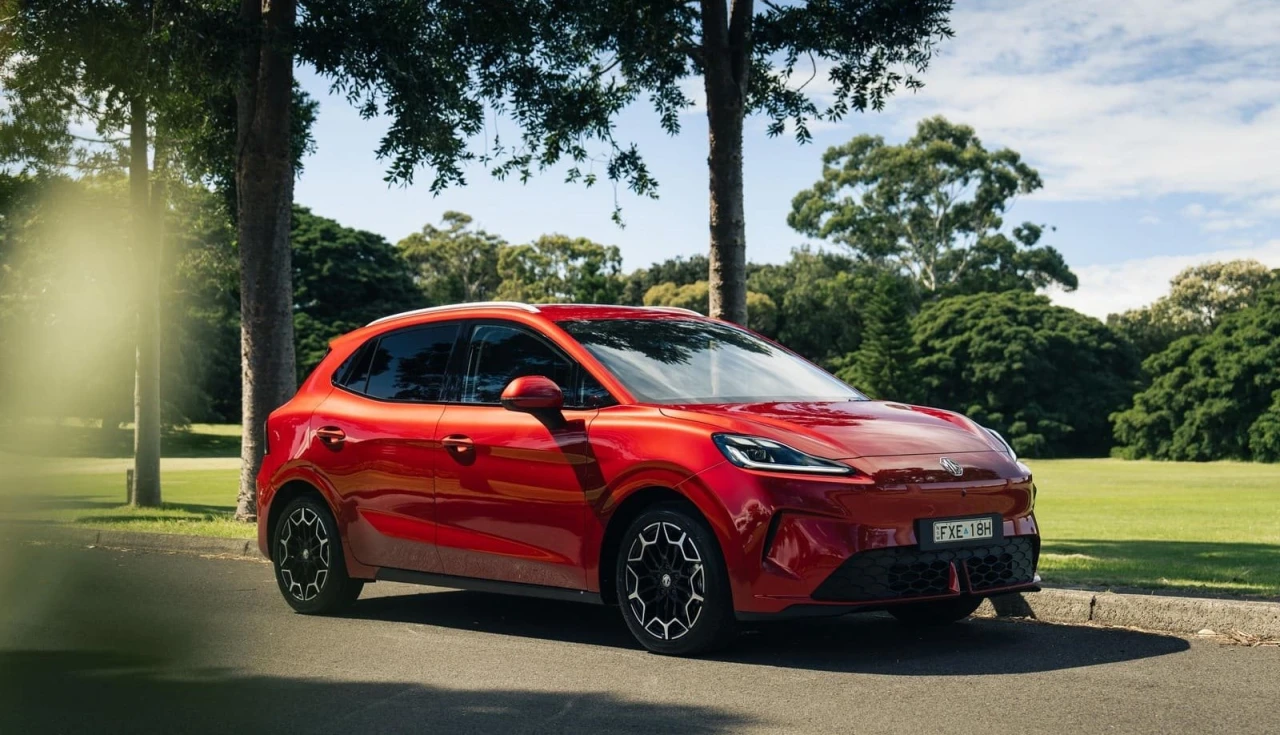
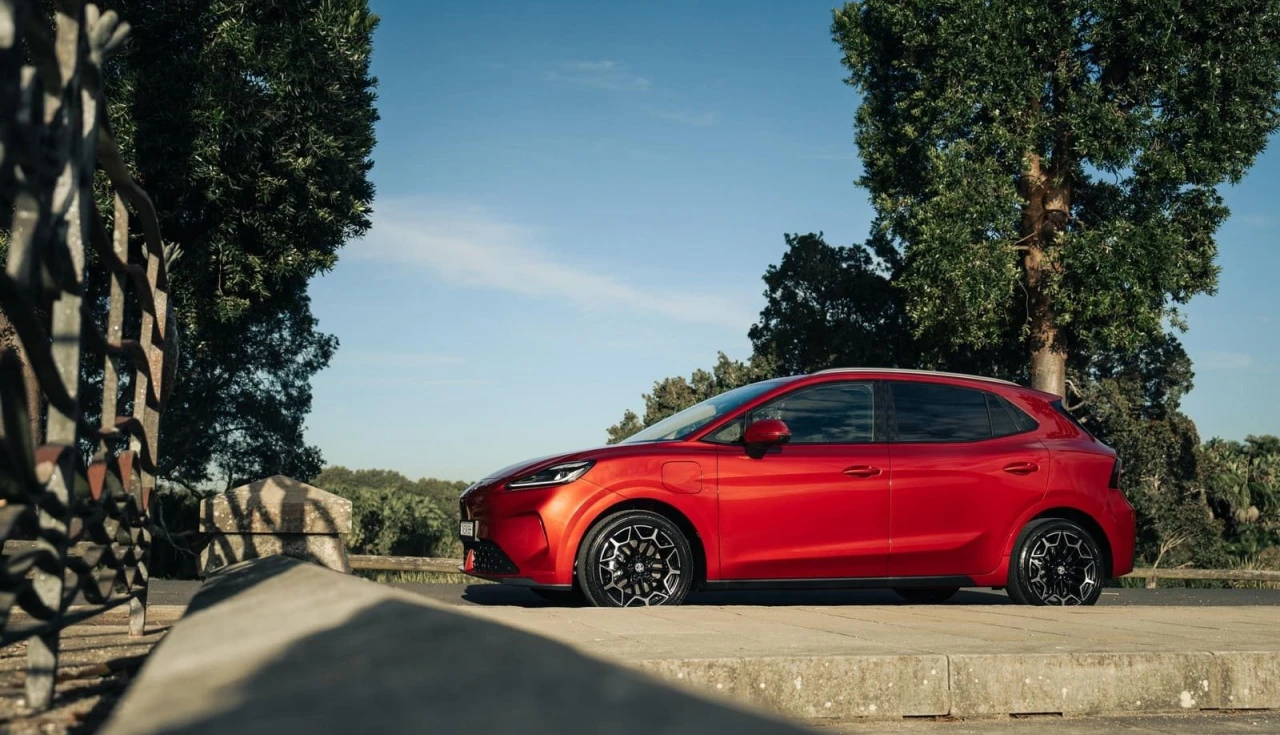
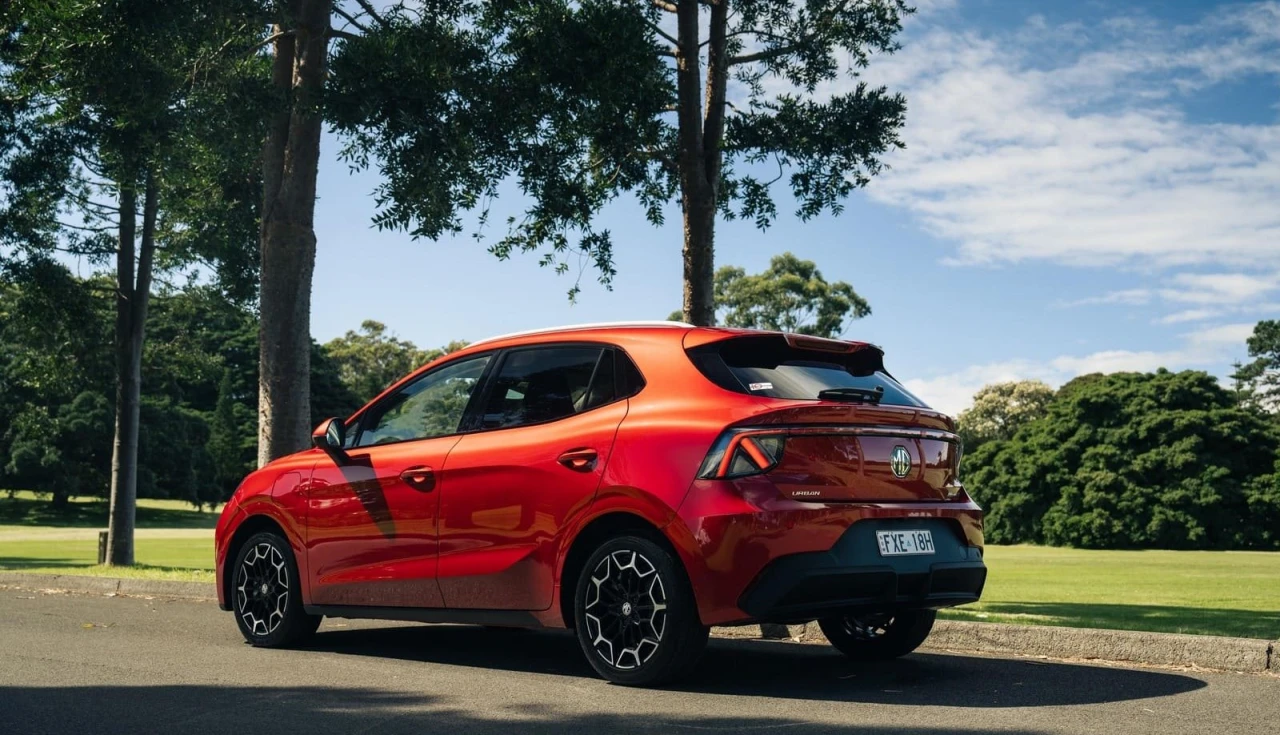
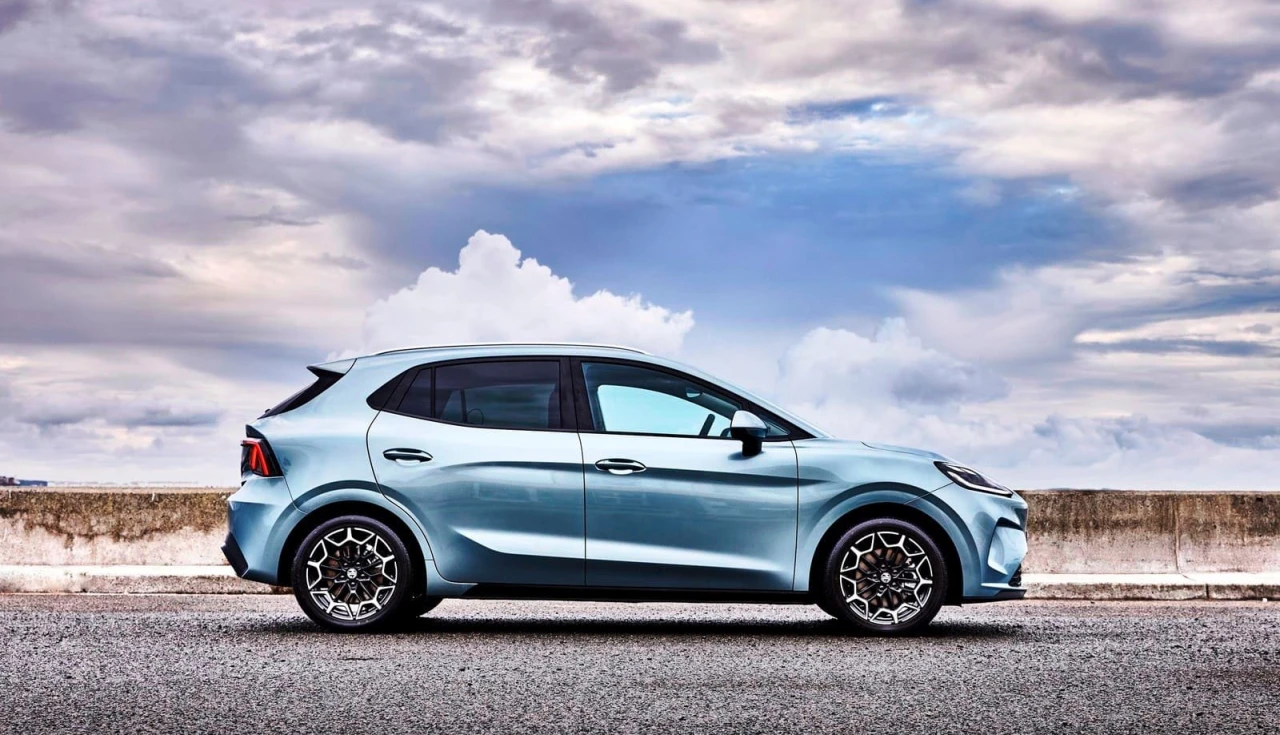
The MG4 Urban is noticeably larger than the standard MG4: 173 inches long, 72.5 inches wide, and 61 inches tall. On the street, it occupies the footprint of a mid-size European hatchback, not a subcompact entry-level car.
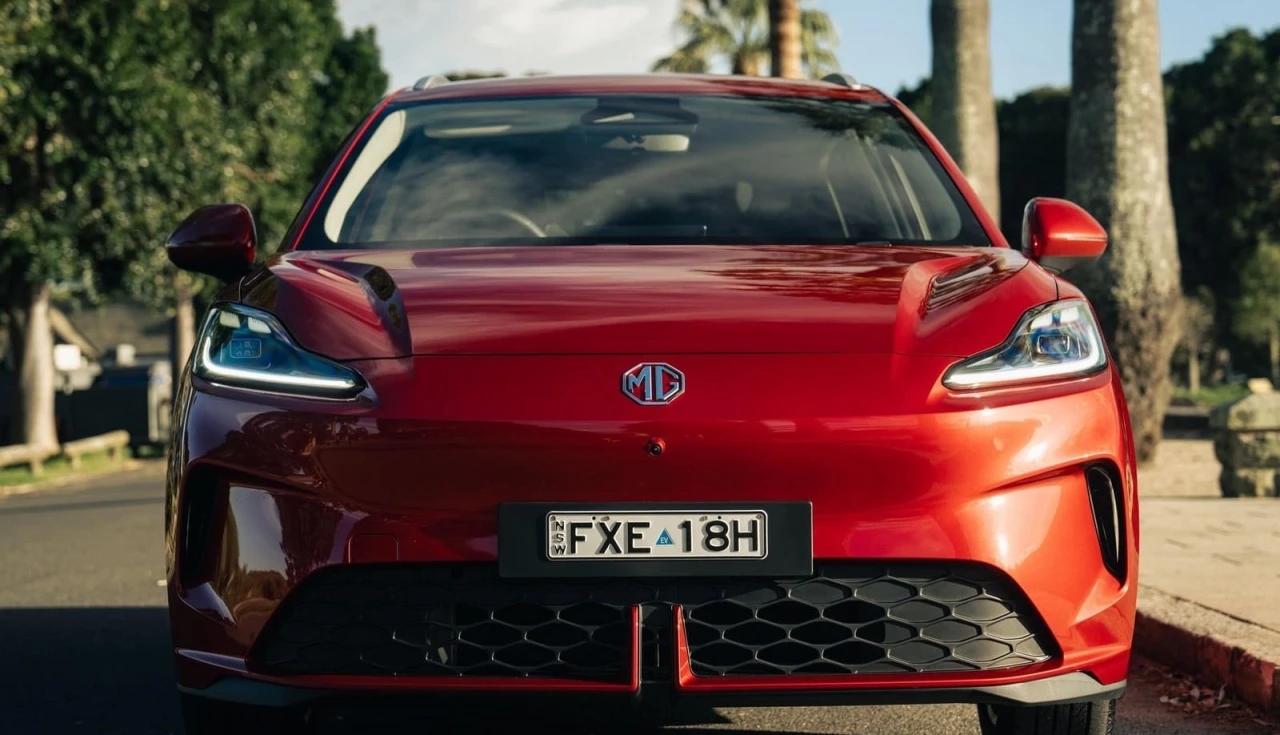
Up front, the full LED headlights with the “Starburst” DRL signature replace the sharp, aggressive look of the original. A horizontal light bar connects both sides — a design cue common across modern EVs. The closed-off front grille makes it unmistakably electric from a distance.
Along the side, the 17-inch alloy wheels with partial aero covers strike a balance between efficiency and appearance. The body lines are softer than the original, communicating confidence over sportiness. The stretched proportions make one thing obvious: the interior is the real story here.
At the rear, the original MG4’s eye-catching dual spoiler is gone. A single-piece aerodynamic wing handles downforce without the drama. The LED taillights carry subtle design cues from the MG Cyberster roadster, connecting this practical hatchback to the brand’s performance DNA — quietly, without overplaying it.
The Urban’s design doesn’t try to excite. It convinces through coherence: every line exists to justify the space underneath.
The Cabin MG Should Have Built From the Start
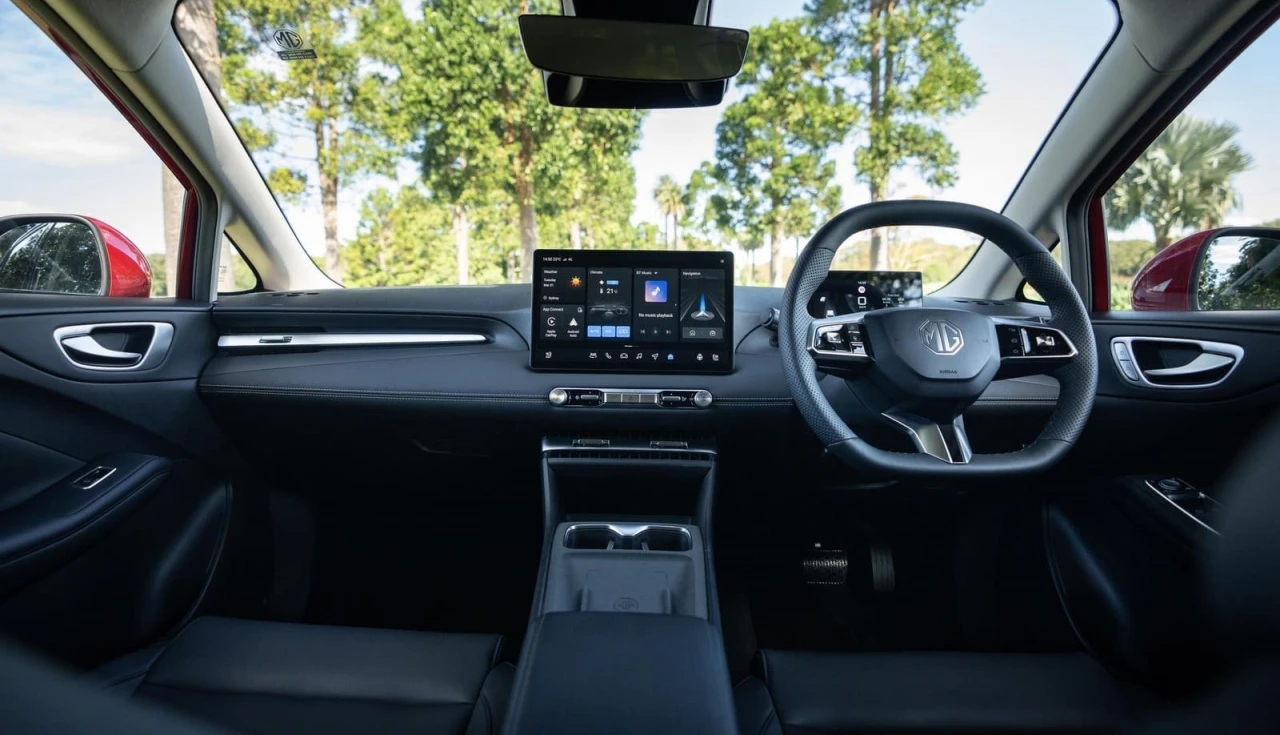
Anyone familiar with the original MG4’s interior will notice the change immediately. The controversial floating shelf that pushed the gear selector awkwardly toward the driver is completely gone. In its place: a clean, flat center console with a wireless charging pad shaped directly into the armrest.
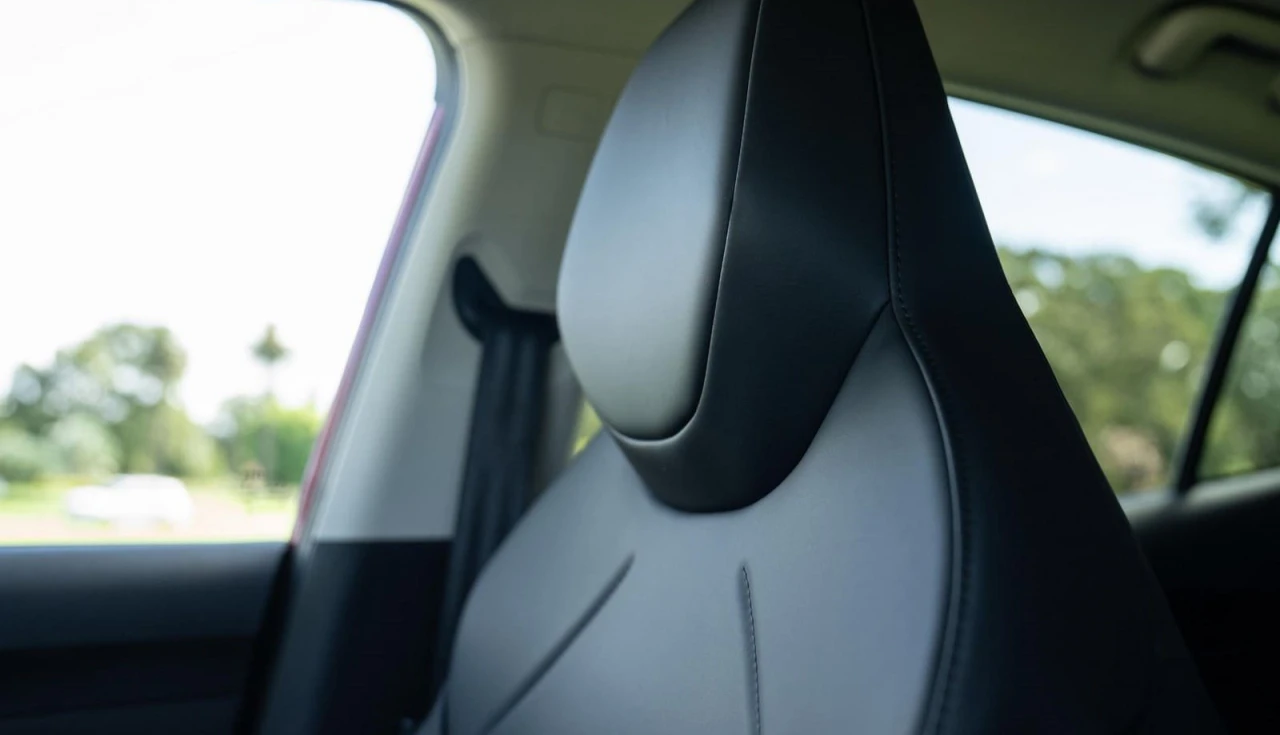
Material quality has improved noticeably. Seats are wrapped in high-density PU synthetic leather on upper trims, shaped for long-haul comfort rather than track-style lateral grip. The driver’s seat offers 6-way electric adjustment. Both front seats and the leather-wrapped steering wheel include heating as standard on most global configurations.
Hard plastics still appear on the upper door panels and portions of the dashboard. That’s expected at this price point. What stands out is the build quality: tight panel gaps, no squeaks, no rattles, and well-fitted pieces throughout.
Multi-color ambient lighting adds a premium feel at night without adding to the sticker price.
Big Screens, Real Buttons Back Again — and a Trunk That Changes the Game
The center touchscreen measures 12.8 inches and runs MG’s iSMART Connectivity system with noticeably reduced input lag. Both Apple CarPlay and Android Auto are wireless and included across trims. The digital instrument cluster ranges from 7 inches on base trims to 10.25 inches on higher configurations.
The cabin’s real strength is a decision that goes against the industry trend: physical rotary controls placed directly below the screen for volume and fan speed. In a world where everything moved to touchscreens, this is the right call for daily drivers.
The limitation is real too: the hard plastics on the door panels disrupt the premium feel that the screen setup and seating try to build. Drivers coming from a Honda Civic or Toyota Corolla will feel that contrast immediately.
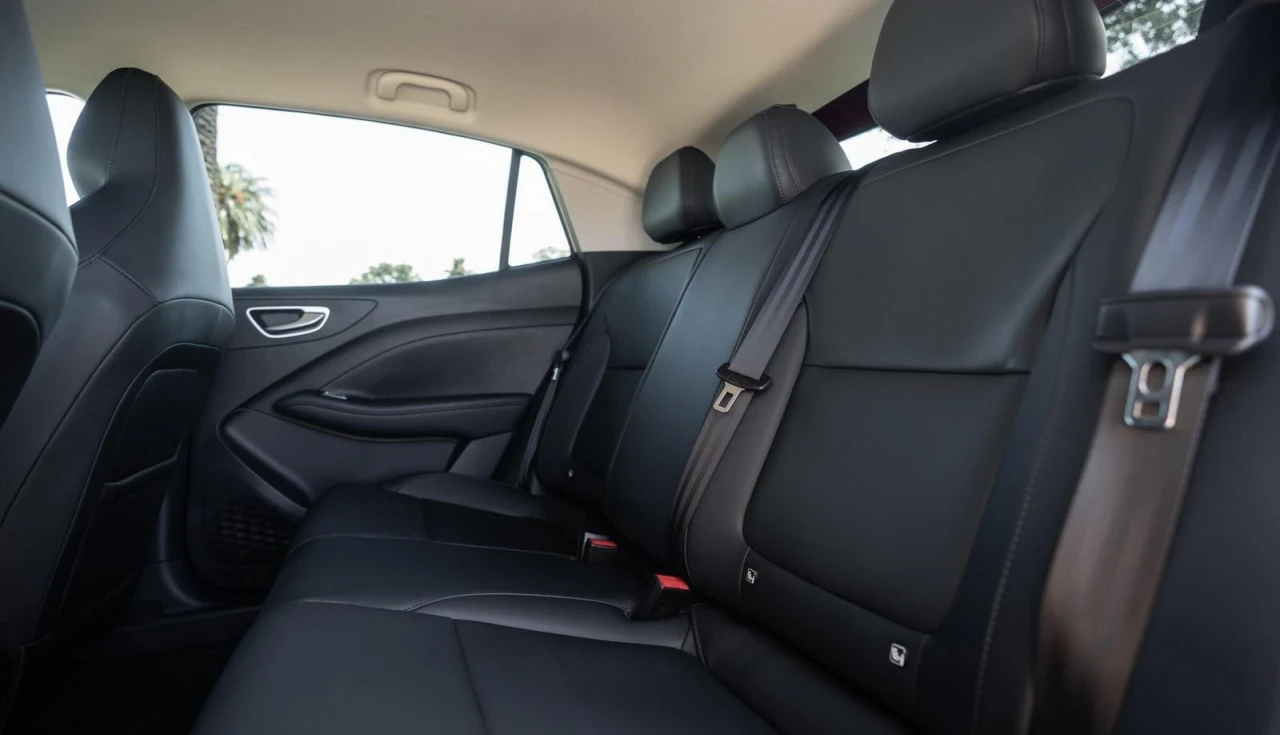
In the back seat, the 108-inch wheelbase creates genuine legroom for tall adults — knees won’t touch the front seatbacks. The floor is completely flat across the entire rear, making five-passenger comfort a realistic claim, not a marketing stretch. Cargo space starts at 17 cubic feet, expands to 20.4 cubic feet with the hidden under-floor compartment, and reaches 44.7 cubic feet with the rear seats folded flat.

163 Horsepower Built for Longevity, Not the Drag Strip
The MG4 Urban walks away from the rear-wheel-drive platform of the original and adopts the new E3 architecture, mounting a permanent magnet synchronous motor on the front axle (FWD). Power goes through a single-speed fixed-ratio reducer — no gear changes, no clutch wear, no gradual drivetrain degradation.
The Long Range version produces 163 horsepower and 184 lb-ft of torque. The Standard Range delivers 150 hp with identical torque. That torque is available from a dead stop — as with every electric motor — but MG deliberately tuned the throttle response to be progressive, protecting the front tires from wheelspin rather than chasing quick numbers.
The 0–60 mph sprint takes approximately 8.2 seconds on the Long Range and around 9.1 seconds on the Standard trim. That’s not a performance figure. It’s a daily-driving figure — smooth, safe, and confidence-inspiring in city traffic.
Top speed is electronically capped at 99 mph. That’s an intentional decision to protect the LFP battery chemistry during sustained highway use.
Official energy consumption comes in at 16.1 to 16.5 kWh per 100 km (roughly 3.9 miles per kWh). The heat pump system — included as standard — is a big reason for that efficiency. Instead of burning battery energy with resistive heating elements, it captures waste heat from the motor and inverter to condition the cabin. The result is significantly better real-world range in both cold winters and hot summers compared to competitors relying on older thermal systems.
AC charging accepts up to 11 kW (0–100% in roughly 6 hours on a Level 2 charger). DC fast charging peaks at 87 kW on the Long Range, covering 10–80% in approximately 30 minutes on a 150 kW+ station.
Quick Specs — 2026 MG4 EV Urban (Long Range)
| Specification | Detail |
|---|---|
| Motor | Permanent Magnet Synchronous (Front-Wheel Drive) |
| Output | 163 hp |
| Torque | 184 lb-ft |
| Transmission | Single-speed fixed reducer |
| Battery | 54 kWh (LFP chemistry) |
| Efficiency | ~3.9 miles/kWh |
| 0–60 mph | ~8.2 seconds |
| Top Speed | 99 mph (electronically limited) |
| AC Charging | Up to 11 kW |
| DC Fast Charging | Up to 87 kW |
| Cargo Volume | 17 cu ft / 20.4 cu ft (w/ underfloor) / 44.7 cu ft (seats folded) |
| Curb Weight | 3,351 lbs |
| Wheelbase | 108.3 inches |
Under $23,500: Where the MG4 Urban Fits in the American Market
In the UK, the MG4 Urban starts at £23,495, with manufacturer discounts regularly bringing transaction prices closer to £21,995. In Australia, the drive-away entry price landed at $31,990 AUD — a record low for a new electric vehicle in that market.
For the US market, official pricing has not been confirmed. Based on global positioning and competitive benchmarks, market analysts estimate the base model would need to land under $23,500 to directly challenge the BYD Dolphin and undercut mainstream options like the Nissan Leaf. That figure should be treated as a market estimate, not a confirmed MSRP.
Ownership costs are where this vehicle makes a compelling long-term argument. Scheduled maintenance intervals are set at every 15,000 miles or 12 months. Early service visits are priced at equivalent costs well under most ICE competitors — no oil changes, no timing belts, no transmission fluid cycles to worry about. The architecture is straightforward enough that independent shops can handle most rear-end repairs without dealership-only tooling.
The factory warranty covers 7 years (extendable to 10 years or 150,000 miles with authorized service). The battery carries a separate 8-year / 100,000-mile coverage.
Insurance should fall into a low-to-mid risk profile, helped by the comprehensive ADAS suite, the more predictable FWD handling dynamics, and the simple torsion beam rear suspension that keeps repair costs down after minor accidents.
Buying at launch makes the most financial sense for high-mileage users — rideshare drivers, commuters, and fleet operators — where the low running costs translate into measurable savings within the first year. Casual drivers with lower annual mileage may benefit from waiting for second-wave inventory and potential incentive programs.
The MG4 Urban fits best for budget-conscious families who need real cargo space, gig economy drivers prioritizing durability, and first-time EV buyers looking for a practical, low-risk entry into electric ownership.
Buyers Have Questions — Here Are Straight Answers About the MG4 Urban
What is the real-world range of the 2026 MG4 EV Urban? The Long Range version carries a 54 kWh LFP battery with efficiency rated at approximately 3.9 miles per kWh. Real-world range in mixed driving should land between 200 and 220 miles, with the heat pump helping maintain that figure in colder conditions.
How much does insurance cost for the MG4 Urban? No confirmed US figures are available yet. Based on the vehicle profile — FWD layout, full ADAS, simple rear suspension — expect insurance to sit in the low-to-mid range for the EV segment, likely competitive with similarly priced hatchbacks.
Is the MG4 EV Urban coming to the United States? MG Motor has not officially confirmed a US launch as of mid-2026. The model is currently available in the UK, Australia, and New Zealand, with a confirmed rollout in Brazil for June 2026. US availability remains unconfirmed.
Who are the biggest competitors of the MG4 Urban? The primary rivals are the BYD Dolphin, the GWM Ora 03, and in some markets, the Renault 5 E-Tech. Against all three, the MG4 Urban holds a clear advantage in cargo volume and standard equipment value.
Does the MG4 Urban Deliver Real Value?
For driving enthusiasts, the answer is straightforward: no. The torsion beam rear suspension and front-wheel-drive layout traded away the handling sharpness that made the original MG4 a standout. That trade was deliberate and permanent.
For everyone else — families who need actual cargo space, daily commuters watching their fuel costs, and rideshare drivers running high mileage — the case is strong. 577 liters of trunk space, low maintenance costs, a long warranty, and a full technology package at a price under $23,500 is a combination few competitors can match right now.
The MG4 Urban isn’t the most exciting car in the segment. It’s the most logical one.
Share this article
Related posts