What BYD Shark Owners Are Saying After Months on the Road
The BYD Shark is a midsize plug-in hybrid pickup with up to 436 hp, but it’s not officially sold in the U.S. Here’s what buyers should know.
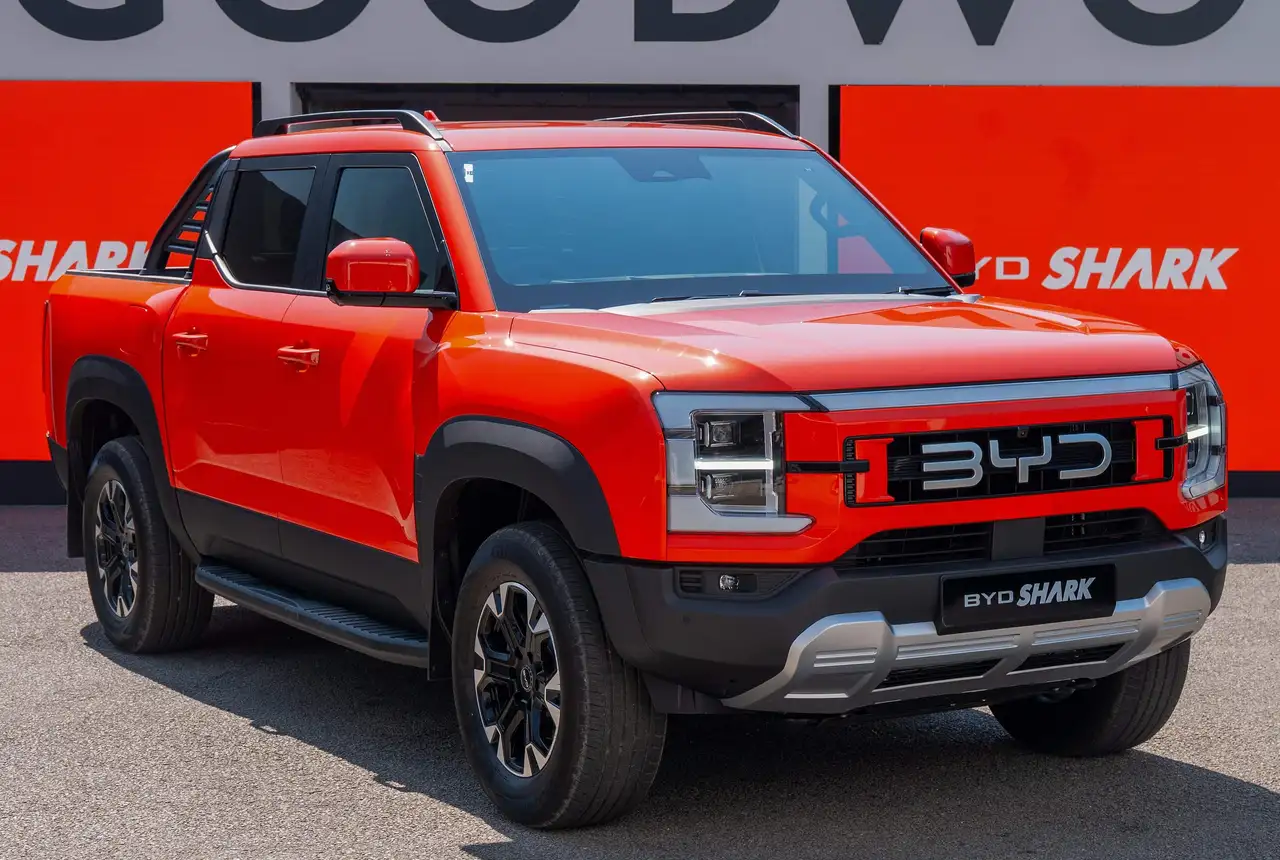
Is the BYD Shark Coming to the U.S.? Here’s What We Know
The BYD Shark is a midsize plug-in hybrid pickup already on sale in Brazil, Mexico, Argentina, Australia, New Zealand, and Europe, but it has no official U.S. release date, pricing, or dealer network. There’s no separate “2027 model year” version confirmed by BYD in any of the specifications reviewed here, so this piece is built around the most recent official figures published for each market where the truck is actually sold.
For American shoppers, the Shark is worth watching because it competes in the same space as the Toyota Tacoma, Ford Ranger, Chevrolet Colorado, and Nissan Frontier, but swaps the traditional gas or diesel engine for a plug-in hybrid drivetrain paired with all-wheel drive. It’s built for buyers who split their time between work duty, weekend towing, light off-roading, and daily commuting, with a strong emphasis on tech features and reduced fuel spending compared to a conventional truck.
Quick Specs
| Spec | Detail |
|---|---|
| Segment | Midsize plug-in hybrid pickup, crew cab |
| Engine (Brazil spec) | 1.5L turbo + hybrid system (longitudinal EHS) |
| Engine (Europe/UK spec) | 1.5L turbo (150 hp) + front e-motor (231 hp) + rear e-motor (204 hp) |
| Combined output | 431 hp (Brazil spec) / 430 hp – 436 PS (Europe/UK spec) |
| Combined torque | 481 lb-ft (Europe/UK spec); not officially disclosed for Brazil spec |
| Drivetrain | All-wheel drive (electric AWD) |
| 0-62 mph | 5.7 seconds (both Brazil and Europe/UK specs) |
| Top speed | 112 mph (Europe/UK spec); not officially disclosed for Brazil spec |
| Electric-only range | 35 miles / 57 km (Brazil spec) / 55 miles / 90 km WLTP (Europe/UK spec) |
| Total driving range | 419 miles / 675 km WLTP (Europe/UK spec); not officially disclosed for Brazil spec |
| Battery | 32.2 kWh, LFP Blade Battery chemistry (Europe/UK spec) |
| Fuel economy | 24.6 km/l city and 19.9 km/l highway (Brazil spec, no official U.S.-style MPG conversion published); 80.7 mpg weighted (WLTP combined) and 29.4 mpg with a depleted battery (Europe/UK spec) |
| Length / Width / Height | 214.8 in / 77.6 in / 75.8 in |
| Wheelbase | 128.3 in |
| Bed volume | 42.4 cu-ft |
| Curb weight | 5,974 lbs (international spec) |
| Airbags | 6 (Brazil spec) / 7 (Europe/UK spec) |
| Safety rating | 5 stars (ANCAP) |
| U.S. MSRP | Not sold in the U.S. |
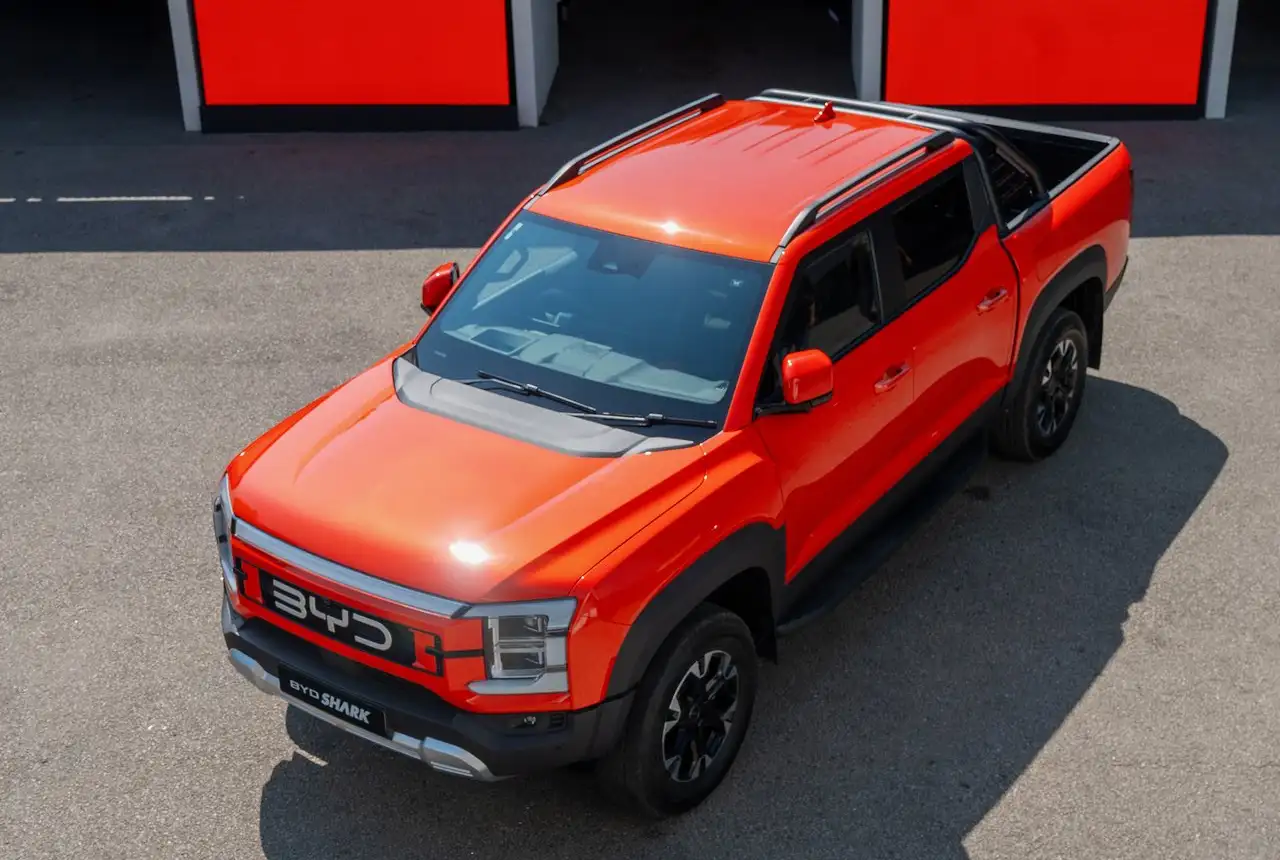
How Big Is the BYD Shark? Body and Dimensions
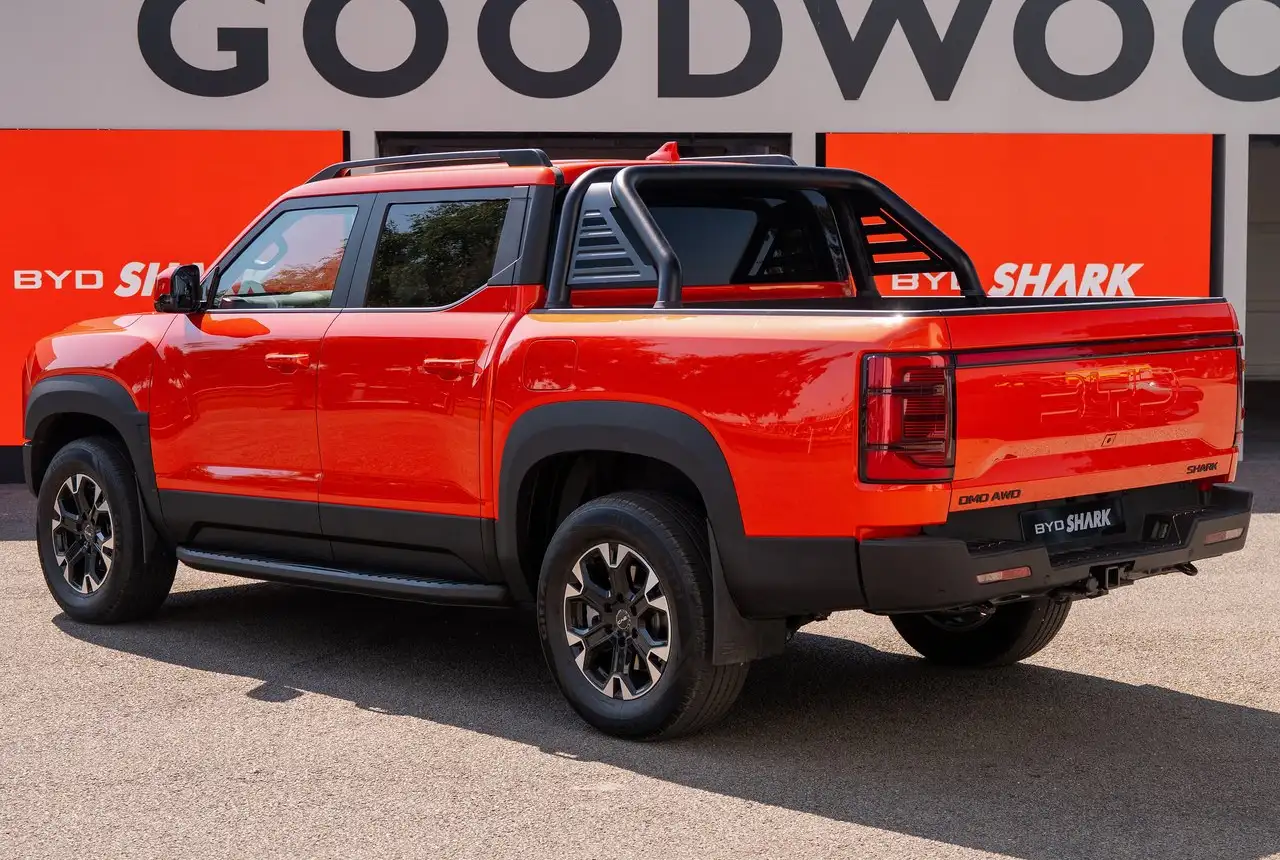
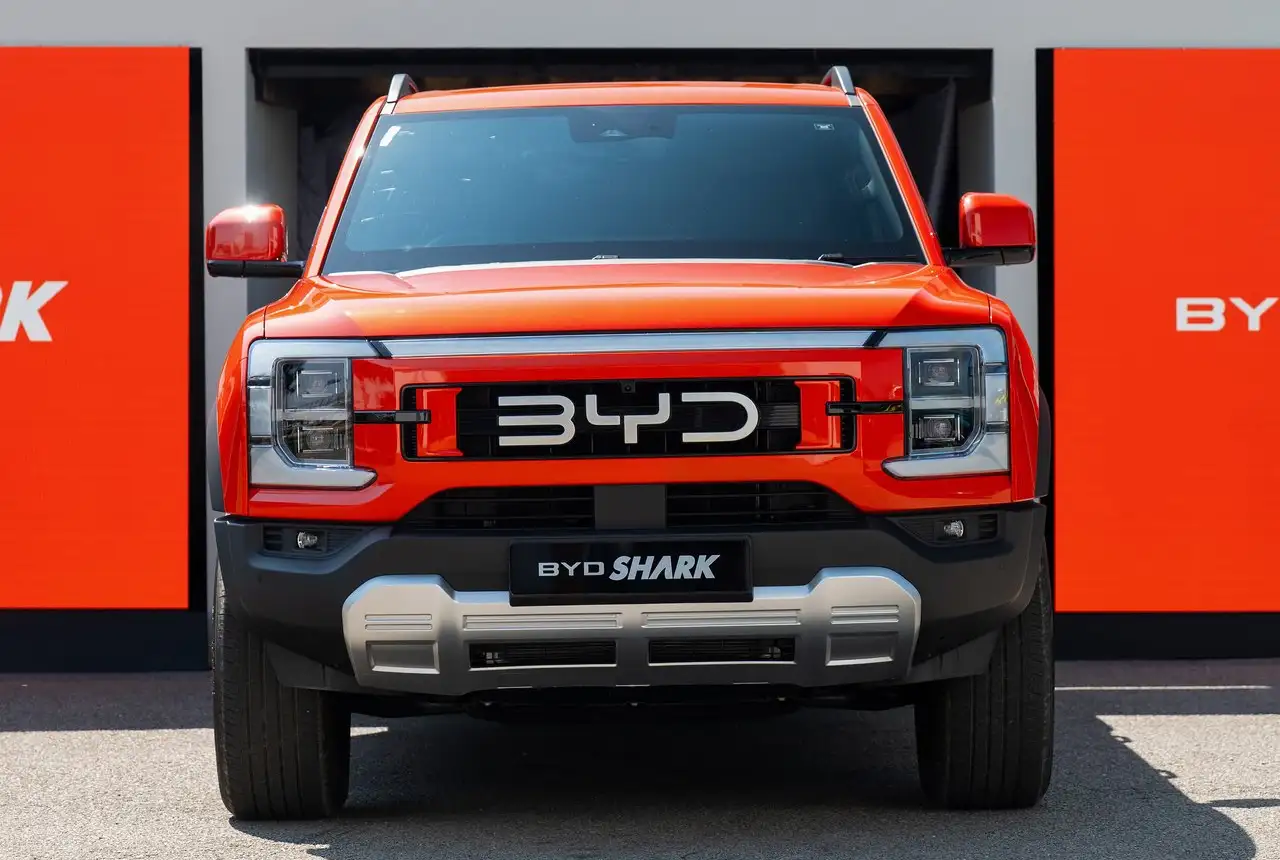
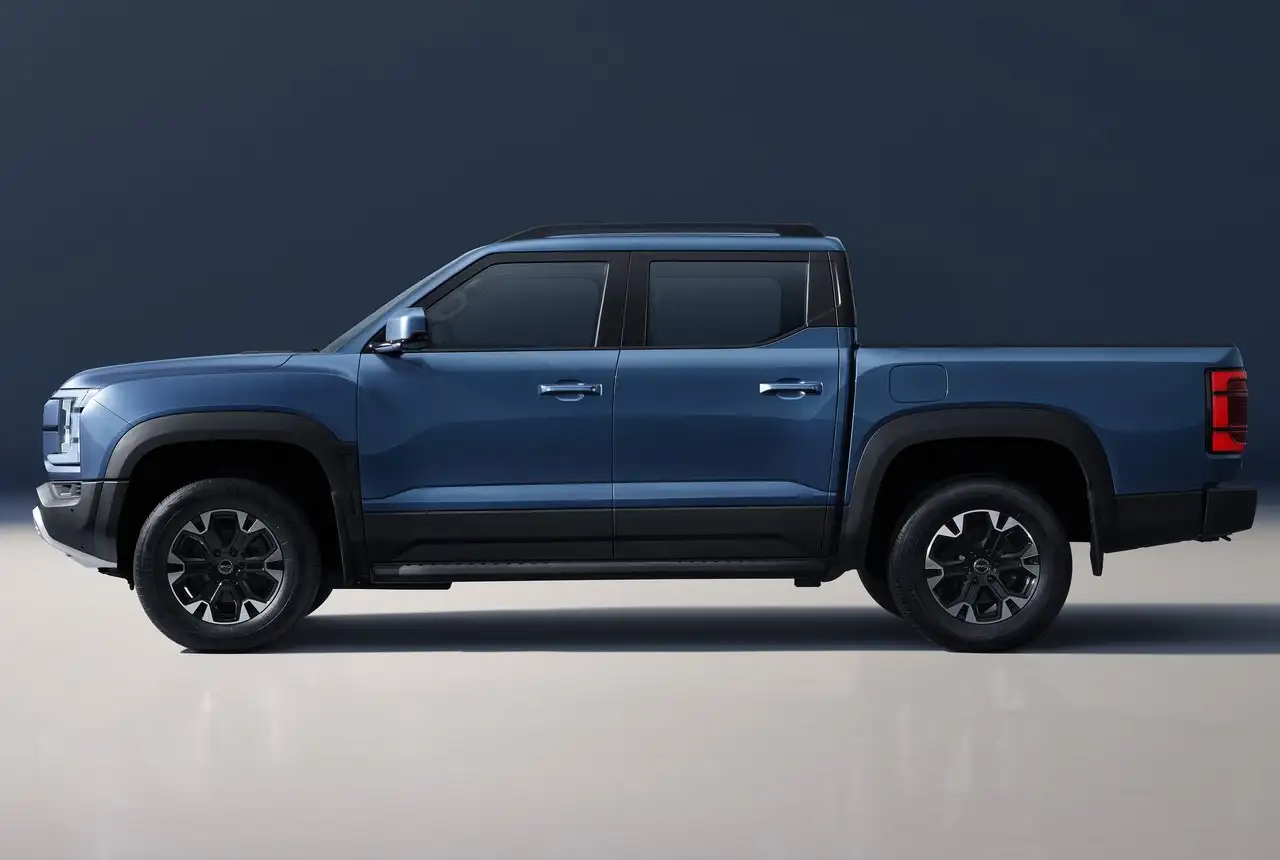
The BYD Shark measures 214.8 inches long, 77.6 inches wide, and 75.8 inches tall, riding on a 128.3-inch wheelbase. That puts it in the same general footprint as other midsize crew-cab trucks sold stateside, rather than in full-size territory.
The bed holds 42.4 cu-ft of cargo space, a figure pulled from the European and Australian/New Zealand technical materials rather than a U.S.-specific listing. None of the source material reviewed here breaks down specific styling changes to the front fascia, profile, or tailgate, or how the current Shark compares to an earlier generation, so this piece doesn’t speculate on design updates beyond the confirmed dimensions.
What Is the BYD Shark’s Interior Like?
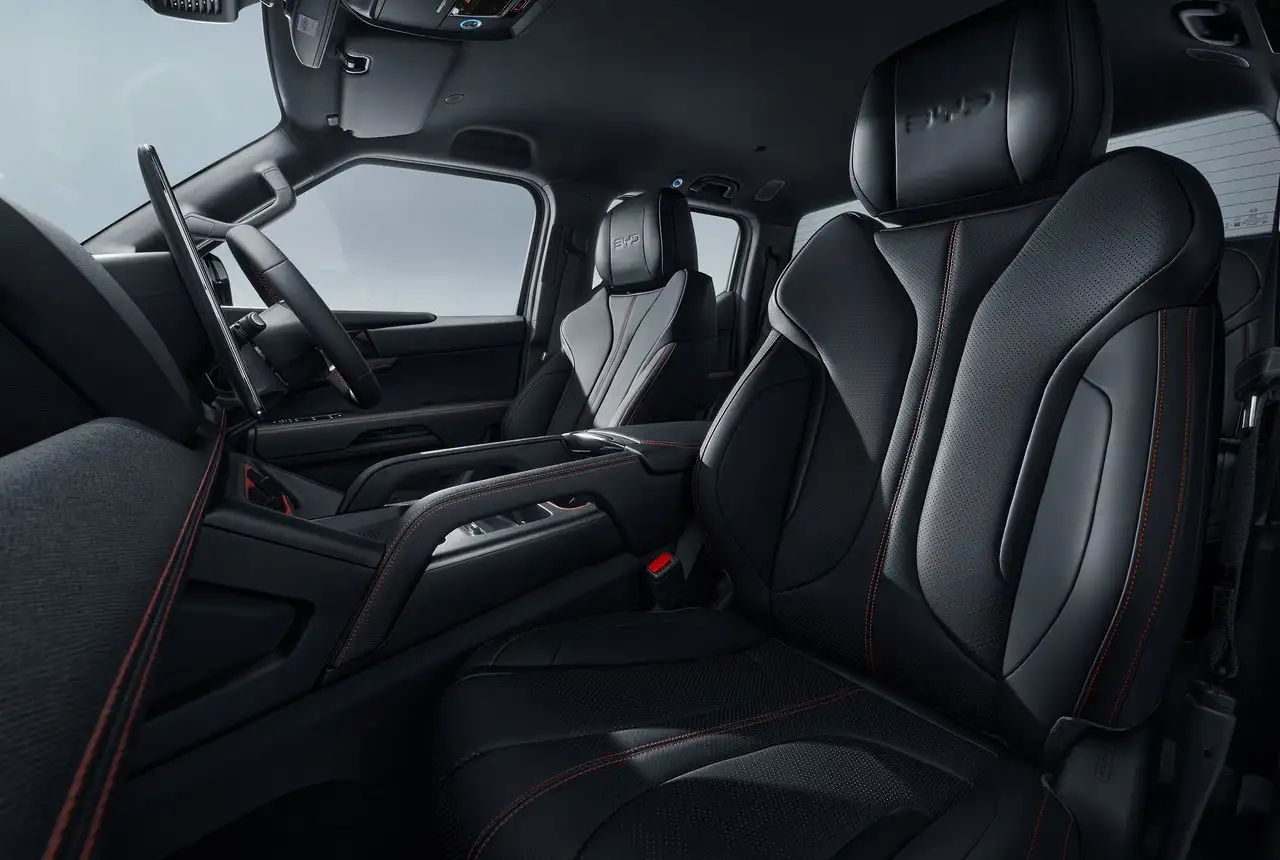
The BYD Shark seats five and comes standard with a 10.25-inch digital gauge cluster across the specs reviewed. Beyond that instrument display, the source material doesn’t break down trim-specific upholstery, seat materials, or driving-position adjustability in detail, aside from the comfort features tied to the European launch trim.
That single European launch trim bundles heated and ventilated front seats, along with a head-up display and a Dynaudio sound system — equipment that’s typically reserved for range-topping trims on rival trucks, not standard across the board.
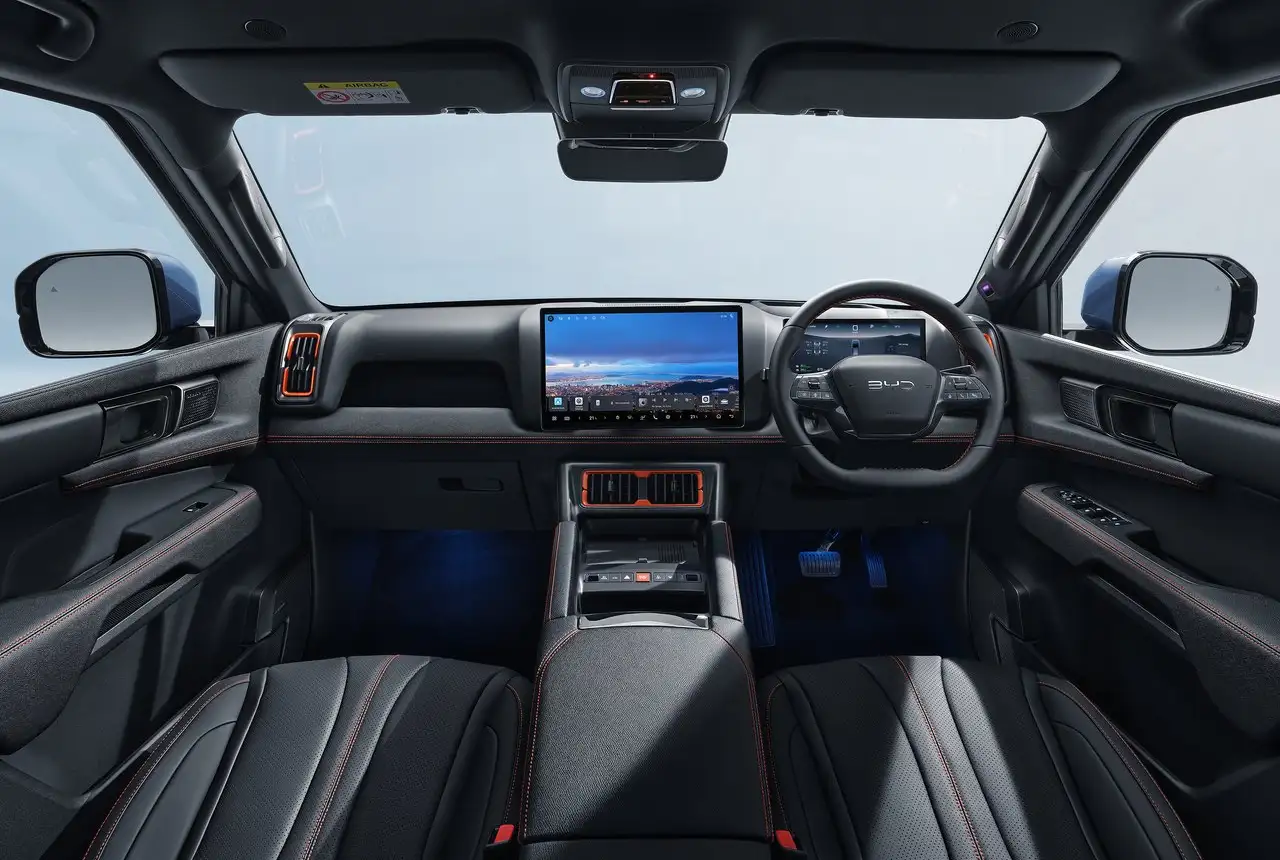
What Tech and Features Does the BYD Shark Cabin Have?
Infotainment screen size varies by market: 12.8 inches in the Brazil-spec truck and 15.6 inches in the European-spec version. Both come with Apple CarPlay, Android Auto, a 50-watt wireless phone charger, BYD’s companion app, and NFC key access in some markets.
On the tech side, the Shark also gets a 540-degree camera system on the Brazil-spec truck and multiple terrain modes — sand, mud, and snow on the Brazil-spec version, with gravel added on the European-spec truck. As for driver-assistance tech, the Brazilian-market page reviewed notes that the most advanced ADAS package is offered only on the GS trim, which points to at least one meaningful equipment split within the Brazilian lineup, even though the full trim walk wasn’t detailed in the source material.
Among owner accounts gathered in the research, the 360-degree camera draws criticism from some drivers for lacking sharpness, and there are recurring complaints about the T-Box telematics module dropping app connectivity, navigation, and over-the-air update functionality.
What Engine Does the BYD Shark Have?
The BYD Shark runs a plug-in hybrid setup built around a 1.5L turbocharged gas engine paired with electric motors and all-wheel drive. In the Brazil-spec truck, BYD quotes 431 hp combined output through a system it calls the longitudinal EHS. In the European-spec truck, BYD breaks the numbers down further: a 150-hp 1.5L turbo engine works alongside a 231-hp front e-motor and a 204-hp rear e-motor, adding up to 436 PS (430 hp) and 481 lb-ft of combined torque, under what BYD calls its Super Hybrid DMO architecture.
Both markets report a 5.7-second run from 0-62 mph — a strong number for a midsize pickup, a segment traditionally built around slower-revving diesel or gas engines. That quickness comes from the instant torque delivery of the electric motors layering on top of the combustion engine, and it should show up most clearly during passing maneuvers and highway merges rather than at a stoplight. Top speed is rated at 112 mph, but only for the European-spec truck.
Combined torque figures, transmission gear details, and top speed for the Brazil-spec truck haven’t been officially disclosed in the materials reviewed.
What Is the BYD Shark’s Fuel Economy and Electric Range?
Fuel economy depends heavily on which market’s spec sheet you’re reading, since BYD hasn’t published a direct U.S.-style MPG figure for every version. Here’s what’s confirmed:
- Brazil spec: 24.6 km/l city, 19.9 km/l highway, and 35 miles (57 km) of electric-only range — no official mpg conversion has been published for this spec.
- Europe/UK spec: 55 miles (90 km) of WLTP electric range, 419 miles (675 km) of total WLTP driving range, an 8.5-gallon (32.2 kWh) LFP battery, and a 15.9-gallon fuel tank.
- Europe/UK spec, weighted WLTP: 80.7 mpg combined.
- Europe/UK spec, battery depleted: 29.4 mpg.
In practice, that split matters for anyone cross-shopping the Shark against a conventional midsize truck. Drivers who plug in regularly and stick to short trips will likely see very low fuel bills, since the electric motors can handle most daily driving on their own. Once the battery runs low, though, fuel economy drops closer to what you’d expect from a turbocharged gas truck, since the combustion engine ends up doing more of the work — a pattern that’s typical of plug-in hybrids generally, not unique to this truck. Real-world fuel economy reports from owner forums and video reviews vary too widely to treat as a reliable data point, so they’re left out of the numbers above.
How Much Does the BYD Shark Cost, and Is It Sold in the U.S.?
The BYD Shark isn’t officially sold in the United States, and BYD hasn’t published a U.S. MSRP, release timeline, or dealer plan for the truck. Buyers interested in a plug-in hybrid midsize pickup currently need to look at what’s actually available stateside, including trucks like the Ford Ranger, Toyota Tacoma, Nissan Frontier, and Chevrolet Colorado, none of which currently offer a plug-in hybrid powertrain matching the Shark’s electric-only range.
Where the Shark is sold, pricing varies significantly by country. In New Zealand, a public price list from August 2026 lists the truck between NZ$70,990 and NZ$78,990 depending on configuration — a figure that shouldn’t be read as a direct currency conversion for what a U.S. price might look like, since taxes, trim availability, and market positioning differ from country to country. In Brazil, the only clearly identified trim is the GS, notable for including the most advanced ADAS package offered on the truck; the full Brazilian lineup and equipment differences between trims weren’t detailed in the source material. In Europe, the launch trim is a single, well-equipped configuration rather than a multi-trim lineup.
Insurance premiums, scheduled maintenance costs, warranty terms, and resale value for the Shark haven’t been officially disclosed anywhere in the research reviewed. One relevant data point from Australian owner accounts: the biggest indirect cost reported by some owners isn’t fuel spending, but downtime and difficulty sourcing parts or service after a repair — a factor that matters for total cost of ownership even before fuel savings enter the picture. Buyers who prioritize low running costs from frequent charging and strong daily tech may find the concept appealing once and if it reaches a market like the U.S.; buyers who need heavy-duty, continuous use with easy access to parts and service should treat those owner reports as a caution flag.
BYD Shark FAQ
Is the BYD Shark fully electric?
No. The BYD Shark is a plug-in hybrid, combining a 1.5L turbo gas engine with electric motors, and it has a limited electric-only range of 35 miles (Brazil spec) or 55 miles WLTP (Europe/UK spec).
What’s the difference between the Brazil-spec and Europe-spec BYD Shark?
Output ranges from 431 hp (Brazil spec) to 430-436 PS (Europe/UK spec), and the two versions also differ in electric range, airbag count (6 vs. 7), and infotainment screen size (12.8 vs. 15.6 inches).
Is the BYD Shark safe?
In ANCAP testing, the Shark 6 earned a 5-star rating, with scores of 85% for adult occupant protection, 87% for child occupant protection, 74% for vulnerable road user protection, and 86% for safety assist systems.
Has the BYD Shark been recalled?
No official recall has been published for the BYD Shark in the materials reviewed here. Some owners have reported isolated mechanical or software issues, but that doesn’t amount to a formal recall.
The Bottom Line on the BYD Shark
The BYD Shark stands out for packing a genuinely strong plug-in hybrid powertrain into a midsize pickup body, with all-wheel drive and acceleration that beats most trucks in its class. Its biggest weak spot is consistency — specs vary widely by market, and owner reports point to recurring telematics glitches and spotty after-sales support. It’s a compelling pick for someone who values tech and low running costs from frequent charging; it’s a riskier one for anyone who needs constant heavy-duty use without dependable local service. For now, it’s a truck to watch rather than one to shop, at least in the U.S. A hybrid pickup built to prove itself on tech first and durability second.
Would you consider a plug-in hybrid pickup over a traditional gas or diesel truck if it eventually reached U.S. dealerships?

Por: Danniel Bittencourt
24/08/2026
Related posts