Welded Doors and Formula 1 Aero: Inside the Extreme SGT Automobili 55-SGT
A legendary 1993 German touring car champion returns with a modern twist. The SGT Automobili Alfa Romeo 155 tribute conceals a 740-HP Giulia Quadrifoglio powertrain under its custom composite skin.

SGT Automobili Alfa Romeo 155 Tribute: 740-HP Giulia QV in Disguise
Back in the early 1990s, German automakers dominated the European touring car circuit. Then, an aggressively styled, boxy Italian sedan showed up and completely rewrote the rulebook.
The 1993 Alfa Romeo 155 V6 TI, driven by Nicola Larini, stormed the German Touring Car Championship (DTM) and took home the crown. It became an instant motorsport icon.
Now, boutique Italian builder SGT Automobili is bringing that boxy magic back to modern pavement.
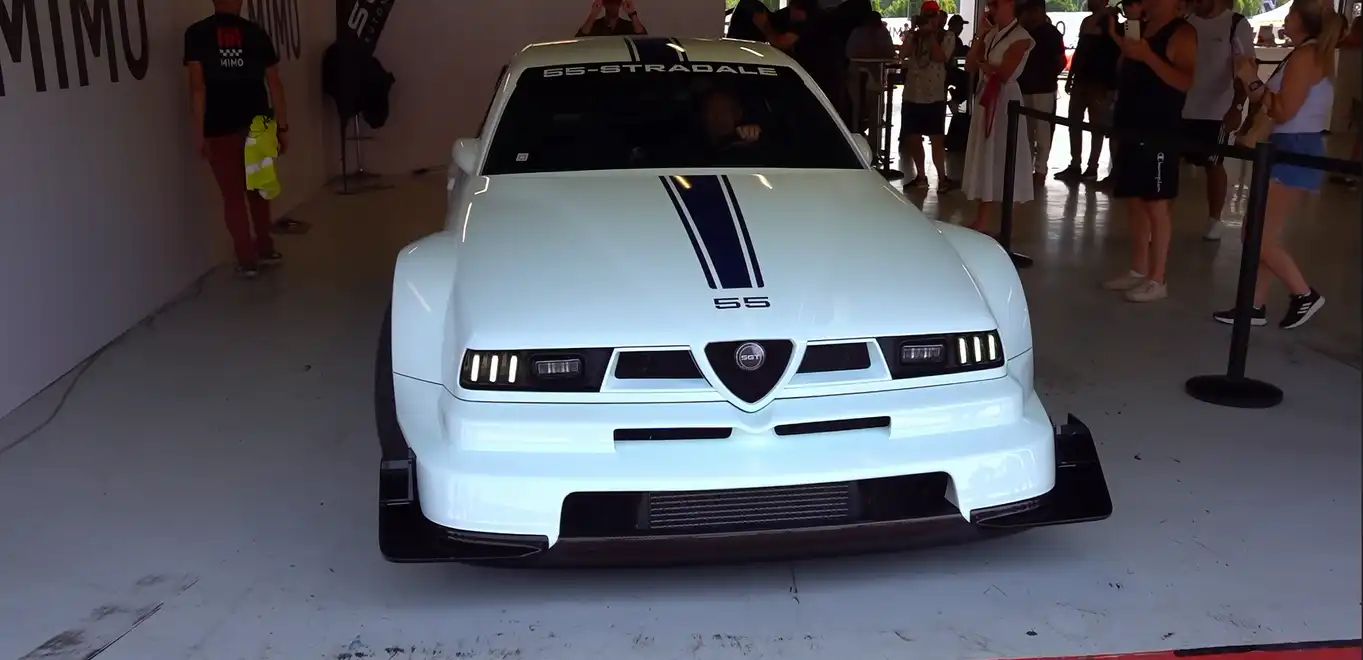
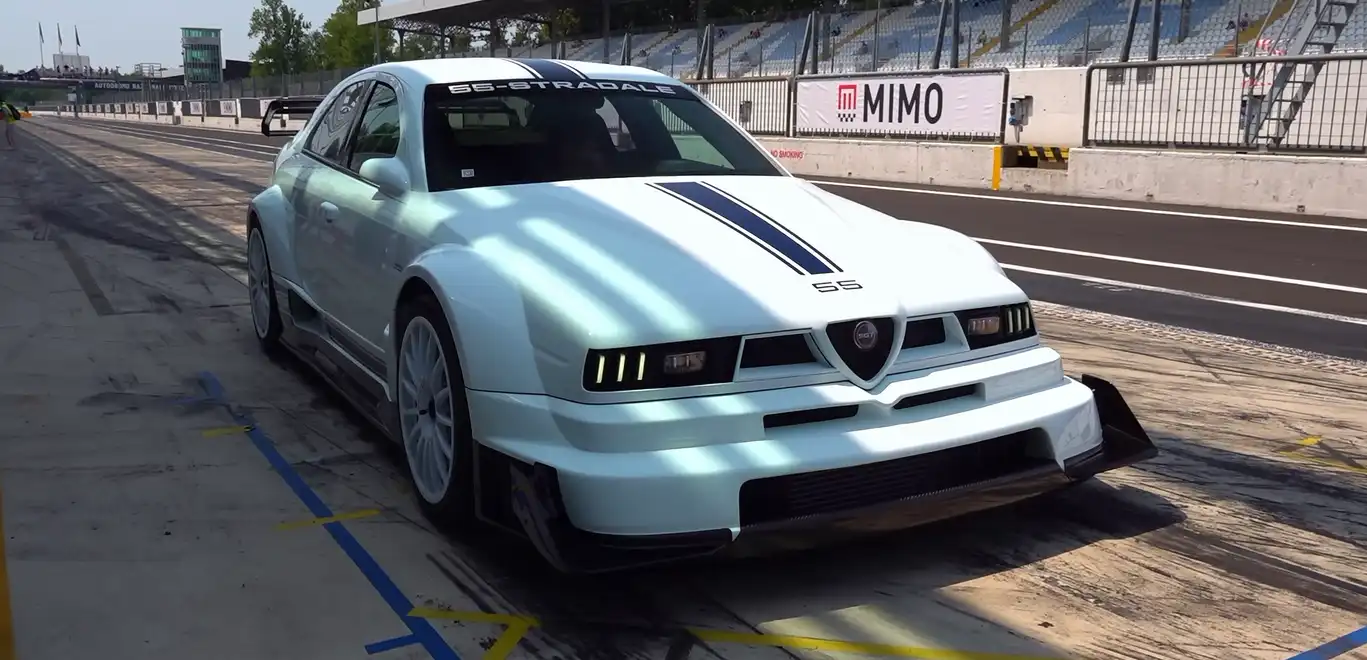
The company calls its new creation the 55-SGT. It is a stunning homage to the 1990s racing hero that refuses to rely on outdated mechanicals.
Instead of taking a 30-year-old chassis and updating the suspension, SGT flipped the traditional restomod formula entirely.
The engineers started with a brand-new Alfa Romeo Giulia Quadrifoglio and re-skinned it to capture the raw aggression of the DTM champion.
Reimagining an Icon Without Saying Its Name
Building a modern tribute to one of Europe’s most famous race cars requires a delicate balance of respect and engineering ambition.
Interestingly, you will not find the name “Alfa Romeo” mentioned anywhere in official SGT Automobili press materials due to intellectual property rights.
The company describes the machine simply as a tribute to an Italian DTM legend, but one glance at the squared-off fenders tells the real story.
SGT set out to answer a simple question: What would the legendary 155 touring car look and perform like if it were built from the ground up today?
Pure Giulia Quadrifoglio Power Pushed to 740 Horsepower
Underneath the retro-inspired skin sits the heart of a modern super sedan. SGT utilized the donor Giulia’s Ferrari-derived 2.9-liter twin-turbocharged V6 engine.
To satisfy both canyon carvers and dedicated track-day drivers, the company developed two distinct mechanical tunes for the powertrain.
The Road-Legal Stradale Trim
The Stradale trim is engineered for the street, offering a balance between everyday usability and high-revving Italian performance.
Buyers can stick with the stock 513-horsepower output of the donor car or opt for a tuned setup that delivers an impressive 612 horsepower.
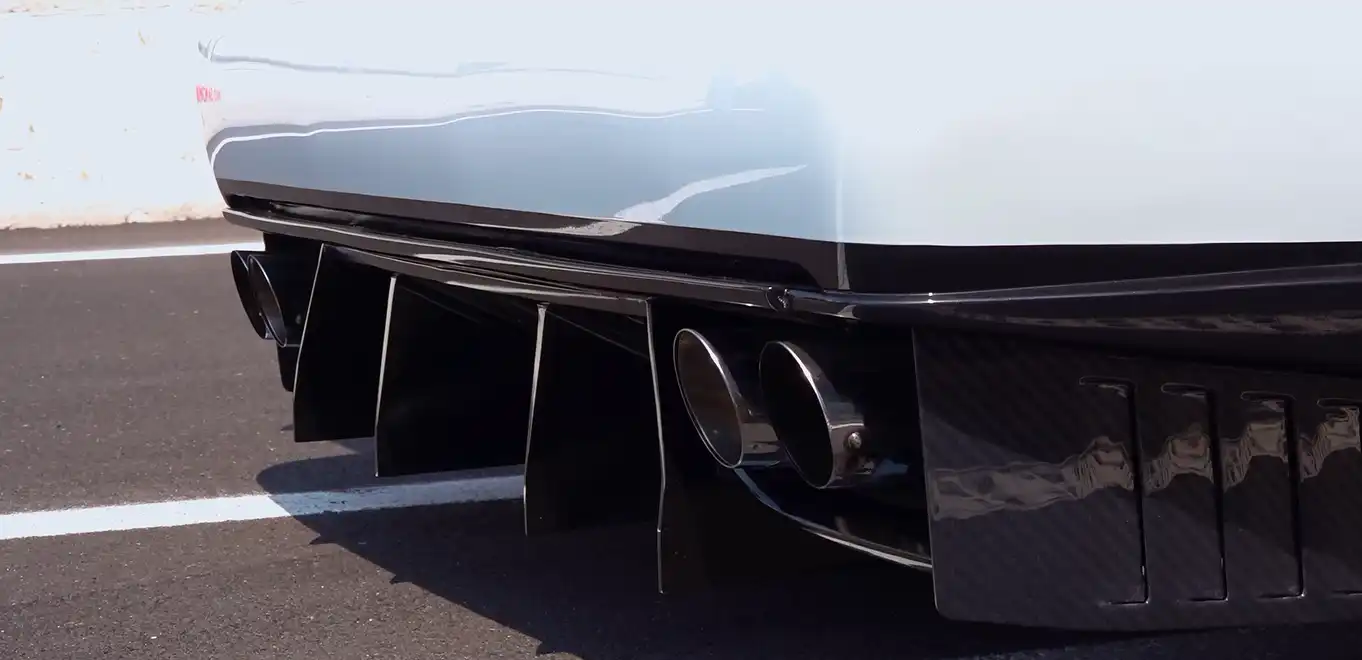
It also features a custom active-valve exhaust system. Drivers can keep the exhaust quiet for neighborhood driving or open the valves for a full-throat V6 wail.
The Track-Ready Trofeo Trim
For those who want pure circuit performance, the hardcore Trofeo trim turns the intensity up to eleven.
In this configuration, the twin-turbo V6 is massaged to generate a massive 740 horsepower and 590 lb-ft of torque.
The factory eight-speed ZF automatic transmission receives substantial beefing up to handle the extra torque without flinching under heavy track use.
Custom AWD Setup With Drift Mode and Vectoring
While the standard production Giulia Quadrifoglio sends power strictly to the rear wheels, the SGT tribute adopts a custom all-wheel-drive system.
This engineering choice is a direct nod to the original 1993 race car, which used AWD to dominate wet German circuits.
The AWD setup is fully programmable, allowing the driver to adjust front-to-rear torque distribution on the fly depending on grip levels.
If you want to burn some rubber, an electronic selector engages a dedicated drift mode that sends 100 percent of the engine’s power directly to the rear axle.
To keep all that power manageable, SGT reworked the chassis structure to deliver 25 percent greater torsional rigidity than the stock Giulia.
The suspension features adjustable electromagnetic dampers, letting drivers dial in the exact stiffness needed for street comfort or track attack.
Carbotanium Bodywork and Formula 1-Style Aero
The exterior visual transformation is nothing short of extreme. Virtually every factory body panel is discarded in favor of lightweight composite replacements.
SGT utilizes a proprietary blend of carbon fiber, Kevlar, and carbotanium—an exotic carbon-titanium composite frequently used by hypercar builders like Pagani.
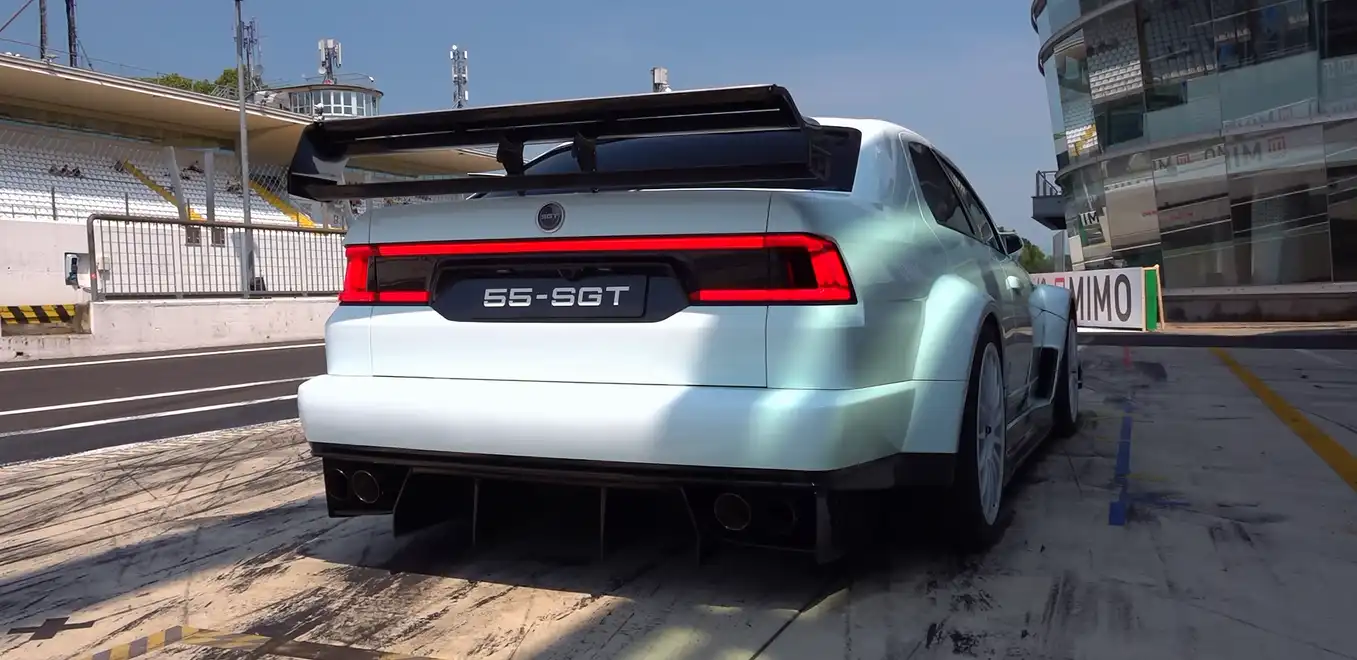
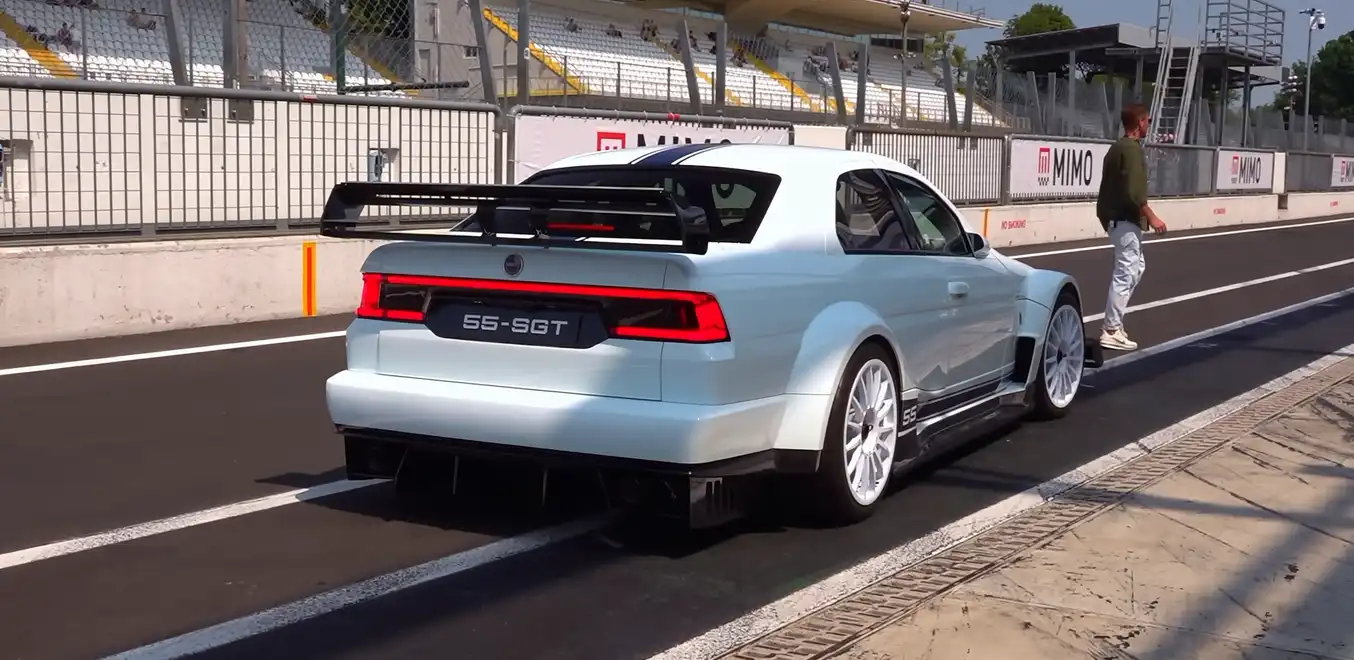
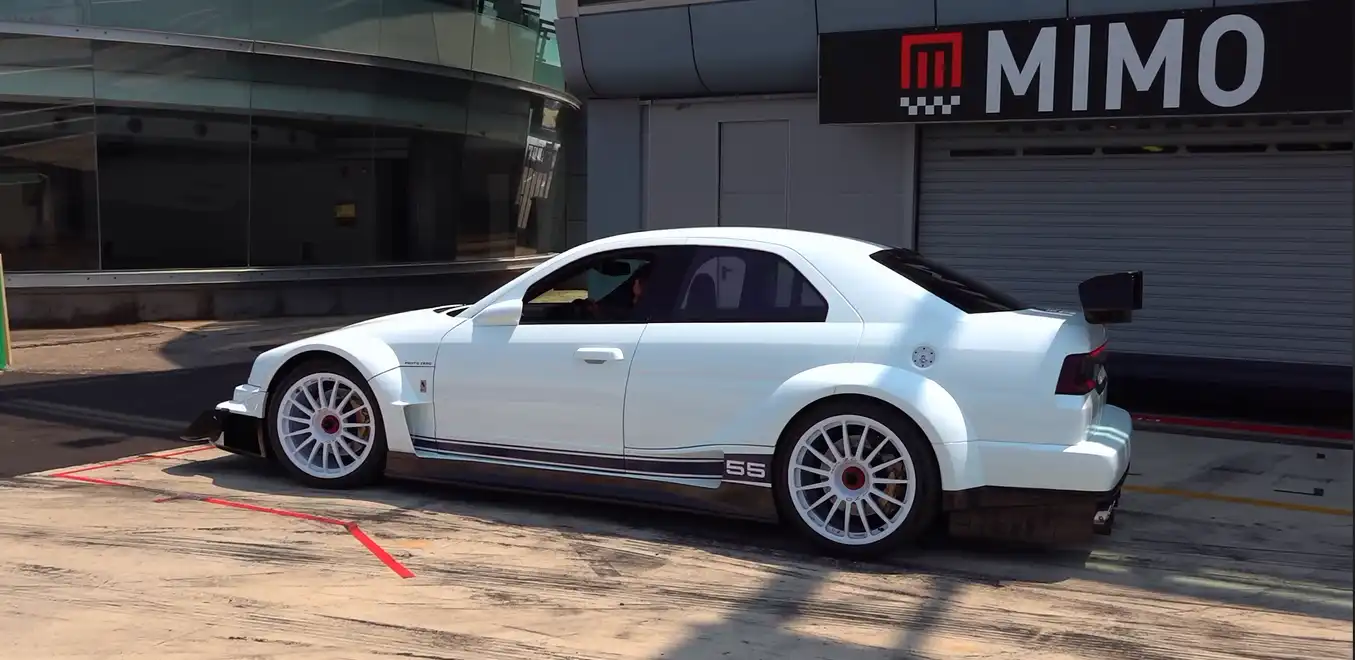
To improve chassis rigidity and mimic the stance of the original race car, the rear doors are welded shut, effectively converting the sedan into a coupe.
The massive box flares and deep rear diffuser are not just for show. They work alongside an active aerodynamic package featuring an F1-inspired DRS system.
At 143 mph, the aero elements generate a whopping 1,014 pounds of downforce to keep the tires glued to the tarmac.
In street-oriented Stradale trim, the curb weight sits at roughly 3,505 pounds. The track-only Trofeo shaves off an extra 220 pounds thanks to carbon-fiber suspension wishbones.
A Stripped-Out Cockpit Built for Serious Drivers
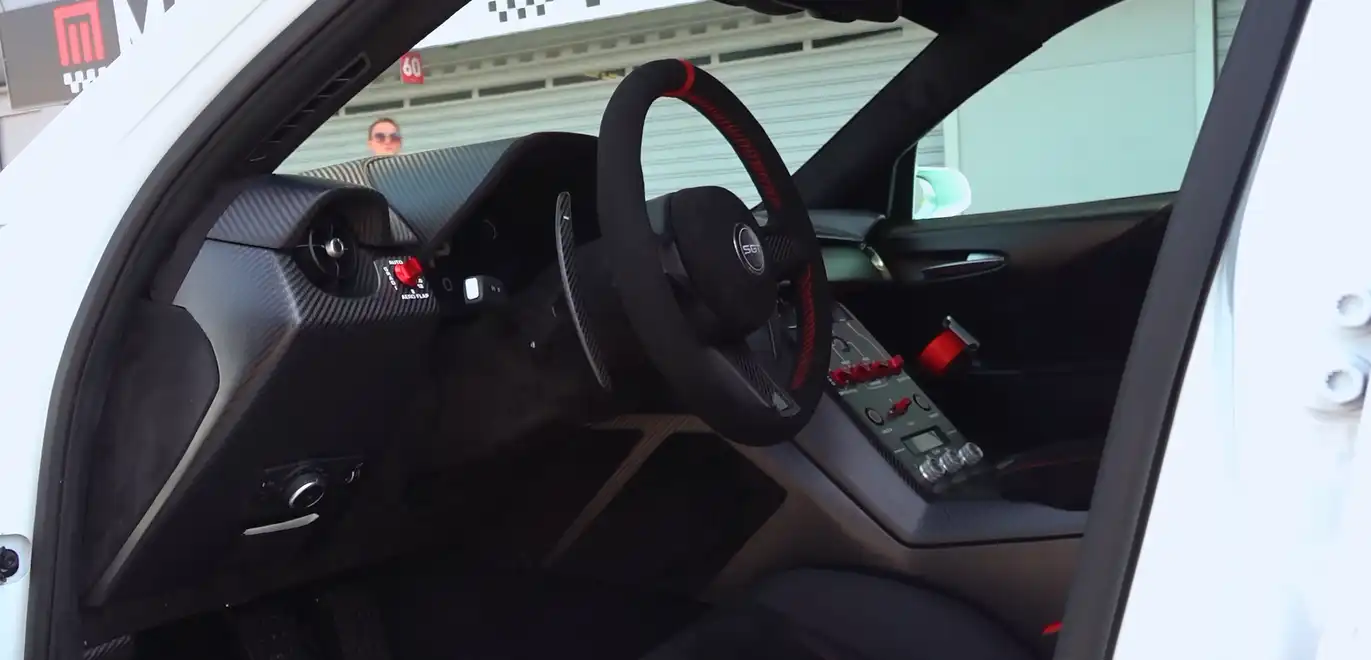
Step inside, and it becomes obvious that luxury took a backseat to functional ergonomics and extreme weight reduction.
The rear seats are completely gone, replaced by a structural roll bar and a race-spec fire extinguisher.
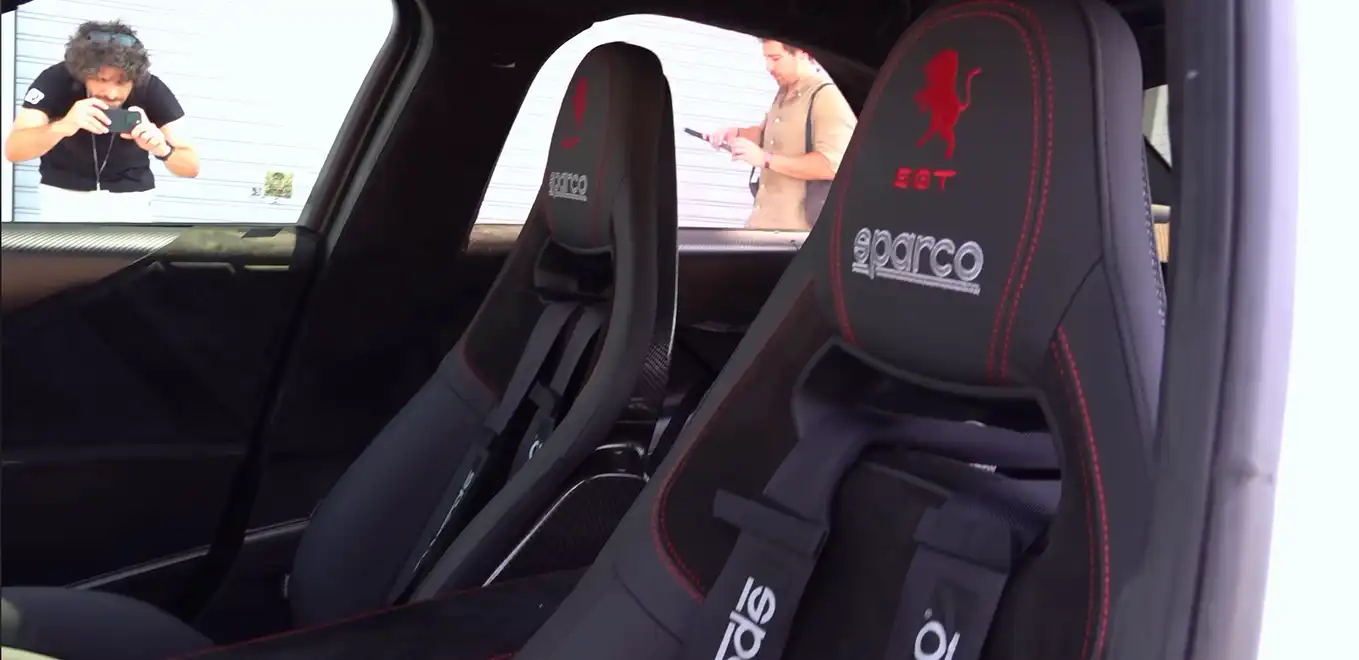
Up front, deep carbon-fiber bucket seats are mounted further back than in the stock Giulia to optimize driver positioning and weight distribution.
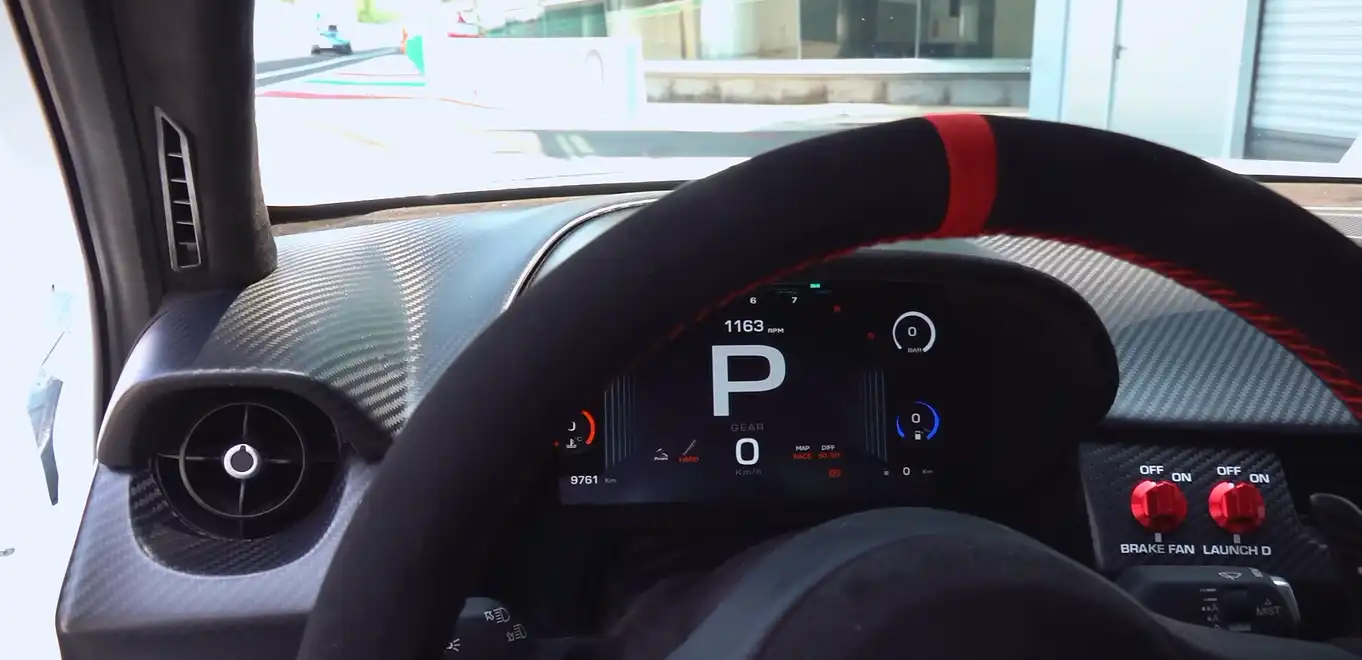
The center console features analog, machined switchgear that feels ripped straight out of a 1990s pit lane.
Drivers use these physical toggles to adjust differential behavior, suspension damping, and aggressive engine mapping on the move.
Finishing off the exterior look is a set of 20-inch forged center-lock wheels designed specifically for this build by Italian wheel specialist OZ Racing.
Extreme Exclusivity at a Half-Million Dollar Price Tag
Because of the labor-intensive composite work and custom engineering, SGT Automobili will keep production numbers strictly limited.
The company plans to build just 55 examples of the Stradale and 55 of the Trofeo, starting with an ultra-exclusive 10-car Opening Edition.
Unsurprisingly, exclusivity of this caliber comes with a hefty bill. The conversion process alone costs roughly $570,000—and that does not include the price of the donor Giulia Quadrifoglio.
Despite the steep price of admission, four collectors have already secured their build slots before the car even made its public debut.
Conclusion The SGT Automobili 55-SGT brilliantly bridges the gap between golden-era motorsport nostalgia and cutting-edge modern performance. By blending the soul of the iconic 1990s German touring car champion with the proven mechanicals of a modern super sedan, SGT created something truly special. With its rigid carbotanium body, programmable AWD system, and a screaming 740-horsepower V6, this tribute proves you don’t have to sacrifice modern driving dynamics to celebrate automotive history.

Danniel Bittencourt
21/07/2026