You won’t believe what’s hiding underneath this vintage BMW’s beige paint!
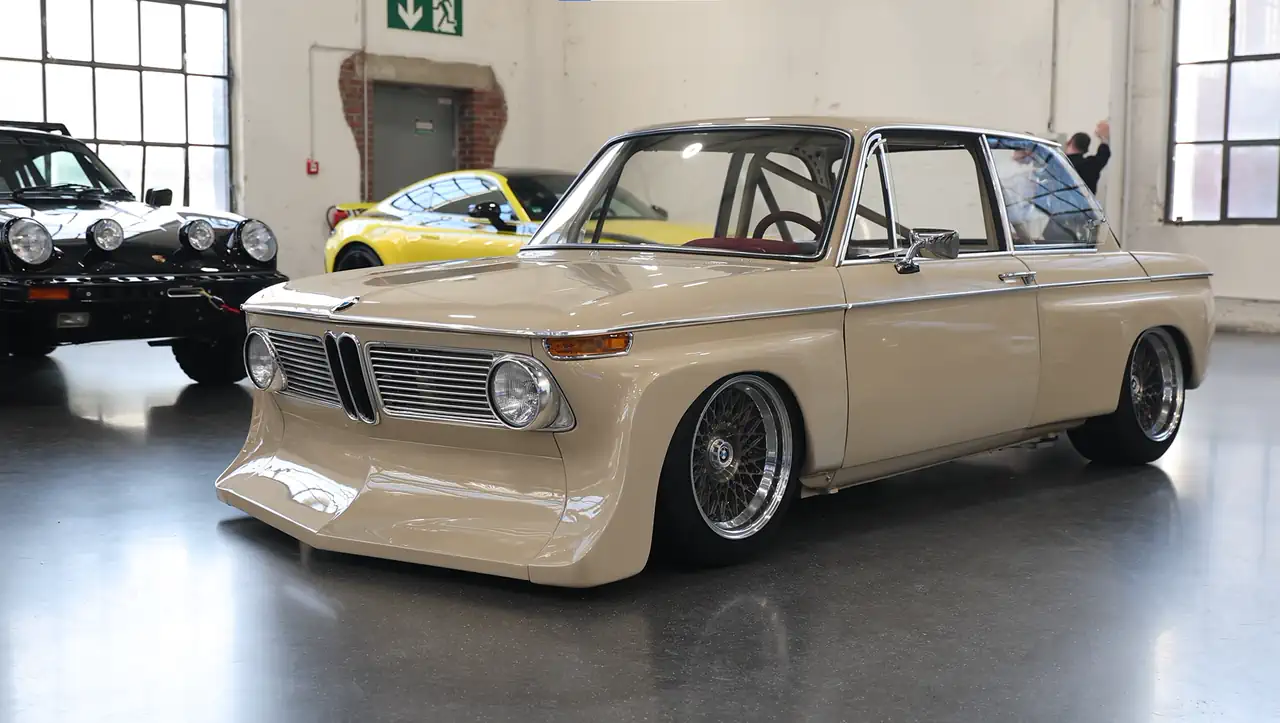
What happens when you combine rotting junkyard metal with pure track engineering? This stealthy beige 1973 BMW 2002 hides a bespoke carbon fiber suit and a screaming 240-horsepower engine.
The Stealthy Carbon-Fiber BMW 2002: A 1,968-Pound Masterpiece That Defies Logic
Picture yourself walking past a classic 1973 German coupe draped in a subtle, factory-style beige. At first glance, it looks like a standard, well-preserved Sunday driver.
Take two steps closer, let the sunlight hit the fenders, and your jaw will instantly drop.
Beneath that innocent paint job sits an absolute monster: a custom BMW 2002 engineered to fuse 1970s motorsport grit with space-age composite materials.
Saved From the Crusher: A Junkyard Miracle
Every legendary build has an origin story, but this one started on death row. The original chassis was a rotting shell eaten alive by rust, sitting in a scrapyard waiting to be crushed.
Bringing it back required an exhausting 18-month marathon. Before any performance upgrades could even be dreamed up, the floorboards and structural pillars had to be fabricated entirely from scratch.
The builder’s goal wasn’t just to resurrect a dead car. It was to craft the ultimate tribute to purist, old-school BMW engineering.
The Secret Hiding Under the Beige Paint
What makes this car truly special is its restraint. Instead of leaving raw carbon fiber exposed to scream for attention, the composite panels were meticulously painted over.
Custom Handcrafted Bodywork
The entire front clip, hood, trunk lid, and side skirts were molded in-house out of lightweight carbon.
That front spoiler? It’s a one-of-a-kind custom vision designed specifically to hug the car’s retro lines. The wide fender arches were actually salvaged from a ruined vintage BMW race car and reshaped by hand.
Despite keeping the original steel roof and factory glass, the entire vehicle tips the scales at just 1,968 lbs (893 kg). Can you imagine how wickedly flickable a sub-2,000-pound car feels on the street?
Pure-Blood M10 Power: 240 All-Motor Horses
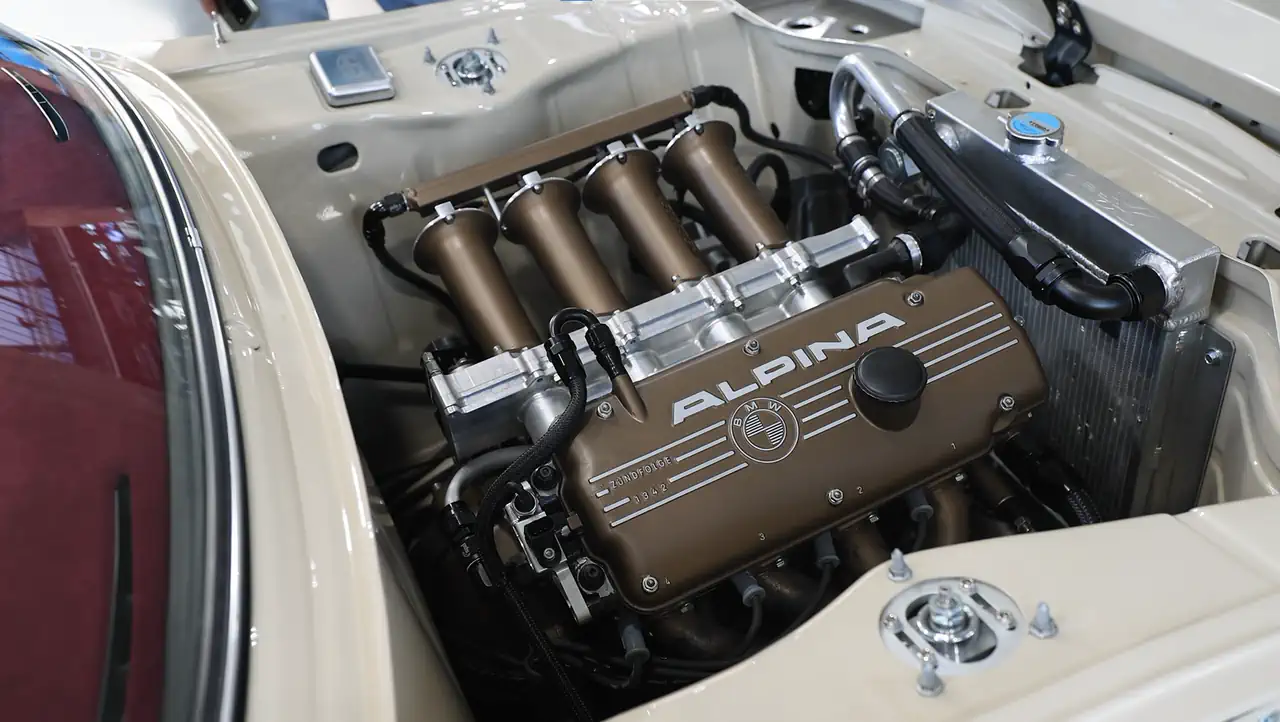
Pop the hood, and you’re greeted by mechanical poetry. There are no massive turbos or soulless modern engine swaps here.
Powering this featherweight is a bored-out 2,043cc BMW M10 engine pumping out a naturally aspirated 240 horsepower. That is a staggering 120 horsepower per liter without forced induction.
Slide Throttles and Retro Injection
The intake setup features individual throttle bodies paired with an ultra-rare mechanical slide throttle—often called a “guillotine” setup—pulled straight from classic track machines.
Fuel injectors sit directly above the open trumpets, showering atomized fuel downward. It delivers the savage, instant bark of old-school carburetors combined with the crisp reliability of a standalone ECU.
Power gets sent to the rear tires through an exotic dog-leg manual transmission and a limited-slip differential. To top it off, a custom side-exit exhaust barks out a raw, metallic symphony.
Wilwood Brakes and Aggressive Stance
Stopping a featherweight rocket requires precision hardware. The Wilwood racing brake system was heavily shaved down to eliminate dead weight and reduce unsprung mass.
That brake upgrade alone shaved off 55 lbs (25 kg) compared to the factory setup. Even the fuel and brake hardlines were bent from aviation-grade aluminum.
Custom three-piece wheels fill out the widebody arches perfectly, measuring 9.5 inches wide up front and 10.5 in the rear with a deep, negative offset.
An Industrial Cabin With Swiss Luxury
Open the door, and the interior completely flips the script on the exterior’s humble beige aesthetic.
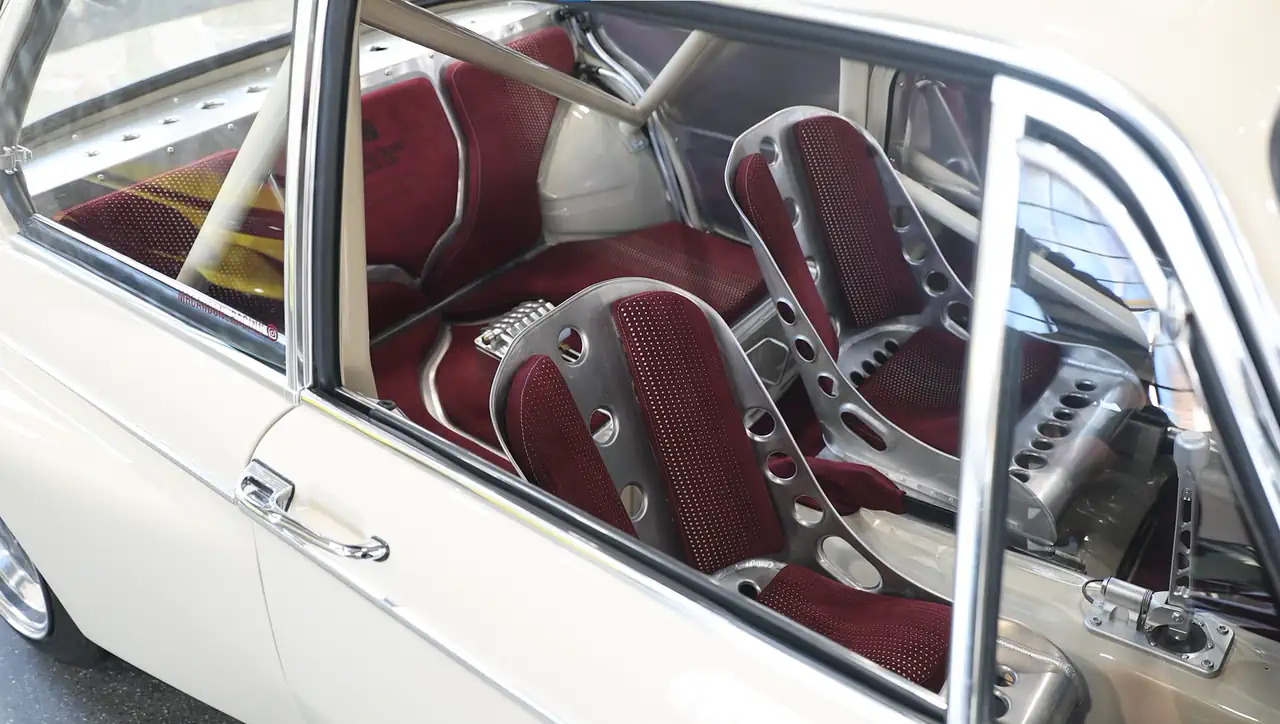
You are greeted by rich, wine-colored aubergine leather hand-trimmed by specialists in Switzerland. The custom dashboard features precision laser-cut perforations, while the door cards embrace a stripped-down industrial vibe.
Down on the floor sits a hardcore Tilton pedal box. Yet, tucked discreetly into the center console of this 70s time capsule is a hidden wireless smartphone charger.
The Hits and Misses of an Extreme Build
When you push an automotive concept this far to the edge, compromises are inevitable. Here is how the reality of this machine breaks down:
The Strengths:
Power-to-weight ratio: Packing 240 horsepower into a 1,968-pound frame guarantees mind-bending acceleration.
Period-correct DNA: Virtually every mechanical component honors BMW’s golden era of motorsport.
Total stealth: A factory-grade finish that rewards only the most observant car nerds.
The Weaknesses:
Zero daily comfort: A bone-shaking suspension setup and an unforgiving race clutch make city traffic a nightmare.
High-strung maintenance: High-compression race engines demand constant tuning and top-tier fuel to stay happy.
What Is a Rolling Masterpiece Worth?
Bringing a vision like this to life takes bottomless patience, elite fabrication skills, and a massive stack of cash.
Classic car appraisers estimate the build’s market value sits somewhere between $80,000 and $90,000. For die-hard collectors, getting this level of bespoke engineering for under six figures is an absolute steal.
At the end of the day, this machine proves that car culture isn’t about buying the most expensive supercar off a dealership lot. It’s about having the imagination to turn forgotten scrap into immortality.
If you had a blank check today: would you buy a brand-new modern sports car, or fund a wild, ground-up vintage build like this one? Drop your thoughts in the comments!

Danniel Bittencourt
29/06/2026