Volkswagen ID. Polo GTI: The World’s First All-Electric GTI Is Finally Here
With 226 horsepower, an active mechanical differential, and a 52-kWh battery pack, the 2027 VW ID. Polo GTI marks the electric debut of the most iconic badge in hot hatch history — and it’s already sparking debate before the first customer takes delivery.

Por: Danniel Bittencourt
16/05/2026
2027 VW ID. Polo GTI: Volkswagen’s Most Important Electric Car Isn’t a Crossover
Fifty years after the original Golf GTI rewrote the rules of affordable performance, Volkswagen is doing it again — this time without a drop of gasoline. The ID. Polo GTI is the first fully electric car to carry the GTI name, and it arrives as a 2027 model year vehicle launching in the European market in late 2026.
This isn’t a straight-line speed machine chasing quarter-mile records. The goal is more focused: prove that a compact electric car can actually feel alive in the corners. With a mechanical torque-vectoring differential, magnetorheological adaptive suspension, and 290 lb-ft of instant torque, Volkswagen is making a serious engineering argument here.
For US buyers, there’s no confirmed launch date. If it does arrive stateside, import costs and federal tax credit eligibility will shape the final price significantly. For now, it’s a European launch with a global audience watching closely.
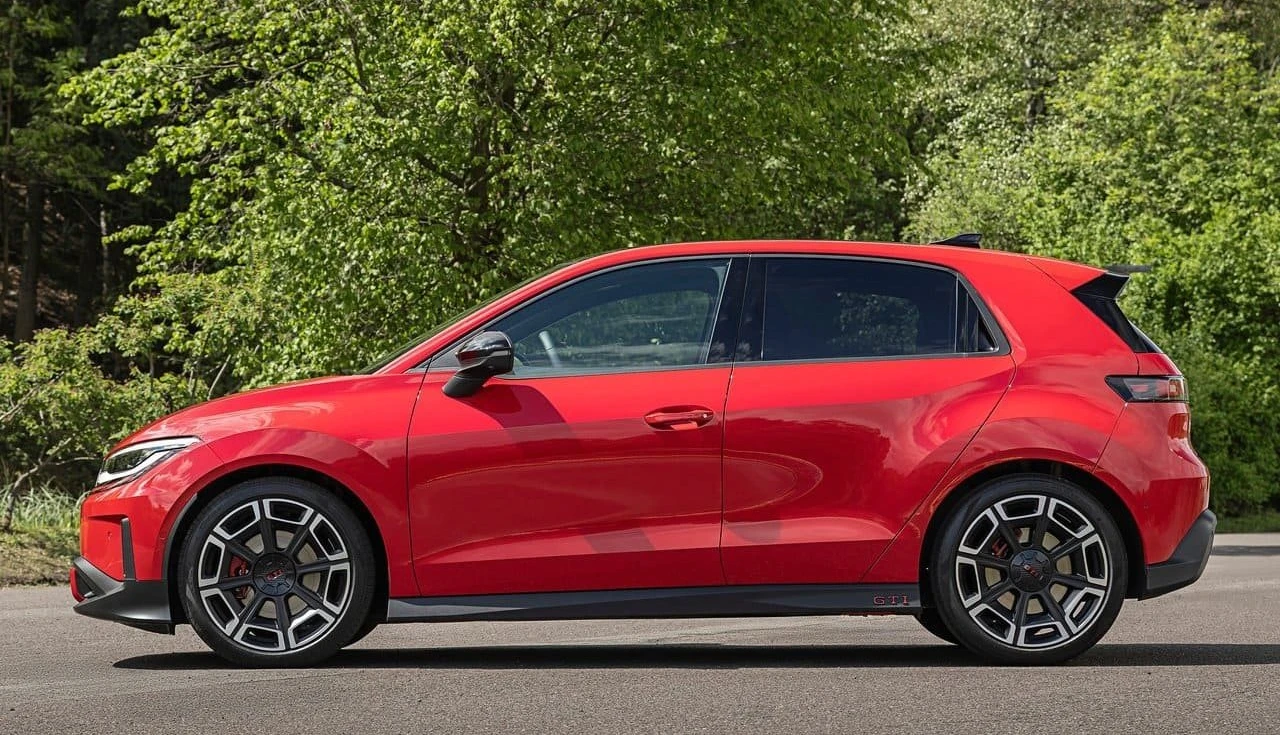
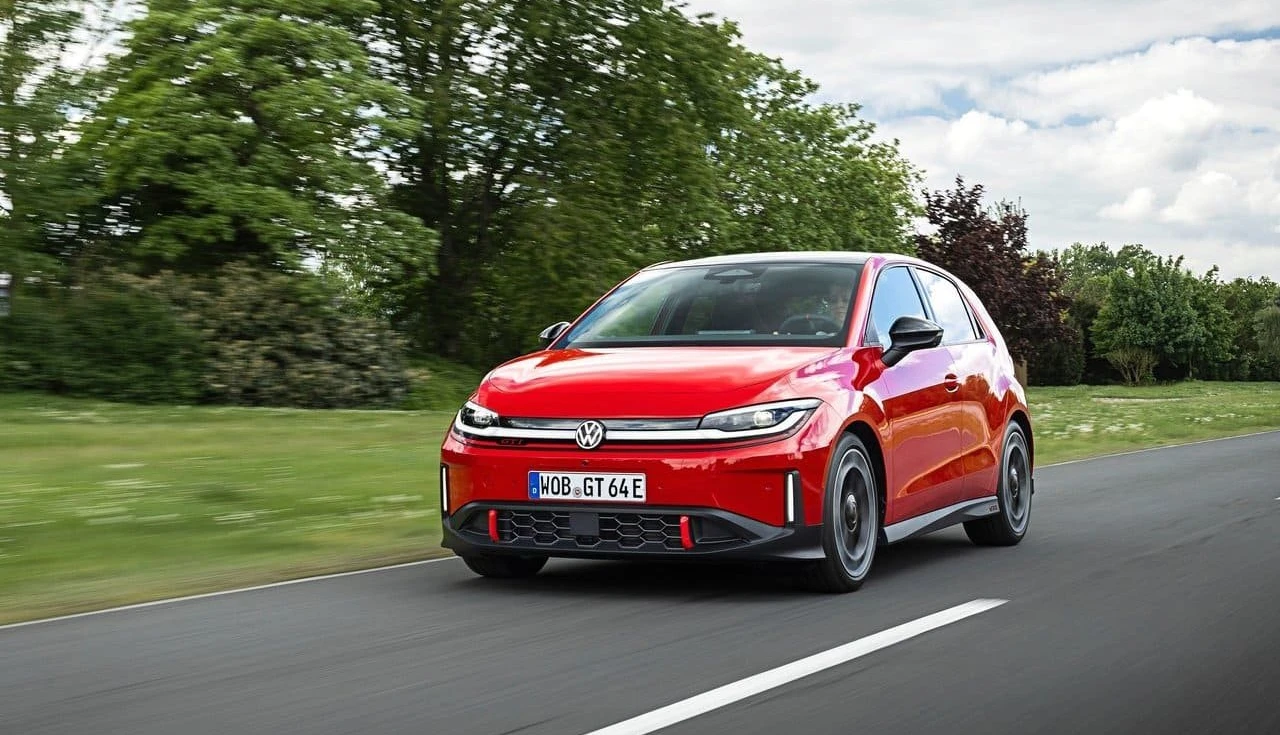
Sharp Lines, Hidden Door Handles, and Red Brake Calipers: The ID. Polo GTI Means Business
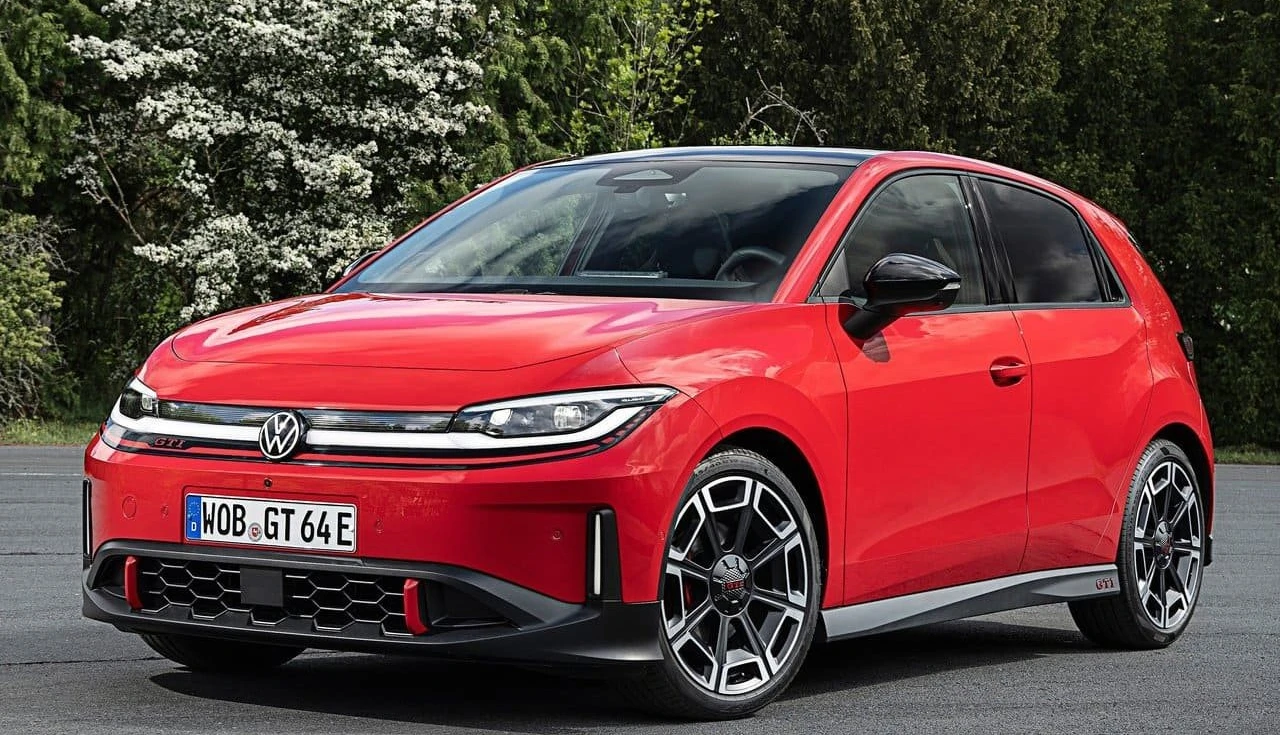
The ID. Polo GTI makes a clean break from the soft, bubble-like shapes that defined early ID-family vehicles. Volkswagen’s new “Pure Positive” design language gives this car a tighter, more athletic stance — one that actually reads as a proper hatchback rather than a rolling appliance.
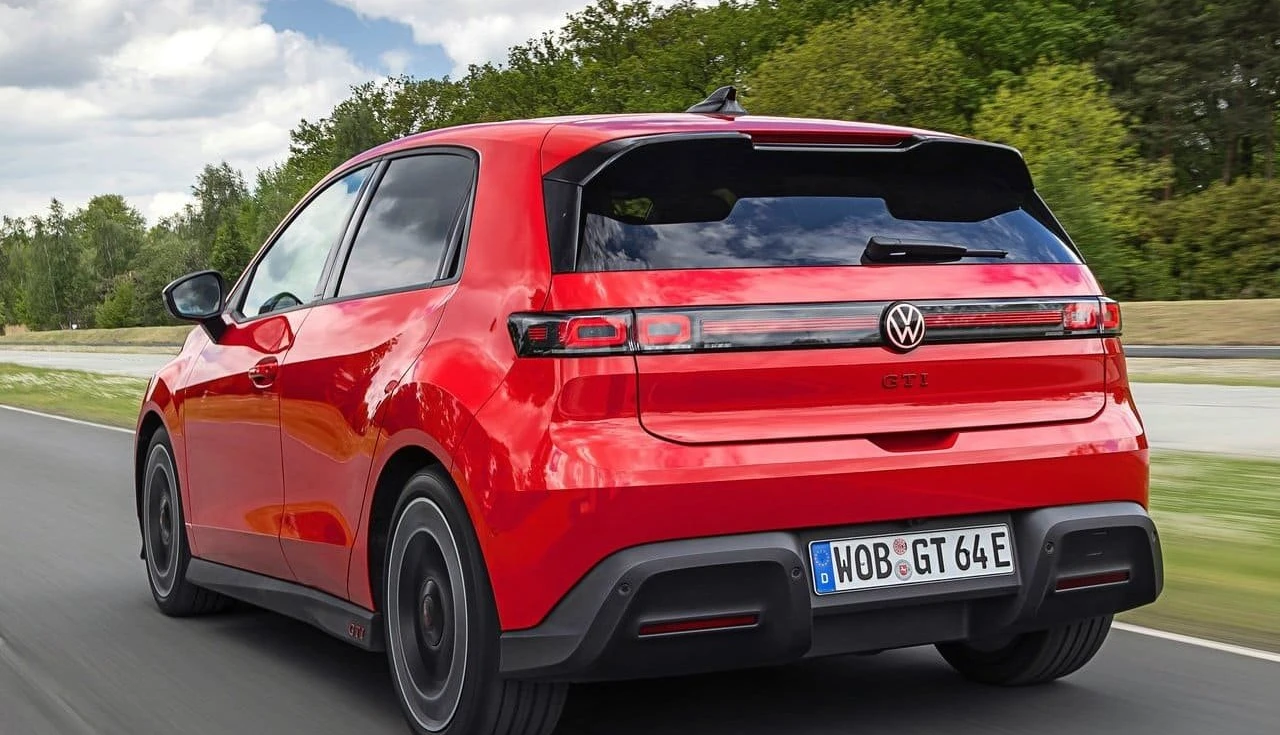
Up front, a completely redesigned bumper features a deep chin spoiler with an angle deliberately echoing the original Golf GTI Mk1 from the 1970s. The daytime running lights swap the usual horizontal layout for a vertical arrangement, giving the car a more aggressive look in the rearview mirror. For the first time on a GTI, the Volkswagen logo is backlit.
Along the side, the rear door handles disappear into the C-pillar — a design trick that makes the five-door car read like a sleeker three-door coupe. Flared wheel arches house standard 19-inch alloy wheels, with an upgrade path to 20-inch rollers wrapped in performance rubber. The bright red brake calipers visible through the spokes are pure GTI tradition.
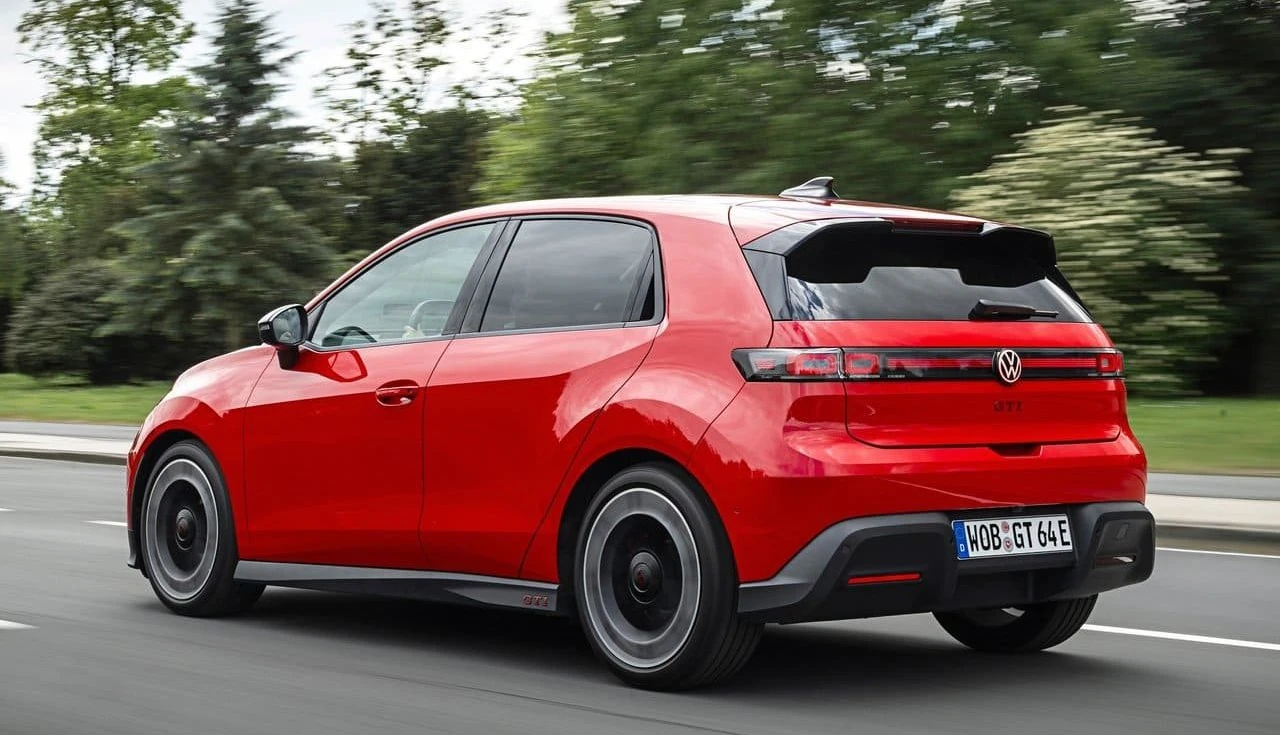
At the rear, a dual-section diffuser and a roof spoiler with a split-wing profile handle aerodynamic downforce duties. The darkened LED light bar across the tailgate ties the whole design together with a look that feels cohesive and intentional — not overdone.
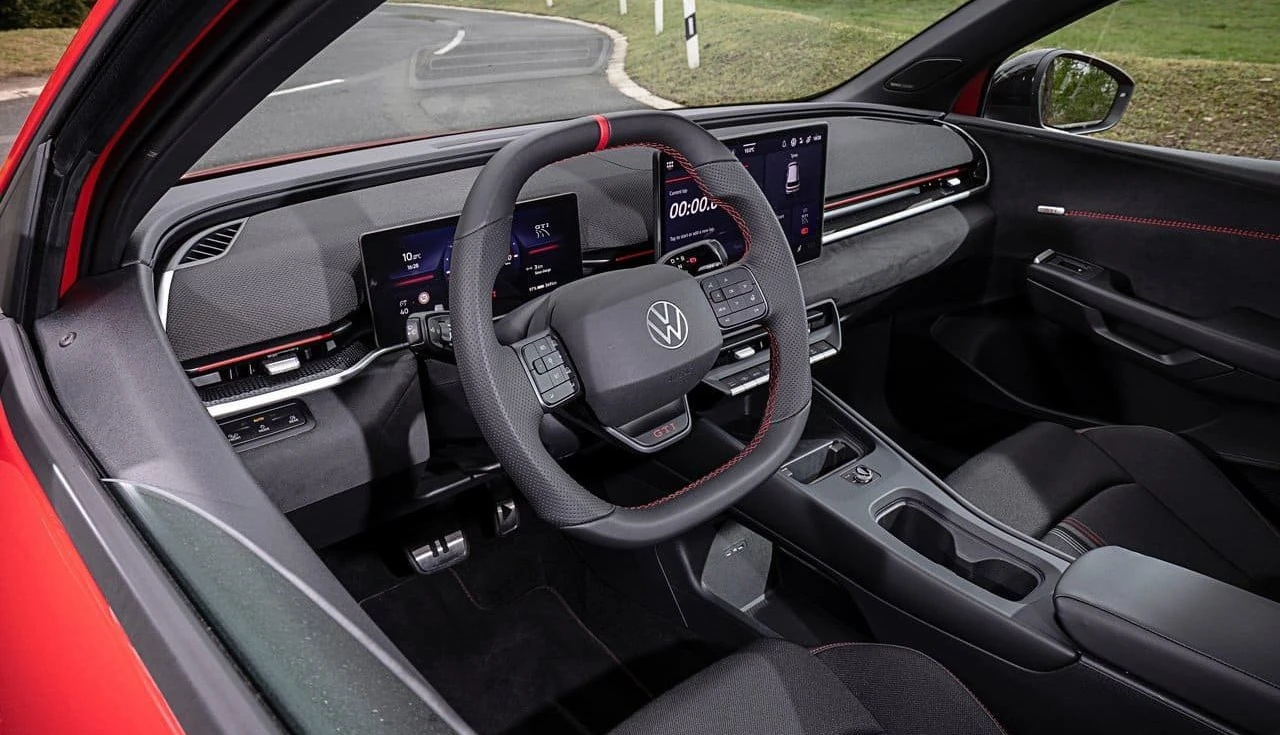
The Cabin Volkswagen Should Have Built From Day One: Physical Buttons Are Back
Step inside the ID. Polo GTI and the first thing you’ll notice is what’s missing: the frustrating touch-sensitive sliders and haptic controls that drew endless criticism from owners of earlier ID-model vehicles. They’re gone. In their place, Volkswagen installed a proper row of physical knobs and backlit buttons below the center vents for climate control — functions you can actually operate without looking away from the road.
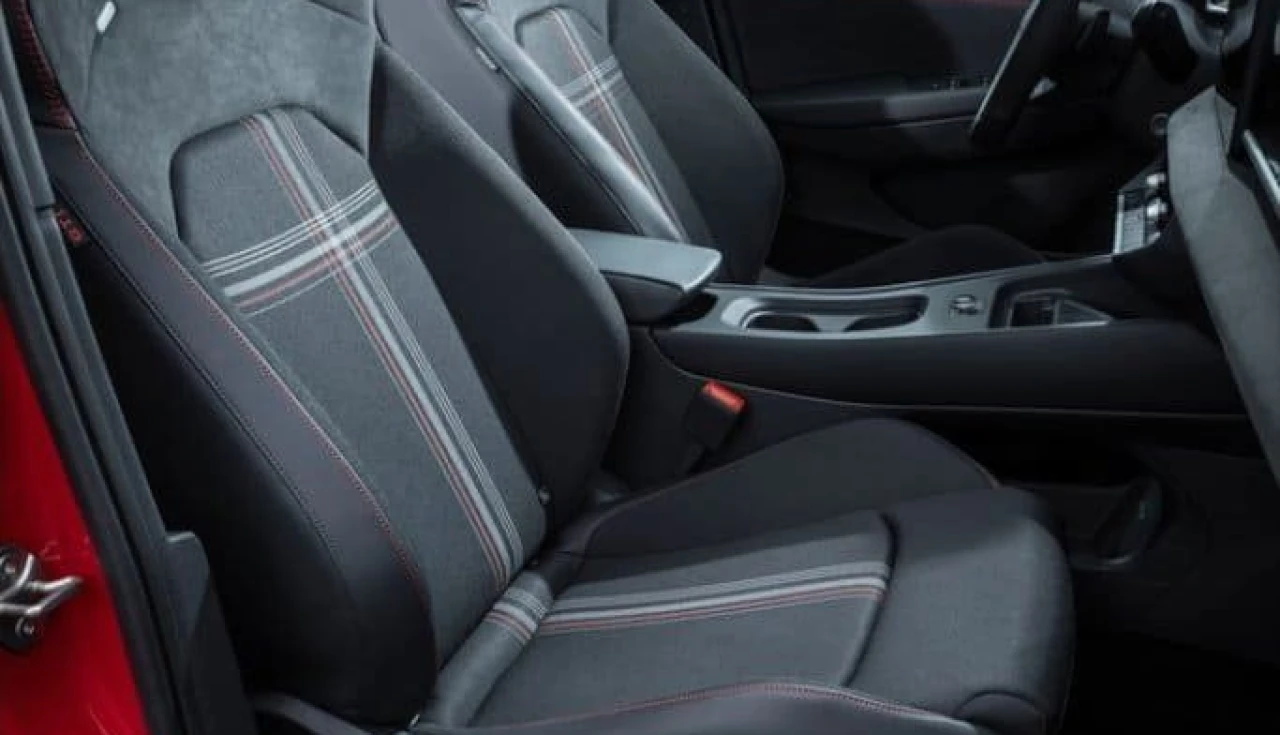
The dashboard is wrapped in Dinamica microsuede, a sustainable textile that gives the interior a genuinely premium feel. The sport seats up front offer pronounced side bolstering to keep you planted in corners, finished in the iconic tartan plaid pattern with red contrast stitching — a nod to every GTI that came before. The flat-bottomed, two-spoke steering wheel puts real mechanical buttons under your thumbs, plus a dedicated GTI button that reshapes the car’s personality in an instant.
Two Screens, Augmented Reality, and More Cargo Space Than Most Crossovers
The tech stack centers on a 12.9-inch touchscreen for infotainment and a 10.9-inch digital instrument cluster positioned directly in the driver’s sightline. Wireless Android Auto and Apple CarPlay are standard. The optional Harman Kardon audio system brings 10 speakers and a floor-mounted subwoofer into the mix.
A standout feature is the “Digital Cockpit” Retro mode, which replaces the modern interface with graphics that mimic the analog gauges of the original Golf Mk1 — including a fuel-style needle for the battery indicator. The optional augmented reality Head-Up Display projects turn-by-turn arrows and performance data directly onto the road ahead.
The real surprise is cargo space: 15.6 cubic feet with the rear seats up, expanding to roughly 43.9 cubic feet with them folded — numbers that embarrass plenty of compact crossovers. The main limitation is rear passenger legroom, which tightens up due to the torsion beam axle and battery floor configuration. Taller passengers in the back seat will feel it on longer trips.


Instant Torque, a Mechanical Differential, and Front-Wheel Drive Done Right
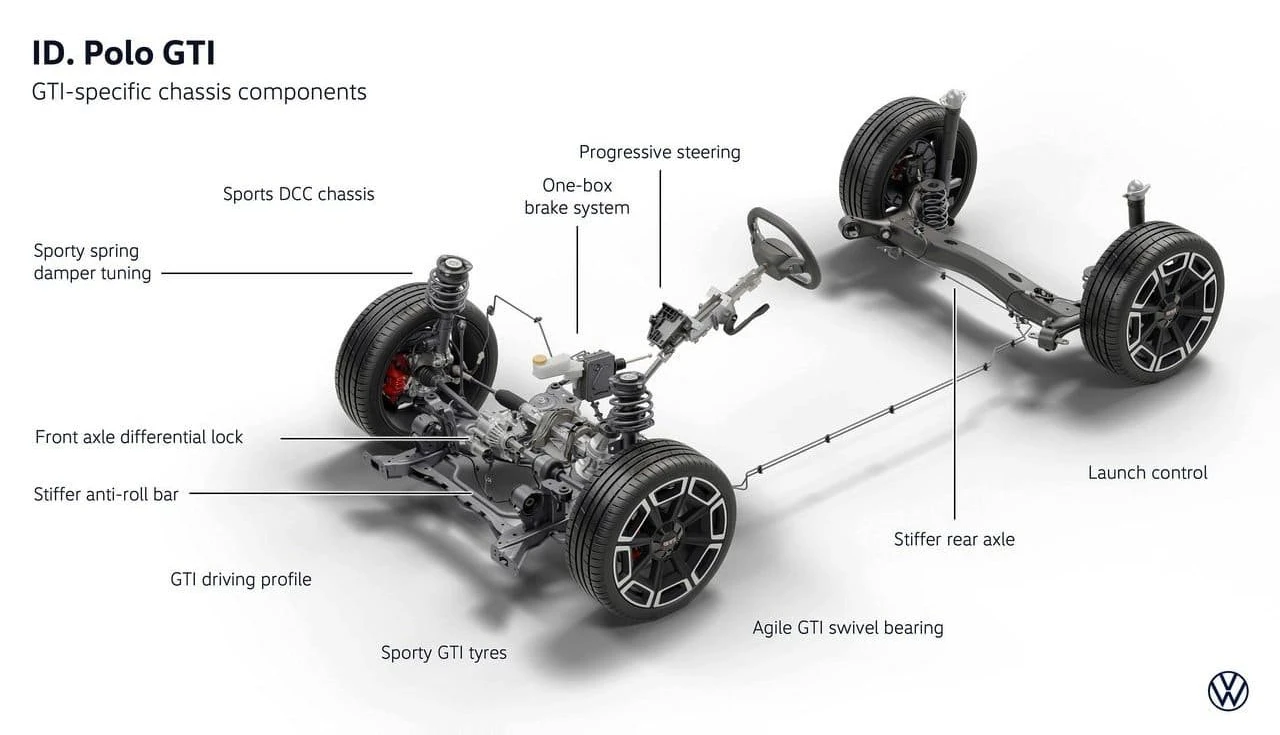
The ID. Polo GTI runs a single permanent magnet synchronous motor — the APP290 unit — mounted exclusively on the front axle. Keeping it front-wheel drive wasn’t a cost-cutting decision. It was a deliberate choice to preserve the handling character that’s defined every GTI since 1976.
The numbers: 226 horsepower and 214 lb-ft of torque delivered from a dead stop. The sprint from 0 to 60 mph takes approximately 6.4 seconds — not the fastest number in the class, but press evaluations consistently describe the throttle response as linear, exploitable, and confidence-inspiring rather than brutally sudden.
The mechanical secret behind all of this is the BorgWarner VAQ limited-slip differential — the same hardware used in the Golf GTI Clubsport. It actively distributes torque between the front wheels, pulling the nose toward the apex under hard cornering instead of pushing wide or triggering constant traction control cuts. Without it, 214 lb-ft through a front axle would be a recipe for wheelspin and frustration.
Top speed is electronically capped at 109 mph. The 52-kWh battery (Cell-to-Pack architecture, NMC chemistry) delivers up to 263 miles of range on the WLTP cycle. DC fast charging at up to 105 kW brings the pack from 10% to 80% in 24 minutes. Home charging via an AC wallbox tops out at 11 kW.
Quick Specs — 2027 VW ID. Polo GTI
| Specification | Detail |
|---|---|
| Motor Type | Permanent magnet synchronous (APP290) |
| Output | 226 hp (166 kW) |
| Torque | 214 lb-ft (290 Nm) |
| Drivetrain | Front-wheel drive (FWD) |
| 0–60 mph | ~6.4 seconds |
| Top Speed | 109 mph (electronically limited) |
| Battery | 52 kWh (Cell-to-Pack, NMC) |
| Range (WLTP) | Up to 263 miles |
| Efficiency | 14.4–16.4 kWh/100 km |
| DC Fast Charging | 10%–80% in 24 min (max 105 kW) |
| AC Home Charging | 11 kW three-phase |
| Curb Weight | 3,395 lbs (1,540 kg) |
Starting Under $43,000 in Europe — Here’s What It Could Cost American Buyers
In its home market of Germany, the ID. Polo GTI opens at just under €39,000 — roughly $42,500 USD at current exchange rates. That puts it squarely in the territory of entry-level premium compact cars. Add the popular options — panoramic roof, Harman Kardon audio, 20-inch wheels — and the sticker climbs toward €45,000 (around $49,000 USD).
In the UK, estimates put the starting price around £30,000, subject to available EV incentive programs depending on the buyer’s region.
For the US market, there is no confirmed launch date or pricing. If Volkswagen does bring it stateside, import logistics, homologation costs, and federal EV tax credit eligibility under the Inflation Reduction Act will all factor heavily into the final number. A realistic US market estimate would land somewhere in the $45,000–$55,000 range — making it a direct rival to the Mini Cooper JCW EV and upper trims of the Chevrolet Equinox EV.
Maintenance costs should run moderate. The electric drivetrain eliminates oil changes, timing chains, and ignition components. However, the low-profile performance tires on 19- or 20-inch wheels wear quickly under hard driving, and the VAQ differential requires periodic specialized fluid changes — costs that owners of mainstream EVs never deal with.
Insurance will likely fall in the high bracket due to the car’s performance profile, elevated MSRP, and the cost associated with repairing a damaged battery floor in a collision.
Buying at launch makes sense only for buyers who already have home charging set up and don’t rely on this as a sole vehicle. For everyone else, waiting for the used market to develop is the smarter financial move.
Answers to the Questions Every Buyer Is Already Googling
Does the electric GTI actually sound like a real car? No. It uses an internal sound synthesizer that pipes a simulated combustion engine noise through the speakers — including fake gear change sounds. Reviewers across Europe were largely critical of how artificial it feels. You can reduce it, but you can’t fully turn it off in Sport mode.
What’s the real-world range in everyday driving? The WLTP figure is 263 miles. In mixed US driving conditions — highway speed, air conditioning, colder temperatures — expect somewhere between 180 and 210 miles of practical range. That’s a market-based estimate, not an official figure.
Will the ID. Polo GTI be sold in the United States? No official announcement has been made. Volkswagen’s US roadmap hasn’t confirmed this model. If it arrives, it would likely come as a low-volume import rather than a mainstream launch.
Who are its closest competitors? The Mini Cooper JCW Electric, Alpine A290, Abarth 600e, and the Cupra Raval VZ are the most direct rivals. The Polo GTI beats all of them on cargo space and real-world range, while trading blows on visual flair and driving character.
Is the 2027 VW ID. Polo GTI Worth the Money?
For European buyers living in cities with low-emission zones and a charger at home, the value proposition is solid. The VAQ differential is real mechanical hardware, the interior is a genuine step forward for the ID lineup, and the cargo space makes it practical enough for daily use.
For American buyers, the math gets trickier. At an estimated $45,000–$55,000, it competes against established EVs with stronger dealer networks and better-understood ownership costs. The ID. Polo GTI is honest about what it is — but it needs the right environment to make sense.
It drives like a GTI. It just doesn’t sound like one.
Share this article
Related posts