801 HP: The Number That Puts the Urus SE Performante on Top
The 2027 Lamborghini Urus SE Performante arrives with 801 hp, real EV range, and a new Rally mode. Here’s what the numbers mean, what it costs, and whether it’s worth the wait.
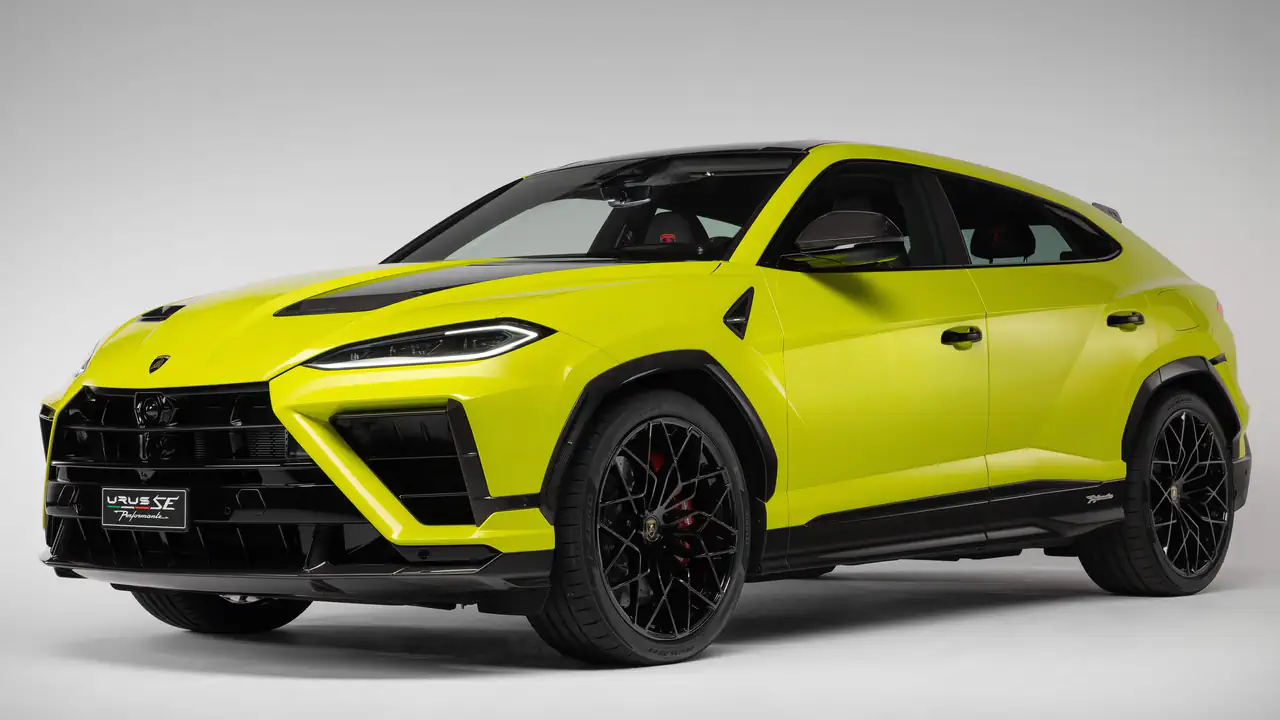
2027 Lamborghini Urus SE Performante: The Brand’s Most Powerful Hybrid Yet
The Urus SE Performante makes a combined 801 hp and 738 lb-ft of torque, the highest output ever offered in a production Urus. The variant replaces the outgoing combustion-only Urus Performante, discontinued in 2024, and now sits alongside the standard Urus SE at the top of the lineup.
The SUV was tuned for track-focused chassis response without giving up everyday luxury. It’s a new arrival aimed squarely at ultra-high-net-worth buyers, and it goes head-to-head with the Porsche Cayenne Turbo E-Hybrid and the Ferrari Purosangue.
No official on-sale date has been confirmed at this time.
Quick Specs
| Spec | Details |
|---|---|
| Category | High-performance SUV (Super SUV) |
| Powertrain | 4.0L twin-turbo V8 + electric motor (plug-in hybrid) |
| Power | 801 hp combined |
| Torque | 738 lb-ft |
| Transmission | 8-speed automatic |
| Drivetrain | All-wheel drive (AWD) |
| 0-60 mph | Approximately 3.1 seconds |
| Top Speed | 194 mph |
| Fuel Economy | 48 MPGe (battery charged) / roughly 19 mpg combined (battery depleted) |
| Electric Range | Around 30-35 miles (EPA) / roughly 37 miles (WLTP) |
| Launch Date | Second half of 2026 (2027 model year); U.S. pricing not yet finalized |
Those numbers already tell part of the story. But it’s how Lamborghini fixed the previous Urus’s biggest complaint that makes this one worth paying attention to.
A Super SUV Sculpted by the Wind
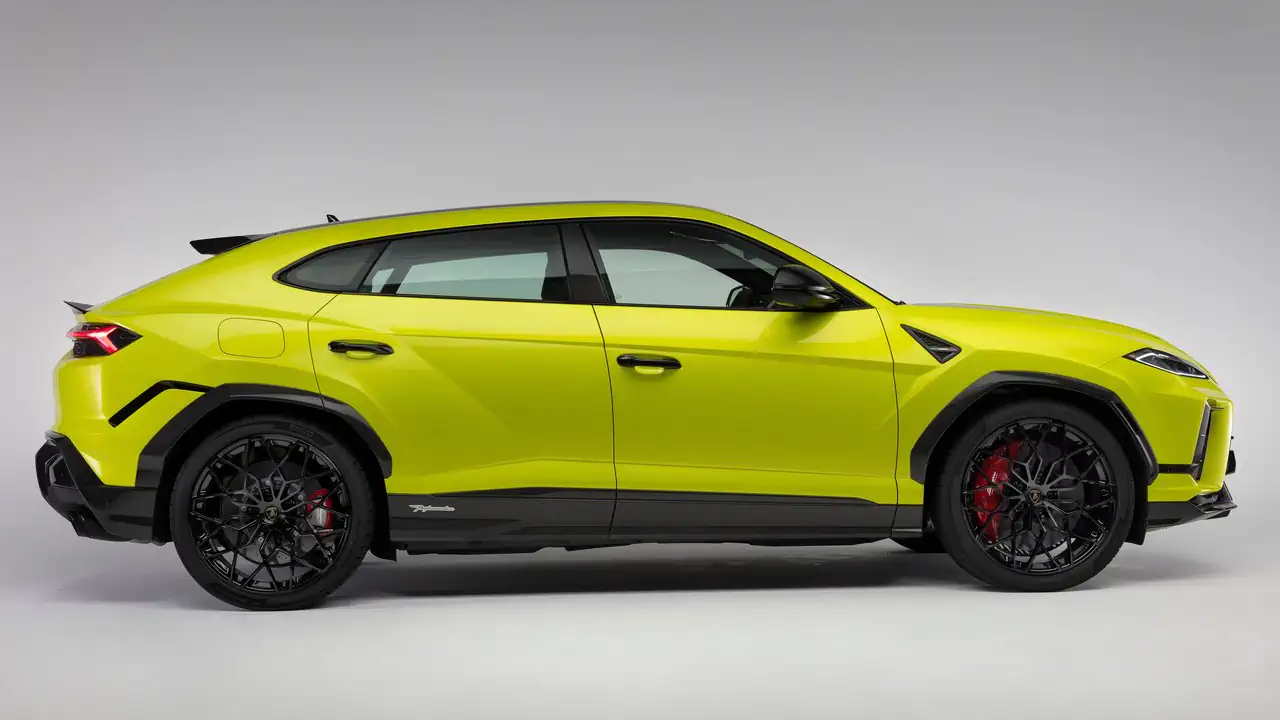
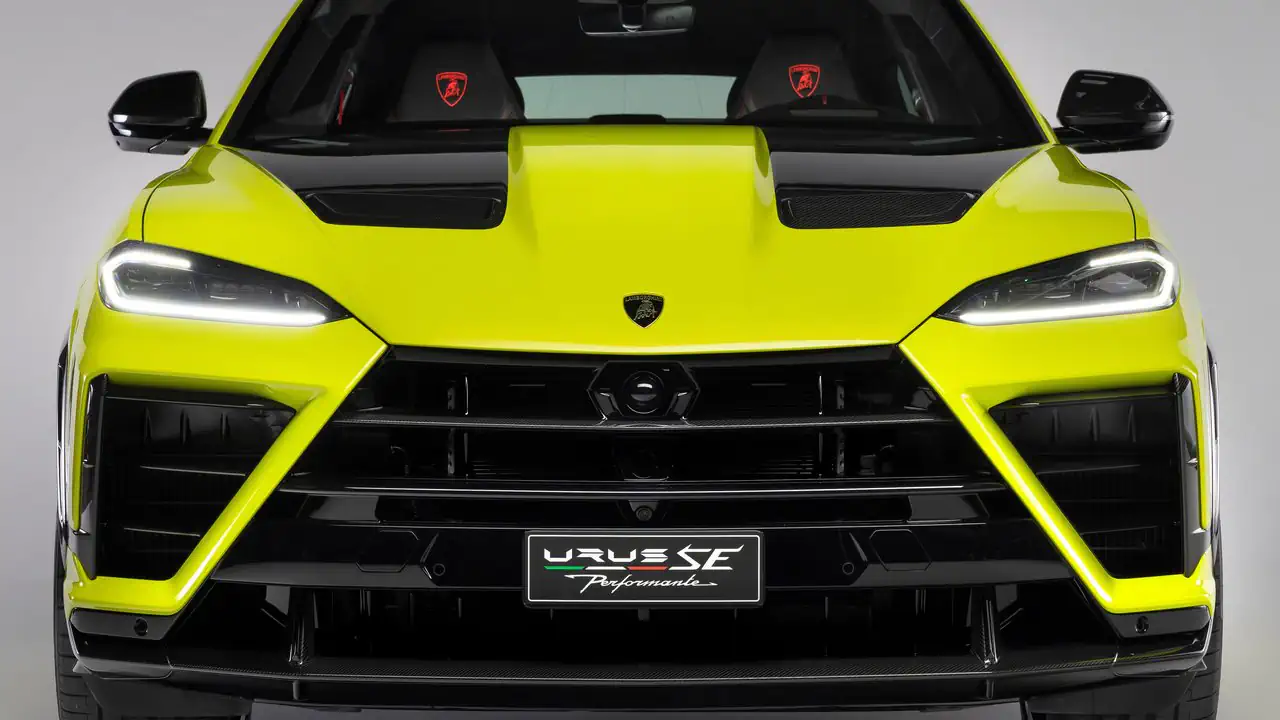
The front end is dominated by an exposed carbon-fiber hood, featuring a central power dome and air extractors that hint at their cooling function. Along the side, sharp creases and a steeply raked C-pillar reinforce the coupe-like silhouette, with reshaped fenders housing a wider track.
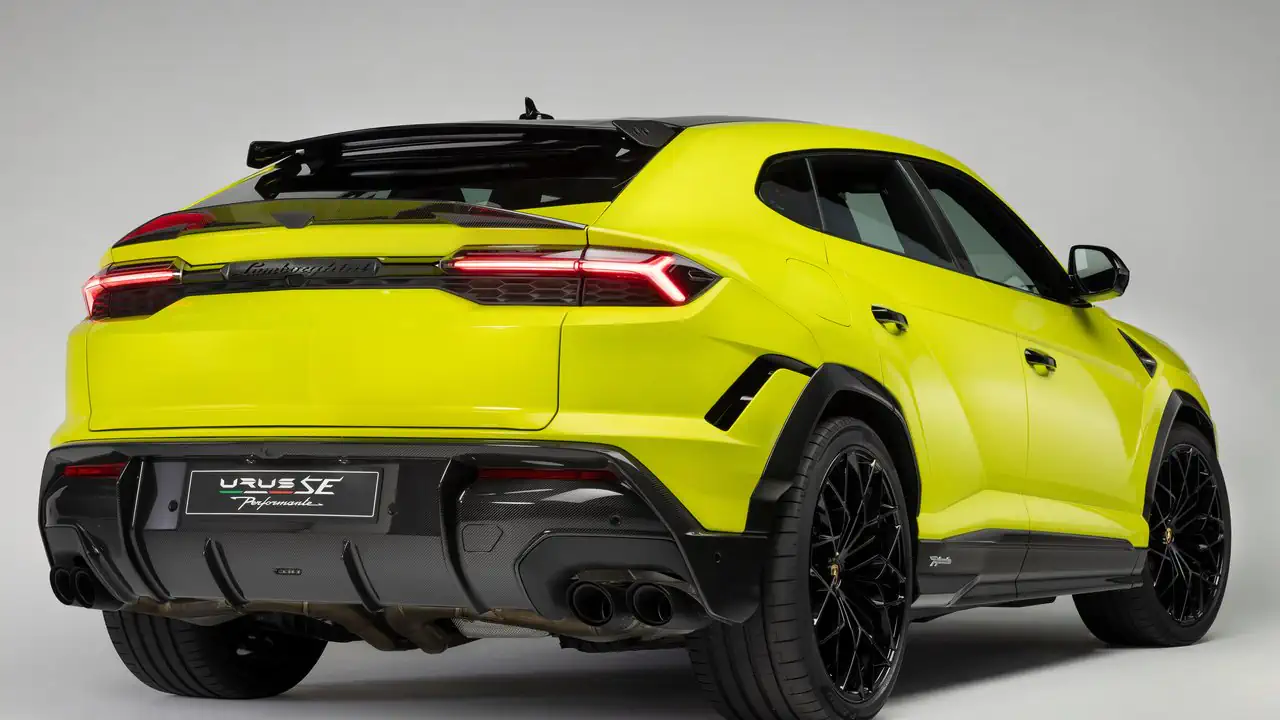
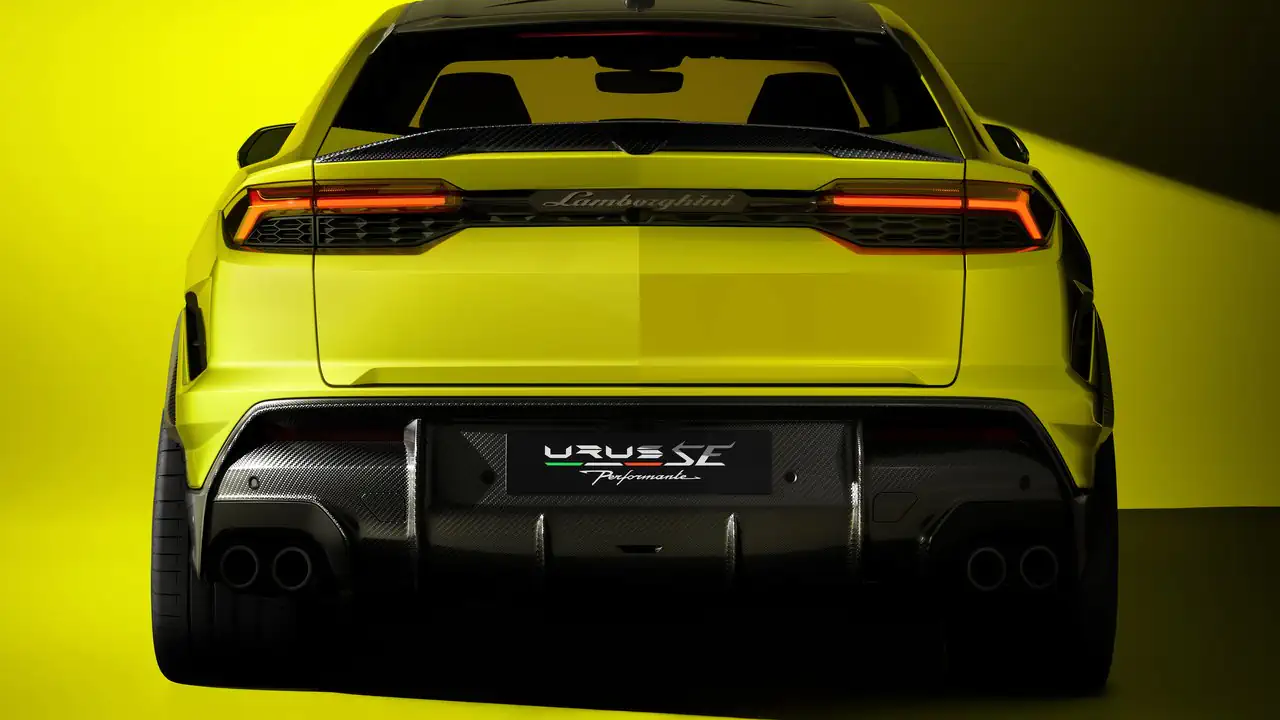
Around back, the standout is the largest diffuser ever fitted to an Urus, paired with a roof-mounted wing that works alongside a lip spoiler on the tailgate.
The overall effect reads as functional aggression: the aerodynamics were optimized to cut drag while also boosting the downforce that keeps the SUV planted through fast corners. It’s a more extreme take on the design language already used on the Urus SE, without breaking from Lamborghini’s current identity.
A Cockpit-Inspired Cabin With Less Weight in the Trim
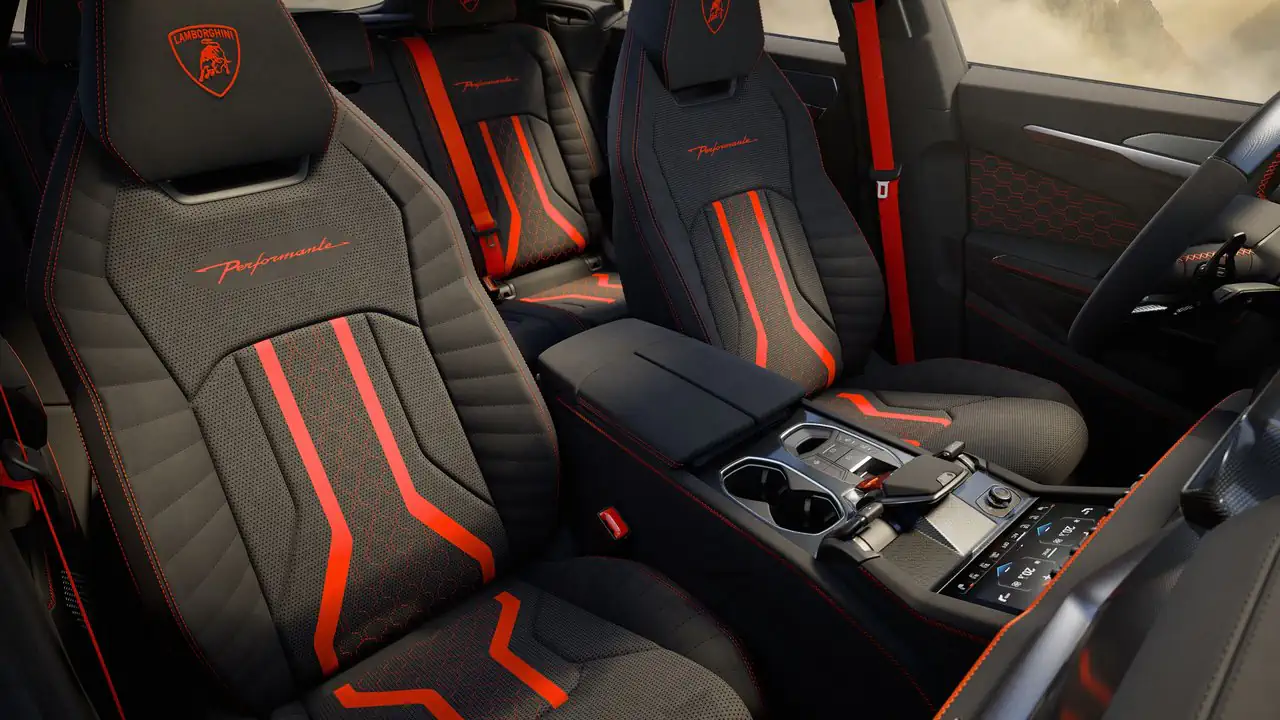
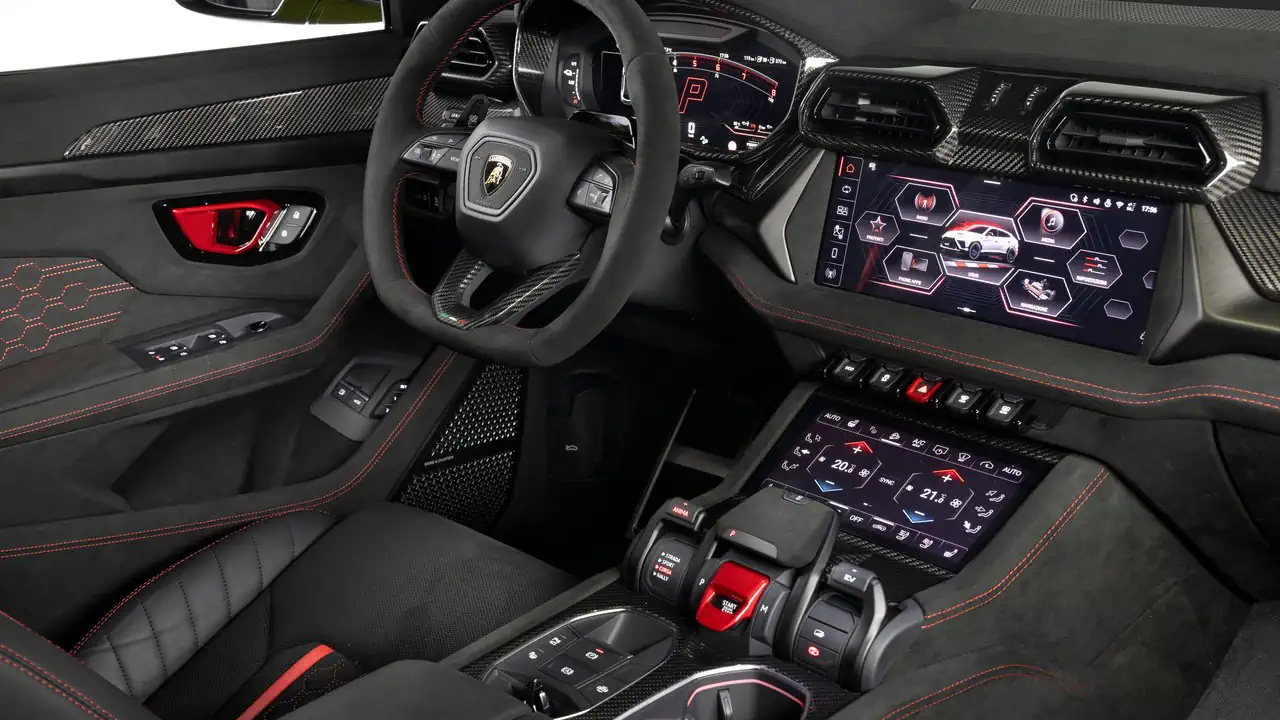
The interior sticks to Lamborghini’s “Feel Like a Pilot” philosophy, with a dashboard full of hexagonal shapes, sharp angles, and mechanical switchgear borrowed from aviation. CorsaTex by Dinamica, a lightweight technical microfiber, is now the standard upholstery — full leather remains available through the Ad Personam personalization program.
The steering wheel has been redesigned with a carbon-fiber rim, and Y-shaped anodized aluminum air vents round out the dash. The overall feel is a cabin that hasn’t sacrificed luxury while chasing weight savings.
Screens, Sensors, and What’s Left of the Trunk
The 12.3-inch touchscreen runs the Lamborghini Infotainment System, borrowing its interface — including a carousel-style menu — directly from the Revuelto hypercar. The digital gauge cluster matches that 12.3-inch size, and the driver-assist suite includes adaptive cruise control, blind-spot monitoring, and rear cross-traffic alert.
The trunk pays the price for electrification: the battery pack under the rear floor shrinks cargo capacity to as little as 16.0 cubic feet in some seating configurations. That’s the cabin’s clearest weak point — its strongest asset is the tactile, lag-free response of the Revuelto-derived infotainment system.
Performance Breakdown: How the New Super SUV Actually Drives
Under the hood sits a 4.0-liter twin-turbo V8 that on its own produces 611 hp and 590 lb-ft, paired with a 189-hp, 356 lb-ft electric motor mounted between the engine and the 8-speed automatic transmission. Combined, they produce 801 hp and 738 lb-ft, delivered in a flat curve from 2,000 to 5,500 rpm.
In practice, that means acceleration with almost no lag: the electric motor’s torque fills in before the turbos spool up, erasing the hesitation typical of forced-induction engines. 0-60 mph comes in around 3.1 seconds, and top speed is electronically limited to 194 mph.
With the battery charged, fuel economy improves to 48 MPGe, good for roughly 30-35 miles of pure-electric range under EPA testing. Once the battery runs dry, the V8 alone returns around 19 mpg combined — a figure that makes clear how much efficiency depends on the owner’s charging habits.
Cost of Ownership: What It Takes to Park One in the Garage
Overseas — a benchmark that applies directly here — Lamborghini prices the Urus SE Performante close to $300,000 MSRP, a step above the entry-level Urus SE, which starts near $255,000. Final U.S. pricing hasn’t been confirmed, but expect it to land in that range once configured.
Insurance premiums for a vehicle in this class typically run between $5,000 and $10,000 a year, driven up by the cost of replacing extensive carbon-fiber body panels. Maintenance costs follow the same logic: a set of carbon-ceramic brake discs alone can cost as much as an entry-level economy car, though most owners are covered by factory maintenance packages for the first several years. For buyers considering financing, this remains a segment where most transactions are cash purchases or handled through specialized high-value asset lending rather than conventional auto loans.
Unlike traditional supercars that can lose up to 20% of their value in the first year, the Urus lineup has proven unusually resilient on the resale market, with well-optioned examples holding value strongly in their first 18 months. The SUV makes the most sense for buyers who’d actually drive a high-performance utility vehicle several times a week — it’s not built for someone who’ll only take it out occasionally.
Frequently Asked Questions: What to Know Before Buying
What’s the real-world fuel economy?
With the battery charged, expect around 48 MPGe; once depleted, the V8 alone returns roughly 19 mpg combined.
Is maintenance expensive?
Yes, especially items like carbon-ceramic brake discs, though factory maintenance packages typically cover the first few years of ownership.
Who are the main competitors?
The Porsche Cayenne Turbo E-Hybrid, Ferrari Purosangue, Aston Martin DBX707, and BMW XM Label Red.
Is there a confirmed U.S. release date?
Lamborghini hasn’t confirmed official U.S. pricing or an exact on-sale date yet.

Verdict: Does the Urus SE Performante Justify the Price?
This is an emotional purchase, not a rational one. Lamborghini fixed the harsh ride that plagued the old Performante without dulling the V8’s character, and the added EV range brings genuine everyday usability. But the nearly 5,452-lb curb weight shows up on track, and the shrunken cargo space will frustrate anyone expecting a practical family hauler for long trips. This isn’t the SUV for buyers who prioritize cargo room or raw, unfiltered driving feel. It is, however, for anyone who wants the fastest production SUV in the world sitting in their garage.
So, do you think the Urus SE Performante’s price tag is justified, or would you rather put that money toward a traditional sports car? Let us know in the comments.
Share this article

Por: Danniel Bittencourt
02/07/2026
Related posts