2026 Toyota bZ Woodland Review: Everything You Need to Know Before Buying
Backed by a 10-year, 621,000-mile battery warranty and over 8 inches of ground clearance, the 2026 Toyota bZ4X Touring arrives as the most capable and practical electric family SUV Toyota has ever built.

Por: Danniel Bittencourt
18/05/2026
2026 Toyota bZ4X Touring: Toyota Finally Fixes What the Original Got Wrong
Toyota knew the original bZ4X had problems. The cargo space was underwhelming, rear headroom was tight for taller passengers, and DC fast charging topped out in a way that frustrated road-trippers. The 2026 bZ4X Touring — sold in the US as the bZ Woodland — addresses all three issues head-on.
This isn’t a redesign. It’s a purpose-built long-wheelbase variant with roughly 5.5 extra inches added to the rear overhang, riding on the same e-TNGA platform that underpins Toyota’s EV partnership with Subaru. The payoff is a flat-roofed crossover wagon with 33.3 to 33.8 cubic feet of cargo space behind the rear seats — nearly double what the standard bZ4X offers.
The pitch is straightforward: real-world cargo room, genuine off-road ability, and the reliability reputation that Toyota buyers have counted on for decades. Its two closest competitors are the Tesla Model Y and the Subaru Trailseeker, which shares its drivetrain with this very Toyota.
Toyota has confirmed the bZ4X is coming to the US market, with the AWD variant leading the charge.
Rugged, Flat-Roofed, and Built for the Long Haul: the Touring’s Design Makes a Statement
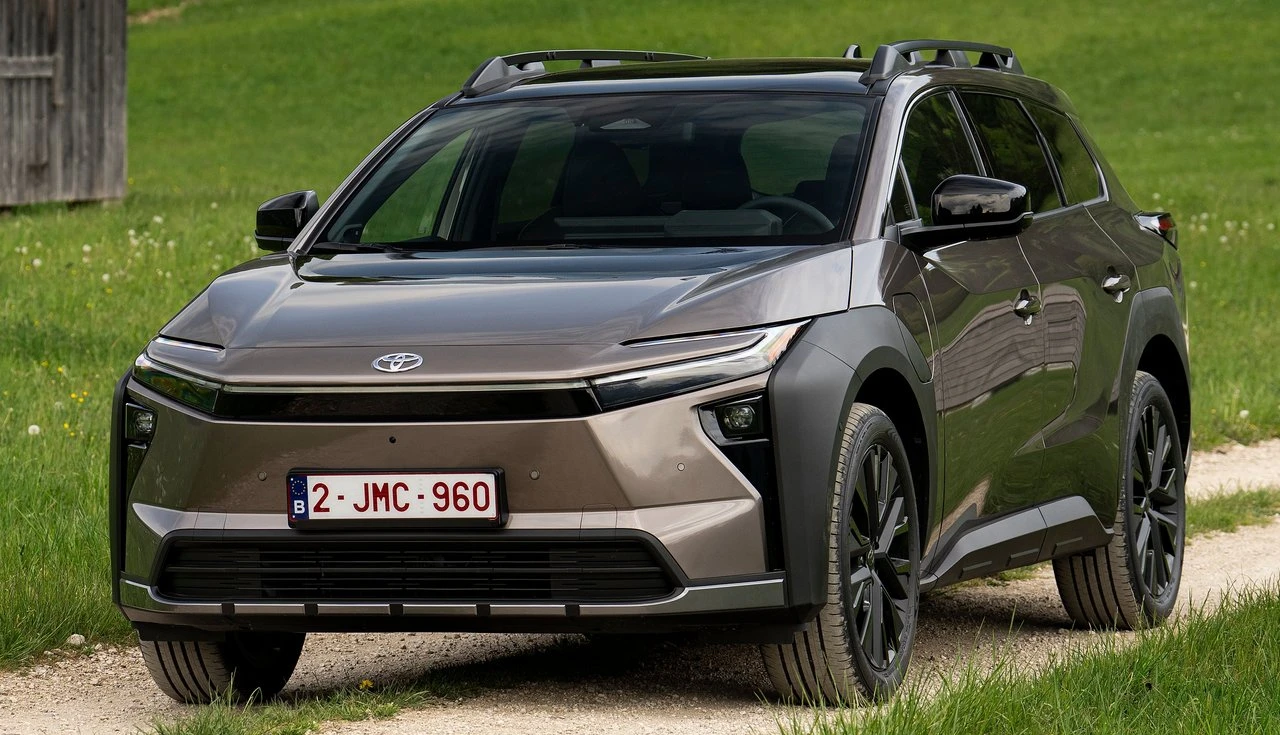
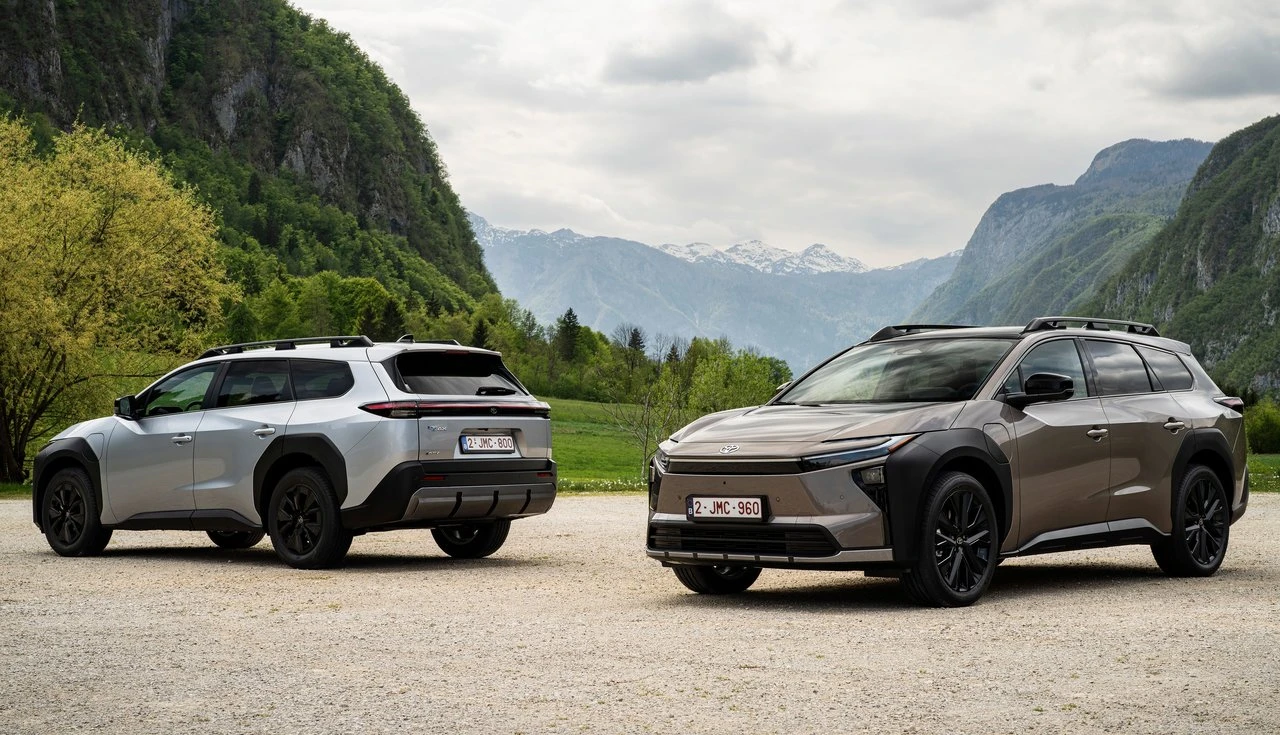
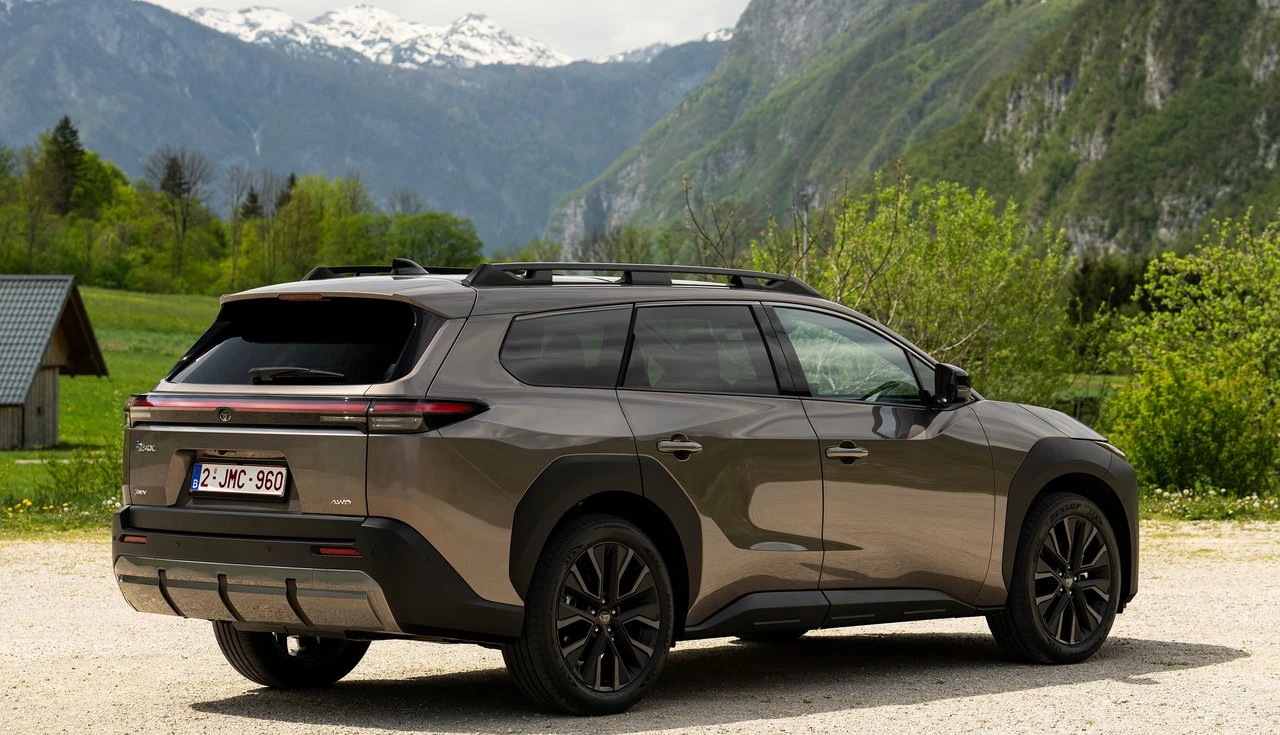
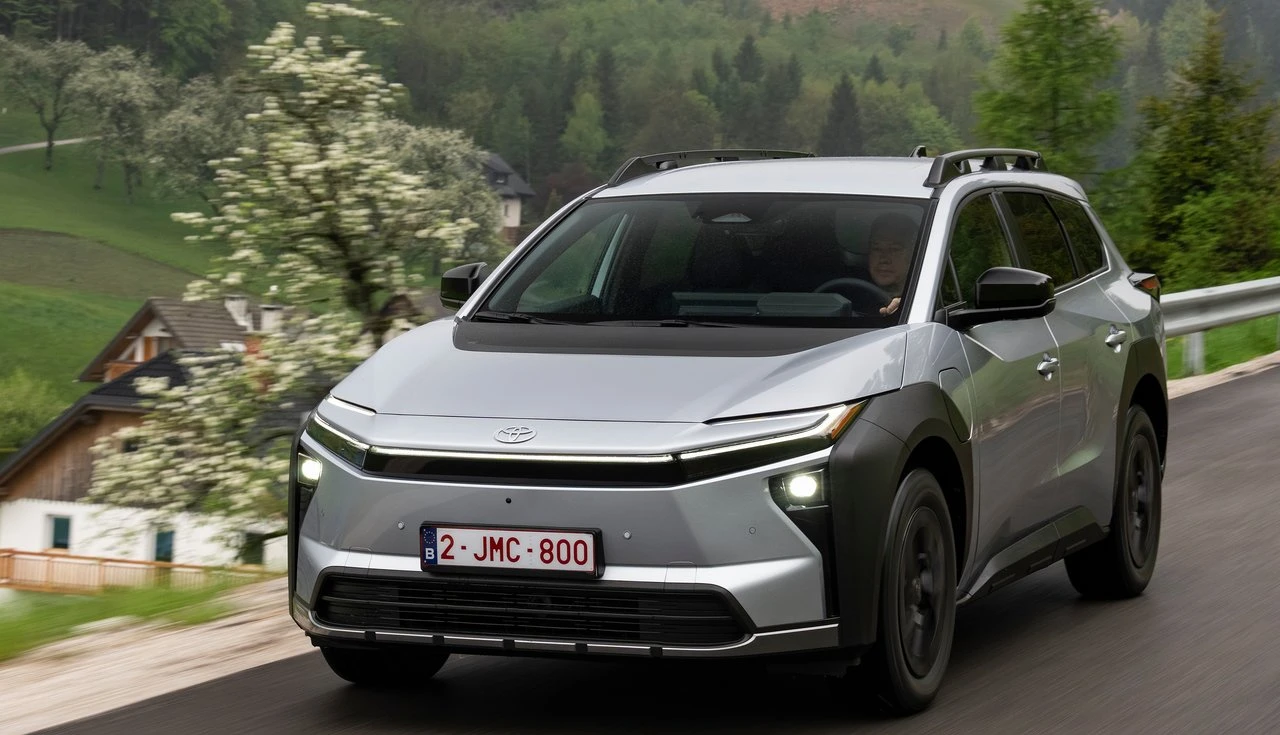
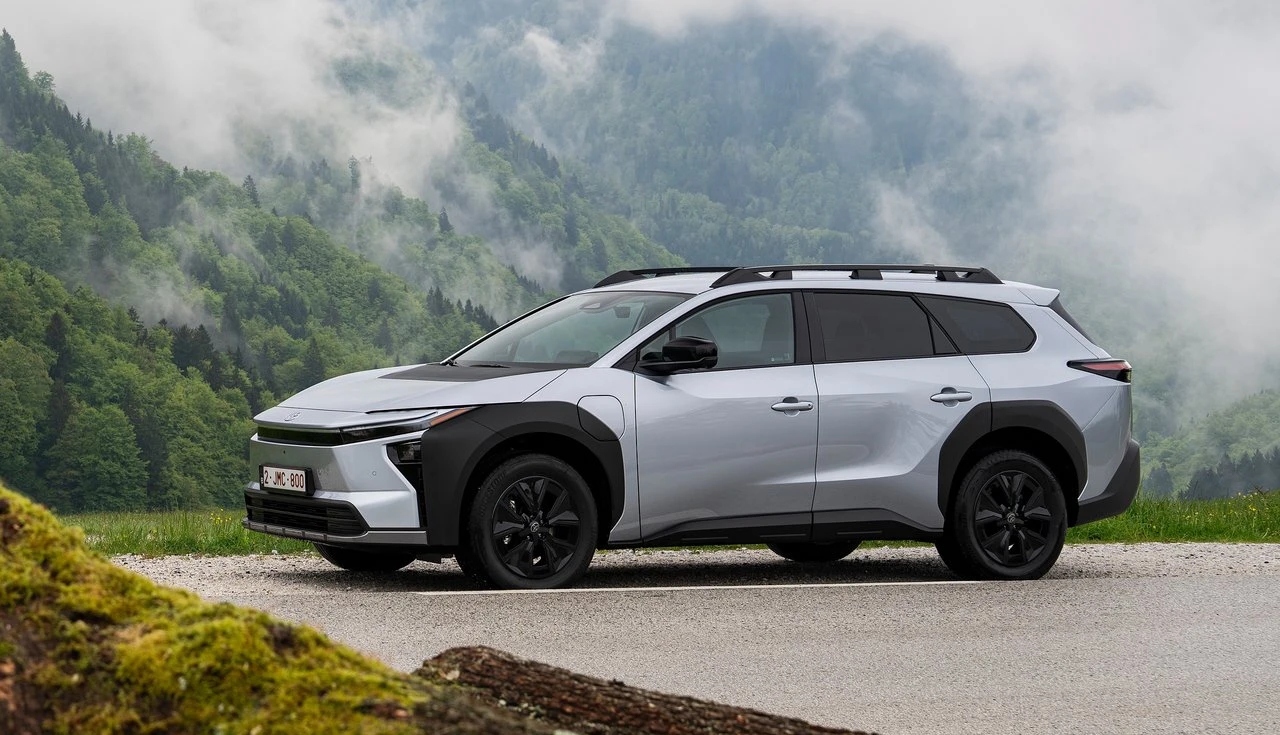
The bZ4X Touring doesn’t try to look sporty. It doesn’t need to. The silhouette is upright and purposeful — a flat roofline runs nearly parallel to the ground from the windshield to the tailgate, giving it the stance of a proper expedition wagon rather than a swoopy crossover.
Up front, the sealed grille typical of EVs is flanked by slim horizontal LED headlights connected by a full-width light bar. It’s a clean, serious face — no fussy chrome trim, no aggressive scoops trying to fake performance intent.
The sides tell the real story. Matte black fender flares, reinforced rocker panels, and prominent roof rails signal that this vehicle was designed to leave the pavement without drama. Wheel options run from 18 to 20 inches depending on the market and trim level — and the choice between them has real consequences for range and ride quality.
Out back, the redesigned rear bumper integrates underbody skid plates into the overall look rather than bolting them on as an afterthought. The taillights mirror the horizontal theme of the front end, wrapping up a design that reads as cohesive and deliberate.
The Touring communicates durability before style. Given its intended audience, that’s exactly the right call.
No Glove Box, a Knee Warmer, and a Steering Wheel That Might Block Your Speedometer
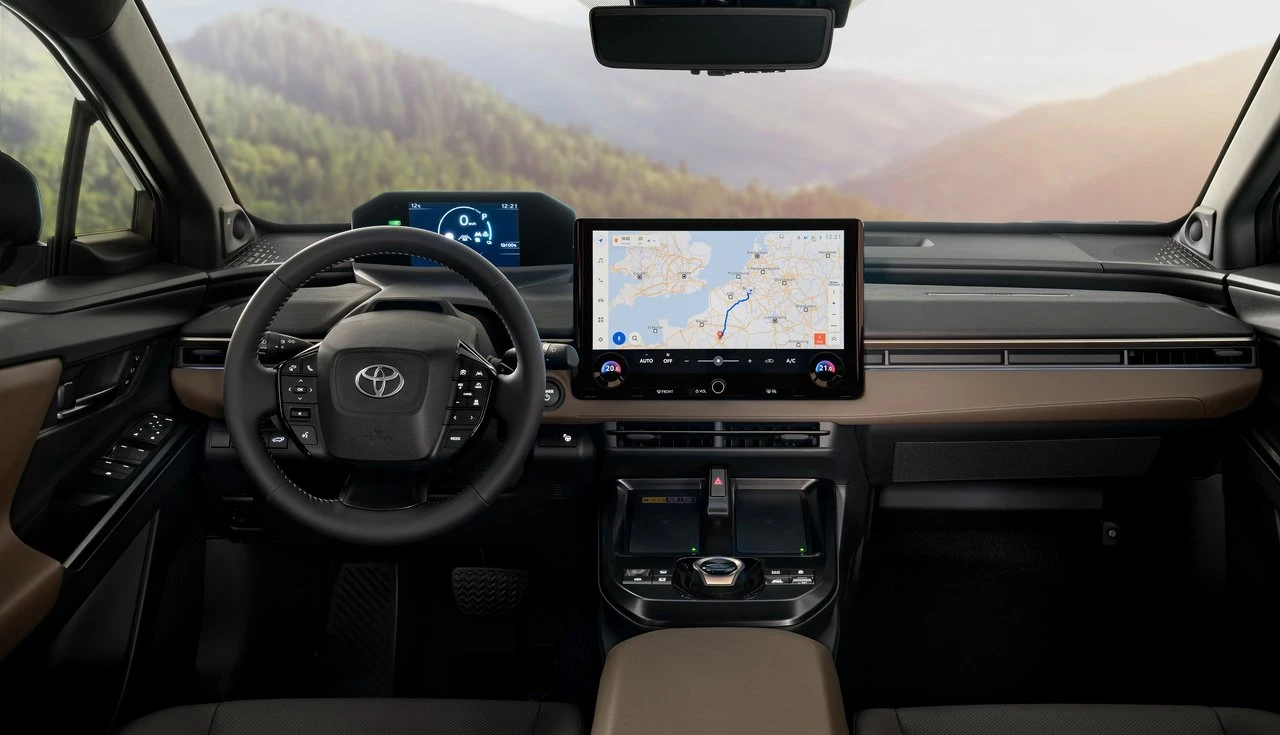
The interior of the bZ4X Touring follows Toyota’s two-tier cabin philosophy: softer materials up top where your eyes land, tougher surfaces below where kids, dogs, and muddy boots do their damage. It’s a practical decision that most family buyers will quietly appreciate after the first road trip.
The dashboard centers around a 14-inch touchscreen running Toyota’s Smart Connect+ infotainment system. Physical knobs handle climate control and audio volume — a genuinely useful design choice in a segment increasingly obsessed with burying every function inside a menu. The front seats and steering column are power-adjustable, and the overall layout is organized without feeling sterile.
The elephant in the room sits on the passenger side: there is no glove box. That space was given over entirely to an infrared radiant leg warmer — a system that heats occupants’ legs directly in seconds using far less electricity than a traditional forced-air heater. Winter range improves. Everyday storage disappears. Whether that trade-off works for you depends entirely on your lifestyle.
14-Inch Screen, Five-Star Safety, and Finally Enough Rear Headroom
The 7-inch digital instrument cluster is mounted high near the base of the windshield, positioned to eliminate the need for a separate heads-up display. The idea works in theory — until the top of the round steering wheel partially blocks the speed readout for some drivers. It’s a real ergonomic complaint documented across multiple markets, and worth experiencing firsthand before committing.
Wireless Apple CarPlay and Android Auto are standard. So is Toyota Safety Sense 3.0, which bundles automatic emergency braking with pedestrian detection, lane-keeping assist, and a proactive driving assist feature that gently slows the car before curves and approaching congestion.
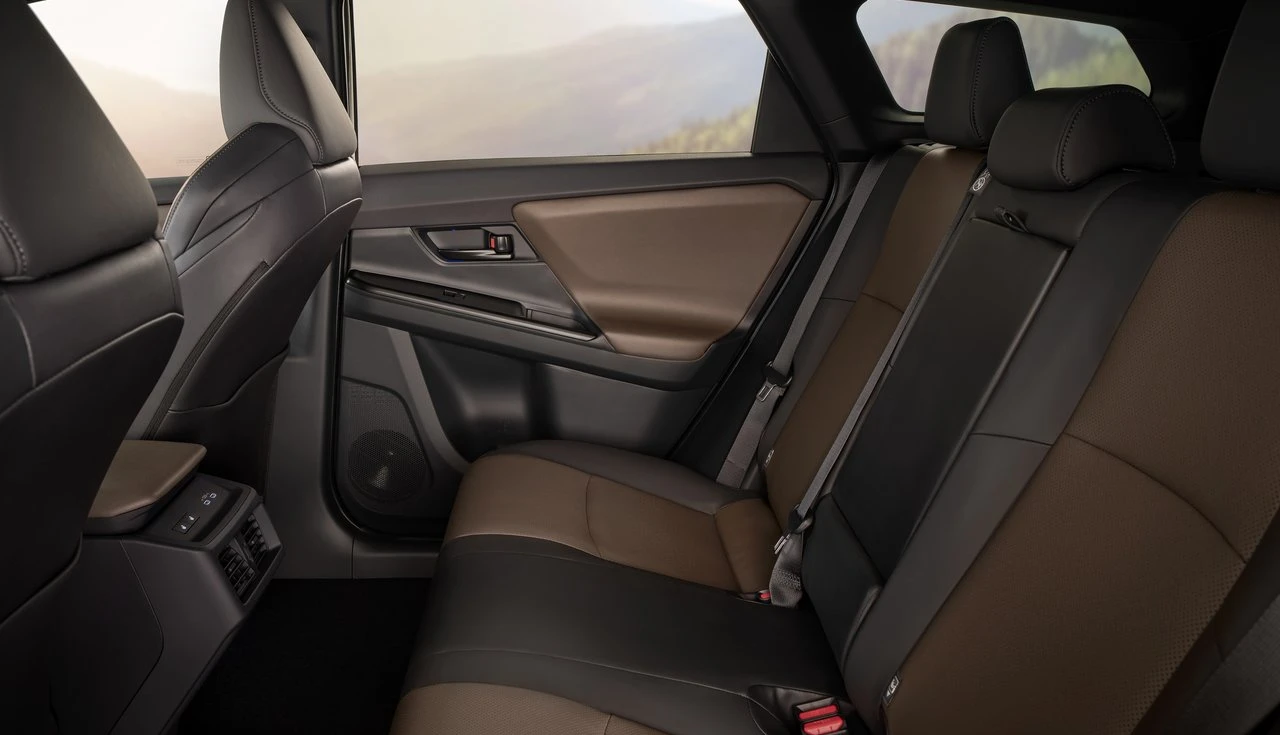
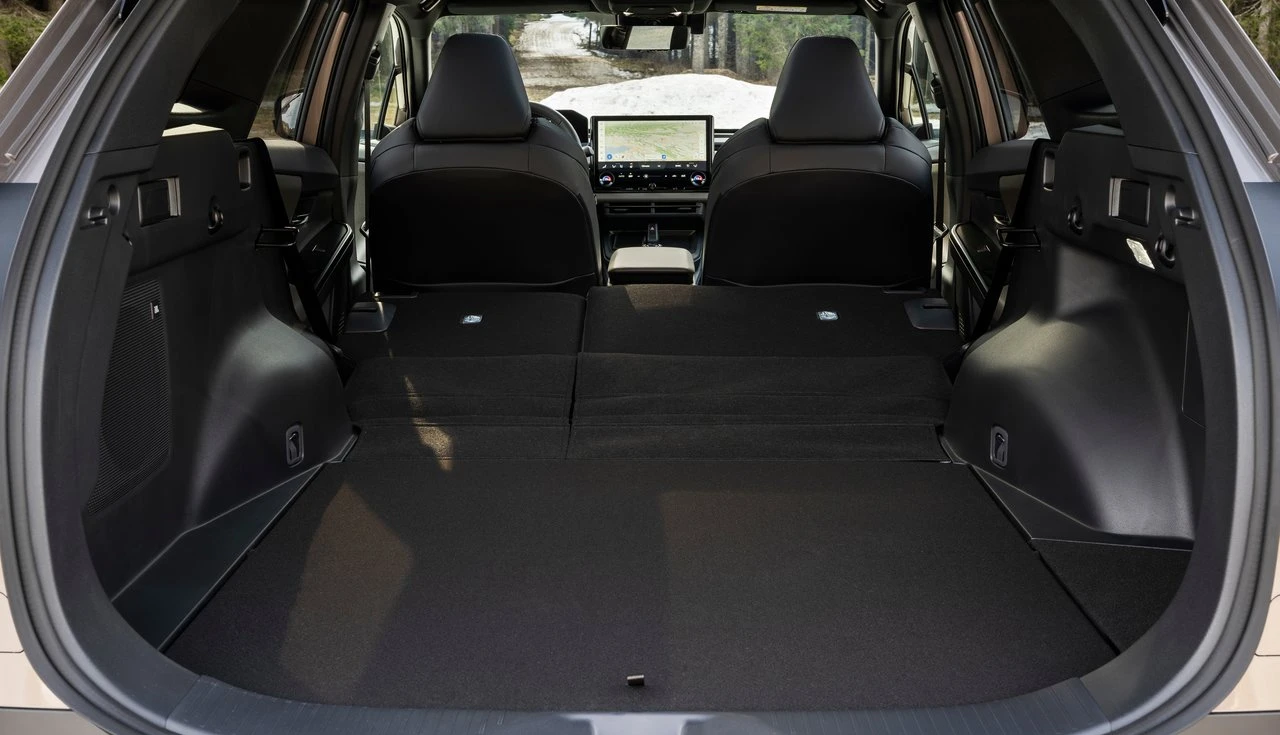
The rear seat is where the Touring’s extended roofline pays its biggest dividend. Passengers over 6 feet tall who felt squeezed in the standard bZ4X will find the headroom issue completely resolved here. Cargo space measures 33.3 to 33.8 cu ft with seats up and up to 74.3 cu ft flat — competitive numbers for this class. One notable omission: there’s no true one-pedal driving mode. The regenerative braking is aggressive off-throttle, but the car keeps creeping at low speeds, requiring a press of the brake pedal to stop completely.
380 Horsepower, Silicon Carbide Inverters, and the 0–60 Time Nobody Expected From a Toyota
The bZ4X Touring comes in two powertrain configurations. The front-wheel-drive setup uses a single 2XM electric motor producing 221 horsepower and 198 lb-ft of torque. It’s the efficiency-focused choice — EPA-cycle estimates based on WLTP data suggest real-world range up to 367 miles and energy consumption of around 14.0 kWh per 100 km. For urban families with no interest in trail driving, this is the smart buy.
The AWD version pairs two 3XM motors — one per axle — for a combined output of 375 horsepower. That’s enough to move this family crossover from 0 to 60 mph in 3.9 seconds in independent instrumented testing. For context, that’s quicker than most performance sedans and faster than any non-sports Toyota ever sold. It’s a number that tends to raise eyebrows.
The technology behind both configurations is the real headline. The new motors use silicon carbide (SiC) semiconductors in their inverters, replacing older silicon transistors. SiC loses significantly less energy as heat during high-frequency switching — which translates directly into better efficiency at highway cruising speeds, exactly where most EV energy budgets are spent.
Power comes from a 74.7 kWh gross / 71 kWh usable NMC battery pack rated for up to 328 miles of range in the AWD configuration on 18-inch wheels. DC fast charging maxes out at 150 kW, taking the pack from 10% to 80% in approximately 29 minutes. US-market models use the NACS connector, providing native access to Tesla’s Supercharger network without adapters.
One honest caveat: back-to-back full-throttle runs cause the battery management system to activate thermal protection and limit output. Normal driving is never affected — but this isn’t a car built for repeated drag-strip launches.
Technical Specs — 2026 Toyota bZ4X Touring / bZ Woodland
| Spec | Detail |
|---|---|
| Motor Type | Permanent Magnet Synchronous Electric |
| Horsepower (FWD) | 221 hp (165 kW) |
| Horsepower (AWD) | 375 hp (280 kW) |
| Torque (per motor) | 198 lb-ft (268.6 Nm) |
| 0–60 mph (AWD) | 3.9 seconds (instrumented) |
| Battery (gross/usable) | 74.7 kWh / 71 kWh |
| Range — FWD (WLTP) | Up to 367 miles |
| Range — AWD (WLTP) | Up to 328 miles (18″ wheels) |
| Max DC Charging Speed | 150 kW |
| DC Charge Time (10–80%) | ~29 minutes |
| Towing Capacity (AWD) | 3,307 lbs (1,500 kg) |
| Ground Clearance | 8.4 inches (213 mm) |
| Charging Connector (US) | NACS (Tesla Supercharger compatible) |
What the bZ Woodland Actually Costs — and Whether It Makes Financial Sense in the US
Pricing for the US-market bZ Woodland hasn’t been locked in officially at the time of publication. Based on Toyota’s global positioning and the Australian market price of $69,990 AUD (roughly $46,000 USD at direct conversion before local taxes), industry expectations place the US sticker in the $52,000–$58,000 range for the AWD variant. That is a market estimate — final pricing will be confirmed by Toyota closer to the on-sale date.
At that price point, the bZ Woodland lands squarely against the Tesla Model Y Long Range AWD, which starts around $52,490. The Tesla charges faster — up to 250 kW peak versus 150 kW here — and offers slightly more power at 324 kW. Toyota counters with 8.4 inches of ground clearance versus the Model Y’s 6.6 inches, the Subaru-developed X-MODE off-road traction system, and a battery warranty that isn’t close to matched in the segment.
That warranty deserves its own paragraph: Toyota’s Battery Care Program guarantees at least 70% of original capacity for 10 years or 621,000 miles. Keeping it valid requires scheduled dealer inspections, but for buyers worried about long-term battery degradation — the single largest resale risk in EVs — it’s a meaningful financial backstop.
Maintenance costs on the bZ Woodland should track lower than European luxury EV competitors in the same price bracket. Electric drivetrains have fewer wear items, and Toyota’s dealer network in the US is extensive enough to keep service costs competitive.
Who should buy this? Toyota loyalists stepping into their first EV, families needing serious cargo space with occasional trail capability, and anyone who plans to keep the vehicle long enough for the battery warranty to matter. Those who prioritize the fastest possible charging speeds or maximum performance per dollar should look closely at the Model Y before deciding.
Your Real Questions About the bZ Woodland, Answered Straight
What is the real-world range of the 2026 Toyota bZ Woodland? WLTP estimates put the AWD version at up to 328 miles. Real-world highway driving at US speeds typically lands 10–15% below the rated figure, so plan for roughly 280–295 miles in mixed conditions.
Does the bZ Woodland work with Tesla Superchargers? Yes. US models come standard with the NACS connector, giving native access to Tesla’s Supercharger network — no adapter required.
What’s the battery warranty on the Toyota bZ Woodland? Toyota’s Battery Care Program covers at least 70% of original battery capacity for 10 years or 621,000 miles, provided scheduled inspections are completed at an authorized Toyota dealer.
Who are the main competitors of the 2026 Toyota bZ Woodland? The primary rivals are the Tesla Model Y Long Range AWD — which charges faster and costs similarly — and the Subaru Trailseeker AWD, which shares the same drivetrain but typically costs more.
Does the 2026 Toyota bZ Woodland Earn Its Price Tag?
For the right buyer, absolutely. The combination of legitimate off-road hardware, a flat-roofed cargo-friendly body, and an industry-leading battery warranty creates a package that no direct competitor currently replicates in full.
It’s not the choice for drivers who want maximum charging speed, true one-pedal driving, or a glove box. Those are real trade-offs, not marketing spin.
But for families who put miles on their vehicles, need actual cargo room, and want the financial security of knowing their battery is covered past the point where most people sell — the bZ Woodland makes a strong, rational case for itself.
It’s the EV Toyota should have launched first.
Share this article
Related posts