Fiat Toro 50th Anniversary 2027: Everything About the 550-Unit Special Run
Fiat’s Toro 50th Anniversary Edition brings a mild-hybrid system, a 550-unit production run, and pricing around $34,000 in Brazil — but it isn’t sold in the US. Here’s what American truck shoppers should know about it.

Fiat Toro 50th Anniversary Edition Debuts With a Mild-Hybrid System
Fiat introduced the Toro 50th Anniversary Edition to mark 50 years of operations at its Betim plant in Brazil. It’s a limited run of 550 units, built on the mid-to-upper Volcano trim.
The truck carries a 2027 model designation and arrived in dealerships in the second half of 2026. Its biggest technical update is the debut of a mild-hybrid (MHEV) system on this pickup line.
It isn’t sold in the US, but it competes directly with the Ford Maverick Hybrid and Chevrolet Montana in Latin American markets, and even overlaps internally with the Ram Rampage, another Stellantis product.
Quick Facts
| Spec | Detail |
|---|---|
| Category | Compact pickup (crossover-based, unibody) |
| Powertrain | 1.3L turbo flex-fuel + 48V mild-hybrid (MHEV) system |
| Horsepower | 176 hp (gas engine output) |
| Torque | 199 lb-ft (270 Nm) |
| Transmission | 6-speed automatic |
| Drivetrain | Front-wheel drive (FWD), with electronic traction lock |
| 0-60 mph | Approximately 9.4–9.6 seconds |
| Top speed | 122 mph |
| Fuel economy | Roughly 24.7 mpg city / 25.1 mpg highway (gasoline) |
| Range | About 365 miles on a full gas tank |
| Release | Second half of 2026 (2027 model year) |
Those numbers explain the basic pitch, but not the whole story. Below is how that spec sheet plays out in styling, cabin space and everyday driving — along with where the concept runs into trouble.
A Body That Leans Into Light-and-Dark Contrast
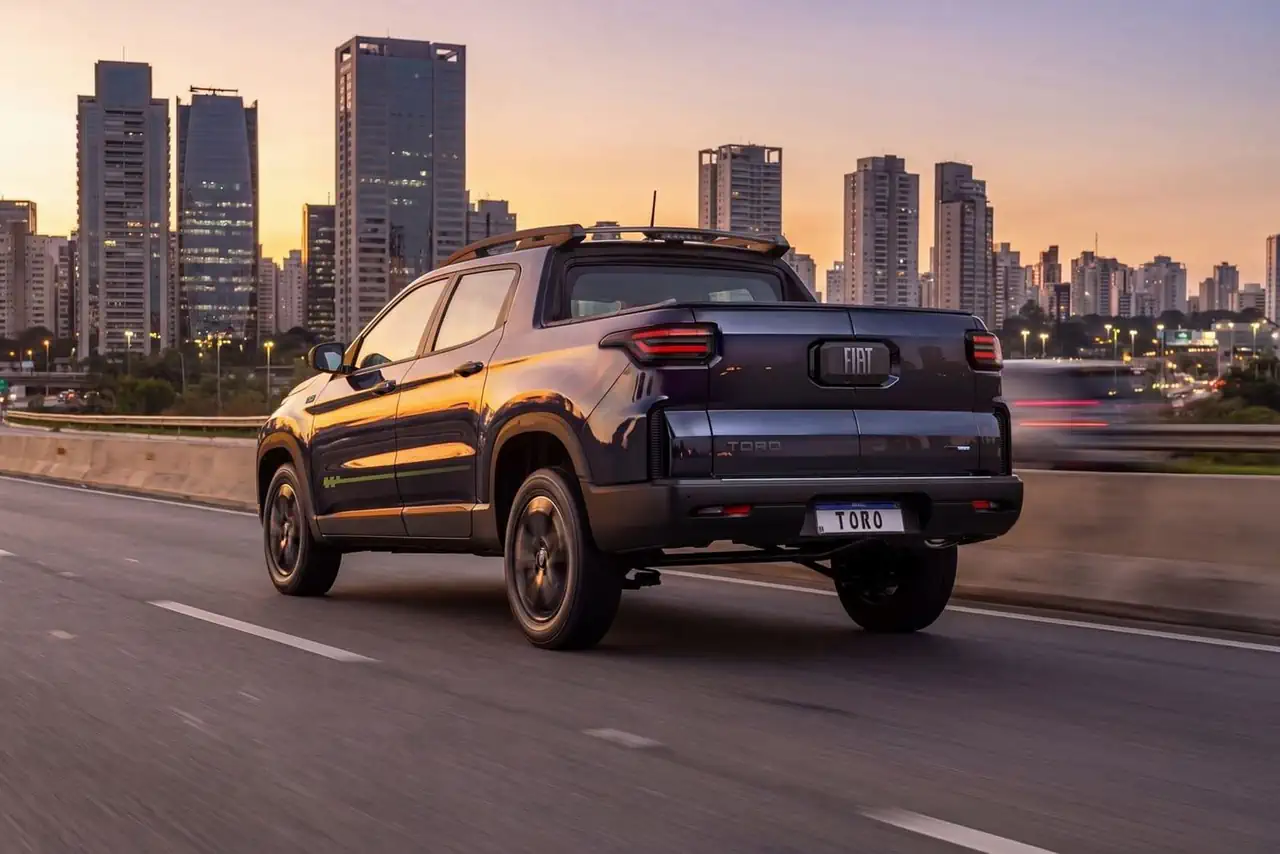
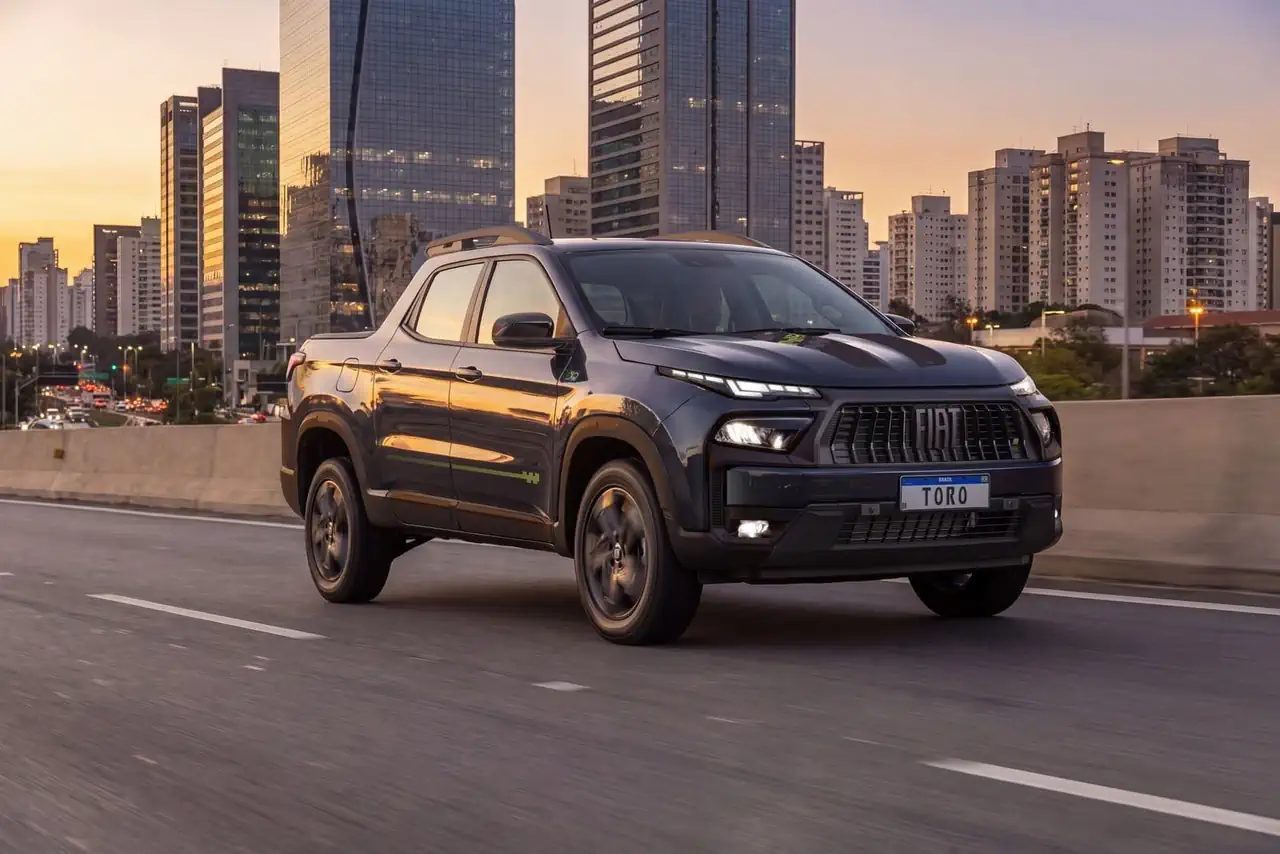
Up front, the pickup keeps Fiat’s split headlight signature, now paired with full-LED lighting and pixel-matrix daytime running lights capable of sequential turn signals — an unusual touch for this class.
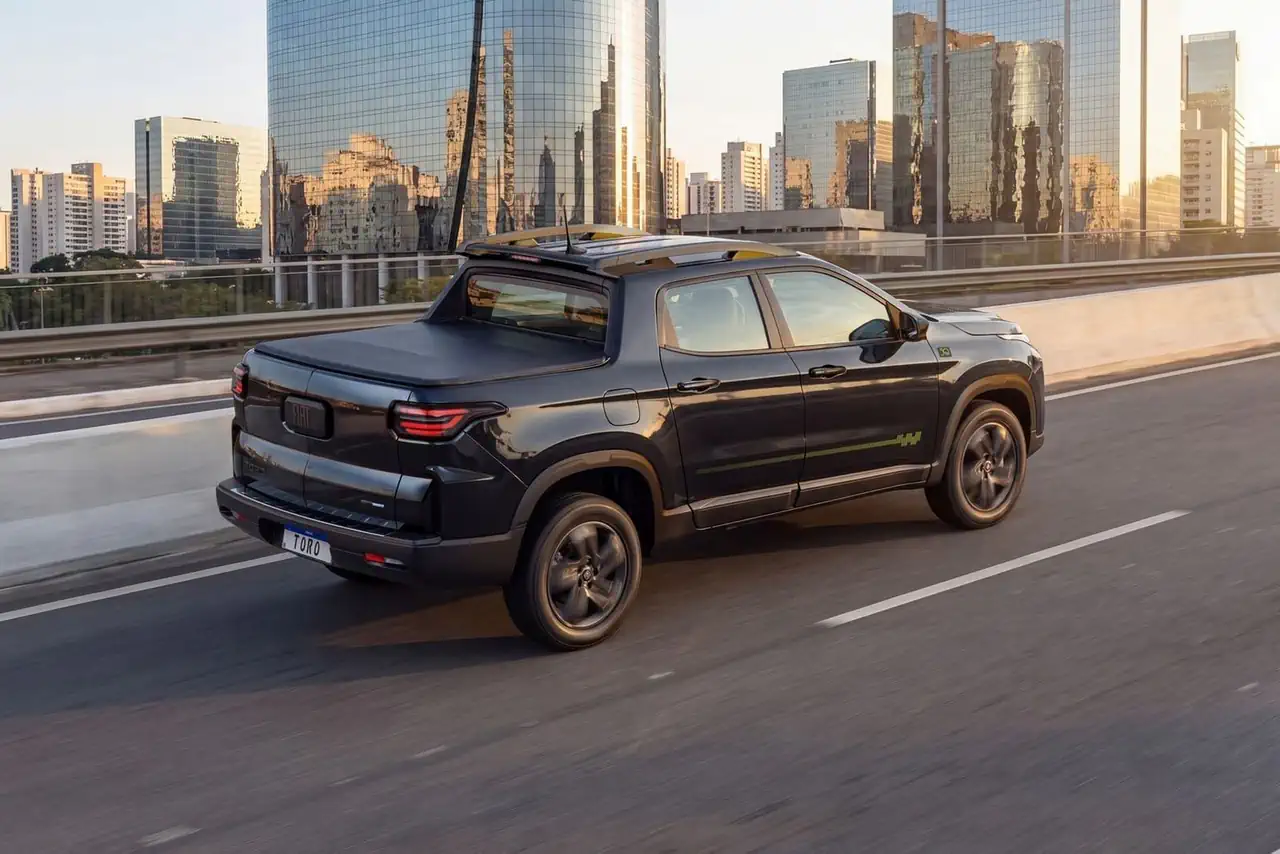
Along the sides, longitudinal decals trace the body’s character lines, and 18-inch wheels wear a graphite-and-black finish. The roof gets a gloss-black treatment as part of the two-tone scheme that sets this edition apart from the standard lineup.
Around back, a numbered 50th Anniversary badge marks the special run. The front grille carries Fiat’s four-bar emblem finished in the colors of the Italian flag, a direct nod to the brand’s origins.
Overall, the styling doesn’t reinvent what was already there. It sharpens the existing look with darkened trim and exclusivity cues, without departing from the original 2016 concept behind this segment.
Synthetic Leather, Suede Inserts and a Lime-Green Contrast Stitch
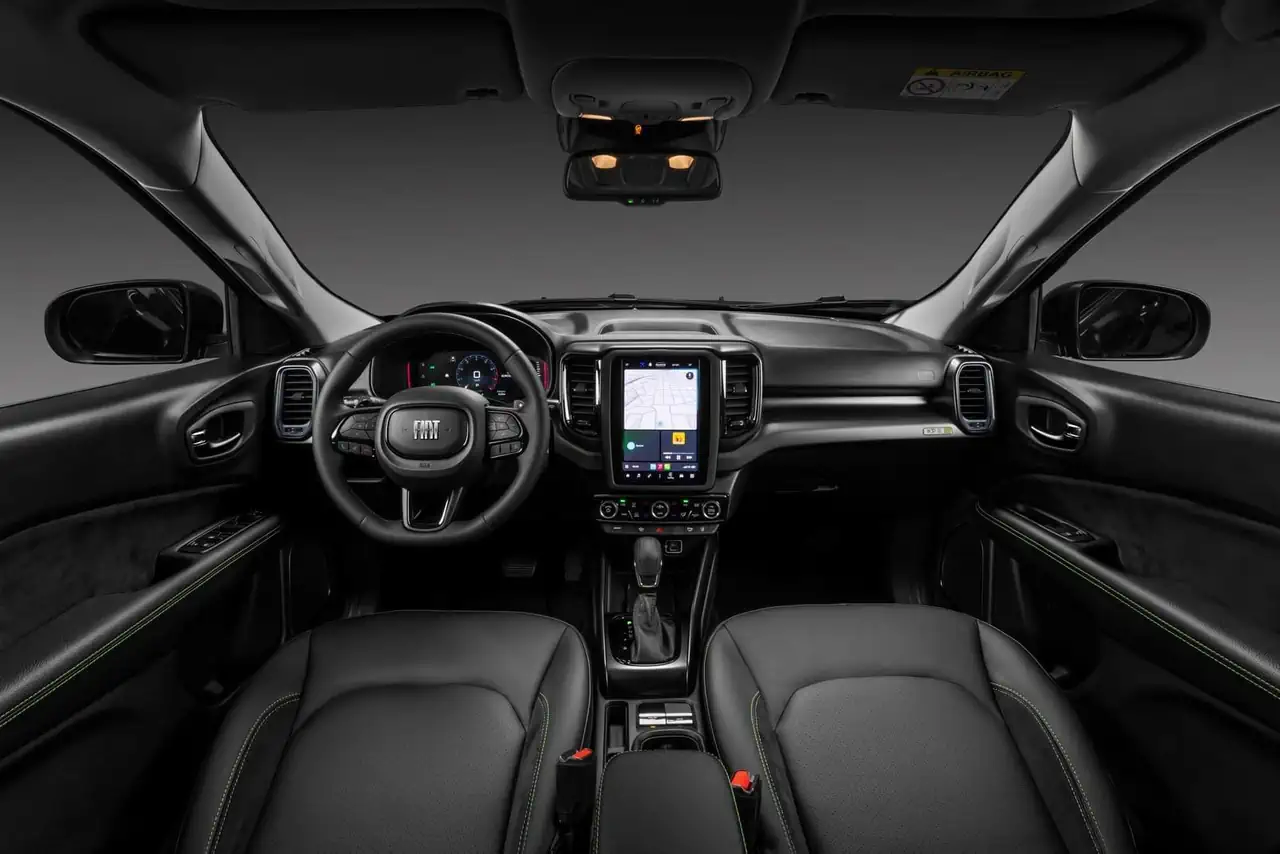
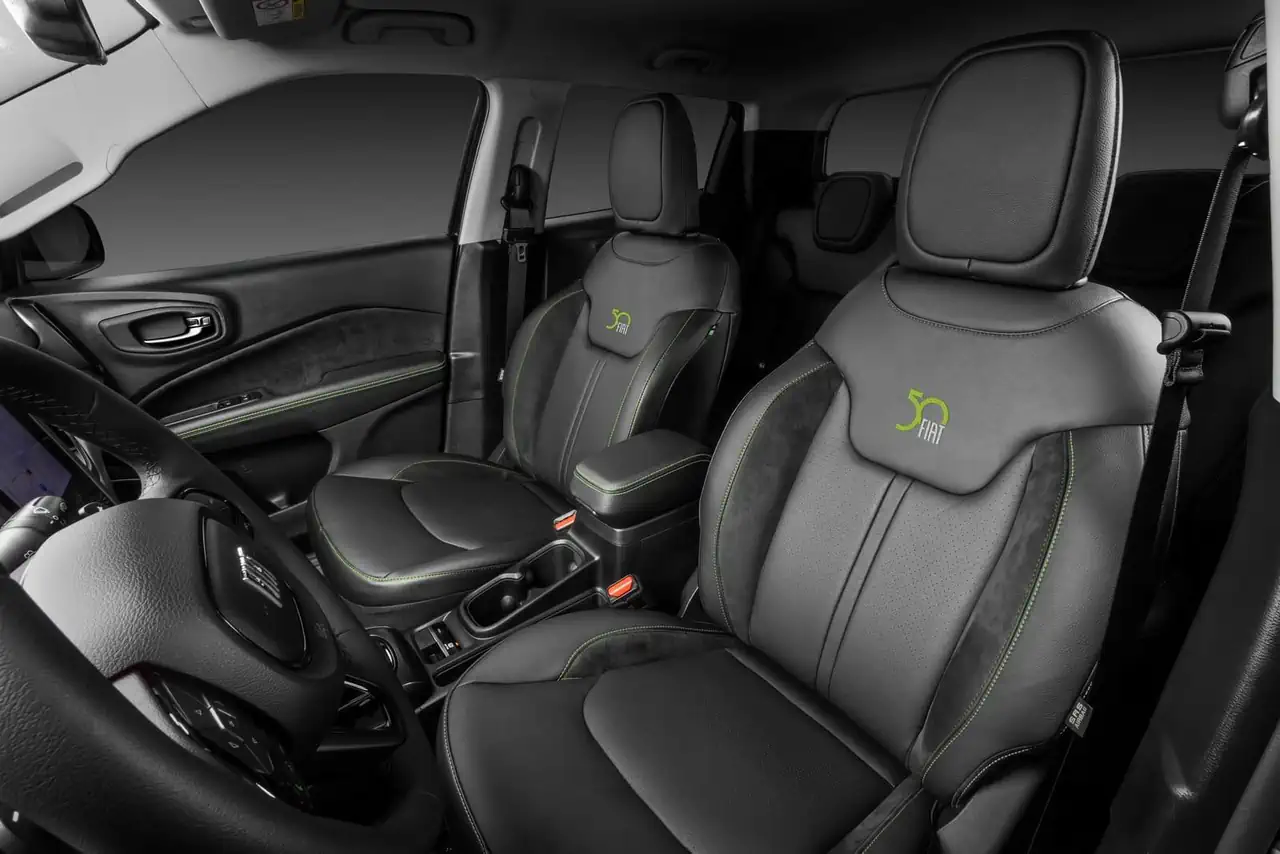
Inside, the exclusivity theme continues. Seats combine synthetic leather with suede inserts, and lime-green stitching runs along the seat edges and dashboard, with “Fiat 50” embroidered into the front headrests.
The driver’s seat gets power adjustment as standard equipment, a feature normally optional on the regular Volcano trim. A numbered plate — from 001 to 550 — reinforces the collector’s-item angle.
The finish isn’t consistent throughout, though. Lower dash and center console panels still use hard plastic, a contrast given the truck’s price tag, which pushes past $37,000 at full MSRP overseas.
A 10.1-Inch Touchscreen and 33 Cubic Feet of Cargo Room
The Uconnect infotainment system runs on a vertical 10.1-inch touchscreen, with wireless Apple CarPlay and Android Auto plus an induction phone charger that includes cooling to prevent overheating. The gauge cluster is fully digital, on a 7-inch display, with an exclusive startup animation for this trim.
Standard driver-assist features include automatic emergency braking, lane departure warning, automatic high beams and blind-spot monitoring. Notably absent is adaptive cruise control, a feature several rivals already offer.
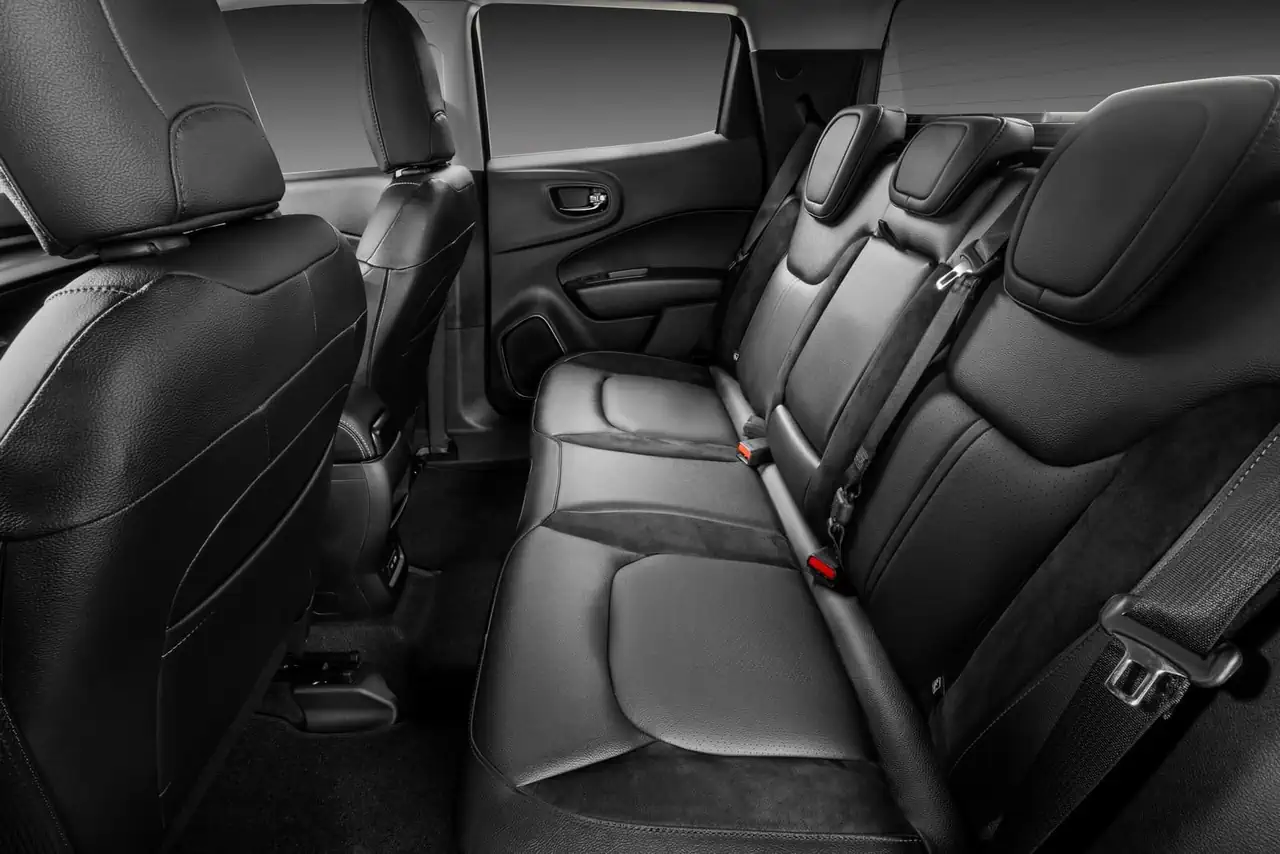
Cargo volume comes in at roughly 33 cubic feet, with a payload capacity of about 1,477 lbs. The strongest point of the cabin is that driver-assist suite; the real weak spot, based on owner and reviewer feedback, is the lack of rear air vents for back-seat passengers.
A 1.3L Turbo With Electric Assist: What It Actually Changes
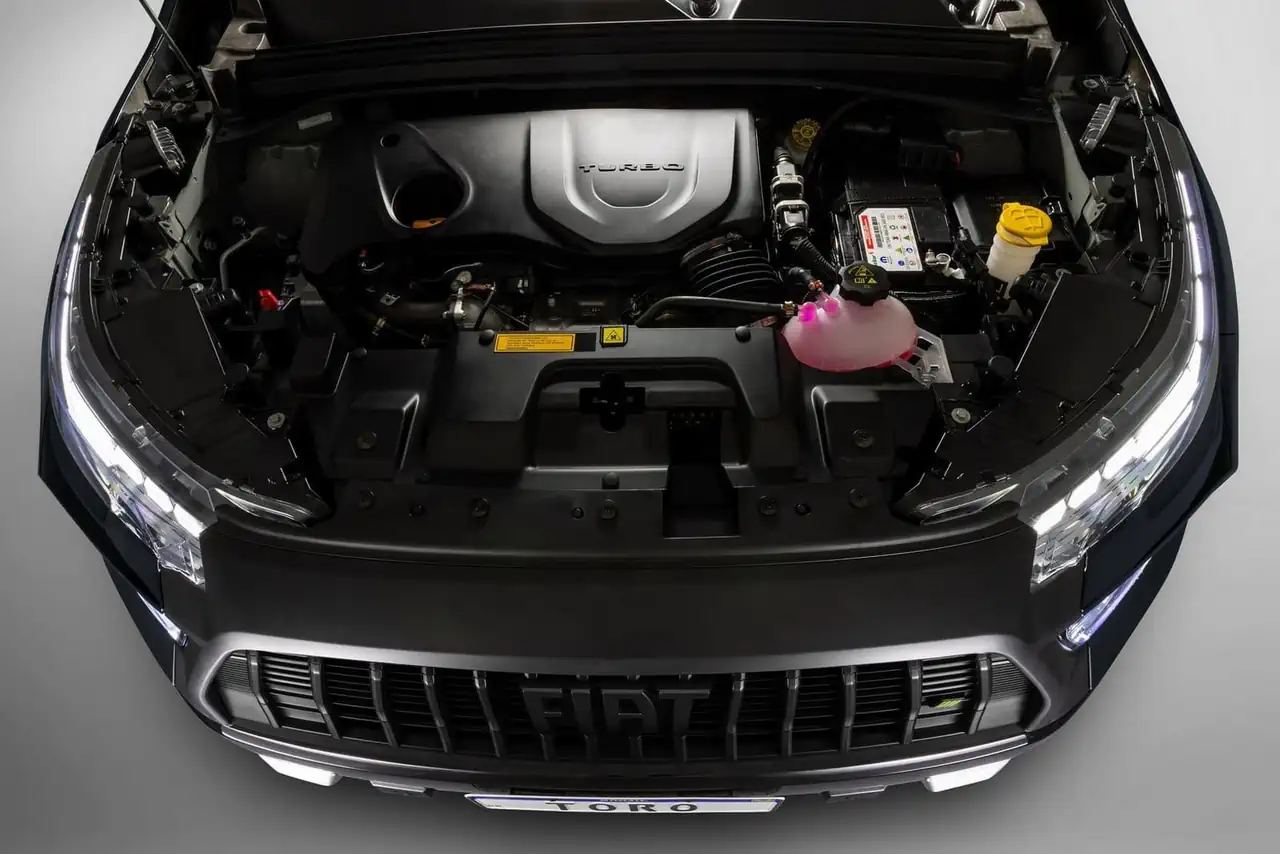
The powertrain pairs a 1.3-liter turbocharged flex-fuel four-cylinder with a 48V mild-hybrid system built around a belt-driven starter-generator (BSG). Power routes through a 6-speed automatic to the front wheels only — there’s no all-wheel-drive option.
The gas engine makes 176 hp, a figure that’s now identical whether running on gasoline or ethanol after emissions-related recalibration. The electric side adds 15.3 hp and 47.9 lb-ft, but that boost fills in low-end response rather than stacking on top of peak output.
In practice, that means smoother stops at lights thanks to a nearly imperceptible start-stop system, and less turbo lag off the line.
The 0-60 mph run lands around 9.4 to 9.6 seconds, with a top speed of 122 mph. Those numbers point to a truck built for daily commuting, not one chasing performance benchmarks.
On fuel economy, Fiat claims up to a 12% improvement in city driving versus the non-hybrid version, working out to roughly 24.7 mpg city and 25.1 mpg highway on gasoline. On ethanol, those figures drop to about 17.1 and 17.8 mpg — the mild-hybrid system narrows the fuel-type gap, but doesn’t close it.
Pricing, Insurance and Why This Truck Won’t Be an Easy US Buy
Fiat priced the special edition at roughly 37,500MSRP(converted,basedontheR37,500 MSRP (converted, based on the R 37,500MSRP(converted,basedontheR 202,480 sticker), but ran online-only promotional pricing around $33,200 — a discount of nearly $4,300 aimed at moving all 550 units quickly.
Compared with the Ford Maverick Hybrid, the Toro undercuts it by more than $6,800 in its home market, which would make it a compelling value play on paper — if it were actually sold in the US.
It isn’t. Fiat withdrew from the US car market years ago, and there’s no indication this pickup, or any Toro variant, is headed stateside. Any US pricing here is a currency-based estimate for context, not a real MSRP.
Insurance premiums in Brazil run an estimated $780 to $1,000 annually for drivers age 35-55, depending on region and driving history — figures that don’t translate directly to US insurance markets, which price risk differently.
Maintenance costs also held steady with electrification: the first scheduled service, at roughly 6,200 miles, runs about $320. Costs for the 37,000-mile service, which would include hybrid battery system checks, haven’t been disclosed by the manufacturer — a real gap for anyone estimating long-term ownership costs.
For buyers in markets where this truck is actually sold, an estimated 15% annual depreciation rate — better than some other models in Fiat’s lineup — favors buying at launch rather than waiting, especially given the collector appeal of a 550-unit run. It suits someone already committed to the Toro who wants the styling and hybrid badge, not someone cross-shopping purely on cost of entry.
Frequently Asked Questions
Is the Fiat Toro 50th Anniversary Edition sold in the US?
No. Fiat does not currently sell this pickup, or any vehicle, in the US market.
How many units of the Fiat Toro 50th Anniversary Edition were made?
Production is capped at 550 units, each individually numbered from 001 to 550.
Is the Fiat Toro 50th Anniversary Edition fully electric?
No. It uses a 48V mild-hybrid (MHEV) system that assists the gas engine — it can’t drive on electric power alone.
Does the Fiat Toro 50th Anniversary Edition have adaptive cruise control?
No. The standard driver-assist package doesn’t include adaptive cruise control, only traditional cruise control.
The Verdict
This is more of an emotional purchase than a rational one — buyers are paying for exclusivity and a hybrid badge, not a major efficiency leap.
It’s not the right pick for anyone chasing aggressive fuel savings or expecting full-hybrid performance. Rear-seat comfort also falls short for anyone regularly carrying adult passengers, given the missing rear vents.
It makes sense for someone who already likes the Toro concept and wants a numbered, visually distinct example — not for a buyer coldly comparing fuel-economy spreadsheets against the competition.
The Fiat Toro 50th Anniversary Edition delivers numbered exclusivity, but it doesn’t rewrite the fuel bill.
Would you pay a premium for a limited 550-unit run, even knowing the real-world fuel savings are modest? Let us know what you think.
Share this article

Por: Danniel Bittencourt
07/07/2026
Related posts