Honda Super-N 2026: The Cheapest Honda EV in Europe — And Why the US Misses Out
The 2026 Honda Super-N hits Europe under $27,000 with a simulated 7-speed gearbox and a Boost Mode that jumps from 63 to 94 hp. Here’s what the numbers don’t tell you.
Honda Super-N Arrives at Under $27,000 With Boost Mode and a Fake Gearbox
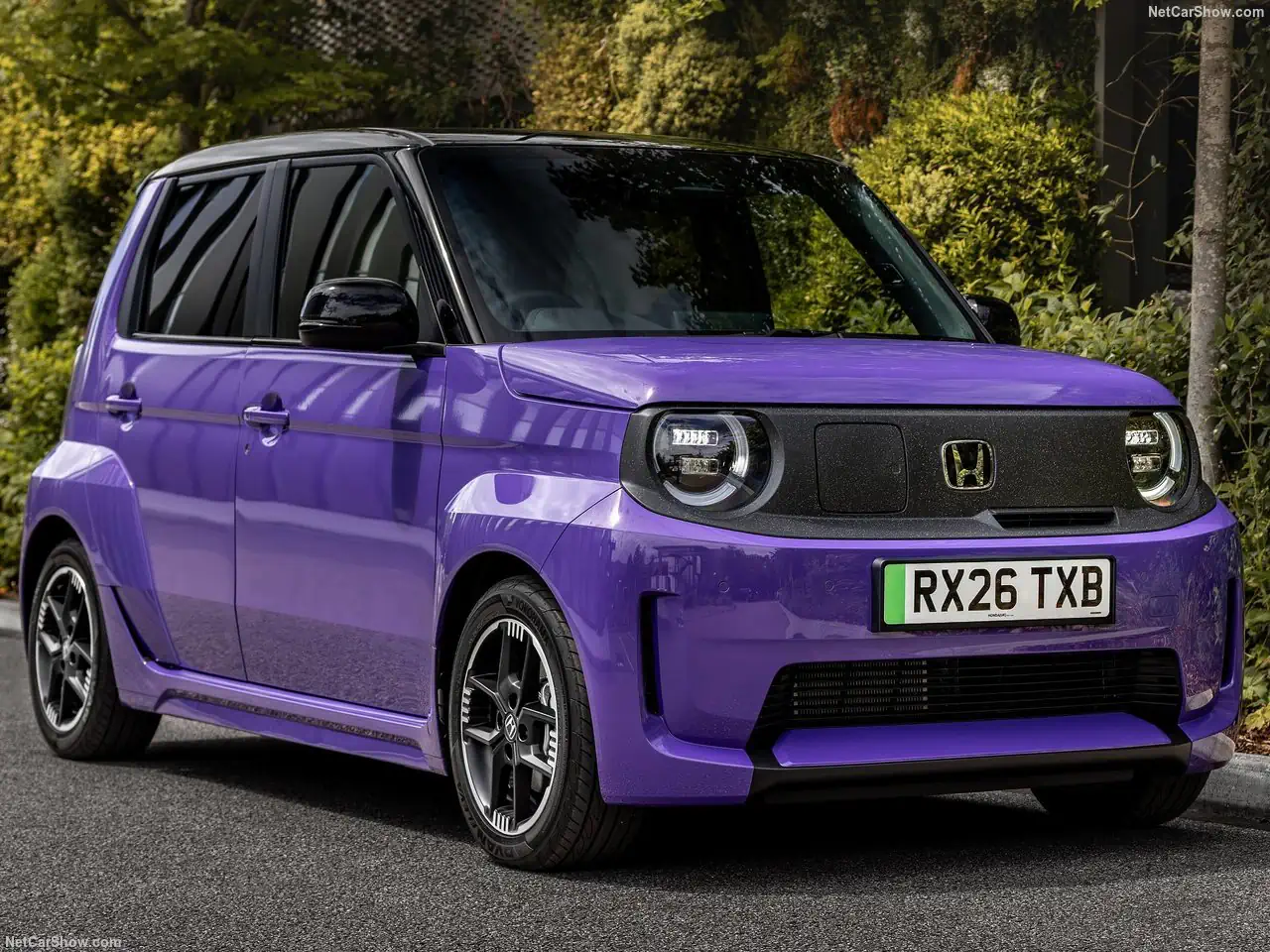
The 2026 Honda Super-N launched in the United Kingdom this summer starting at £18,995 — roughly $24,000 at current exchange rates — making it the most affordable Honda EV on sale in Europe, and one that activates a Boost Mode capable of pushing output from 63 hp all the way to 94 hp on demand.
This is a brand-new model, not a refresh. Honda positions the Super-N as a spiritual successor to the discontinued Honda e, but at a significantly lower price point and with a clearly defined urban-first mission. Think of it as the Japanese automaker’s answer to the growing flood of affordable Chinese EVs hitting European showrooms.
The closest American reference points would be the MINI Cooper SE and the now-discontinued Chevrolet Bolt — except the Super-N is physically smaller than both and priced to undercut them. Its direct rivals in the UK and Europe are the Renault Twingo E-Tech, BYD Dolphin Surf, and Hyundai Inster.
A note for American readers: Honda has confirmed no plans to sell the Super-N in the United States. The car’s compact dimensions, limited range, and stricter domestic safety requirements make a US launch unlikely in the near term. This review covers the European-spec model with all figures in US imperial units.
Quick Specs
| Spec | Details |
|---|---|
| Category | Subcompact electric hatchback (city car) |
| Powertrain | Single front-mounted electric motor (e-Axle), 29.6 kWh battery |
| Horsepower | 64 hp (standard) / 95 hp (Boost Mode) |
| Torque | ~120 lb-ft |
| Transmission | Single-speed reduction (EV) with simulated 7-speed paddle-shift software |
| Drive | Front-wheel drive (FWD) |
| 0–60 mph | ~9 sec (Boost Mode); ~14 sec (standard) |
| Top Speed | ~84 mph |
| Efficiency | ~5–5.6 mi/kWh (real-world urban/mixed, based on independent tests) |
| Range | 128 miles WLTP combined / up to 199 miles city-cycle |
| On Sale | July 2026 (UK); no US launch confirmed |
Those numbers only tell part of the story. The Super-N’s character on the road goes well beyond what its spec sheet suggests — and the Boost button on the steering wheel is where it gets interesting.
An ’80s Throwback That Actually Works in 2026
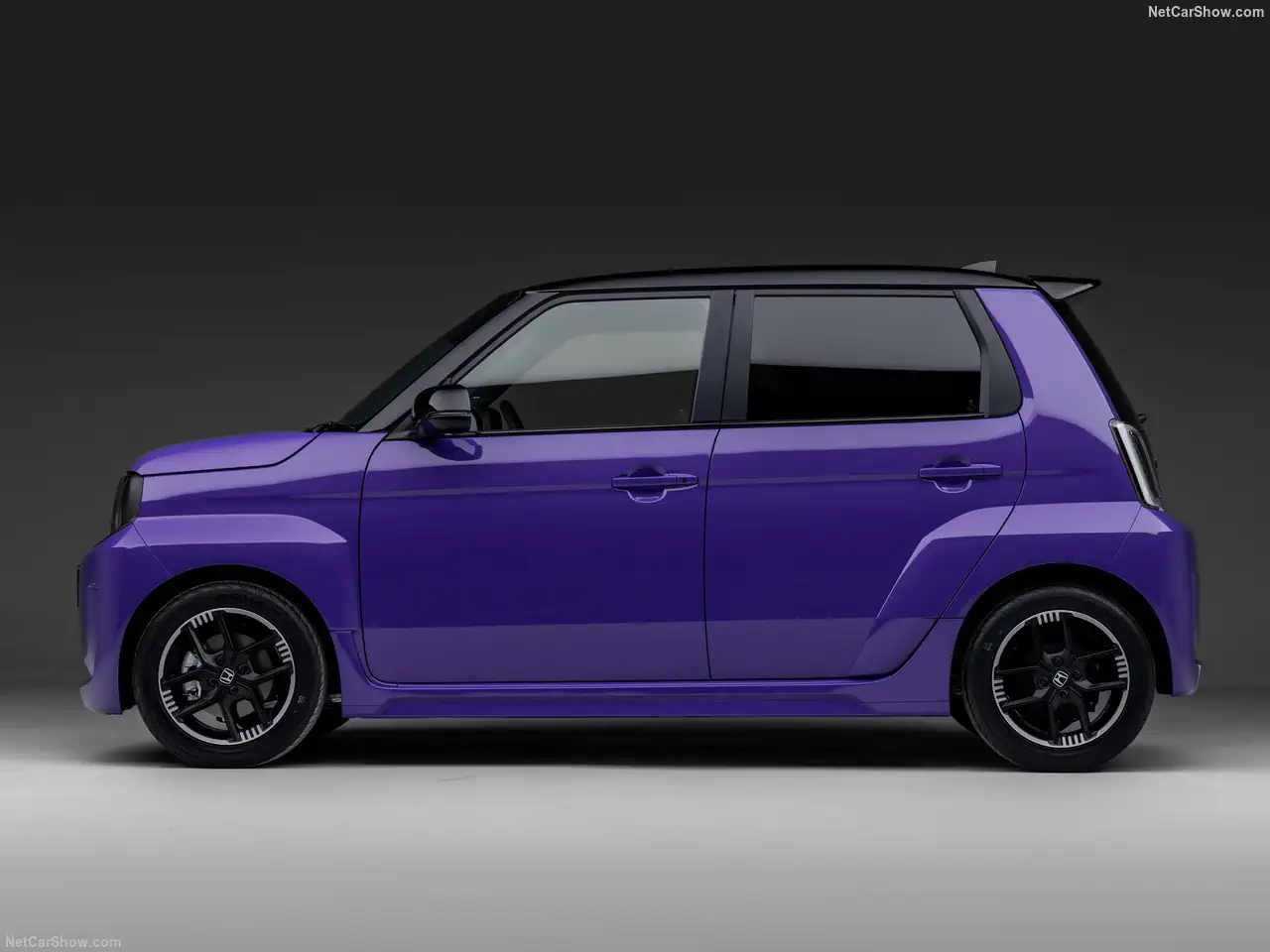
Seeing the Super-N in person for the first time is a bit of a double-take moment. The car is deliberately boxy, upright, and narrow — all intentional nods to the Honda City Turbo II, the Japanese hot hatch that ran from 1983 to 1986 in Japan. At roughly 141 inches long, it’s shorter than a MINI Cooper SE and closer in footprint to a Fiat 500 — context that matters when you’re trying to gauge whether it would ever survive on American highways.
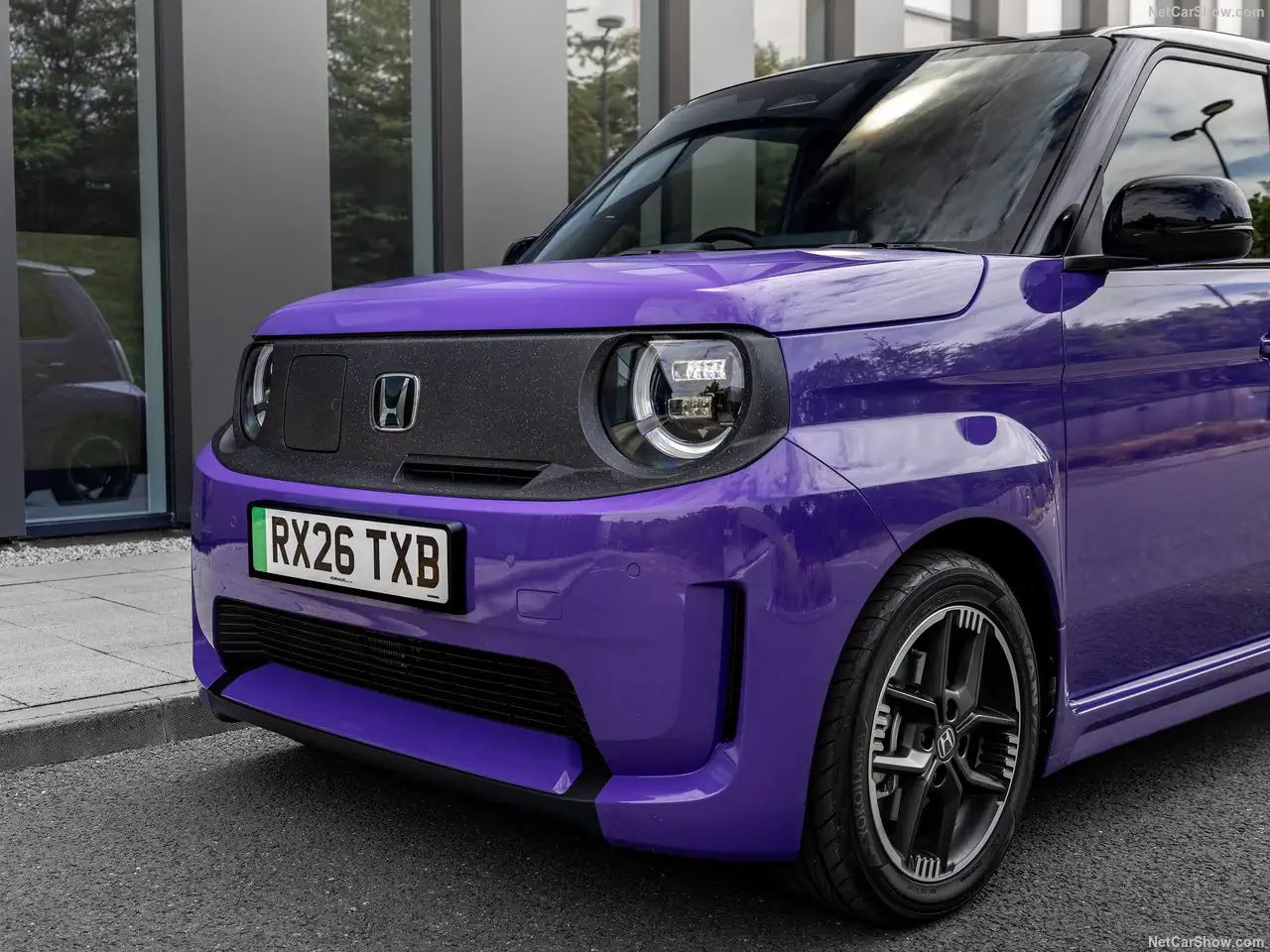
Up front, the closed grille uses recycled plastics, and the rectangular LED headlights read as almost comically retro against the modern EV landscape. The hood is short, the windshield is nearly vertical, and the overall stance communicates exactly what kind of car this is: built for city blocks, not interstates.
Along the sides, flared fender arches and 15-inch alloy wheels pushed to each corner of the car create a visual presence that outpunches the actual footprint. When was the last time a new car launched with 15-inch wheels and still looked purposeful? The Super-N somehow pulls it off.
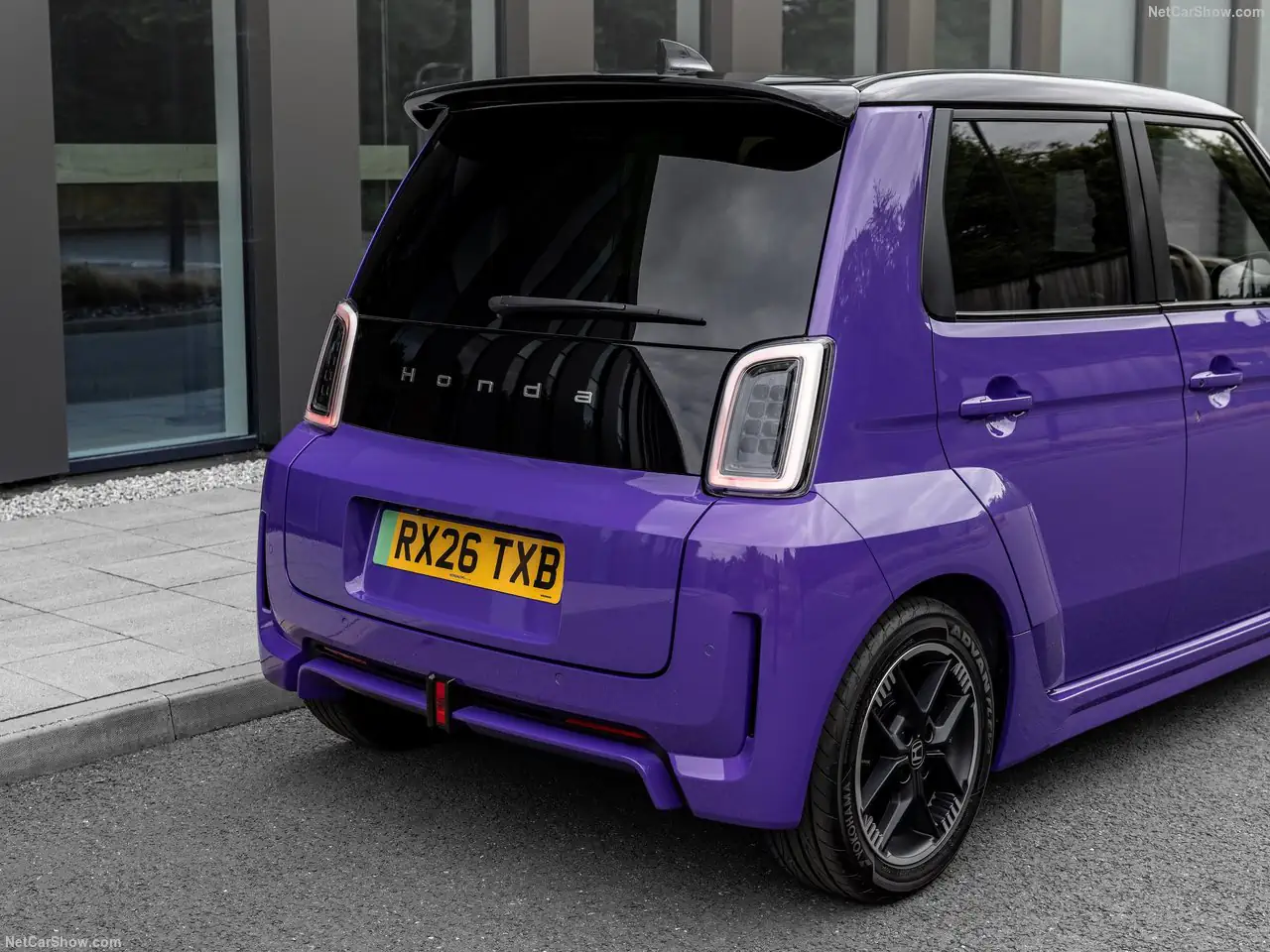
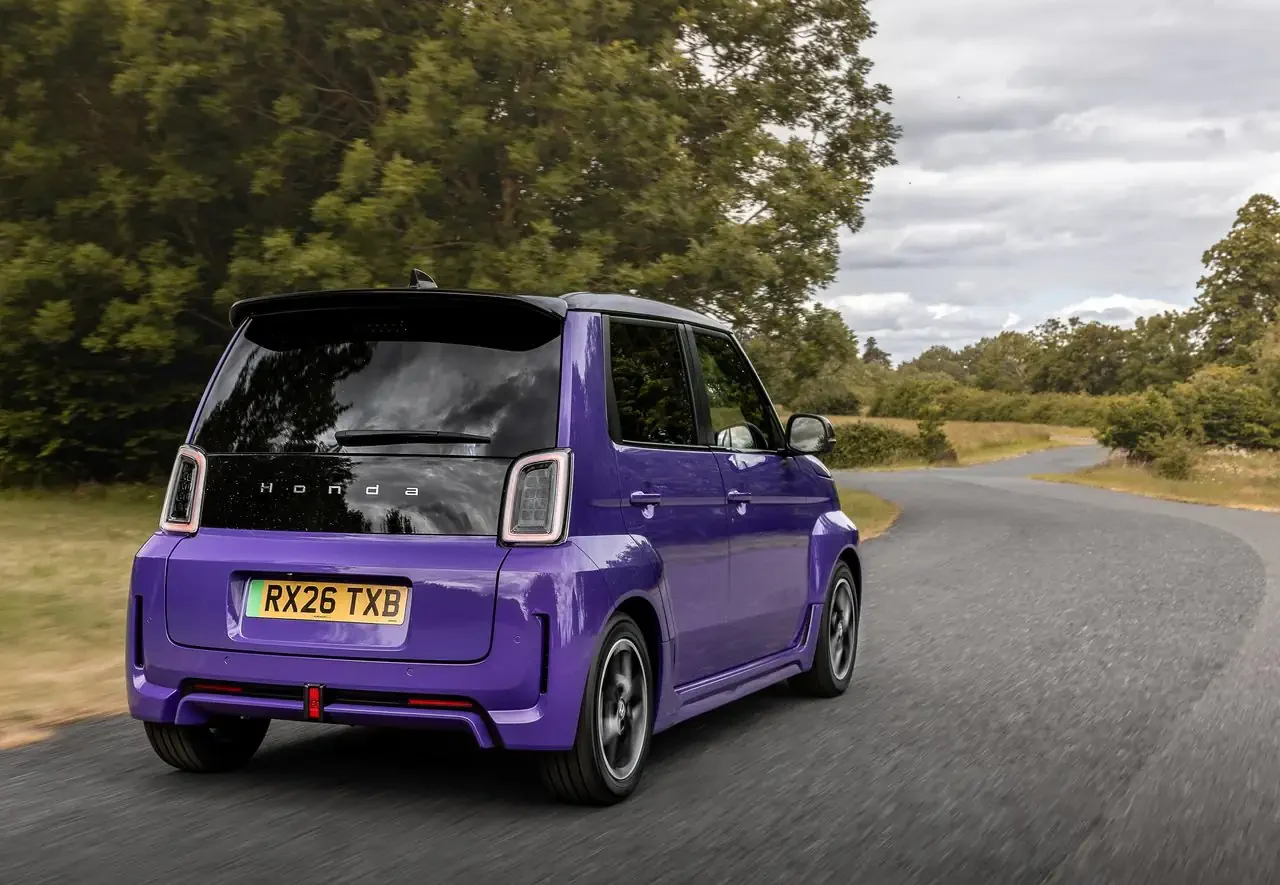
Out back, the near-vertical tailgate and small roof spoiler close out the design with consistency. Taken as a whole, the Super-N looks like nothing else on European streets right now — which is either its greatest strength or a question about long-term appeal, depending on who you ask.
A Cabin That Prioritizes Honesty Over Flash
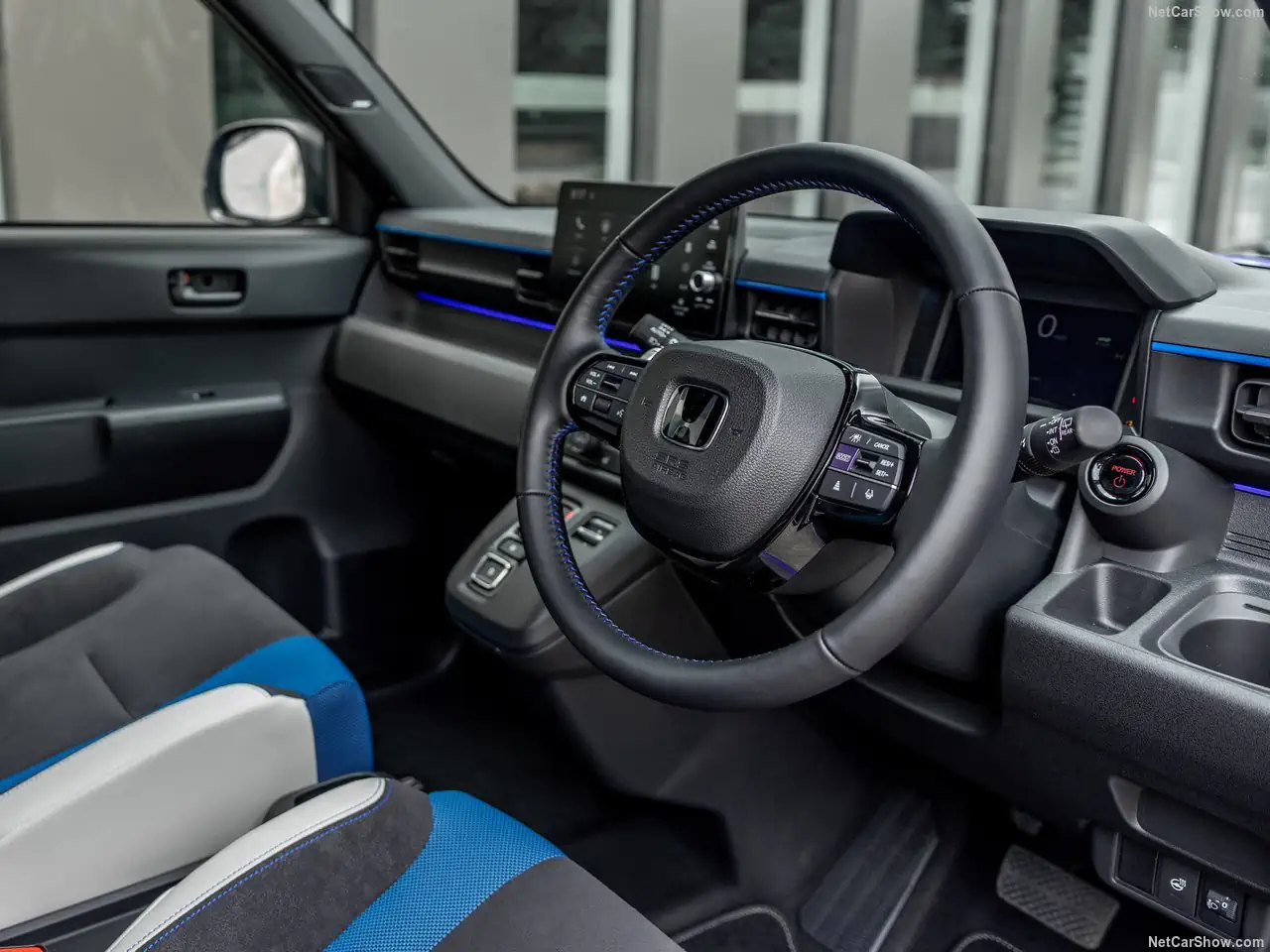
Step inside and the interior won’t remind you of a Tesla or a premium German EV. The dashboard runs horizontally across the cabin with a clean, minimalist layout — physical climate controls, no floating glass screens, no ornate trim. The plastics are hard but well-assembled, and the overall impression is one of solid, functional simplicity rather than luxury for its own sake.
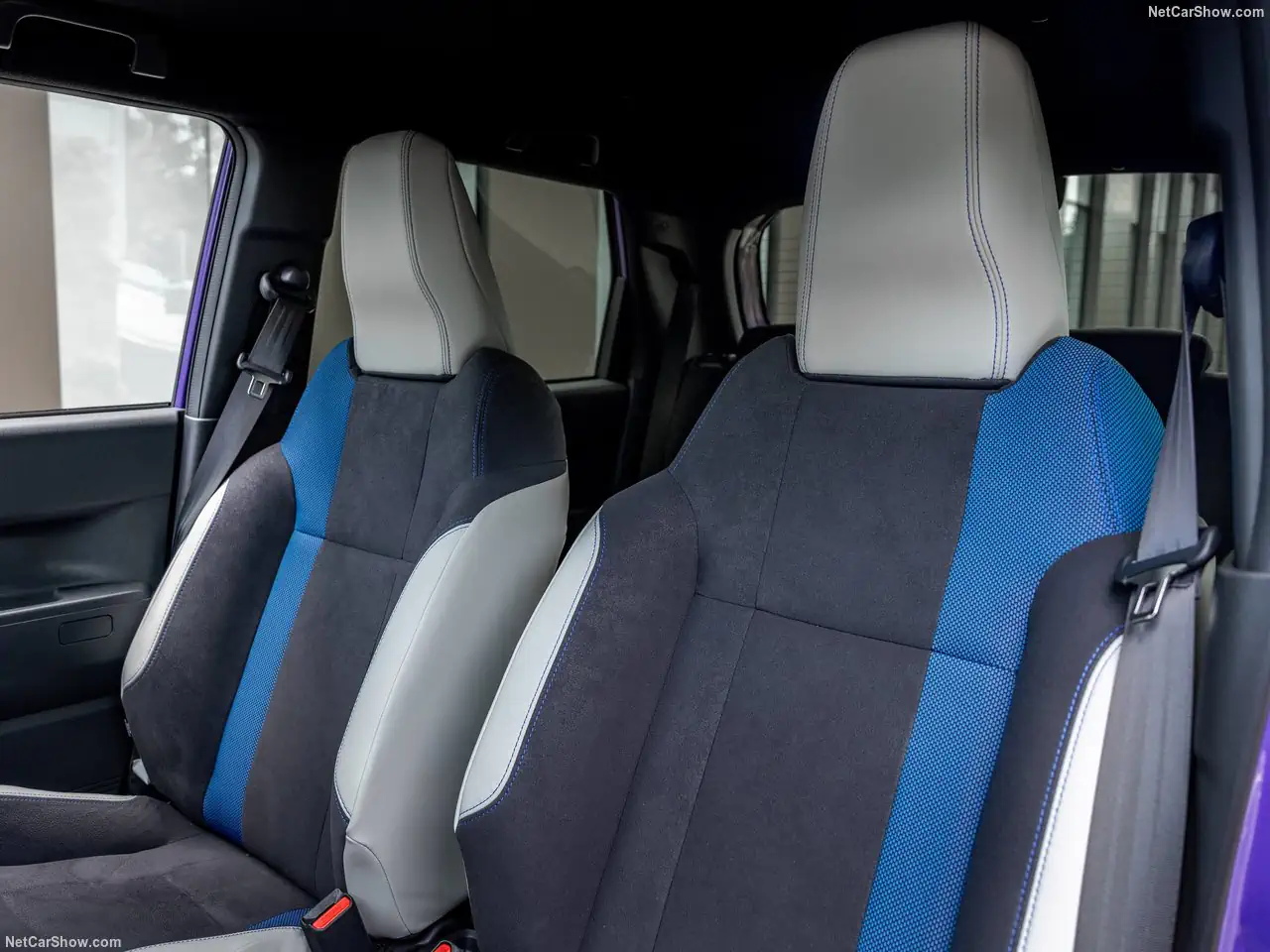
The front seats draw immediate attention. Styled after the original City Turbo II with asymmetric blue accents, they’re trimmed in recycled fabric — Honda says some of it came from employee uniforms. For a city car, the lateral support is surprisingly decent, and comfort holds up well across a full urban workday.
Compared to a MINI Cooper SE or a Fiat 500e, the Super-N interior doesn’t aim for the premium shelf — it goes for character instead. That’s a deliberate choice, and it mostly works for the target buyer. Against the BYD Dolphin Surf, the Honda reads as higher-quality in assembly feel, even if neither cabin costs extra to build.
Tech, Rear Space, and the Bose Surprise
The 9-inch touchscreen supports wireless Apple CarPlay and Android Auto, and the 7-inch digital instrument cluster keeps things legible without clutter. Honda Sensing — the brand’s driver assistance suite — comes standard, covering automatic emergency braking, adaptive cruise control, and lane-keeping assist.
The most unexpected feature for a sub-$27k EV is the Bose audio system: eight speakers plus a 20cm subwoofer mounted in the rear cargo area, all included at the base price. It’s a genuine differentiator in this segment, where most rivals ship with mediocre single-source audio.
Rear seat room is respectable for the class — adults up to roughly 6’3″ can fit behind themselves without major complaints, though the narrow body keeps shoulder room tight. The cargo area is a real constraint: 5.7 cubic feet with seats up, which is tight by any measure. Honda’s Magic Seats fold and flip to free up around 34 cubic feet when rear passengers aren’t needed.
Clear strength: Bose audio standard on a city EV under $27k is genuinely hard to match. Real limitation: 5.7 cubic feet of cargo space with seats occupied makes this impractical for anything beyond a weekend grocery run.
Power, Range, and What It’s Actually Like to Drive
The drivetrain is mechanically simple: one front motor, one fixed reduction gear, and a 29.6 kWh battery pack. In standard mode, output is 64 hp and ~120 lb-ft of torque, sending the Super-N to 60 mph in about 14 seconds — not quick, but appropriate for stop-and-go city traffic where instant electric response covers the gaps. That said, on a highway on-ramp or during a fast merge, you’ll feel the limits.
Hit Boost Mode, and the character shifts. Output climbs to 95 hp, and 0–60 mph drops to roughly 9 seconds. British journalists who drove it back-to-back with the Renault Twingo and BYD Dolphin consistently noted that the Super-N feels more alive in corners — a result of its wide stance, wheels at the extremes of the bodywork, and suspension calibrated specifically for UK tarmac. Add the simulated 7-speed paddle-shift system with artificial engine sounds, and the experience reads like an ’80s hot hatch translated into software.
Top speed is electronically limited to 84 mph. That’s highway-legal but leaves zero margin, so US highway driving would feel constrained even if the car were sold here.
Real-world efficiency tests recorded around 5.6 mi/kWh in urban and mixed driving, which is solid for a 1,097 lb (2,418 lb) subcompact EV. The 128-mile combined WLTP range is achievable with efficient driving, and the city-cycle figure of 199 miles is realistic for short-haul urban users. DC fast charging tops out at 50 kW — meaning a 10–80% charge takes about 30 minutes. Rivals like the Hyundai Inster push closer to 85 kW, which gives them a clear edge on road-trip scenarios.
Pricing, Insurance, and the Real Cost of Ownership
The Super-N launched in the UK at £18,995 — approximately $24,000 at current rates — which makes it more affordable than a MINI Cooper Electric ($34,750 MSRP) and in line with the now-discontinued Chevrolet Bolt EV ($26,500 before it was cancelled). On paper, that’s a compelling value proposition for an EV with Bose audio, heated seats, and a full driver-assist suite.
But for American readers, this pricing is theoretical. Honda has confirmed no plans for a US launch. Were the Super-N to arrive stateside — accounting for shipping, NHTSA compliance modifications, dealer margins, and brand positioning — an estimated market price would likely land between $28,000 and $33,000, putting it squarely against the MINI Cooper SE and Chevy Equinox EV entry levels.
On insurance premiums, no official actuarial data exists for the Super-N in the US market. For context, compact EVs in America with similar power outputs typically run between $1,200 and $1,800 annually for full coverage, depending on the driver’s profile and ZIP code. The Super-N’s modest power figures and city-car profile would likely keep it on the lower end of that range.
Maintenance costs for a single-motor FWD EV are inherently lower than those of an ICE vehicle — no oil changes, no timing belt, no clutch. Honda’s standard warranty covers 3 years/36,000 miles, with an 8-year battery warranty available for buyers who service at Honda dealerships. Financing at current US rates (roughly 6–7% APR for 60 months) on a $30k MSRP would run approximately $580–600/month — competitive for a fully equipped compact EV.
As for depreciation: the Super-N has no US resale history to reference, but Honda’s own Honda e depreciated aggressively in Europe due to its niche appeal and limited range. Buyers who prioritize asset retention should approach this category with caution.
What to Know Before Buying the Super-N
What is the real-world range of the Honda Super-N?
The WLTP combined range is 128 miles; city-cycle estimates reach 199 miles. Independent tests confirm combined figures are achievable with moderate driving — urban-only use does better.
Does Boost Mode on the Honda Super-N make a real difference?
Yes. Output jumps from 64 hp to 95 hp and 0–60 mph drops from ~14 sec to ~9 sec. It’s a timed, on-demand function — not a permanent performance setting.
Who are the Super-N’s main competitors?
In Europe: Renault Twingo E-Tech, Hyundai Inster, BYD Dolphin Surf, and Fiat Grande Panda Electric. In US terms, the closest conceptual equivalents are the MINI Cooper SE and the discontinued Chevrolet Bolt.
Is the Honda Super-N expensive to maintain?
No official US service cost data exists, but single-motor EVs generally carry lower maintenance bills than combustion cars. Honda’s 8-year extended warranty (with dealer servicing) offers meaningful long-term coverage.
Does the Super-N Deserve a Spot in Your Garage?
The Super-N is, without question, an emotional buy — but one backed by solid rational arguments. For urban commuters who drive under 80 miles daily, the pricing, standard equipment, and driving experience combine to make a genuinely compelling package.
This car is not for drivers who need highway range, fast DC charging, or serious cargo space. The 128-mile combined range and 50 kW DC limit are real constraints — not marketing footnotes.
A city car with fake gears that drives better than most real ones.
Would you pay $30k for a Honda Super-N if it came to the US — or would you rather take the MINI Cooper Electric with its better range and dealer network? Drop your honest take in the comments below.
Share this article

Por: Danniel Bittencourt
22/06/2026
Related posts