Why American Buyers Won’t Get the X5 M60e
The 2027 BMW X5 M60e packs 612 hp, a hybrid B58 engine, and a design change that erases a signature feature dating back to 1999 — but it won’t be sold in the United States. Here’s what’s coming instead, and how the numbers stack up.
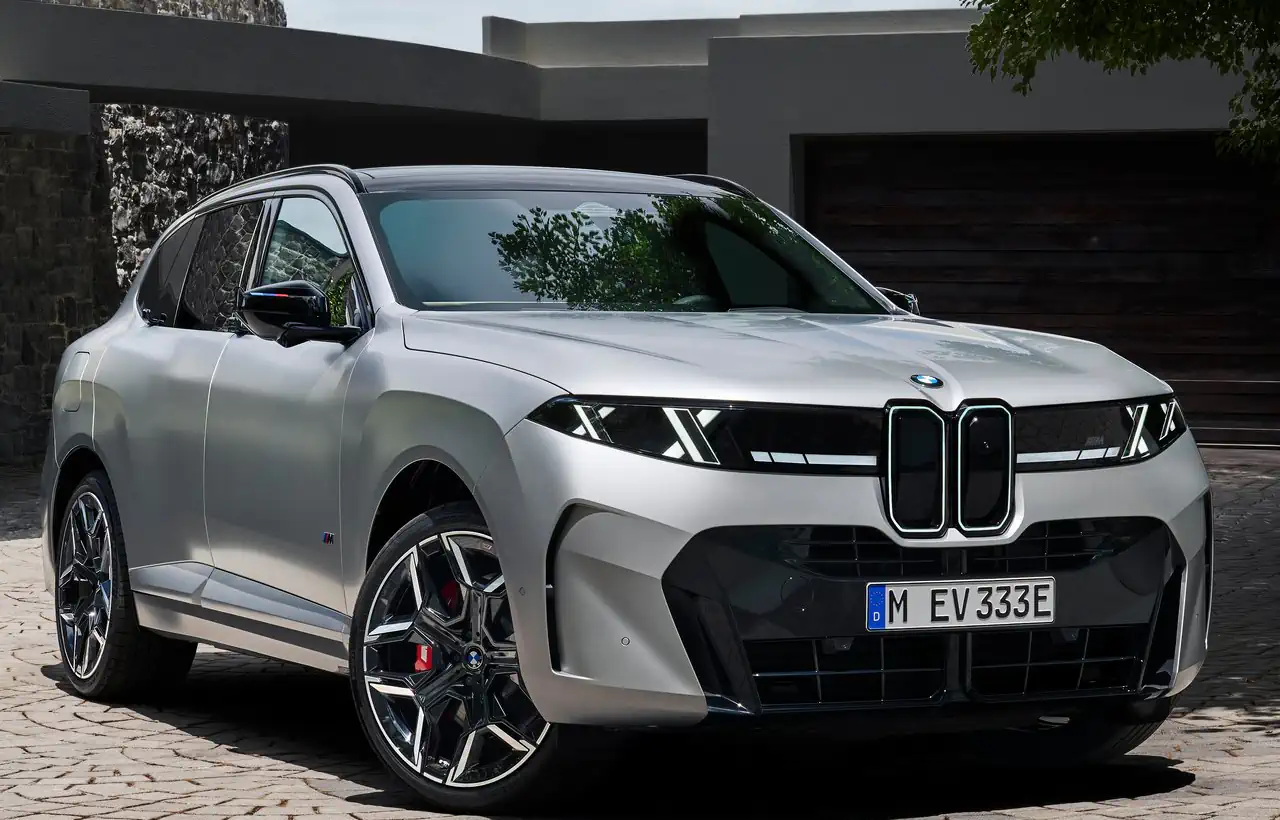
BMW X5 M60e 2027: The M Performance Hybrid Breaking a 25-Year Tradition
The new X5 arrives as BMW’s first model engineered to support five different powertrain types on a single platform. At the top of the electrified lineup sits the X5 M60e xDrive, rated at 612 combined horsepower.
This is the fifth generation of the SUV, internally coded G65, and it marks the debut of BMW’s Neue Klasse design language on a full-size model. The most talked-about change isn’t under the hood — it’s the disappearance of the split tailgate that every X5 has had since 1999.
Here’s the catch for American shoppers: the M60e won’t actually be sold stateside. US buyers will instead get a V8-powered M Performance variant, expected to wear the M60i badge, while the hybrid M60e is reserved for markets like Europe and Brazil where emissions taxation favors plug-in hybrids.
Quick Specs
| Information | Details |
|---|---|
| Category | Plug-in hybrid performance SUV (SAV) |
| Powertrain | 3.0L inline-6 turbo (B58) + synchronous electric motor |
| Horsepower | 612 hp combined |
| Torque | 590 lb-ft combined |
| Transmission | 8-speed ZF Steptronic automatic |
| Drivetrain | xDrive all-wheel drive |
| 0-60 mph | 4.5 seconds |
| Top Speed | 155 mph (87 mph in EV mode) |
| Fuel Economy | 39.2 – 45.2 mpg equivalent (WLTP combined) |
| Electric Range | 50-61 miles (WLTP cycle) |
| Launch Date | Production starts December 2026; not confirmed for the US market |
Those numbers tell part of the story, but the design overhaul and the cabin tech are where this SUV really sets itself apart — and where the trade-offs start to show.
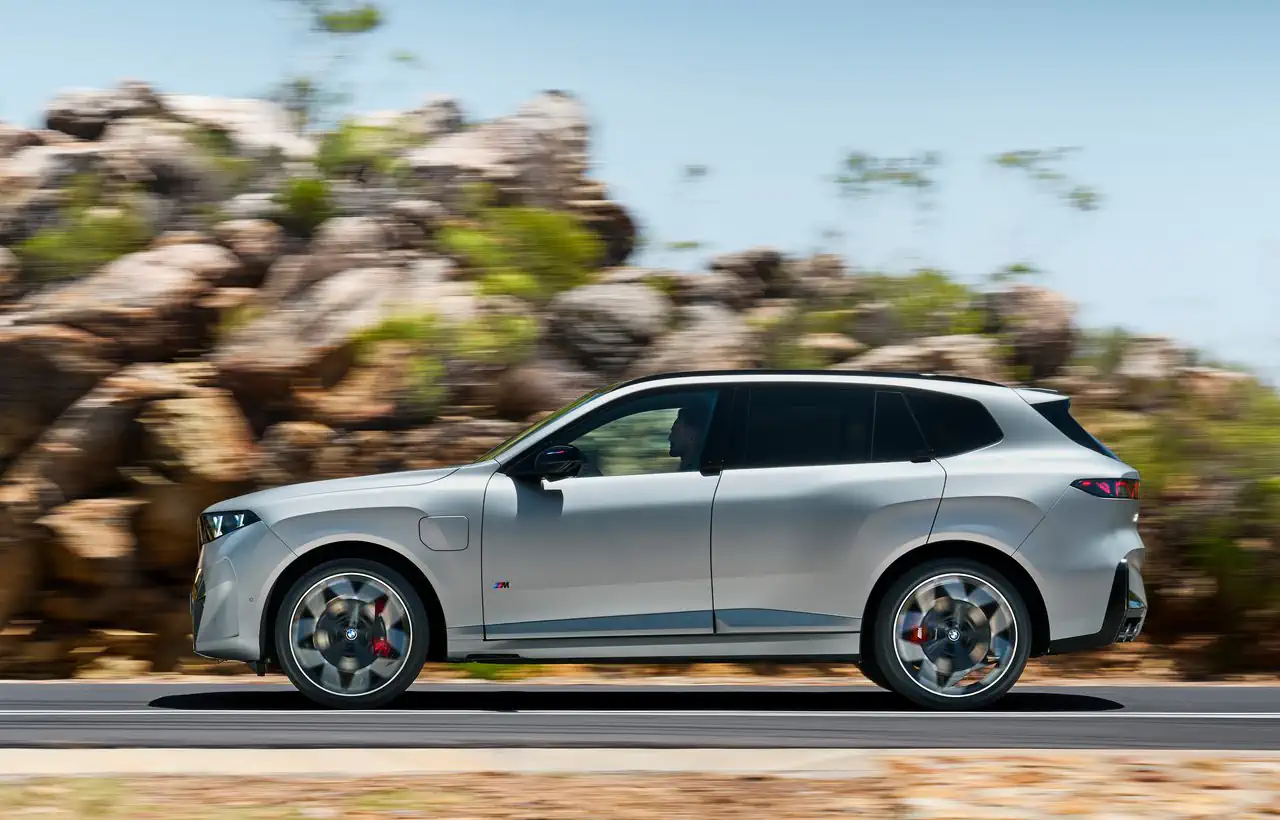
A Design That Breaks From the Past: What This M Performance SUV Looks Like in Person
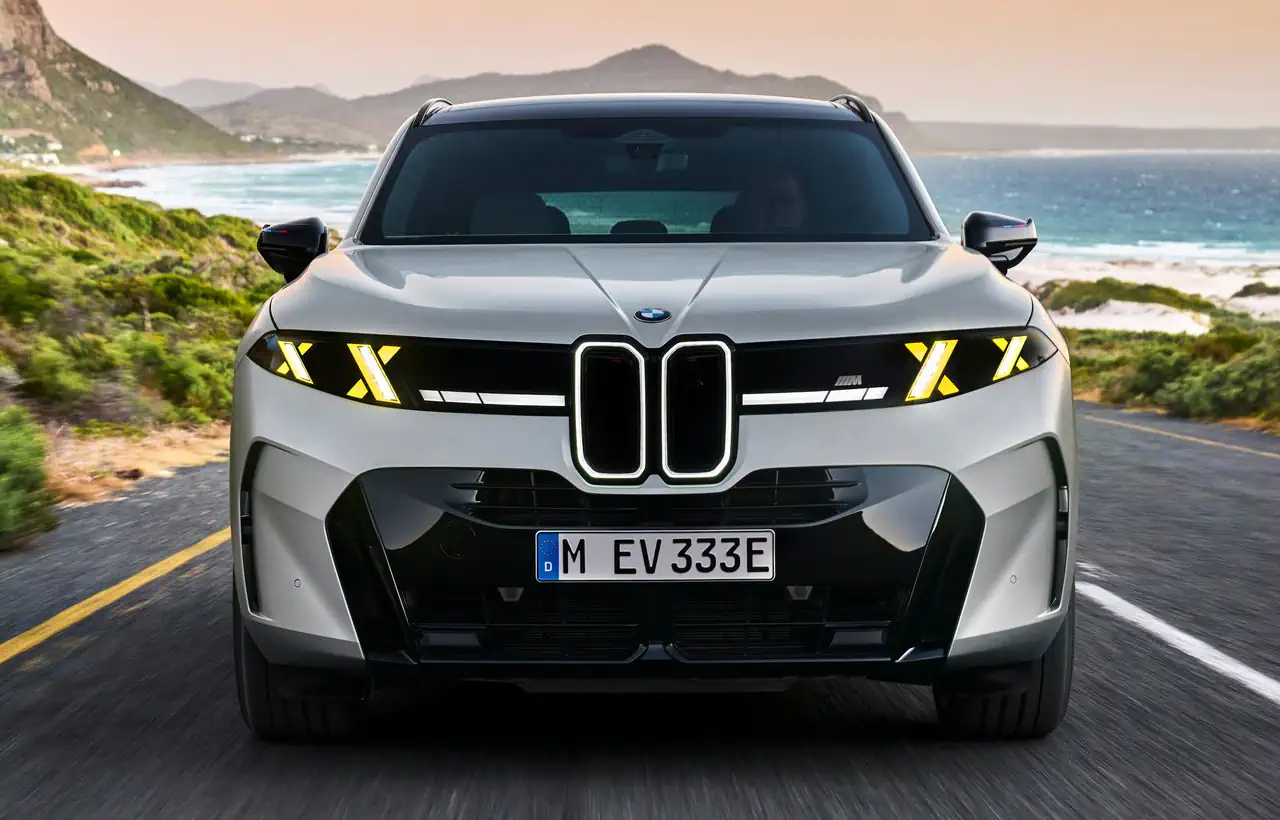
Up front, the X5 M60e gets new headlights built around BMW’s “double X” motif, finished in yellow on this M Performance trim — a nod to endurance racing and the celebrated M5 CS. The kidney grille shifts to a vertical orientation for the first time in years, framed by illuminated trim (BMW Iconic Glow).
Along the sides, traditional door handles are gone, replaced by BMW Winglets — flush panels built into the beltline that pop the door open electronically. Wheels start at 22 inches and can be optioned up to a massive 23 inches from the factory.
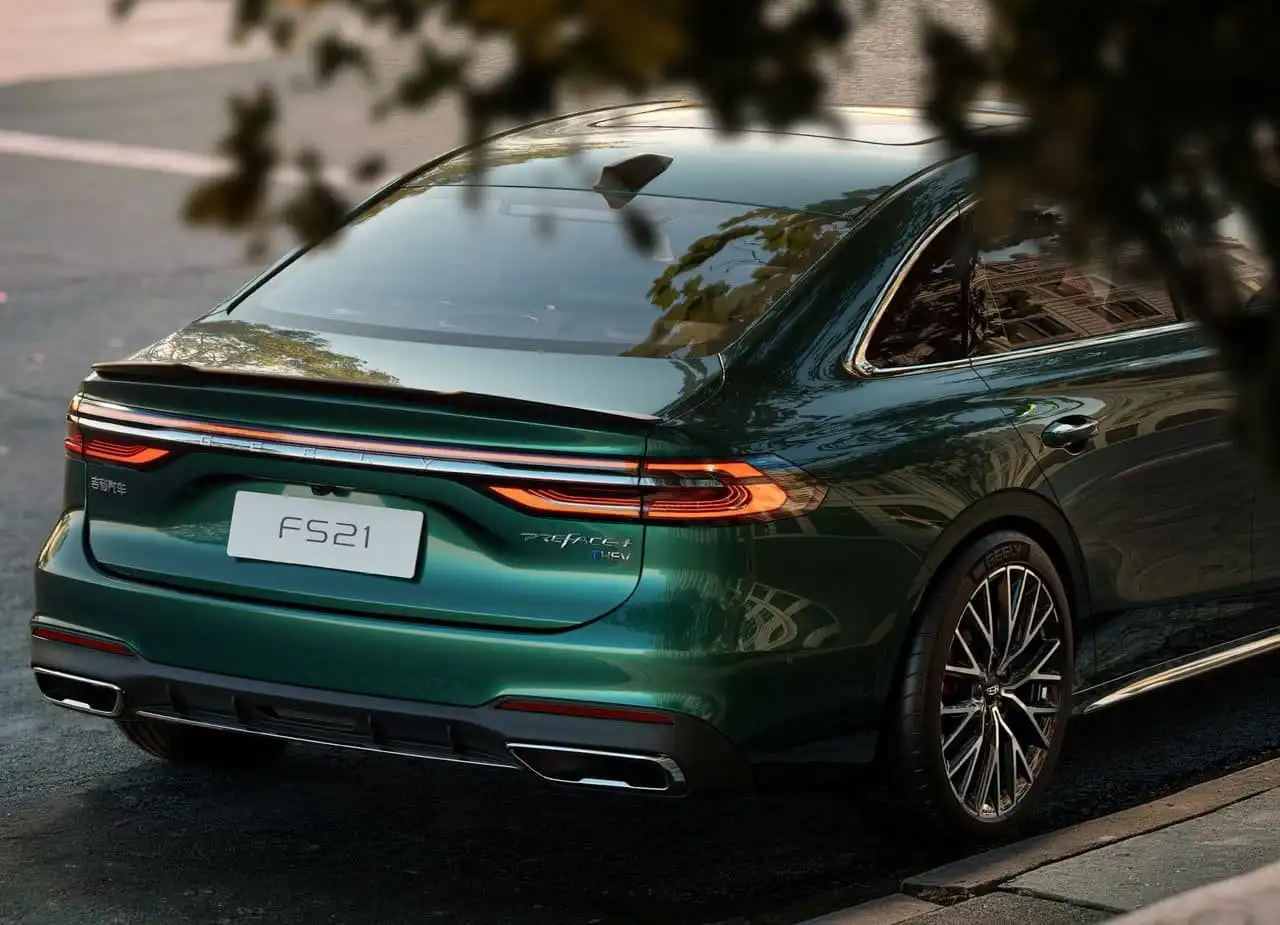
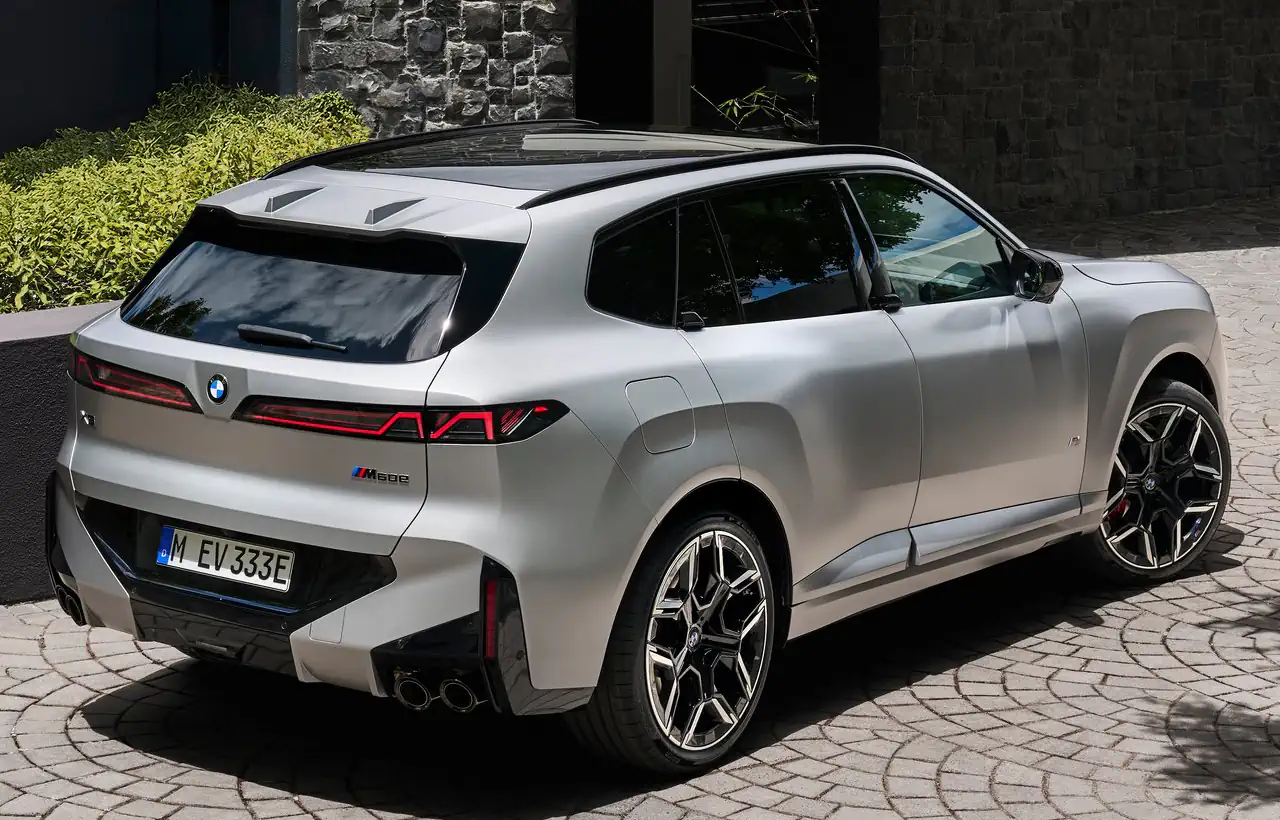
Out back, an aggressive diffuser and quad exhaust tips carry the M Performance signature. The bigger controversy is the cargo area: the split tailgate that defined every prior X5 generation has been eliminated in favor of a smooth, single-piece liftgate.
The overall effect is cleaner and more minimalist than the outgoing model’s more muscular stance — a clear signal of BMW’s pivot toward the Neue Klasse identity.
A Cabin That’s Nearly Button-Free: Inside the New Cockpit
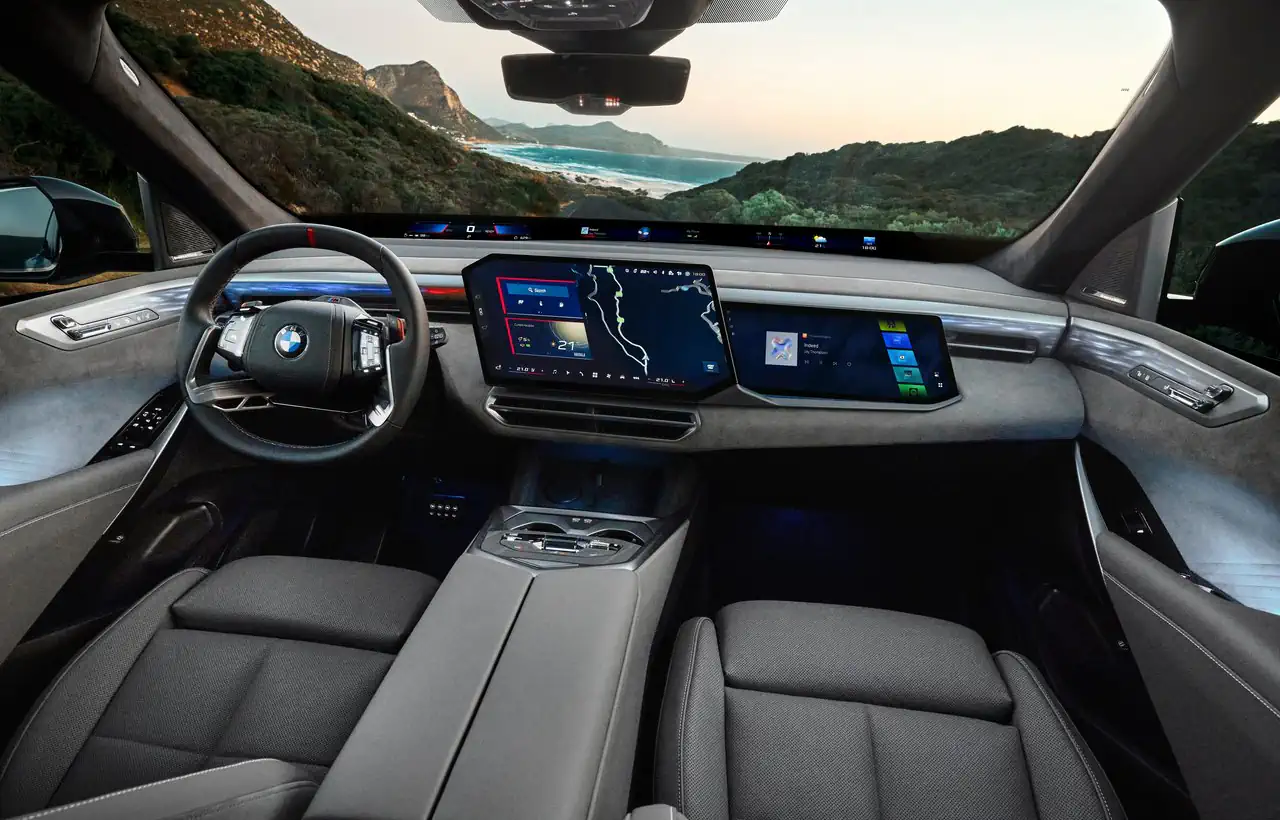
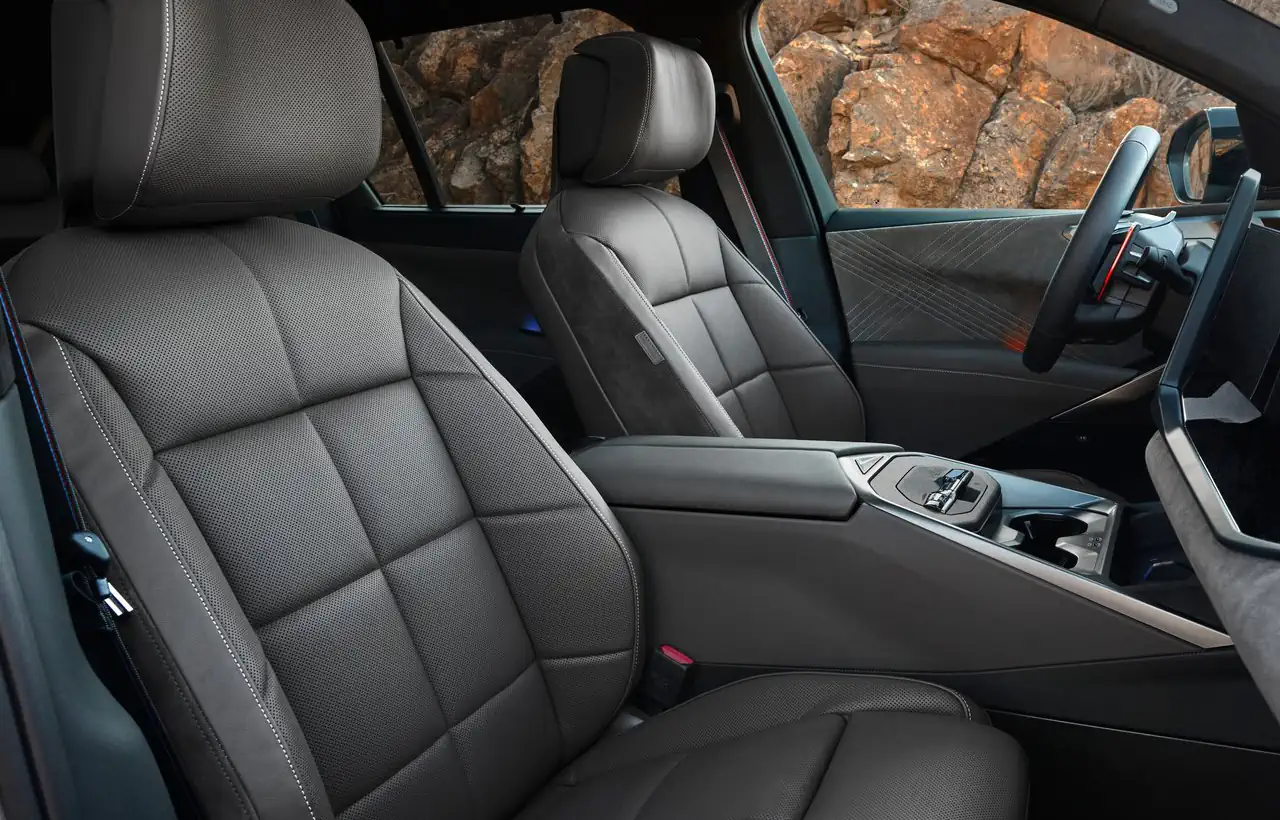
The M60e’s interior leans on Merino leather, Alcantara trim, crystal accents, and even laser-cut stone surfaces on the center console — finishes pulled straight from BMW’s luxury playbook. Material quality is high throughout.
The dashboard layout all but eliminates physical controls, including the long-running iDrive rotary controller, replaced by touch and voice commands through BMW’s new Operating System X. Build quality impresses, but the reliance on screens is total.
Screens, Connectivity, and Passenger Space
The standout tech feature is Panoramic Vision, which removes the traditional gauge cluster and projects driving info along the base of the windshield. The main touchscreen measures 17.9 inches, paired with a 14.6-inch display for the front passenger.
Rear-seat space benefits from a 119.5-inch wheelbase, but the third-row option is gone entirely — this generation of X5 is strictly a five-seater. Cargo volume on the M60e comes in at 18.5 cubic feet, down from 23 cubic feet on combustion-only versions, a direct result of the battery pack eating into trunk space.
On the plus side, Panoramic Vision pairs with the Highway Assistant, a Level 2+ semi-autonomous system capable of changing lanes based on eye-tracking. On the downside, climate controls are buried entirely in the center touchscreen menu, which creates real friction during everyday use.
Performance in the Real World: How the Hybrid X5 Actually Drives
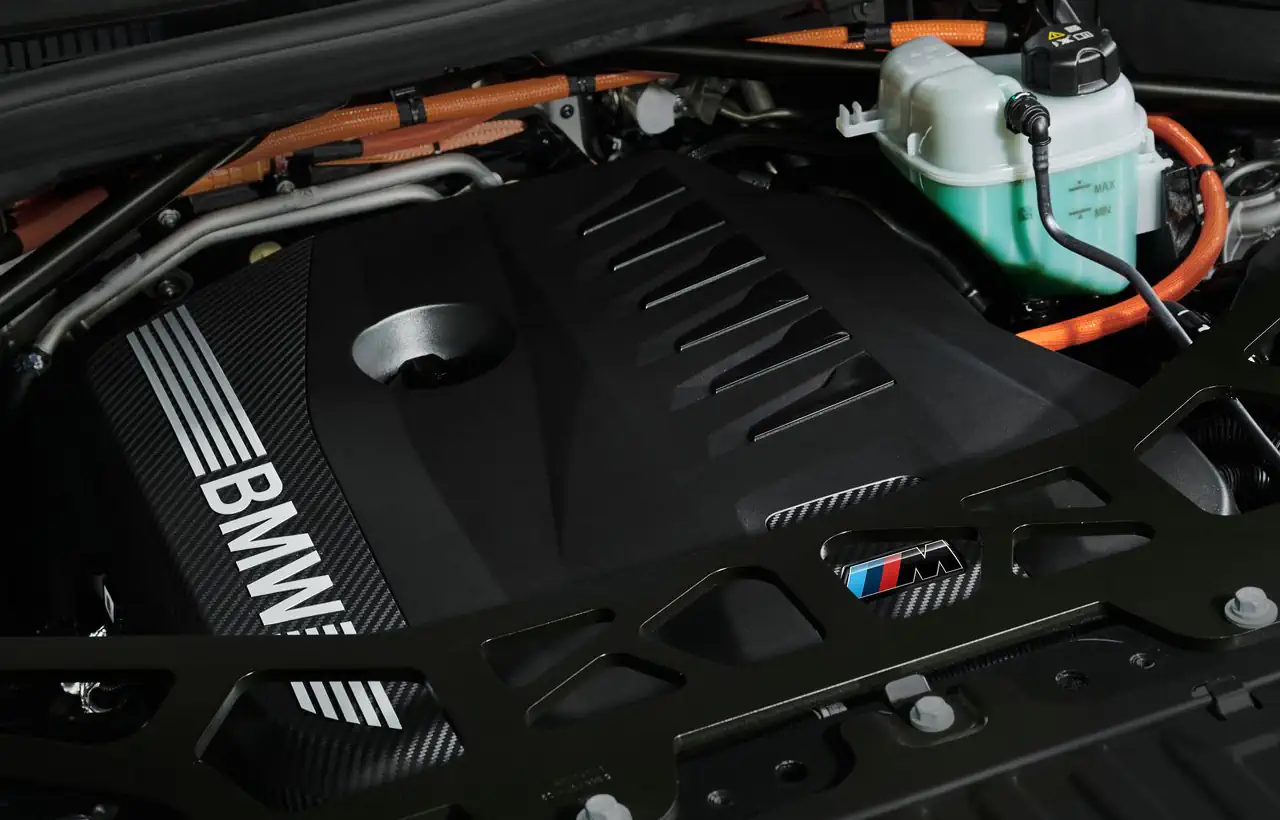
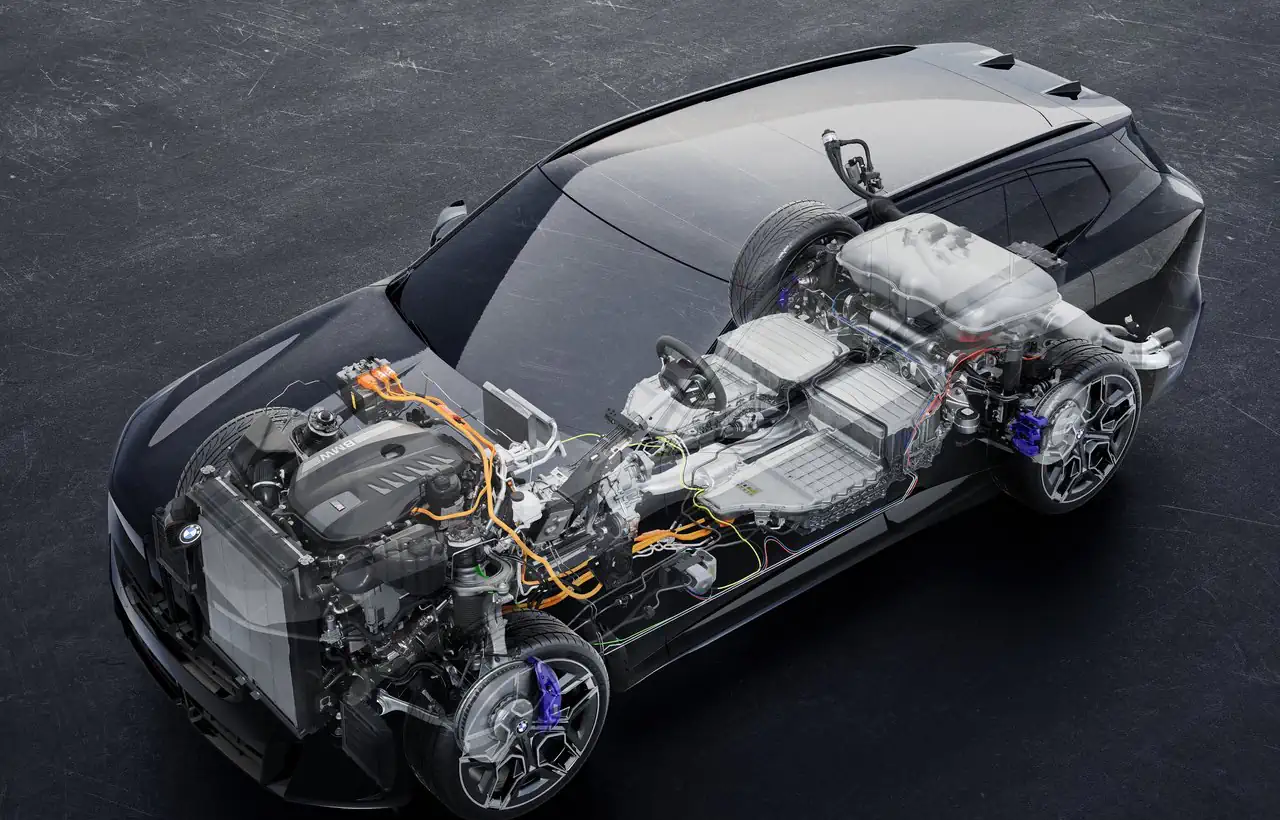
The powertrain pairs the B58 engine — a turbocharged 3.0-liter inline-six making 420 hp on its own — with a synchronous electric motor adding another 194 hp. Combined output lands at 612 hp and 590 lb-ft of torque, sent through xDrive all-wheel drive.
In practice, that means serious shove off the line: 0-60 mph arrives in 4.5 seconds, with the SUV’s roughly 5,820-lb curb weight kept in check by air suspension and rear-axle steering. Top speed is electronically capped at 155 mph, dropping to 87 mph in pure EV mode.
The 26.5-kWh battery delivers 50 to 61 miles of electric range on the WLTP cycle — a figure that typically drops once EPA testing and real-world conditions come into play. Once the battery runs dry, fuel economy settles in a more modest range, since the inline-six alone has to haul the SUV’s full weight.
Cost Breakdown: Does the X5 M60e Make Financial Sense?
In Germany, the M60e starts at roughly €125,000. The math looks different everywhere it’s actually sold, since import duties and local taxes vary sharply by market — and again, this particular hybrid variant isn’t slated for US showrooms at all.
For American buyers curious about pricing context, the V8-powered M60i is expected to fill this slot domestically, competing more directly against gas-powered performance SUVs rather than hybrids like the Mercedes-AMG GLE 53 or Porsche Cayenne S E-Hybrid.
Insurance premiums on a vehicle in this price bracket typically run high regardless of powertrain, often landing in the 3.5% to 5% range of the vehicle’s value annually — a pattern that holds across the luxury hybrid SUV segment. Maintenance costs also tend to track BMW’s reputation for pricier-than-average upkeep once factory coverage runs out.
For buyers outside the US who can actually order the M60e, the calculus comes down to whether the hybrid’s efficiency and silent-running capability justify a premium over straightforward V8 alternatives.
Frequently Asked Questions
Will the BMW X5 M60e be sold in the United States?
No. The hybrid M60e is being positioned for markets like Europe, where it’s expected to launch around €125,000; US buyers get a separate V8-powered M60i instead.
What’s the real-world fuel economy?
With the battery charged, BMW’s combined WLTP figures translate to roughly 39-45 mpg equivalent; once the battery depletes, economy drops closer to what a standard six-cylinder hybrid delivers under load.
What are the closest competitors?
The Mercedes-AMG GLE 53 Hybrid and Porsche Cayenne S E-Hybrid are the most direct rivals in terms of power and plug-in hybrid positioning.
Why did BMW remove the split tailgate?
BMW’s design team says the smooth Neue Klasse rear end couldn’t accommodate the seam required by the old two-piece tailgate mechanism.
Verdict: Is the BMW X5 M60e Worth the Hype?
The M60e delivers a genuinely rare combination: supercar-quick acceleration paired with enough electric range for daily commuting. It’s a more emotional purchase than a rational one, driven by the M badge and the cabin tech rather than pure value.
It’s not the right call for buyers who relied on the old split tailgate for everyday practicality, and American shoppers specifically should know this exact variant isn’t headed their way. The V8 M60i will be the one to watch instead.
A hybrid that tries to be two different vehicles at once — silent around town, brutal on the open road.
What do you think — does it make sense for BMW to keep this hybrid flagship out of the US market, or should they bring it stateside? Let us know in the comments below.
Share this article

Por: Danniel Bittencourt
30/06/2026
Related posts