Hyundai Ioniq 3: Why Everyone’s Suddenly Talking About This Hatchback
Hyundai unveils the Ioniq 3, a 100% electric hatchback with up to 308 miles of WLTP range and a 400V platform. Here’s what the numbers really mean — and whether it’s headed to the US.
Hyundai Ioniq 3: The New Electric Hatchback Betting on Space and Efficiency
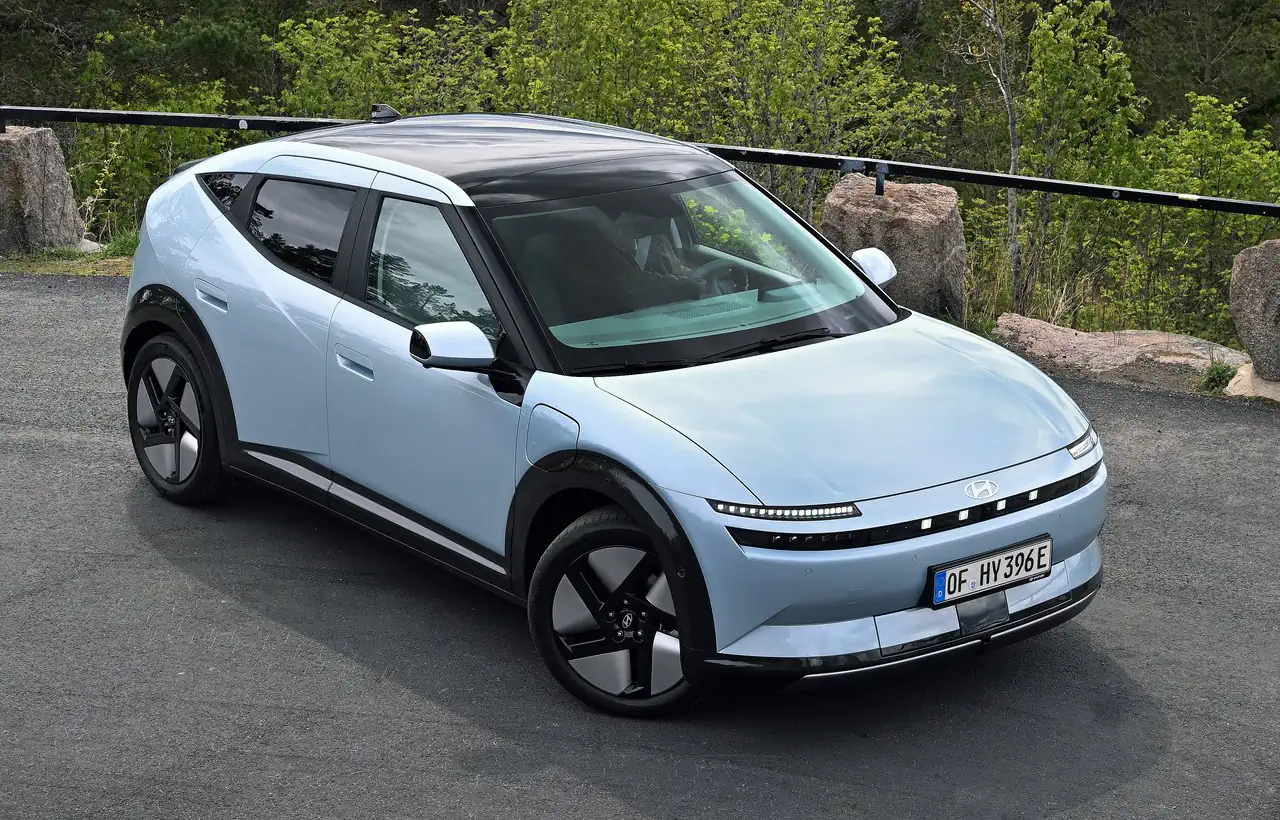
Hyundai has unveiled the Ioniq 3, a fully electric hatchback that slots in as the entry point of the Ioniq lineup, sitting below the already-familiar Ioniq 5 and Ioniq 6. The global reveal took place during Milan Design Week 2026, introducing a new body concept the automaker calls “Aero Hatch.”
This isn’t a facelift or a special edition — it’s an entirely new model, built on the 400V version of Hyundai’s E-GMP electric platform, the same architecture used across other EV launches from the brand, just in a more affordable configuration.
The car targets city drivers and young families shopping for their first EV, going up against rivals like the Volkswagen ID.3 and BYD Dolphin in markets where those models are sold. So far, Hyundai has not confirmed a US launch — everything regarding American availability remains industry speculation at this point.
Quick Facts
| Specification | Details |
|---|---|
| Category | Compact electric hatchback |
| Powertrain | Front-mounted permanent-magnet synchronous electric motor |
| Horsepower | Between 133 and 145 hp, depending on trim |
| Torque | 184 lb-ft across all versions |
| Transmission | Single-speed reduction gear, no multi-speed option |
| Drivetrain | Front-wheel drive (FWD) on all configurations |
| 0-60 mph | Approximately 9.0 seconds |
| Top Speed | Around 106 mph |
| Efficiency | Not yet officially disclosed |
| Range | 214 miles (42.2 kWh battery) to 308 miles (61 kWh battery), WLTP cycle |
| Launch Date | Production begins in 2026, model year 2027 (European sales start Q3 2026) |
Those numbers already give a sense of where the Ioniq 3 fits in, but it’s the body design, cabin, and powertrain details that really clarify who this car is built for — and where it still falls short.
The “Aero Hatch” Body: Hyundai’s New Take on the Compact EV
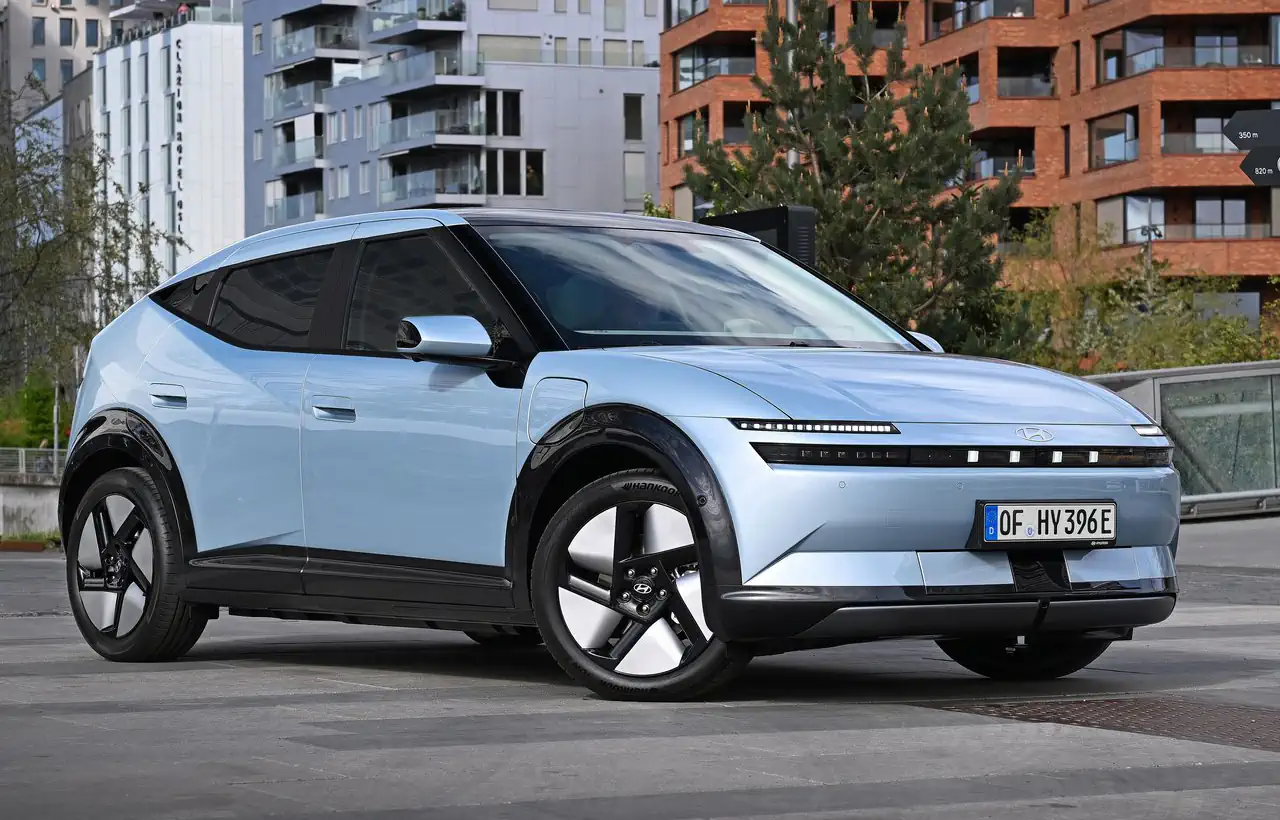
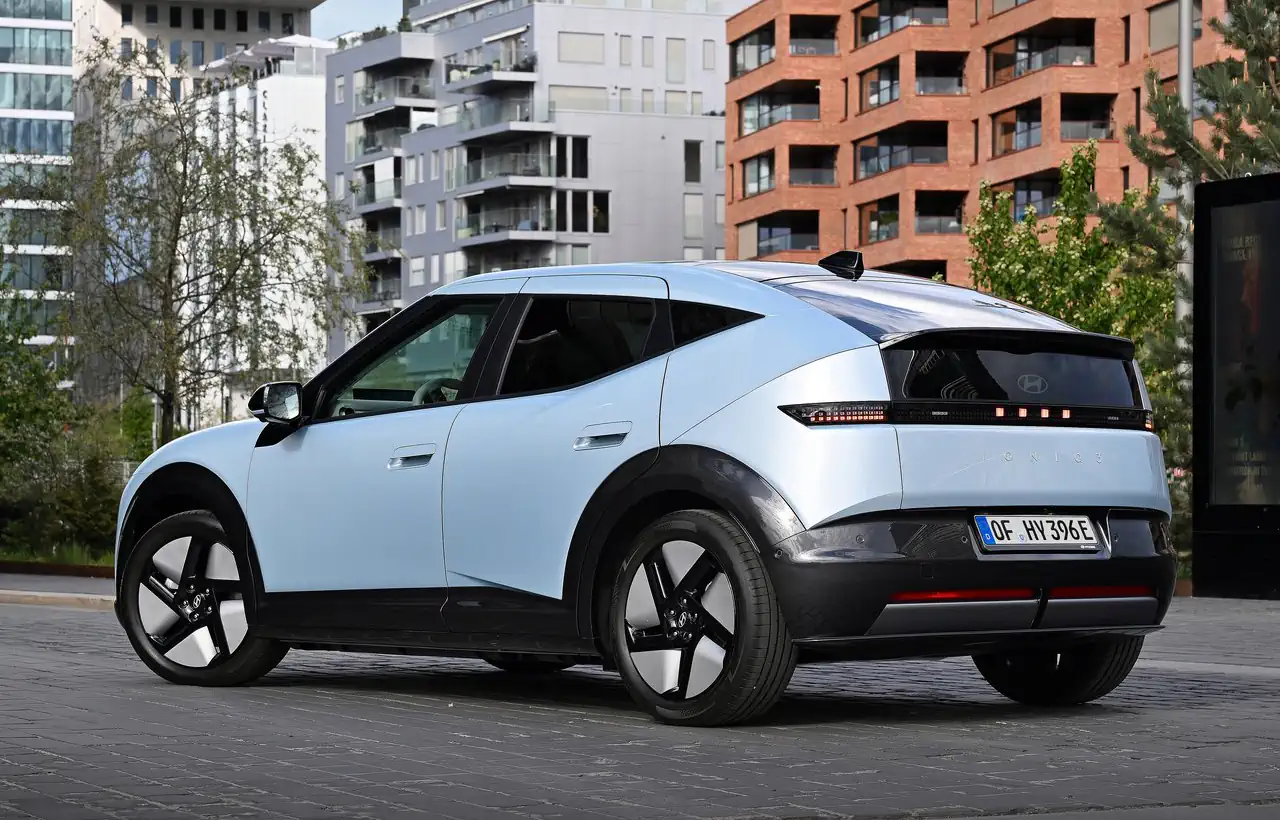
From the front, the Ioniq 3 shows off a low nose, pixel-style LED headlights, and four light points that spell out an “H” in Morse code — a signature look already seen on other models in the lineup. The hood is short and the grille is nearly absent, typical of EV design.
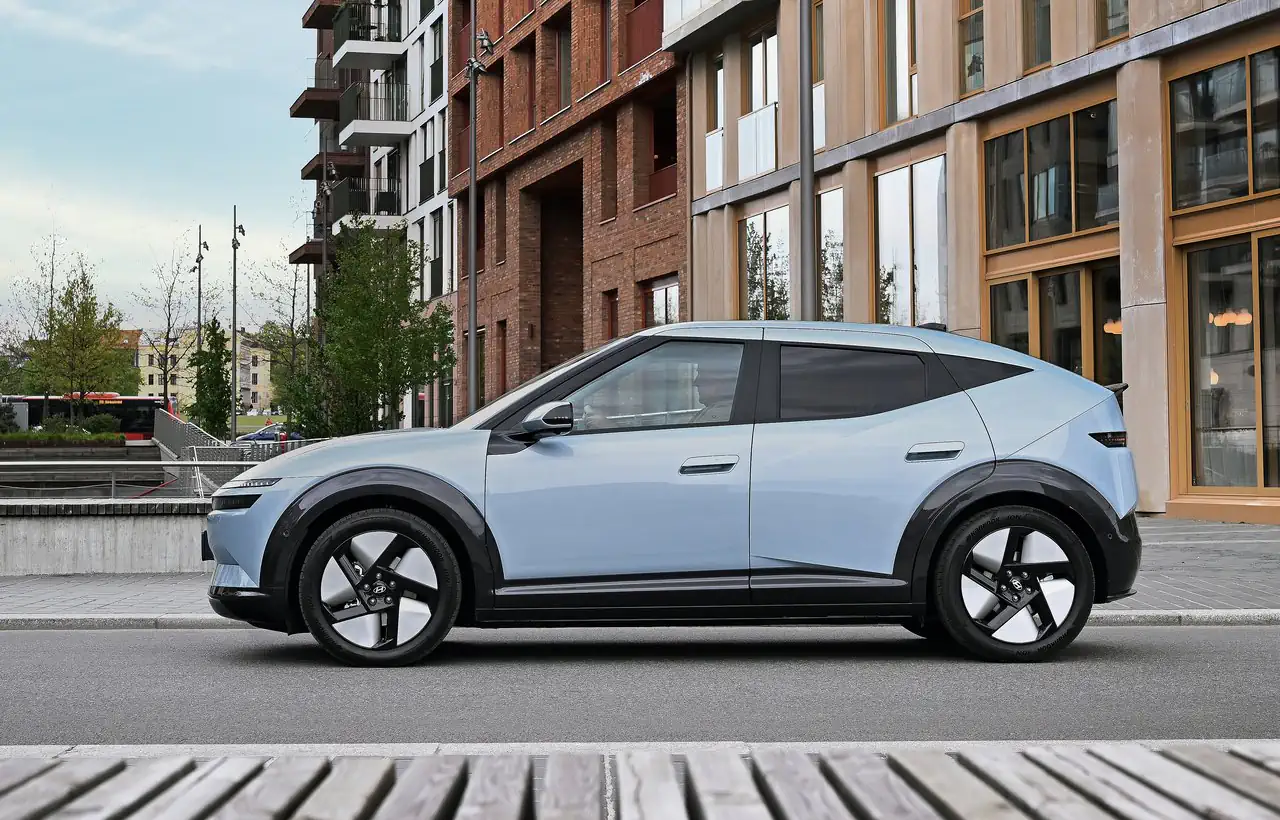
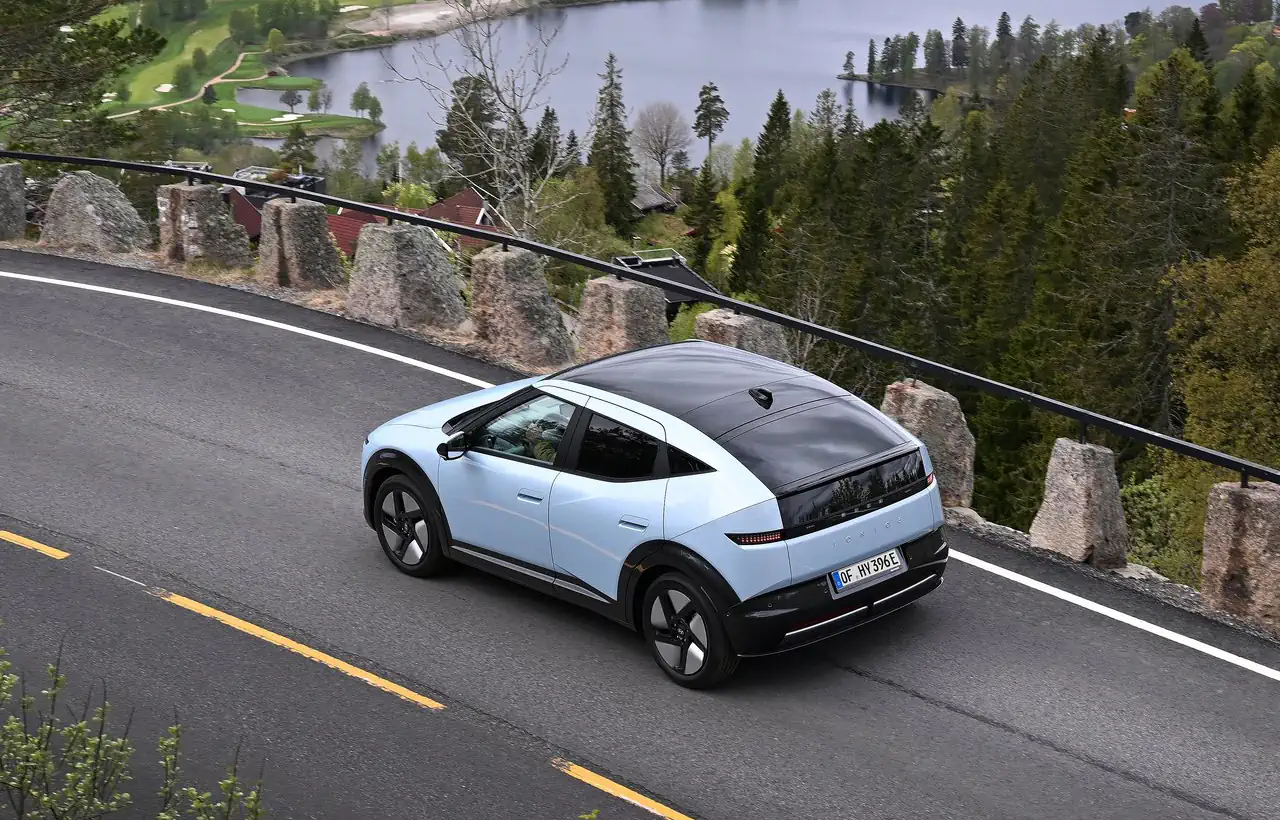
In profile, a nearly flat roofline stretches back to a small ducktail spoiler at the rear. That layout, dubbed Aero Hatch, helps the car hit a drag coefficient of 0.263 — a competitive number for the segment.
The overall impression is clean and understated, with few decorative lines and a clear focus on efficiency. This isn’t an aggressive or sporty design: the goal is functional elegance, in line with the “Art of Steel” language already seen on other Ioniq models.
Inside the Ioniq 3: Comfort Inspired by Italian Furniture Design
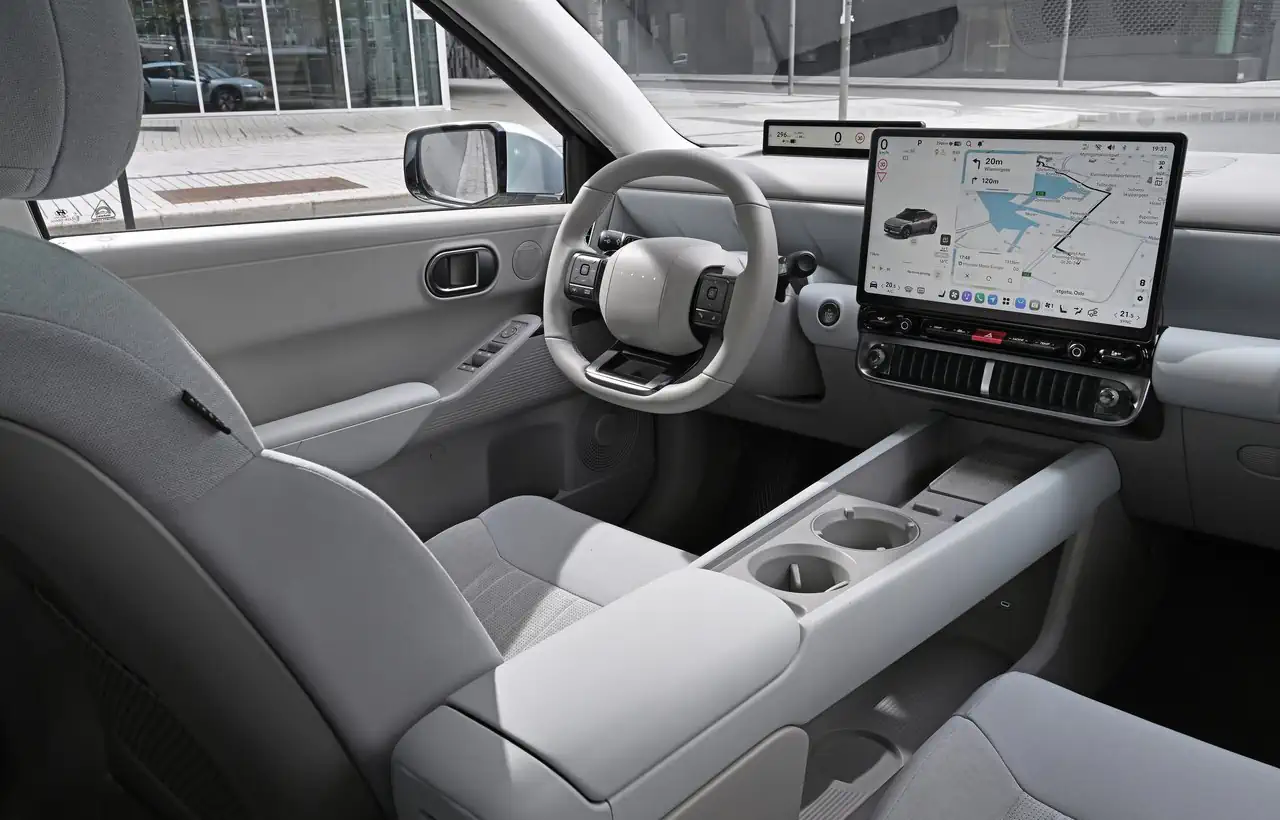
The dashboard follows what Hyundai calls the “Furnished Space” concept, drawing on 1970s Italian furniture design and built using recycled and bio-based materials. The intent is to move away from the cold “tech-forward” feel and bring something closer to a living room into the cabin.
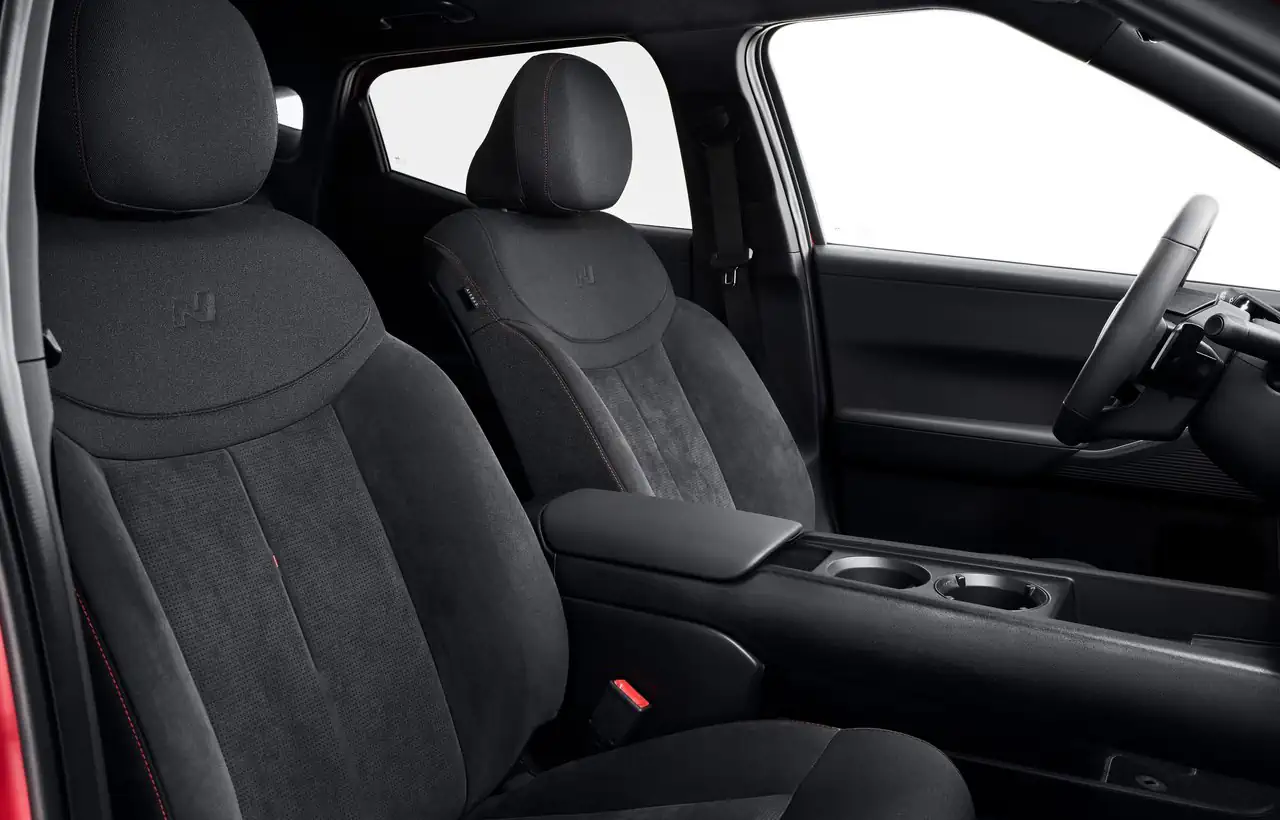
The front seats, in the “Relaxation” trim, come with heating and ventilation. Early reviews describe solid ergonomics and a mix of soft-touch materials with harder plastics in certain spots — in line with the car’s positioning as the more affordable entry point into Hyundai’s EV family.
Compared to pricier rivals, the cabin doesn’t try to compete on luxury, but it does deliver a sense of roominess that’s uncommon for a hatchback this size.
Pleos Connect and the Space That Surprises
The infotainment system debuts Pleos Connect, built on Android Automotive OS, available with either a standard 12.9-inch screen or an optional 14.6-inch display. Early impressions highlight the combination of physical buttons with the touchscreen, said to be less fatiguing than fully touch-based systems.
The instrument cluster is a narrow display mounted high on the dash, close to the driver’s line of sight — functioning almost like a simplified head-up display. The Hyundai SmartSense safety suite includes Highway Driving Assist 2, Remote Smart Parking Assist, blind-spot monitoring, and a 360-degree surround-view camera.
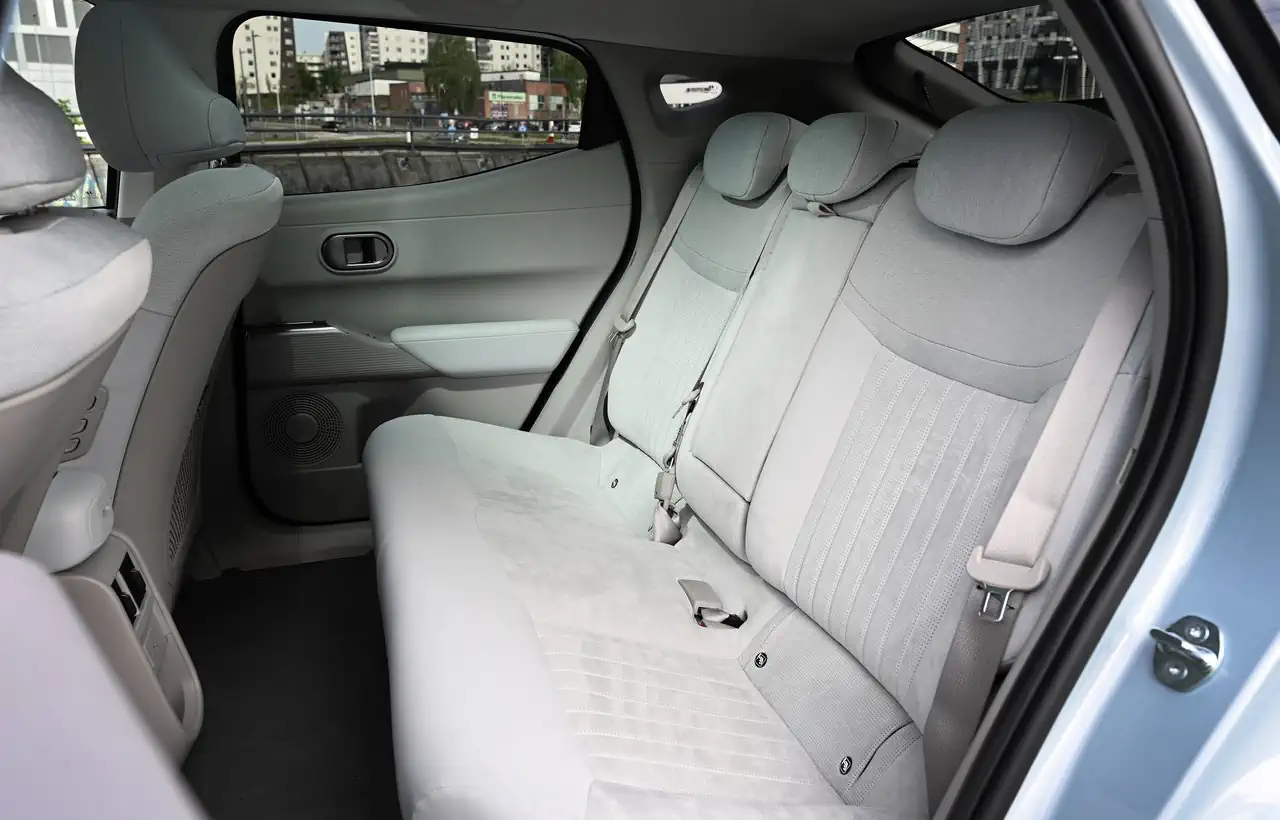
In the back seat, a 105.5-inch wheelbase delivers a flat floor and room for three adults. Cargo space totals 15.6 cubic feet, including an extra “Megabox” compartment.
Strong point: surprisingly generous interior space for a hatchback just over 13 feet long. Real limitation: no front trunk (frunk), a feature already offered by some EV rivals.



Performance in the Real World: How the New Hyundai EV Drives
Every Ioniq 3 trim uses the same front-mounted permanent-magnet synchronous motor, with output ranging from 133 to 145 hp depending on the battery and trim level. The transmission is a single-speed unit, standard for EVs, and the car is front-wheel drive only — there’s no all-wheel-drive option on the table.
Torque is fixed at 184 lb-ft across the entire lineup, which in practice translates to instant response off the line and solid agility around town. The 0-60 mph sprint lands between roughly 9.0 and 9.6 seconds depending on configuration — numbers that point to a car built for daily commuting, not for thrills. Top speed is electronically limited to around 106 mph.
On range, the Standard Range trim with its 42.2 kWh battery covers 214 miles on the WLTP cycle. The Long Range version, with 61 kWh, stretches to 308 miles — a strong figure against direct rivals in the compact EV class. Energy consumption hasn’t been officially disclosed yet, so there’s no way to pin down real-world efficiency outside the homologation cycle. It’s also worth noting these are WLTP figures, not EPA-rated numbers, which tend to run lower once a car is tested under US standards.
In practice, the package suggests a balanced commuter EV built for city use and moderate road trips, not one competing on acceleration with sportier electric hatchbacks on the market.
Pricing and Market Outlook: Is the Ioniq 3 Worth Waiting For in the US?
Overseas, the Ioniq 3 already has a production timeline and a confirmed European sales launch for the third quarter of 2026, with availability in Australia expected in early 2027. In the US, however, there’s still no official confirmation — what exists right now is industry speculation, nothing more.
Hyundai hasn’t released official pricing in any market yet; an announcement is expected in the coming months. Market Estimate: European outlets project a starting price near €30,000, which would make this the most affordable EV in the Ioniq lineup — but converting that figure directly to dollars would be misleading. Given how Hyundai typically prices EVs for the US market, a realistic starting MSRP estimate would land somewhere in the $34,000 to $38,000 range, factoring in federal and state incentives that could apply if the car is built or sold domestically.
Without a confirmed US launch, it’s too early to talk specifics on insurance premiums, financing terms, or maintenance costs tied directly to the Ioniq 3. As a rough reference, other Hyundai EVs and hybrids sold in the US tend to carry maintenance costs in line with the segment average, with insurance premiums slightly higher than gas-powered compacts due to battery repair costs — though that’s a general trend, not data specific to this model.
For buyers overseas who can already order one, the financial calculus is simpler: as a brand-new launch, there’s no depreciation history to lean on yet. Buyers prioritizing the latest tech may want to jump in early; those focused on value typically do better waiting a few months for early-adopter pricing to settle.
According to Hyundai itself, the ideal buyer is the city commuter or young family looking for a first EV — not the enthusiast chasing performance numbers.
Frequently Asked Questions About the Hyundai Ioniq 3
What’s the real-world range of the Hyundai Ioniq 3?
Official WLTP range runs from 214 miles (42.2 kWh battery) to 308 miles (61 kWh battery). Real-world efficiency figures haven’t been released yet.
Is the Hyundai Ioniq 3 coming to the US?
There’s no official confirmation at this time. Anything circulating about a US launch is speculation from the press.
Who are the Ioniq 3’s main competitors?
In Europe, the most commonly cited rivals are the VW ID.3, BYD Dolphin, MG4, and Volvo EX30.
Does the Ioniq 3 offer all-wheel drive?
No. Every announced trim is front-wheel drive (FWD) only, with no AWD option so far.
Verdict: Does the Hyundai Ioniq 3 Live Up to the Hype?
The Ioniq 3 isn’t an emotional buy aimed at performance chasers — a 9.0-to-9.6-second 0-60 time makes that clear. This is, first and foremost, a rational choice: above-average cabin space, generous cargo room, and well-executed everyday tech.
It’s not the right pick for anyone wanting a sporty EV, all-wheel drive, or a front trunk. For that buyer, more performance-focused rivals still have the edge.
The Ioniq 3 delivers exactly what it promises without overreaching: an honest electric hatchback, built for life in the city.
So, does the Hyundai Ioniq 3 have what it takes to go up against the BYD Dolphin and VW ID.3, or does the lack of US confirmation already take it out of the conversation here? Let us know what you think in the comments below!
Share this article

Por: Danniel Bittencourt
30/06/2026
Related posts