


Geely Debuts Eva Cab: The AI-Powered Robotaxi Designed to Outdrive Humans
The driver’s seat is officially a thing of the past. Geely has just unveiled the Eva Cab, a purpose-built AI robotaxi featuring radical design, 3,000 TOPS of raw processing power, and a 2027 production date that aims to disrupt the global ride-sharing market.

Danniel Bittencourt
25/04/2026
Geely Unveils Eva Cab: The AI-Centric Robotaxi Set to Redefine Urban Commuting
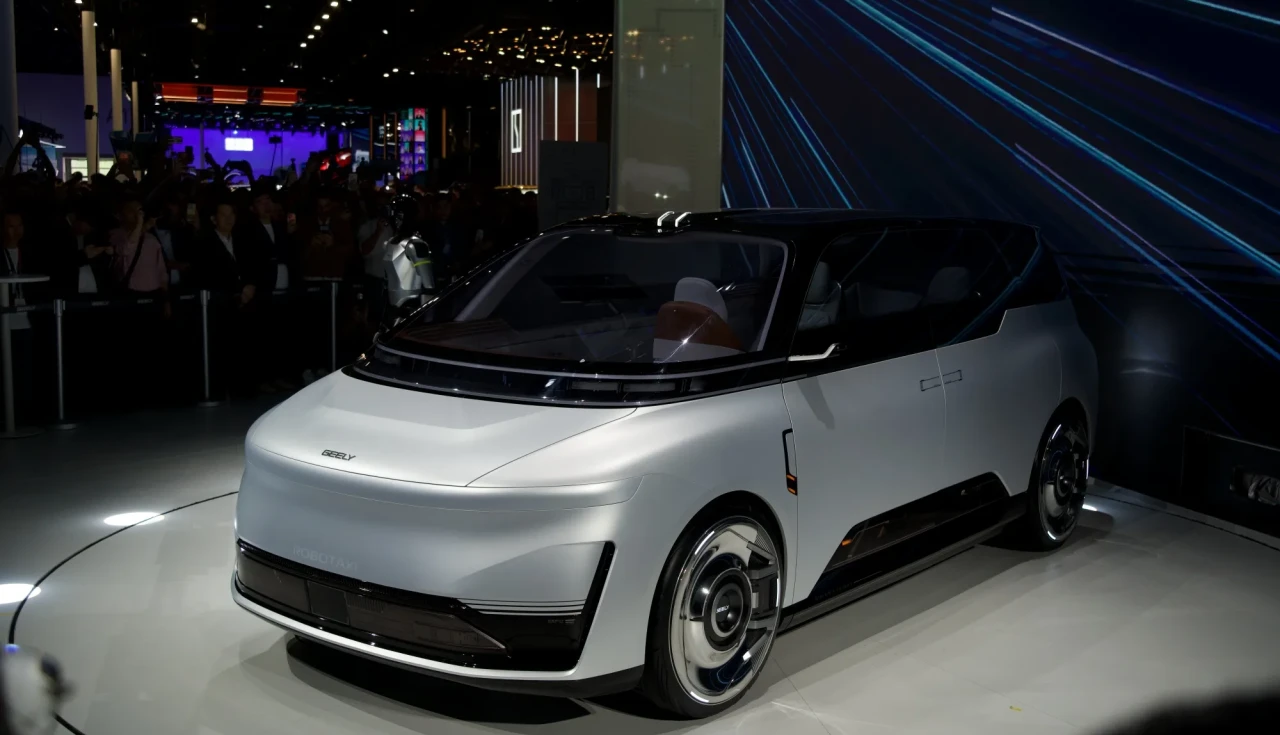
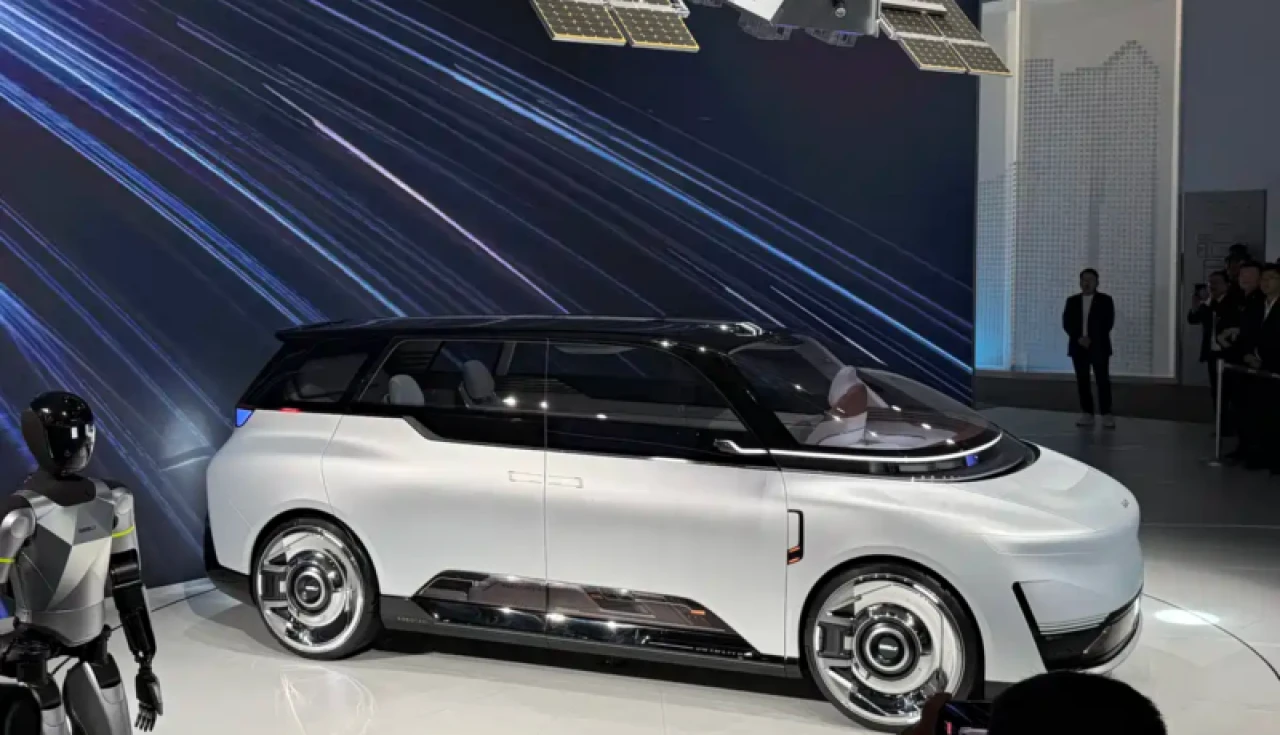
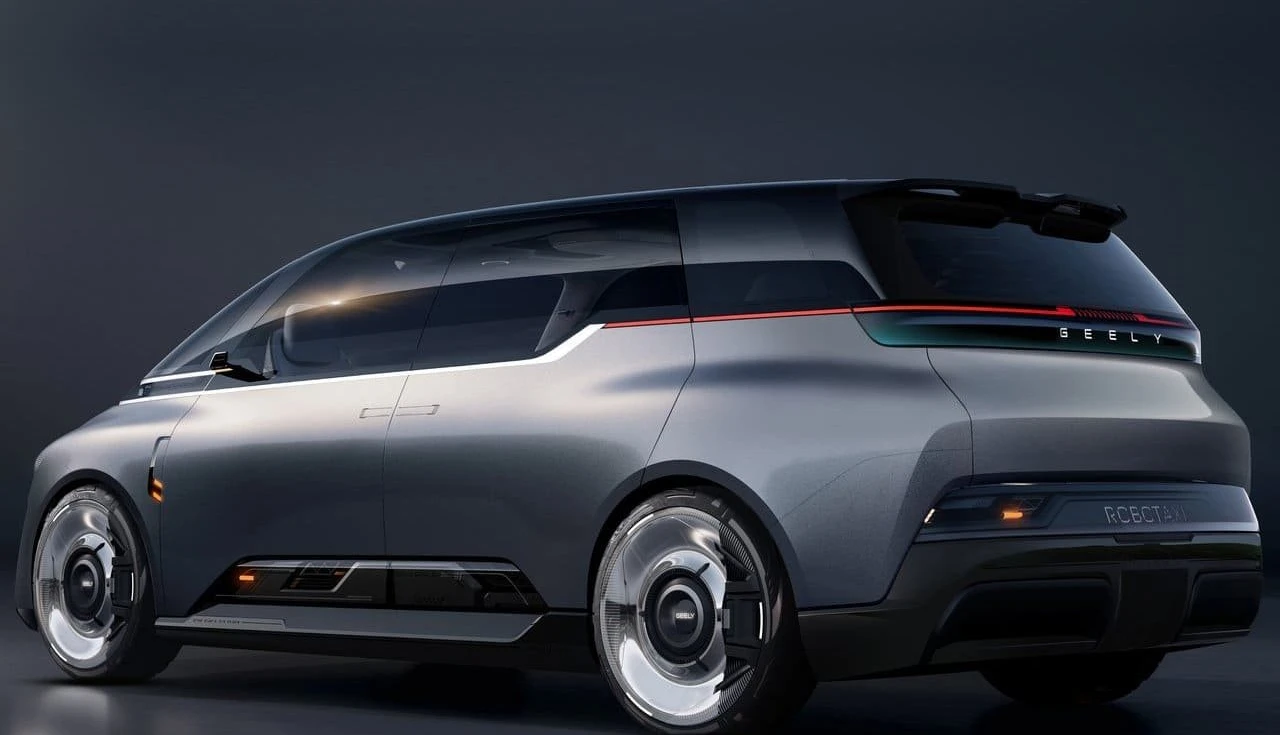
At the latest Beijing Auto Show, Geely stole the spotlight by revealing the Eva Cab, a Level 4 autonomous vehicle developed from the ground up for the ride-hailing era. Unlike current autonomous prototypes that are often modified production cars, the Eva Cab was built without a steering wheel or pedals, prioritizing passenger comfort and cutting-edge software integration.
This model serves as the flagship for Geely’s AI 2.0 initiative. Driven by a massive large language model with 196 billion parameters, the vehicle makes split-second decisions roughly three times faster than a human driver. Geely claims the system is so advanced it can navigate unmapped rural roads and handle manual toll booths without any human intervention.
Extreme Hardware and Massively Parallel Processing
The Eva Cab isn’t just a car; it’s a supercomputer on wheels. To handle the complex task of navigating dense urban environments like San Francisco or New York, the vehicle utilizes NVIDIA’s SuperChip (Thor U) and Qualcomm platforms, delivering a combined performance of over 3,000 TOPS.
Safety is handled by a “redundancy-first” sensor suite:
43 high-fidelity perception units, including HD cameras and ultrasonic sensors.
The world’s first 2,160-line digital LiDAR, capable of “seeing” up to 650 yards (600 meters) away.
A lightning-fast 4-millisecond reaction time to avoid sudden road hazards.
Quantum encryption to shield the vehicle’s cloud communication from sophisticated cyber threats.
A Premium Lounge Experience for the Passenger
Since nobody needs to focus on the road, the Eva Cab’s interior has been reimagined as a mobile living room. Large sliding electric doors open to reveal a spacious cabin with seats arranged in a face-to-face configuration, perfect for business meetings or social chats during the morning commute.
The design language is sleek and modern, featuring the “Galaxy Skyroof”—a panoramic glass ceiling that floods the cabin with natural light. Even the storage was rethought; the doors feature “open-concept” bins to ensure passengers never accidentally leave their smartphones or wallets behind when the ride ends.
Mass Production and Global Expansion Plans
Geely isn’t just showing off a concept; they are ready to build. Mass production of the Eva Cab is slated to begin in 2027. Initial deployment will happen through CaoCao Mobility, but the company has its sights set on global hubs, including potential operations in international tech centers and the Middle East.
The company’s roadmap is aggressive: they plan to have a fleet of 100,000 robotaxis in operation by 2030. With this move, Geely positions itself as a formidable rival to Western players like Waymo and Tesla, proving that the race for autonomous supremacy is officially a global contest.
FAQ
1. What is the Geely Eva Cab? It is a native Level 4 autonomous robotaxi designed specifically for ride-sharing services, built without traditional controls like a steering wheel.
2. When will the Eva Cab be available for public use? Commercial operations and mass production are scheduled to kick off in 2027.
3. Does it have any manual override controls? No. The Eva Cab is designed for full autonomy, meaning it lacks a traditional cockpit, steering wheel, and pedals.
4. How powerful is the onboard AI? It features a high-performance compute platform using NVIDIA and Qualcomm chips, delivering over 3,000 TOPS of processing power.
5. How does the vehicle detect its surroundings? It uses a suite of 43 sensors, including a 2,160-line digital LiDAR that can detect objects up to 600 meters (approx. 1,970 feet) away.
6. Is the vehicle’s software secure from hacking? Yes. Geely has integrated quantum-grade encryption to protect the vehicle-to-cloud communications from external interference.
7. How fast does the AI react to traffic? The AI-driven digital chassis has a response time of just 4 milliseconds, significantly faster than human reflexes.
8. How many passengers can it carry? The cabin is configured as a lounge with face-to-face seating, typically accommodating four passengers in high comfort.
9. Will Geely operate the fleet itself? The initial rollout will be managed by Geely’s mobility subsidiary, CaoCao Mobility, with plans for further expansion.
10. Can I buy an Eva Cab for my personal garage? Currently, the Eva Cab is designed exclusively for commercial robotaxi fleets and shared mobility rather than individual consumer sales.
Share this article
ADVERTISING
Top of the Moment
Related posts

Honda Adia Novos Lançamentos Após Perdas com Elétricos
O prejuízo de 70 mil milhões de reais com elétricos obrigou a Honda a mudar a sua estratégia global. A marca cancelou novos projetos e adiou a

Os carros mais vendidos em abril: Polo e Strada lideram
O Volkswagen Polo consolidou sua posição no topo do ranking de automóveis em abril, superando rivais diretos em um mês marcado pelo avanço expressivo dos modelos eletrificados

Chevrolet Spark EUV Lidera Vendas de SUVs Elétricos
O Chevrolet Spark EUV emplacou 1.047 unidades em abril e superou rivais tradicionais. O utilitário a bateria assumiu a ponta no segmento, provando que a estratégia nacional

W16 Mistral Fly Bug: o último roadster W16 da Bugatti
A pintura exclusiva “Dragonfly Blue” e o fato de ser um modelo único no mundo marcam o Bugatti W16 Mistral Fly Bug. O roadster entrega 1.600 cv

Jaecoo 7 Elite chega por R$ 179.990 e desafia BYD e Haval
O SUV PHEV mais barato do Brasil chega por R$ 179.990 com 279 cv, 79 km de autonomia elétrica e pacote ADAS completo — e mira diretamente

Hyundai mantém aposta em sedãs compactos acessíveis
O Hyundai Aura reafirma que o mercado global ainda valoriza veículos diretos e sem excessos. Com foco em economia e funcionalidade, o modelo se destaca pela eficiência