The 10 Fastest American Cars Ever Built
America’s fastest cars aren’t just muscle anymore — they’re chasing 300 mph with carbon fiber, twin-turbo V8s, and engineering that rivals anything from Europe.


Por: Danniel Bittencourt
04/08/2026
The Fastest Cars America Has Ever Built
American car culture has always chased one thing above all else: speed. Today, that obsession has split into two very different paths.
On one side, a new generation of hypercars is chasing the 300 mph barrier with aerospace-grade materials and obsessive aerodynamics. On the other, classic muscle cars are getting turbocharged, supercharged, and reborn with four-figure horsepower numbers.
Here’s a look at the fastest cars America has ever produced, from Texas-built hypercars to a Corvette that can hang with cars costing five times as much.
American Speed, Ranked
| Car | Top Speed |
|---|---|
| Hennessey Venom F5 | 311 mph (500 km/h) |
| SSC Tuatara | 295 mph (475 km/h) |
| Hennessey Venom GT | 270 mph (435 km/h) |
| SSC Ultimate Aero TT | 256 mph (412 km/h) |
| Czinger 21C V Max | 253 mph (407 km/h) |
| Saleen S7 Twin Turbo | 248 mph (399 km/h) |
| Vector W8 | 242 mph (389 km/h) |
| Chevrolet Corvette ZR1 | 233 mph (375 km/h) |
| Scuderia Cameron Glickenhaus SCG 003S | 217 mph (350 km/h) |
| Camaro ZL1 “Exorcist” | 217 mph (350 km/h) |
1
Hennessey Venom F5
Hennessey Performance Engineering has spent years chasing one goal: building the fastest production car on the planet. The Venom F5 is the result.
Its carbon fiber monocoque chassis keeps weight down, while a twin-turbo 6.6-liter V8 nicknamed “Fury” sends 1,817 horsepower straight to the rear wheels. Unlike track-focused hypercars loaded with big rear wings, the F5 skips that setup entirely to cut drag and push for one thing: outright top speed. Hennessey’s claimed top speed sits at 311 mph.
| Spec | Detail |
|---|---|
| Engine | 6.6L Twin-Turbo V8 |
| Horsepower | 1,817 hp |
| 0-62 mph | 2.6 seconds |
| Top Speed | 311 mph (500 km/h) |

2
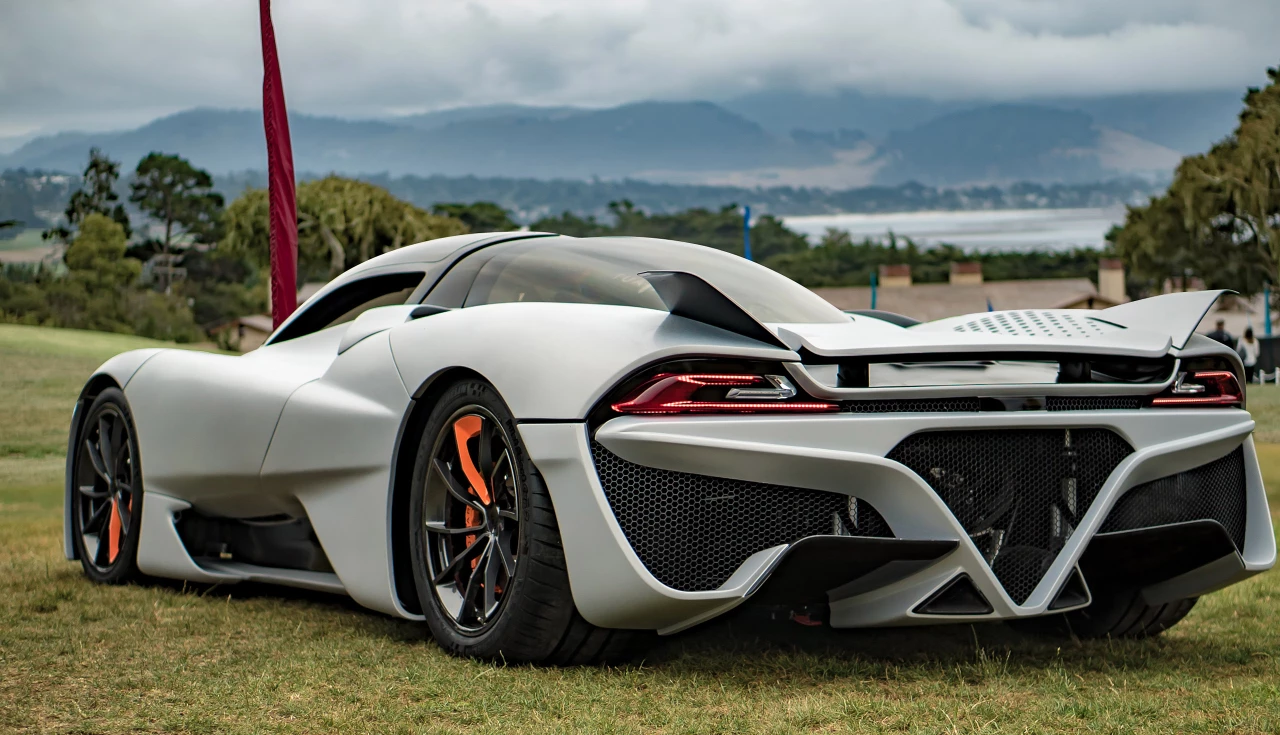
SSC Tuatara
Built by SSC North America under Jerod Shelby, the Tuatara was designed by Jason Castriota with one priority: cutting through the air as efficiently as possible. Its teardrop-shaped body produces a drag coefficient of just 0.279, among the lowest of any production car.
Power comes from a mid-mounted, flat-plane-crank 5.9-liter twin-turbo V8 that makes 1,750 horsepower on E85 fuel. After independent satellite-verified testing, the Tuatara posted a top speed of 295 mph.
| Spec | Detail |
|---|---|
| Engine | 5.9L Twin-Turbo V8 |
| Horsepower | 1,750 hp (on E85) |
| 0-62 mph | 2.5 seconds |
| Top Speed | 295 mph (475 km/h) |
3
Hennessey Venom GT
Before the current wave of computer-optimized hypercars, there was the Venom GT — a raw, analog machine that stunned European rivals. Hennessey started with a Lotus Exige chassis, widened and reinforced to handle serious power without piling on weight.
A 7.0-liter twin-turbo V8 producing 1,244 horsepower routes through a six-speed manual transmission. Running at NASA’s Kennedy Space Center, the Venom GT hit 270.49 mph, becoming one of the quickest analog hypercars ever recorded.
| Spec | Detail |
|---|---|
| Engine | 7.0L Twin-Turbo V8 |
| Horsepower | 1,244 hp |
| 0-62 mph | 2.7 seconds |
| Top Speed | 270 mph (435 km/h) |

4
SSC Ultimate Aero TT
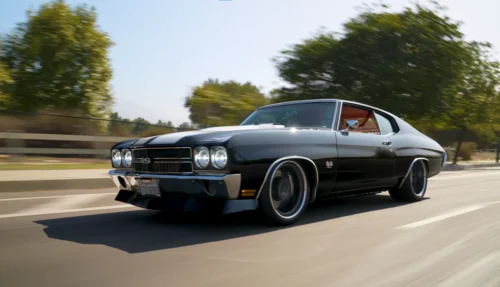
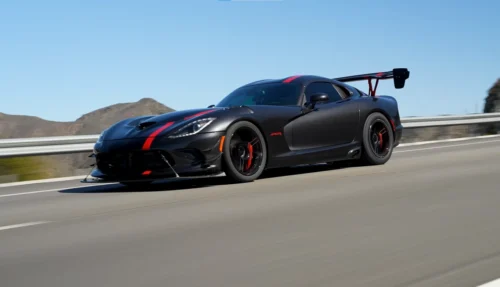
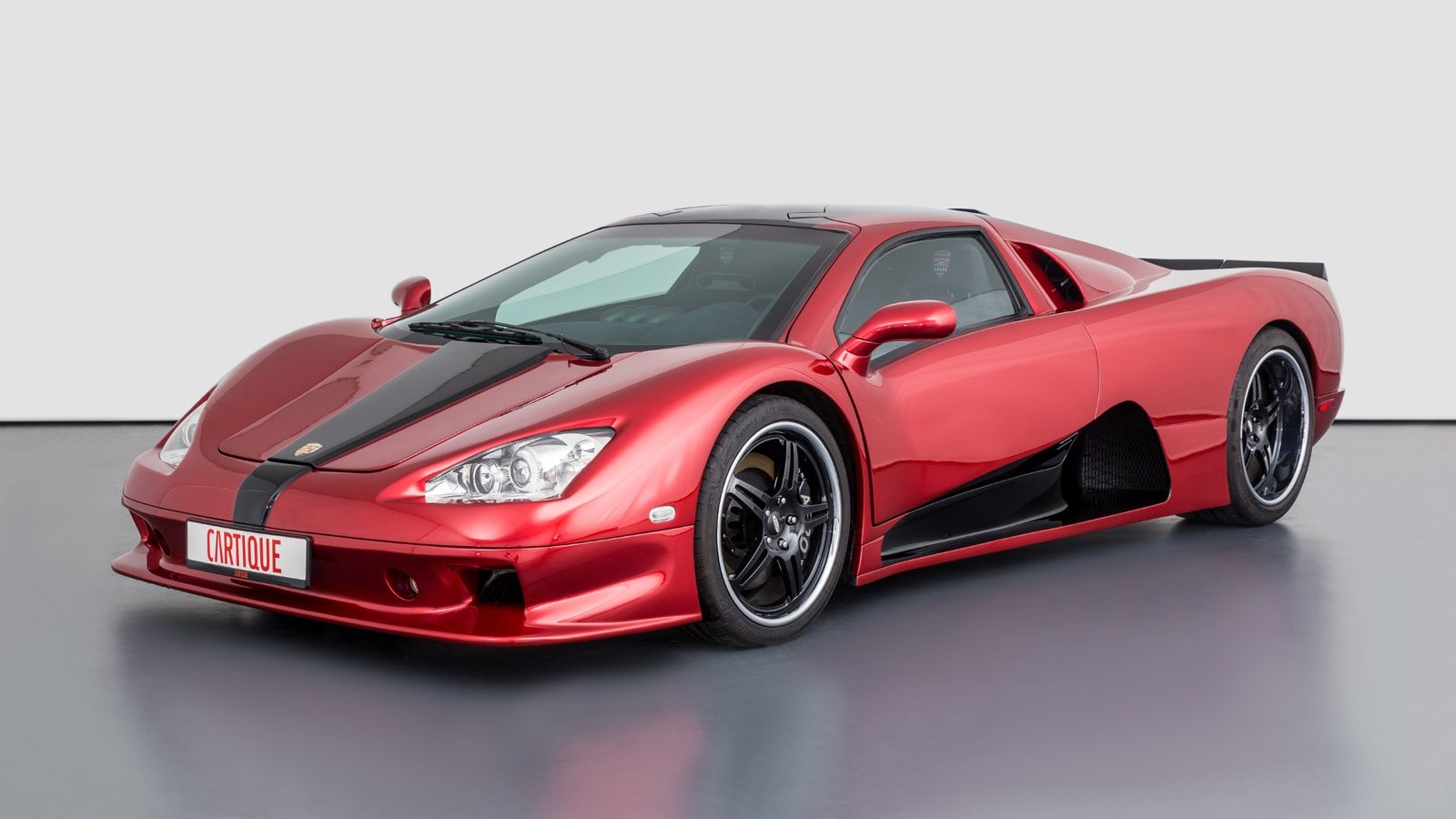
Long before Tuatara, SSC North America was a virtual unknown taking on Bugatti with the Ultimate Aero TT. There was no traction control, no ABS — just a driver, a 6.3-liter twin-turbo V8, and 1,183 horsepower sent purely to the rear axle.
That stripped-down approach paid off. The Ultimate Aero TT earned a Guinness World Record after clocking a verified 256 mph.
| Spec | Detail |
|---|---|
| Engine | 6.3L Twin-Turbo V8 |
| Horsepower | 1,183 hp |
| 0-62 mph | 2.7 seconds |
| Top Speed | 256 mph (412 km/h) |

5
Czinger 21C V Max
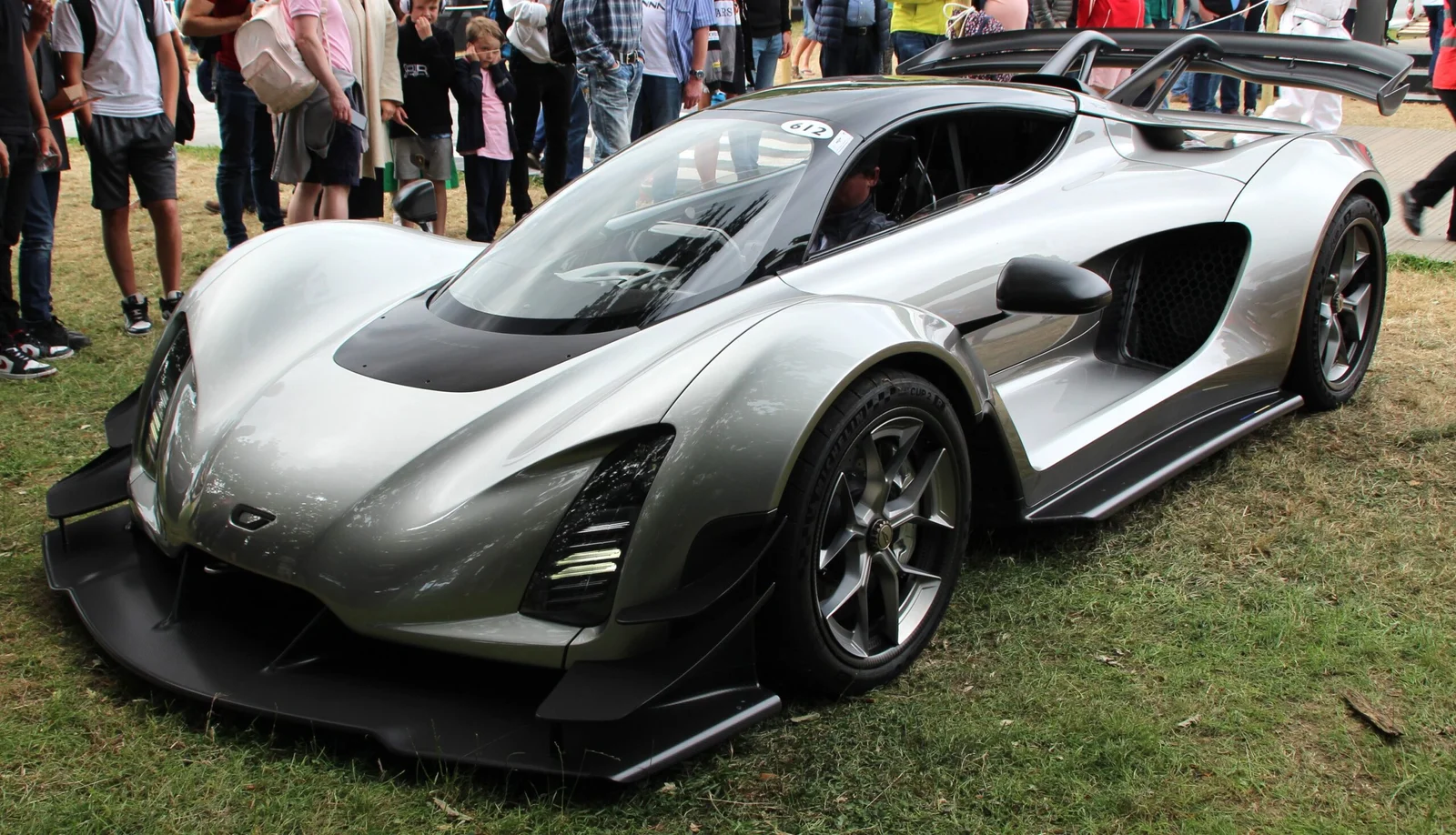
Built in California, the Czinger 21C leans on AI-assisted design and 3D-printed components in a way few automakers attempt. This V Max variant ditches the rear wing entirely to cut drag, giving it a fighter-jet-inspired silhouette.
A compact 2.88-liter twin-turbo hybrid V8 combines with electric motors to produce 1,250 horsepower at a screaming 11,000 rpm, pushing the 21C to 253 mph.
| Spec | Detail |
|---|---|
| Engine | 2.88L Twin-Turbo Hybrid V8 |
| Horsepower | 1,250 hp |
| 0-62 mph | 1.9 seconds |
| Top Speed | 253 mph (407 km/h) |
6
Saleen S7 Twin Turbo
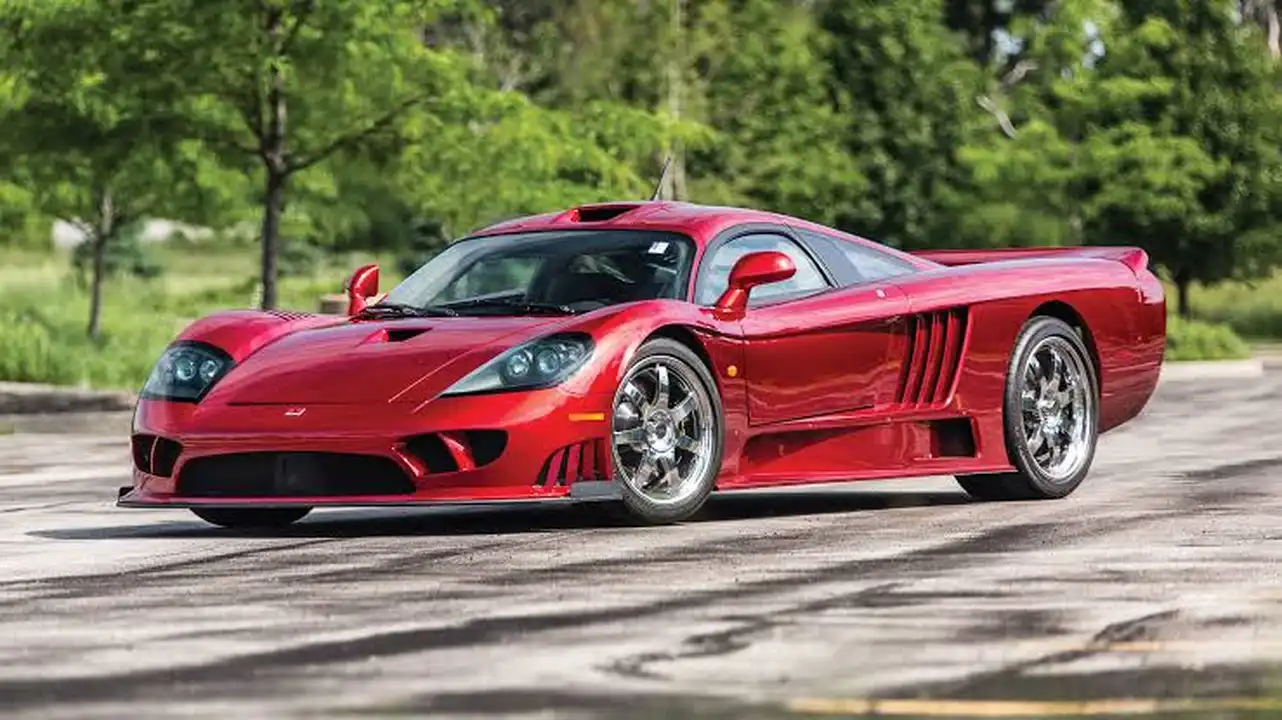
Steve Saleen’s S7 has been a fan favorite for decades, known for its wedge-shaped body and deep aerodynamic vents. In 2005, facing growing pressure from European rivals, Saleen bolted on twin Garrett turbochargers to the S7’s 7.0-liter V8, boosting output to 750 horsepower.
Downforce was the S7’s real superpower, and it helped the car reach a top speed of 248 mph.
| Spec | Detail |
|---|---|
| Engine | 7.0L Twin-Turbo V8 |
| Horsepower | 750 hp |
| 0-62 mph | 2.8 seconds |
| Top Speed | 248 mph (399 km/h) |
7
Vector W8
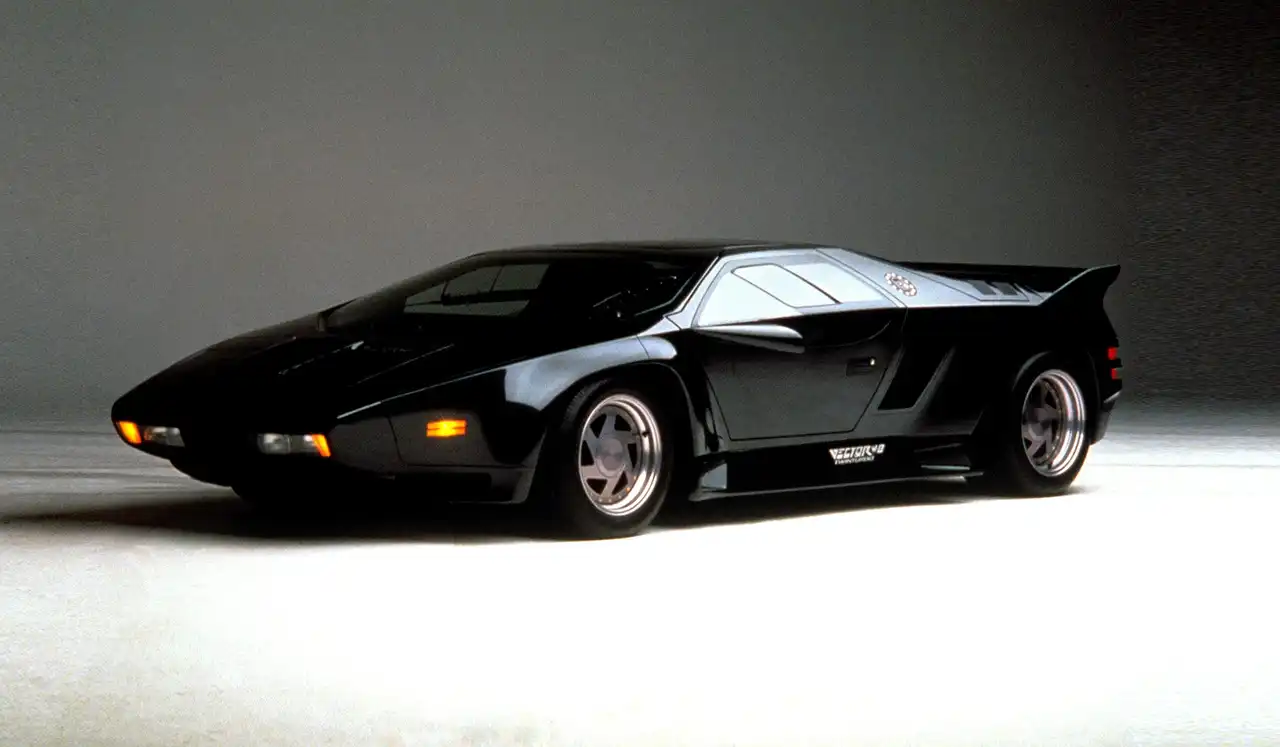
The Vector W8 is a time capsule from the late 1980s, when designer Jerry Wiegert set out to build America’s answer to Lamborghini. Its body combined Kevlar with carbon fiber panels, wrapped around a transverse-mounted 6.0-liter twin-turbo V8.
Instead of a manual gearbox, the W8 used a three-speed automatic — an unusual choice that didn’t stop it from hitting 242 mph on the Bonneville Salt Flats.
| Spec | Detail |
|---|---|
| Engine | 6.0L Twin-Turbo V8 |
| Horsepower | 625 hp |
| 0-62 mph | 4.2 seconds |
| Top Speed | 242 mph (389 km/h) |
8
Chevrolet Corvette ZR1
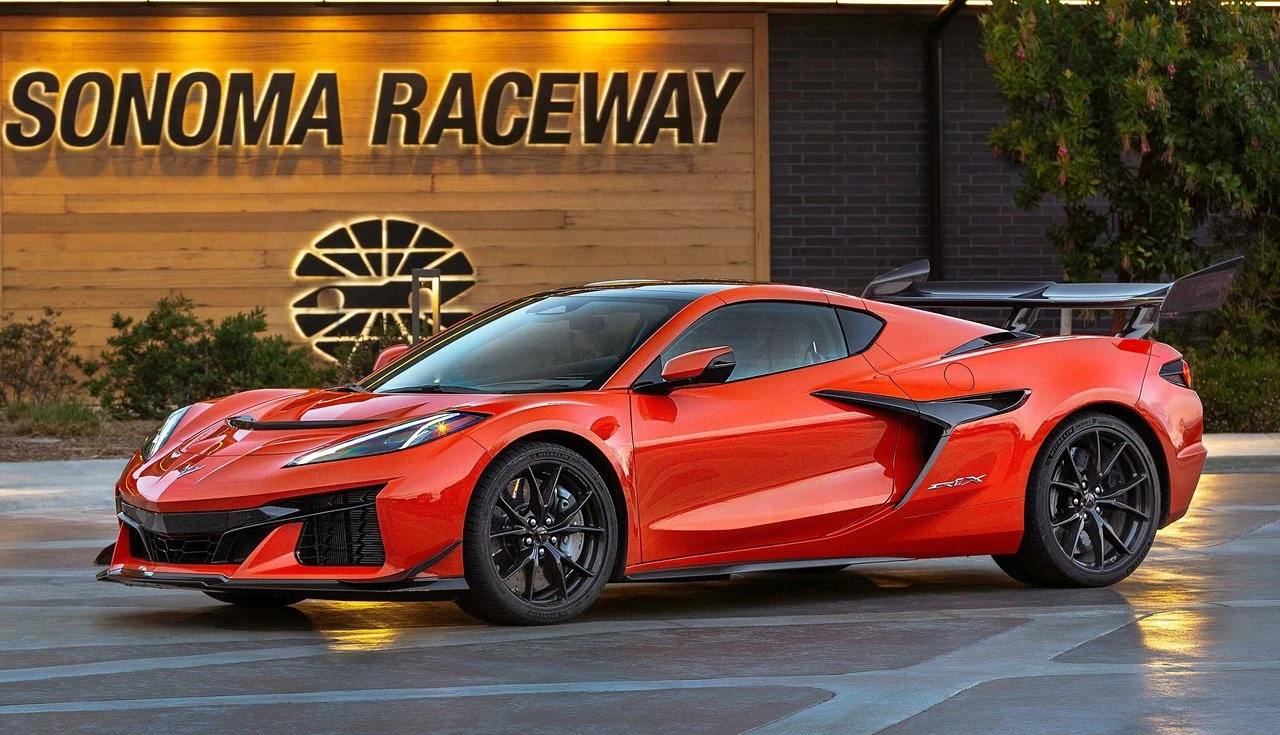
The latest Corvette ZR1 marks a major shift for Chevrolet, moving to a mid-engine layout for the first time. Rather than leaning on hybrid assistance, GM extracted 1,064 horsepower from a flat-plane-crank 5.5-liter twin-turbo V8 — no electric motors required.
That’s supercar-rivaling output at a fraction of the price of European exotics, and it’s enough to send the ZR1 to a claimed 233 mph.
| Spec | Detail |
|---|---|
| Engine | 5.5L Twin-Turbo V8 |
| Horsepower | 1,064 hp |
| 0-62 mph | Under 2.5 seconds |
| Top Speed | 233 mph (375 km/h) |
9
Scuderia Cameron Glickenhaus SCG 003S
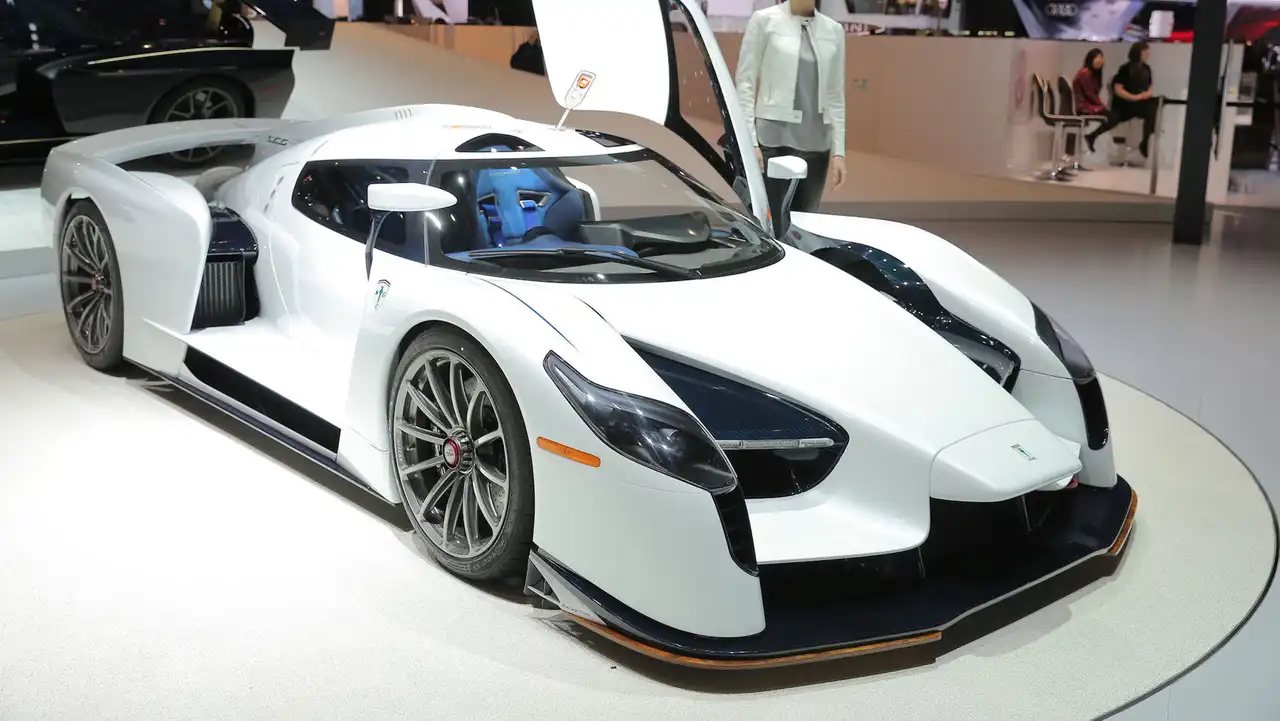
James Glickenhaus built his reputation racing at Le Mans, and the SCG 003S is the road-legal Stradale version of that race-bred know-how. Its carbon fiber body wraps around a BMW-sourced 4.4-liter twin-turbo V8 making roughly 800 horsepower.
Independent testing confirmed a top speed of 217 mph, proving small-batch American exotics can still hang with the big names.
| Spec | Detail |
|---|---|
| Engine | 4.4L Twin-Turbo V8 |
| Horsepower | Approximately 800 hp |
| 0-62 mph | Under 3 seconds |
| Top Speed | 217 mph (350 km/h) |
10
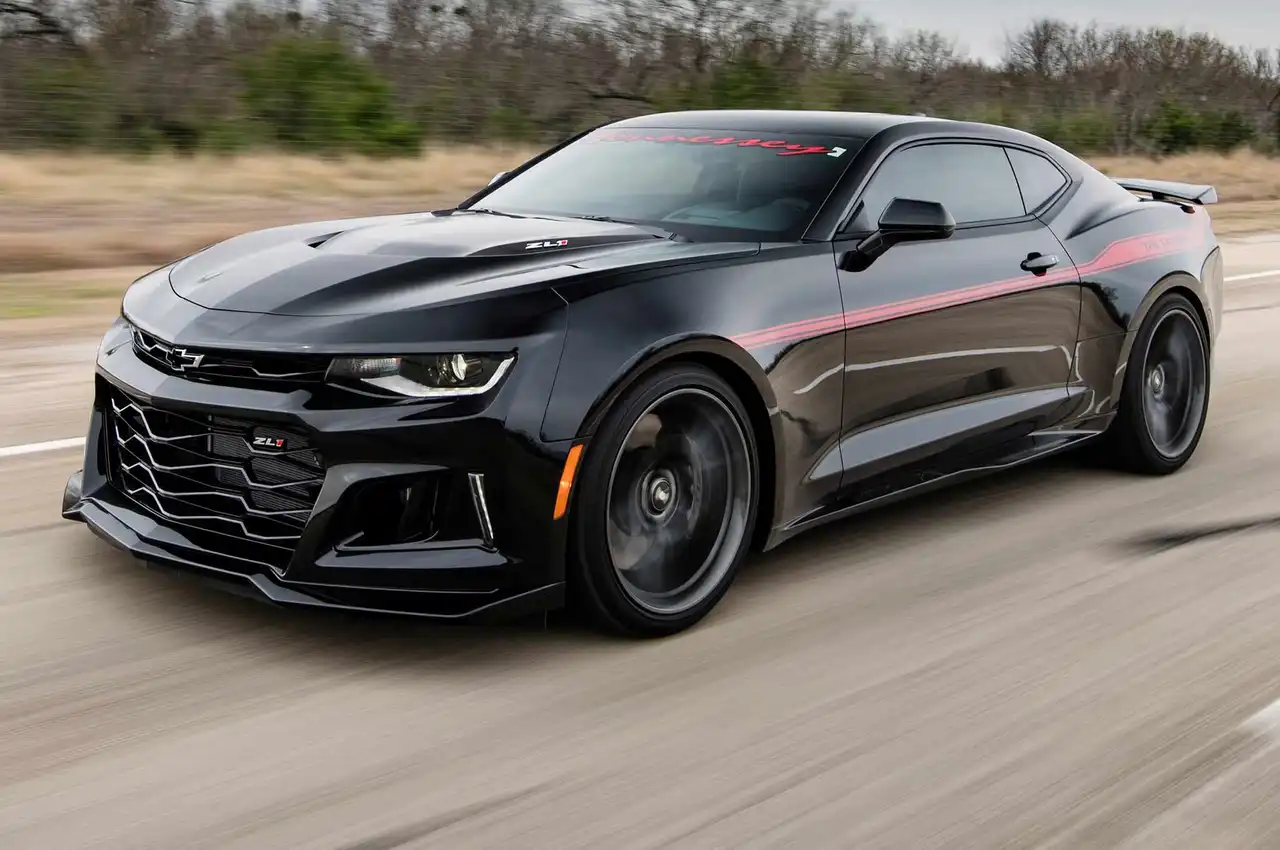
Camaro ZL1 “Exorcist”
Built by Hennessey to take direct aim at the Dodge Demon, the Exorcist is a supercharged version of the Chevrolet Camaro ZL1. Hennessey’s upgrades push the 6.2-liter supercharged V8 to 1,000 horsepower.
GPS-verified testing at a Texas proving ground clocked the Exorcist at speeds approaching 217 mph, putting it in the same league as cars costing several times as much.
| Spec | Detail |
|---|---|
| Engine | 6.2L Supercharged V8 |
| Horsepower | 1,000 hp |
| 0-62 mph | Under 3 seconds |
| Top Speed | 217 mph (350 km/h) |
From Texas garages to California R&D labs, these cars prove that American engineering still knows how to chase a redline. Whether it’s a carbon fiber hypercar hunting 300 mph or a supercharged Camaro built to humiliate a Demon, the fastest cars in America keep getting faster.