
Mercedes 300SL Gullwing: German Engineering That Still Holds Up
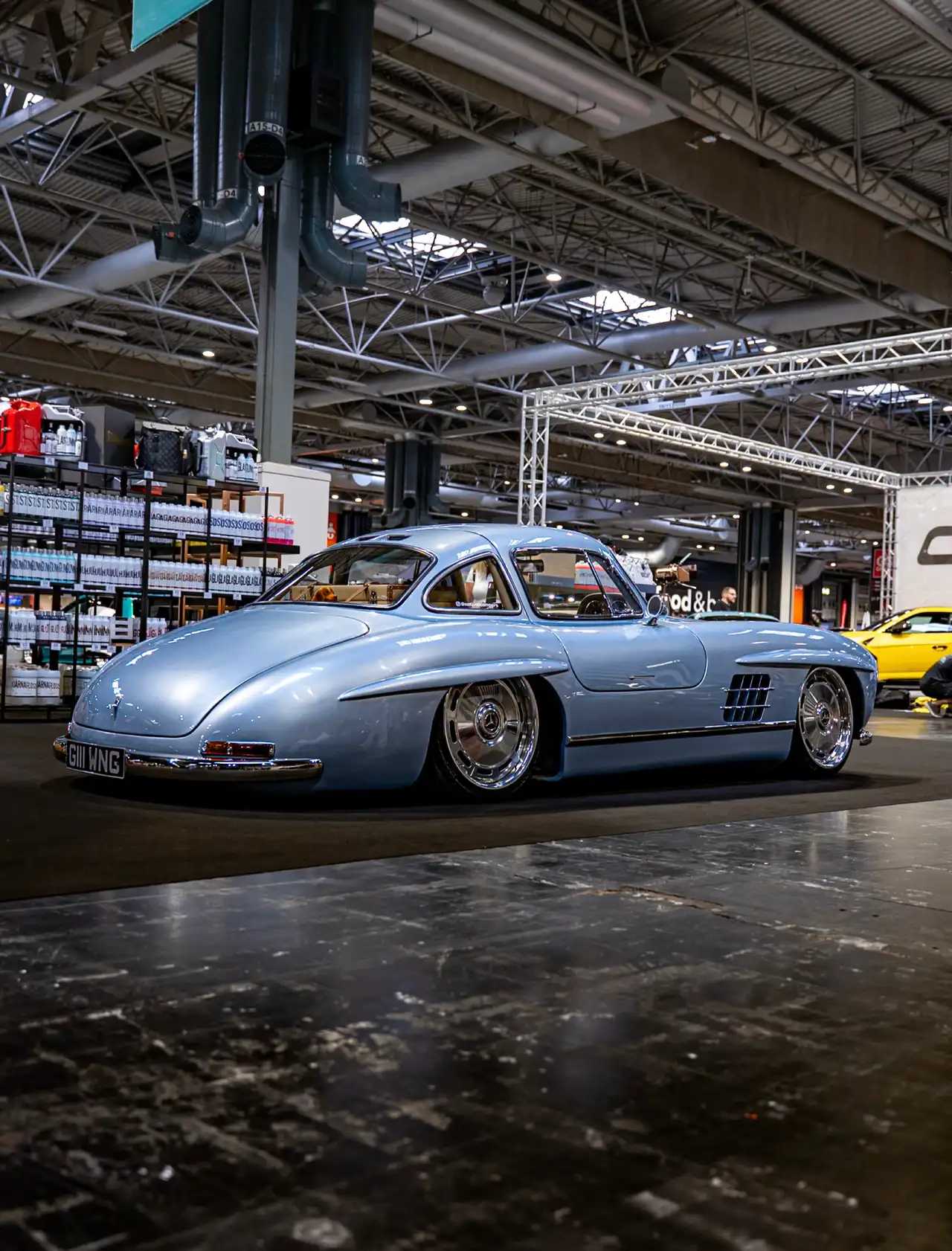
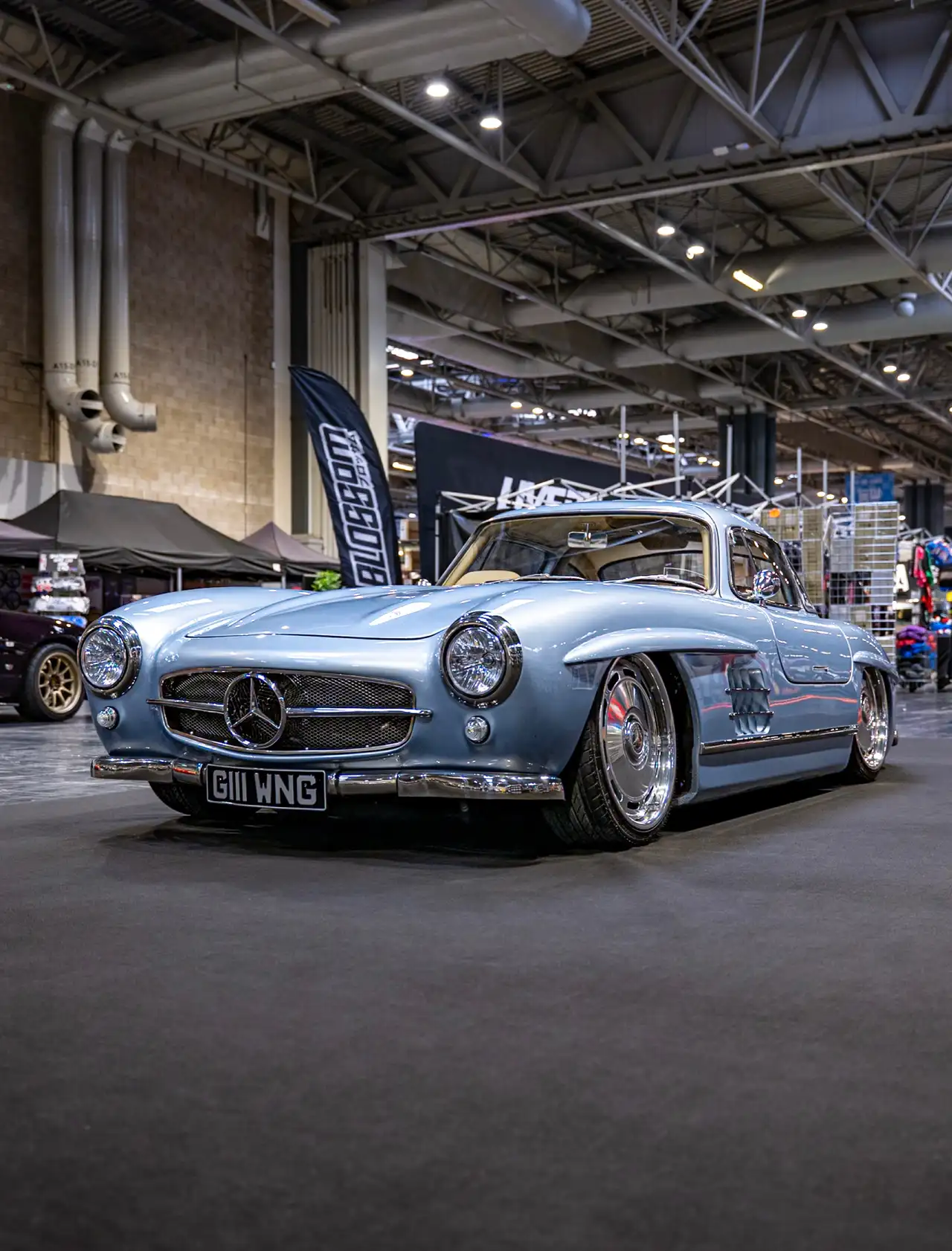
The Mercedes 300SL Gullwing (1954-1957) got its swing-up doors from a race-bred tube-frame chassis, not styling. A 215-hp inline-six and 160 mph top speed made it the fastest production car of its era.

Why Does the Mercedes 300SL Gullwing Have Doors That Swing Up?
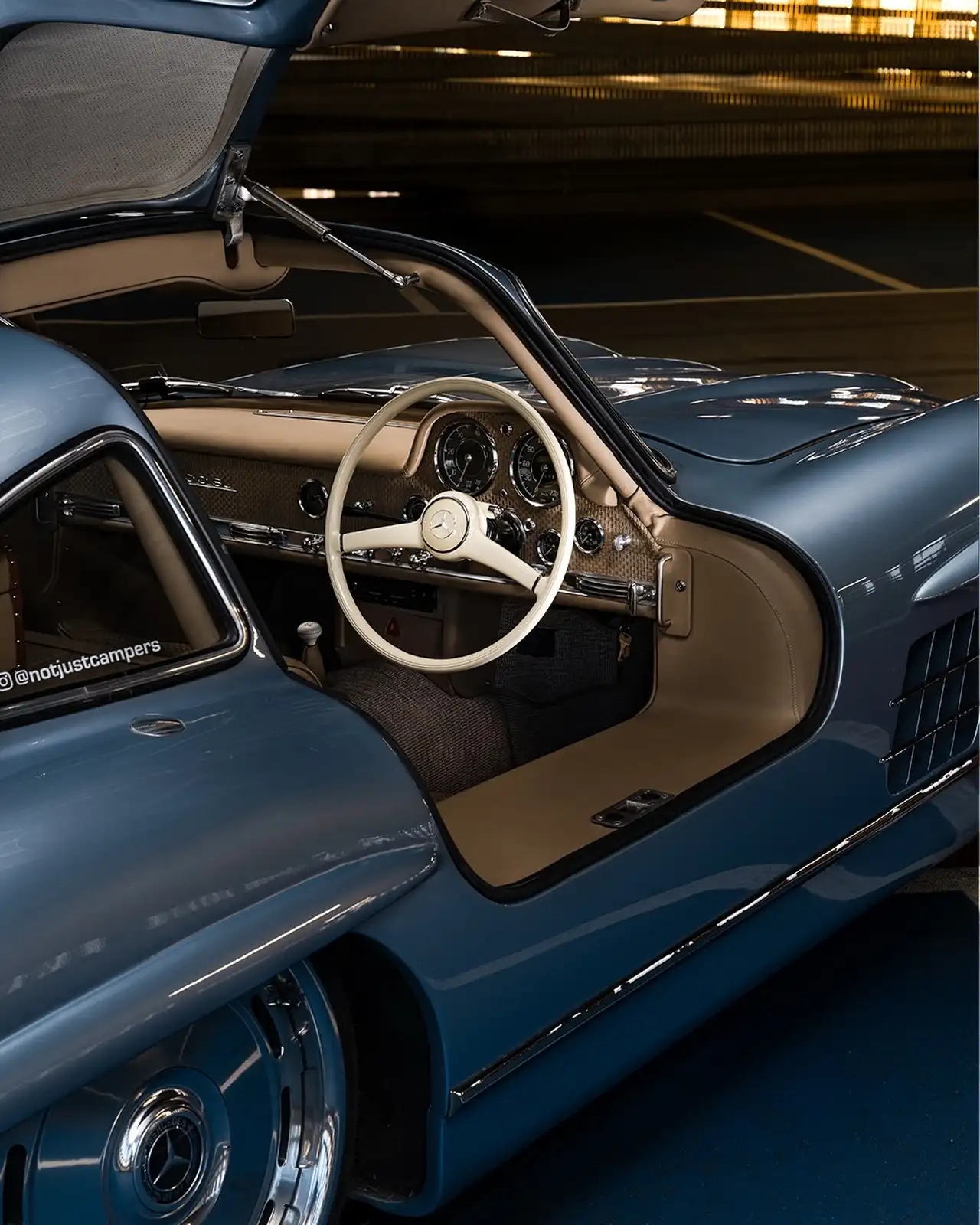
The 300SL’s doors swing upward because the chassis left no room for a conventional hinge. The car sits on a lightweight tubular space frame, and that structure runs high along both sides of the cabin.
That frame wasn’t designed for a showroom. It came straight from the Mercedes-Benz W194 race car, built to survive grueling endurance events like the Mille Miglia and the 24 Hours of Le Mans.
With structural tubing running along the sills, engineers had nowhere to mount standard doors. Hinging them at the roofline solved the problem, and it created one of the most recognizable silhouettes in automotive history.
What Engine Powers the Mercedes 300SL Gullwing?
The 300SL runs a 3.0-liter inline-six, the M198, producing roughly 215 hp. That output was staggering for a road car in 1954.
The real breakthrough was mechanical fuel injection, a technology almost unheard of in production cars at the time. While most rivals still relied on carburetors, Mercedes-Benz adapted wartime aviation fuel-injection know-how for street use.
Engineers also tilted the engine 50 degrees to one side inside the bay, a solution that kept the hood low and aerodynamic without sacrificing cabin space.
How Fast Was the Mercedes 300SL Gullwing?
Depending on the final drive gearing a buyer chose, the 300SL could hit close to 160 mph, making it the fastest production car in the world at launch.
Most sports cars of the 1950s struggled to break 120 mph, so that gap mattered. Combined with direct fuel injection and slippery aerodynamics, that top speed is why museums and collectors treat the 300SL as an engineering milestone rather than just a good-looking coupe.
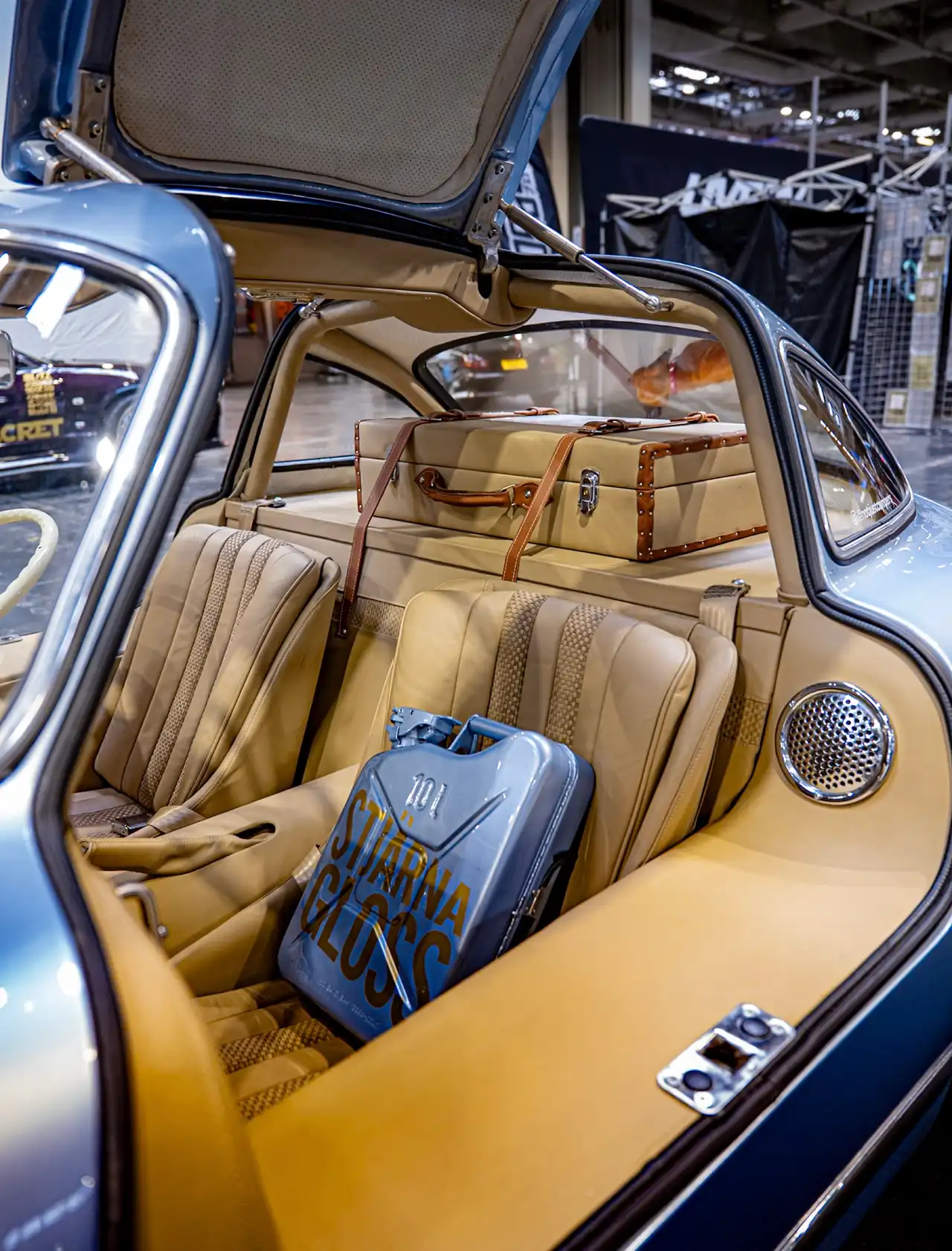
A note on the photos: any images paired with this story are for illustrative purposes only. We can’t confirm the origin or authenticity of specific photos credited to social media accounts, so we don’t present any image as proof of a real modified example.
How Many Mercedes 300SL Gullwings Were Built?
Mercedes-Benz produced about 1,400 Gullwing coupes between 1954 and 1957. The convertible that followed, the 300SL Roadster, used conventional doors and outsold the coupe.
That limited run is a big reason the car now trades for millions at auction. Scarcity, historical significance, and a one-of-a-kind design have turned the 300SL into one of the most stable investments in the collector-car market.
Is the Mercedes 300SL Gullwing Available in the US Today?
The 300SL was sold new in the US through Mercedes-Benz dealers in the 1950s, but production ended decades ago, so there’s no current MSRP or factory availability. Every example on the road today comes through the classic-car market.
Auction results for well-documented Gullwings routinely land between $1 million and $2 million, with exceptional matching-numbers cars going higher. Buyers typically insure them through agreed-value classic-car policies rather than standard auto insurance, since replacement cost far exceeds book value.
Maintenance isn’t cheap either. Parts are scarce, specialist mechanics are limited, and a full mechanical restoration can run into six figures. For collectors cross-shopping the era, comparable icons include the Porsche 356 Speedster and the Jaguar XK120, both of which trade in a similar six-figure-to-low-seven-figure range depending on condition.
Is the Mercedes 300SL Gullwing Worth the Attention?
It is, and not just for nostalgia. The 300SL marks the moment Mercedes-Benz proved, with race-track data, that it could build the most advanced road car in the world.
For collectors, it’s a rolling museum piece. For engineering enthusiasts, it’s a case study in turning a structural limitation into a design icon. Few cars manage to pull off both at once.

Por: Danniel Bittencourt
03/09/2026
Related posts