BMW M3 CS Handschalter 2027: The Manual Transmission M3 BMW Fans Have Been Waiting For
The 2027 BMW M3 CS Handschalter packs 473 horsepower, a six-speed manual gearbox and rear-wheel drive into a CS badge for the very first time, making it the most driver-focused M3 BMW has ever produced.

Por: Danniel Bittencourt
19/05/2026
2027 BMW M3 CS Handschalter: The Manual-Transmission M3 That Changes What CS Means
BMW announced the M3 CS Handschalter in May 2026, and it immediately rewrote the rules of what a CS model can be. For the first time in M3 history, the CS badge comes paired with a six-speed manual transmission and rear-wheel drive only — no all-wheel drive, no automatic gearbox.
Under the hood sits the familiar S58 engine, tuned to 473 horsepower and 406 lb-ft of torque. The car also sheds 75 pounds compared to the standard manual M3, which is the kind of weight reduction that changes how a car actually feels in the real world.
This is a limited-edition model built as the final send-off for the sixth-generation M3. It’s not a facelift or a new platform — it’s BMW extracting everything the G80 generation has left before moving on.
The closest competitors are the Cadillac CT4-V Blackwing with a manual and the Porsche 911 Carrera T, but neither combines weight reduction, carbon fiber bodywork and a three-pedal setup under a CS nameplate.
The M3 CS Handschalter is sold exclusively in the United States and Canada. There are no plans for an official launch in any other market.
Exposed Carbon Fiber and Red Kidney Grille: The M3 CS Handschalter Means Business From Every Angle
The CS Handschalter doesn’t try to be subtle. BMW made design decisions here that prioritize function, and the result is a car that looks exactly as aggressive as it performs.
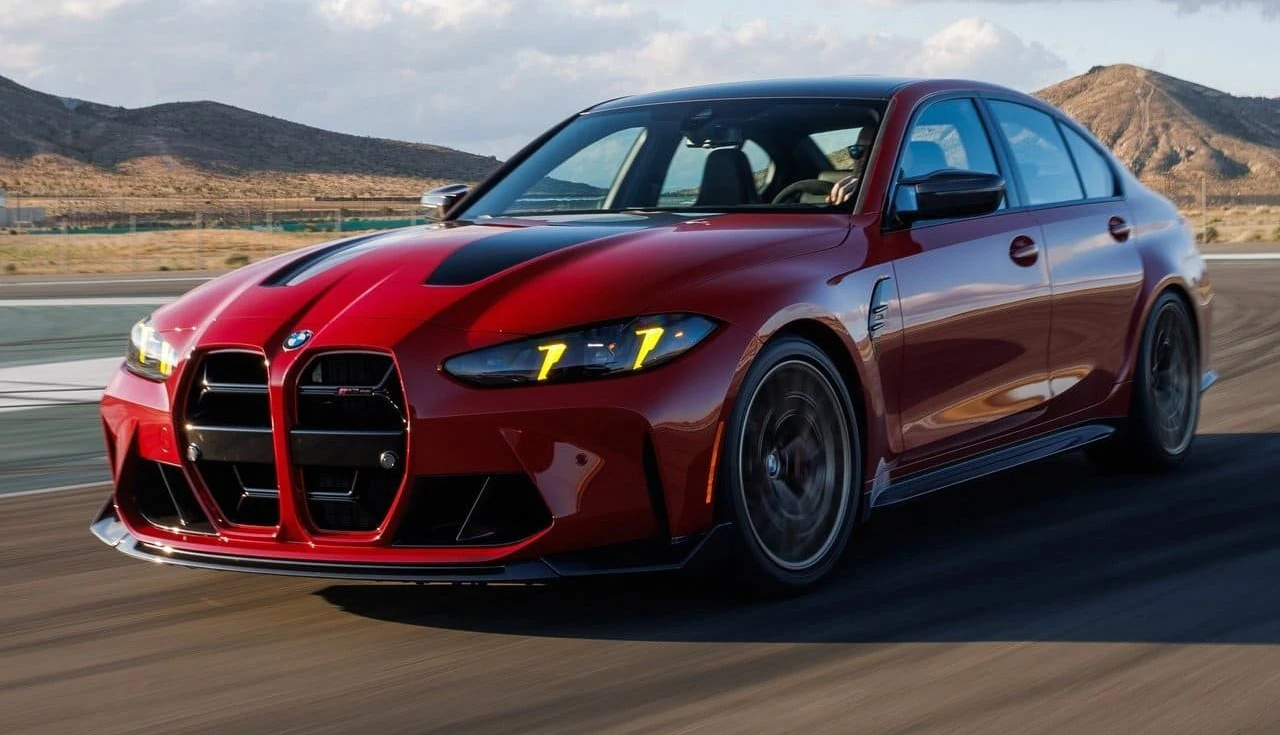
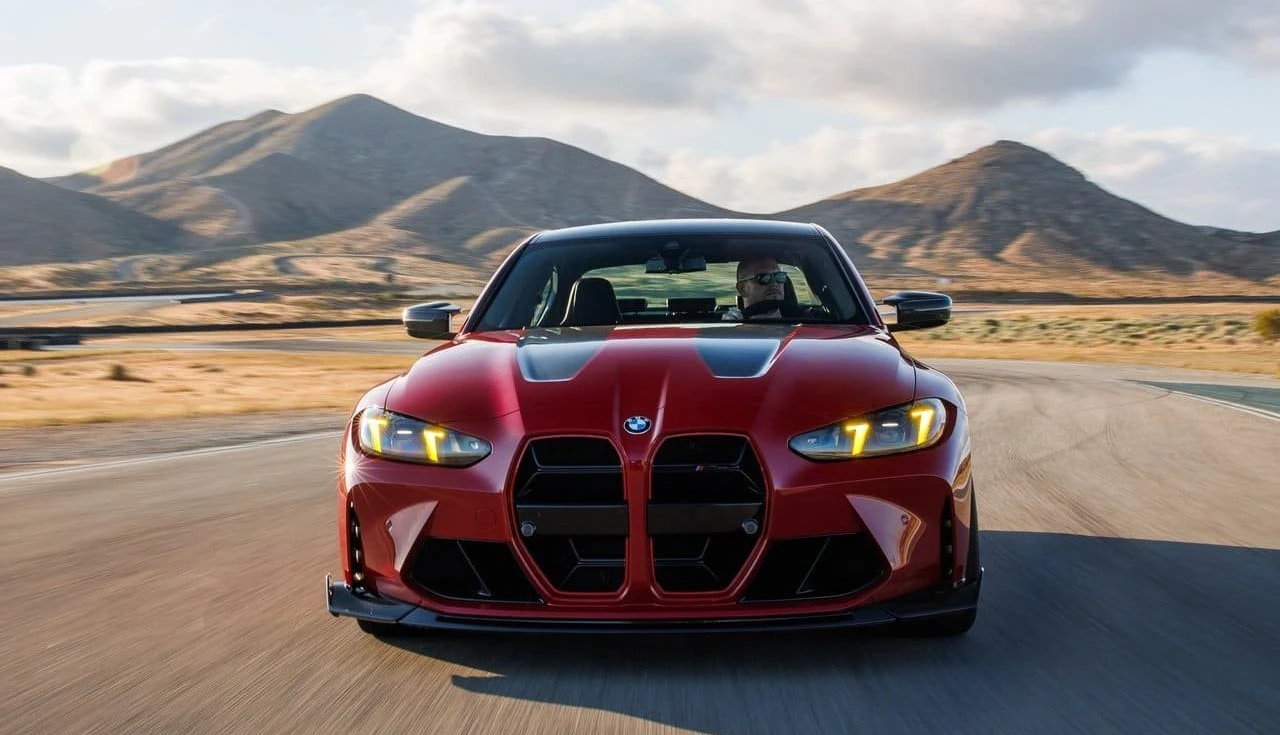
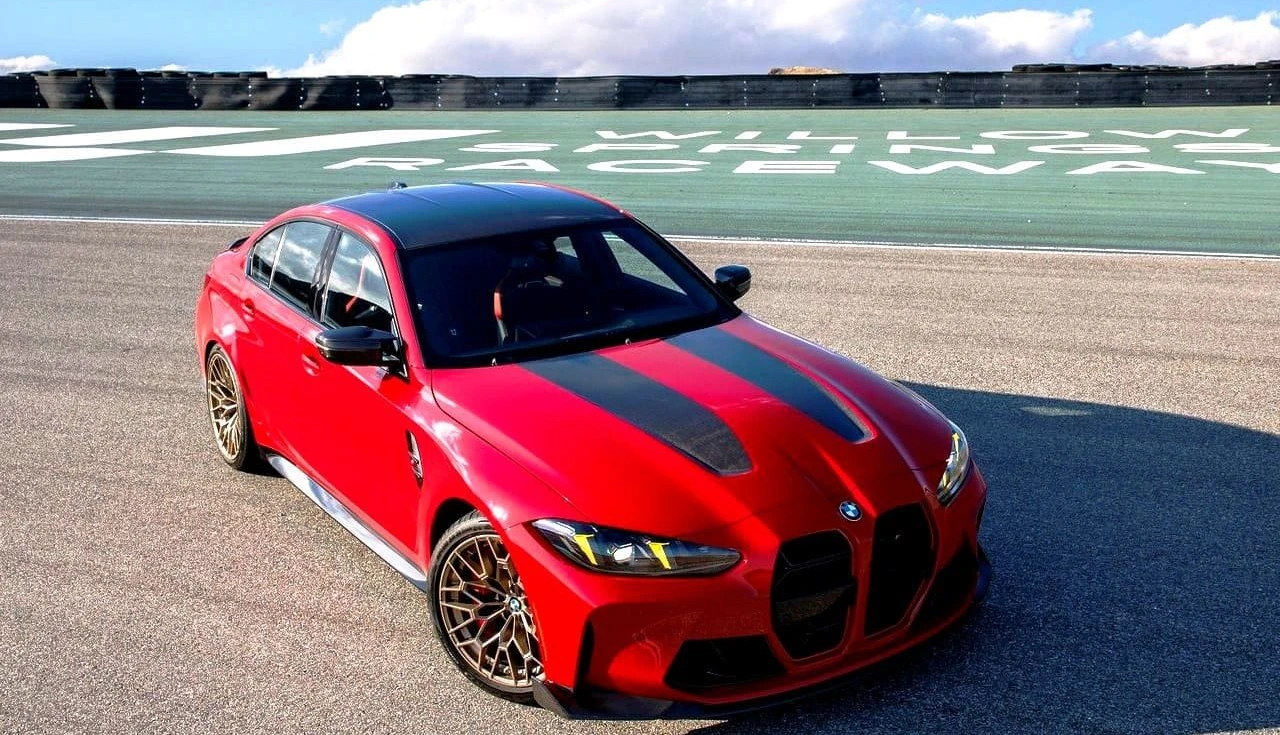
Up front, the iconic kidney grille ditches its chrome trim and gets red outline accents, a direct nod to BMW’s GT racing cars. The daytime running lights glow yellow — another detail pulled straight from the motorsport world and used here as a visual signal of what this car is about.
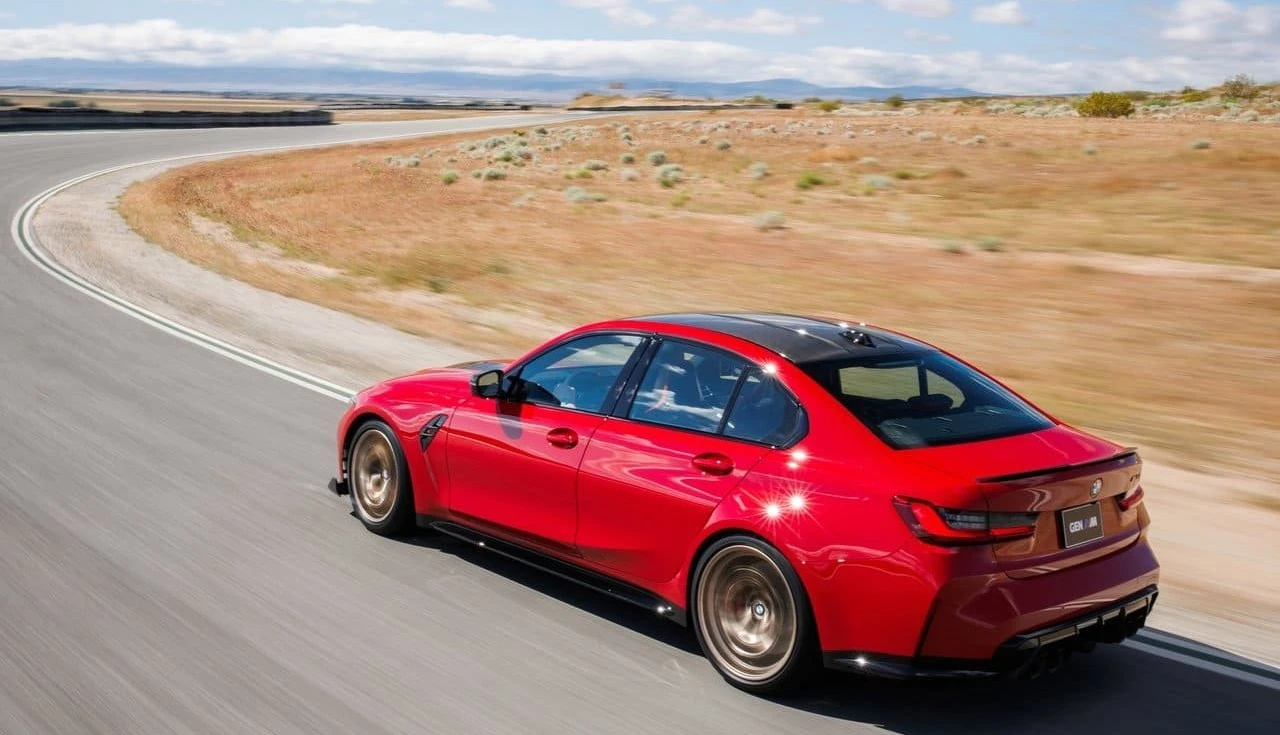
The roof, front splitter, rear diffuser, trunk spoiler and hood channels are all made from exposed CFRP — carbon fiber reinforced plastic with the weave visible. This isn’t cosmetic. Every piece of carbon on this car is there to reduce weight, and the visual effect is a byproduct of that engineering decision.
From the side, the proportions follow the standard M3 Competition, but the carbon details and forged wheels give the CS Handschalter its own identity within the G80 family. It reads as a different animal even to someone who knows the regular M3 well.
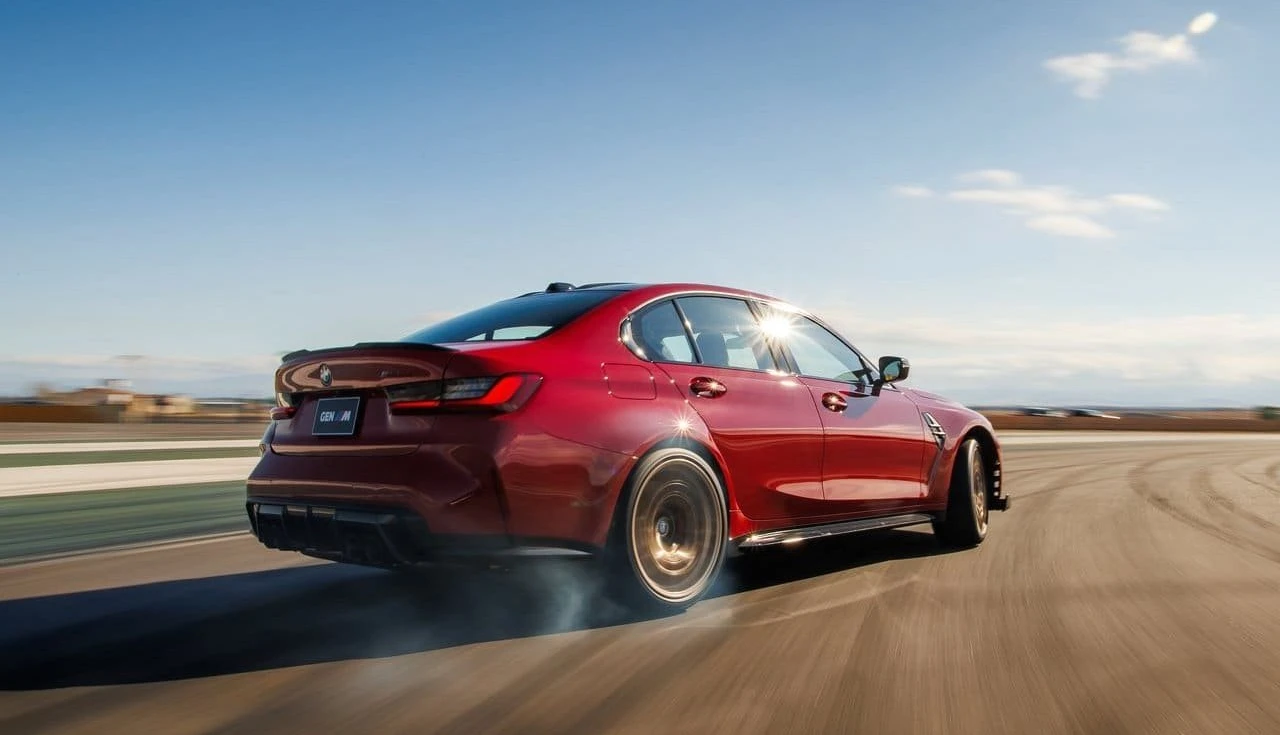
Around back, the carbon diffuser and integrated spoiler close out a design that feels cohesive and purposeful. Aggressive without being theatrical. The kind of car that communicates rear-wheel drive and a clutch pedal before you even see the interior.
Stripped-Down Cabin, Full-Bucket Seats: The M3 CS Handschalter Interior Prioritizes the Drive
Sitting inside the CS Handschalter feels like a negotiation. BMW removed everything that wasn’t essential to the driving experience and kept only what matters when you’re pushing hard through a corner or hitting a track day.
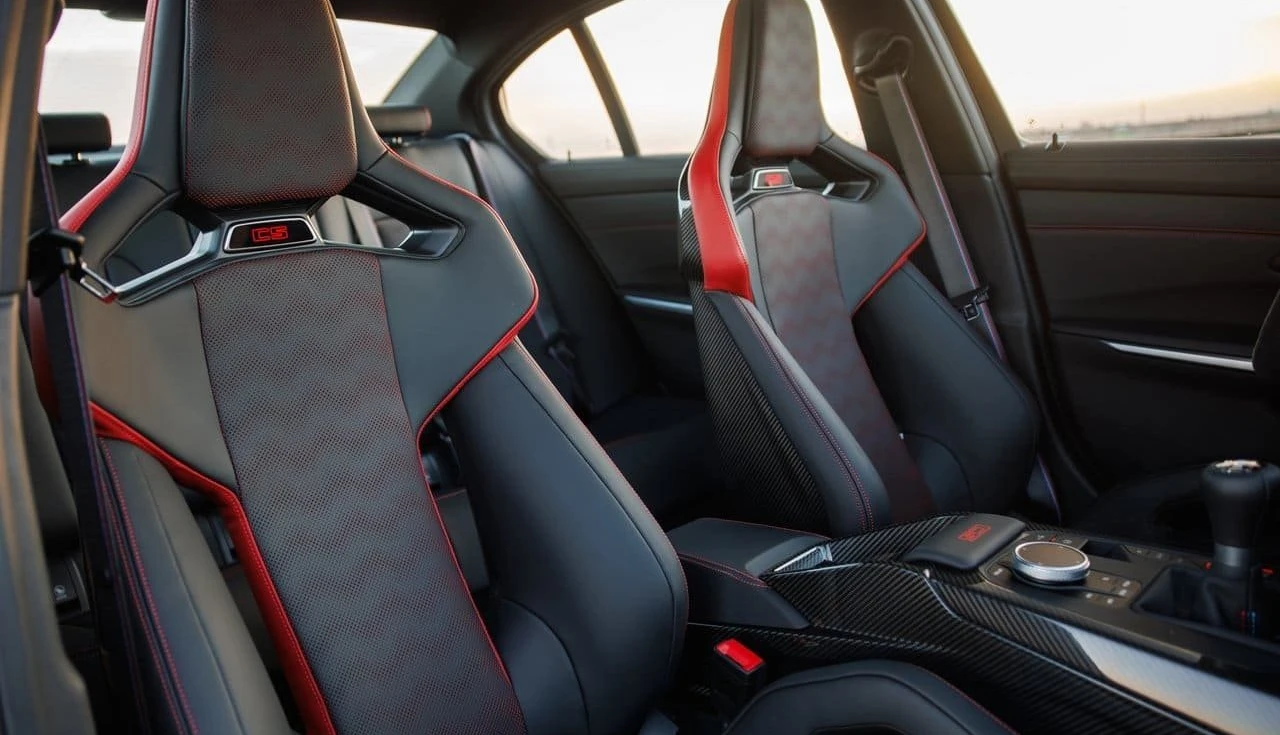
The standard M Carbon bucket seats are upholstered in black and red Merino leather. They hold you in place through hard cornering the way a standard sport seat never could, but that same rigidity makes itself known on rough city streets after an hour behind the wheel.
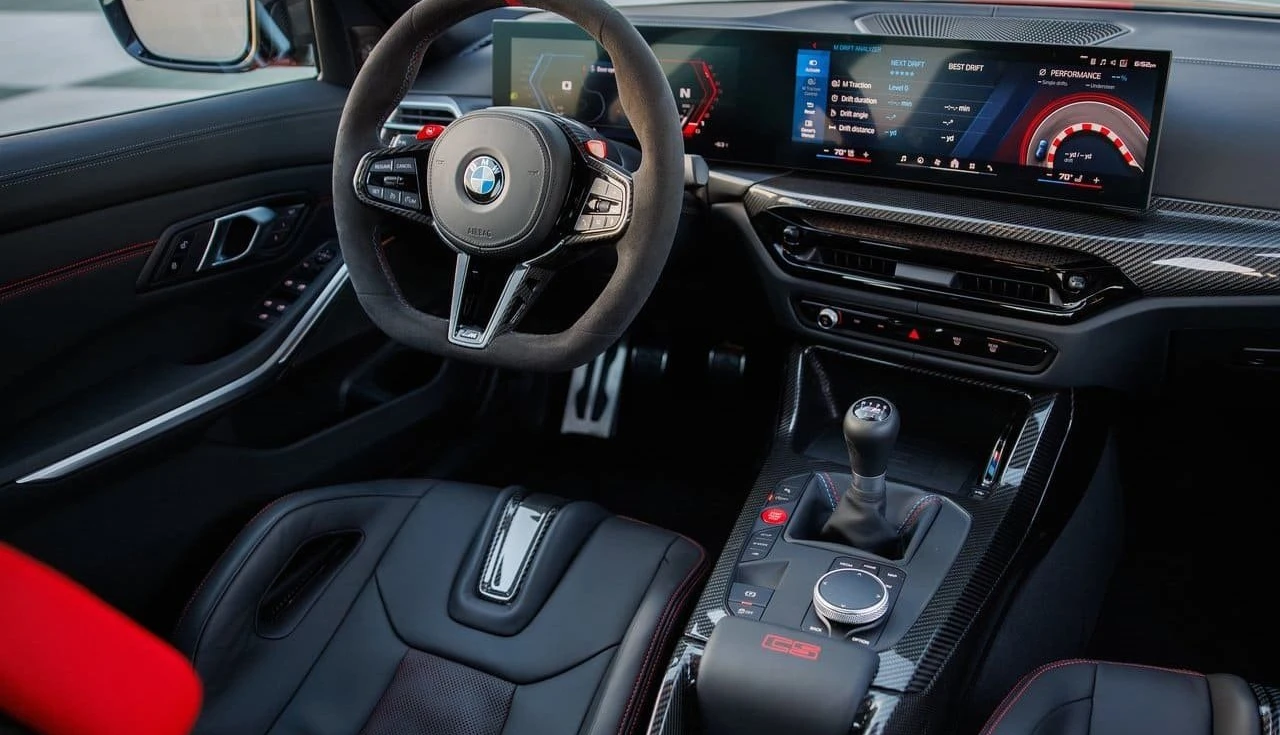
The Alcantara-wrapped steering wheel gives genuine grip under hard use and is one of the interior details that consistently reminds you what kind of car this is. The rest of the dashboard stays true to BMW’s current layout, with the Curved Display and iDrive system intact — but the focus here is on the M Drive Professional software suite.
M Drive Professional: The Technology That Stays When Everything Else Gets Cut
M Drive Professional brings two systems that matter on track. The M Drift Analyzer monitors and scores your slides in real time. The M Traction Control offers 10 stages of stability intervention, giving the driver precise control over how much the rear wheels are allowed to work.
That level of electronic adjustability balances out the analog nature of the manual gearbox. With 473 horsepower going to the rear wheels only, having ten steps of traction control isn’t a luxury — it’s the kind of tool that separates a controlled drift from a wall.
Rear passenger space and the 480-liter trunk match the standard M3 G80. No compromises were made structurally in that regard.
The real strength of this cabin is how well the track-focused environment coexists with BMW’s digital systems without feeling contradictory. The genuine limitation is the bucket seats — extended daily driving in city traffic will remind you this car was built for something faster than stop-and-go on the highway.
473 HP, Six-Speed Manual, Rear-Wheel Drive: The Powertrain That Defines the CS Handschalter
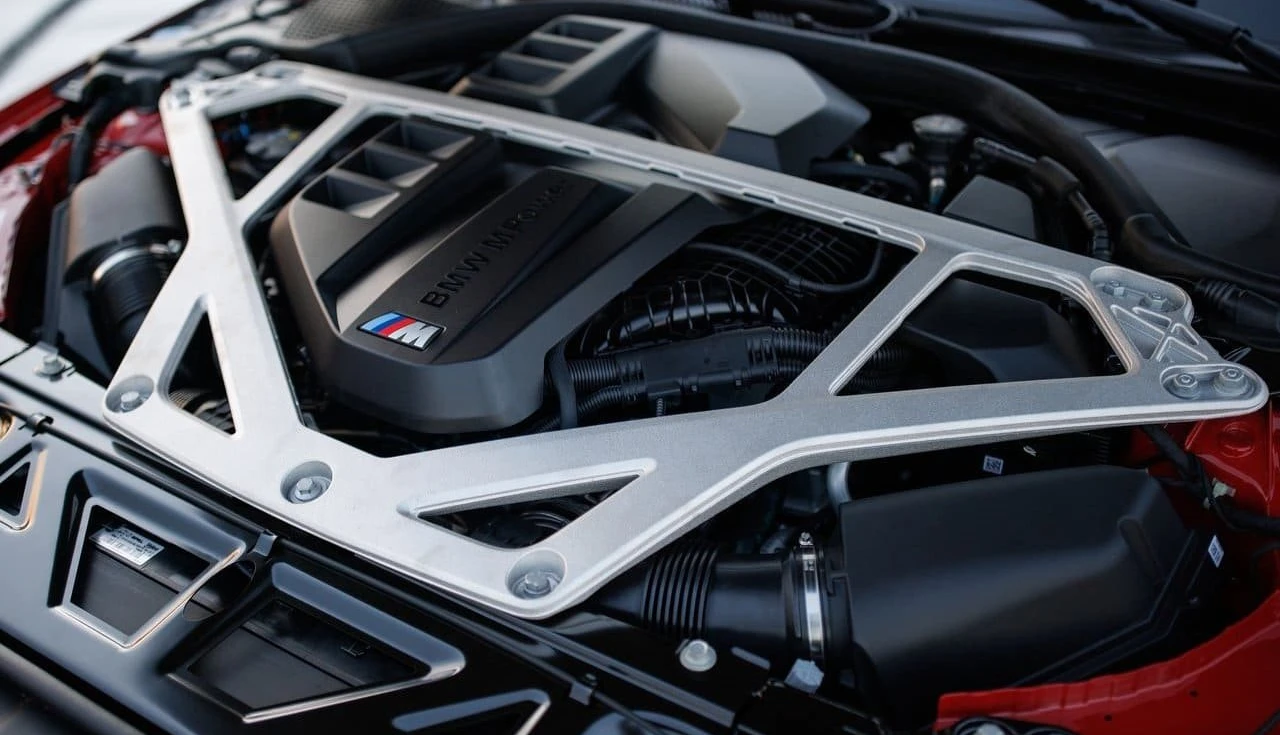
The engine is the S58 — a 3.0-liter twin-turbocharged inline-six that shares its fundamental architecture with the M4 GT3 Evo racing engine. That connection isn’t just a marketing line. The S58 is a purpose-built block with a level of mechanical refinement that shows in how it delivers power across the rev range.
Output is 473 horsepower and 406 lb-ft of torque, and all of it runs through a six-speed manual gearbox to the rear wheels. No xDrive, no dual-clutch automatic. Every gear change is the driver’s responsibility, and that’s entirely the point.
The practical result is a 0-60 mph time of approximately 4.2 seconds — slower than the all-wheel-drive automatic CS, and BMW knows it. The Handschalter isn’t chasing lap records. It’s chasing the kind of engagement that a fast automatic simply can’t replicate in the real world.
Top speed is 180 mph, with the M Driver’s Package included as standard equipment. Fuel economy follows the standard manual M3 G80 as a reference point, with EPA-based estimates of around 23 mpg highway and 16 mpg city — numbers that will drop significantly during aggressive track use.
Specifications
| Item | Specification |
|---|---|
| Engine | 3.0L Inline-6 Twin-Turbo (S58) |
| Horsepower | 473 hp |
| Torque | 406 lb-ft |
| Transmission | 6-Speed Manual |
| Drive | Rear-Wheel Drive (RWD) |
| 0–60 mph | ~4.2 seconds |
| Top Speed | 180 mph |
| Fuel Economy (Est.) | ~16 city / ~23 hwy mpg |
| Wheelbase | 112.5 in |
| Curb Weight (Est.) | ~3,682 lbs |
| Trunk Space | 17.0 cu ft |
Starting at $108,450 and North America Only: What the M3 CS Handschalter Really Costs to Own
The 2027 BMW M3 CS Handschalter carries a starting price of $108,450 in the United States. That positions it well above the standard M3 Competition and closer to the territory of the Porsche 911 Carrera T, which is exactly the company BMW intends for it to keep.
The model is exclusive to the U.S. and Canadian markets. No official allocation exists for Europe, Asia or any other region. For buyers outside North America, the only path to ownership runs through independent importers — which adds cost, complexity and no factory support.
Maintenance costs will run high. The exposed CFRP body panels, the CSL-derived suspension with exclusive dampers and springs, and the forged wheels all carry premium repair and replacement costs. Owners who use the car on track days should budget accordingly for consumables and suspension servicing.
Insurance falls into the high-risk category across the board: rear-wheel drive, near-500-horsepower output, manual transmission and a strictly limited production run. This isn’t a car for buyers who are calculating monthly carrying costs.
Is it worth buying at launch? For collectors, yes — without hesitation. The first-ever combination of a manual transmission with the CS nameplate creates a precedent that protects the car’s value in ways that standard M models simply don’t have. Road & Track has already flagged it as a guaranteed future classic, and that kind of early recognition tends to reflect in real-world appreciation over time.
The buyer profile is narrow: driving purists who want analog engagement over lap times, collectors with a long-term perspective, and enthusiasts who genuinely understand what it means that no CS has ever come with three pedals before this one.
Everything Buyers Want to Know About the 2027 BMW M3 CS Handschalter
Will the BMW M3 CS Handschalter be sold outside North America? No. The model is exclusive to the United States and Canada. There is no official allocation for Europe, the UK or any other market. International buyers would need to go through an independent importer with no BMW factory support.
What does insurance cost for the M3 CS Handschalter? No official rate exists yet, but expect a high-risk premium. The combination of rear-wheel drive, near-500-horsepower output, manual transmission and limited production puts this firmly in the expensive-to-insure category for any major U.S. insurer.
What kind of fuel economy does the M3 CS Handschalter get? Based on the standard M3 G80 manual as an EPA reference point, estimates land around 16 mpg city and 23 mpg highway. Push it hard on a track and those numbers will drop noticeably.
Who are the main competitors of the BMW M3 CS Handschalter? The two closest rivals are the Cadillac CT4-V Blackwing with the manual gearbox option and the Porsche 911 Carrera T. Neither one combines the same level of weight reduction, carbon fiber construction and a three-pedal setup under a CS-equivalent badge.
Is the 2027 BMW M3 CS Handschalter Worth the Money?
For collectors and driving purists, the answer is straightforward: yes. The first-ever CS model built around a manual transmission and rear-wheel drive creates something that has never existed before in M3 history, and that uniqueness has real long-term value.
For buyers looking for a comfortable daily driver with usable back seats and a smooth highway ride, this isn’t the right car. The track-tuned suspension, bucket seats and the absence of all-wheel drive make the urban ownership experience demanding.
The M3 CS Handschalter isn’t a car you buy with a spreadsheet. It’s the one you buy because you know you’ll regret it if you don’t.
Share this article
Related posts