2027 Ford Bronco Filson: Raptor’s V6, Sasquatch Package and Premium Interior
Ford pairs the Bronco Raptor’s twin-turbo V6 with quilted leather and Filson-grade materials. The result is the most capable and refined Bronco ever — but what’s the real-world cost?
2027 Ford Bronco Filson: The Raptor’s V6 Meets Luxury Off-Road DNA
Ford didn’t just build a new Bronco trim. It created a separate category within the Bronco lineup — and the Filson proves exactly that.
This is a special edition of the sixth-generation Bronco, developed in partnership with iconic American outdoor brand Filson. The brief was straightforward: take the full Sasquatch off-road package, drop in the 3.0L EcoBoost twin-turbo V6 from the Raptor, and wrap it all in an interior that finally justifies the price tag.
The Bronco Filson slots above the Badlands and Heritage trims, just below the Raptor in price and positioning. Its two biggest rivals? The Jeep Wrangler Rubicon and the Land Rover Defender 110.
Orders open in fall 2026, with deliveries scheduled for early 2027.
2027 Ford Bronco Filson — Quick Specs
| Spec | Details |
|---|---|
| Category | Premium off-road SUV |
| Engine | 3.0L EcoBoost twin-turbo V6 |
| Output | 400–418 hp (market estimate; official figure not yet released) |
| Torque | Up to 440 lb-ft (market estimate based on Bronco Raptor) |
| Transmission | 10-speed automatic |
| Drivetrain | 4×4 with two-speed transfer case, front & rear locking differentials |
| 0–60 mph | ~5.5–5.8 sec (market estimate) |
| Top Speed | ~112–118 mph (not officially confirmed) |
| Fuel Economy | ~15 mpg city / ~16 mpg hwy (market estimate based on Raptor EPA data) |
| Range | N/A (gasoline) |
| On Sale | Early 2027 (US); orders open fall 2026 |
Those numbers already tell a compelling story — but the raw specs don’t capture the full picture. Keep reading to understand why this particular Bronco might be the most well-rounded off-road vehicle Ford has ever produced.
The Boxy SUV That Earns a Second Look: Filson’s Trail-Ready Exterior
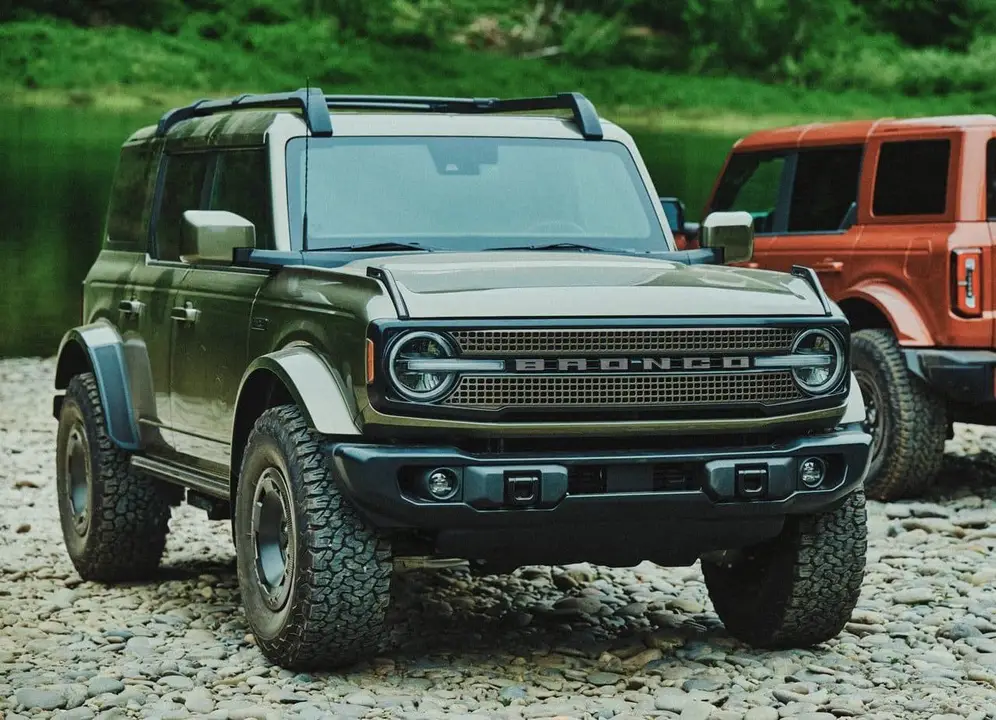
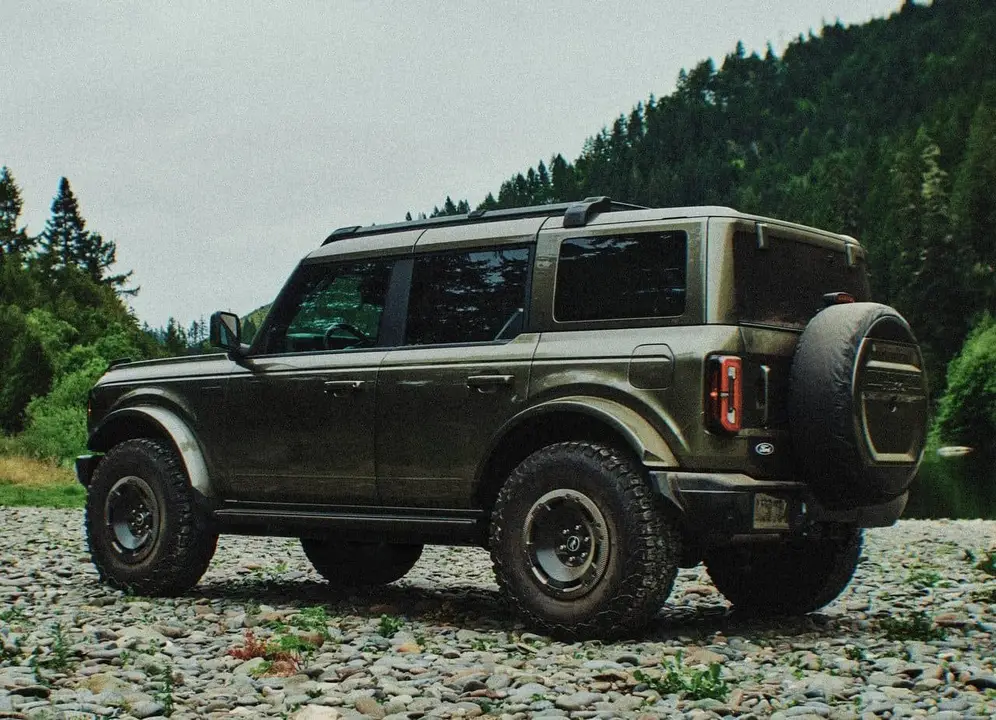
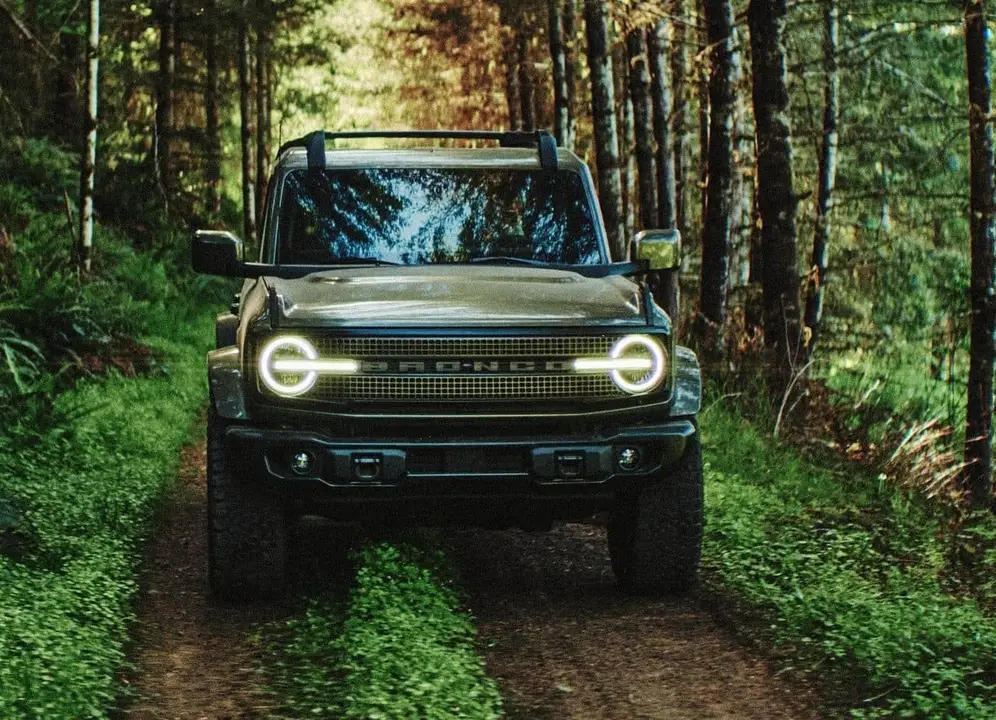
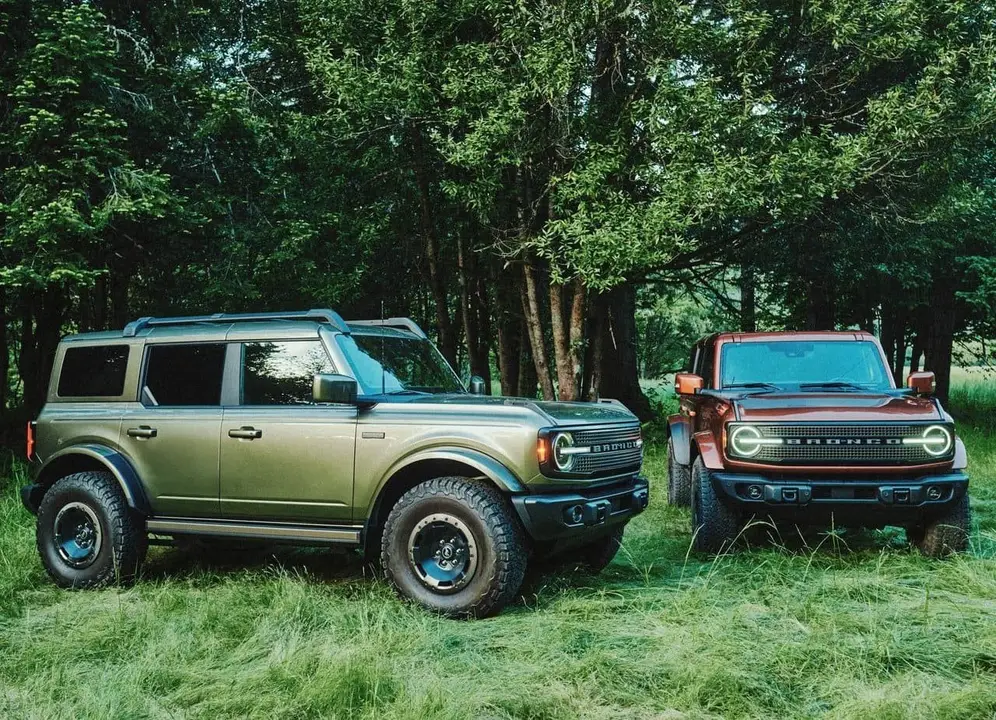
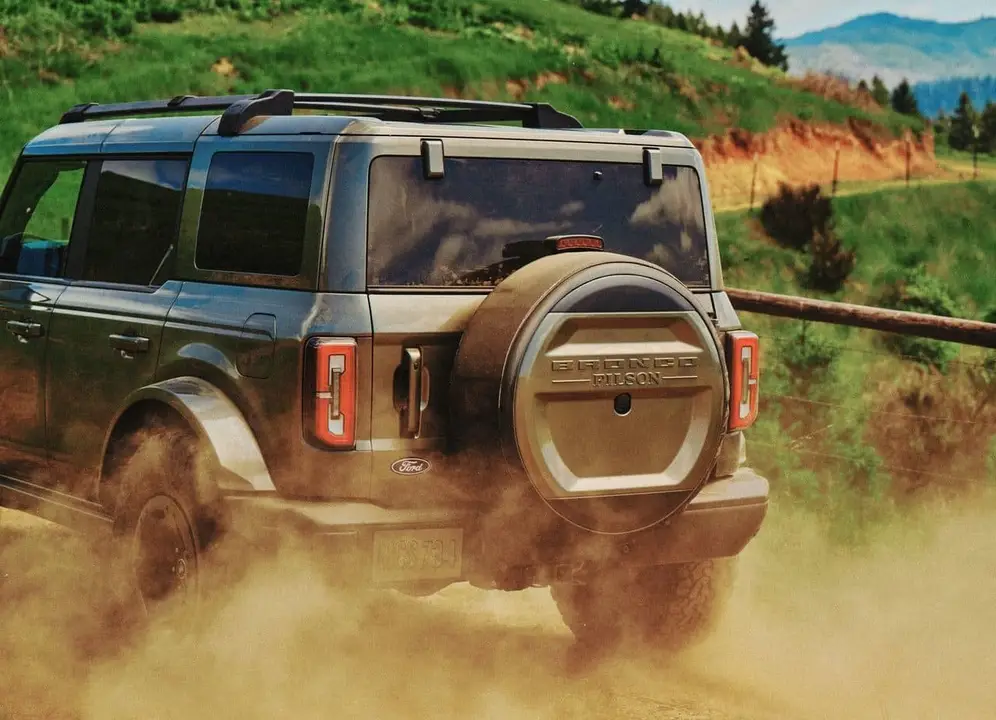
Up front, the Bronco Filson holds the same imposing, angular stance that defines the family — but several details set this edition apart at a glance. The exclusive grille features a differentiated BRONCO lettering, and the heritage-painted fender flares break the visual monotony without feeling overdone.
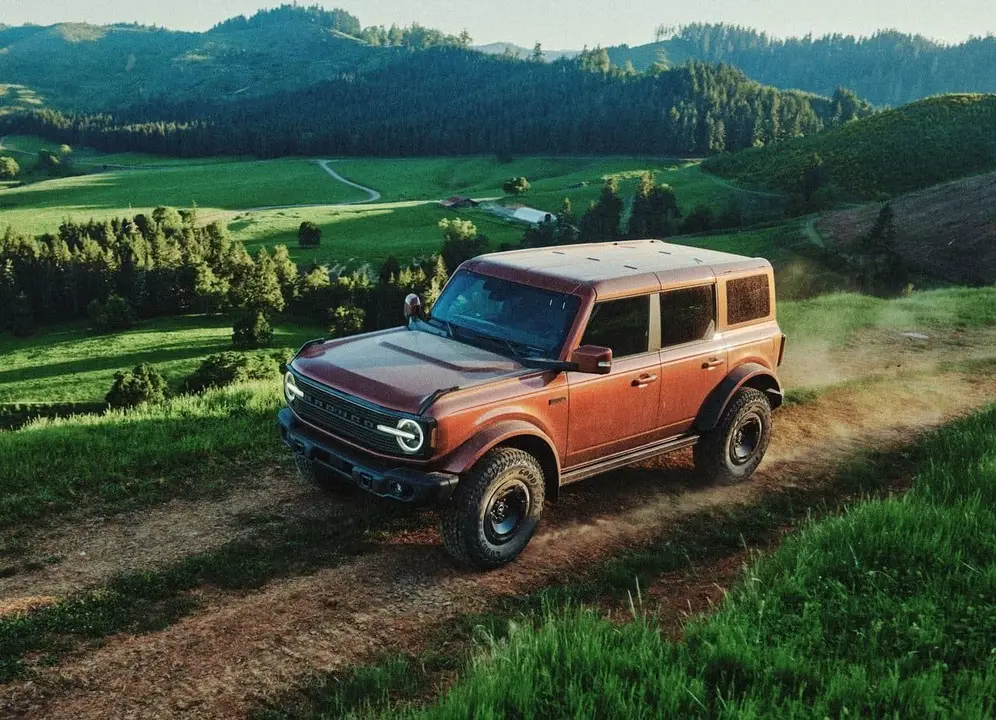
From the side, the 35-inch off-road tires from the Sasquatch package dominate the profile. They’re responsible for the generous ride height and the ground clearance that makes other SUVs back down. The lateral lines are clean — no excess, no clutter.
At the rear, the Bronco’s modular architecture remains intact: removable roof and doors, still the definitive statement of this truck’s character before any test drive.
The Filson-specific trail sights stand out as a signature detail — body-integrated anchor points that serve both as visual off-road driving references and as tie-down points for long cargo like kayaks and canoes.
Exclusive colorways include Field Green Metallic, Marsh Gray, Avalanche Gray, Desert Sand, Shadow Black and Oxford White. The First Edition adds Iron Sands Copper Metallic with numbered badging — closing the limited-series pitch with quiet confidence.
This isn’t a SUV trying to imitate European elegance. It’s a truck that says exactly what it is — and does so with real personality.
Inside the Filson: The Bronco That Finally Stopped Apologizing for Its Cabin
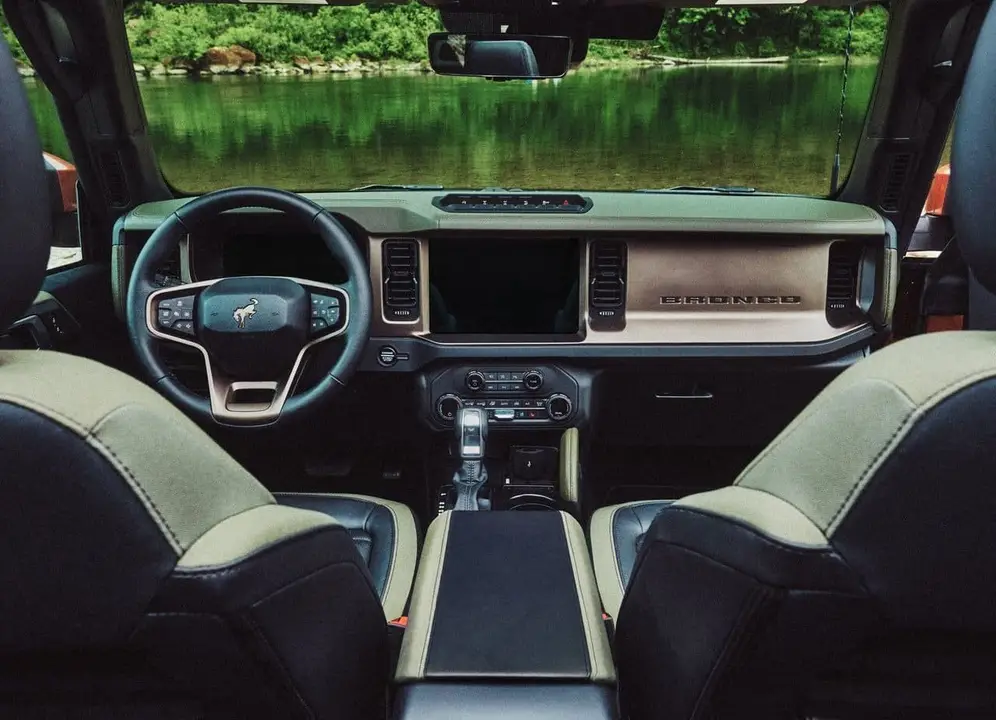
For years, the Bronco carried a well-known criticism: the interior felt too rough for a truck priced above $50,000. The Filson addresses that head-on.
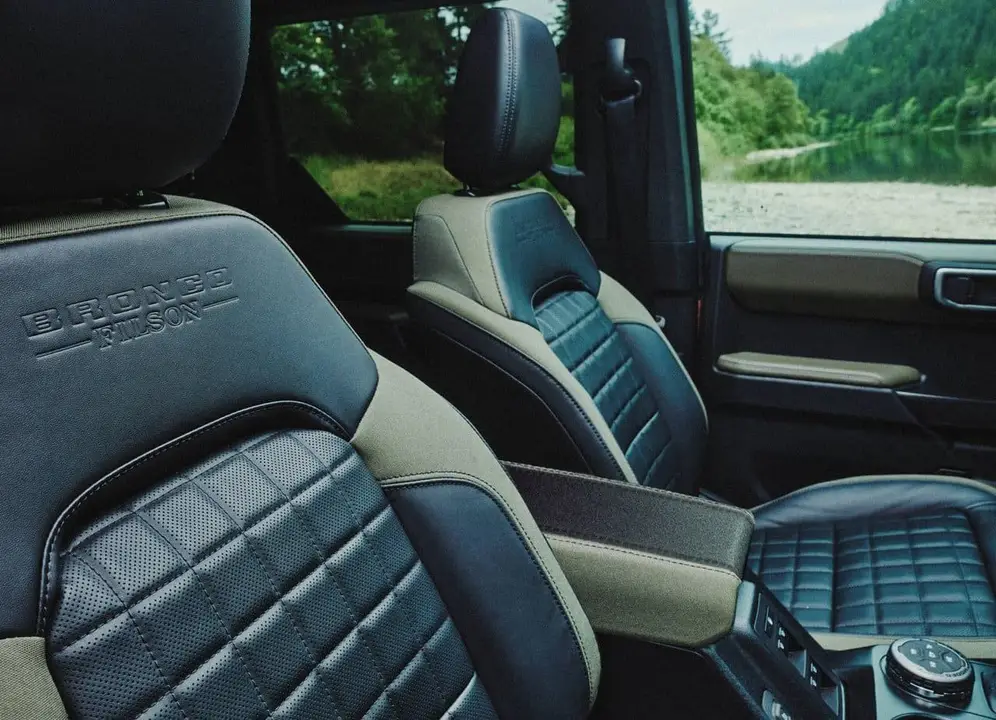
The dashboard keeps the family’s rugged architecture, but the materials have moved up a tier. Quilted leather on the front seats, Filson’s signature twill-inspired fabric throughout, leather-wrapped steering wheel and instrument panel — and brushed brass and bronze accents on the wheel rim and G.O.A.T. mode selector. These aren’t cosmetic gestures. They’re deliberate positioning decisions.
Front seats are ventilated; rear seats are heated. For a truck built for long overland drives between trail runs, that combination makes a meaningful difference in daily use.
The cabin gives the Filson an argument that previous Broncos simply couldn’t make against the Defender or Land Cruiser: you don’t have to apologize for the interior.
Screens, Connectivity and the Silence the Bronco Never Had
The 12-inch SYNC 4 infotainment system is familiar territory for Bronco buyers, but the Filson package adds 5G connectivity, built-in Wi-Fi, wireless Android Auto and Apple CarPlay, 360-degree cameras, a digital rearview mirror with integrated camera, and an upgraded B&O sound system.
Active safety coverage includes autonomous emergency braking, forward collision warning, blind-spot monitoring, lane-keep assist, adaptive cruise control and automatic high-beam assist.
Clear strength: Ford claims this is the quietest Bronco cabin ever built, with approximately 20% less perceived wind noise compared to a 2021 Bronco — achieved through acoustic glass, new sealing compounds and improved airflow management.
Real limitation: even with that improvement, Bronco owner forums have documented years of wind noise complaints, hardtop gaps and whistles at highway speeds. The square body and removable roof panels create multiple potential noise intrusion points — improvements help, but they don’t fully eliminate the issue.
Power and Efficiency: What the Raptor’s Engine Feels Like in the Real World
The Filson runs the same 3.0L EcoBoost twin-turbo V6 found in the Bronco Raptor — but with an application-specific tune focused on throttle refinement and reduced mechanical noise rather than outright maximum output.
In the Raptor, that engine produces 418 hp and 440 lb-ft of torque. Ford has not published official output figures for the Filson. Reporting from Car and Driver and Road & Track indicates the tune lands “a bit below” the Raptor, likely in the high-300s hp range. Market estimate: 400–418 hp, up to 440 lb-ft of torque.
What does that mean on the road? The twin-turbo V6 delivers full torque low in the rev range — exactly what a heavy SUV needs on loose dirt, sand or rock without running out of breath. On the highway, the power reserve makes passing moves confident and effortless.
The 10-speed automatic works with the full G.O.A.T. modes suite — Normal, Eco, Sport, Slippery, Baja, Off-Road and Rock Crawl — alongside Trail Turn Assist and Trail 1-Pedal Drive for precise low-speed maneuvering.
The 0–60 mph time has not been officially published. Based on Bronco Raptor test data (approximately 5.5–5.6 seconds) and industry projections, a market estimate places the Filson around 5.5–5.8 seconds.
Fuel economy numbers are also pending official EPA certification for the Filson. Using the Bronco Raptor as a reference — market estimate: approximately 15 mpg city and 16 mpg highway — this is clearly a performance-first machine. Thirty-five-inch tires, elevated curb weight and a twin-turbo V6 don’t add up to fuel economy leadership. Efficiency is a side note, not the headline.
MSRP, Insurance and Maintenance: Is the Bronco Filson Worth the Investment?
Ford has set the Bronco Filson’s starting MSRP in the “mid-$70,000s” — positioning it above the Badlands and Heritage trims ($53K–$72K range) and just below the Bronco Raptor, which starts at just over $80,000.
That puts it in direct financial competition with the Jeep Wrangler Rubicon 4xe, the Land Rover Defender 110, and the Toyota 4Runner TRD Pro.
Insurance premiums for a standard Bronco run approximately $2,400–$2,700 per year. Raptor-level trims approach $3,000 annually. The Filson — with a high-performance engine, full off-road hardware and a mid-$70K price tag — will likely land at or near the top of the Bronco insurance range. Its off-road use profile and high repair costs for the suspension and body contribute to elevated premium rates.
Maintenance costs for the Bronco family run $500–$750 per year in normal use. The 3.0L twin-turbo and the Fox suspension package will push Filson ownership costs closer to Raptor territory in the medium term — more complex components at a higher price point than the base 2.3 or 2.7 trims.
Financing a Filson in the mid-$70K range places monthly payments in premium SUV territory, comparable to a fully loaded Land Rover Defender 110 or a Porsche Macan GTS. Buyers in this segment typically carry strong credit profiles and often use manufacturer or dealer financing incentives.
Buy at launch or wait? Special and limited editions — especially First Edition models — historically hold value better in the first 1–2 years before depreciation kicks in more aggressively. General Bronco depreciation analysis puts five-year value loss between 42% and 50%. If the truck fits your use case, launch timing is a reasonable entry point, particularly for the numbered First Edition.
This is a rational purchase only if you’ll actually use it off-road. For urban driving with occasional light trails, the running costs don’t justify the capability.
What Buyers Ask Before Pulling the Trigger
What is the real-world fuel economy of the 2027 Ford Bronco Filson?
No official EPA figure has been published yet. Based on Bronco Raptor data, the market estimate is approximately 15 mpg city and 16 mpg highway — expect lower figures in heavy off-road use.
Are maintenance costs high on the Bronco Filson?
Above average for the segment. The 3.0L twin-turbo and Fox suspension components are more expensive to service than base Bronco hardware, placing ongoing costs near Raptor territory.
Who are the Bronco Filson’s closest competitors?
The Jeep Wrangler Rubicon and Land Rover Defender 110 are the most direct rivals. The Toyota 4Runner TRD Pro and Lexus GX Overtrail also compete in the premium off-road lifestyle segment.
Is the Bronco Filson worth the premium over a standard Bronco Sasquatch?
If you want the quietest Bronco cabin, the most powerful engine in the lineup outside the Raptor, and genuine luxury materials, yes. If you mostly drive on pavement, the standard Sasquatch delivers 90% of the capability at a lower price.
Does the Bronco Filson Earn Its Price Tag?
The Bronco Filson is an emotional purchase — and there’s nothing wrong with that, as long as you understand what you’re buying.
It delivers serious off-road capability straight from the factory, the most powerful non-Raptor engine in the Bronco family, and an interior that finally competes with European rivals. For buyers who live the outdoor lifestyle and have the income to match, few packages in the segment are this complete.
This truck is not for: daily urban commuters, buyers focused on cost-efficiency, or anyone who needs low maintenance costs as a priority.
The Bronco Filson doesn’t try to be everything to everyone — and that’s exactly what makes it worth talking about.
And you — does the Bronco Filson justify its price against a Defender 110 with full dealer support, or would you rather take the Wrangler Rubicon and pocket the difference? Drop your honest opinion in the comments below!
Share this article

Por: Danniel Bittencourt
05/06/2026
Related posts