The V-One Could Be Cadillac’s Boldest Performance Car Yet
The Cadillac V-One Concept pairs an 830-hp hybrid V8 with Le Mans-inspired hardware, creating a single-seat performance car that brings Cadillac’s V-Series.R technology closer to the road.
Cadillac V-One Concept: An 830-HP Single-Seat Hypercar Study
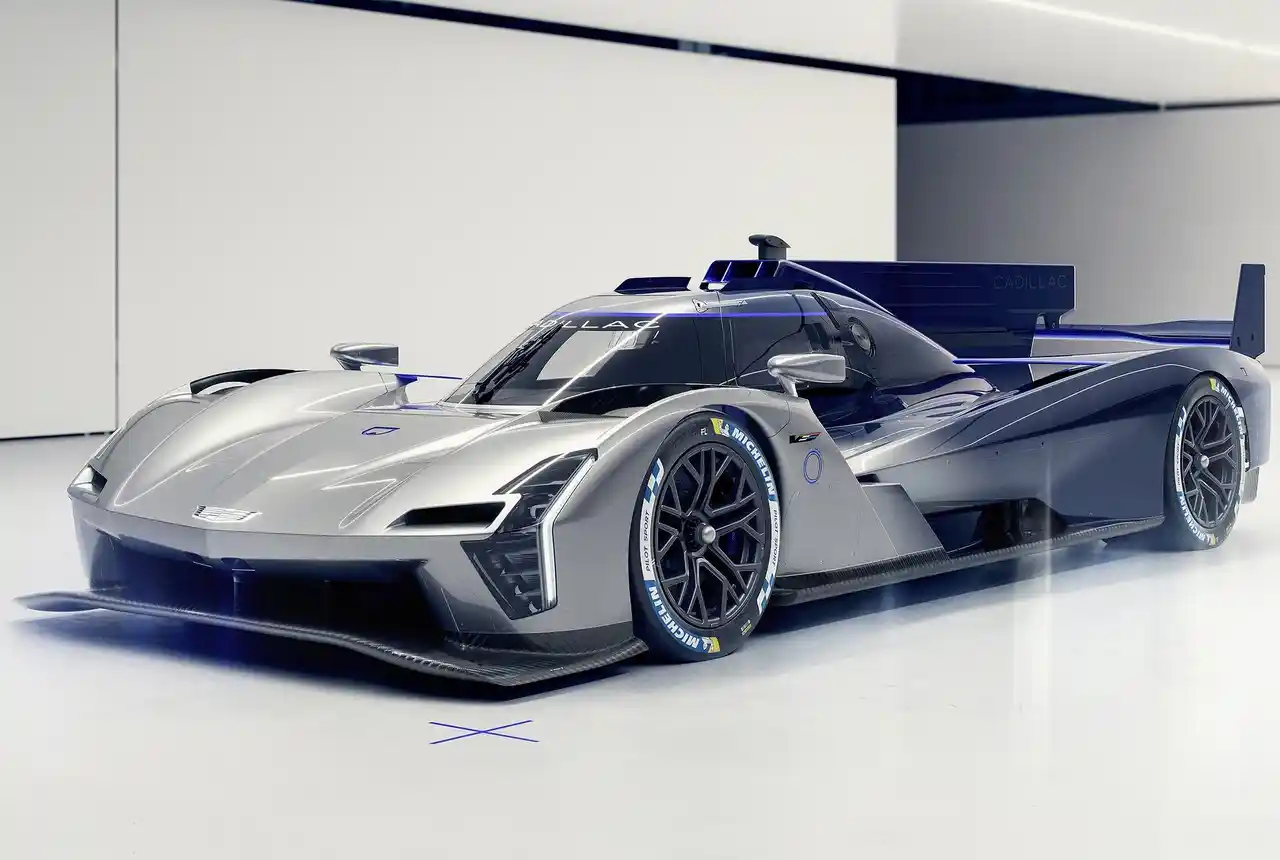
The Cadillac V-One Concept is a single-seat hypercar study with an 830-hp hybrid V8 and hardware closely related to the V-Series.R endurance racer.
Cadillac developed the concept through a joint effort involving Cadillac Design, Cadillac Racing, and race-car constructor Dallara. The result is far closer to a competition machine than to a conventional luxury sports car.
The V-One is not currently confirmed for production. However, Cadillac describes it as a look at how racing technology could be adapted into a more driver-focused experience for private customers.
Could Cadillac Actually Build the V-One?
Cadillac has not announced a production version, but the concept appears to explore a realistic direction for the V-Series performance family.
The company says the V-One is designed to offer performance similar to the V-Series.R while being easier to operate. That distinction matters because a Le Mans prototype demands specialized driving skills and is not designed around everyday usability.
A production model would likely change several details, but the concept shows that Cadillac is considering a much more exclusive performance vehicle than its current V-Series sedans and SUVs.
What Powers the Cadillac V-One Concept?
The V-One uses a hybrid V8 powertrain rated at a combined 830 horsepower.
Cadillac has not released every mechanical specification, but the system is closely connected to the V-Series.R. Industry reports identify the foundation as a naturally aspirated 5.5-liter DOHC V8 working with an electric motor and hybrid hardware.
The concept also shares several chassis elements with the race car, including the transmission and portions of its electronics. Cadillac has not announced an MSRP, fuel-economy rating, torque figure, or acceleration time.
How Much Race-Car Technology Does It Use?
The V-One carries far more racing hardware than a typical road-going supercar concept.
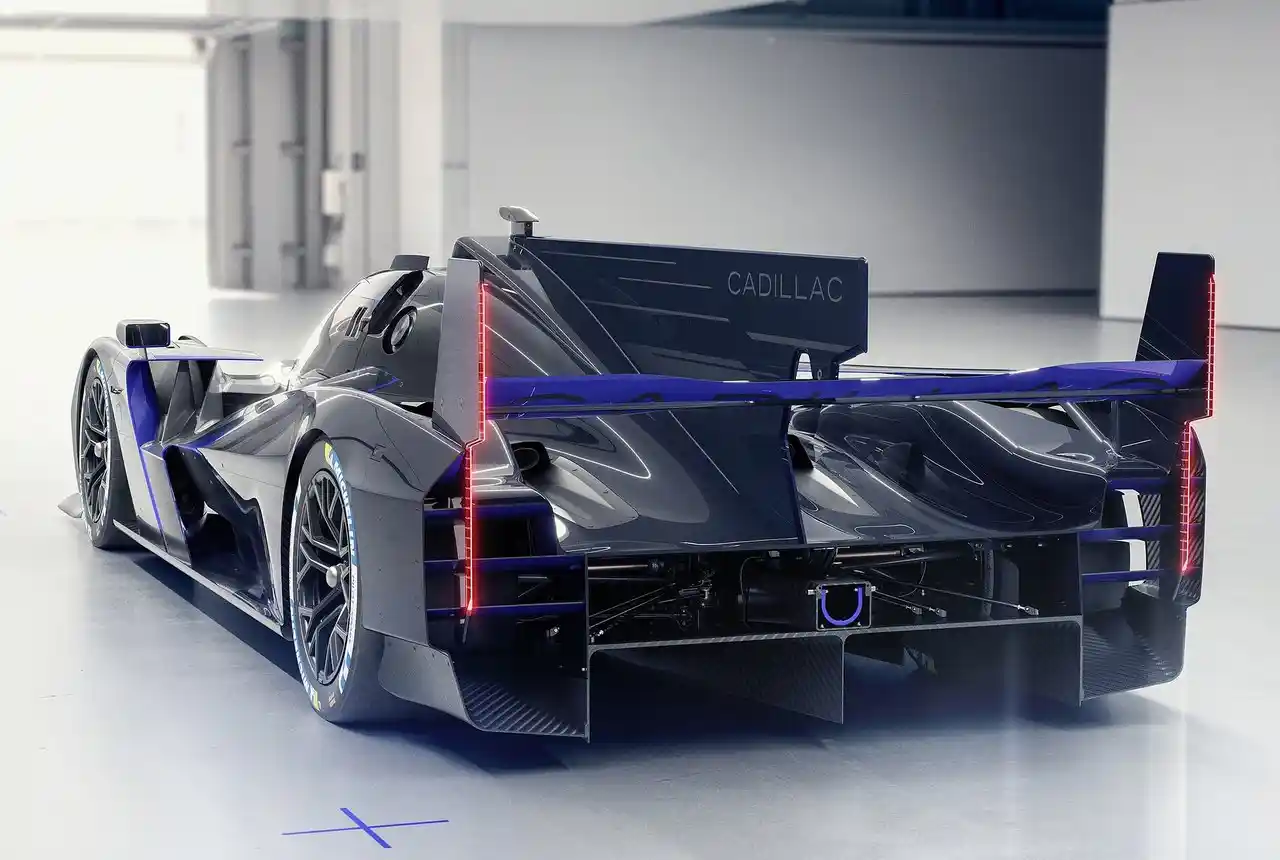
Its structure, body design, and aerodynamic package are heavily influenced by the V-Series.R. The car also uses a double-wishbone suspension with pushrod actuation, coil and torsion springs, and separate dampers to control different body movements.
Those components are common in purpose-built race cars but unusual in vehicles meant for public roads. The goal is to deliver a sharp, controlled response without requiring the driver to have professional racing experience.
What Is Inside the One-Seat Cabin?
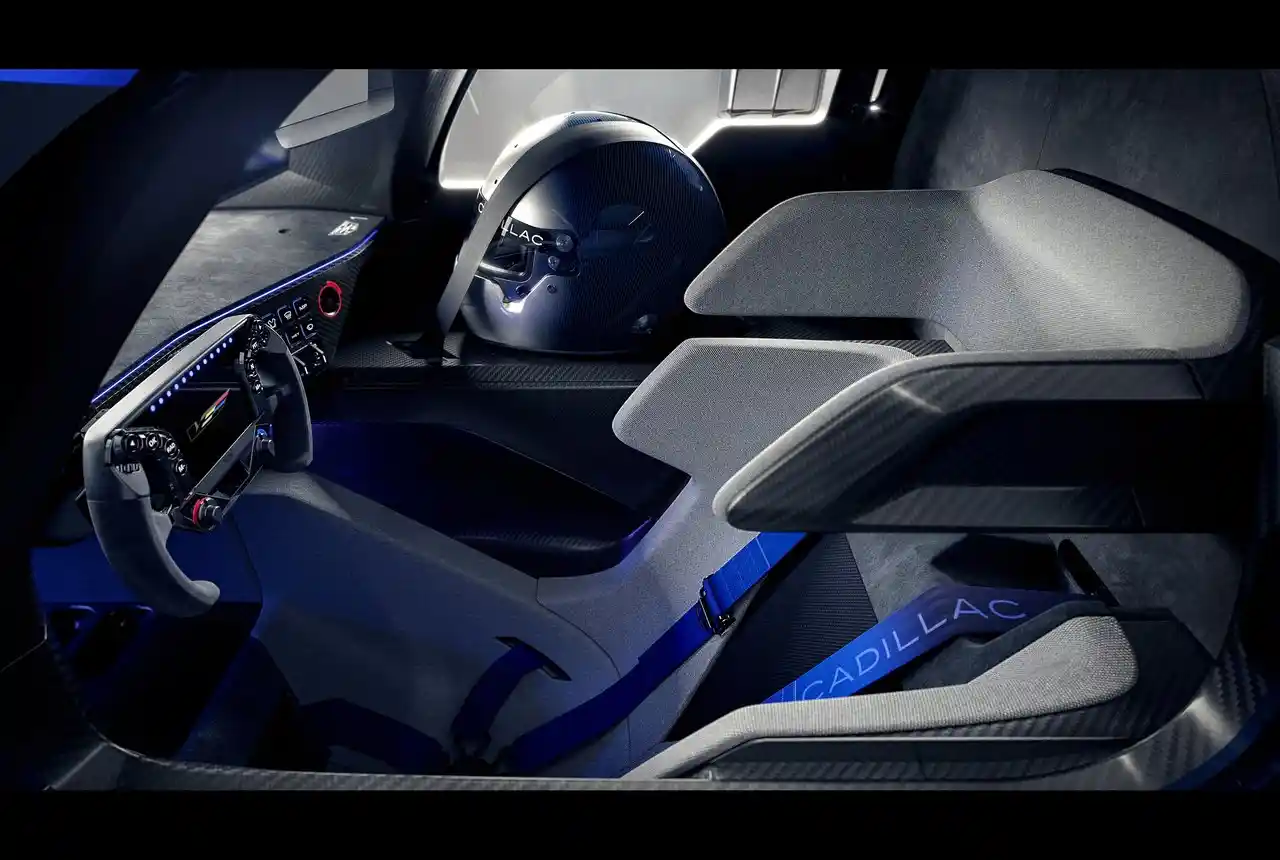
The cabin keeps the single-seat layout but adds more refinement than the race car.
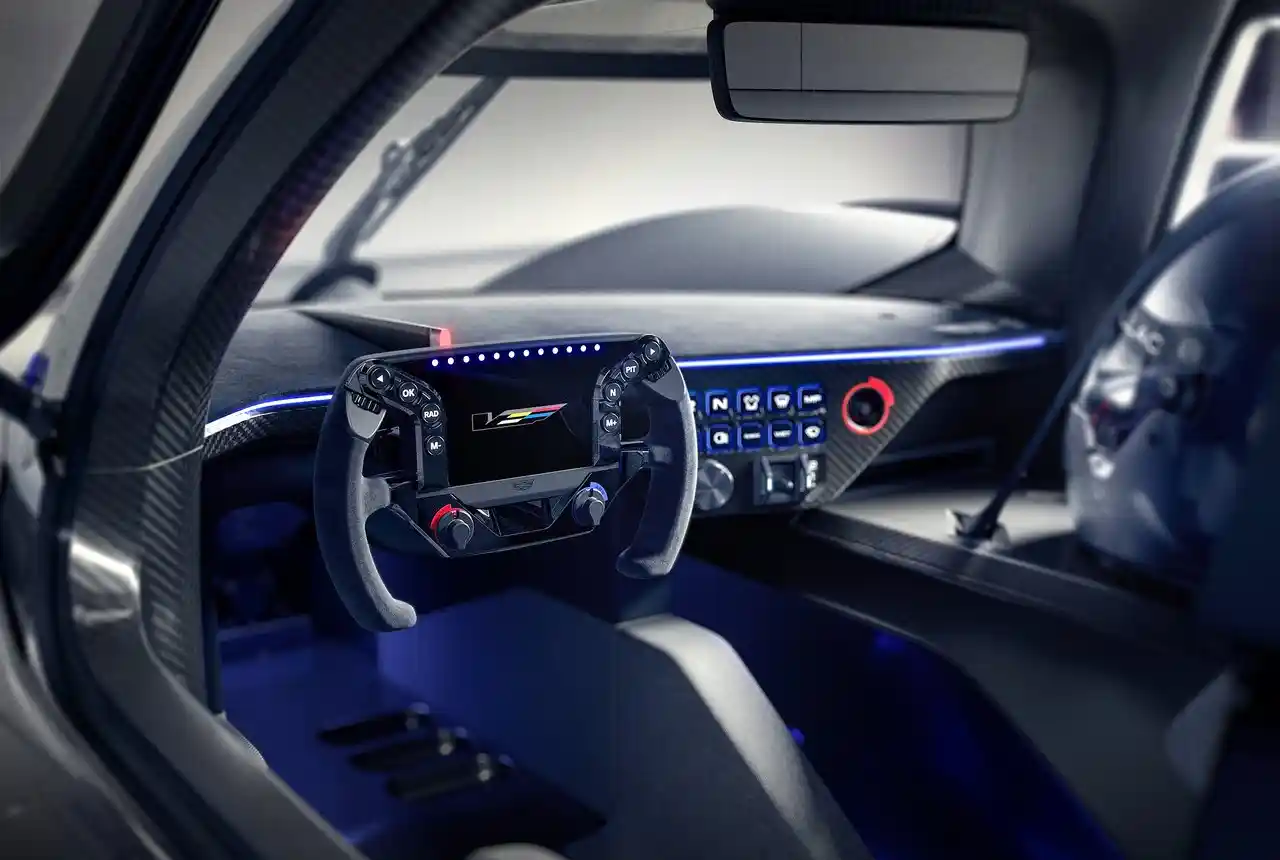
Cadillac uses premium materials, recycled fabrics, a custom user interface, and a steering wheel with controls that could be adapted to a customer’s preferences. The driver’s seat could also be tailored to fit an individual owner.
There is even a carbon-fiber shelf designed to hold a racing helmet. That detail reinforces the V-One’s role as a track-focused machine rather than a practical grand tourer.
Does the Design Look Like a Le Mans Car?
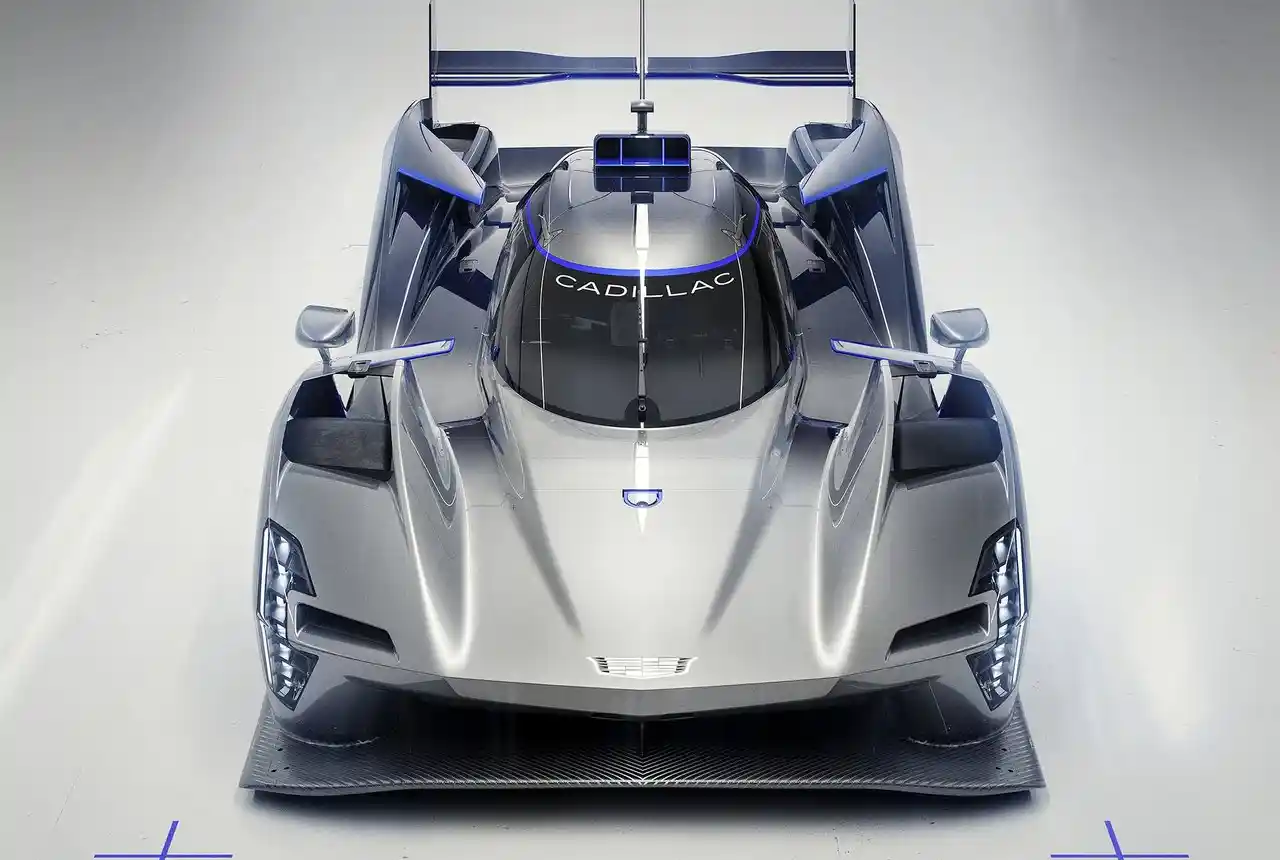
Yes. The V-One has the low, wide stance and aggressive aerodynamic surfaces expected from a car inspired by an LMDh prototype.
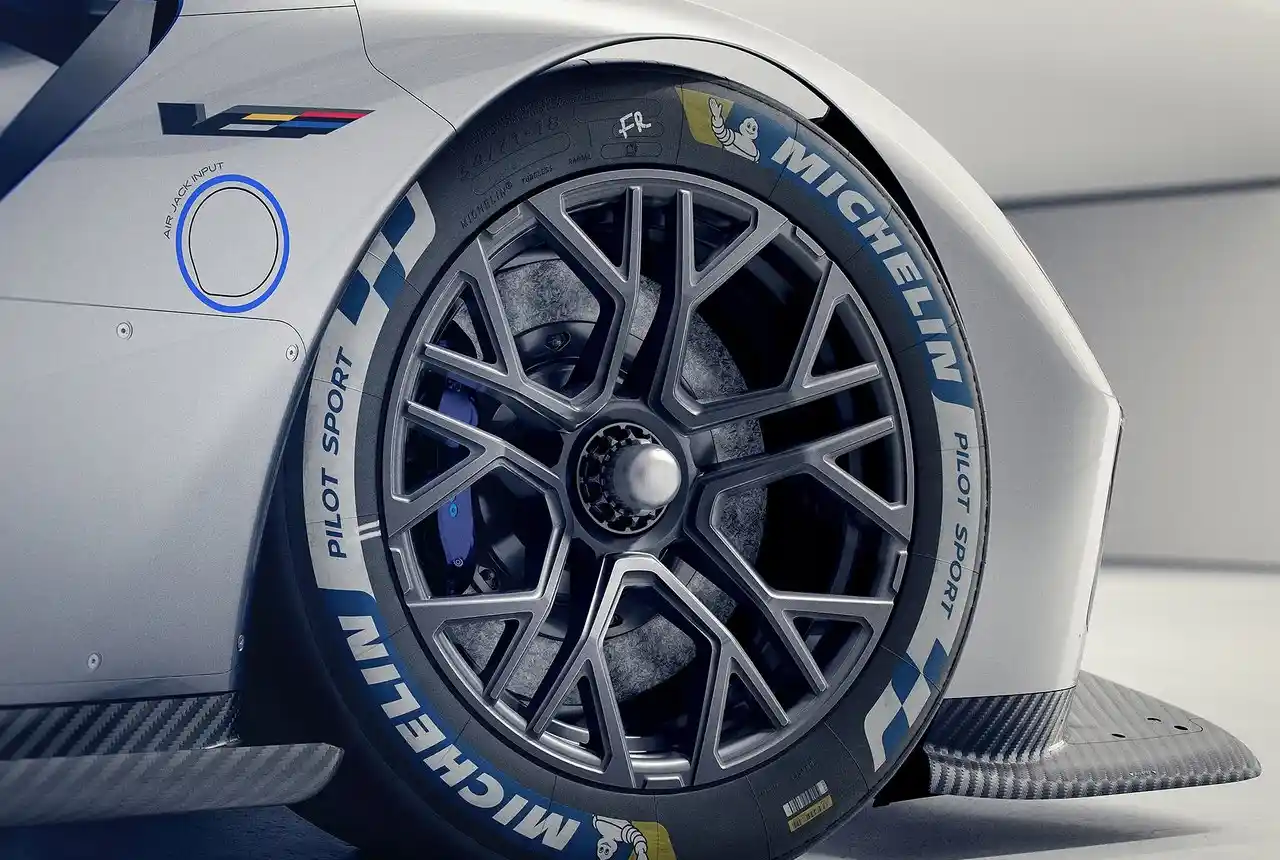
Its body uses exposed carbon fiber, distinctive V-Series wheels, and a hand-applied gradient that moves from silver to dark blue. The styling is more extreme than Cadillac’s current production lineup, but it still carries recognizable brand themes through its lighting and sharp bodywork.
The result is a car that looks more like a privateer racing machine adapted for a wealthy enthusiast than a traditional Cadillac coupe.
Is the Cadillac V-One Concept Worth Watching?
The Cadillac V-One Concept deserves attention because it expands the meaning of the V-Series beyond high-performance sedans and SUVs.
With 830 horsepower, a hybrid V8, a single-seat cabin, and suspension technology borrowed from an endurance racer, the concept points toward a much more specialized type of Cadillac performance car.
It would make sense only for a small group of drivers who value track capability, exclusivity, and racing technology above comfort or practicality. Even without a production announcement, the V-One gives Cadillac a bold new way to define its performance ambitions.

Danniel Bittencourt
14/08/2026