Audi Rebuilt the Q7 From the Ground Up for 2027 — Here’s What Actually Changed
The 2027 Audi Q7 ditches its old platform entirely. New V8, 25,600-LED headlights, and a cockpit redesign — but does the price tag hold up against American rivals?
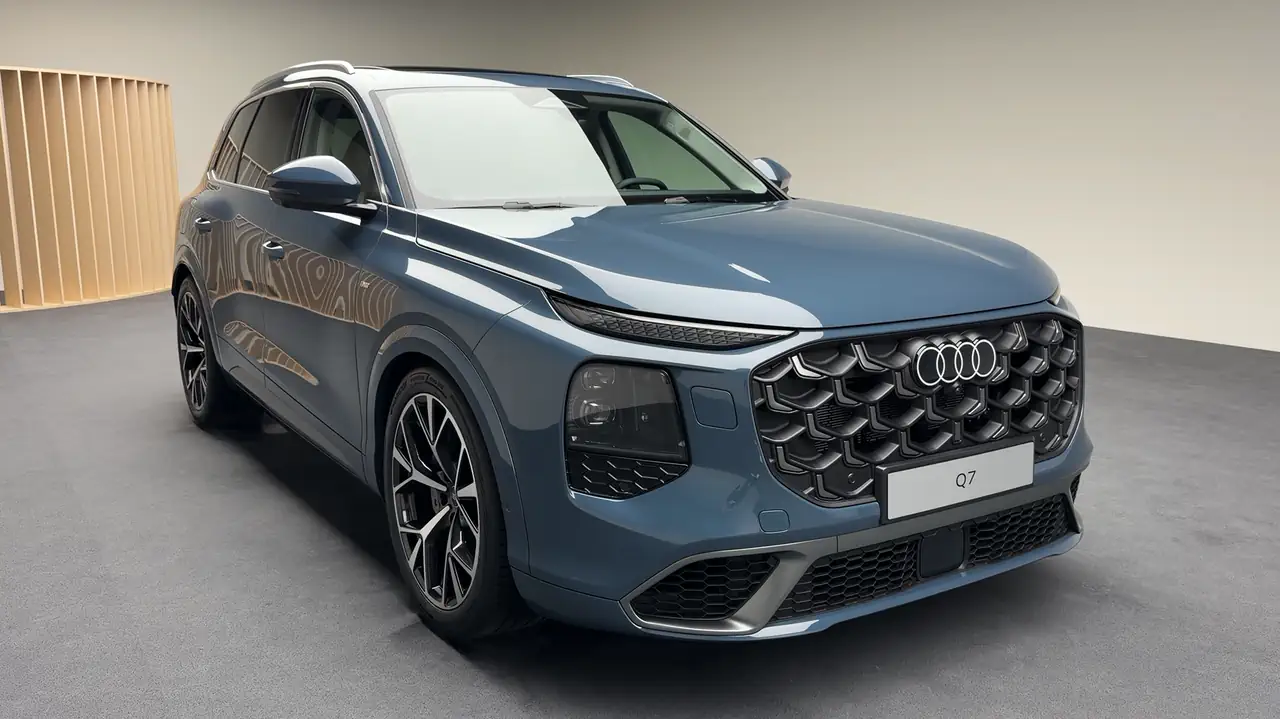
2027 Audi Q7 Debuts Third Generation With V8 Power and an All-New Platform
Audi didn’t refresh the Q7 for 2027 — it replaced it. New platform, new electronics architecture, a twin-turbo V8 option pumping out 591 hp in the SQ7 trim, and headlights built around a matrix of 25,600 individual micro-LEDs.
The outgoing model rode on the MLB Evo platform for over a decade, with periodic updates that kept it competitive but never truly modern. The 2027 generation moves to the brand-new Premium Platform Combustion (PPC), an architecture designed from the start to integrate 48V hybrid systems — not bolt them on as an afterthought.
In the U.S. market, it goes directly against the BMW X7 and Mercedes-Benz GLS. Both are strong competitors, and in some trims, offer more cargo room for a similar price. Audi is betting on technology, interior refinement, and the SQ7’s performance figures to justify the premium.
Quick Facts
| Spec | Details |
|---|---|
| Category | Three-row luxury SUV |
| Engine | 2.9L Twin-Turbo V6 TFSI (Q7) / 4.0L Twin-Turbo V8 TFSI (SQ7) |
| Output | 429 hp / 591 hp (SQ7) |
| Torque | 442 lb-ft (Q7) / 590 lb-ft (SQ7) |
| Transmission | 8-speed Tiptronic automatic |
| Drivetrain | quattro AWD (standard) |
| 0–60 mph | 4.8 sec (Q7 V6) / 3.7 sec (SQ7 V8) |
| Top Speed | 130 mph (Q7 V6) / 155 mph (SQ7) |
| Fuel Economy | ~19–25 mpg combined (TFSI) |
| Electric Range | N/A — not a PHEV or EV |
| U.S. On-Sale Date | Not officially confirmed |
The numbers above give you a solid baseline — but the spec sheet only tells part of the story. A new platform, a five-node computing architecture, and a headlight system that projects turn signals onto the pavement make this one of the more technically ambitious three-row SUVs to hit the market in years. Here’s what it all means in practice.
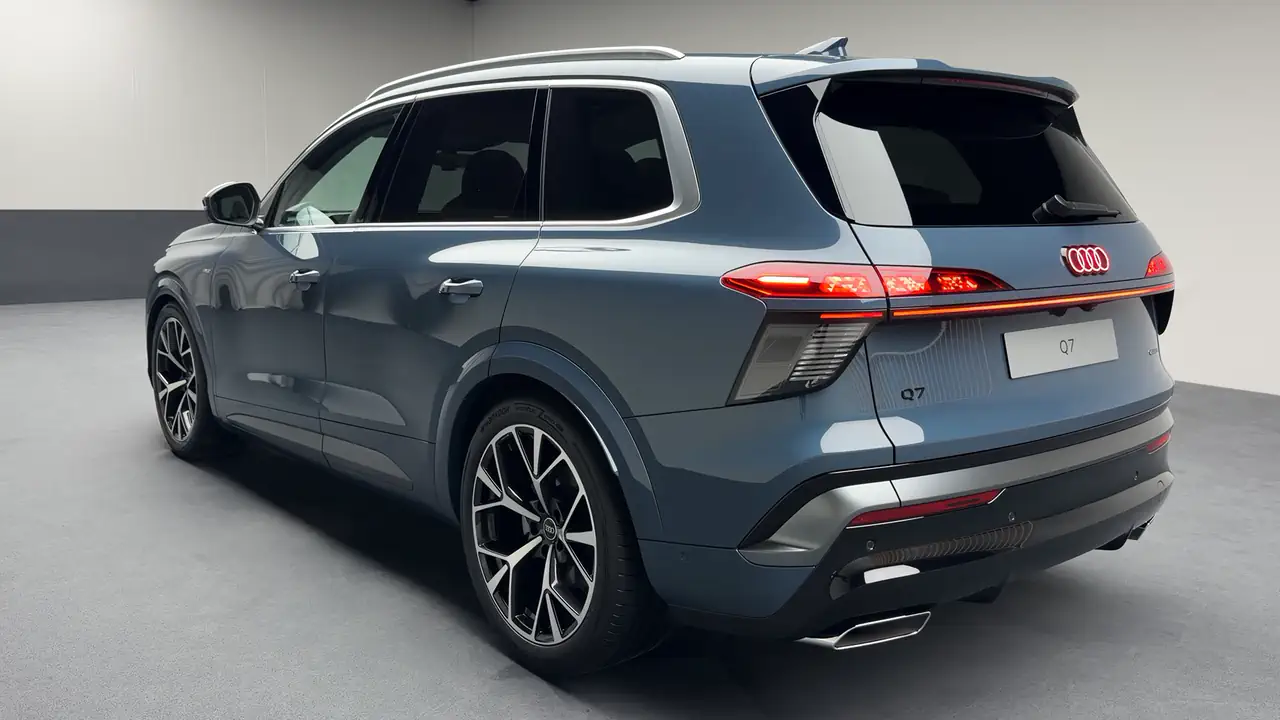
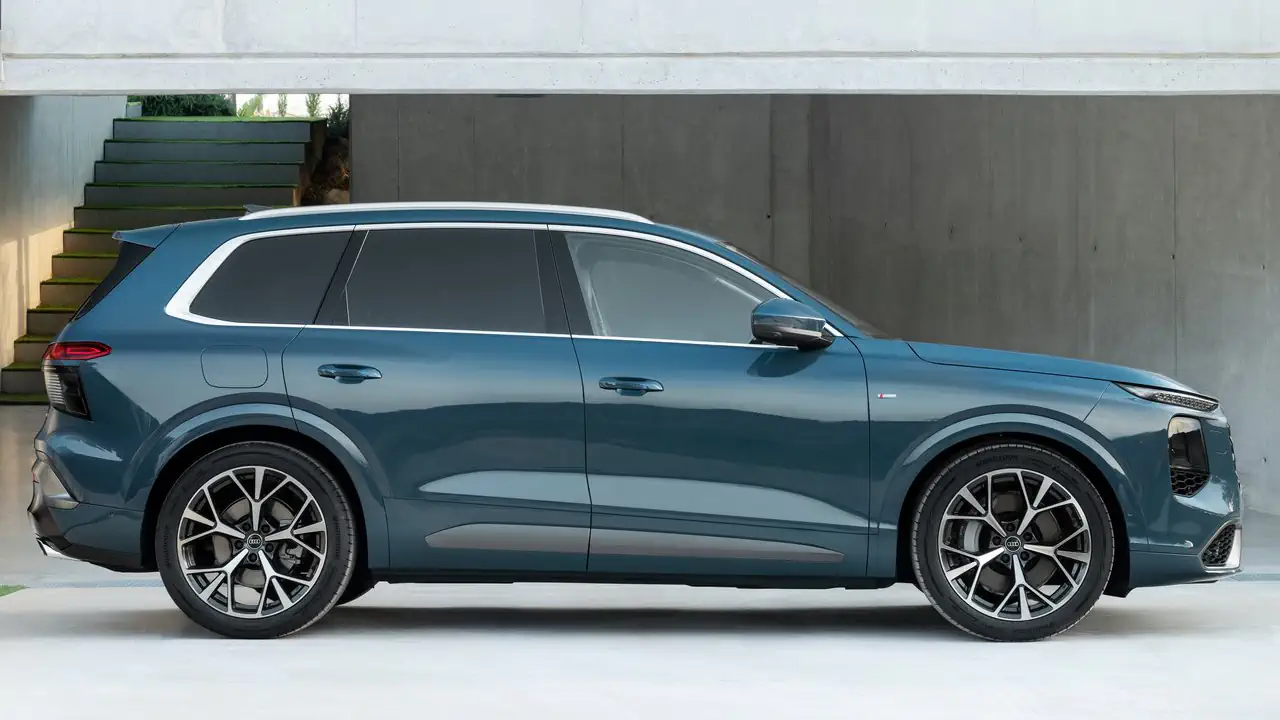
Bold New Shape: How the Three-Row SUV Looks in Person
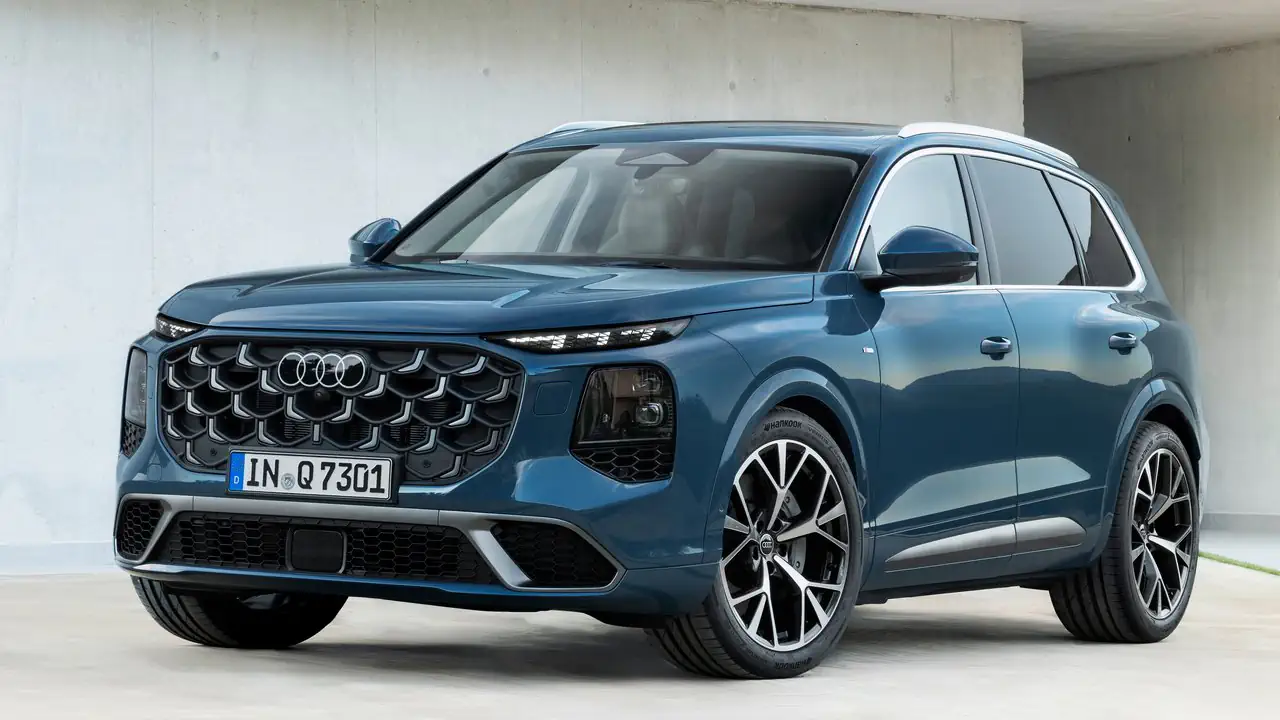
Up front, the enlarged octagonal Singleframe grille sets the tone immediately. The three-dimensional honeycomb mesh is wider and taller than before, and Audi repositioned the four-ring emblem higher on the hood — a subtle tweak that gives the front end a more upright, commanding stance compared to the softer face of the outgoing model.
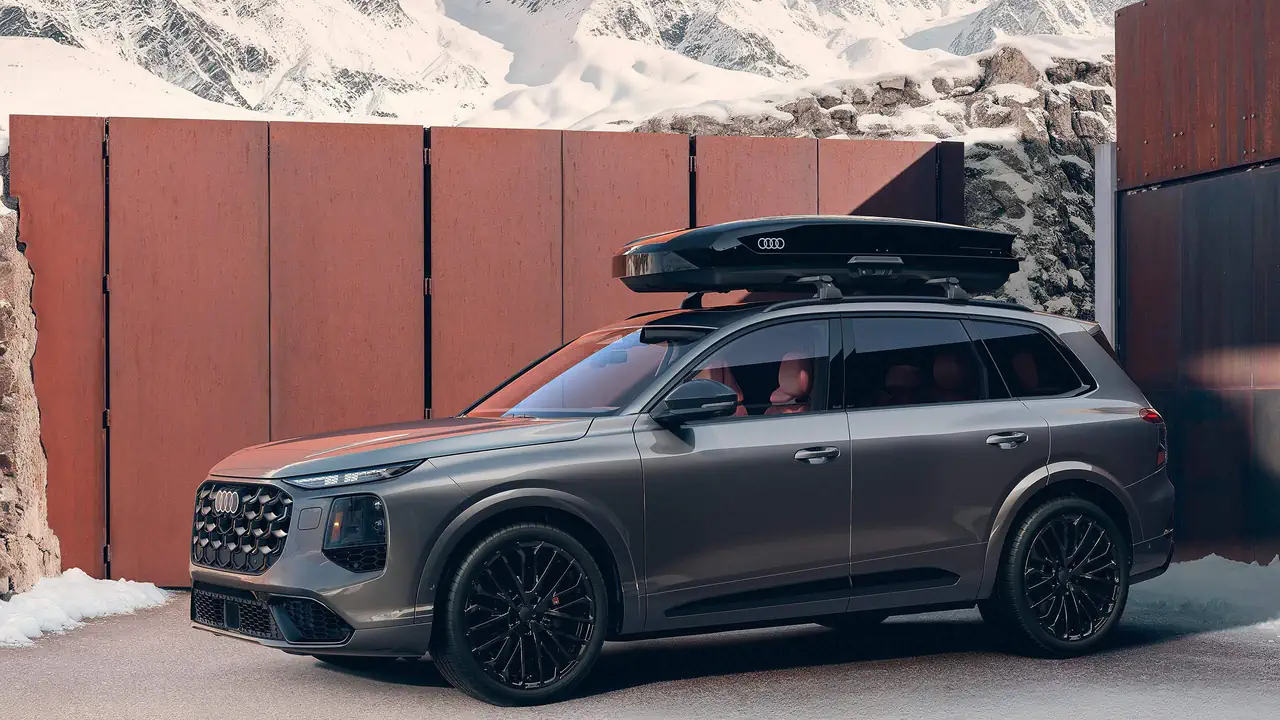
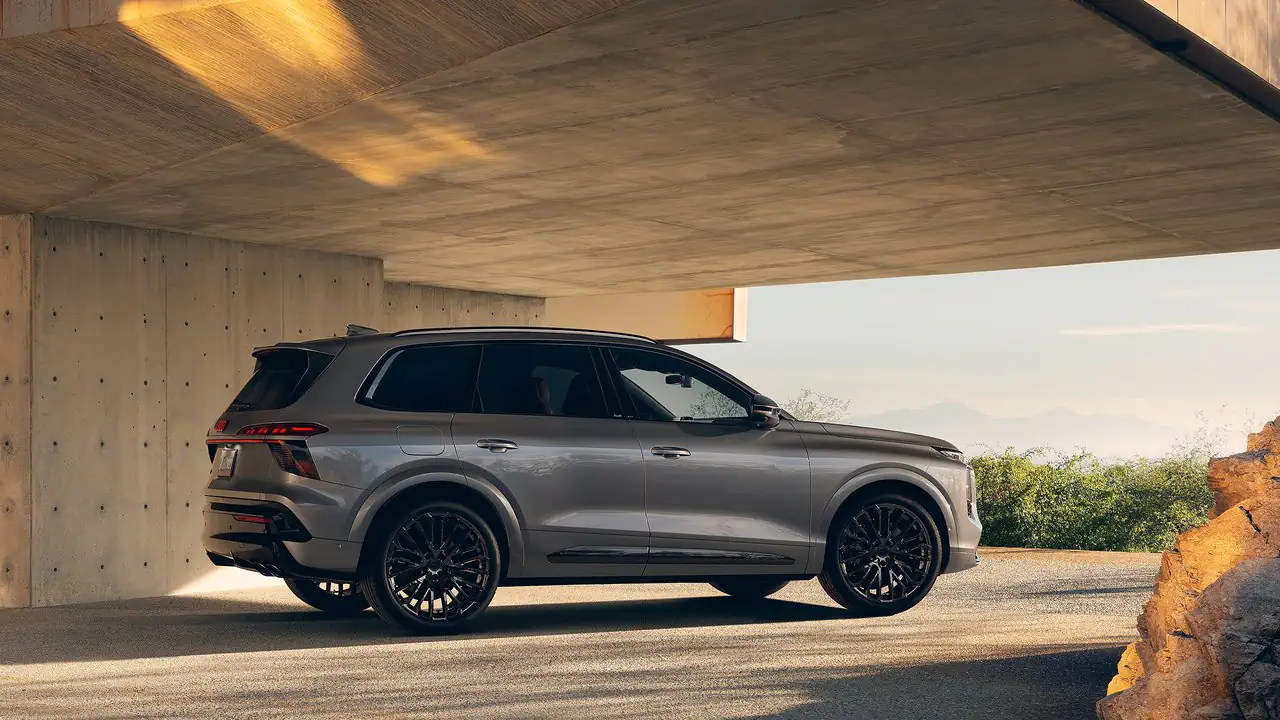
Along the sides, the flared rear haunches are a deliberate callback to the original Audi Quattro from the early 1980s. The D-pillar sits more vertically now, and the roofline runs flatter — a design choice that does double duty, improving the visual proportion while freeing up meaningful headroom for third-row passengers.
Wheel fitment starts at 20 inches and climbs all the way to 23 inches from the factory on the SQ7 — a first for the Q7 lineup. Behind those wheels, the SQ7 runs 15.7-inch front rotors clamped by six-piston calipers.
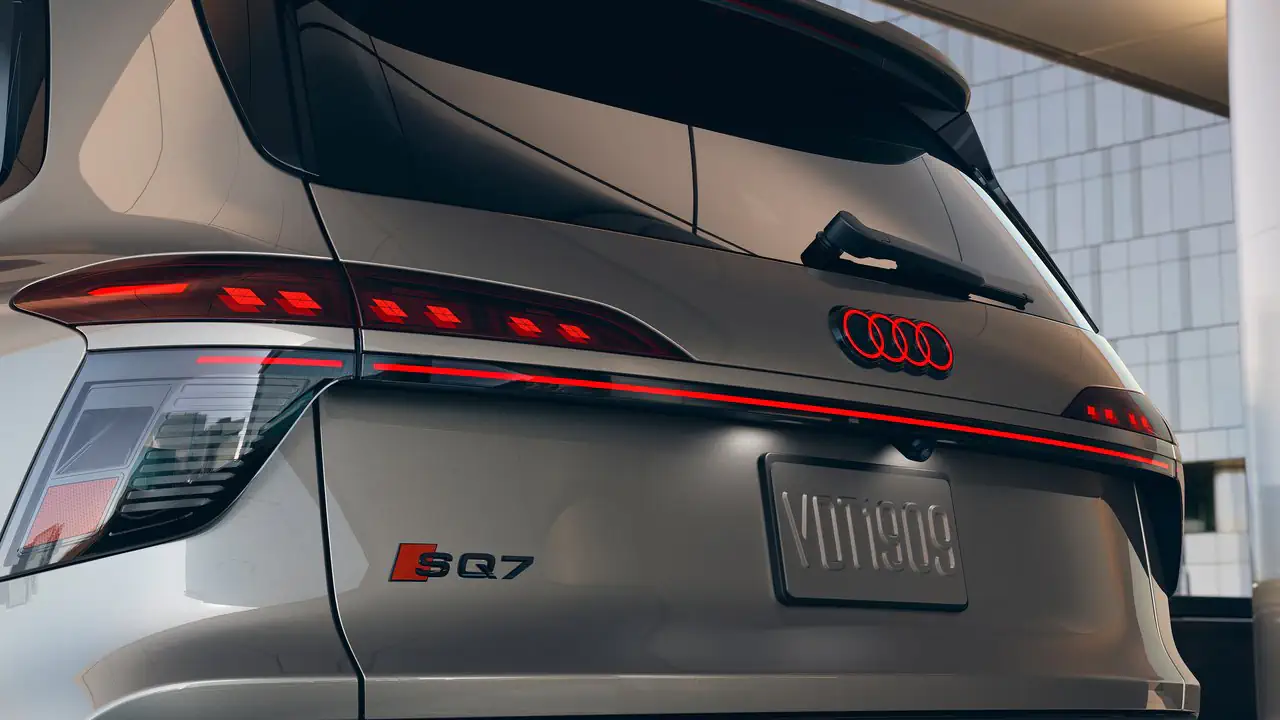
Out back, the Digital OLED tail lamps span the full width of the vehicle as a continuous light bar. They’re not just decorative: proximity sensors trigger a brightness increase when a following vehicle gets too close, and a separate system projects an amber directional signal directly onto the road surface when signaling a turn — giving cyclists in blind spots a visible heads-up.
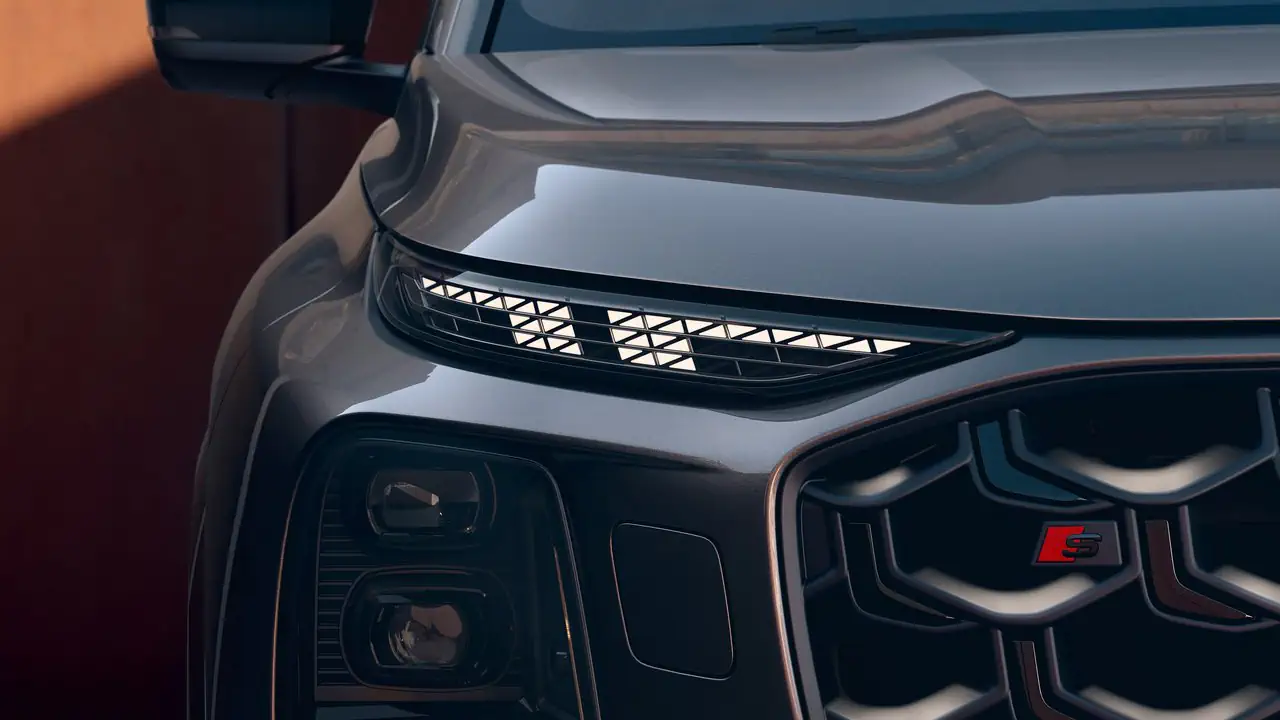
At night, the Digital Matrix LED headlights — available in the U.S. for the first time — use 25,600 individual micro-LEDs to precisely mask oncoming traffic without reducing road illumination. It’s one of the most advanced lighting systems currently available on any production vehicle.
The overall impression is of a vehicle that finally looks as serious as its price tag suggests. The old Q7 could pass for a large station wagon at a glance — this one does not.
Inside the Cabin: Where Audi Made Its Biggest Statement
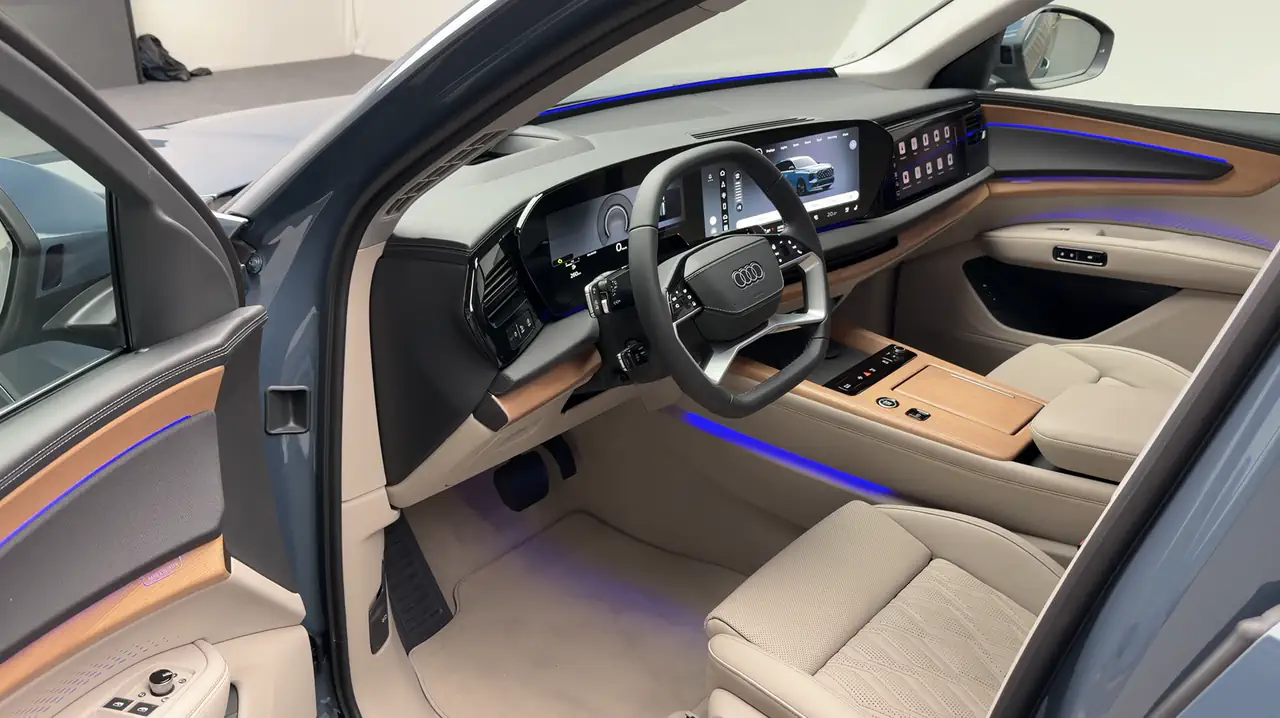
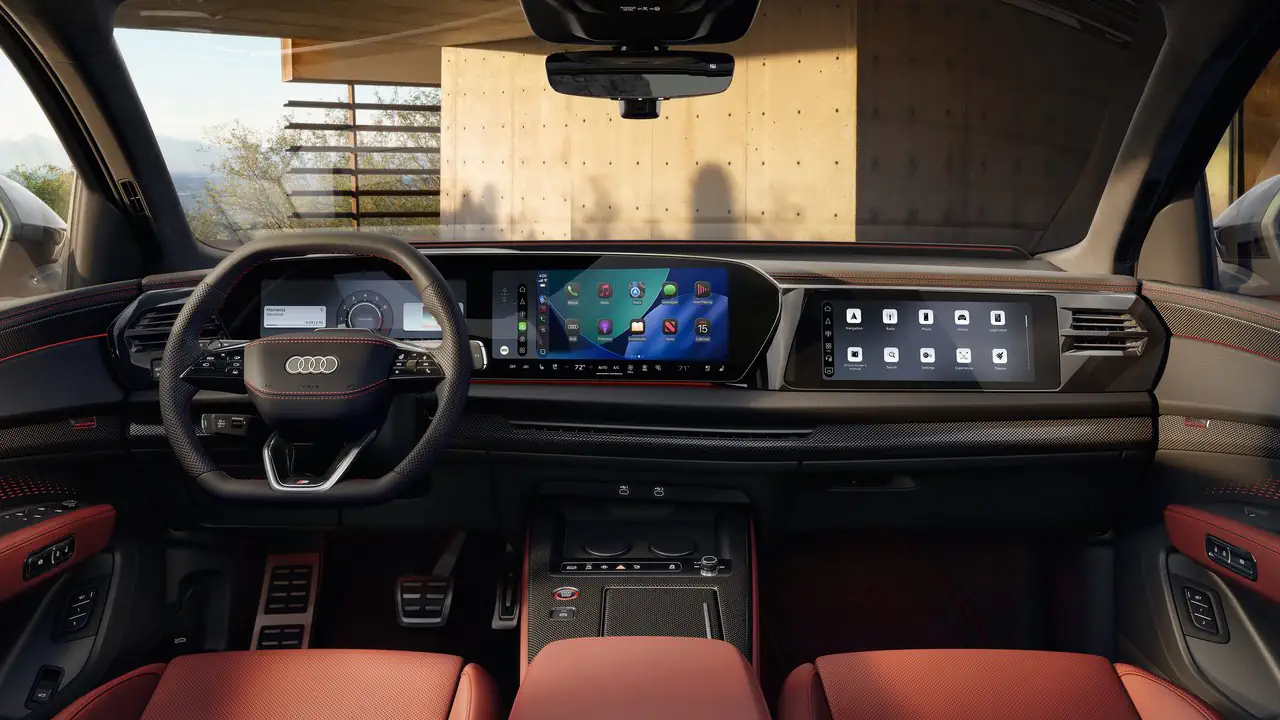
The interior redesign is the clearest signal that Audi treated this as a clean-sheet project, not a revision. Physical buttons are largely gone. In their place, wide horizontal surfaces, a touch-sensitive climate bar, and a 14.5-inch OLED center display dominate the dashboard.
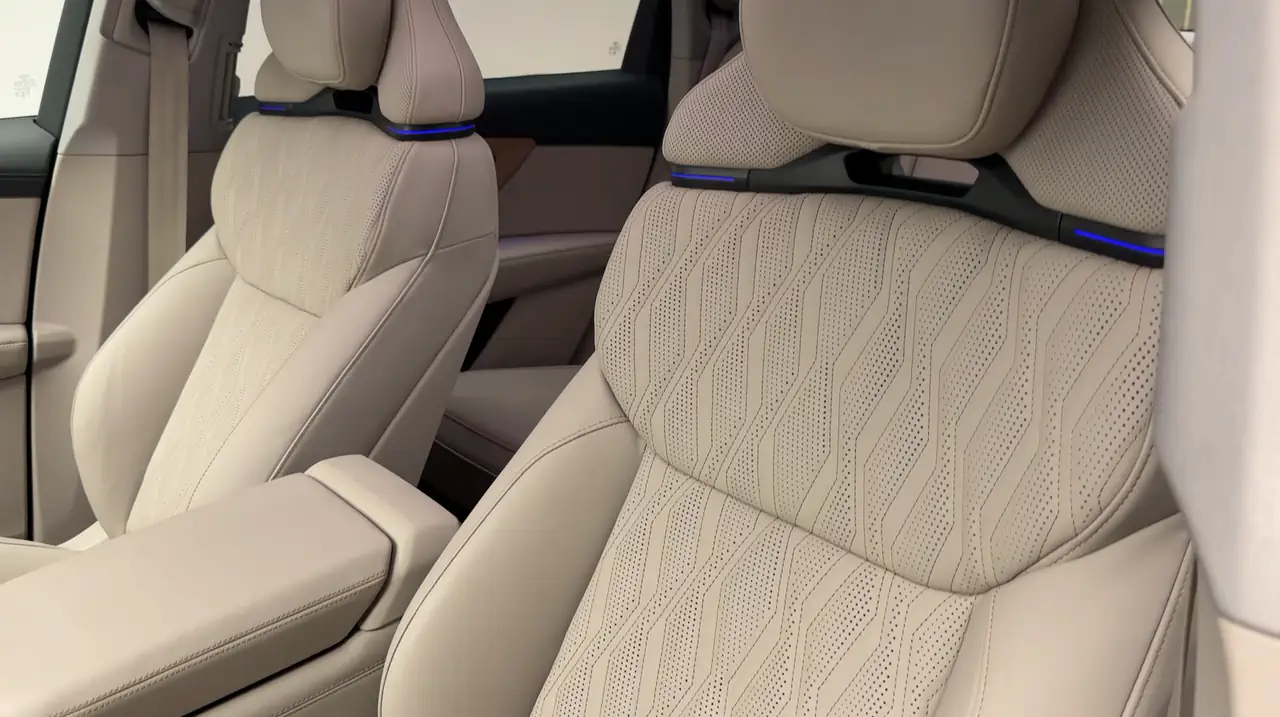
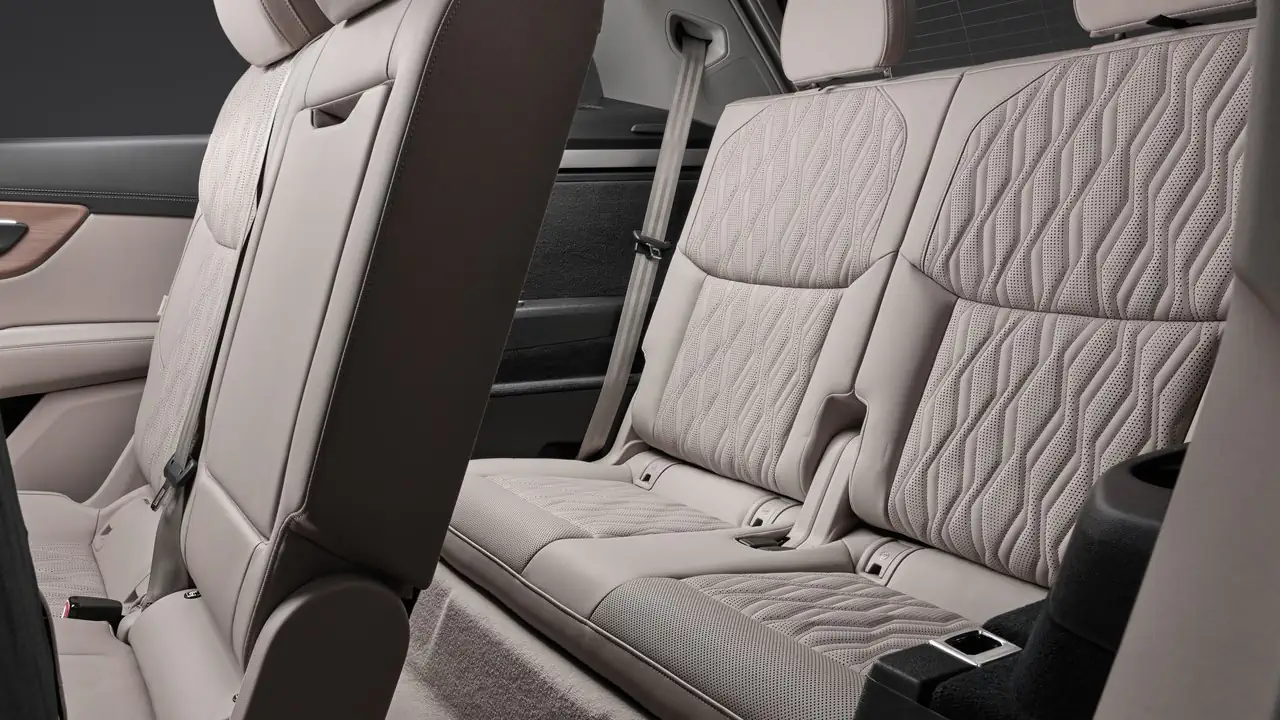
Material quality is where the brand earns its price premium. The seats are wrapped in Valcona leather with contrast stitching, and the dash combines open-pore wood with genuine aluminum trim inserts. Color options include Stone Beige, Tamarind Brown, and Pastel Silver — a refreshing departure from the segment’s default black interiors.
Seating configurations have been expanded. Beyond the standard five- and seven-seat layouts, the 2027 Q7 now offers a six-seat executive arrangement with individual captain’s chairs in the second row, a center console passageway, and per-seat adjustments. The seven-seat version accommodates three ISOFIX child seats simultaneously across the second row.
Screens, Software, and the Real-World Tech Experience
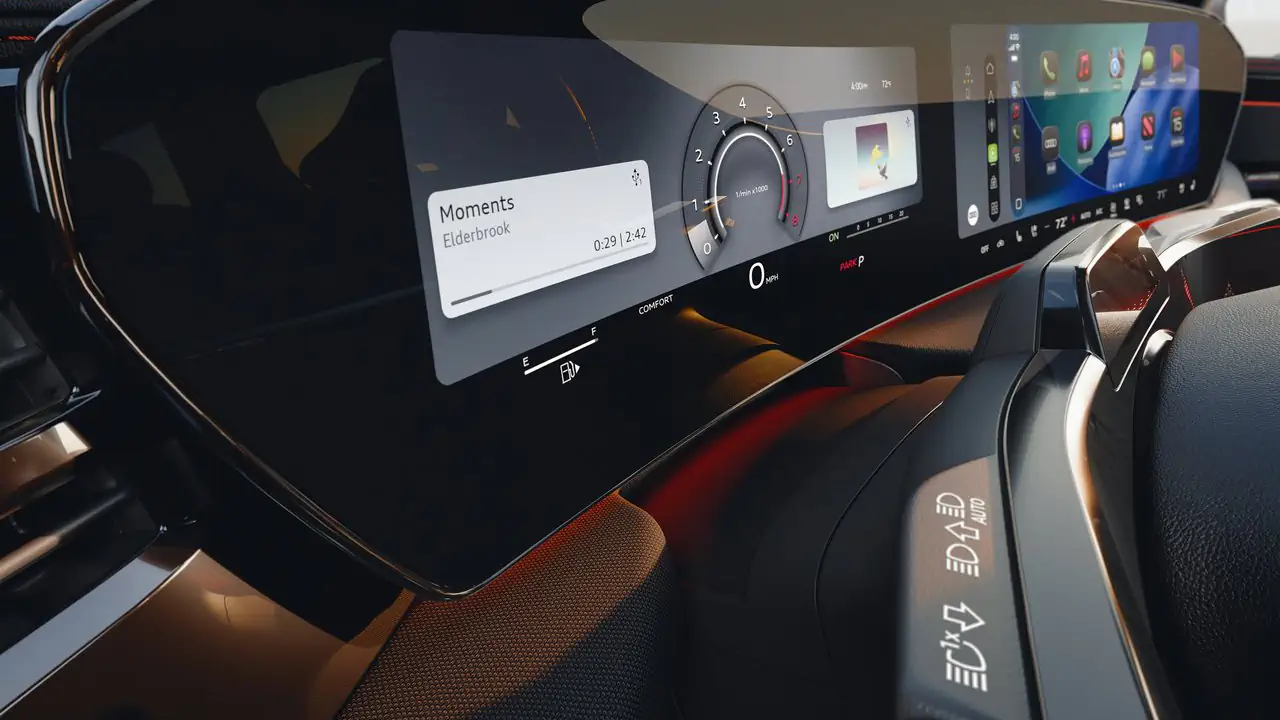
The 14.5-inch OLED touchscreen replaces the old dual-screen setup and responds with haptic feedback. Front-seat passengers get their own 12.3-inch display with a built-in privacy filter that blacks out from the driver’s sightline while the vehicle is moving. The digital instrument cluster measures 11.9 inches.
Under the surface, a new E³ 1.2 electronic architecture — co-developed with Audi’s software subsidiary CARIAD — consolidates everything into five high-performance computing nodes instead of the dozens of fragmented ECUs from previous generations. The system runs Android Automotive OS natively, supports over-the-air updates via an integrated 5G modem, and incorporates natural language processing powered by ChatGPT.
The optional Bang & Olufsen 4D Premium Sound system goes beyond speaker placement — it includes vibration actuators in the seat cushions and headrest-mounted speakers that translate low-frequency audio into physical sensation.
Standout strength: The tech ecosystem is cohesive and genuinely current — not a patchwork of features added at different model years.
Real limitation: The near-total elimination of physical controls demands a real adjustment period. Existing Audi owners who rely on tactile muscle memory for audio and climate controls have already flagged this as a frustration point.
Cargo space behind the third row measures 14.2 cubic feet — enough for a weekend’s worth of luggage, but noticeably behind the Lexus TX’s 20.2 cubic feet in the same configuration. With all seven seats folded, total cargo volume reaches 78.1 cubic feet.



Under the Hood: Power, Efficiency, and How It Actually Drives
Two engine options are offered for the North American market. The base Q7 runs a 2.9-liter twin-turbo V6 producing 429 hp and 442 lb-ft of torque. That combination moves 5,100-plus pounds to 60 mph in 4.8 seconds — a strong result for a vehicle that seats seven and can tow up to 7,700 lbs with the optional tow package.
The SQ7 steps it up considerably with a 4.0-liter twin-turbo V8 making 591 hp and 590 lb-ft. The 0–60 time of 3.7 seconds puts it in territory most buyers wouldn’t expect from a three-row family hauler. Top speed is electronically limited to 155 mph. Both engines route power through an 8-speed Tiptronic automatic that keeps shifts smooth in daily driving and noticeably firmer in Sport mode.
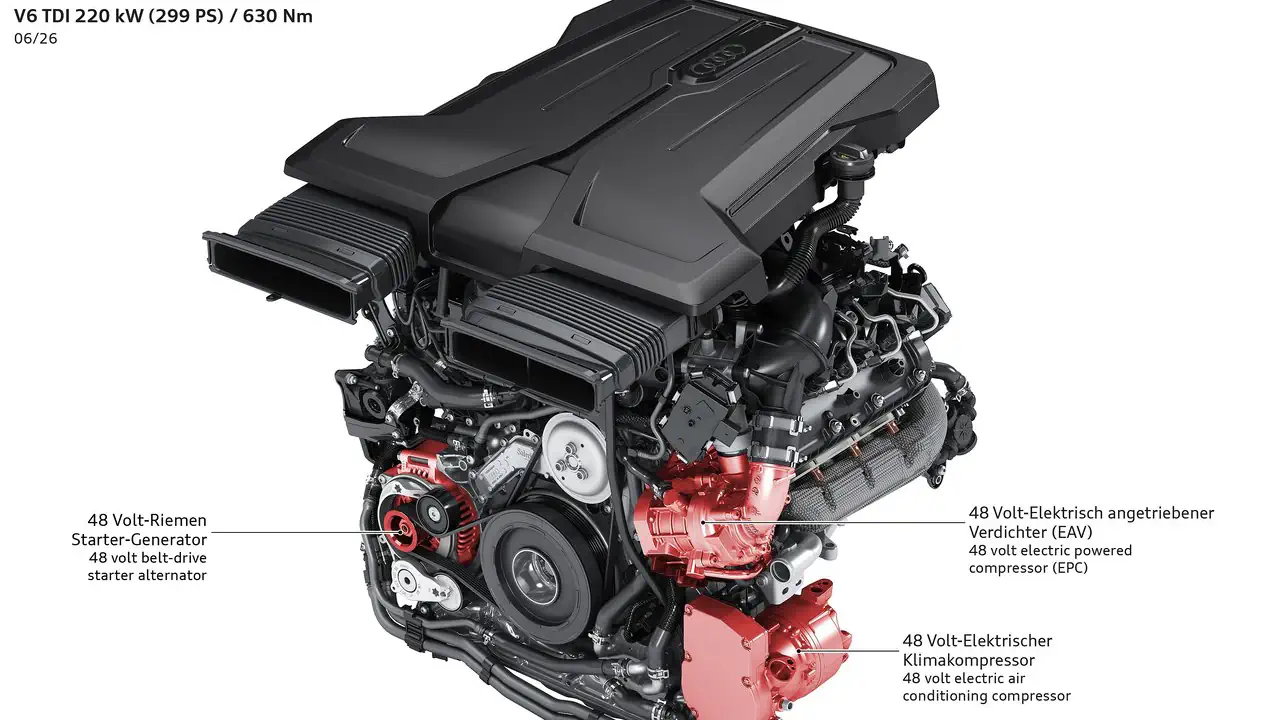
European TDI variants get the MHEV Plus 48V system, which is worth understanding even if it won’t be sold stateside. The Electric Powered Compressor (EPC) spins to 90,000 rpm in 250 milliseconds — before exhaust gases even leave the engine — eliminating turbo lag almost entirely. The result is throttle response that feels closer to a large naturally aspirated engine than a turbocharged diesel.
Fuel economy for the U.S.-spec TFSI models lands around 19 mpg city and 25 mpg highway. That’s consistent with what the outgoing model delivered and reflects the trade-off made for performance. The European TDI versions, for reference, achieve between 29.4 and 33.1 mpg combined — a reminder of how much the diesel powertrain changes the ownership math overseas.
Pricing, Insurance, and the True Cost of Owning a 2027 Q7
At launch in Germany, the diesel base model starts at €87,900. In the U.S., pre-sale estimates from industry analysts place the Q7’s MSRP between $70,000 and $79,000 depending on trim — with the SQ7 expected to land considerably higher.
That positions it squarely against the BMW X7 and Mercedes-Benz GLS, both of which offer competitive feature sets and, in certain configurations, more usable cargo space at similar price points. Audi’s answer is the SQ7’s performance advantage and what it argues is a more cohesive technology experience.
Insurance averages around $2,671 per year in the U.S. market — translating to roughly $13,355 over five years of ownership. Repair costs for advanced components like the Digital Matrix LED headlights and the sensor array are a known factor in that premium.
Maintenance costs average approximately $1,185 annually in the early years — slightly below the luxury SUV segment average, which is a reasonable result. The longer-term picture is less comfortable: after ten years, there’s a 37.44% probability of a major repair event, with Tiptronic transmission service alone ranging from $605 to $8,543 depending on the condition of internal components.
Depreciation is the most significant financial variable. The Q7 historically loses around 57% of its original MSRP over five years. A vehicle bought at $79,000 could be worth around $34,000 at resale — a steep curve that makes buying at launch a difficult financial argument. Shoppers who prioritize cost-efficiency are better served waiting for the certified pre-owned market to establish itself, typically 24 to 36 months after a new generation’s introduction.
For financing, the depreciation rate is a material risk factor: buyers putting less than 20% down could face periods of negative equity as the vehicle’s value drops faster than the loan balance.
What Buyers Are Asking Before They Sign
What is the real-world fuel economy of the 2027 Audi Q7?
U.S.-spec V6 TFSI models are estimated at around 19 mpg city and 25 mpg highway, consistent with the outgoing model. Official EPA ratings have not been published yet.
Is the 2027 Audi Q7 expensive to maintain?
Annual maintenance averages roughly $1,185 in the early years — competitive for the segment. The real risk emerges after the 10-year mark, where major repairs including transmission service can exceed $8,500.
Who are the main competitors of the 2027 Audi Q7 in the U.S.?
The BMW X7 and Mercedes-Benz GLS are the closest direct rivals. The Lexus TX, Lincoln Aviator, and Acura MDX compete at slightly lower price points while offering comparable or larger cargo volumes.
Should I buy the 2027 Audi Q7 at launch or wait?
If financial return matters to you, waiting makes sense. The model is projected to lose approximately 57% of its value within five years. The certified pre-owned market will offer significantly better value once the initial depreciation curve levels off.
Is the 2027 Audi Q7 Worth the Money?
This is one of the most technically complete three-row luxury SUVs Audi has ever built. The new PPC platform, the Matrix LED headlight system, and the E³ 1.2 electronics architecture represent genuine progress — not just marketing language.
But it’s an emotional purchase with real financial consequences. Depreciation is steep, insurance isn’t cheap, and the third-row cargo space trails the Lexus TX by a meaningful margin.
It’s not the right fit for buyers who prioritize cargo room, fuel efficiency, or long-term resale value.
The 2027 Q7 is for the buyer who wants the most advanced combustion-engine SUV on the market right now — and is clear-eyed about what that costs.
What do you think — does the 2027 Audi Q7 justify its price against American rivals like the Lexus TX and Lincoln Aviator, or is the German premium hard to defend at this level? Drop your honest take in the comments below!
2027 Audi-SQ7
Share this article

Por: Danniel Bittencourt
09/06/2026
Related posts