2027 Nissan Leaf Nismo Brings a Sportier Edge to Nissan’s EV
The 2027 Nissan Leaf Nismo brings sharper handling, a more aggressive look, and up to 214 horsepower—but its most important changes are not found in the powertrain.
2027 Nissan Leaf Nismo Brings a Sportier Edge to Nissan’s EV
The 2027 Nissan Leaf Nismo gives Nissan’s latest electric crossover a more focused personality. It has a louder visual presence, stickier tires, revised suspension hardware, and a cabin with Nismo-specific details.
What it does not have is extra horsepower.
That may sound like an unusual decision for a model wearing Nissan’s performance badge. But the Leaf Nismo is aimed less at stoplight acceleration and more at making everyday driving feel more connected.
For now, the new trim is exclusive to Japan, where orders have already opened. Nissan has not announced plans to bring the Leaf Nismo to the United States.
Same powertrain, different mission
The Leaf Nismo keeps the front-wheel-drive electric powertrains offered in the regular Japanese-market Leaf lineup.
The entry-level B5 Nismo uses a 130-kW electric motor, rated at 174 horsepower and 254 lb-ft of torque. It is paired with a 52-kWh battery pack.
The B7 Nismo moves up to a 160-kW motor producing 214 horsepower and 261 lb-ft. That version uses the larger 75-kWh battery.
Those figures are unchanged from the standard Leaf. Nissan did not turn the Nismo into a high-output EV, and it does not receive an all-wheel-drive option.
That choice puts the emphasis on chassis tuning rather than a bigger peak number. The Leaf Nismo is designed to feel more composed when the road gets interesting, not necessarily quicker in a straight line.
The chassis gets the real upgrades
Nismo-specific springs, stabilizer bars, bushings, and dampers are part of the package. The shocks use swing-valve technology, intended to help control body movement while maintaining a more settled response over uneven pavement.
Nissan says the revised setup is meant to make the Leaf feel more agile and more predictable through turns. It is a sensible direction for an EV that carries substantial battery weight low in the chassis.
The B5 Nismo weighs 4,012 pounds in its lightest form. A B7 with the larger battery reaches roughly 4,232 pounds, though the Recaro-equipped model is slightly lighter.
The suspension changes are joined by 19-inch Enkei aluminum wheels wrapped in 235/45 Michelin Pilot Sport 5 tires. That combination should provide a noticeably more direct steering response and greater cornering grip than a typical efficiency-focused tire setup.
Nismo styling goes beyond red accents
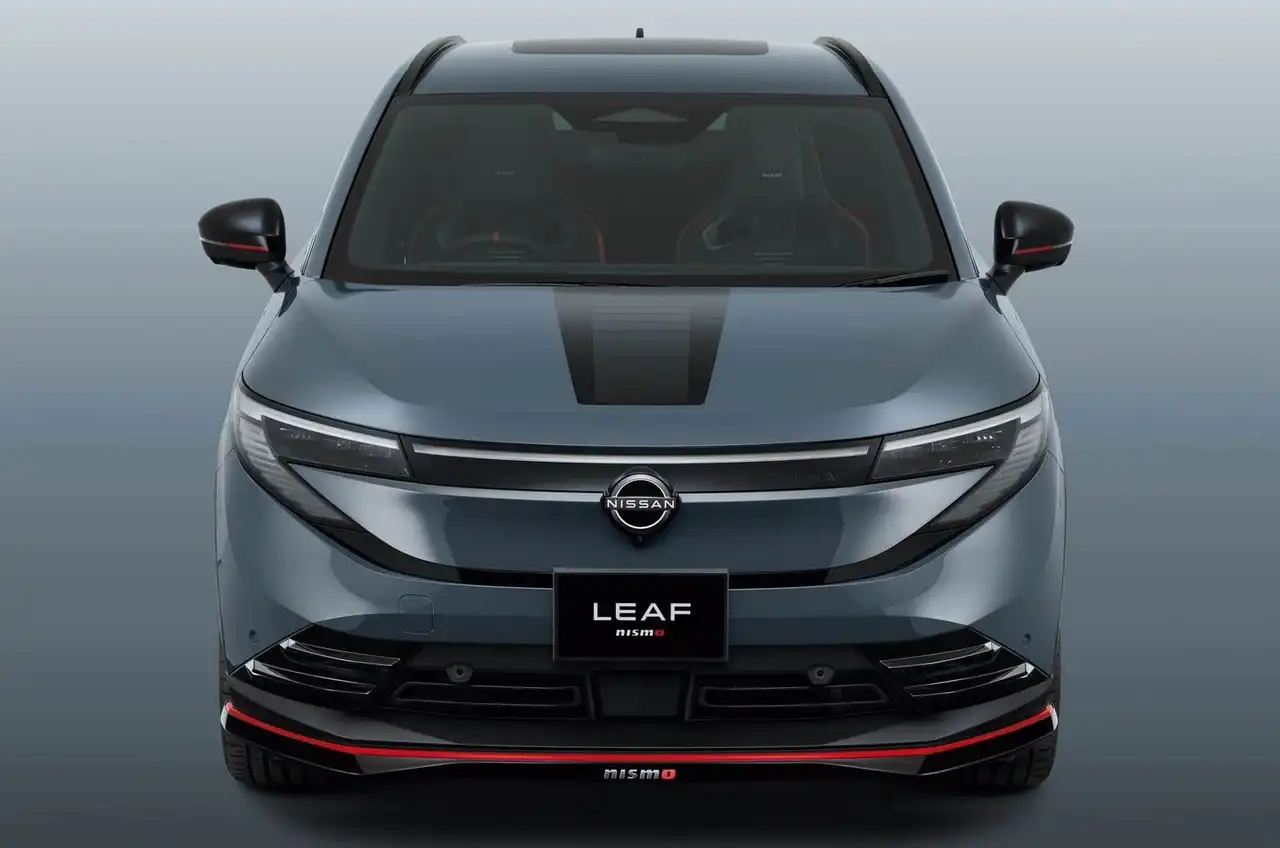
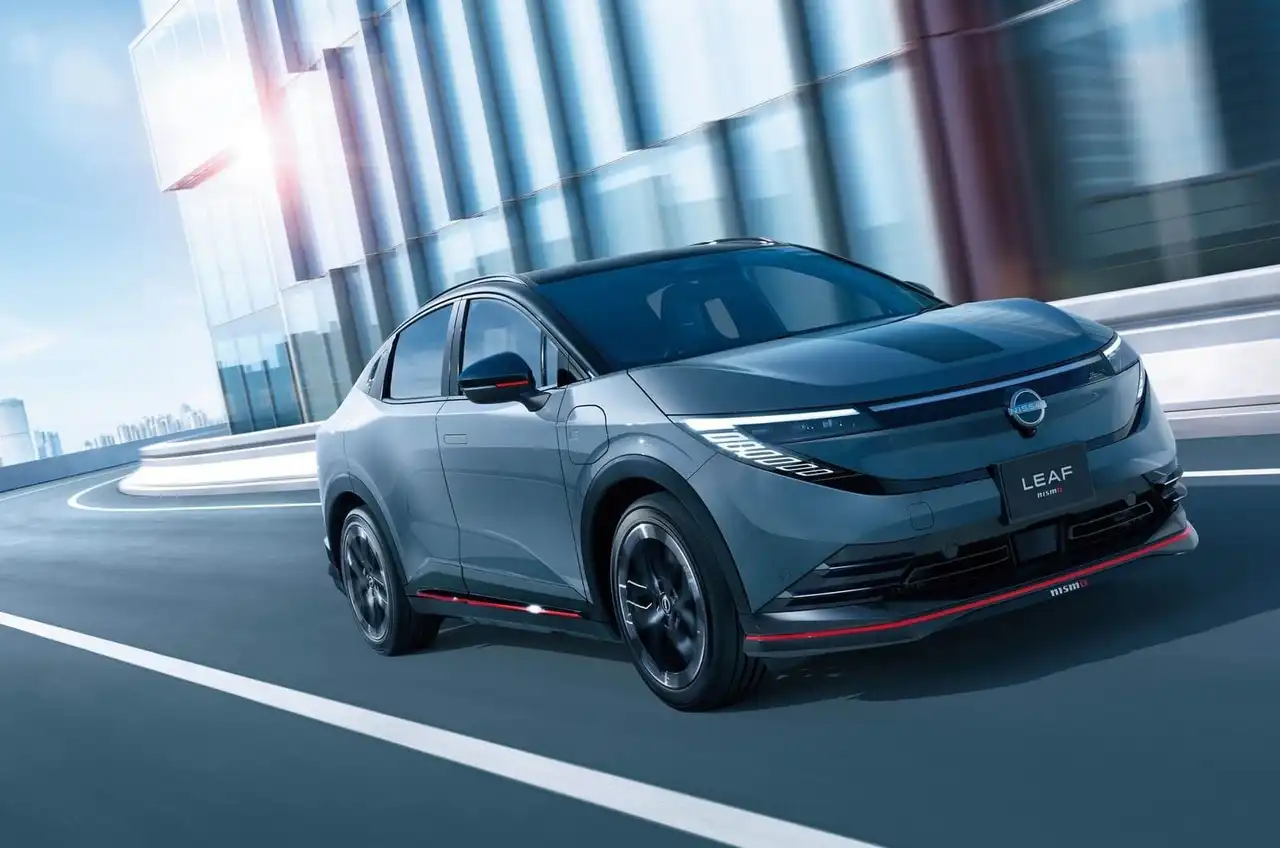
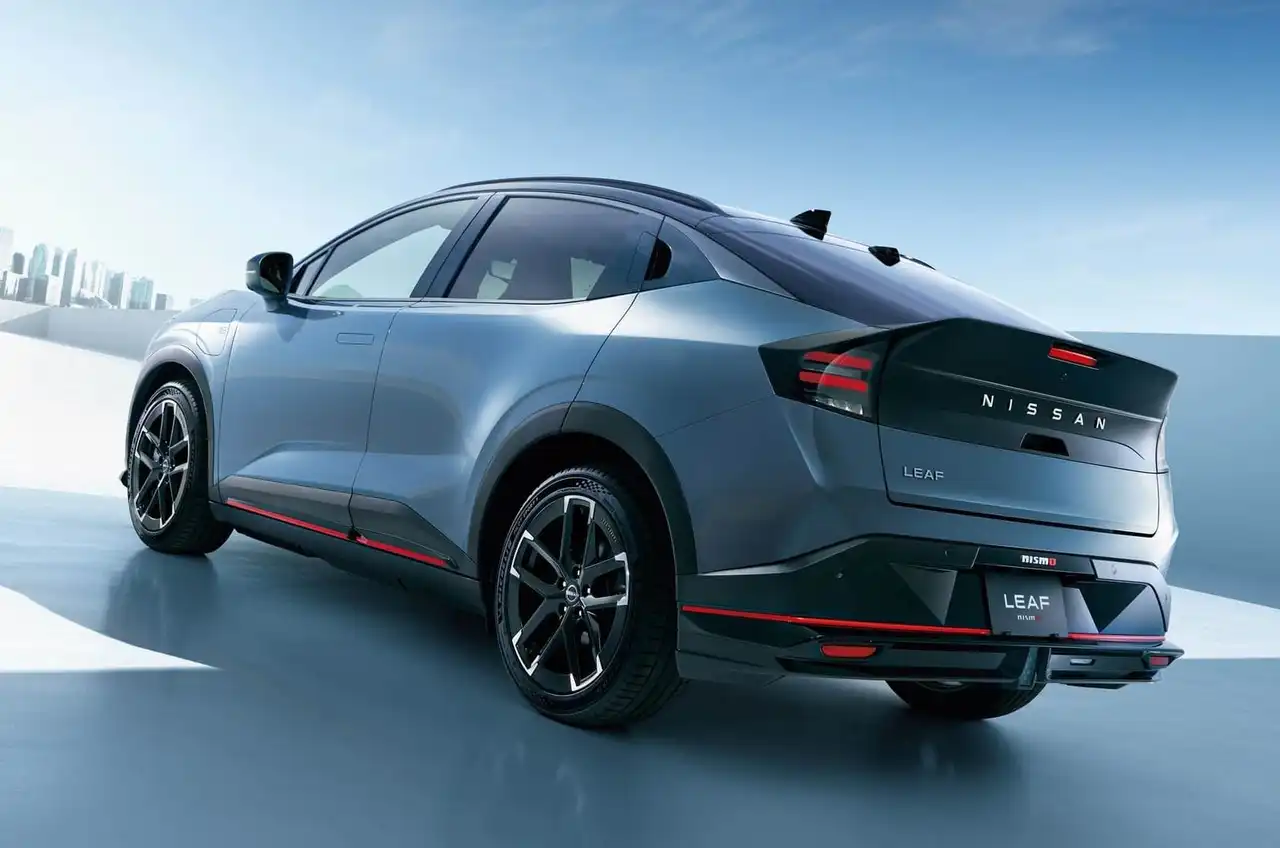
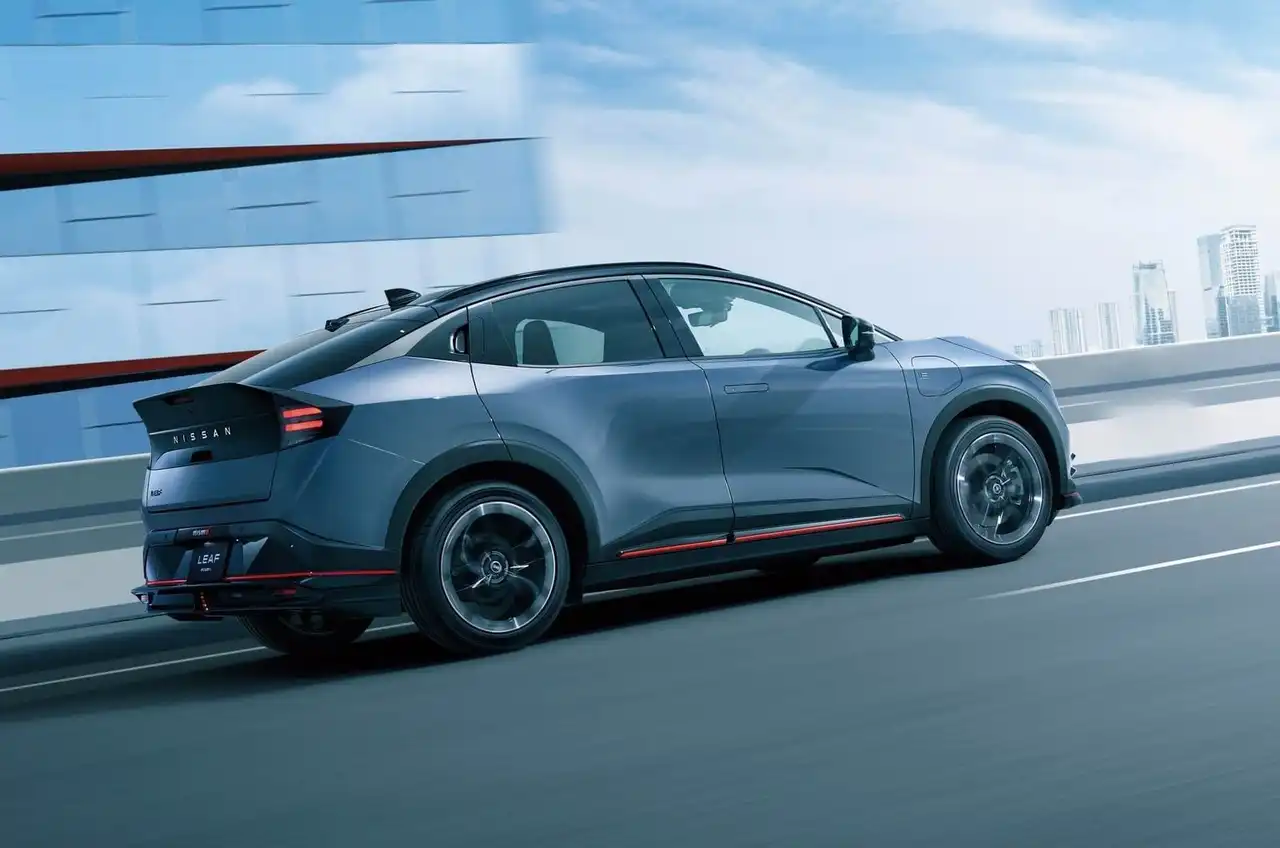
The Leaf Nismo has a more assertive front fascia, revised lower bodywork, red exterior trim, and a rear ducktail-style spoiler. Nissan also fitted additional aerodynamic elements around the bumpers and lower body.
The updates extend the Nismo by about 2.2 inches compared with the standard Leaf, while width and height remain unchanged. Ground clearance is listed at 5.3 inches.
It is a more aggressive design without trying to disguise the Leaf’s crossover profile. The Nismo treatment brings visual contrast, but it does not turn the vehicle into something it is not.
Nissan has also introduced exclusive paint combinations, including Stealth Gray options that suit the darker wheels and red highlights.
Nismo Mode changes the response
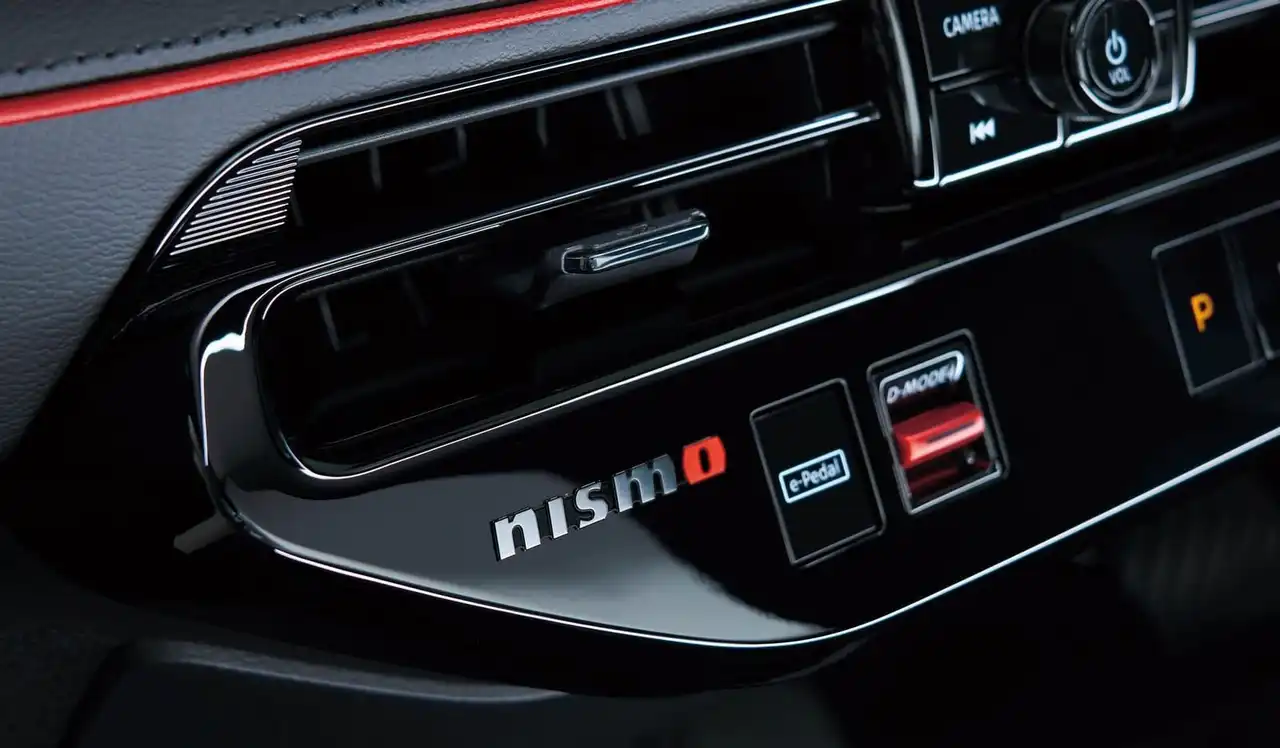
The Leaf Nismo’s drive modes are revised to match its new hardware. Standard, Eco, and Sport settings remain, but Sport has been renamed Nismo Mode.
That setting is intended to sharpen throttle response and give the car a more immediate feel when the driver asks for acceleration. In an EV, where full torque is available from a standstill, calibration can make a meaningful difference in how energetic the car feels.
Paddle shifters behind the steering wheel control four levels of regenerative braking. That gives drivers more flexibility, whether they prefer a coasting feel on the highway or stronger deceleration in traffic and on winding roads.
The system does not add power, but it can make the Leaf Nismo feel more interactive. That is an important part of the appeal for buyers who want more than quiet, point-and-go electric transportation.
Recaro seats top the lineup
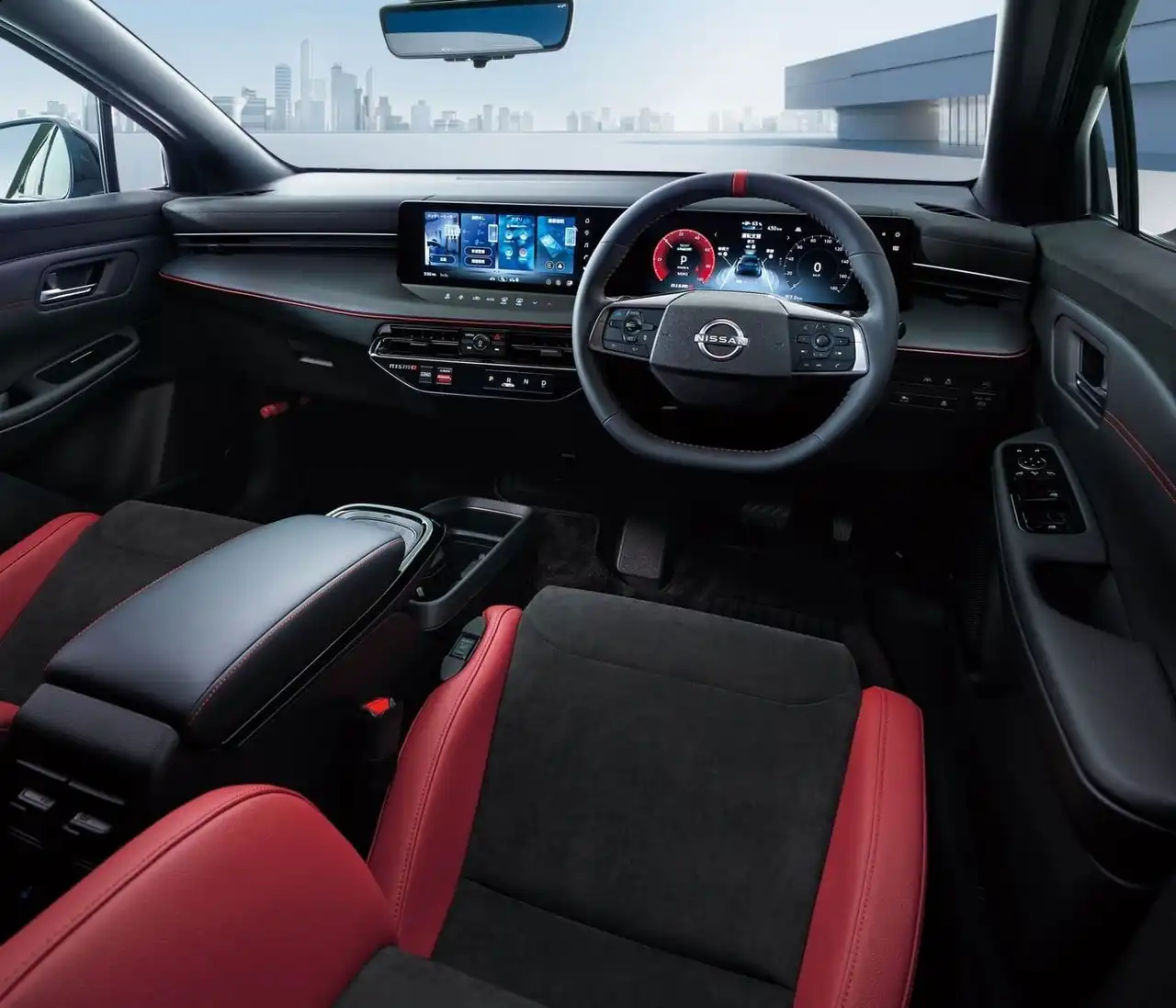
Inside, the Leaf Nismo receives a darker cabin treatment with red stitching, Nismo branding, and sportier trim materials. The steering wheel also gets a center marker, a familiar performance-car detail that helps reinforce the trim’s intent.
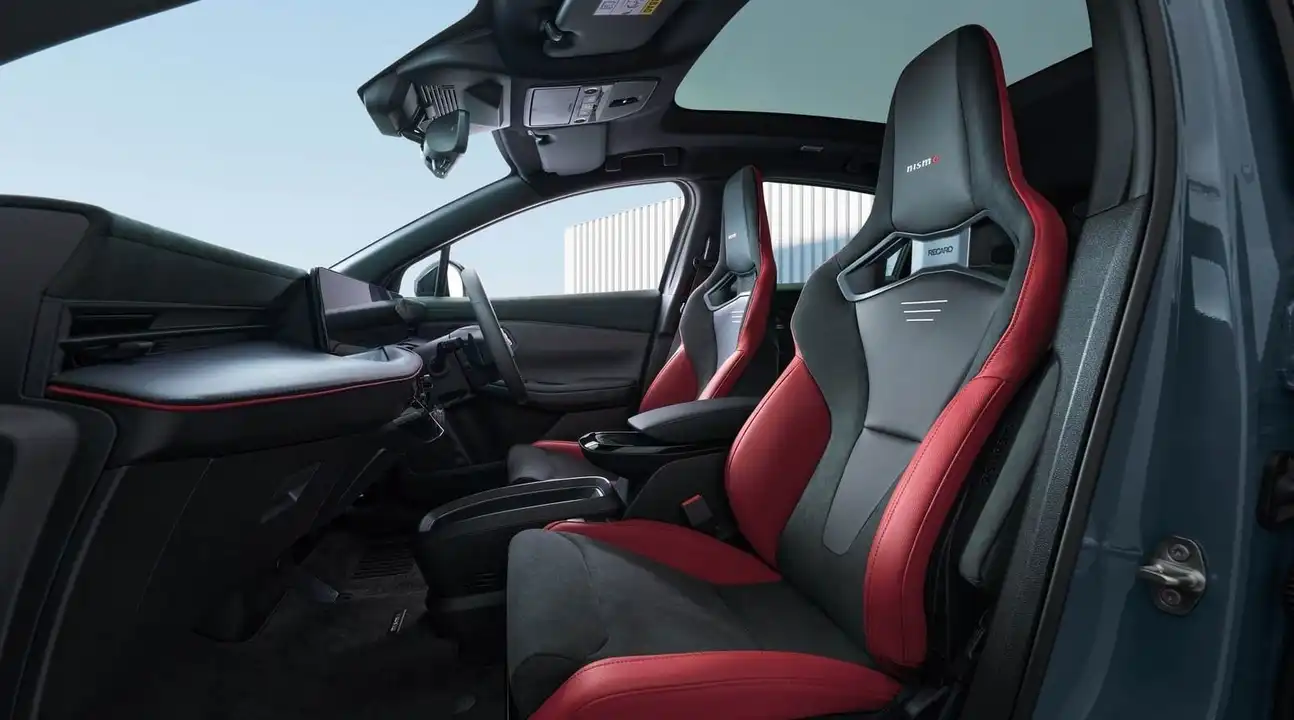
At the top of the lineup, Nissan offers the B7 Nismo Recaro. It adds Recaro sport seats and is listed at about 4,189 pounds, around 44 pounds lighter than the standard B7 Nismo.
The Recaros are more than a cosmetic addition. With a firmer chassis setup and higher-grip tires, more supportive seating makes sense for drivers who expect to spend time on twisting roads.
Japan pricing and U.S. outlook
In Japan, the Leaf Nismo starts at 6,601,100 yen for the B5 model, roughly $40,500 at current exchange rates. The B7 is priced at 6,952,000 yen, while the B7 Nismo Recaro rises to 7,227,000 yen, or about $44,300.
Those prices do not translate directly to a potential U.S. sticker price, as equipment, taxes, and market positioning would be different.
More importantly, Nissan has not confirmed a U.S. launch. The company already sells the Ariya Nismo in certain overseas markets, while the Leaf Nismo remains a Japan-only proposition for now.
A different kind of performance EV
The 2027 Nissan Leaf Nismo does not chase the traditional performance formula of more horsepower and quicker acceleration. Instead, it gives the Leaf a sharper suspension setup, more capable tires, revised drive-mode tuning, and a cabin that better suits the badge.
With up to 214 horsepower, front-wheel drive, and no promised U.S. arrival, it will not be a direct rival to the most powerful EVs on sale. Still, the Nissan Leaf Nismo shows that a performance-oriented electric vehicle can be about steering feel, body control, and driver involvement—not just output figures.

Danniel Bittencourt
27/07/2026