The Volvo EX60 Might Be the Electric SUV America Has Been Waiting For
The Volvo EX60 arrives as a ground-up electric SUV with 400 miles of range, 18-minute fast charging and a starting MSRP that undercuts the BMW iX3. But there’s a serious insurance catch buyers need to know.
Volvo EX60 2027: The Electric SUV That Could Flip the Premium Segment Upside Down
The Volvo EX60 isn’t a converted crossover with a battery pack shoehorned under the floor — it’s a clean-sheet electric SUV built around a dedicated EV architecture from the ground up. That distinction matters more than it sounds.
The global reveal happened in January 2026 in Stockholm, and early demand across Europe outpaced Volvo’s internal projections by enough to trigger additional factory shifts and an €870 million investment into their Torslanda plant. In the US, the SUV arrives with NACS charging compatibility out of the box, meaning direct access to Tesla’s Supercharger network without any adapter.
Its two most direct competitors in the American market are the BMW iX3 — built on the new Neue Klasse platform — and the Tesla Model Y Long Range, the current volume leader in the segment. The Mercedes-Benz GLC Electric and Audi Q6 e-tron round out the premium field.
Quick Facts
| Spec | Details |
|---|---|
| Category | Midsize Premium Electric SUV |
| Powertrain | Dual Motor Electric (Induction + Synchronous) |
| Output | 503 hp |
| Torque | 524 lb-ft |
| Transmission | Single-speed Direct-Drive |
| Drive | All-Wheel Drive (AWD) |
| 0–60 mph | 4.4 seconds |
| Top Speed | 112 mph (electronically limited) |
| Efficiency | ~3.9 mi/kWh (P12 AWD) |
| Range | Up to 400 miles EPA est. (P12) / 322 miles EPA est. (P10 AWD) |
| On Sale | 2026/2027 |
The numbers above tell part of the story. The engineering decisions behind them — some brilliant, some genuinely controversial — tell the rest. Here’s what actually matters for buyers considering this SUV.
The Scandinavian SUV That Rebuilt Itself From the Ground Up to Beat the Germans
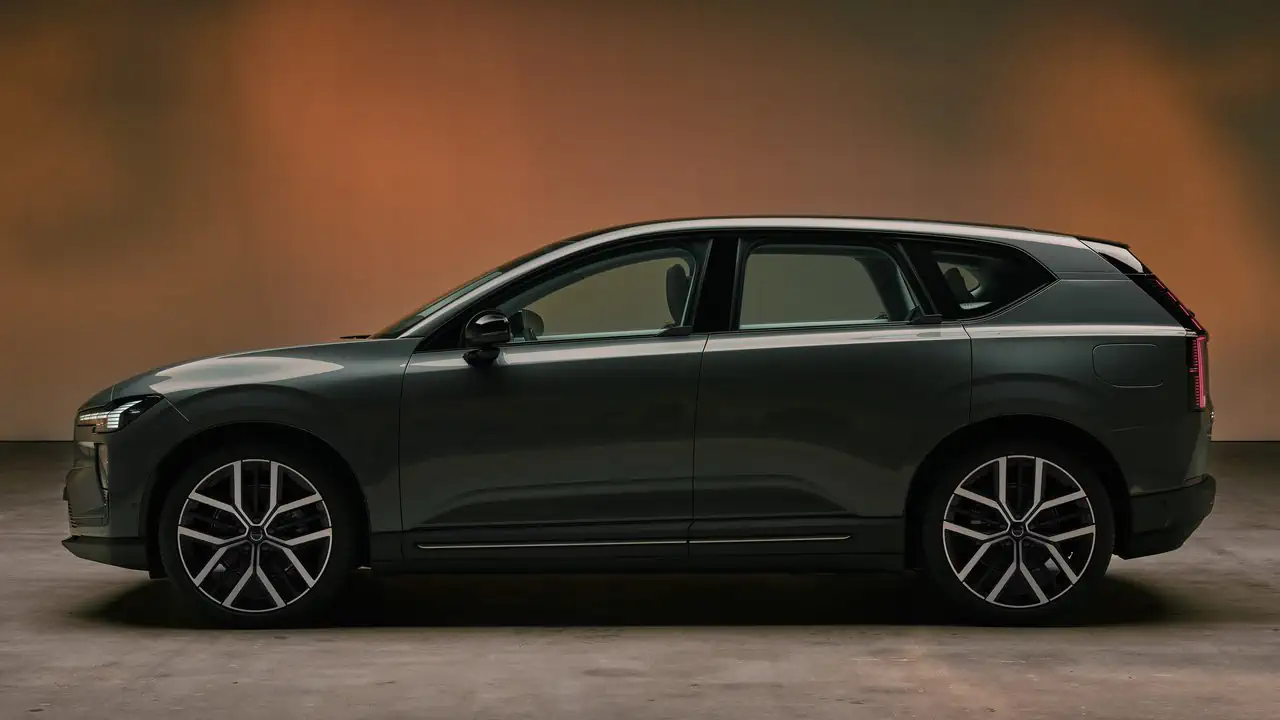
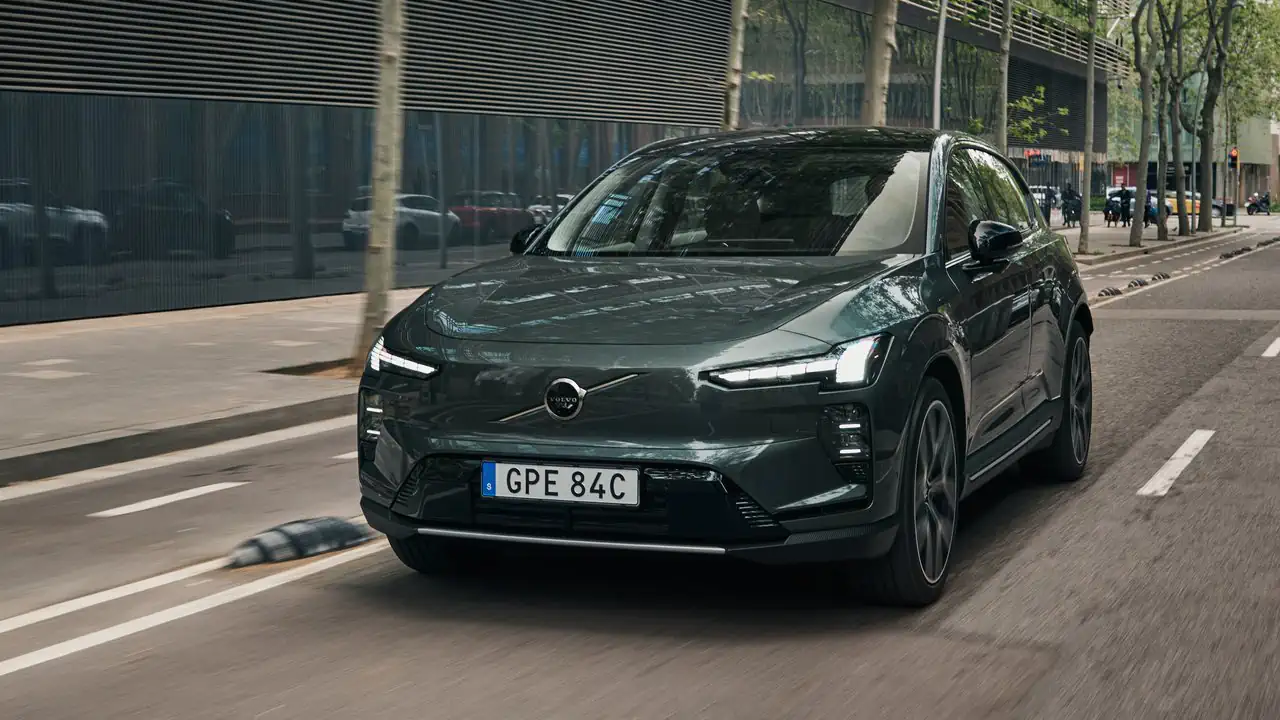
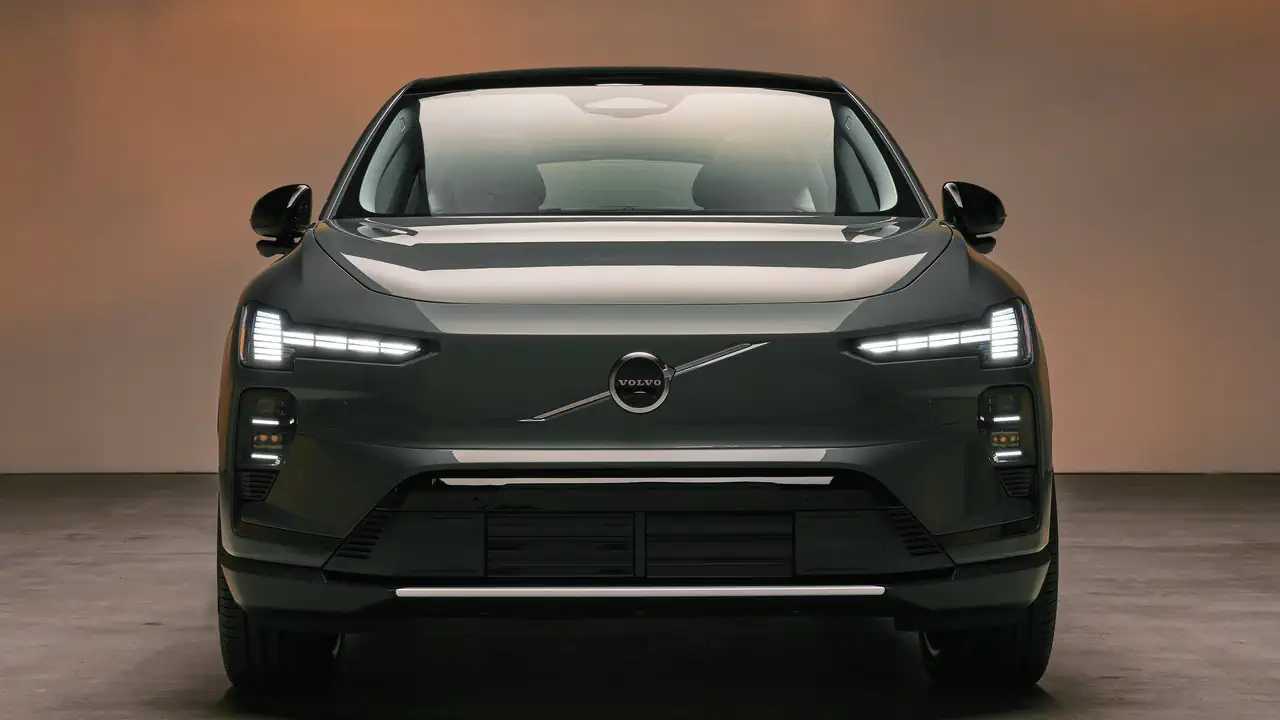
Walking up to the EX60 for the first time, the closed front fascia reads less like a design compromise and more like a deliberate statement. There’s no grille to fake — just a flat, sculpted surface anchored by the Thor’s Hammer matrix headlights that have become Volvo’s most recognizable design signature.
The hood sits lower than on the XC60 it replaces, giving the SUV a more planted, aerodynamic posture without tipping into aggression. Along the side, the traditional door handles are completely gone — replaced by slim electrically operated fins that sit flush above the beltline. It’s a small detail that has an outsized effect on how clean the profile looks.
That sloping roofline isn’t just aesthetic. Combined with the flat underbody and careful surface management, it delivers a drag coefficient of 0.26 Cd — a figure that directly supports the 322-mile EPA estimated range on the P10 AWD. Every bit of aero efficiency earned here translates to real-world miles before the next charging stop.
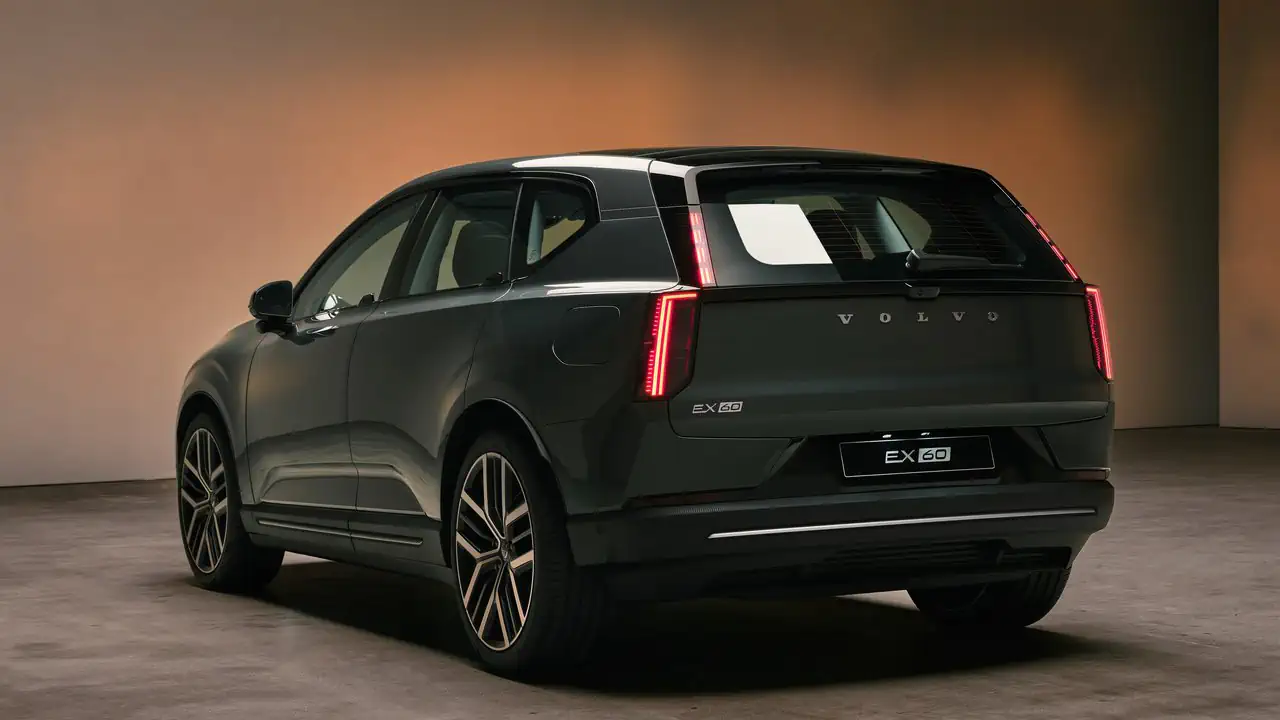
At the rear, Volvo keeps things composed: horizontal taillights, no fake exhaust outlets, nothing that doesn’t serve a purpose. A Cross Country variant is confirmed for later availability, adding wider wheel arches, underbody protection and an adaptive suspension that can raise ride height by an additional 0.8 inches in off-road mode.
The overall impression is one of confidence without spectacle — a meaningful departure from the XC60’s more traditional proportions, and a sharper contrast against the overtly sporty stance of the BMW iX3.
Understated Inside, But Not Underequipped: What Volvo Built for the Cabin
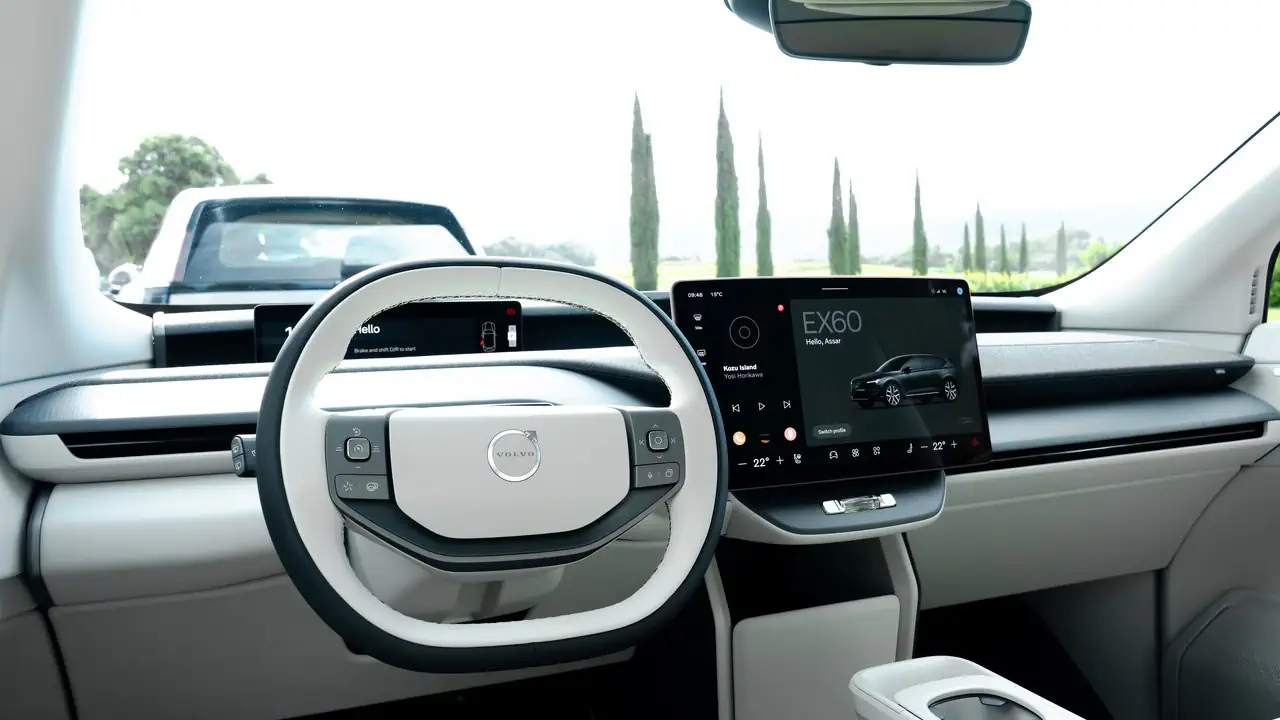
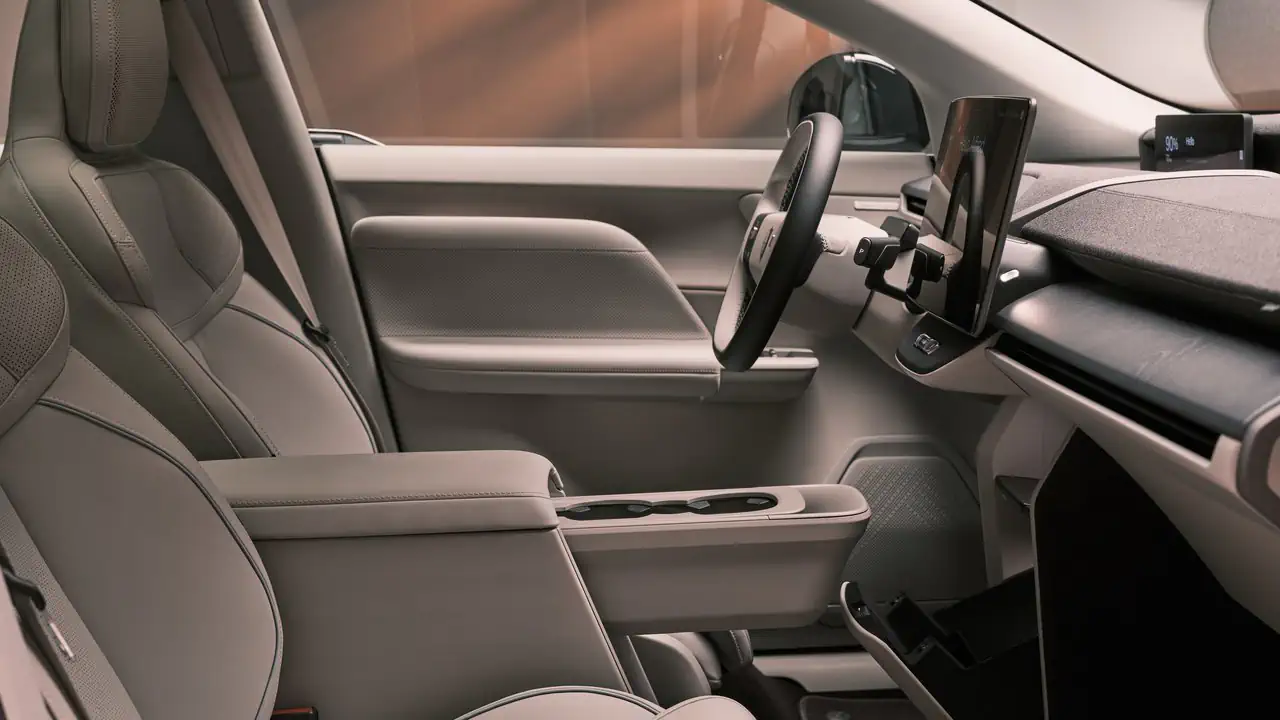
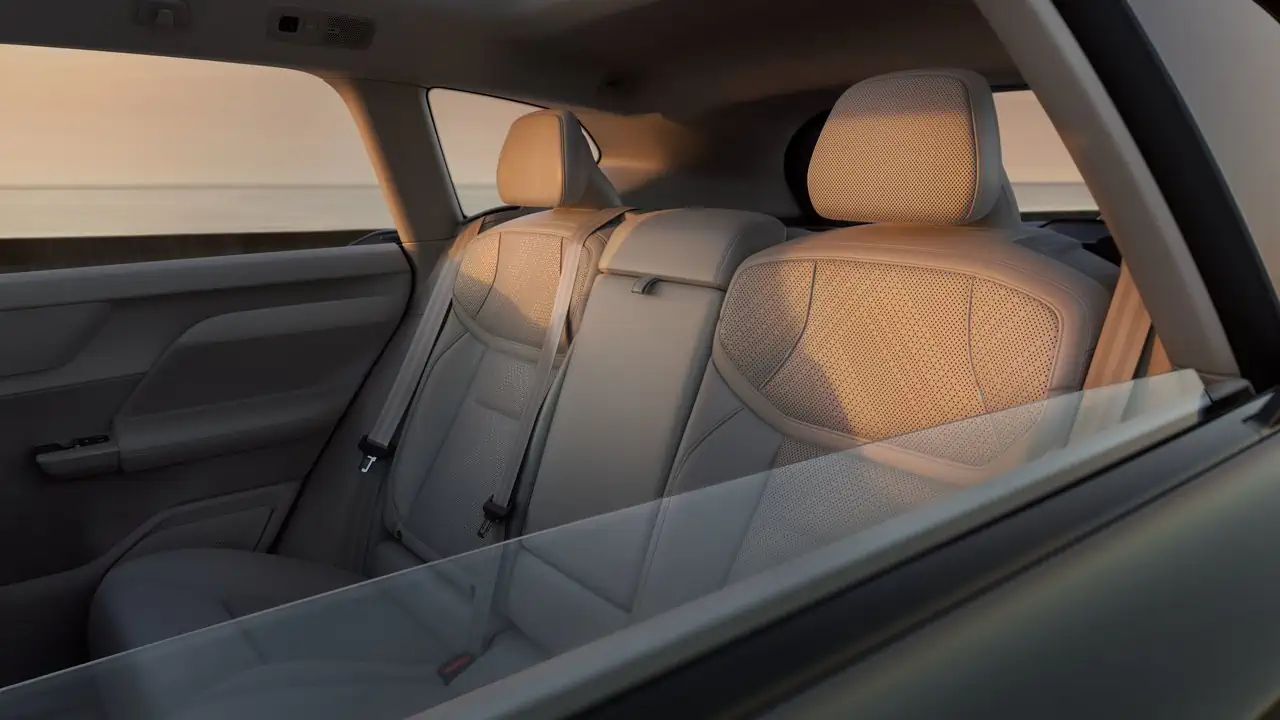
Step inside and the interior immediately signals that Volvo isn’t chasing the same definition of luxury as its German rivals. The dashboard is wide, horizontal and almost entirely clear of physical controls. Depending on trim level, surfaces are finished in Nordico (a perforated, ventilated synthetic), premium wool blends, custom-knit fabrics or — in Ultra configurations — full Nappa leather. Backlit aged ash wood trim completes the atmosphere without feeling decorative for its own sake.
The fully flat floor — a direct benefit of the dedicated EV architecture — makes the cabin feel genuinely spacious for all five passengers. Front seat comfort is strong: well-bolstered, appropriately supportive for longer drives without being aggressively sculpted like sport-focused rivals. Material quality holds up to scrutiny in a way that matters most in this price segment — there are no hard-plastic surfaces where your hands naturally land.
Compared to the Mercedes GLC Electric’s more traditional premium interior or the BMW iX3’s driver-focused cockpit, the EX60 feels like a quieter, more considered space. Whether that reads as sophisticated or sparse depends entirely on what the buyer is coming from.
Screens, AI and the Storage Space That Came From Ditching the Engine
The centerpiece of the tech stack is a 15.04-inch horizontal OLED touchscreen — the most responsive display Volvo has ever shipped. Crucially, the brand reversed its controversial EX30 decision and kept a dedicated 11.4-inch digital instrument cluster for the driver. Running on Qualcomm Snapdragon 8255 and NVIDIA Drive AGX Orin processors, the HuginCore system handles 254 TOPS of compute — which is what makes the standout feature of the cabin actually work.
That feature is native Google Gemini AI integration. This isn’t a voice assistant that responds to preset commands — it processes natural language in context. A driver can ask whether the traffic ahead will compromise range before reaching a fast-charger, and the system cross-references live vehicle telemetry with real-time data to answer. Permanent 5G connectivity and native Apple CarPlay support are included across all trims.
Rear-seat passengers have genuine legroom thanks to the 116.9-inch wheelbase, and cargo space comes in at 22.4 cubic feet behind the second row, expanding to 58.1 cubic feet with seats folded. The frunk adds another 2.0 cubic feet up front — enough for the charging cable and a carry-on.
Undeniable strength: the NVH (noise, vibration and harshness) isolation is exceptional. Laminated double-pane glass, acoustic polymer injections in the megacast chassis and active noise cancellation combine to produce one of the quietest cabins in the segment — quieter, by multiple press accounts, than some executive sedans from segments above.
Real limitation: the consolidation of too many basic functions — mirror adjustment, HVAC vents, steering column settings — into touchscreen submenus forces repeated visual attention away from the road. This was a near-universal criticism from first-drive evaluations across major automotive outlets.


Two Motors, 524 lb-ft and a Charging Speed That Makes Gas Stations Feel Slow
The P10 AWD pairs an induction motor at the front axle with a permanent magnet synchronous motor at the rear. Combined output is 503 hp and 524 lb-ft of torque — and like any well-engineered electric powertrain, that torque is available essentially from rest. The 0–60 mph run happens in 4.4 seconds, though the more relevant characteristic is how it delivers that performance.
Test drivers from European press evaluations consistently noted that the power delivery is progressive and smooth — absent the jarring shove that made some early electric SUVs uncomfortable at full acceleration. Volvo limits top speed to 112 mph across the entire lineup, a deliberate global safety policy the brand applies without exception.
Efficiency comes in around 3.9 mi/kWh under mixed real-world conditions, consistent with the EPA-estimated 322-mile range for the P10 AWD. The top-spec P12 AWD stretches that to an estimated 400 miles — a figure that meaningfully competes with the best long-range figures from Tesla while offering substantially more charging infrastructure flexibility through NACS compatibility.
The 800-volt architecture is what makes the charging story genuinely compelling. Peak DC fast-charging reaches 370–400 kW on P10 and P12 variants, taking the battery from 10% to 80% in approximately 18 minutes. For context, that’s faster than most current premium EV competitors, including the Audi Q6 e-tron on a typical 350 kW charger. On AC — home Level 2 or destination charging — the onboard 22 kW bidirectional inverter supports V2L, V2H and V2G, meaning the EX60 can power household appliances or feed energy back to the grid.
The Breathe Charge software pre-conditions the battery based on the navigation destination, reducing charging time by up to 30% in cold weather. For buyers in northern states, that’s a practical differentiator worth taking seriously.
MSRP, Insurance and the Real Cost of Owning a Megacast Electric SUV
In the US, pricing opens at $58,400 for the EX60 P6 Plus — a number that puts it in direct competition with the current XC60 T8 PHEV on sticker price, and noticeably below the Audi Q6 e-tron and BMW iX3 M Sport in equivalent configurations. The P10 AWD Ultra tops out at $68,745 before any applicable federal EV tax credits.
The value proposition becomes even more interesting when factoring in ongoing maintenance costs. With no oil changes, no timing belt, no spark plugs and regenerative braking that significantly extends brake pad and rotor life, annual service expenses run considerably lower than an equivalent combustion-powered premium SUV. Financing at current rates on a $60,000–$68,000 vehicle puts monthly payments in a range comparable to leasing a fully-loaded German alternative — without the fuel cost overhead.
The insurance picture, however, deserves serious attention before signing anything. Actuarial analysts have flagged two structural characteristics that elevate risk profiles and, consequently, insurance premiums: the rear megacasting and the Cell-to-Body battery integration. A moderate rear collision that deforms the cast aluminum structure may require replacing the entire rear section as a single unit — which in many scenarios results in a total loss declaration earlier than a conventionally constructed vehicle. That’s not speculation; it’s a pattern already observed with megacast-chassis vehicles in repair shop evaluations.
Buyers should request insurance quotes before committing to a purchase. The delta between expected and actual premium costs surprises a meaningful number of first-time EV buyers in this segment.
The case for buying at launch rather than waiting is strengthened by the over-the-air update capability of the HuginCore system. Unlike competitors with static infotainment that ages quickly, the EX60’s software stack will continue to receive updates — keeping the vehicle’s technology profile current years after delivery, which historically supports stronger residual values.
The EX60 makes the most financial sense for buyers who already have home charging infrastructure, are coming from a premium combustion or PHEV vehicle, and carry a history with the Volvo brand. Internal Volvo data indicates that more than 60% of prospective buyers have previously owned or currently own a Volvo — a loyalty profile that few brands can claim in the premium segment.
What Buyers Are Searching Before They Visit the Dealership
What is the real-world range of the Volvo EX60?
The P10 AWD is EPA-estimated at 322 miles. European press tests in mixed conditions recorded approximately 3.9 mi/kWh, consistent with that figure. The P12 AWD stretches the estimate to around 400 miles.
Are insurance costs high on the EX60?
Yes, likely higher than average for the segment. The megacast rear structure and Cell-to-Body battery architecture increase total-loss risk in moderate rear collisions, which pushes insurance premiums up. Get quotes before purchasing.
How does the EX60 compare to the Tesla Model Y and BMW iX3?
The EX60 undercuts both on MSRP in equivalent AWD configurations. It offers faster DC charging than the Model Y and stronger range figures than the current iX3 M Sport. The trade-off is the absence of LiDAR and a more restrictive autonomy ceiling.
Does the Volvo EX60 have full self-driving capability?
No. The EX60 operates at Level 2+ semi-autonomous driving. Without LiDAR — which is included on the larger EX90 — the system cannot progress to Level 3 or higher autonomy regardless of future software updates.
Does the Volvo EX60 Justify the Price at Launch?
The EX60 is a rational purchase dressed in emotional restraint. The 322-mile real-world range, 18-minute fast charging and native NACS compatibility address the three most common objections to EV ownership — and the Google Gemini AI integration is meaningfully ahead of what rivals currently offer in production vehicles.
It is not the right choice for buyers who prioritize full autonomous driving capability, for those without home charging access, or for anyone who hasn’t fully priced out insurance costs against their specific driving profile and location.
The EX60 doesn’t try to be the most exciting SUV in the segment. It tries to be the most complete. And on that measure, it’s very close to pulling it off.
What do you think — does the Volvo EX60’s combination of range, charging speed and MSRP make it the most compelling premium electric SUV available right now, or does the insurance risk change the math for you? Drop your take in the comments below.
Share this article

Por: Danniel Bittencourt
18/06/2026
Related posts