Alpine A390 GTS: 3.9 Seconds to 60 and Something Porsche Still Doesn’t Offer
With three motors, 463 hp and independent torque vectoring on each rear wheel, the Alpine A390 GTS is challenging the Porsche Macan Electric on its own terms — but does it actually deliver where it counts?
Alpine A390 GTS: The Tri-Motor Electric Fastback Gunning for Porsche Territory
Alpine just put its most serious electric vehicle on the table. The A390 GTS arrives with 463 hp, three independent motors and torque vectoring technology borrowed directly from motorsport — wrapped in a body the brand calls a “racing car in a suit.”
This is a ground-up new model, with no direct predecessor in Alpine’s lineup. It’s the brand’s first five-door electric fastback, sitting above the A290 hatch and alongside the legendary A110 in what Alpine is calling its electric Dream Garage.
In Europe, the A390 GTS goes head-to-head with the Porsche Macan Electric and the Tesla Model Y Performance — two well-established benchmarks. Alpine’s pitch is brand exclusivity, sharper dynamics and a visual identity that refuses to blend in with either rival.
No official US launch date has been confirmed by the manufacturer.
Quick Specs
| Spec | Details |
|---|---|
| Category | Electric fastback / 5-door sports SUV |
| Powertrain | Tri-motor EV (1 front SSM + 2 rear PSM) |
| Output | 463 hp (345 kW) |
| Torque | 608 lb-ft |
| Transmission | Single-speed reducer with torque vectoring |
| Drive | AWD |
| 0–60 mph | ~3.7–3.8 sec (est.) |
| Top Speed | 137 mph |
| Efficiency | ~20.4 kWh/100 km (WLTP) |
| Range | 312–345 miles (WLTP est.) |
| Launch Date | European deliveries from Q2 2026 |
The numbers hold up well on paper — but what makes this car genuinely interesting isn’t just the spec sheet. It’s how Alpine connected real-world performance, onboard technology and a design language that refuses the obvious. What follows breaks down why this fastback is drawing serious attention from the premium EV segment.
The Fastback That Turns Pavement Into a Track Without Sacrificing Practicality
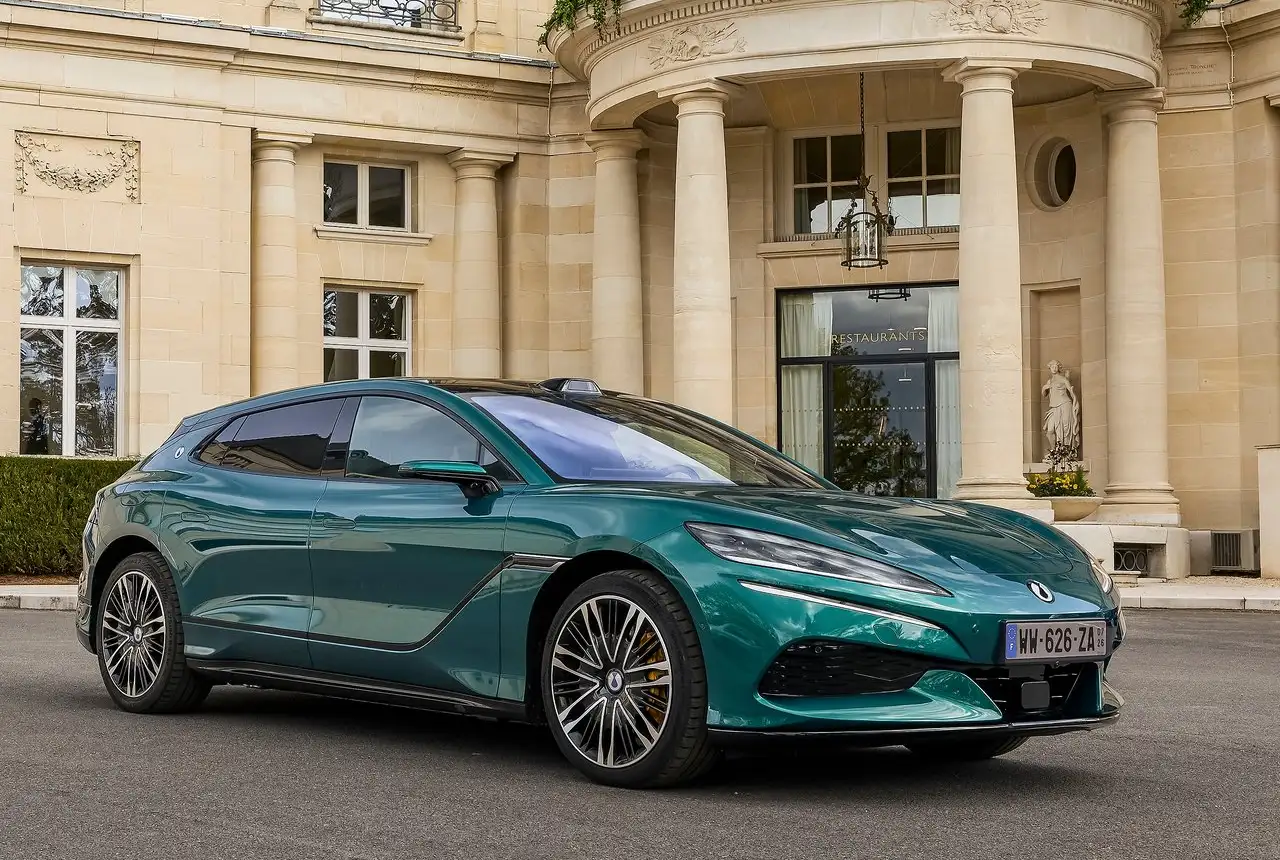
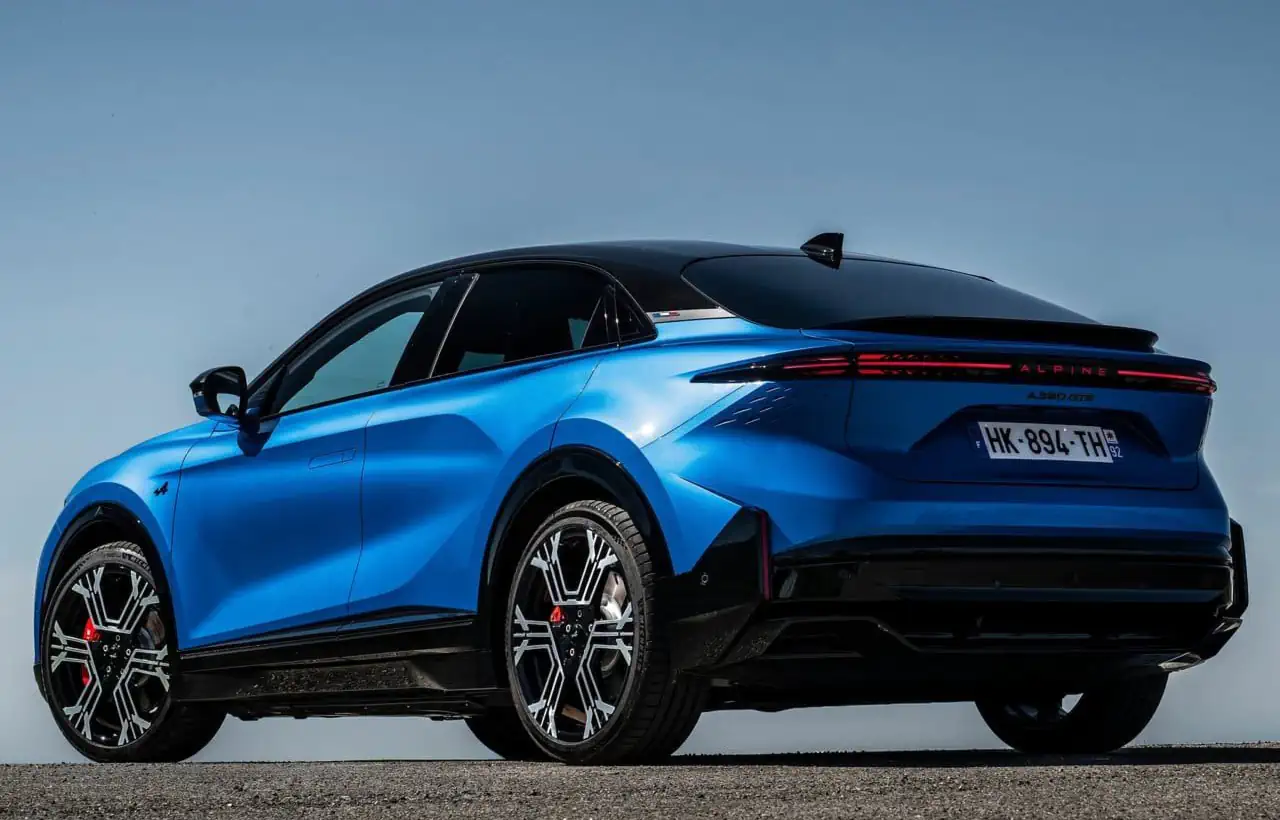
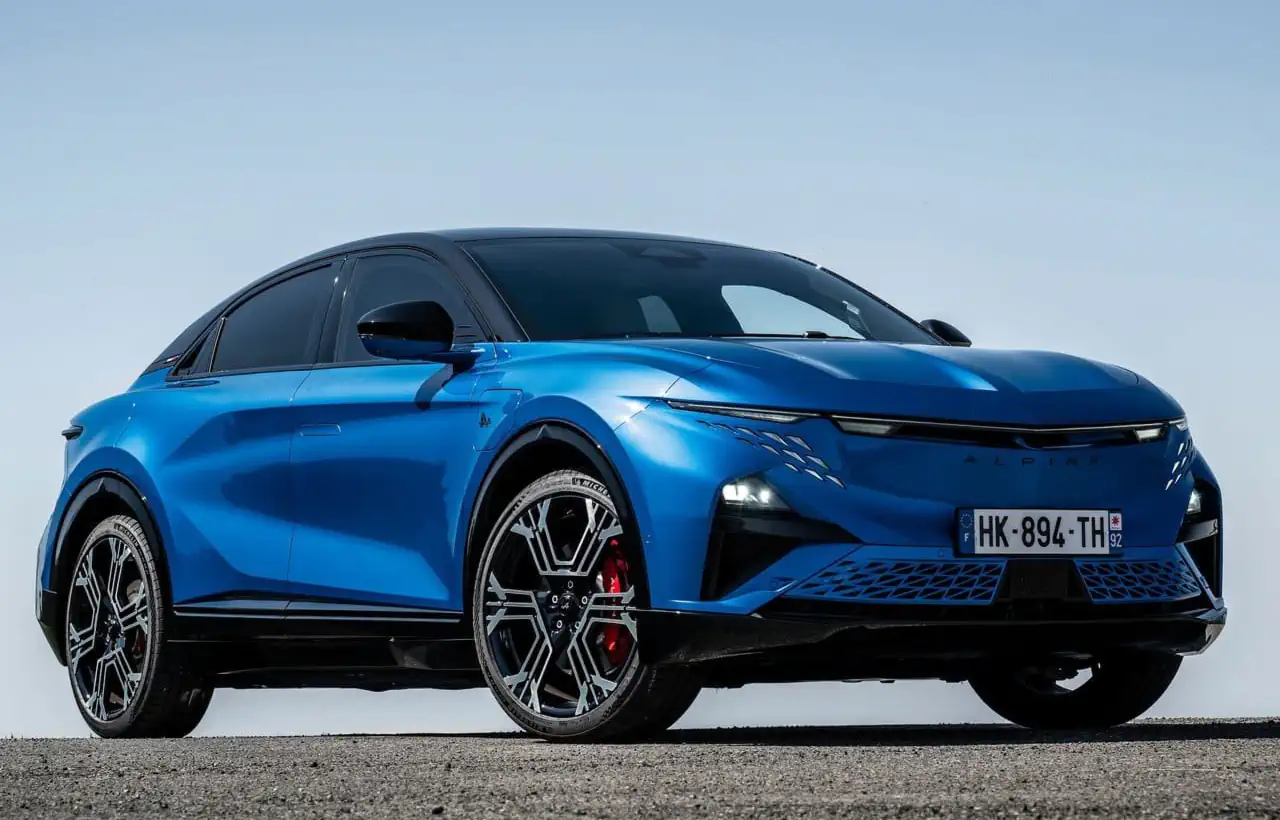
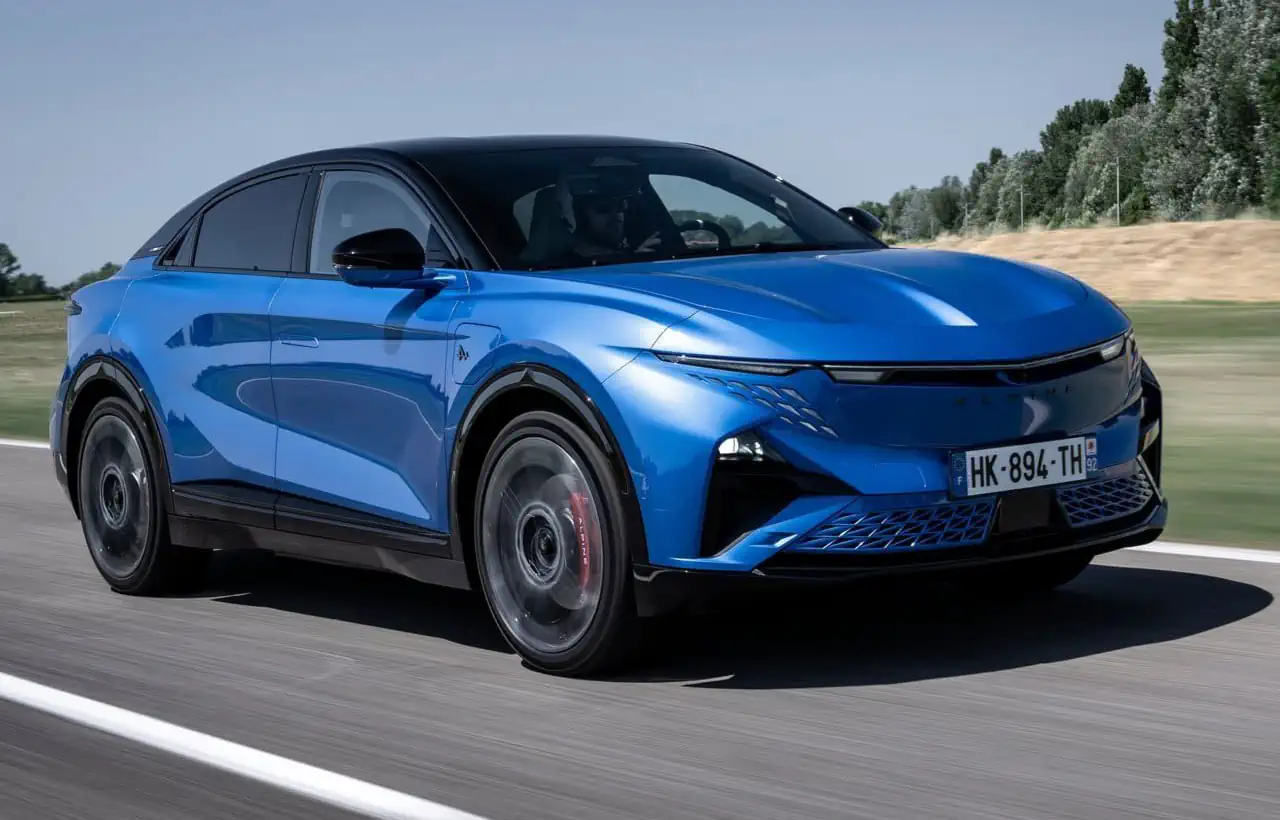
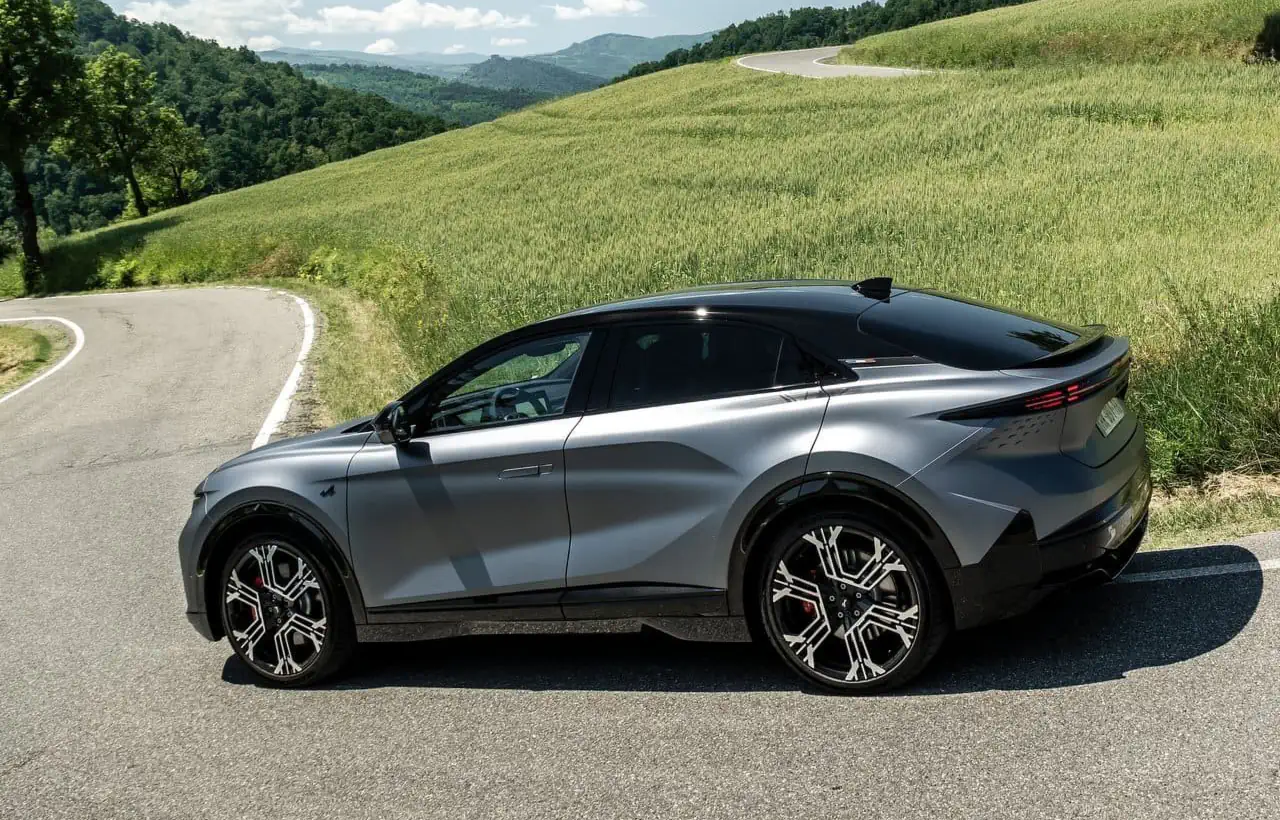
The first thing the A390 GTS communicates in person is a kind of controlled muscular tension. At 181.7 inches long and just over 60 inches tall, the profile sits noticeably lower and more aggressive than most SUVs in its class — something between a luxury coupe and a proper crossover.
Up front, the “Cosmic Dust” lighting signature with four circular elements pays direct homage to the classic A110, while the integrated front aerospoiler actively channels airflow over the hood rather than acting as pure styling. Alpine calls it motorsport heritage — and visually, the argument lands.
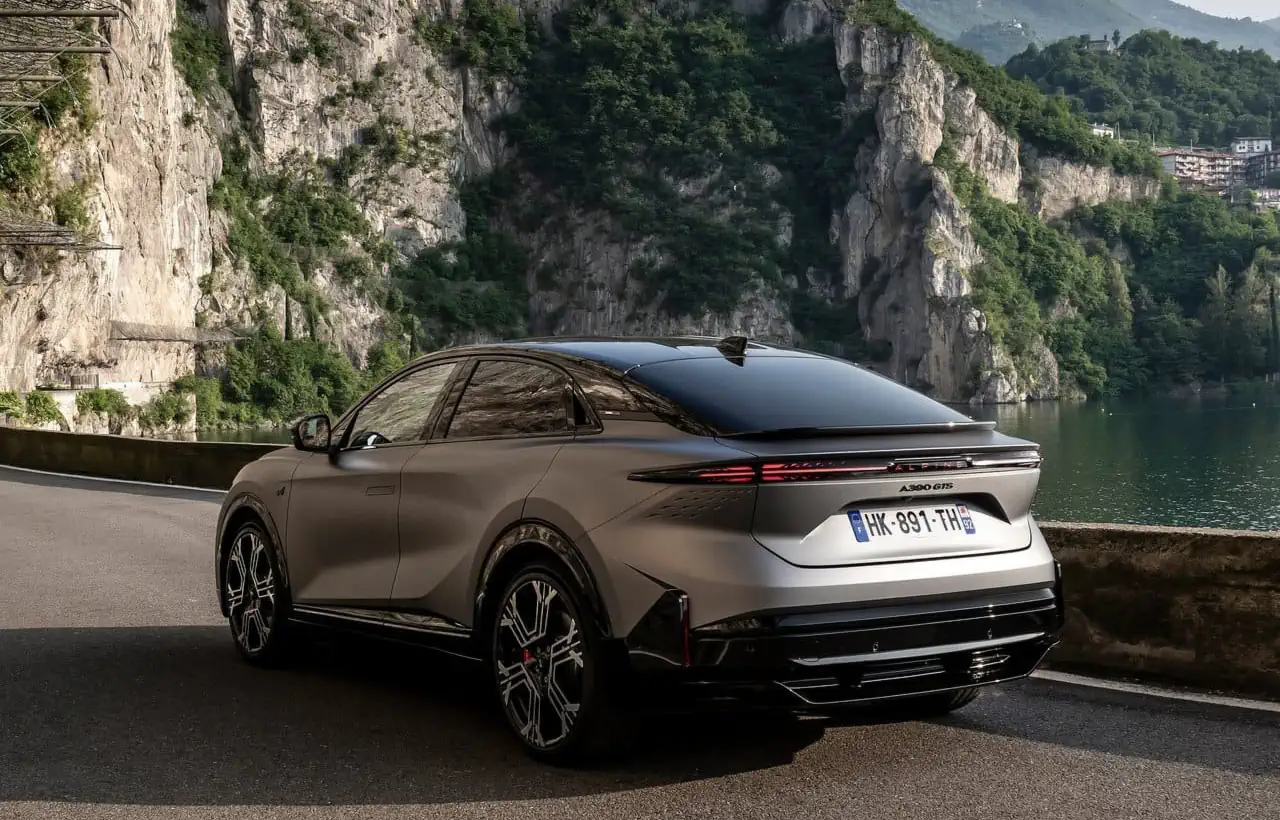
Along the sides, muscular wheel arches wrap around 21-inch forged wheels exclusive to the GTS trim, fitted with Michelin tires developed specifically for this model and marked with the “A39” designation. The roofline drops sharply from the C-pillar, creating the fastback silhouette that sets the A390 apart from every direct competitor.
At the rear, a subtle decklid spoiler, integrated diffuser and horizontally-oriented taillights complete a tail that balances elegance and sporting intent without forcing it. The overall package projects a clear brand identity — and breaks cleanly from the visual templates set by German and Korean rivals in the segment.
A Cabin That Leaves European Conservatism at the Door
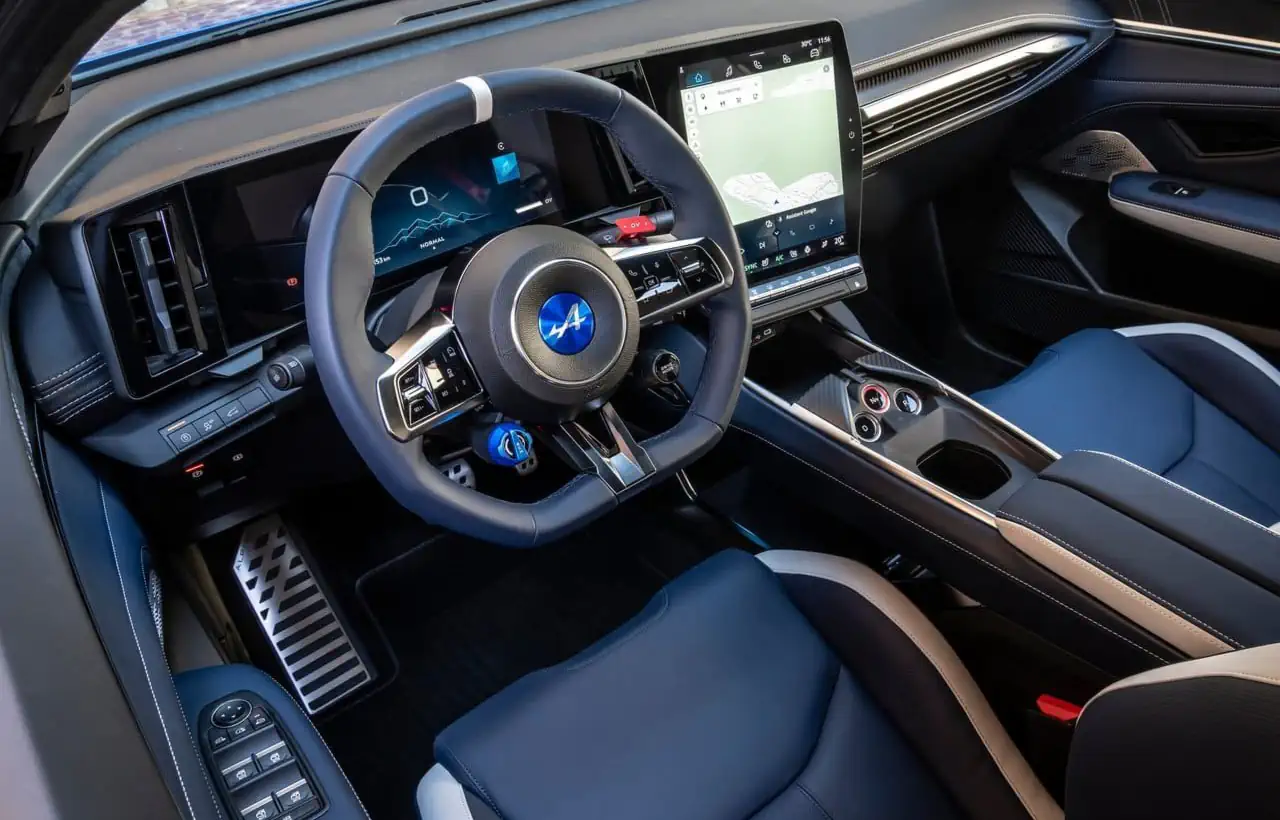
Stepping inside the A390 GTS is an immediate departure from what most European brands offer at this price point. The dashboard is driver-focused, with two primary screens — a 12.3-inch digital cluster and a 12-inch vertical infotainment display — both angled toward the driver’s seat. The effect is immediate: it reads like a cockpit, not a living room.
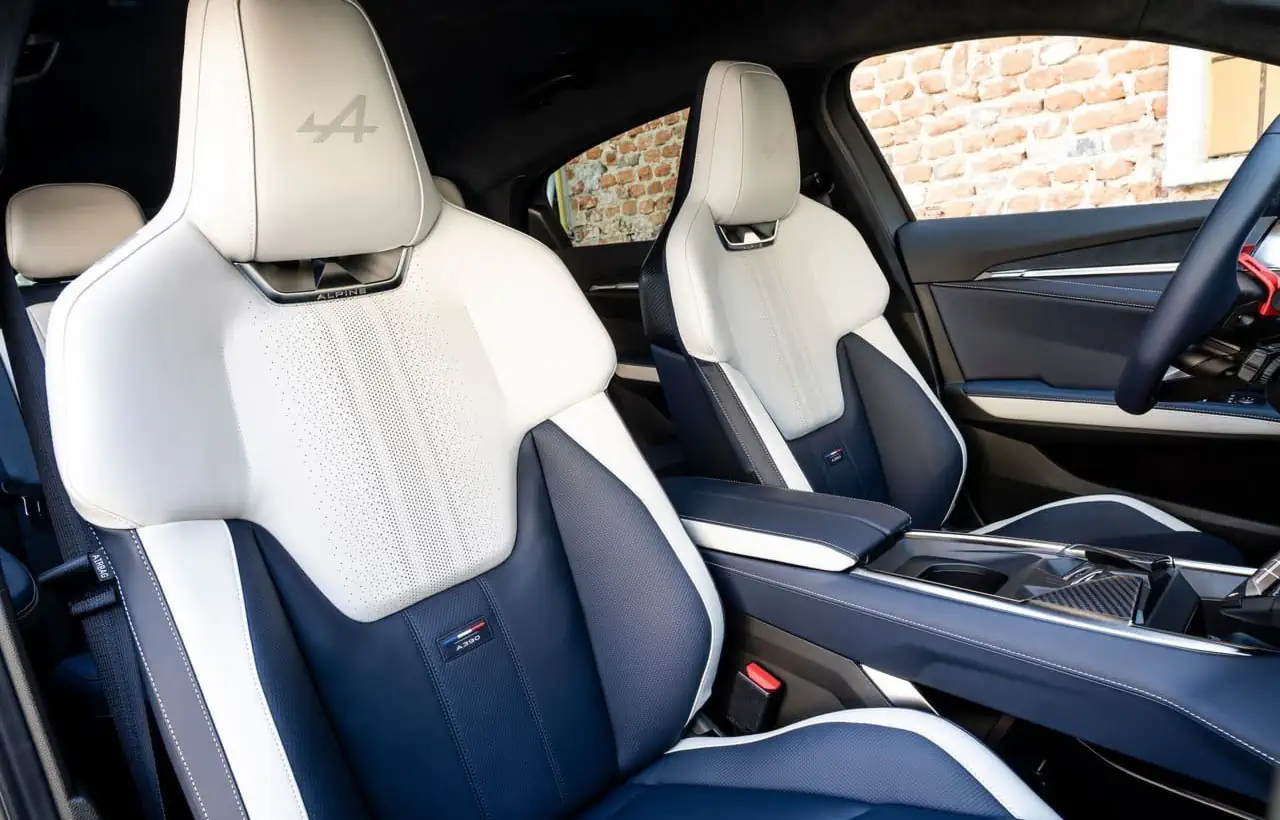
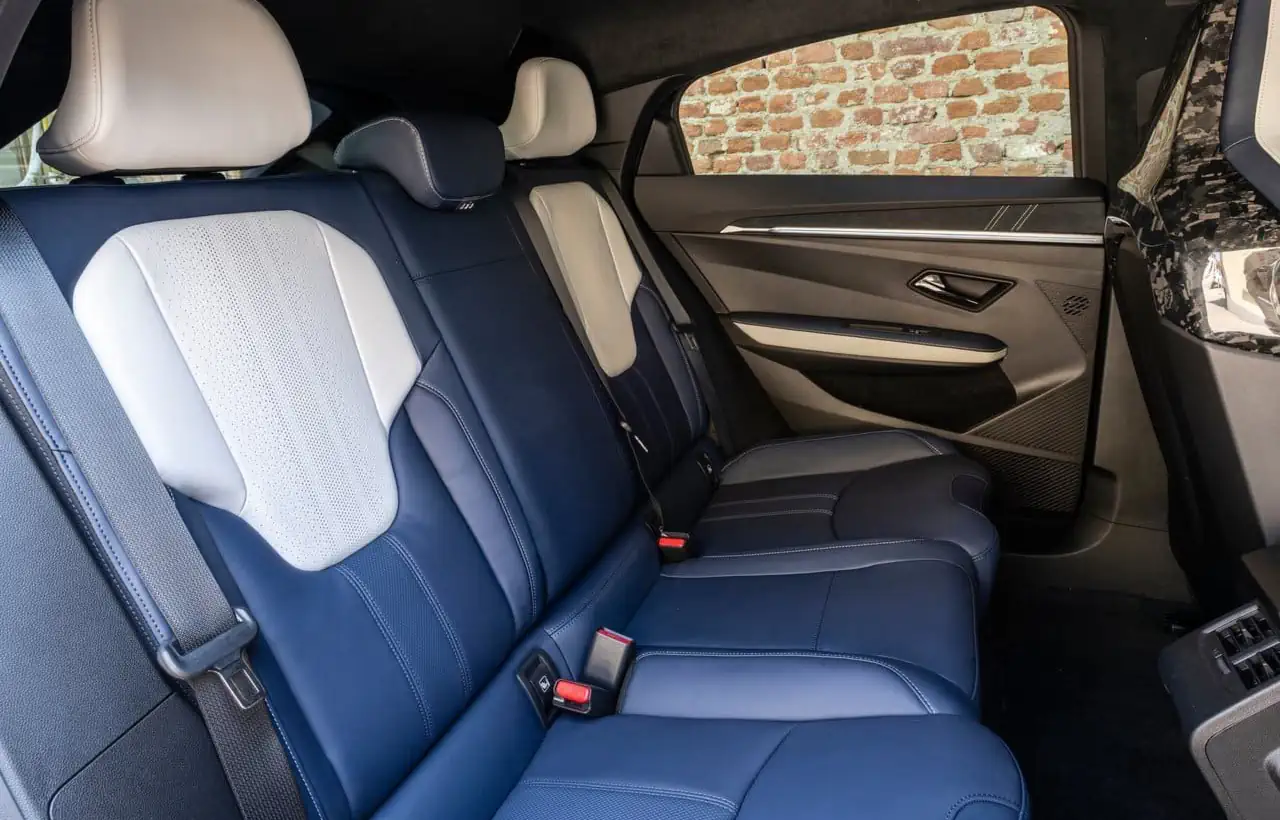
GTS materials include Alcantara, two-tone Nappa leather in blue and gray, and a microfiber headliner on higher configurations. The Sabelt sport seats offer electric adjustment, heating, massage function and lateral bolstering that holds the body through corners without feeling restrictive on longer drives. Perceived quality is high throughout — though several early press evaluations note that overall refinement hasn’t quite reached Porsche levels.
Screens, Sound and Space: Where This Car Actually Impresses
The infotainment runs on Android Automotive with native Google integration — meaning Google Maps, Google Assistant and Play Store access without needing a tethered phone. Wireless Apple CarPlay and Android Auto round out the ecosystem. The 13-speaker Devialet audio system (with an XtremeSound upgrade available on the GTS) is consistently cited as one of the best in class.
The digital instrument cluster offers four display modes with color themes that shift based on the selected driving mode — a detail that sounds minor but reinforces the cabin’s immersive character.
Cargo capacity stands at 18.8 cubic feet, which is generous for a performance fastback, expanding to roughly 58 cubic feet with the rear seats folded. The weak point: the steeply raked roofline cuts into rear headroom for taller passengers — a limitation flagged consistently across multiple press evaluations.
Three Motors, Torque Vectoring and Sub-4-Second Runs: How the A390 GTS Actually Drives
The powertrain setup here is unlike anything Alpine has offered before. Three electric motors work in concert — one wound-rotor synchronous unit at the front axle, two permanent magnet units operating independently at the rear — producing 463 hp and 608 lb-ft of torque available almost instantaneously.
In real-world terms, the 0–60 mph run of approximately 3.7–3.8 seconds isn’t just a brochure figure. Early press drives report consistent, hesitation-free acceleration with all three motors coordinating seamlessly even on wet surfaces. Top speed is electronically governed at 137 mph.
The Alpine Active Torque Vectoring system distributes power independently between the two rear wheels, which in practice reduces understeer mid-corner and delivers a level of agility that feels disproportionate to a vehicle tipping the scales at 4,676 lbs. Multiple reviewers note that the A390 GTS “disguises” its own weight in dynamic situations — a genuine engineering achievement for a car in this segment.
WLTP-rated range spans 312 to 345 miles depending on wheel configuration. Preliminary real-world estimates — with no substantial owner data yet available — suggest approximately 250–270 miles in mixed driving for the GTS, though those figures should be treated carefully until independent testing confirms them.
The “OV” (Overtake) button on the steering wheel delivers a 10-second power boost on demand — part motorsport tool, part brand storytelling, and fully functional in either role.
What It Costs in Europe — and What to Expect If It Reaches the US
In Germany, the A390 GTS carries a suggested price of approximately $85,000–$86,000 USD at current exchange rates — placing it above the Kia EV6 GT and meaningfully below the Porsche Macan Turbo Electric. That’s a deliberate positioning move, and it’s defensible given the content on offer.
For the US market, no official MSRP has been announced. Any pricing estimate needs to account for import duties, federal EV incentive eligibility (which depends on battery sourcing and assembly location under current regulations), dealer margins and Alpine’s as-yet-unestablished American retail network. Based on comparable European performance EVs that have made the US crossing, a Market Estimate for a US-spec A390 GTS — if it arrives — would likely land between $90,000 and $105,000, depending on configuration and applicable incentives.
Insurance premiums for a vehicle in this profile — high-value, European-sourced, with advanced electronics and specialty parts — would likely fall in the range of premium sport EV competitors. Comparable models typically carry annual premiums between $3,500 and $5,500 depending on the driver’s profile, location and coverage level. No actuarial data specific to the A390 exists yet.
Maintenance costs should theoretically run lower than an equivalent combustion vehicle — regenerative braking reduces brake wear, and there’s no oil, belts or exhaust system to service. However, high-voltage battery repairs, proprietary electronics and the absence of an established Alpine dealer network in the US introduce real uncertainty around out-of-warranty costs.
Financing terms are unavailable since Alpine has no confirmed US retail presence. Buyers would likely need to pursue third-party financing or import through specialty channels — neither of which offers the competitive rates a manufacturer-backed program would.
Buying at launch, if and when the A390 GTS reaches American showrooms, means paying the exclusivity premium at peak depreciation exposure. Waiting 18 to 24 months for the used market to develop could yield significant savings — especially if Alpine doesn’t establish a strong domestic dealer footprint in that window.
The buyer profile that makes the most sense here is an enthusiast with a diversified garage: someone who doesn’t rely on this as a daily driver, has access to Level 2 or DC fast charging and values rarity over residual value.
What to Know Before Considering the Alpine A390 GTS
What is the real-world range of the Alpine A390 GTS?
WLTP certification estimates 312–345 miles. Preliminary mixed-use projections for the GTS suggest around 250–270 miles in real conditions, but independent large-scale testing hasn’t been completed yet.
Who are the main competitors of the A390 GTS?
The Porsche Macan Electric and Tesla Model Y Performance are the closest direct rivals. The Kia EV6 GT also competes on performance metrics but carries less brand cachet.
Will the Alpine A390 GTS be sold in the United States?
No official confirmation from Alpine. There’s no announced dealer network, homologation process or launch timeline for the US market as of this writing.
Is the A390 GTS expensive to maintain?
No official data is published. As a high-value European EV without an established US service network, specialty parts and certified technician labor are likely to carry a premium — particularly outside of warranty.
Does the Alpine A390 GTS Justify Its Price Tag?
The A390 GTS is an emotional purchase backed by real engineering substance. Buyers focused purely on rational cost-per-mile have better-optimized options in the segment.
But for the driver who wants something genuinely distinctive — with actual motorsport lineage, dynamics that hold up under scrutiny and technology that doesn’t embarrass itself next to German rivals — this fastback delivers on its core promises based on every early assessment available.
It is not the right car for anyone who needs a single daily driver, lives without reliable fast-charging infrastructure, or puts passengers above 6 feet in the back seat regularly.
The A390 GTS is built for the driver who still cares about the act of driving — not just the destination.
So — does the Alpine A390 GTS’s tri-motor setup and European exclusivity justify its price against the Porsche Macan Electric, or does Porsche still own this segment? Drop your honest take in the comments below.
Share this article
Por: Danniel Bittencourt
17/06/2026
Related posts