New Renault 4 E-Tech 2026: Specs, Range and Competitors Compared
A compact electric SUV with a retractable canvas roof, multi-link rear suspension and vehicle-to-grid capability — all under $42K. The Renault 4 Plein Sud is either the most interesting EV of 2026 or a very expensive experiment.
Renault 4 E-Tech Plein Sud: The Compact Electric SUV With a Canvas Roof That Defies Its Price Tag
A retractable canvas roof, multi-link rear suspension, and the ability to push stored electricity back to your home grid — packaged into a compact electric SUV priced under $42,000. That combination would seem unlikely from any manufacturer, and yet the Renault 4 E-Tech Plein Sud makes it real.
This isn’t a refresh or a special edition. It’s a full ground-up generation built on the AmpR Small platform, reviving the name and utilitarian spirit of the original 4L — a car produced from 1961 to 1994 that moved over 8 million units worldwide on the strength of pure practicality.
In Europe, it squares off against the Skoda Epiq, Jeep Avenger Electric and Volvo EX30. For the US market, no official launch date or pricing has been confirmed.
Quick Specs
| Spec | Details |
|---|---|
| Segment | Compact Electric SUV (B-SUV) |
| Powertrain | Front-mounted EESM Synchronous Electric Motor (rare-earth free) |
| Horsepower | 148 hp (110 kW) |
| Torque | 181 lb-ft |
| Transmission | Single-speed automatic (FWD) |
| Drive | Front-Wheel Drive |
| 0–60 mph | 8.2 seconds |
| Top Speed | 93 mph (electronically limited) |
| Efficiency | ~3.9–4.0 mi/kWh (~132 MPGe) |
| Range (WLTP) | 241–247 miles (Plein Sud canvas variant) |
| Battery | 52 kWh NMC, liquid-cooled |
| DC Fast Charging | Up to 100 kW (15–80% in ~30–35 min) |
| European MSRP | From €37,290 (Techno Plein Sud) |
| US Pricing | Not officially confirmed |
| Cargo | 14.8 cu ft standard / 49.6 cu ft seats folded |
| Curb Weight | 3,223–3,389 lbs |
The spec sheet tells part of the story. The more interesting part is where Renault spent engineering budget that most rivals at this price point simply don’t — and where the compromises landed. Read on.
A Retro-Shaped SUV That Doesn’t Apologize for Standing Out
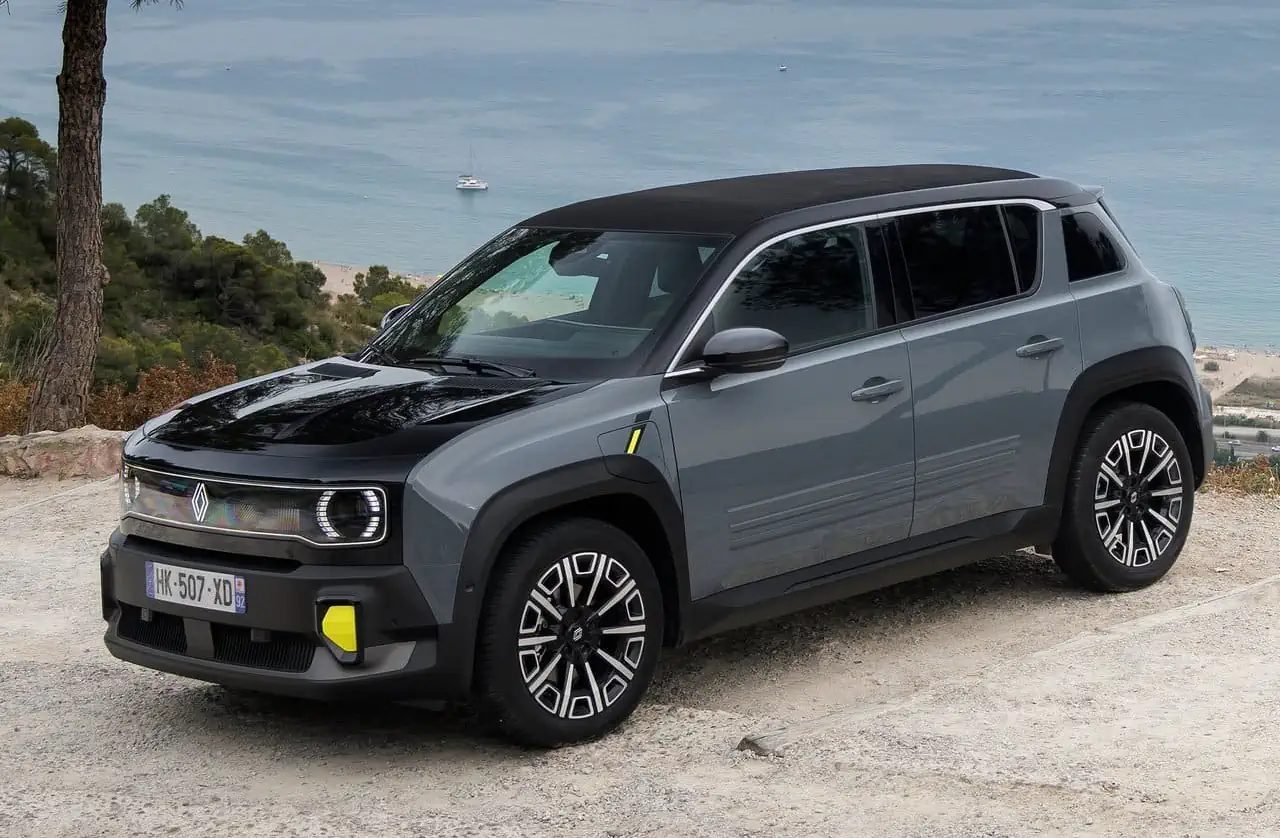
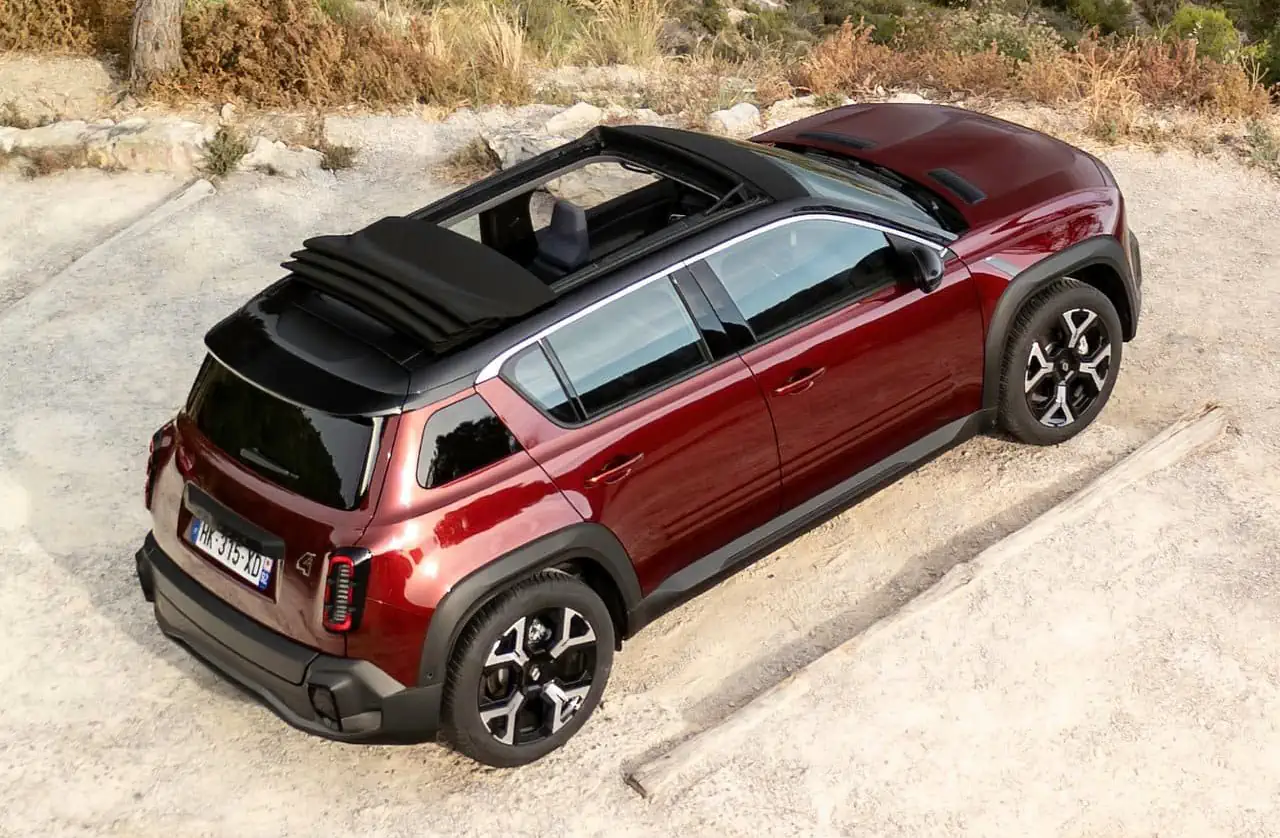
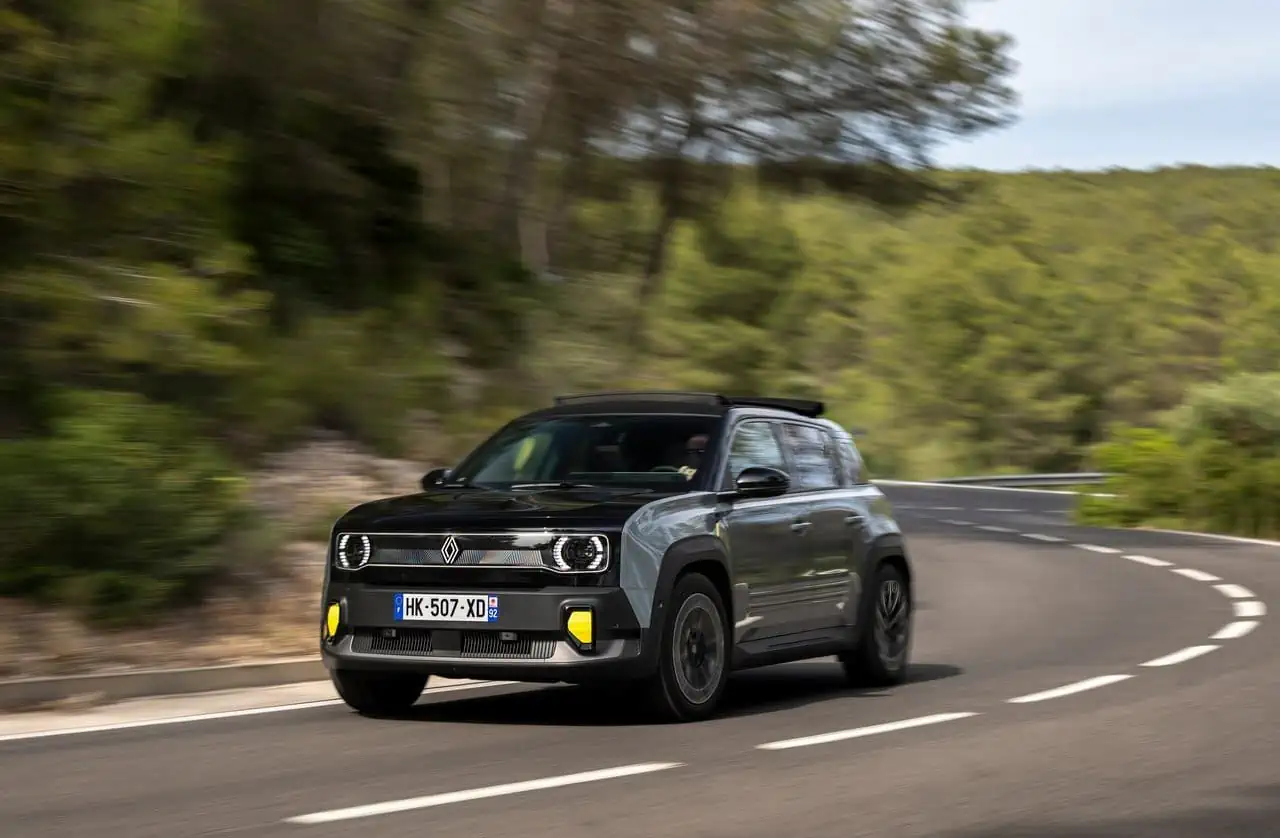
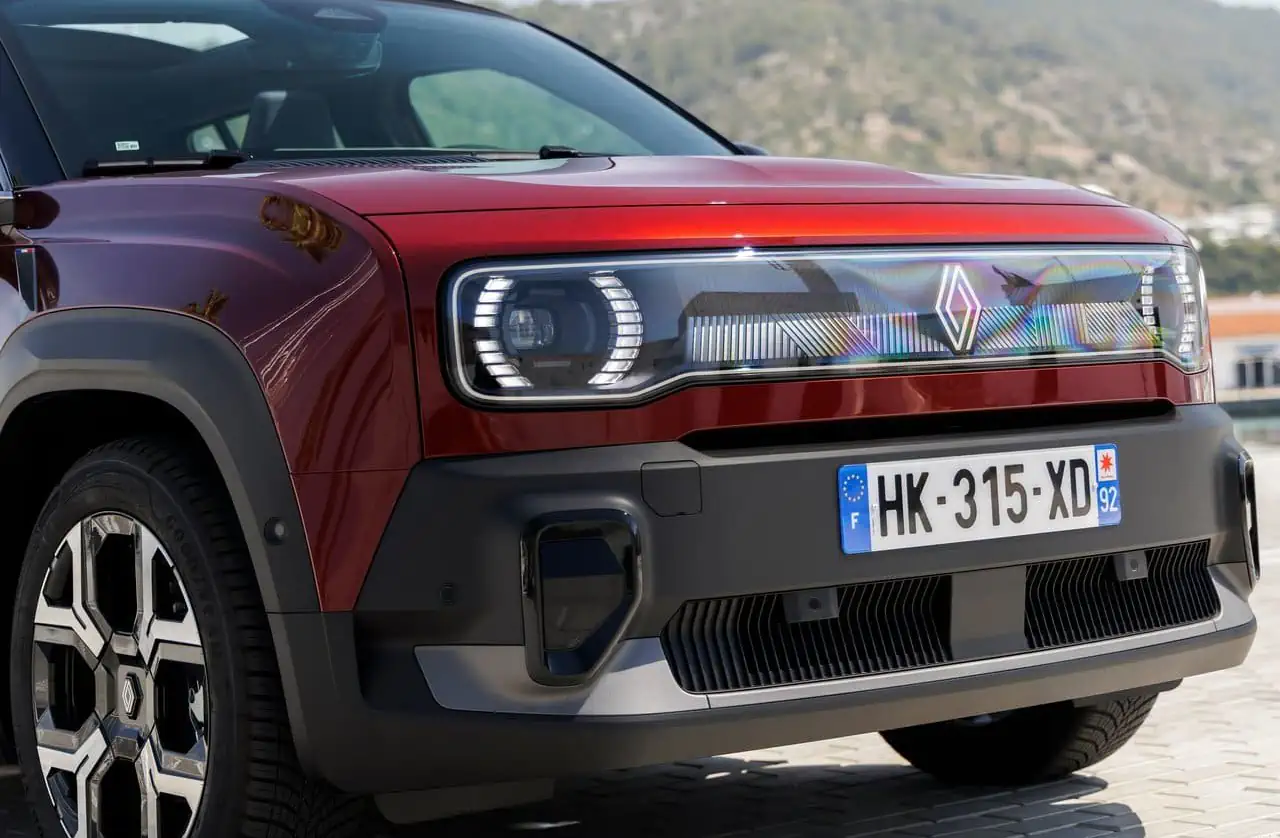
Up front, a continuous 57-inch LED bar stretches across the entire face, framing round full-LED headlights and a backlit diamond logo. At night, the Renault 4’s identity is immediate and unmistakable — nothing else in the compact EV segment looks remotely like it.
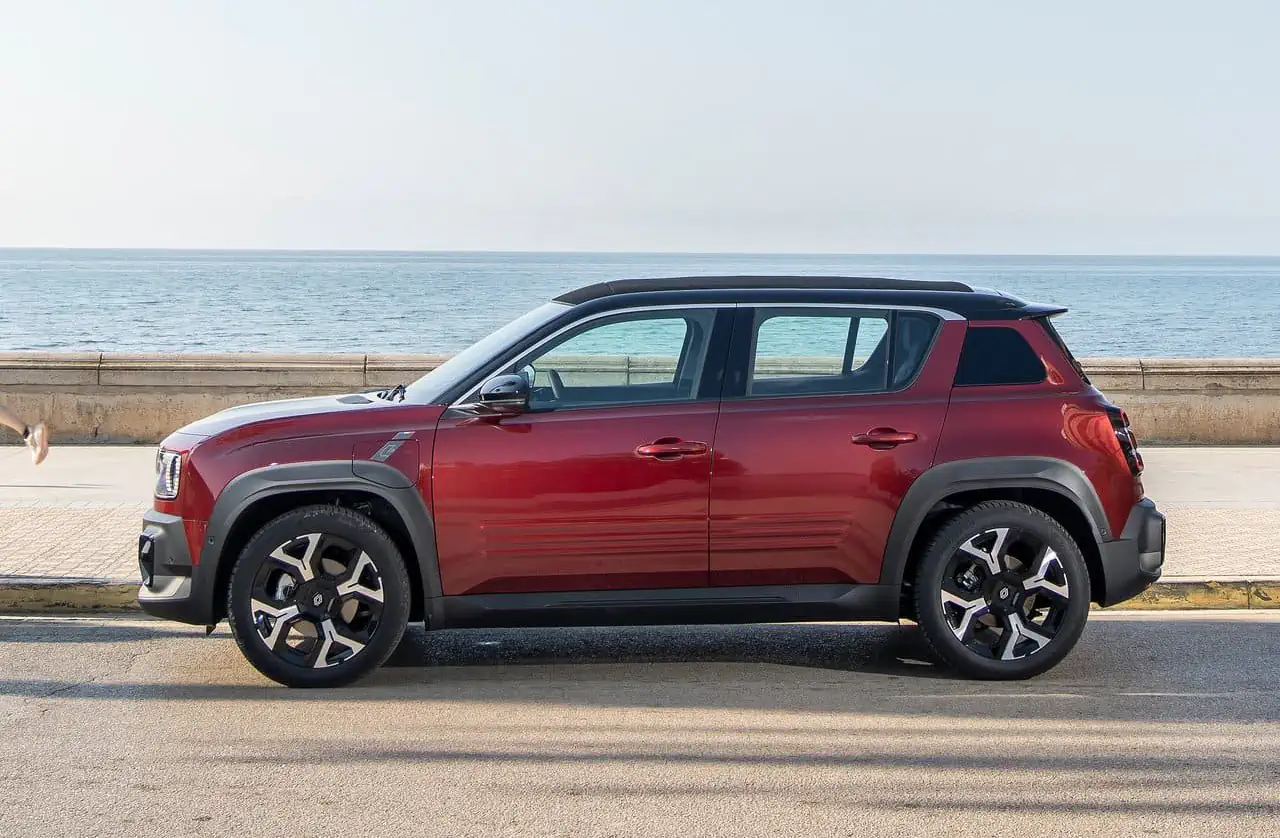
The profile tells you this isn’t trying to be aerodynamically clever. Where most EVs adopt teardrop silhouettes to squeeze out extra range, the Renault 4 leans into boxy proportions on purpose — a direct nod to the original 4L that comes with real packaging dividends inside, and a modest efficiency penalty outside.
At 163.1 inches long and 61.9 inches tall, the SUV occupies roughly the same footprint as a Chevrolet Trax, but carries itself differently. The 7.1-inch ground clearance — 0.47 inches more than the European Renault Captur — gives it a stance that reads as genuinely capable rather than purely cosmetic.
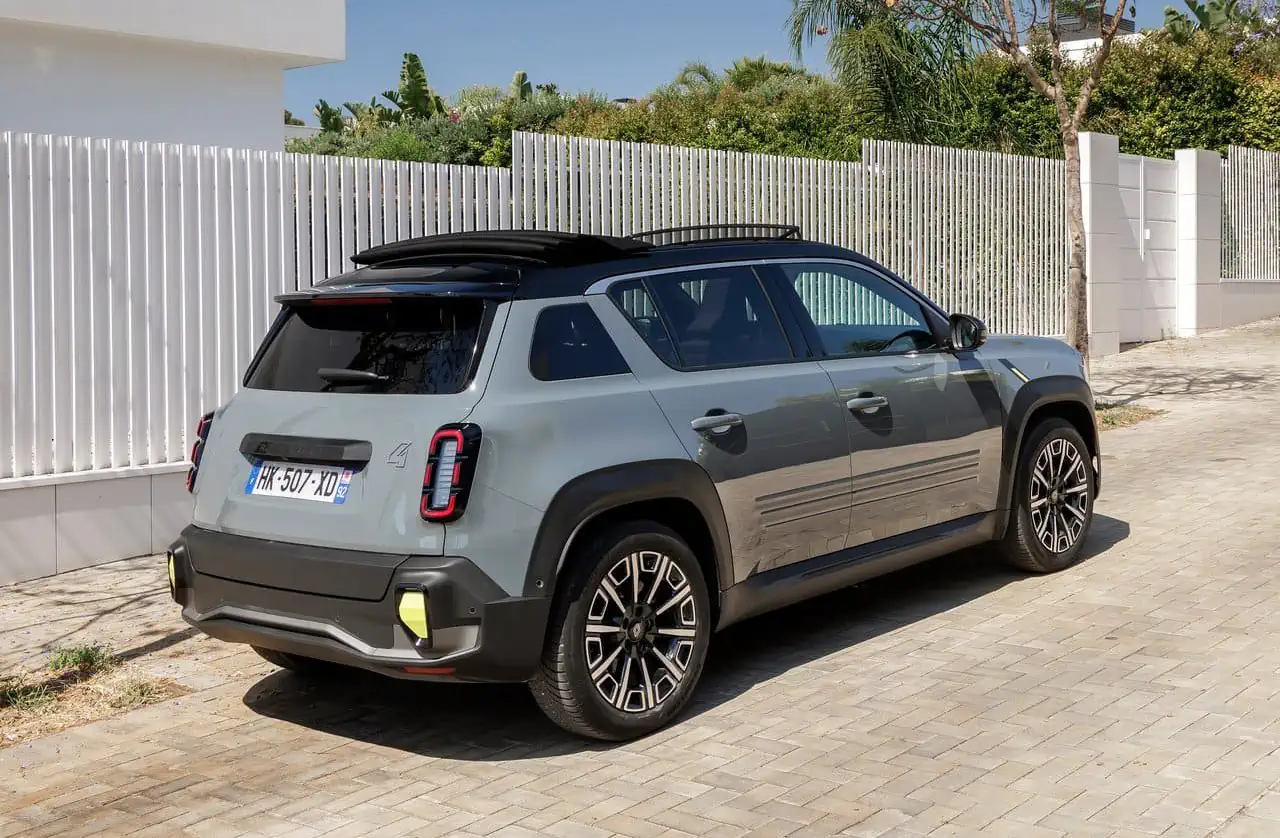
Out back, vertically stacked pill-shaped taillights quote the original 4L’s design language while the liftgate drops all the way down to bumper level, creating a low load floor that’s genuinely useful when loading heavy cargo. It’s a small detail, but one that daily drivers notice.
The Plein Sud variant layers the retractable canvas roof on top of all this, eliminating the traditional roof rails and relocating the shark-fin antenna to the rear glass. The roofline becomes cleaner and uninterrupted — one of the more distinctive silhouettes in the B-SUV class right now.
A Cabin Built Around the People Inside It, Not Around a Marketing Deck
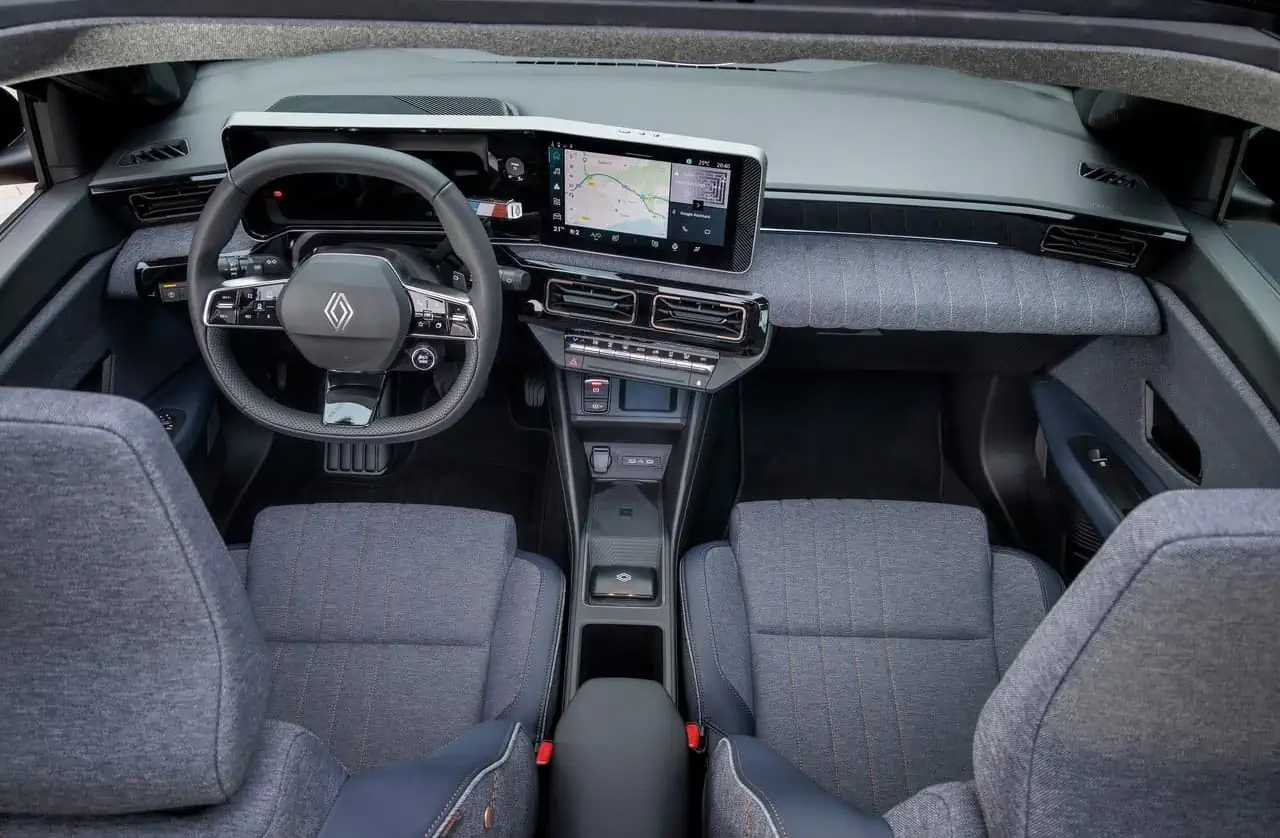
Step inside and the Renault 4 E-Tech Plein Sud makes its priorities clear immediately. The dashboard reads horizontally — wide and open — rather than wrapping around the driver the way the Renault 5’s cockpit does. This is a car designed with passengers in mind as much as the person behind the wheel.
Door panels and dashboard trim use 100% recycled polyester fabric engineered to mimic denim texture — a deliberate callback to the original 4L’s reputation as the automotive equivalent of a pair of jeans. It won’t compete with the premium soft-touch surfaces in a Volvo EX30, but that’s not the point. The material choice is intentional, durable, and identifiable.
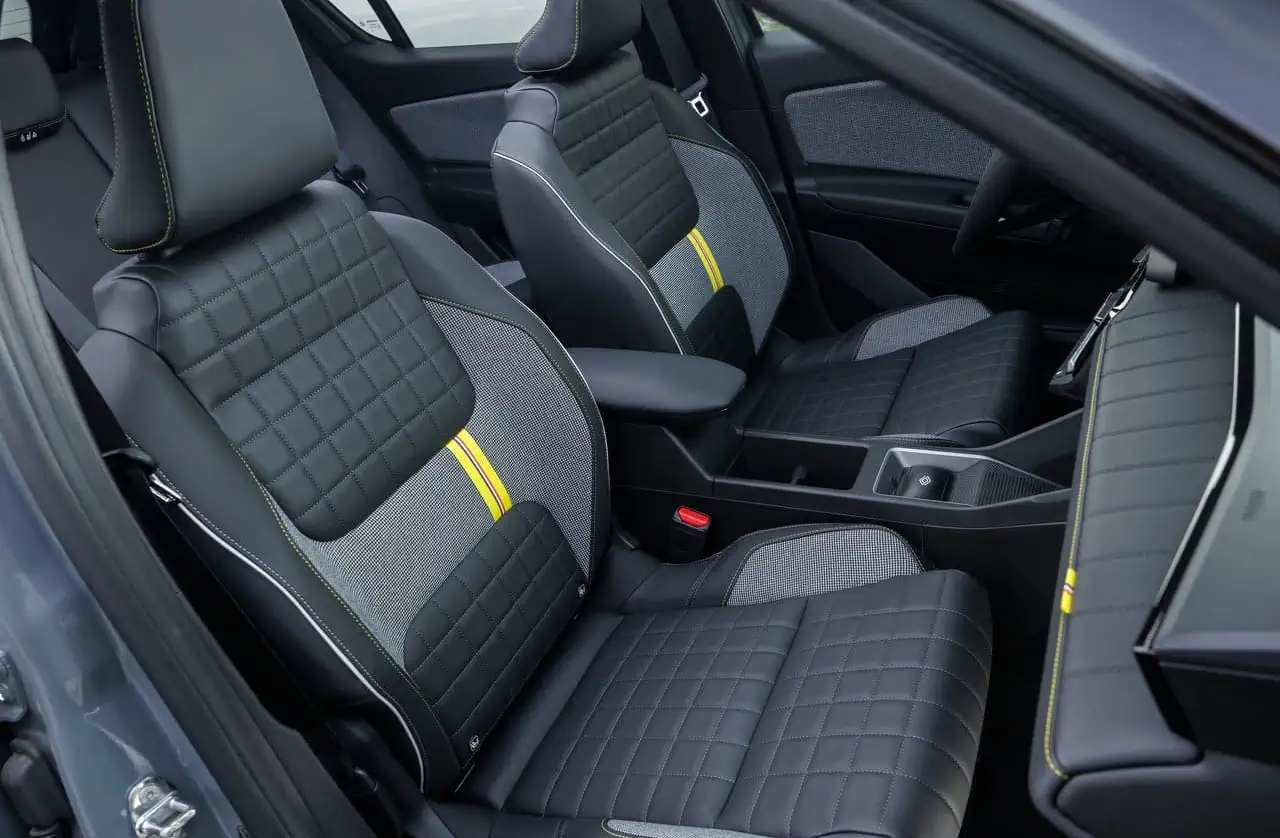
Front headroom reaches 35.6 inches — actually 0.8 inches more than the hardtop version, because removing the metal acoustic liner frees up space that the canvas roof doesn’t reclaim. For taller drivers and passengers, that’s a noticeable difference on longer trips.
The Infotainment Setup That Actually Eliminates Phone Mount Clutter
The 10.1-inch central touchscreen runs OpenR Link, built in deep collaboration with Alphabet. Google Maps, Google Assistant and Google Play are native — not mirrored, not dependent on your phone’s connection. The system talks directly to the car’s battery management system to factor in real-time charging stops along your route.
The “Reno” AI voice assistant handles natural language commands without requiring memorized syntax. Asking it to partially close the roof, adjust regeneration strength, or find the nearest fast charger works the way you’d expect modern voice control to work — which, frankly, is still not the standard in this segment.
Rear passengers get 32.0 inches of headroom, enough for most adults without discomfort. The 14.8 cu ft trunk expands to 49.6 cu ft with the rear seats folded, and a hidden underfloor compartment of roughly 1.2–1.9 cu ft keeps charging cables out of the main cargo area.
Clear strength: cargo versatility is in a different class from the Volvo EX30’s 11.2 cu ft trunk — it’s not a close comparison. Real limitation: rearward visibility is genuinely compromised by thick C-pillars and a narrow rear window. Parallel parking without the camera system active requires real patience.


181 lb-ft From Zero: What the Electric Powertrain Feels Like in Traffic
Renault’s motor choice here is worth understanding before discussing the numbers. The EESM — Electrically Excited Synchronous Motor — uses copper windings instead of permanent magnets, which means zero rare-earth minerals like neodymium or dysprosium in the build. That’s an ethical and supply-chain decision that most competitors, including those using standard PMSM motors, haven’t made at this price point.
On the road, 148 hp and 181 lb-ft available from a dead stop means the kind of response that turbocharged engines at this displacement simply can’t replicate. There’s no lag, no waiting for boost to build. City driving feels alert and confidence-inspiring, and highway merges don’t require planning. The 8.2-second 0–60 mph time is solid for the class — not quick by sports car standards, but more than adequate for a family-oriented compact SUV.
The 80–120 km/h passing sprint (roughly 50–75 mph) clears in under 7 seconds, which matters more in real-world highway use than the 0–60 figure does.
Top speed is capped electronically at 93 mph. For European motorways that’s workable; for American interstate driving it sits right at the legal limit in most states, with no headroom to spare. Rivals like the Volvo EX30 push past 100 mph — worth noting if highway driving is a regular part of your routine.
Efficiency lands at approximately 3.9–4.0 miles per kWh, translating to roughly 132 MPGe. In mixed real-world testing, the press fleet recorded between 290 and 340 miles of actual range on a full charge — a realistic expectation for daily driving and regional road trips.
Pricing, Insurance and Ownership Costs: The Honest Financial Picture
In Europe, the Plein Sud configuration starts at €37,290 for the Techno trim and reaches €39,290 in Iconic specification — before any government incentives. The roughly $1,950 premium over the hardtop version reflects the engineering complexity of the Webasto/Haartz canvas roof system, not just a style surcharge.
For the US market, no official MSRP has been announced. Based on the European pricing structure, currency adjustments, import duties and typical US market positioning for European EVs, an estimated market price in the $40,000–$44,000 range would be consistent with how similar vehicles from Renault’s broader ecosystem have historically landed stateside. This is an estimate — not a confirmed figure from the manufacturer.
Insurance for a European-built electric vehicle in the US typically carries higher premiums than comparable domestic or Asian-market EVs, driven by parts availability and specialized repair network coverage. Based on comparable vehicles in the segment, estimated annual insurance premiums would likely fall between $1,800 and $2,600 depending on coverage level, driving record and zip code.
Maintenance costs are where the EV case gets genuinely compelling. No oil changes, no timing belt, no clutch. Brake pad wear is dramatically reduced by regenerative braking — real-world data from similar platforms suggests pads lasting well beyond 60,000 miles in urban use. Scheduled service concentrates on brake fluid replacement every two years, cabin air filter, wiper blades and battery coolant inspection. European service plans run as low as £9.99 per month covering three years — US equivalents would vary by dealer network.
Financing on a $42,000 vehicle at current rates, with 20% down over 60 months, produces monthly payments roughly in the $650–$720 range before any federal EV tax credit eligibility is factored in. Whether the Renault 4 qualifies for the $7,500 federal credit under current domestic content requirements has not been confirmed.
Depreciation on EVs has been aggressive across the board in the past two years. However, the Plein Sud’s canvas roof and neo-retro positioning historically slow that curve — the Fiat 500e Cabriolet and MINI Electric Convertible show similar patterns. European analysts project first-year depreciation at 15–18%, which is better than the EV segment average.
The target buyer is a 30–55 year old urban professional or young family that has grown tired of identical-looking crossovers and sees V2L camping capability and integrated Google navigation as practical tools rather than spec-sheet talking points.
Common Questions Before You Sign Anything
What is the real-world range of the Renault 4 E-Tech Plein Sud?
The WLTP figure is 241–247 miles. Press fleet testing in mixed conditions recorded 180–210 miles — consistent with realistic daily use and weekend road trips within charging infrastructure range.
Is the maintenance cheaper than a gas-powered SUV?
Significantly. No oil, no timing belt, no clutch servicing. Brake pads typically last past 60,000 miles with regenerative braking. Primary scheduled costs are brake fluid, cabin filter and wiper blades.
Who are the main competitors in the US market?
The Volvo EX30, Chevrolet Equinox EV and Hyundai Kona Electric represent the closest comparisons in terms of size, price and intended use. The Renault 4 differentiates on cargo space, rear suspension quality and the Plein Sud canvas roof — none of which those rivals offer simultaneously.
Does the Renault 4 come with all-wheel drive?
Not in current production spec. AWD is listed as not officially confirmed, with only concept prototypes shown publicly. All production models use front-wheel drive, supplemented by the optional Extended Grip electronic traction assist system.
Does the Renault 4 Plein Sud Earn Its Price?
Buying the Renault 4 E-Tech Plein Sud involves both a rational and an emotional calculation — and genuinely balancing those two things in a sub-$45K compact SUV is rarer than it should be. The multi-link rear suspension, V2G hardware, native Google integration and 49.6 cu ft of cargo space solve real problems. The canvas roof and neo-retro design solve a different one: the visual monotony that dominates the compact crossover segment right now.
It’s not the right car for buyers who prioritize unrestricted rear visibility, sustained silence above 70 mph, or all-wheel drive for regular off-pavement use.
For everyone else, the Renault 4 Plein Sud is likely the most characterful compact electric SUV available at this price — full stop.
What do you think — does the canvas roof justify the premium, or is Renault charging extra for nostalgia that could become a maintenance headache down the road? Drop your honest take in the comments below.
Share this article

Por: Danniel Bittencourt
10/06/2026
Related posts