Audi Nuvolari: The 987 HP Hybrid That Changes Audi’s Entire Identity
499 units. 987 HP. A V8 spinning to 10,000 rpm. The 2027 Audi Nuvolari is the most extreme car the brand has ever built — and the price tag will stop you cold.
Audi Nuvolari 2027: The F1-Derived Hypercar That Nobody Saw Coming
During the 2026 Monaco Formula 1 Grand Prix, Audi sent shockwaves through the automotive world. The brand revived one of its most storied names and attached it to the most radical production vehicle in its corporate history.
The Audi Nuvolari is not a new generation or a refresh. It is an all-new hypercar — mid-engine, plug-in hybrid, and producing a combined 987 HP. A direct rival to the Ferrari SF90 Stradale and the McLaren Artura, it operates in territory the four-ring brand has never entered before.
Global production is capped at 499 units. Deliveries begin in the first half of 2027.
Quick Specs: Audi Nuvolari
| Specification | Details |
|---|---|
| Category | Hypercar / Supercar |
| Powertrain | 4.0L Twin-Turbo V8 + 3 Axial-Flux Electric Motors (PHEV) |
| Output | 987 HP (736 kW) combined |
| Torque | 538 lb-ft (V8) + up to 1,585 lb-ft at the front axle |
| Transmission | 8-Speed Dual-Clutch (DCT) |
| Drive System | AWD — quattro predictive ride |
| 0–60 mph | Est. 2.5 seconds |
| Top Speed | 217+ mph |
| Fuel Economy | ~20.8 MPG combined (WLTP estimate) |
| Battery Range | 7.3 kWh — performance-focused, not urban range |
| Launch Date | Reveal 2026 / Deliveries 2027 |
Those numbers would stop any rival in its tracks. But what makes the Nuvolari genuinely extraordinary is not just the output — it is the engineering behind how every single horsepower reaches the road. That is exactly what we are breaking down next.

A Shape Born in a Wind Tunnel, Finished on a Race Track
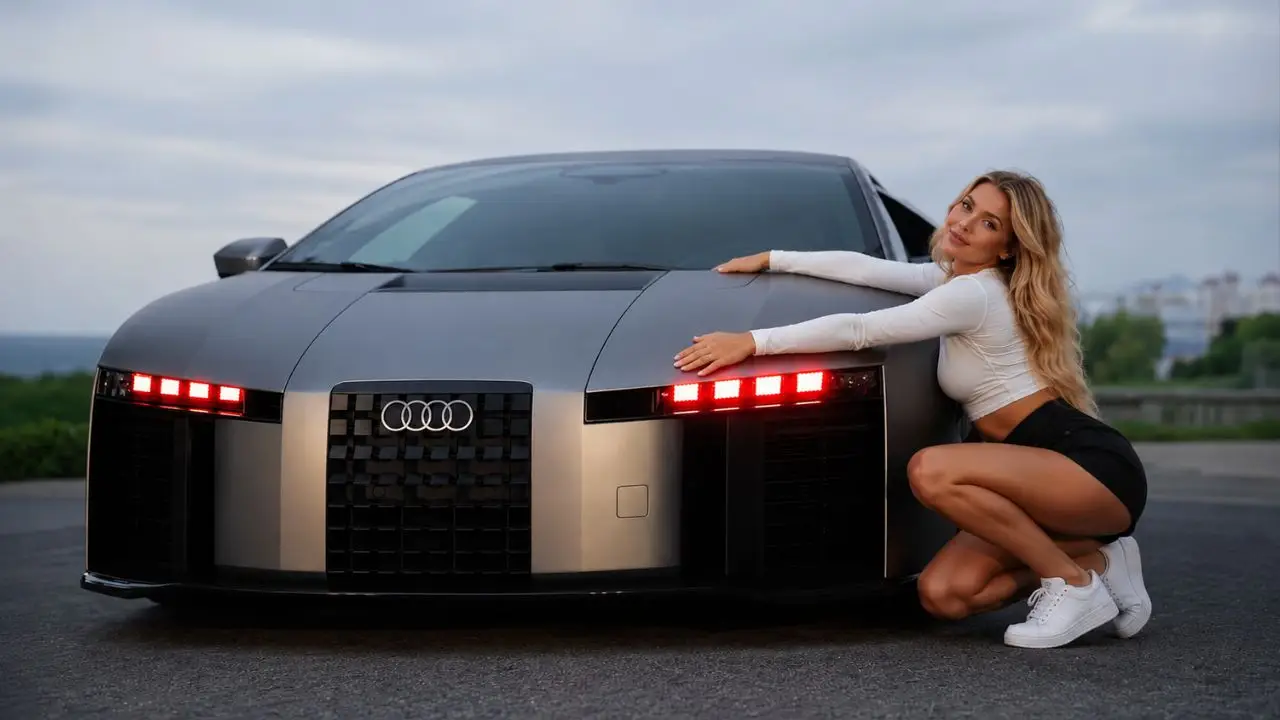
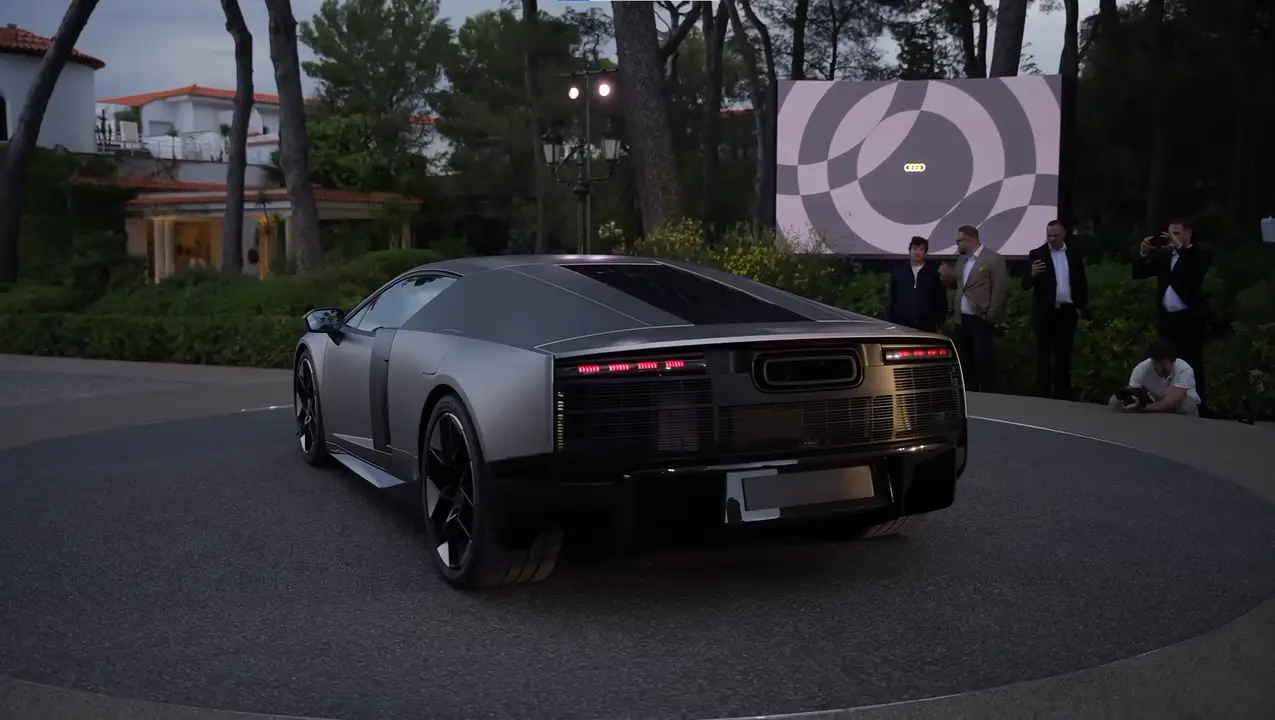
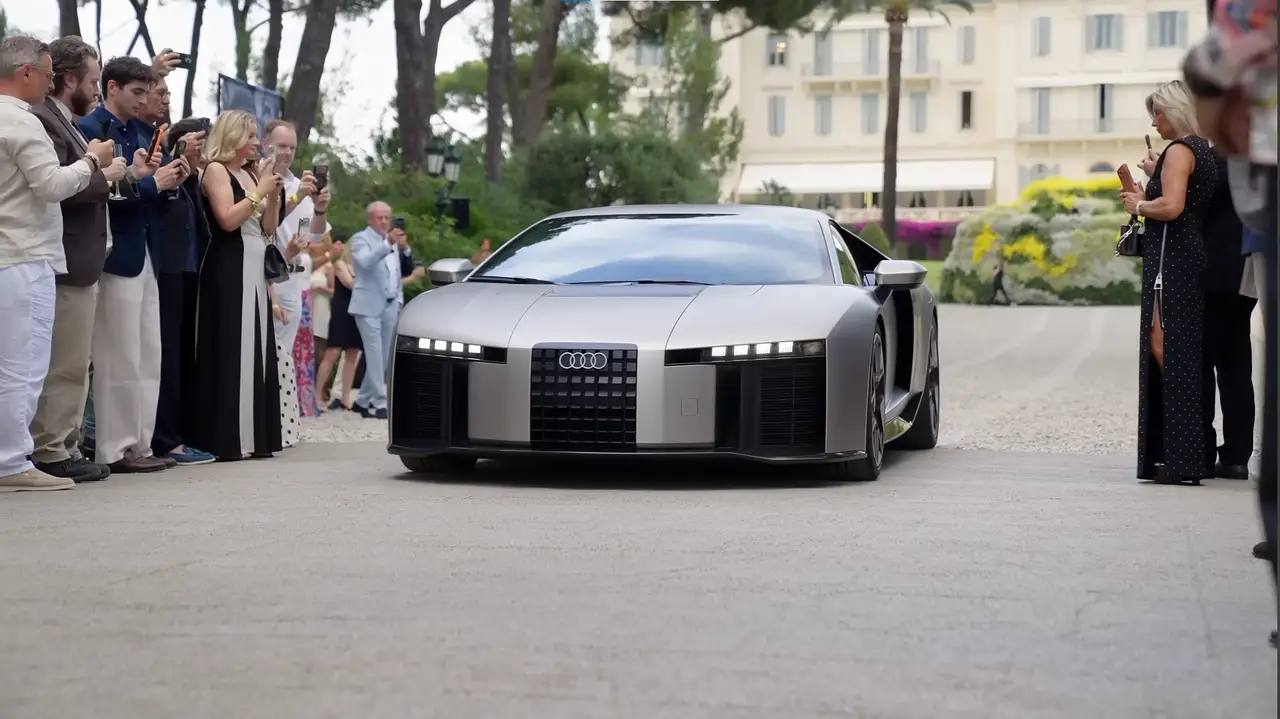
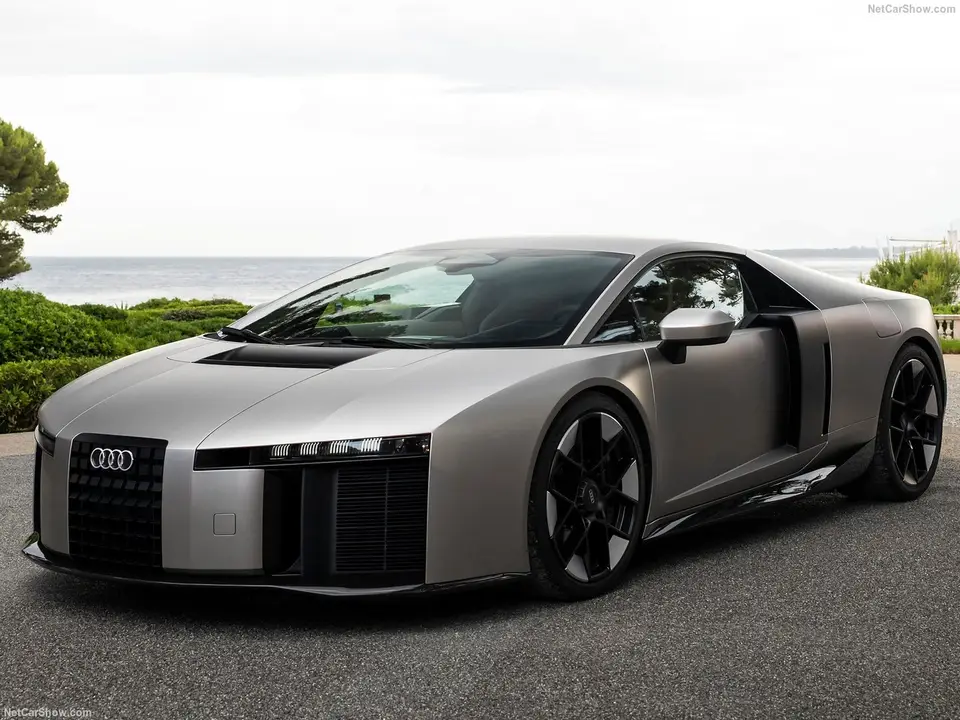
Pull up next to an Audi Nuvolari and the first instinct is to stop and stare. The body sits just 47.3 inches tall, and every surface reads like a CFD rendering brought to physical form.
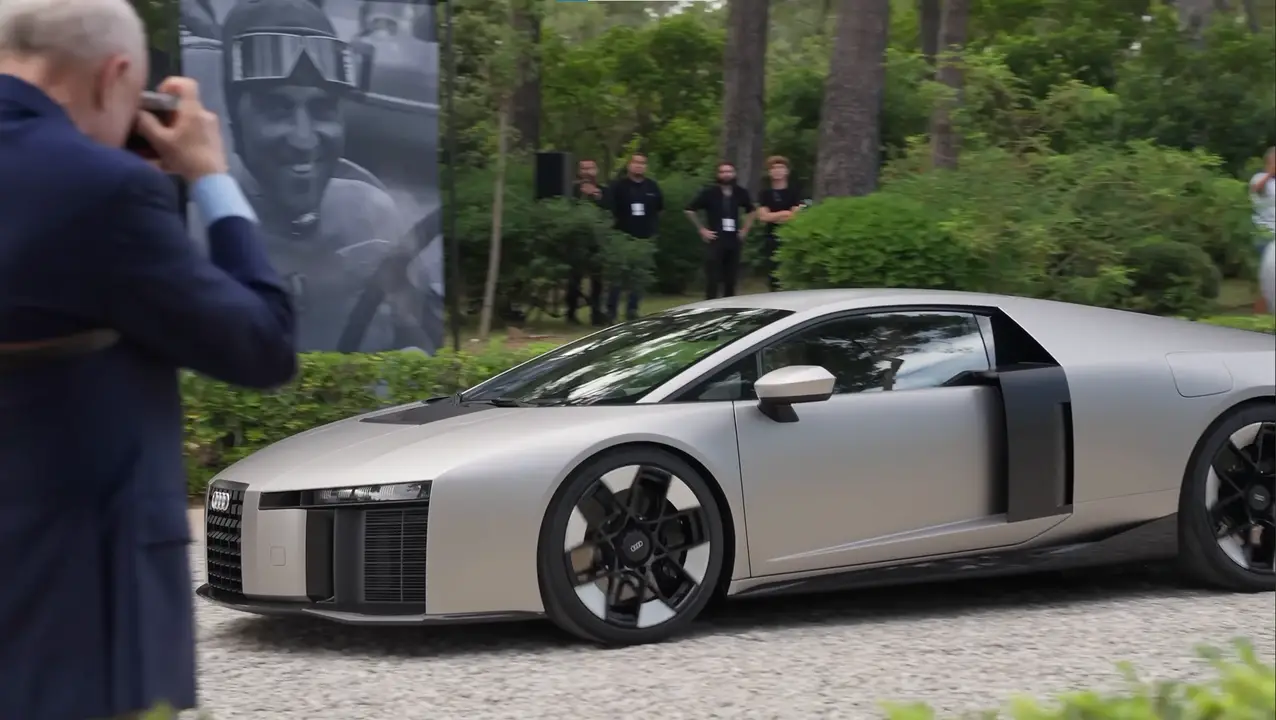
The front end is anchored by an S-duct — the same concept used in Formula 1 — that swallows turbulent air at the nose and expels it cleanly over the hood. Flanking that inlet, the Vertical Frame array uses 64 individually angled micro-fins to manage airflow with surgical precision. The launch color, Titanium, matches the livery of the Audi F1 factory car. The racing connection is more than cosmetic.
Along the flanks, 21-inch forged wheels with single center-lock fasteners — a feature borrowed from open-wheel motorsport — signal the car’s intent without subtlety. At the rear, a massive sculpted diffuser and an intelligent active wing system dominate the visual. That wing transitions between low and high downforce positions in milliseconds, generating up to 881 lbs of vertical load under hard braking.
This design does not follow the existing Audi design language. It inaugurates a completely new visual philosophy, internally developed under the Concept C study.
A Racing Cockpit That Still Knows How to Be a Car
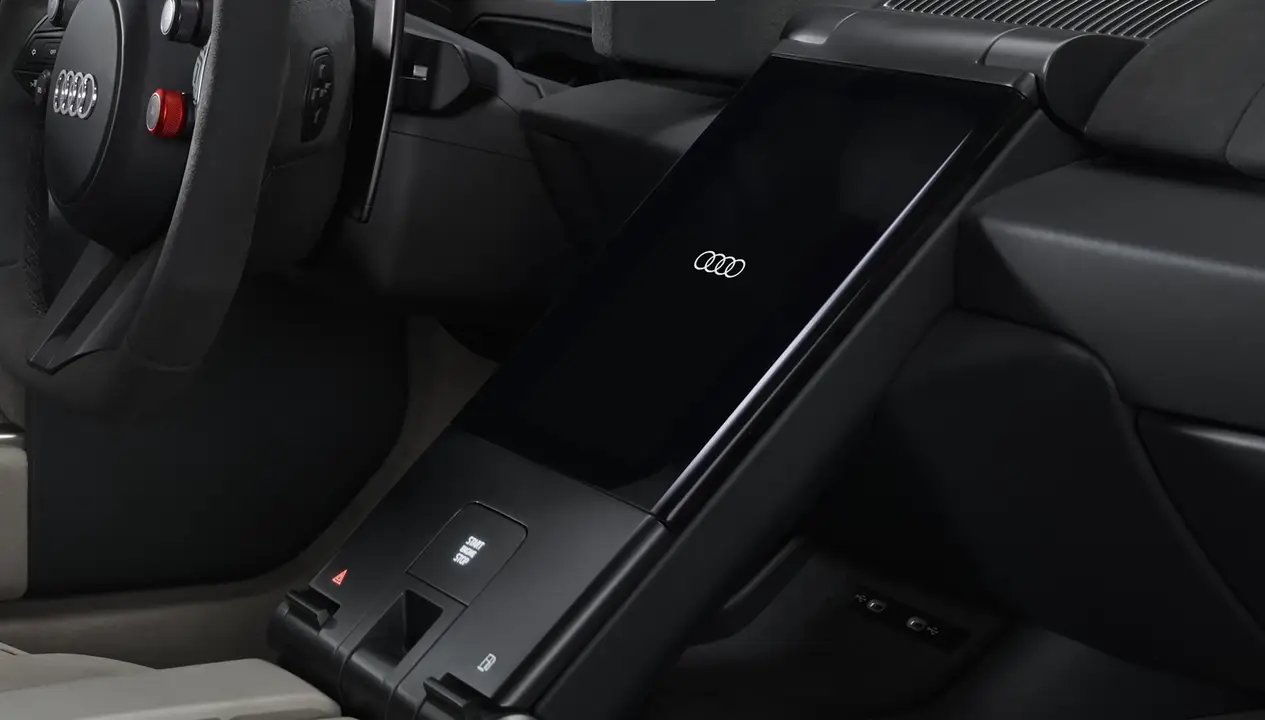
Step inside the Nuvolari and any expectation of cold digital minimalism disappears. Audi made a deliberate decision: physical controls work alongside OLED displays that project critical data precisely into the driver’s peripheral and central field of vision.
The instrument architecture blends visual references from the historic Auto Union Type C race cars with a thoroughly modern UI/UX layout. There are no floating screens grafted from a consumer tablet. Every element was positioned to maximize information absorption without pulling the driver’s eyes from the road.
The ADAS suite here does not exist for traffic jam assistance or passive highway automation. It integrates directly with the chassis dynamics, working invisibly at the handling limits to preserve stability — without removing the sensation of actually driving.
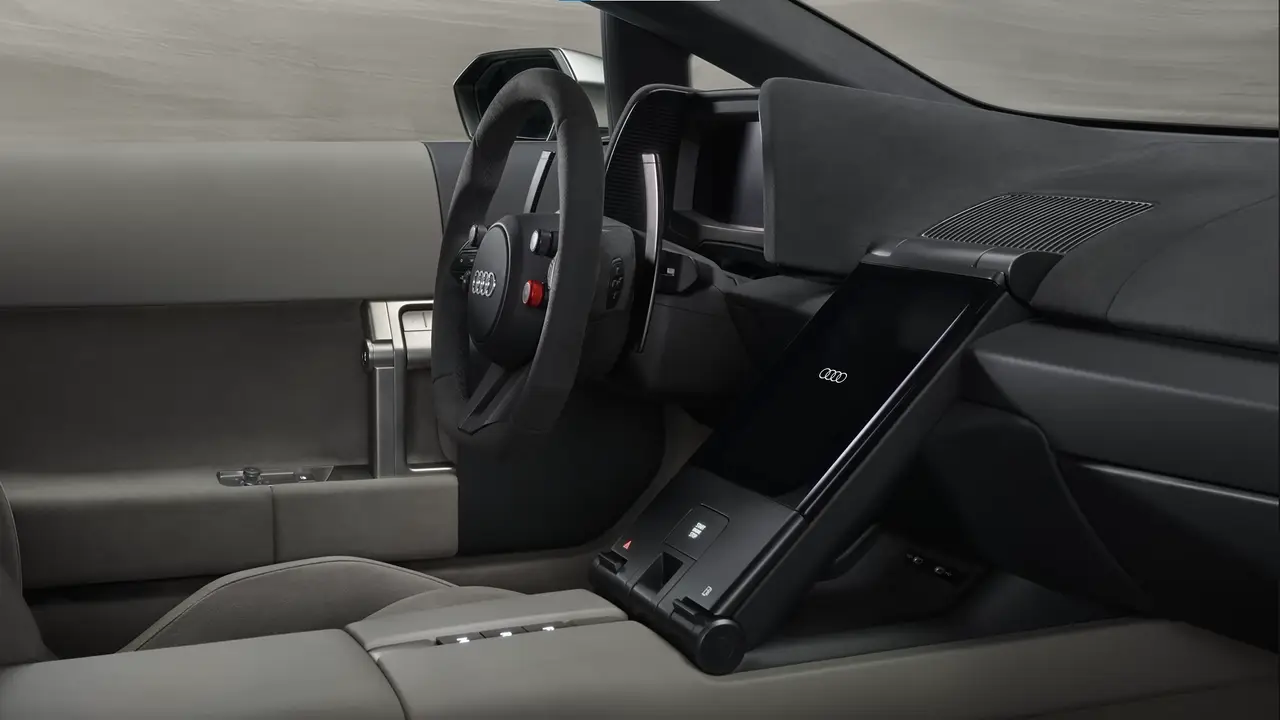
Screens, Connectivity and the One Thing That Will Frustrate You
The cabin’s undeniable strength is the seamless fusion between digital systems and active mechanical behavior. The quattro predictive ride reads hundreds of telemetry frames per second, acting before any loss of grip has a chance to develop.
The real limitation is the trunk. The front storage compartment holds just 4 cubic feet — a number that becomes painful when you recall that the original 2003 Nuvolari concept offered 12.4 cubic feet of genuine grand touring luggage space. The thermal management infrastructure required for the twin front axial-flux motors consumed that volume entirely. A standard golf bag will not fit.

A V8 Spinning to 10,000 RPM: What Those Numbers Actually Feel Like
The heart of the car is a 4.0-liter twin-turbocharged V8 mounted in a mid-rear position. On its own, it produces 789 HP and 538 lb-ft of torque. The redline sits at an extraordinary 10,000 RPM — achieved through a flat-plane crankshaft design with ultra-low rotational inertia, technology drawn directly from racing powerplants.
Three axial-flux electric motors complete the system. Two are mounted at the front axle, delivering up to 1,585 lb-ft of combined torque to the front wheels with independent torque vectoring on each side. The third sits between the V8’s flywheel and the 8-speed DCT, acting as an instant torque-fill unit that eliminates turbo lag entirely and smooths every upshift.
Combined output reaches 987 HP. The 0–60 mph sprint is estimated at 2.5 seconds. The 0–124 mph run arrives in 6.8 seconds from a standstill. Top speed exceeds 217 mph.
Audi’s WLTP estimate puts combined fuel economy at approximately 20.8 MPG with a full battery charge. Push the car on a track and that number collapses fast. The 7.3 kWh battery was engineered for rapid charge-discharge performance cycles, not city range.
MSRP, Insurance and the Real Cost of Owning One of 499
The Audi Nuvolari carries a base MSRP of US$ 686,613 in the international market. With bespoke fabrics, exposed colored carbon packages, Audi exclusive embroidery programs and extended warranties, real transaction prices regularly exceed US$ 900,000.
For American buyers, the financial picture is more straightforward than in markets with heavy import duties — but the cost of ownership still demands serious preparation. Based on comparable hybrid hypercar programs, annual maintenance costs — covering full fluid changes across the three independent cooling circuits for the battery, electric motors and V8 — are estimated between US$ 15,000 and US$ 30,000 per year. This is a Market Estimate based on equivalent high-voltage hybrid platforms. A single full replacement of the 420mm ceramic carbon rotor set will represent a significant additional cost down the line.
Insurance premiums for a vehicle valued near seven figures place this squarely in the territory of specialist underwriters. Standard carriers do not have rated tables for this exposure level. Policies are typically managed through Lloyd’s of London syndicates and comparable multinational reinsurers, with strict garaging requirements and blanket exclusions for track use without purpose-specific weekend coverage.
Financing through conventional auto loan channels is effectively off the table for this buyer profile. The Nuvolari makes financial sense almost exclusively as a collectible asset within a diversified high-net-worth portfolio.
The depreciation outlook, however, is unusually favorable. Limited-run electrified hypercars with hard production caps have consistently appreciated at auction — the flipping market activates the moment allocations sell out. The Nuvolari should behave more like a stored asset than a depreciating vehicle.
This car was built for serious collectors with climate-controlled private garages — not for anyone seeking daily usability or entry-level supercar thrills.
Common Questions Before You Put Your Name on the List
What is the real-world fuel economy of the Audi Nuvolari?
Audi quotes approximately 20.8 MPG combined under WLTP conditions with a full charge. Under hard track use, that figure drops substantially — the 7.3 kWh battery pack was not dimensioned for urban efficiency.
Are maintenance costs high on the Audi Nuvolari?
Significantly. Annual service covering all cooling circuits and predictive suspension components is estimated between US$ 15,000 and US$ 30,000. The high-voltage hybrid architecture requires Level 4 HV-certified technicians and strict battery discharge protocols.
Who are the direct competitors of the Audi Nuvolari?
The Ferrari SF90 Stradale and McLaren Artura are its closest rivals. Within the Volkswagen Group, the Lamborghini Temerario shares a substantial portion of the platform architecture and propulsion philosophy.
Is buying the Audi Nuvolari a smart investment?
With 499 units globally, the precedent set by similar limited-run hybrid hypercars points toward appreciation. Immediate resale premiums — flipping — are expected as soon as production allocations are exhausted.
Verdict: Engineering Masterpiece. Not For Everyone.
The Audi Nuvolari is not a rational purchase. It is a statement — financial, mechanical and aesthetic.
The 987 HP, the V8 screaming to 10,000 RPM and the quattro predictive ride system form a package that likely has no equal among launches of this decade. The hybrid weight penalty and the 4-cubic-foot trunk are real trade-offs that buyers must acknowledge with full clarity.
This car is not for anyone who drives their supercar daily, needs minimum practicality, or lacks the infrastructure to service a high-voltage hybrid system properly.
For the 499 who secure an allocation: you own the car that Formula 1 built for the road.
Do you think a US$ 686,000 base price is justified for a hypercar with less trunk space than a subcompact — or did Audi push the exclusivity too far? Drop your honest take in the comments below.
Share this article

Por: Danniel Bittencourt
05/06/2026
Related posts