






2027 BMW i7 Review: 350+ Miles of Range, 250 kW Charging and NACS Standard
The 2027 BMW i7 arrives with a Rimac-developed Gen6 battery, over 350 miles of estimated EPA range and 250 kW DC charging — making it BMW’s most technically advanced production sedan to date.

Danniel Bittencourt
22/04/2026
What the 2027 BMW i7 Is and Who It’s For
The 2027 BMW i7 made its global debut on April 22, 2026, at Auto China in Beijing — with a simultaneous reveal at Grand Central Terminal in New York. This is not a ground-up redesign. BMW refers to it as a Life Cycle Impulse (LCI) update, though the automaker describes it as the most extensive mid-cycle refresh it has ever carried out.
The strategy behind the update goes beyond cosmetic changes. BMW is using the i7 as a testbed for technologies originally developed for the Neue Klasse platform — the next-generation electric architecture the brand is building its future around. The partnership with Rimac Technology to develop the Gen6 battery cells is central to that plan.
In the US market, the i7 competes directly against the Mercedes-Benz EQS, the Mercedes-Benz S-Class and the Lucid Air. All three target buyers who want the best of both luxury and electric performance. BMW positions the i7 specifically for high-net-worth consumers with a strong interest in technology.
Pricing for the US starts at $107,750 for the i7 xDrive50, with the xDrive60 coming in at $126,250 — both including destination. At those figures, the i7 sits at the top of the luxury EV bracket. Production begins at BMW’s Dingolfing plant in Germany in July 2026, with US deliveries expected to follow.
Exterior Design: Cleaner Lines, Bigger Wheels and 75-Hour Paint Jobs
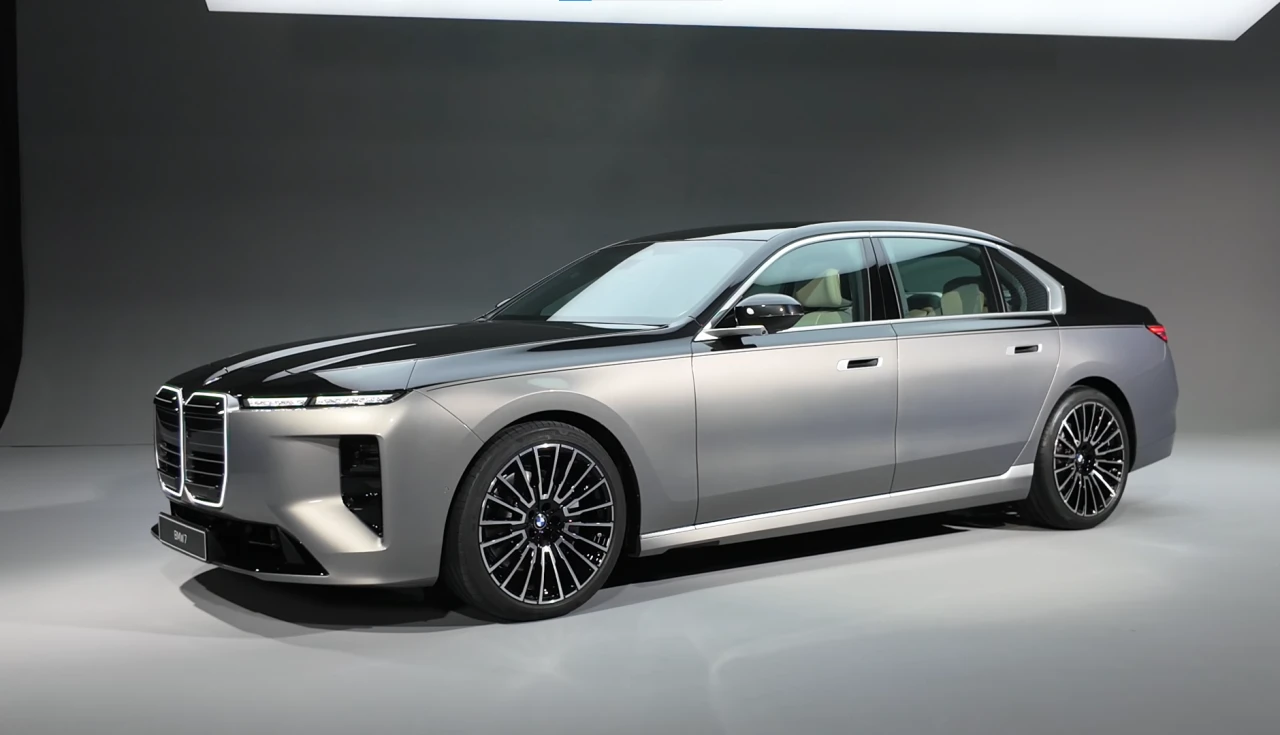
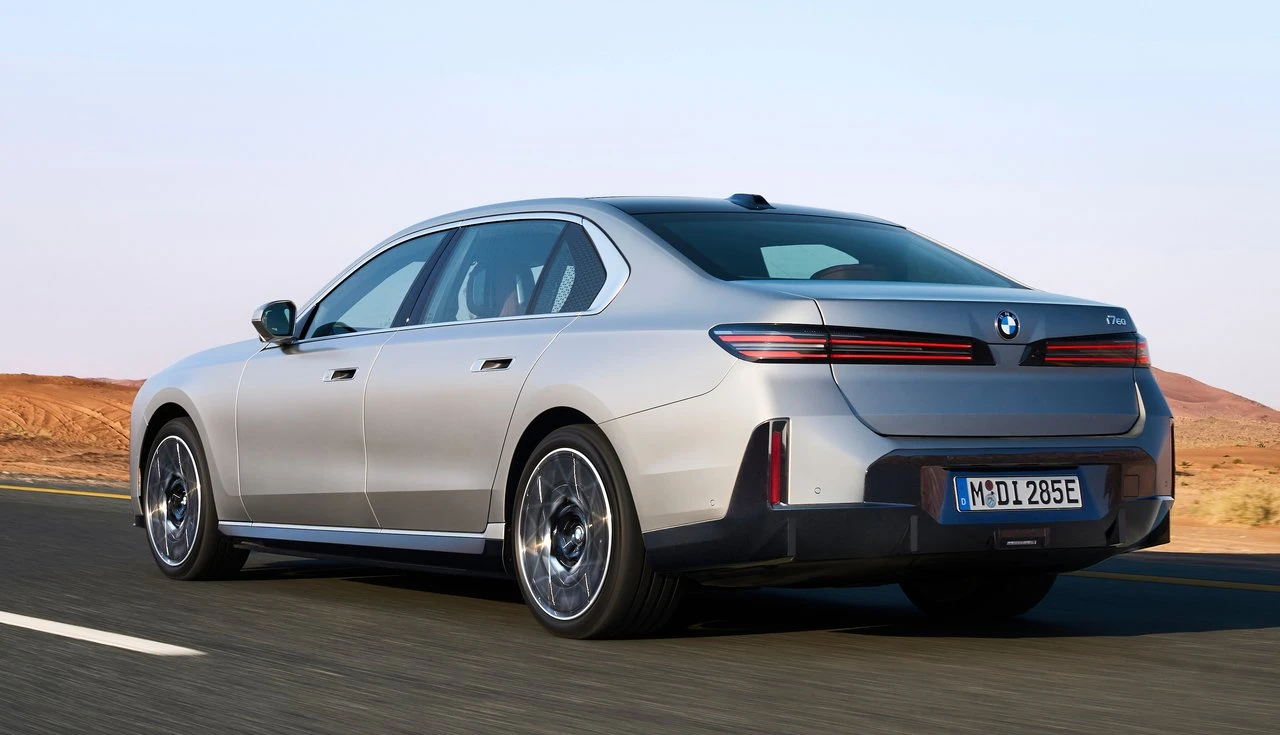
The 2027 BMW i7 moves toward what BMW calls a “monolithic” design language for its flagship sedan — fewer creases, cleaner surfaces and a more restrained overall presence than the outgoing model. The silhouette stays long and formal, but the detailing has been dialed back in favor of a more polished look.
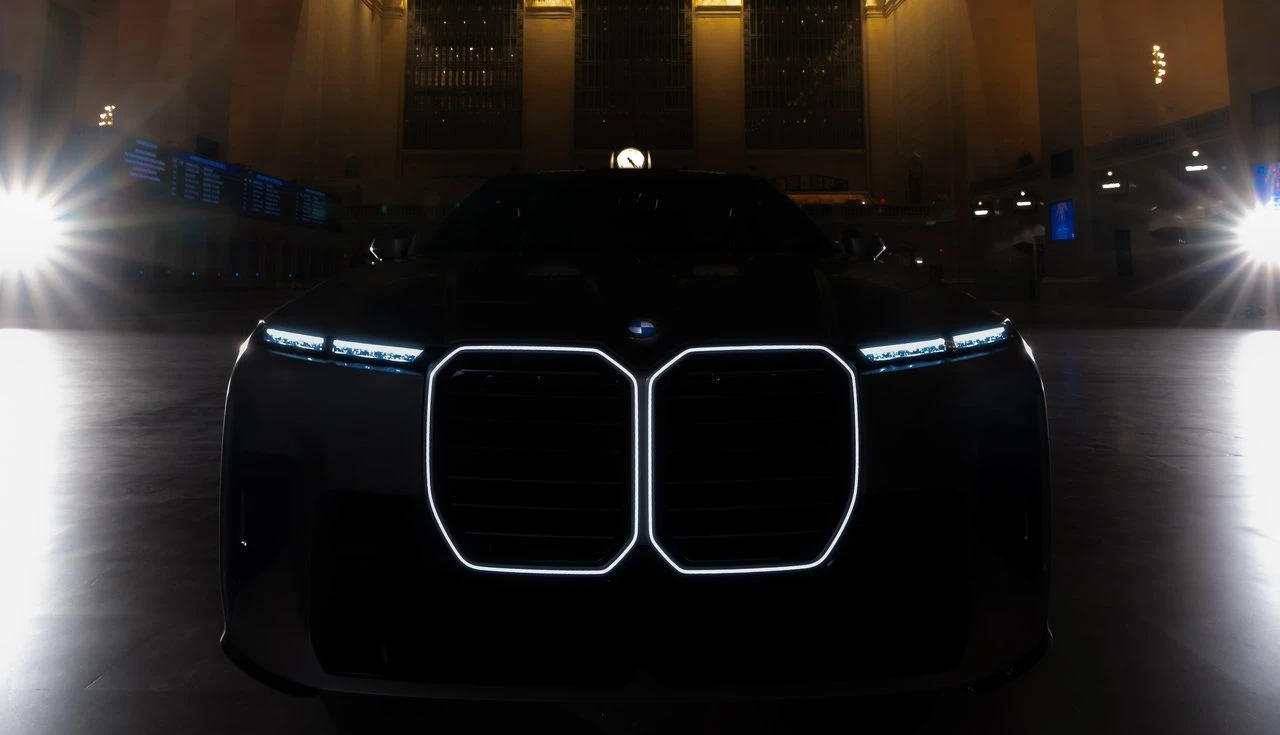
Up front, the illuminated kidney grille has been revised to a slightly narrower and more vertical shape, with a new LED surround fitted as standard. The hood now carries two character lines framing a larger, matte-finish BMW badge set into a recessed panel. The headlights keep their split layout but gain a single horizontal DRL signature — cleaner than the stepped design used before. Optional BMW Crystal Headlights add 12 hand-cut crystals per unit for buyers who want something more distinctive.
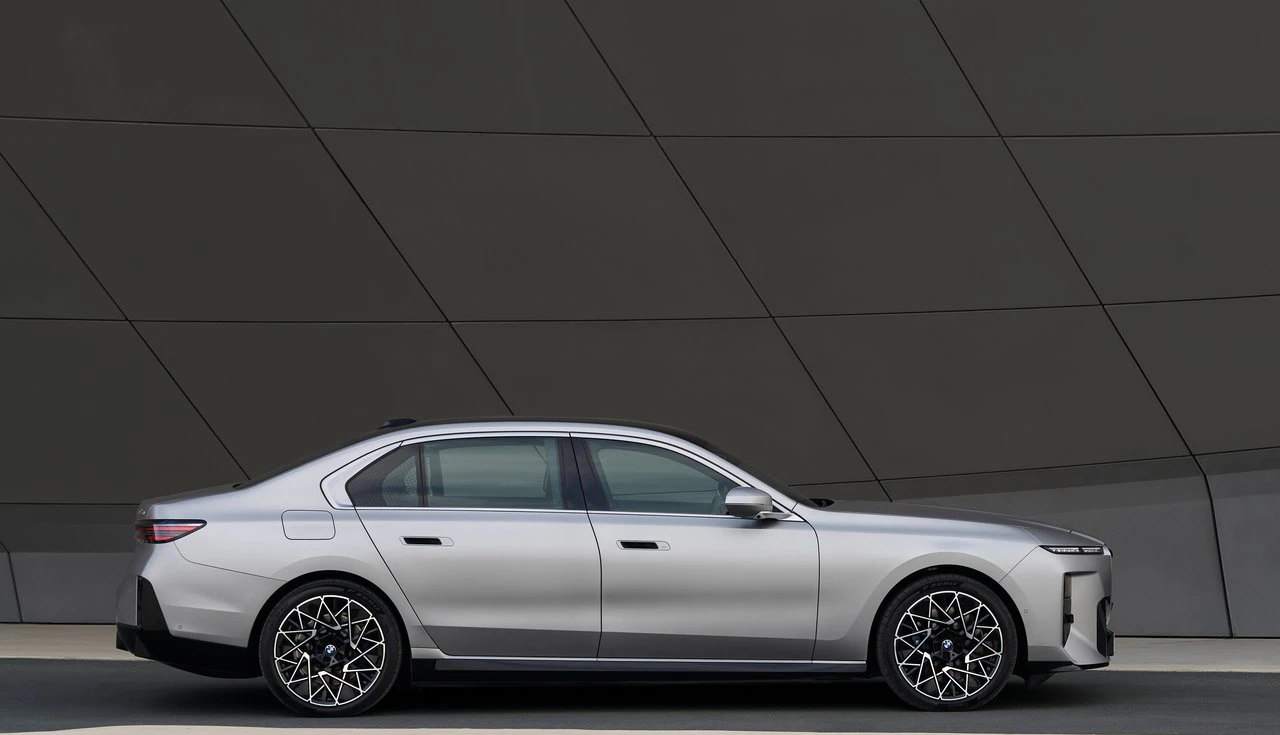
Along the side, a new character line runs from the front bumper to the rear quarter, giving the car a subtle boat-tail effect when viewed from behind. Flush door handles contribute to the aerodynamic profile. In a first for the 7 Series, BMW now offers 22-inch wheels directly from the factory.
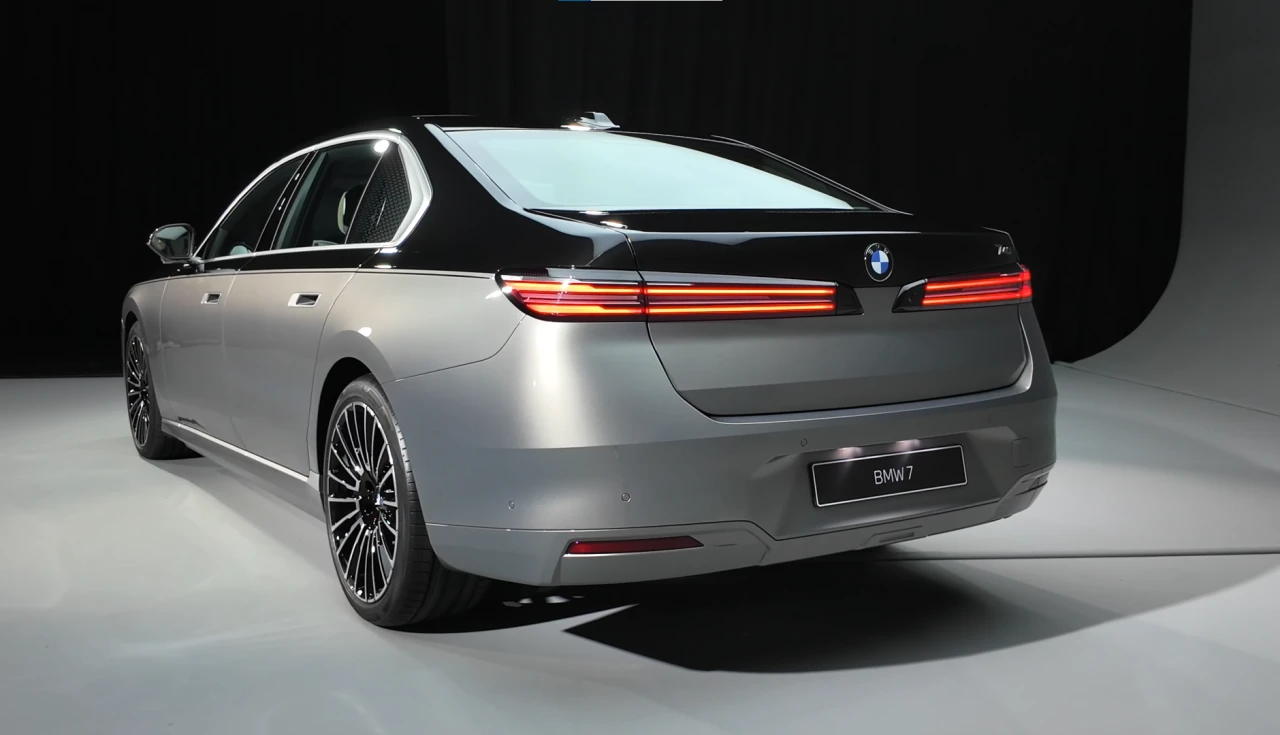
At the rear, the taillights have been stretched toward the center of the trunk lid, finished in smoked glass with chrome internal detailing. The bumper loses some of its previous complexity in favor of cleaner surfaces. There are no diffusers or exhaust tips — this is a sedan that signals luxury over performance.
For buyers who want something truly custom, the BMW Individual Dual-Finish paint option layers a matte lower section against a metallic upper section, divided by a hand-painted body line. The process takes over 75 hours in the paint booth alone. Over 500 exterior colors are available across the lineup.
One detail worth noting: the Ceremonial Light Carpet uses LEDs built into the door sills to project animated patterns onto the ground when the doors open. The system runs at 194,000 pixels of resolution and cycles through Relaxed, Balanced and Excited animation modes.
Interior: Every Surface Got Rethought
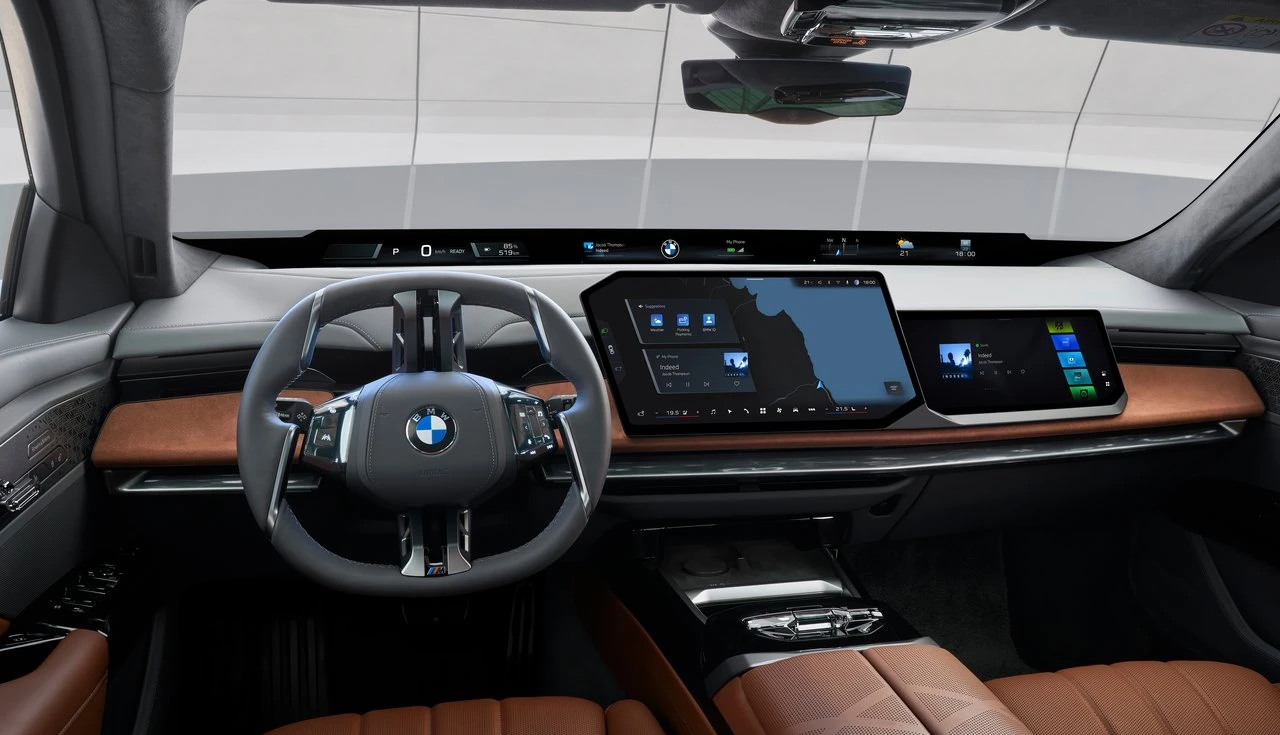
Step inside the 2027 BMW i7 and the most immediate change is how much of the dashboard has been replaced. BMW rebuilt the cockpit around the new BMW Panoramic iDrive with Operating System X, and the difference from the previous generation is significant.
The driver faces a BMW Panoramic Vision display — a projection that stretches across the full width of the windshield base, from A-pillar to A-pillar. It shows speed, range, navigation and media without requiring the driver to look away from the road. A 17.9-inch hexagonal touchscreen floats to the right of the steering wheel at eye level, handling the core infotainment functions.
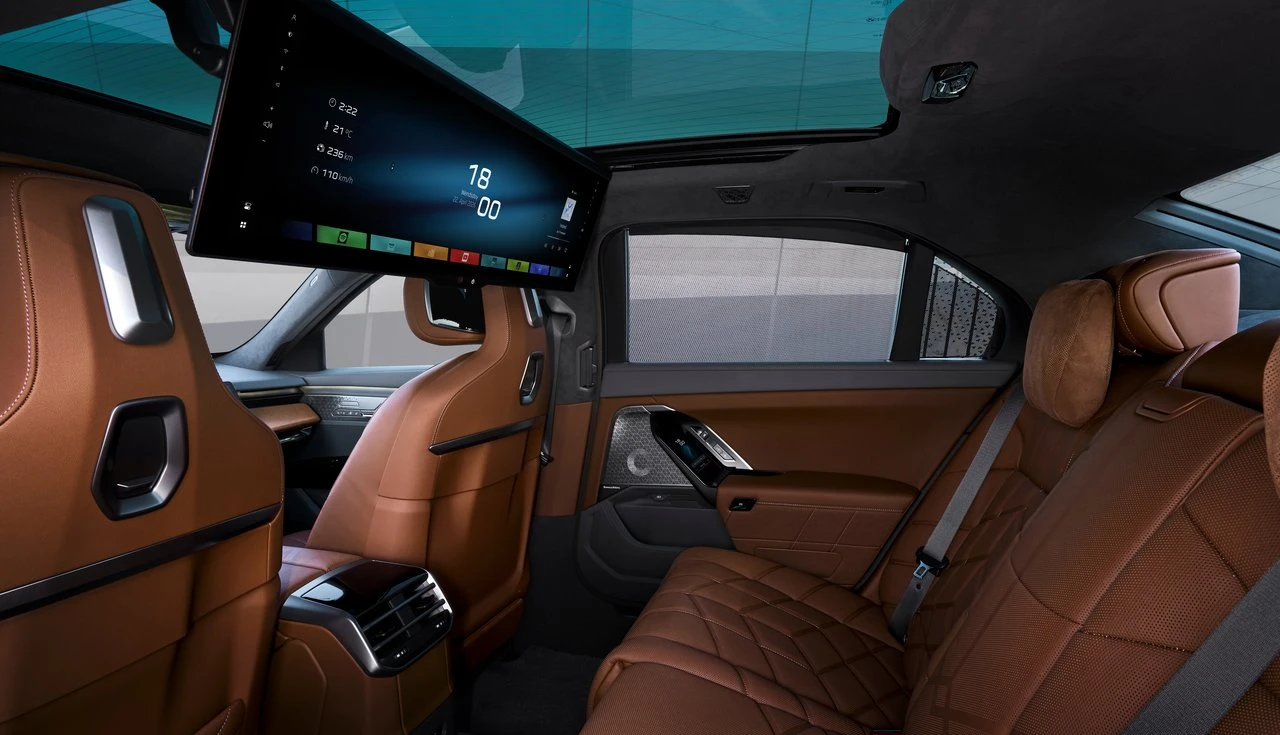
The front passenger gets a dedicated 14.6-inch display fitted as standard across all i7 trims — not as an option. In the rear, the BMW Theatre Screen measures 31.3 inches diagonally with 8K resolution, and for 2027 it gains a built-in camera for Zoom video calls and an HDMI input.
The steering wheel has been redesigned with vertical spokes at 12 and 6 o’clock — a departure from BMW’s traditional layout. Touch-sensitive buttons illuminate only when needed, and the physical iDrive rotary controller has been removed on models running OS X. Buyers who rely on tactile controls will need time to adjust.
Voice control comes through an upgraded BMW Intelligent Personal Assistant powered by Amazon Alexa+ AI, supporting more natural conversational commands. Wireless Apple CarPlay and Android Auto are standard. A BMW Digital Premium package, included for four years, adds 5G data, TiVo video, select games and the BMW Drive Recorder.
Audio is handled by a Bowers & Wilkins 18-speaker system as standard, with an optional upgrade to a 36-speaker Bowers & Wilkins Diamond Surround System with Dolby Atmos support. A new digital rearview mirror — a first for BMW — can switch between a traditional reflection and a rear camera feed.
Front seats include heating, ventilation and massage as standard. The optional Executive Lounge package adds a reclining rear seat with a footrest that extends from the front seatback — practical for rear passengers on long drives.
Powertrain and Performance
The 2027 BMW i7 is offered in two configurations for the US market at launch. The i7 xDrive50 runs dual electric motors producing 449 hp (335 kW) and 487 lb-ft of torque, with a 0–60 mph time of 5.3 seconds and a top speed limited to 130 mph.
The i7 xDrive60 steps up to 536 hp (400 kW) and 549 lb-ft, cutting the 0–60 mph time to 4.6 seconds and raising the top speed to 149 mph. EPA-estimated range is projected above 350 miles — a preliminary figure pending official certification. Both versions share the same 112,5 kWh net battery, built with Gen6 cylindrical cells developed with Rimac Technology in Croatia before being shipped to BMW’s Dingolfing facility.
The shift from prismatic Gen5 cells to cylindrical Gen6 cells brings 20% higher energy density. Maximum DC charging power climbs from 195 kW to 250 kW, dropping the 10–80% charge time to 28 minutes. A 10-minute charge adds approximately 146 miles of WLTP-rated range.
NACS is standard across the US lineup — meaning i7 owners can plug directly into Tesla Superchargers without an adapter. The electrical architecture remains at 400V, unlike some competitors that have moved to 800V systems. That decision limits the theoretical ceiling for charging speeds, even if 250 kW is a practical improvement over the previous generation.
New silicon carbide inverters and optimized wheel bearings contribute to an overall system efficiency gain of up to 7%. A new zonal electrical architecture uses centralized computers with 20x more processing power, while trimming the wiring harness by 600 meters and reducing its weight by 30%.
A European i7 M70 xDrive with 671 hp and 811 lb-ft has been confirmed but not yet announced for North America.
SPECS
| Item | i7 xDrive50 | i7 xDrive60 |
|---|---|---|
| Drivetrain | Dual motor AWD | Dual motor AWD |
| Horsepower | 449 hp (335 kW) | 536 hp (400 kW) |
| Torque | 487 lb-ft | 549 lb-ft |
| Transmission | Single-speed (per axle) | Single-speed (per axle) |
| 0–60 mph | 5.3 seconds | 4.6 seconds |
| Top Speed | 130 mph (limited) | 149 mph (limited) |
| Battery | 112.5 kWh net | 112.5 kWh net |
| Est. EPA Range | Not disclosed | 350+ miles (prelim.) |
| WLTP Range | Not disclosed | 452 miles (728 km) |
| Max DC Charging | 250 kW | 250 kW |
| 10–80% Charge Time | 28 minutes | 28 minutes |
| Connector | NACS (standard) | NACS (standard) |
| Voltage Architecture | 400V | 400V |
| US Starting Price | $107,750 (incl. dest.) | $126,250 (incl. dest.) |
| Weight | Not disclosed | Not disclosed |
| Dimensions | Not disclosed | Not disclosed |
| Cargo Volume | Not disclosed | Not disclosed |
Read more
FAQ
1. Does the 2027 BMW i7 work with Tesla Superchargers? Yes. NACS is standard on all US models, allowing direct access to the Tesla Supercharger network with no adapter required.
2. What is the EPA range for the 2027 BMW i7? Official EPA figures are still pending. BMW’s preliminary estimate for the xDrive60 is above 350 miles. The xDrive50 range has not been disclosed.
3. What’s the difference between the xDrive50 and xDrive60? The xDrive60 delivers more power (536 hp vs. 449 hp), higher torque, a faster 0–60 time (4.6 vs. 5.3 seconds), a higher top speed and longer disclosed range.
4. When does the 2027 BMW i7 go on sale in the US? Production starts at BMW’s Dingolfing plant in July 2026. US delivery timing has not been officially announced.
5. Is the high-performance M70 version coming to the US? The i7 M70 xDrive with 671 hp has been confirmed for Europe only. BMW has not announced North American availability.
Final Assessment
The 2027 BMW i7 makes three concrete improvements over the outgoing model: more range, faster charging and a fundamentally different interior. The jump from 195 kW to 250 kW DC charging, combined with standard NACS connectivity, directly addresses two of the most common friction points for EV ownership in the US.
The interior changes are equally significant. A standard 14.6-inch passenger display, a 31.3-inch 8K rear screen with Zoom capability and full OS X software puts the i7 ahead of the Mercedes-Benz EQS on in-cabin technology. The Bowers & Wilkins 36-speaker Dolby Atmos option and the Rimac-backed battery partnership are details that reinforce the car’s positioning at the top of the segment.
The limitations are real. Keeping a 400V architecture while rivals explore 800V is a long-term disadvantage, even if current charging speeds are competitive. Curb weight and cargo figures remain undisclosed — details that matter for buyers comparing real-world usability. And at $107,750 to start, the i7 is a narrow-market product even within the luxury EV space.
This car makes the most sense for buyers who spend significant time in the rear seat, want the longest possible range without stopping, and value tech-forward interiors over driving dynamics. Against the Lucid Air on range and the EQS on refinement, the i7 counters with stronger technology integration and deeper personalization options.
Real-world driving impressions won’t be available until production begins in July 2026. Until then, the specs alone make a solid case.
Share this article
Advertisement
Top of the Moment
Posts relacionados

Novo Jetta X: O conceito que antecipa o SUV elétrico mais barato da VW
A Volkswagen revoluciona a linha Jetta, transformando-a numa marca de elétricos acessíveis. Conheça o Jetta X Concept e os planos para SUVs elétricos de baixo custo. A

Por dentro do ID. Aura T6: a aposta tecnológica da Volkswagen para não ficar para trás em 2027
A Volkswagen apresentou o ID. Aura T6, SUV elétrico previsto para 2027 com sensor Lidar e nova arquitetura de software. O modelo aponta para o segmento médio

VW ID. UNYX 09 surge na China e deixa o passado para trás
O Volkswagen ID. UNYX 09 chega para redefinir o design da marca. Desenvolvido com a Xpeng em apenas dois anos, o sedan aposta no luxo, Inteligência Artificial

O sedã elétrico que levou 75 horas só para ser pintado — conheça o novo BMW i7 2027
O BMW i7 2027 chega com bateria Gen6 desenvolvida pela Rimac, autonomia de até 728 km e carregamento de 250 kW — sendo apresentado como o primeiro

Por que o Geely Galaxy A7 EV pode incomodar BYD, Xiaomi e até o Tesla Model 3 em 2027
O Geely Galaxy A7 EV chega como ano-modelo 2027 com consumo de 11,4 kWh/100 km e até 550 km de autonomia — tudo isso com uma bateria

Isuzu D-MAX EV V-Cross 2026: a picape elétrica com 1 tonelada de carga e tração 4×4 permanente
A Isuzu D-MAX EV V-Cross 2026 chega como a primeira picape elétrica com tração 4×4 permanente, capacidade de 1 tonelada e reboque de 3,5 toneladas no mercado