Hyundai Ioniq 3 2027: specs, range, battery options and everything confirmed so far
The 2027 Hyundai Ioniq 3 debuted at Milan Design Week with 308 miles of range, a hidden Morse code Easter egg in the headlights, and a cabin inspired by 1970s Italian furniture.

Danniel Bittencourt
20/04/2026
The 2027 Hyundai Ioniq 3 Is a Compact EV Built Around Practicality
Hyundai pulled the wraps off the Ioniq 3 at the 2026 Milan Design Week. First deliveries of the 2027 model are scheduled for the first half of next year, though the company has confirmed the car is built specifically for the European market — no US sales are planned at this point.
That matters for American buyers who might be curious. If you were hoping to see it at a dealership stateside, it’s not happening — at least not yet.
A Hatchback That Ignored the Crossover Playbook
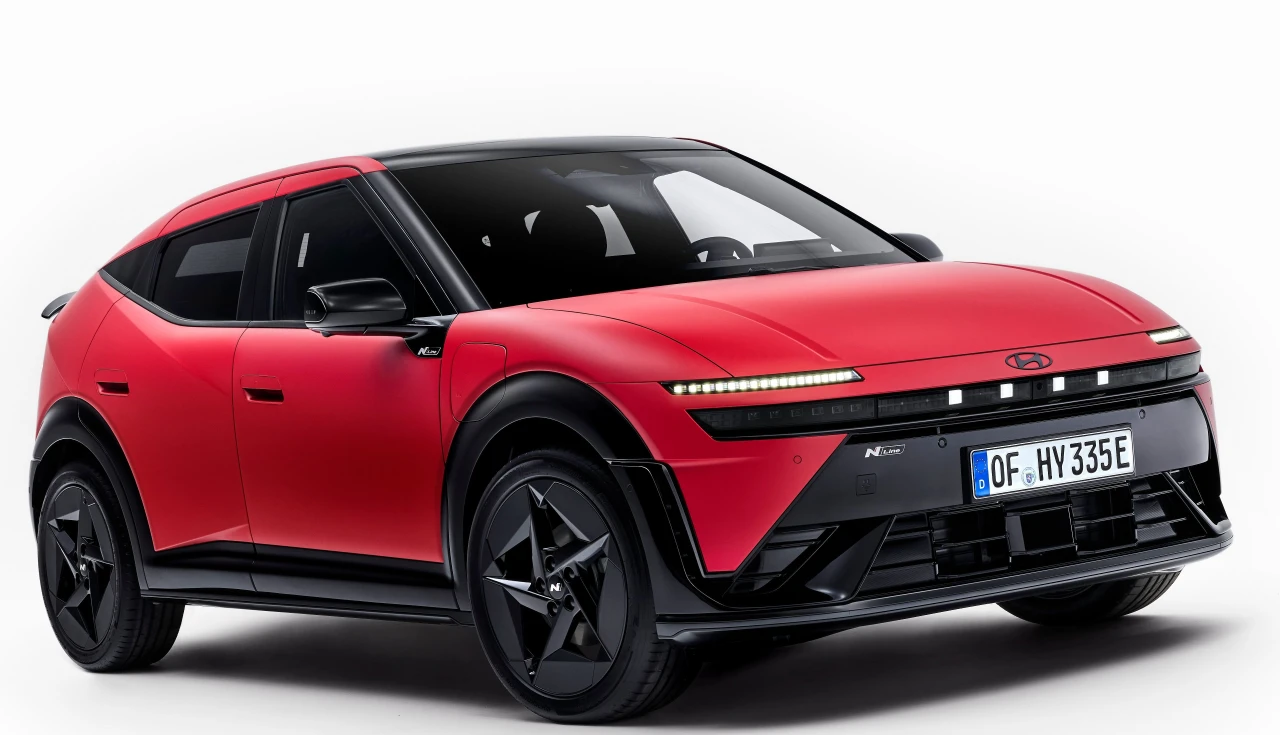
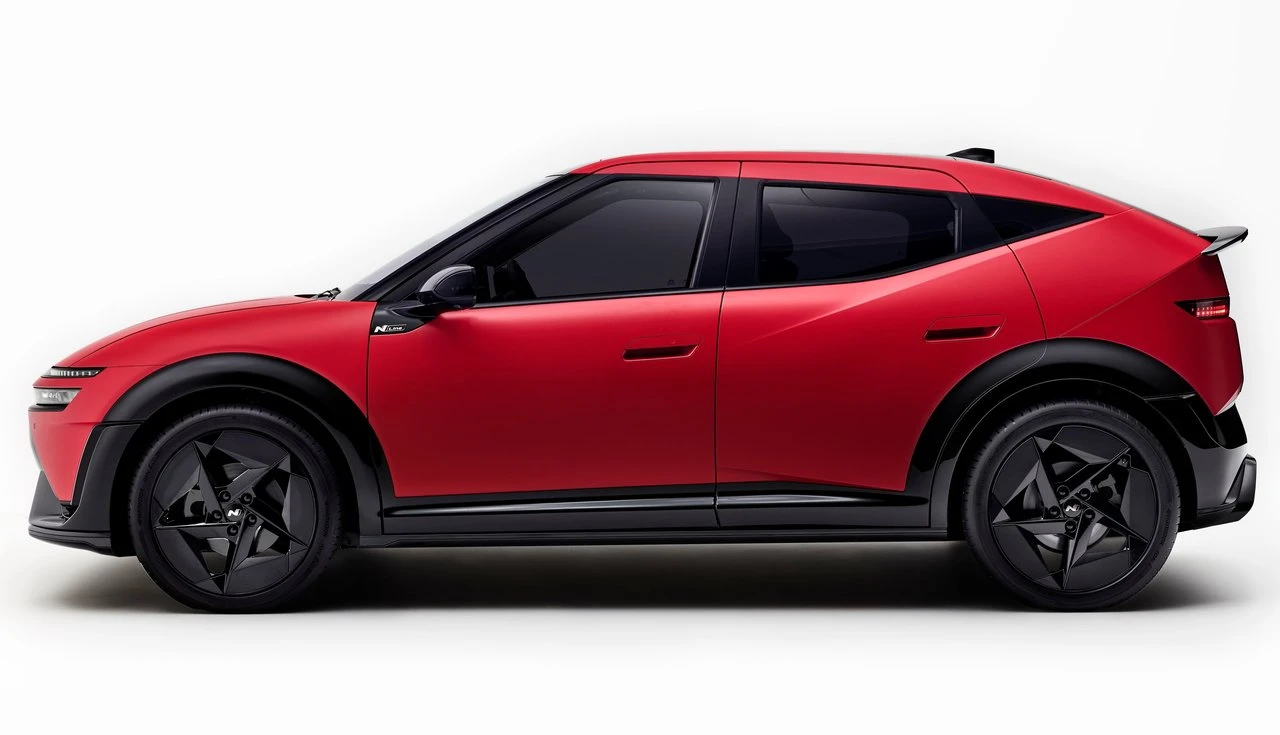
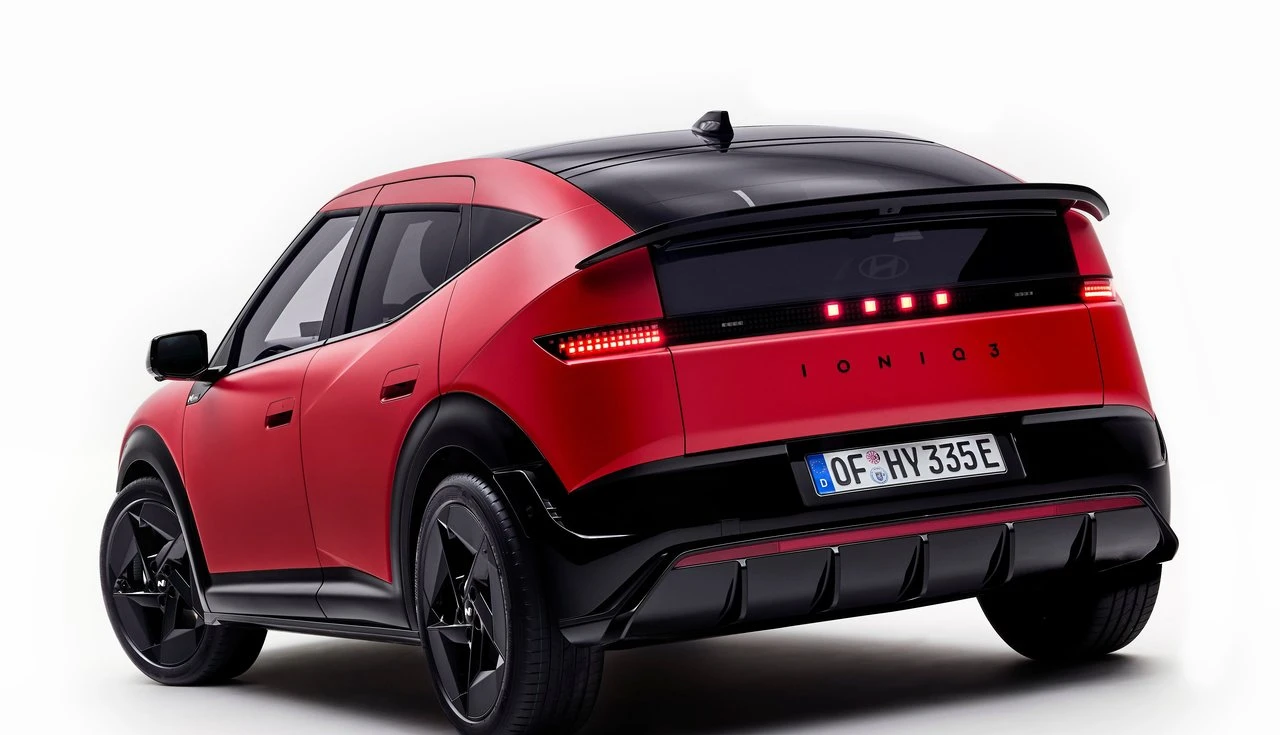
Most compact EVs went the SUV route. The Ioniq 3 didn’t. Hyundai went with a low, sleek aerohatch shape — closer to a sport coupe in profile than a tall crossover. The drag coefficient lands at 0.263, which is part of why the range numbers are competitive.
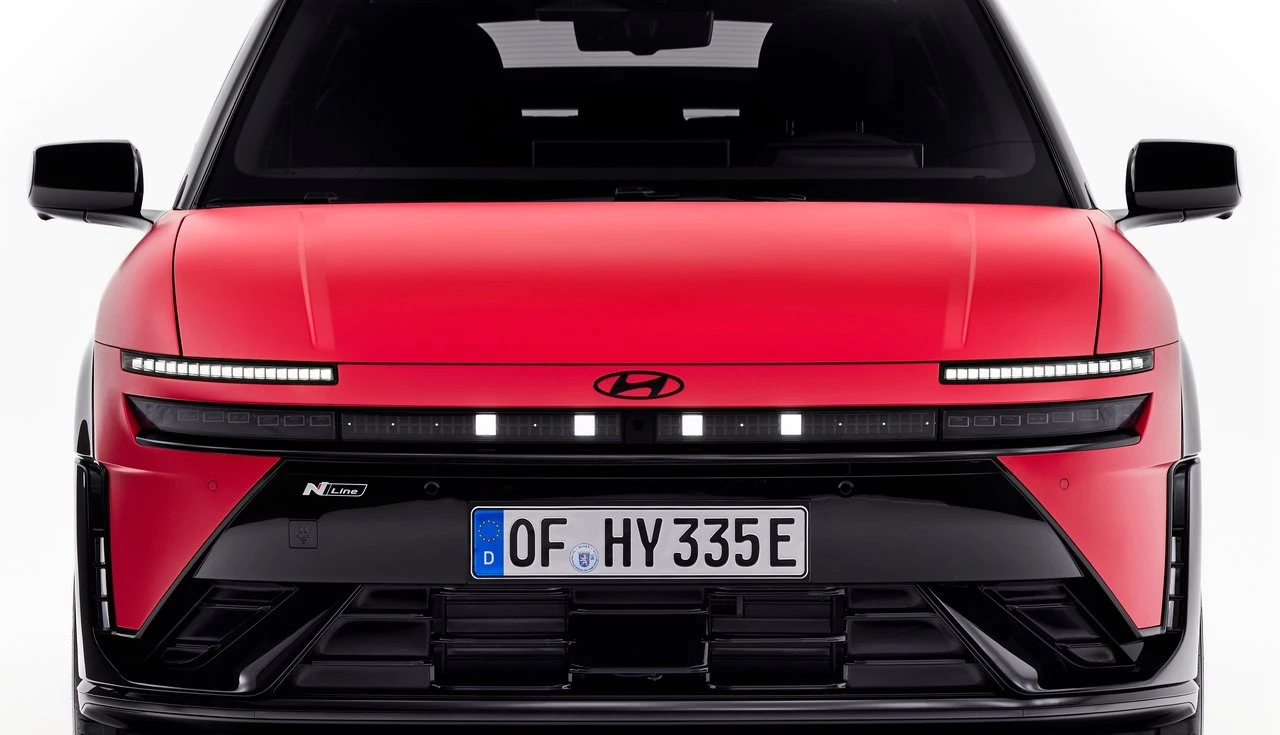
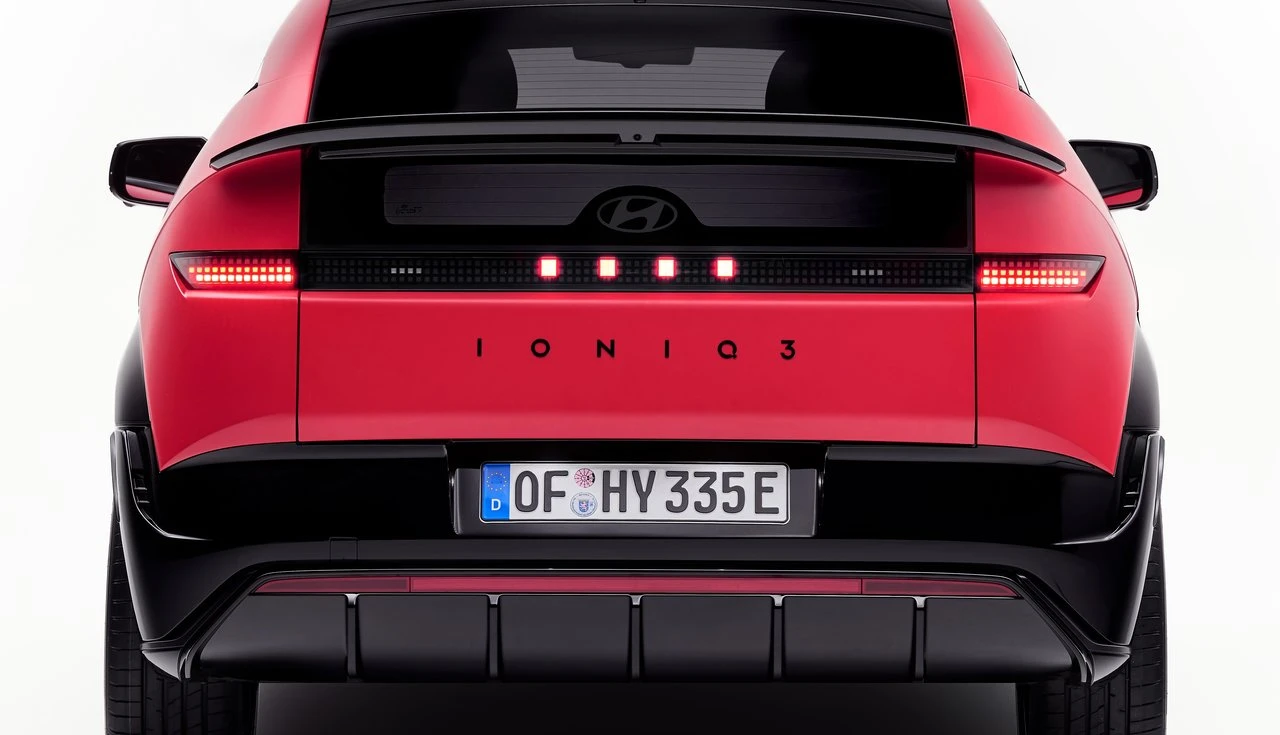
The headlights use Hyundai’s Pixel LED signature. Up front and out back, four central light points form the letter “H” in Morse code — four dots in a row. It’s the kind of detail you either love or never notice.
The N Line trim adds a rear spoiler and diffuser. Wheel options run from 16 to 19 inches depending on the package.

Inside — Big Screen, Physical Buttons, Italian Furniture?
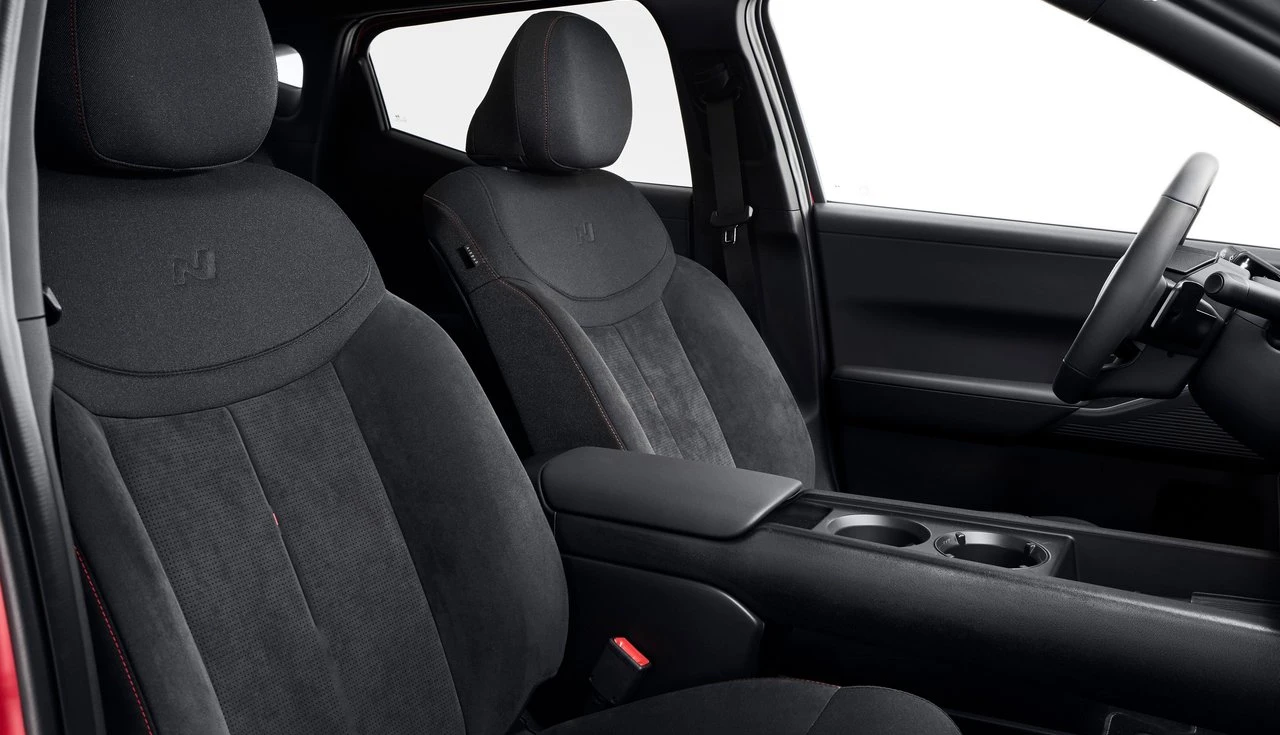
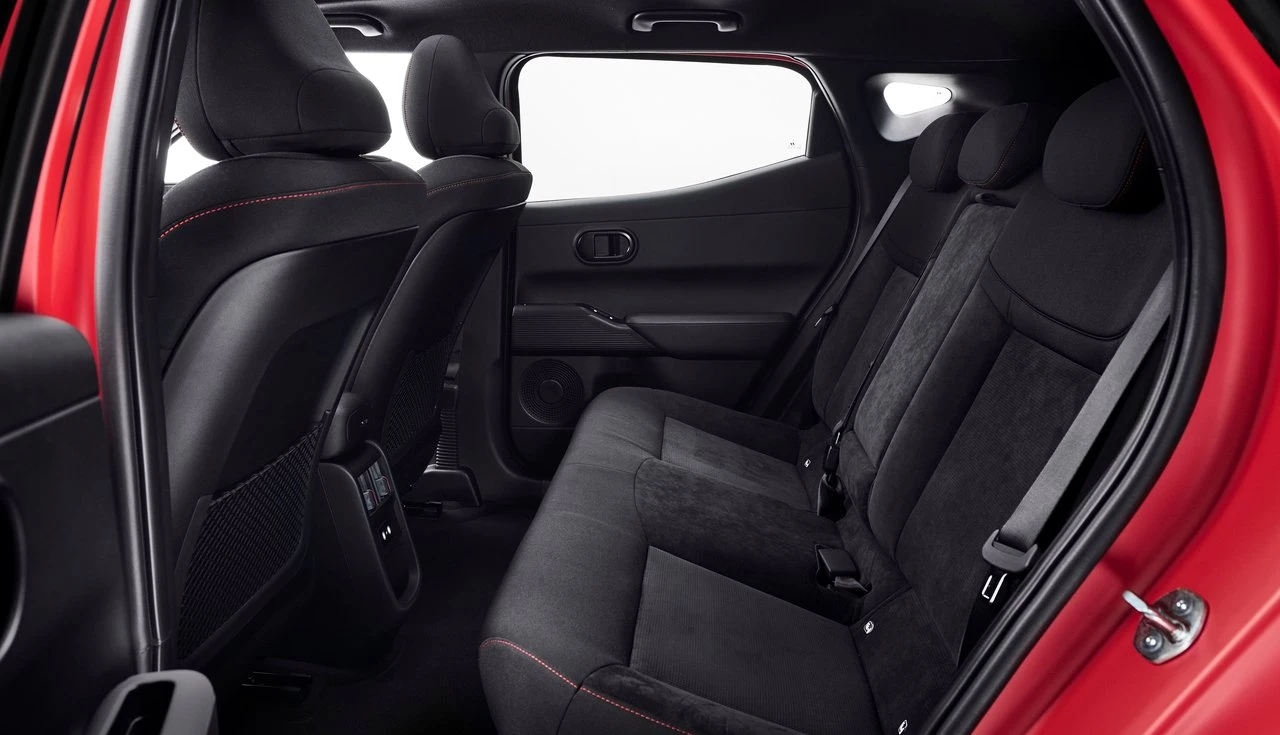
The cabin follows a minimalist layout Hyundai calls “Furnished Space,” with materials influenced by 1970s Italian furniture design. Recycled fabrics and bio-based materials are used throughout.
The centerpiece is the Pleos Connect infotainment system running Android Automotive OS, displayed on either a 12.9 or 14.6-inch touchscreen. Below it, a row of physical buttons handles climate control — a practical choice that keeps the driver off the menus while driving.
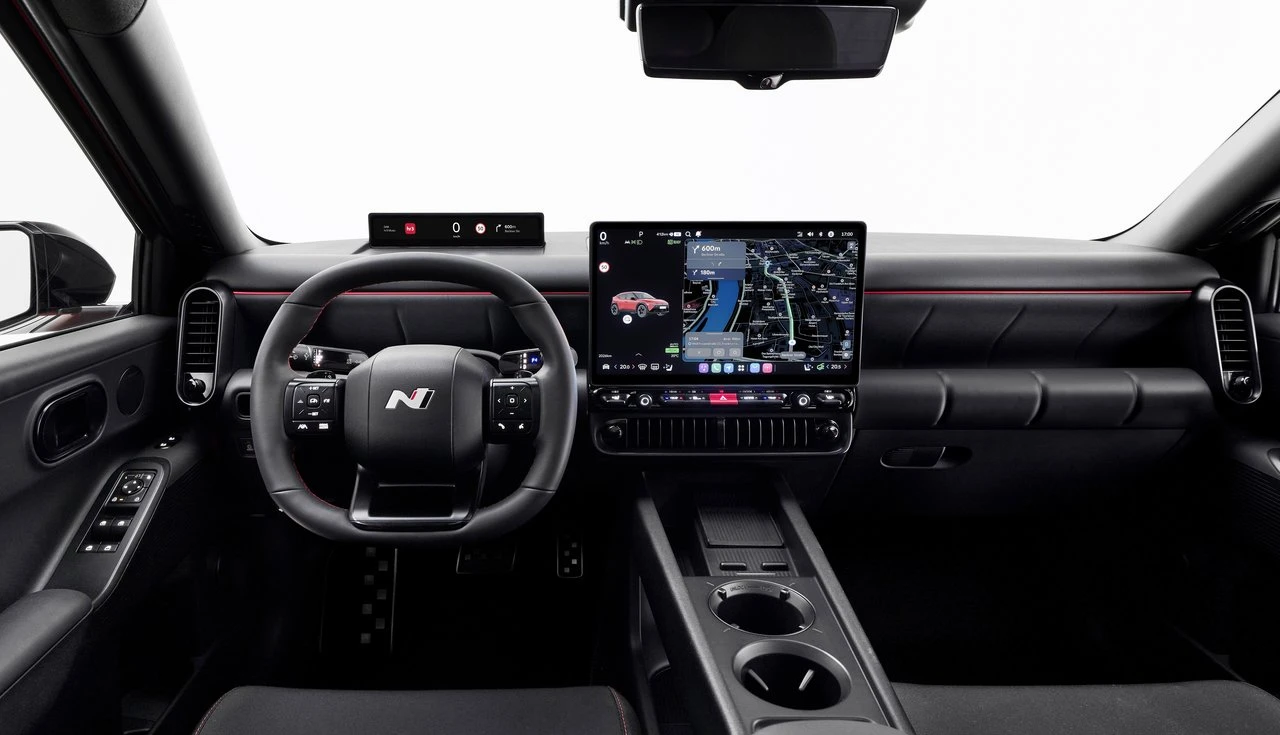
Connectivity includes Apple CarPlay Ultra, cloud-based user profiles, and natural voice control. A premium Bose audio system is available as an option.
The flat floor frees up space for five adults. The trunk holds 441 liters, plus an underfloor Megabox compartment adding another 119 liters — that’s around 560 liters total, a strong number for this class.
Motor, Range and Charging
Two powertrain options, both front-wheel drive:
- Standard Range — 133 hp, 0–60 in roughly 9.0 seconds, 344 km / ~214 miles of range from a 42.2 kWh battery
- Long Range — 145 hp, 0–60 in roughly 9.6 seconds, 496 km / ~308 miles from a 61 kWh battery
Torque is 250 Nm / 184 lb-ft across both versions. Top speed is 106 mph.
DC fast charging takes the battery from 10% to 80% in about 29 minutes. The platform runs on 400V architecture — not the 800V setup found in the Ioniq 5 and 6. Charging is slower as a result, but the lower voltage helps keep the price down. The car also supports V2L and V2G, so you can pull power from it to run devices or feed back to the grid.
Driver assistance runs through Hyundai SmartSense with Level 2 features including Highway Driving Assist 2, Remote Smart Parking Assist, Blind-Spot View Monitor and Surround View Monitor.
SPECS
| Spec | Detail |
|---|---|
| Motor | Single electric, front-mounted |
| Power | 133 hp / 145 hp |
| Torque | 184 lb-ft (250 Nm) |
| Drivetrain | Front-wheel drive |
| 0–60 mph | ~9.0 sec (133 hp) / ~9.6 sec (145 hp) |
| Top Speed | 106 mph |
| Battery | 42.2 kWh or 61 kWh |
| Range (WLTP) | 214 miles / 308 miles |
| Fast Charge (10–80%) | ~29 minutes |
| Length | 163.6 in (base) / 164.2 in (N Line) |
| Width | 70.9 in |
| Height | 59.3 in |
| Wheelbase | 105.5 in |
| Trunk | 15.6 cu ft + 4.2 cu ft (Megabox) |
| Drag Coefficient | 0.263 |
| Weight | Not disclosed |
| V2L / V2G | Yes |
Read more
FAQ
Is the Hyundai Ioniq 3 coming to the United States? No — at least not based on current plans. Hyundai built the Ioniq 3 for the European market and has not announced US sales.
How far can the Ioniq 3 go on a full charge? Up to 308 miles (496 km) on the WLTP cycle with the 61 kWh Long Range battery. Real-world numbers will vary.
Does the Ioniq 3 support fast charging? Yes. DC fast charging gets it from 10% to 80% in around 29 minutes. The system runs on 400V, not the 800V found in the Ioniq 5 and 6.
What makes the trunk different from other compact EVs? Beyond the standard 15.6 cubic feet, there’s an underfloor Megabox adding another 4.2 cubic feet — giving it a total storage edge over most competitors in the segment.
Why does the Ioniq 3 use 400V instead of 800V charging? Cost. The 400V platform keeps the price lower than the Ioniq 5 and 6. The tradeoff is slower charging speeds at high-power stations.
Bottom Line
The Ioniq 3 is not a performance car. Nine-second 0–60 times and 133 or 145 hp make that clear. What it does well is range, cargo space and interior tech at a price point below the Ioniq 5.
For the US market, it’s currently a no-go. But for anyone watching the compact EV segment globally, it sets a clear benchmark — especially on range per dollar and usable trunk space.