


The Mazda RX-7 FD Is the 90s JDM Icon That Still Breaks All the Rules
The Mazda RX-7 FD didn’t just challenge the nineties sports car hierarchy; it rewrote it. With its featherweight chassis and screaming twin-turbo rotary engine, this purebred canyon carver remains one of the most intoxicating driving experiences ever put on asphalt.
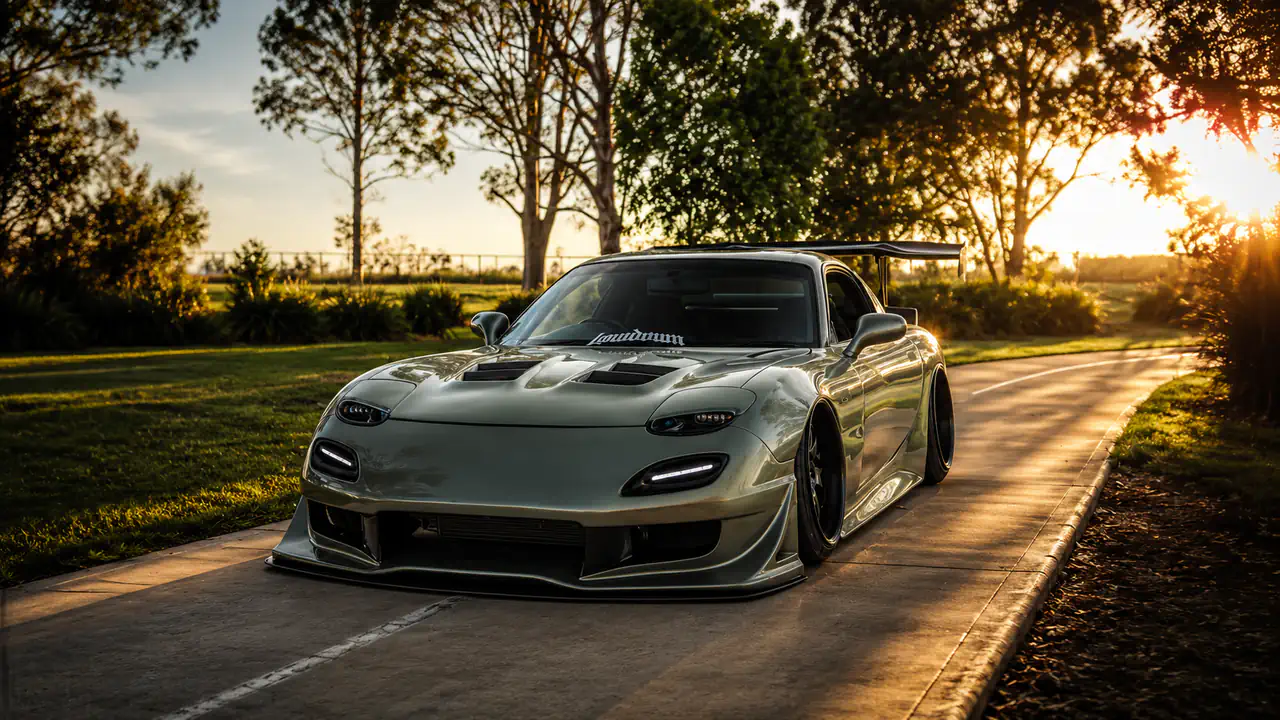
Technical Specifications (USDM FD3S)
Engine: 1.3L 13B-REW Twin-Turbo Wankel Rotary (2-Rotor)
Horsepower: 255 hp @ 6,500 rpm
Torque: 217 lb-ft @ 5,000 rpm
Transmission: 5-speed manual
Drivetrain: Rear-wheel drive (RWD) with Torsen limited-slip differential
Curb Weight: 2,848 lbs
The Birth of a Legend: Tracing the RX-7’s Lineage
While the RX-7 badge dates back to 1978, it was the third-generation FD3S—hitting US showroom floors for the 1993 model year—that turned a quirky Japanese coupe into a global giant-slayer. Mazda’s engineers operated on a strict diet, trimming ounces anywhere they could to achieve near-mystical chassis balance.
Stateside buyers only got the FD for three short years (1993–1995) before emissions regulations pulled the plug, making true USDM examples ultra-rare. Over in Japan, however, the car evolved until 2002, culminating in the 280-horsepower Spirit R—a holy grail that American collectors are finally importing legally under the 25-year rule.
Engineering the Unconventional: The Wankel Magic
The Heart of the Beast: 13B-REW Sequential Twin-Turbo
Under the hood sits automotive witchcraft. Instead of traditional pistons stroking up and down, two triangular rotors spin smoothly inside an oval chamber. To fix the notorious low-end lag of rotary engines, Mazda developed a complex sequential twin-turbo setup. The primary turbo spools instantly off the line, handing the baton to a larger secondary unit at 4,500 rpm. The payoff is a relentless pull all the way to its 8,000 rpm redline.
Liquid Aesthetics: An Exterior Built by the Wind
The FD’s sheet metal is a masterclass in organic nineties design. Free of aggressive, fake aero creases, the body drapes tightly over the mechanicals. Because the rotary engine sits so low and far back, designers were able to give the car an impossibly low hood line, capped off with classic pop-up headlights.
To capture the sheer visual presence of this chassis, the photography featured throughout this breakdown was sourced directly from an Instagram feed run by a dedicated die-hard car enthusiast—we’ve dropped their handle at the bottom so you can inspect the build yourself.
The Cockpit: Driver-Centric Minimalism
Step inside, and the cabin feels less like a modern commuter and more like a fighter jet. The entire center console wraps tightly around the driver. Every gauge, dial, and the short-throw shifter fall right into your natural line of sight, keeping your focus strictly on the tachometer dead-center in the cluster.
The Nineties Showdown: RX-7 vs. Its Fiercest Rivals
| Model | Engine Type | Top Speed | 0–60 MPH |
| Mazda RX-7 FD | 1.3L Twin-Turbo Rotary | 155 mph | 5.1 sec |
| Toyota Supra MK4 | 3.0L Twin-Turbo Inline-6 (2JZ-GTE) | 155 mph | 4.9 sec |
| Nissan Skyline GT-R R34 | 2.6L Twin-Turbo Inline-6 (RB26DETT) | 156 mph | 4.8 sec |
The Reality Check: Pros and Cons of Ownership
3 Unbeatable Strengths
Telepathic Handling: A 50:50 weight distribution combined with a sub-2,900 lb curb weight makes it one of the most rewarding backroad carvers ever built.
The Soundtrack: Nothing sounds like a rotary at full song; it offers an exotic, high-revving auditory experience that makes standard V8s feel agricultural.
Blue-Chip Investment: Clean USDM manuals have skyrocketed on auction sites like Bring a Trailer, turning them into rolling savings accounts.
3 Harsh Drawbacks
Thermal Nightmares: Rotaries generate massive underhood heat; stock cooling systems struggle severely in stop-and-go summer traffic.
The “Apex Seal” Anxiety: Internal engine seals are wear items. When they go, you lose compression instantly, meaning a full rebuild is mandatory.
Abysmal Fuel Economy: Despite being a 1.3-liter, it drinks premium gas—and consumes engine oil by design—like a big-block American muscle car.
FAQ
Does the Ford Mustang GT still have a V8 engine?
Yes. The Mustang GT is powered by a naturally aspirated 5.0-liter V8 engine.
Is the Mustang rear-wheel drive?
Yes. The Mustang GT sends power exclusively to the rear wheels.
How fast is the Ford Mustang GT?
The vehicle reaches a top speed of approximately 155 mph.
Is the Ford Mustang comfortable for daily use?
Yes. Despite its performance focus, it offers a comfortable ride and modern technology.
Can adults comfortably sit in the back seats?
The rear seats are best suited for shorter trips and occasional passengers.
Is the Mustang fuel efficient?
Fuel economy is not one of its primary strengths, as performance takes priority.
Why is the Ford Mustang still so popular?
Its combination of V8 power, iconic styling, rich heritage, and engaging driving experience continues to make it one of the world’s most desirable performance cars.

Danniel Bittencourt
Danniel Bittencourt é especialista e entusiasta do setor automotivo, com atuação focada em análise de veículos, lançamentos e tendências do mercado global. É fundador do site e responsável por diversos canais no YouTube voltados ao universo dos carros.
Related posts >