
Lexus TZ 2027: The Electric SUV That Claims to Be Quieter Than Anything Else in Its Class
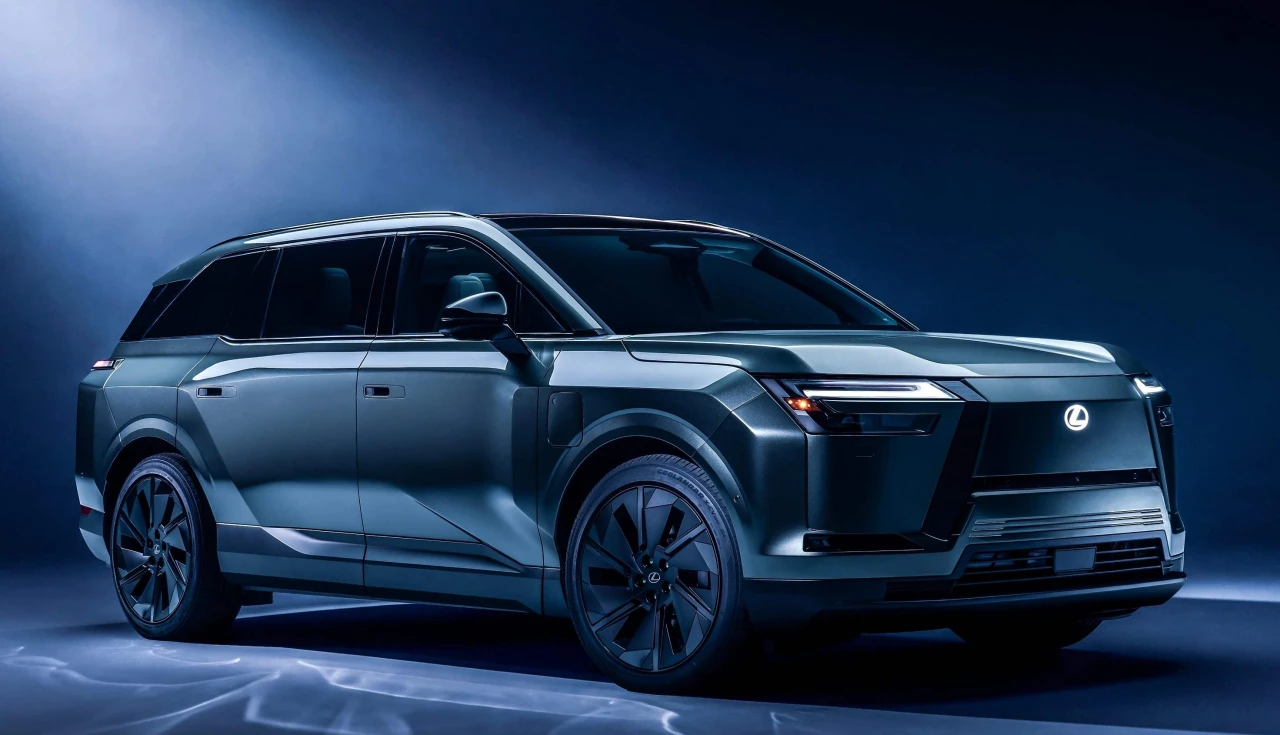
With 408 horsepower, seating for six and an estimated range of up to 330 miles, the 2027 Lexus TZ is the boldest move the Japanese luxury brand has ever made in the electric vehicle space.

Por: Danniel Bittencourt
07/05/2026
2027 Lexus TZ: Lexus Finally Builds the Three-Row Electric SUV America Has Been Waiting For
Lexus has never built a three-row electric SUV — until now. The TZ changes that in a big way, stepping directly into a competitive fight against heavyweights like the Kia EV9 and the Hyundai Ioniq 9.
Officially unveiled in May 2026, the TZ is built on an electrified version of Toyota’s TNGA platform — shared with the upcoming Toyota Highlander EV — but carries Lexus-exclusive bodywork, interior tuning and a cabin philosophy the brand calls a “Driving Lounge.”
This isn’t a vehicle chasing the fastest 0–60 time or the highest charging speed. The TZ is engineered to be the most refined, most comfortable electric SUV in its segment — a rolling luxury lounge with a premium badge and a silent cabin to match.
Sales are expected to begin in North America and Europe in 2027, with pricing details still to be confirmed by Lexus.
Sharp, Sophisticated and Over 200 Inches Long: The Lexus TZ Makes a Statement Before You Even Open the Door
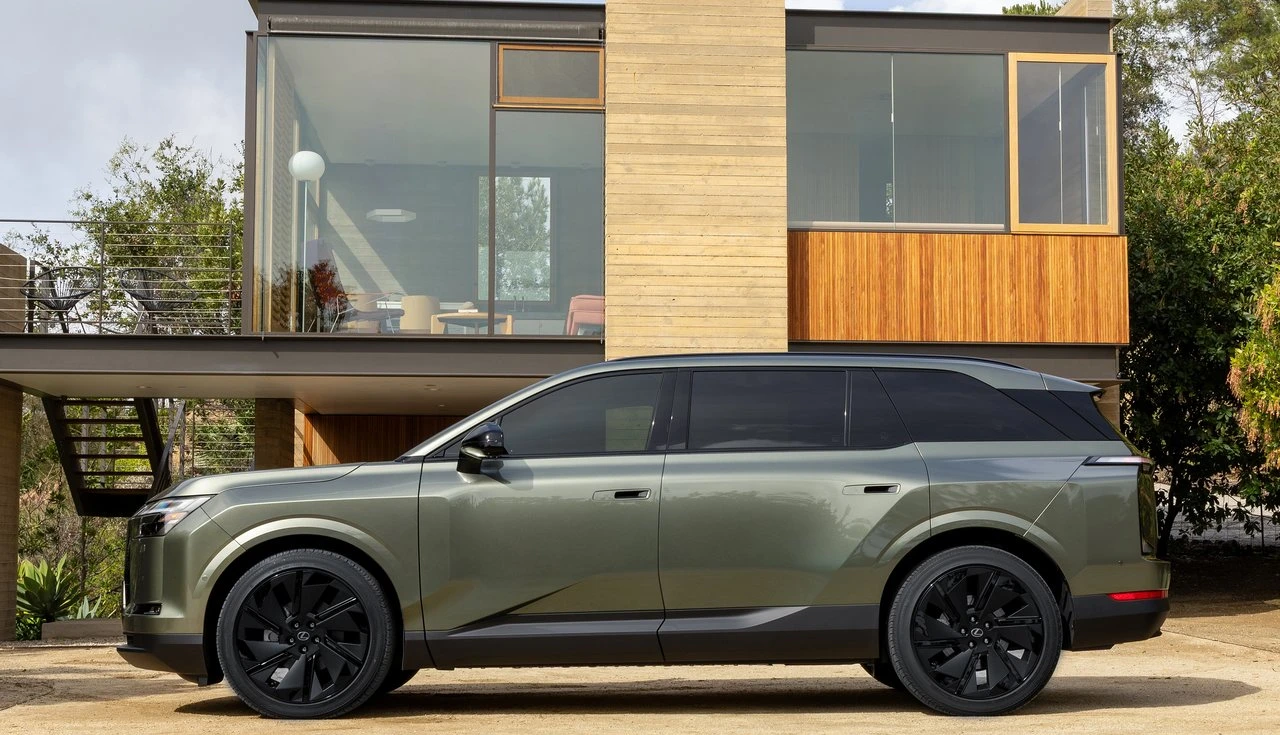
At 200.8 inches (5,100 mm) in length, the TZ is a genuinely large SUV. It doesn’t try to look bigger than it is — it simply is big, with proportions that make its premium positioning instantly clear from any angle.
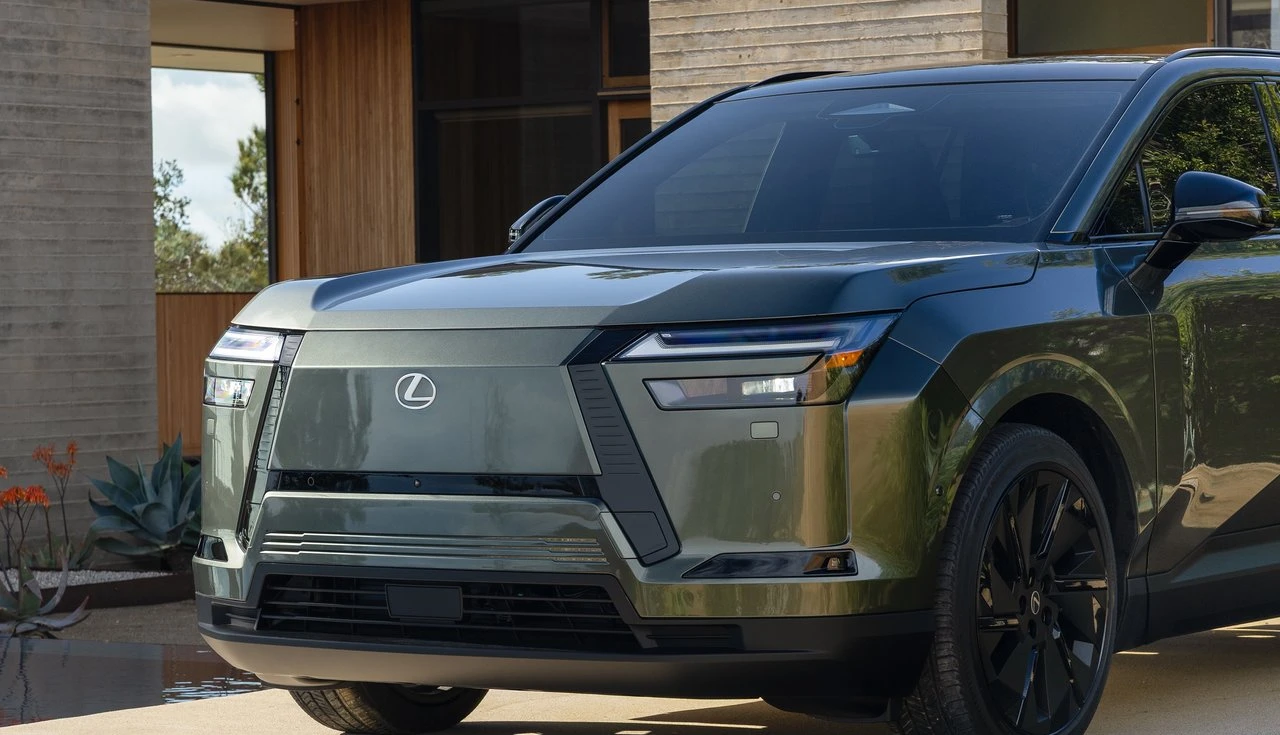
Up front, the signature closed spindle grille takes on a cleaner, more integrated form compared to Lexus combustion models. Slim, angular headlights frame the nose with a lighting signature that reads as modern without trying too hard to look futuristic.
Along the side, the 119.9-inch (3,050 mm) wheelbase defines the silhouette — short hood, long cabin, and a rear door that leaves no doubt there’s real space for three rows inside. Wheel options of 20 or 22 inches use aerodynamic designs that contribute directly to the TZ’s efficiency targets.
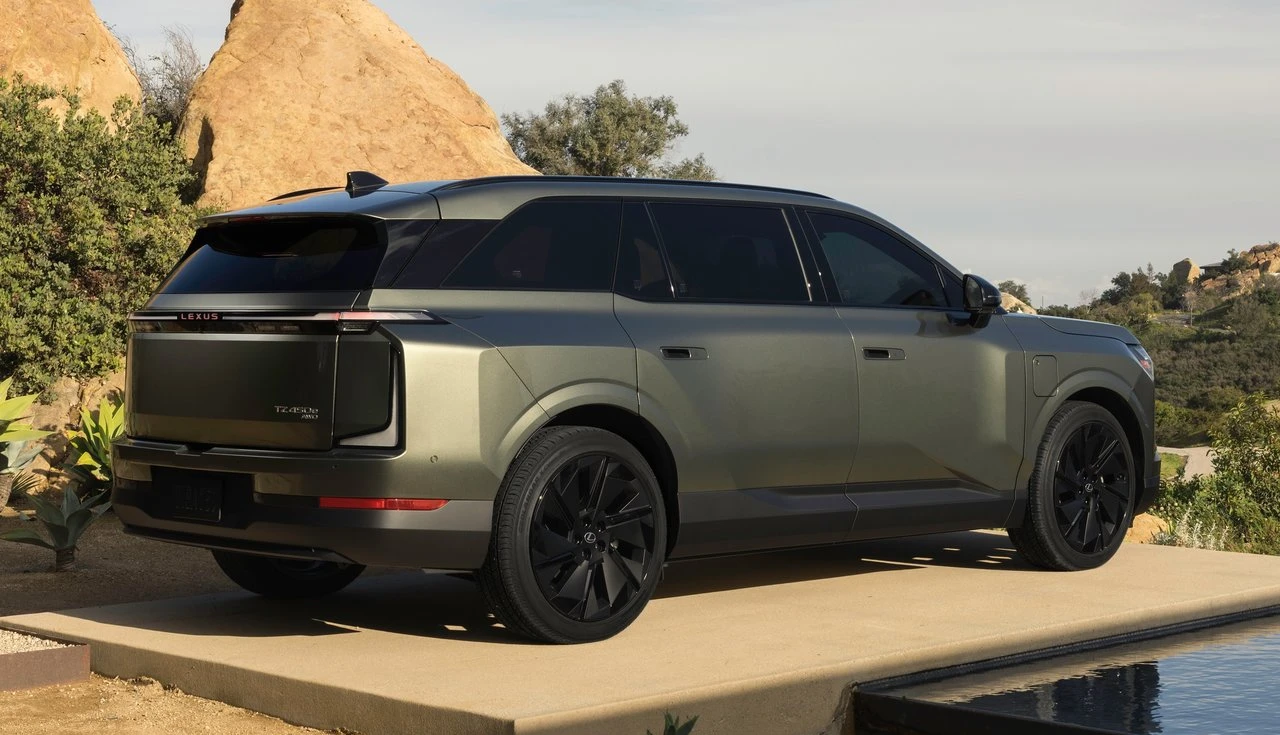
The rear is clean and deliberate. Horizontal taillights stretch across the tailgate, the bumper integrates smoothly, and — as expected from an EV — there are no exhaust tips. The darkened C-pillar creates a floating roof effect that visually reduces the mass of a vehicle this size.
Overall, the TZ reads as elegant and substantial. It’s not aggressive like a performance EV, and it’s not boring like a family hauler. It occupies a confident middle ground — polished, composed and built to impress the buyer who’s done shopping by looks alone.
Step Inside the Lexus TZ: Where Silence Becomes the Most Premium Feature of All
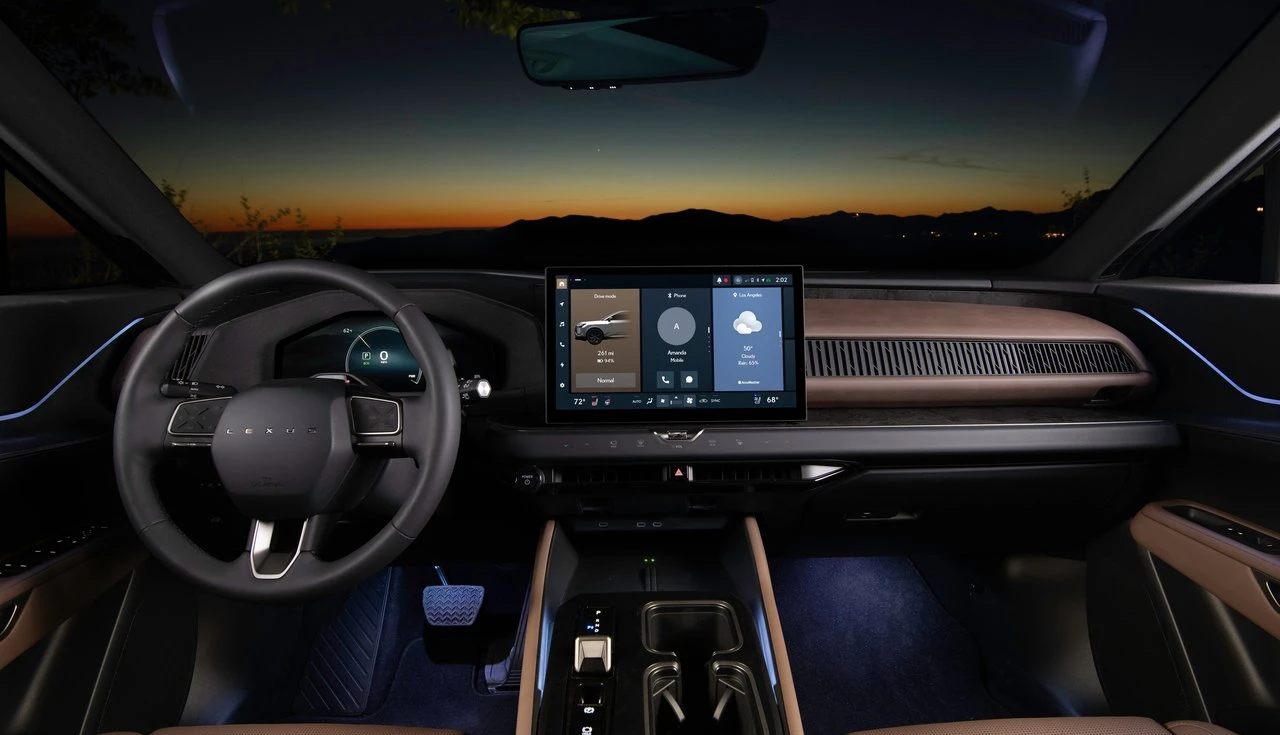
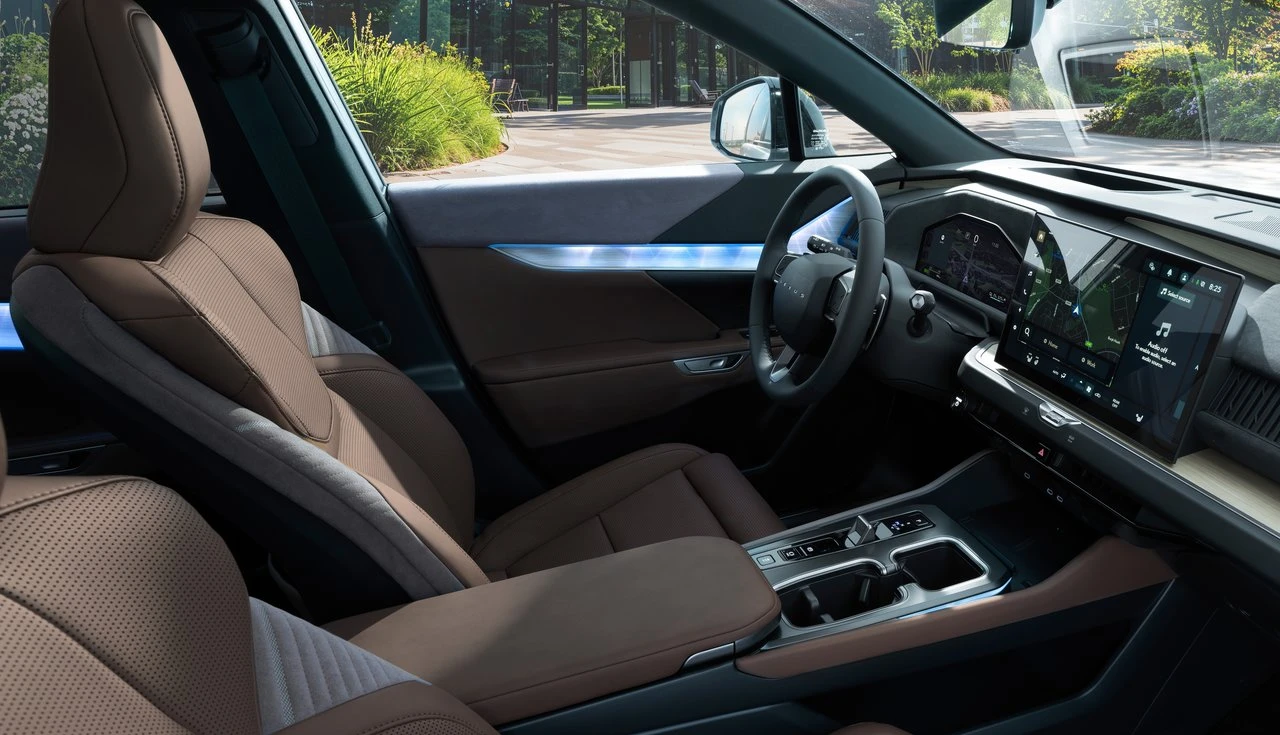
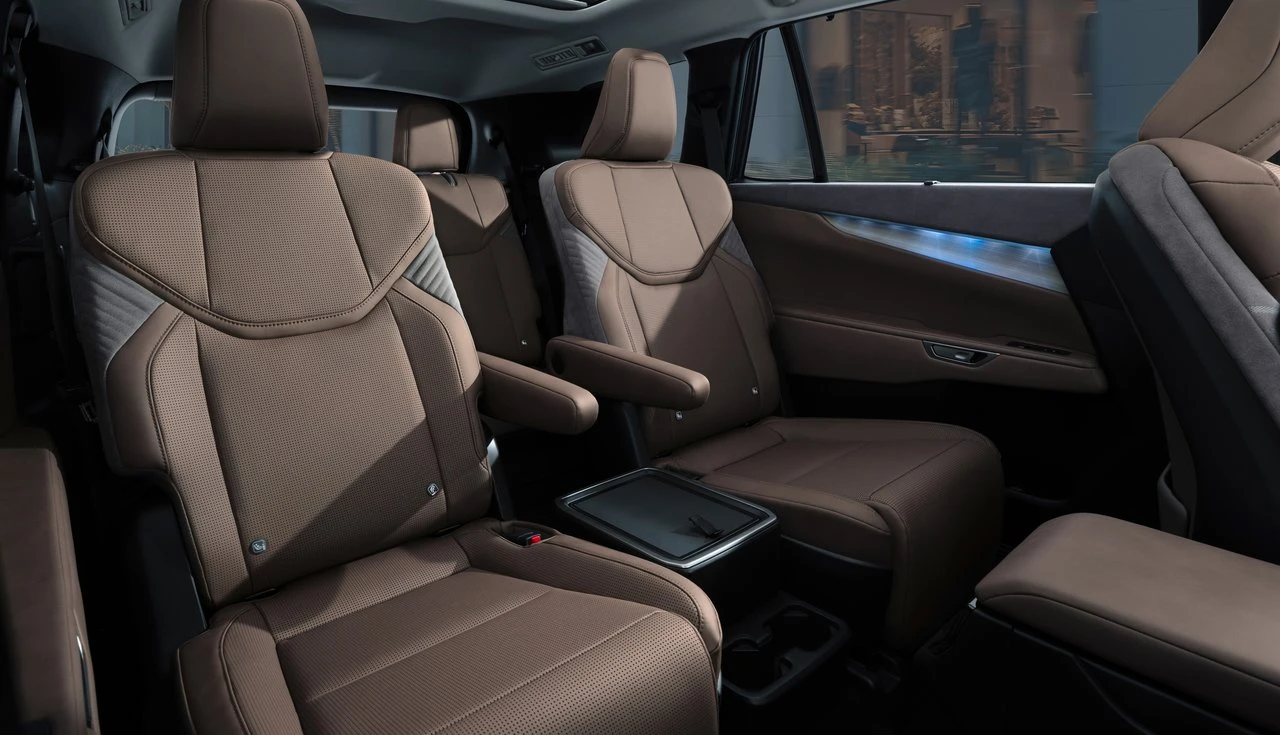
Getting into the Lexus TZ feels different from any other three-row electric SUV on the market. The reinforced acoustic insulation isn’t just a spec sheet talking point — early drive impressions confirm that the TZ delivers one of the quietest cabins Lexus has ever produced. With a stiffer body structure and suspension tuned specifically for EV dynamics, wind noise and road vibration are kept to a minimum that rivals genuinely struggle to match.
The dashboard is clean and well-organized. The large center touchscreen runs the updated Lexus Interface, with built-in navigation, EV-specific route planning, charging station mapping and a real-time range display. The “Hey Lexus” voice assistant handles commands naturally, reducing the need to reach for the screen while driving.
Material quality throughout the cabin sits above what you’ll find in the Korean competition. Fit and finish feel deliberate and premium, and the ergonomics of the front seats reflect a brand that takes long-distance comfort seriously.
Tech, Space and the One Thing the Third Row Gets Wrong
The six-seat layout puts individual captain’s chairs in the second row — and they’re a genuine highlight. Wide, well-cushioned and paired with the “Rear Comfort” drive mode that prioritizes passenger smoothness over sportiness, these seats deliver a near-executive experience in the middle of a family SUV.
The infotainment system integrates fully with the Lexus Safety System+ 4.0, which includes automatic emergency braking with pedestrian detection, adaptive cruise control, lane-keeping assist, traffic sign recognition and semi-autonomous parking. Top trims add a 21-speaker Mark Levinson audio system that’s among the best available in the segment.
The third row, however, is where reality sets in. Adults will find the space tight for longer trips — it’s better suited for kids or smaller passengers. With all three rows in use, cargo drops to approximately 290 liters (10.2 cubic feet), which is modest for a 200-inch SUV. Fold everything flat and that number climbs to around 2,017 liters (71.2 cubic feet) — competitive, but the trade-off is real.


Dual Motors, AWD and 408 HP: The Lexus TZ Has the Muscle — Here’s What It Means in the Real World
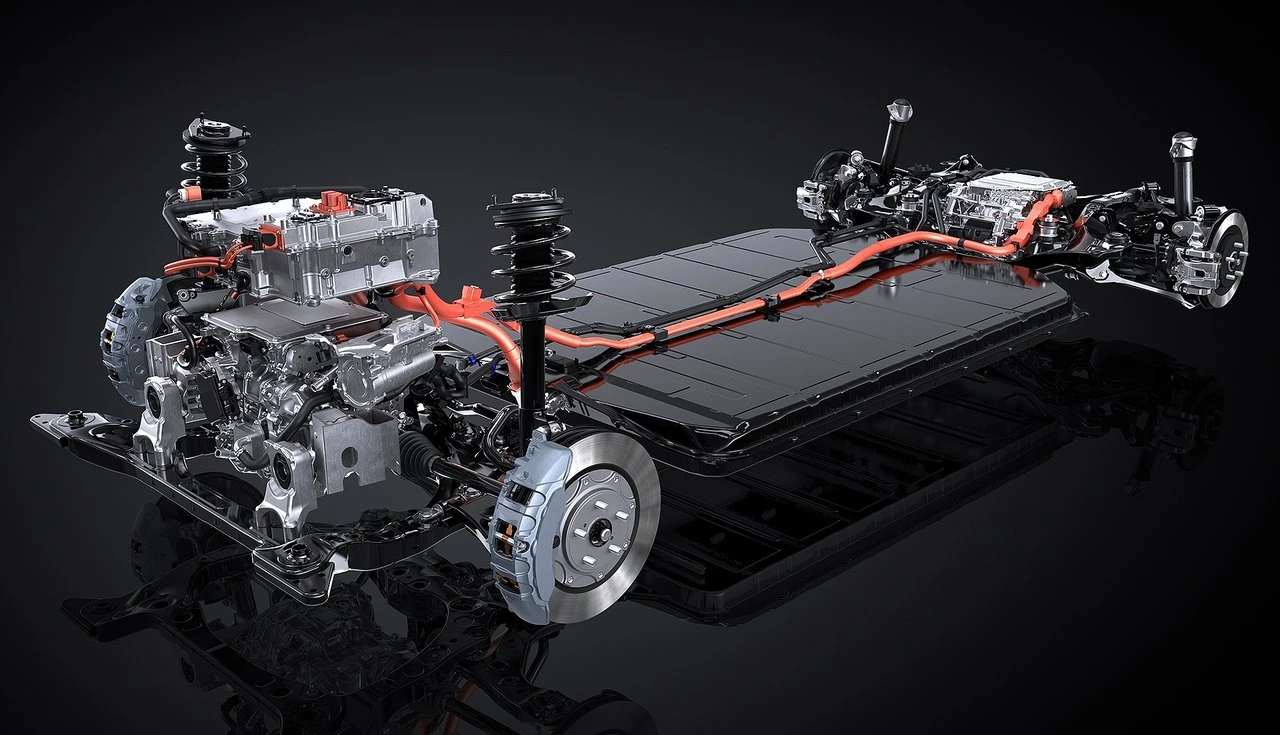
The 2027 Lexus TZ runs two electric motors — one per axle — each producing 167 kW (224 hp). Combined output hits 300 kW, or roughly 408 horsepower. That’s a strong number, but context matters: the TZ tips the scales at approximately 5,800 lbs (2,630 kg).
Combined torque lands around 398 lb-ft (540 Nm) — a market estimate based on each motor’s individual output, not an officially published figure. In practice, that instant torque delivery means the TZ responds firmly during highway merges and passing maneuvers without hesitation. It’s not a performance vehicle, but it never feels underpowered either.
The 0–60 mph sprint takes approximately 5.4 seconds, a number that’s been consistent across Lexus technical briefings and early press coverage. Top speed is estimated at around 112 mph (180 km/h), governed by an electronic limiter — standard practice for premium EVs like the Volvo EX90.
Power management runs through Lexus’s DIRECT4 torque-vectoring system, which continuously adjusts distribution between front and rear axles for stability and agility. Rear-wheel steering of up to approximately 4 degrees improves low-speed maneuverability — a meaningful feature on a vehicle stretching past 16 feet.
Where the TZ doesn’t lead: DC fast charging tops out at 150 kW, without the 800-volt architecture that some rivals already offer. Charging from 10% to 80% takes roughly 30 to 35 minutes — adequate, but not class-leading. The larger 95.8 kWh battery delivers an estimated 330 miles (EPA) of range, placing the TZ squarely in the same conversation as the EV9 and EX90.
Technical Specifications — 2027 Lexus TZ (AWD, 95.8 kWh)
| Item | Specification |
|---|---|
| Powertrain | Dual electric motors (front + rear) |
| Combined Output | 300 kW (~408 hp) |
| Estimated Torque | ~398 lb-ft / ~540 Nm (market estimate) |
| Drivetrain | Full-time AWD — DIRECT4 torque vectoring |
| Battery | 95.8 kWh (entry option: 76.96 kWh) |
| EPA Range Estimate | ~300 miles / WLTP ~330 miles |
| DC Fast Charging | Up to 150 kW (10–80% in ~30–35 min) |
| 0–60 mph | ~5.4 seconds |
| Top Speed | ~112 mph / 180 km/h (press estimate) |
| Length | 200.8 in / 5,100 mm |
| Wheelbase | 119.9 in / 3,050 mm |
| Curb Weight | ~5,800 lbs / ~2,630 kg (prototype data) |
| Cargo (3 rows up) | ~10.2 cu ft / ~290 L |
| Cargo (seats folded) | ~71.2 cu ft / ~2,017 L |

What Will the Lexus TZ Actually Cost — and Does the Math Work for American Buyers?
Lexus hasn’t released official pricing for any market yet. Based on its positioning as the more refined sibling of the Toyota Highlander EV, US automotive outlets including Electrek project a starting price near $60,000 — which puts it directly alongside the Hyundai Ioniq 9, currently priced from $60,555 and climbing past $78,000 in fully loaded trim. The Kia EV9 and Volvo EX90 frequently exceed $75,000 to $80,000 in well-equipped configurations.
If Lexus lands near that $60K entry point, the value proposition becomes genuinely interesting. A quieter cabin, stronger perceived build quality and the reliability reputation of the Toyota/Lexus platform are real differentiators — not just marketing language.
On the ownership cost side, EVs generally reduce expenses tied to oil changes and drivetrain wear. But a vehicle of this size and complexity brings its own costs: 20- or 22-inch tires, advanced suspension components, onboard electronics and premium body parts don’t come cheap. Insurance premiums will reflect the vehicle’s value and repair costs — expect a profile similar to the EV9, Ioniq 9 or EX90.
Buying at launch carries the typical early-adopter premium. Waiting a year allows real-world reliability data to accumulate and potential price adjustments to settle.
The buyer this vehicle is built for already knows what they want: a three-row luxury EV that puts comfort and refinement above raw performance or maximum charging speed. If that description fits, the TZ belongs on the shortlist.
Your Questions About the Lexus TZ, Answered Directly
What is the real-world range of the Lexus TZ? Lexus claims up to 330 miles under EPA estimates with the 95.8 kWh battery. Real-world range — factoring in highway speeds, climate control and load — will realistically land between 260 and 290 miles for most drivers.
When does the Lexus TZ go on sale in the US? Sales are expected to begin in 2027 in the North American market. Lexus has not confirmed an exact on-sale date or US-specific pricing.
Who are the main competitors to the Lexus TZ? The Kia EV9, Hyundai Ioniq 9 and Volvo EX90 are the direct rivals — all three-row premium electric SUVs in the same size and price bracket.
Does the Lexus TZ have a frunk? No. Despite being a large electric SUV, the TZ does not offer a front trunk — a notable omission compared to competitors like the Kia EV9 that use that space as a practical selling point.
Is the 2027 Lexus TZ Worth the Money?
The TZ is technically well-rounded: competitive range, a genuinely quiet cabin, build quality above the Korean competition and a well-calibrated AWD system. For buyers already cross-shopping the EV9 or Ioniq 9 who want something more refined, it’s a legitimate option.
For buyers who prioritize ultra-fast charging, a usable front trunk or a third row that comfortably fits adults, the Korean alternatives deliver more for the money.
The 2027 Lexus TZ isn’t trying to win every category. It’s built for one specific buyer — and for that buyer, it might be exactly right.