2027 Bentley Continental GT S: V8 Hybrid Grand Tourer With 680 HP and Blacked-Out Trim
The 2027 Bentley Continental GT S replaces the iconic W12 with a 680-hp V8 hybrid system, blacked-out exterior trim as standard, and a rotating dashboard display that literally hides the touchscreen.

Danniel Bittencourt
23/04/2026
Where the 2027 GT S Fits in the Bentley Lineup
The 2027 Bentley Continental GT S arrives at a turning point for the British automaker. Bentley’s “Beyond100+” strategy targets a fully electrified lineup by the end of the decade, with carbon neutrality set for 2030.
The W12 engine — a Bentley signature for over twenty years — is gone. Its replacement is the High Performance Hybrid system, pairing a twin-turbocharged V8 with an electric motor integrated directly into the transmission housing.
Within the 2027 lineup, the GT S sits between the GT Core and the GT Speed. It is more aggressive than the Azure (which prioritizes isolation and comfort) and more practical than the track-focused Supersports. The GT S is built for buyers who actually drive their cars.
For American buyers, direct competitors include the Porsche Panamera Turbo E-Hybrid, Aston Martin Vantage, BMW M8 Competition, and Lexus LC 500. Bentley targets what the brand calls “Gen B” — a psychographic profile, not an age group — covering tech entrepreneurs, senior executives, and ultra-high-net-worth individuals who refuse to trade driving engagement for luxury.
Exterior Design Built Around Darkness
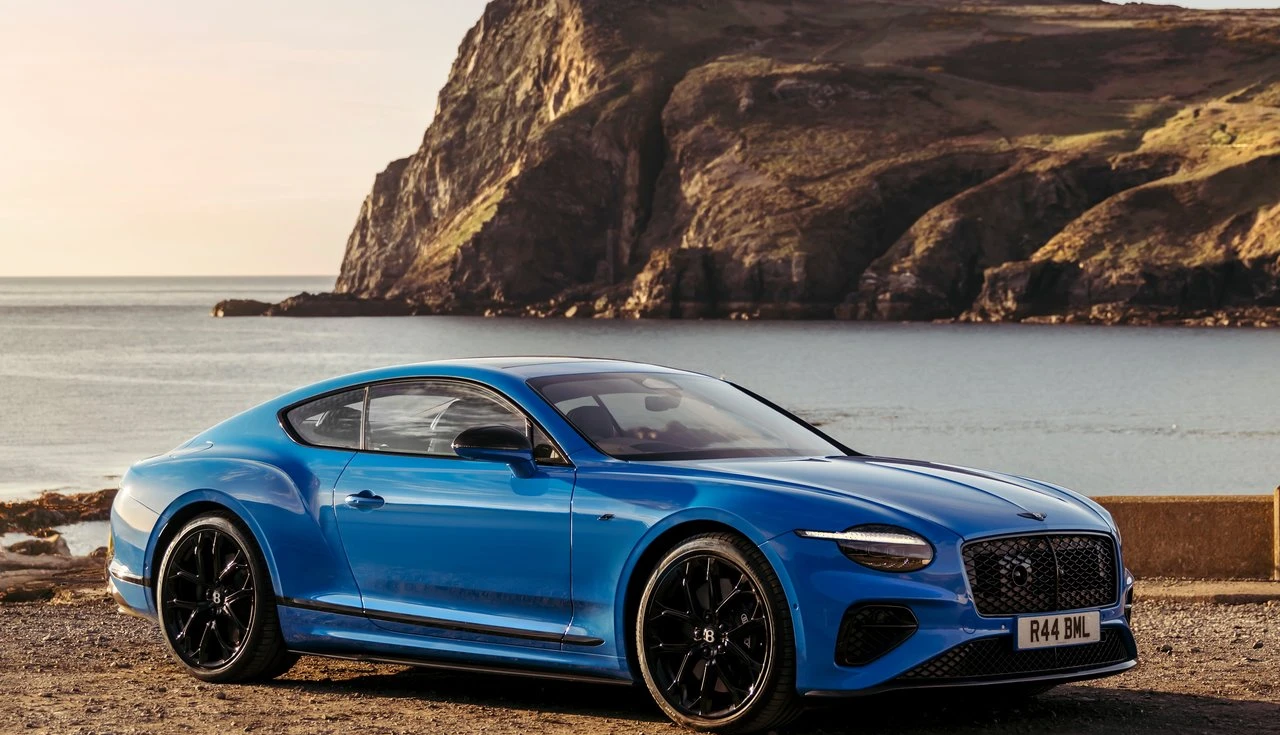
The fourth-generation Continental GT represents the deepest visual overhaul in two decades, drawing influence from the ultra-exclusive Bacalar and Batur coachbuilt projects.
The body stretches 192.7 inches long, stands 55 inches tall, and spans 86.1 inches wide including mirrors. The 112.2-inch wheelbase gives the car a planted, purposeful stance from every angle.
Front End
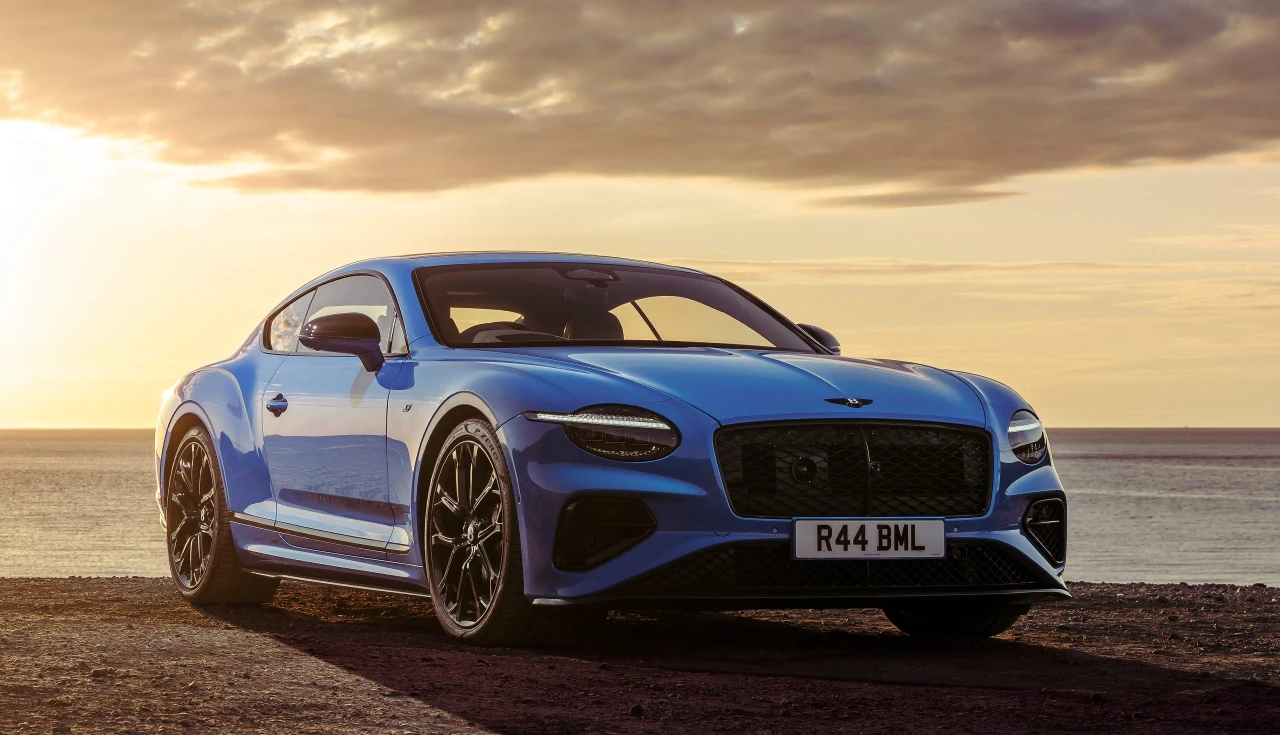
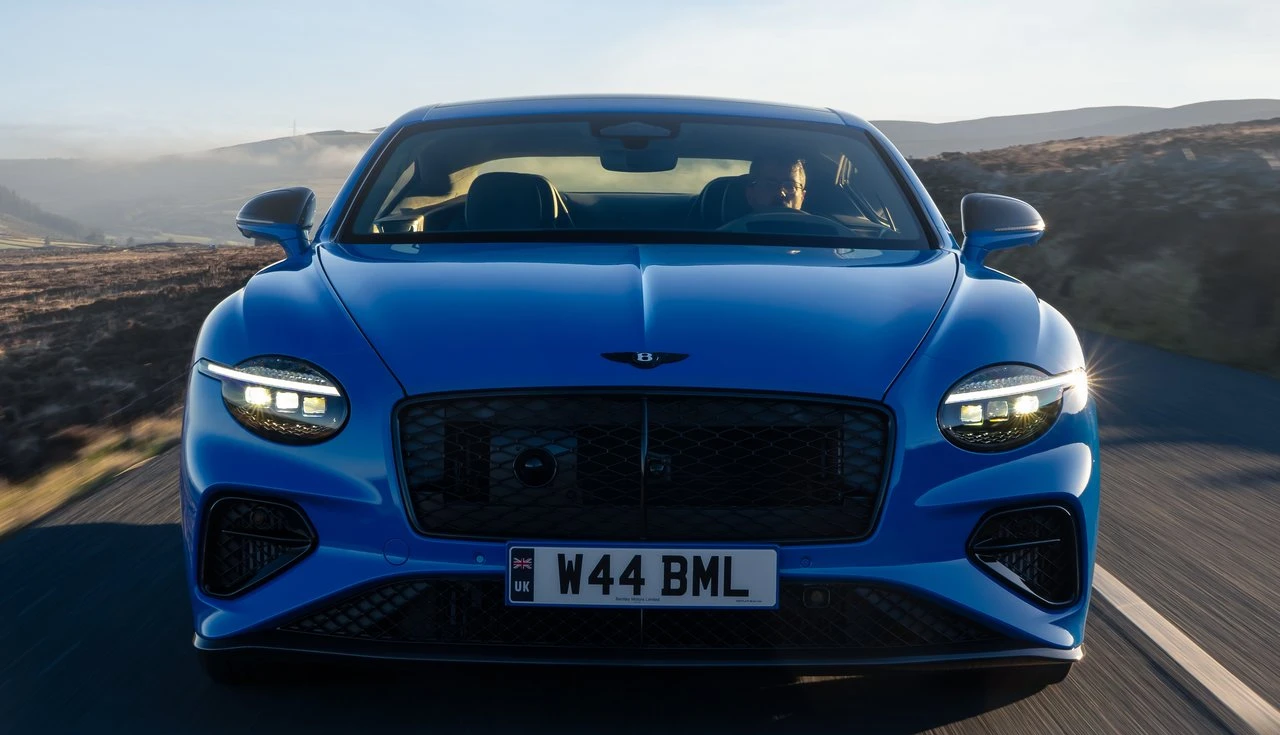
Single Matrix LED headlights replace the traditional round dual-lamp setup — a first for Bentley production cars since the 1950s. Each unit carries a Dark Tint treatment and an internal structure described as precision-cut crystal, catching ambient light even with the car switched off.
The wide front grille, lower intakes, and surrounding trim all convert to high-gloss black through the Blackline Specification — standard on every GT S. This package eliminates all polished chrome from the exterior: window surrounds, door handles, badges, and wing emblems all go dark.
Sides and Rear
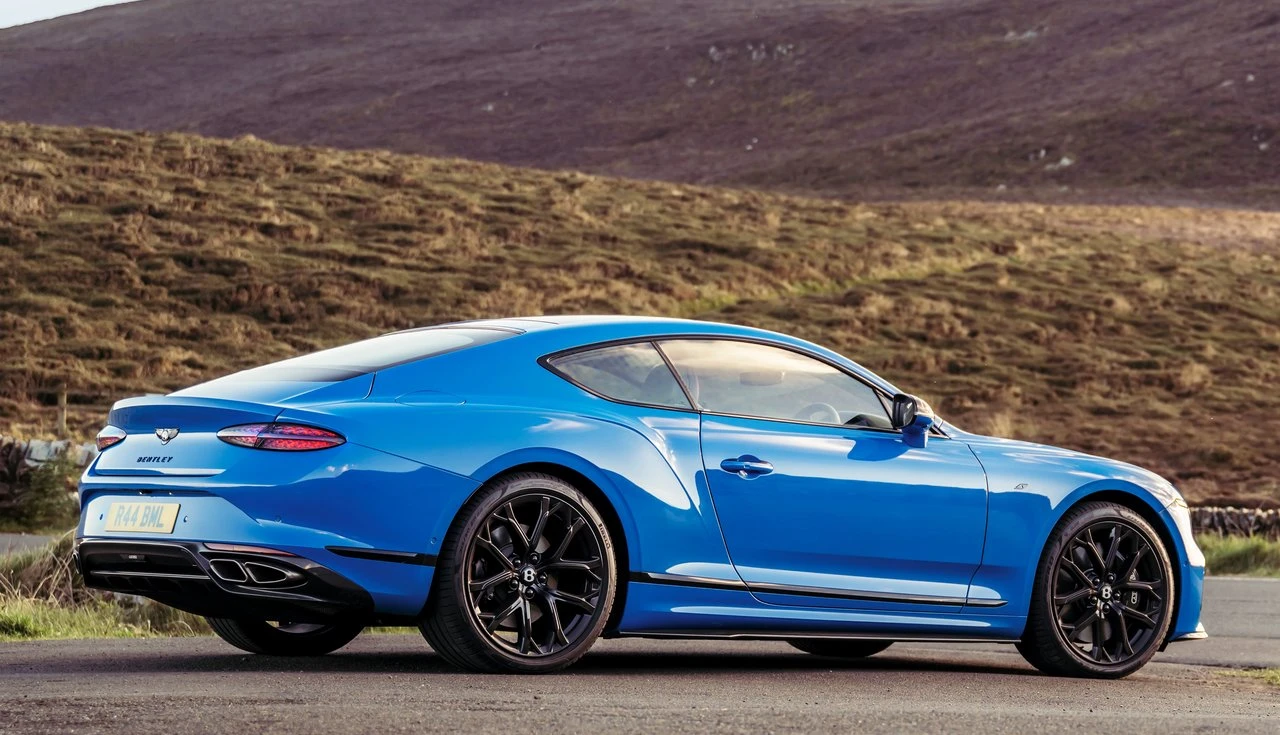
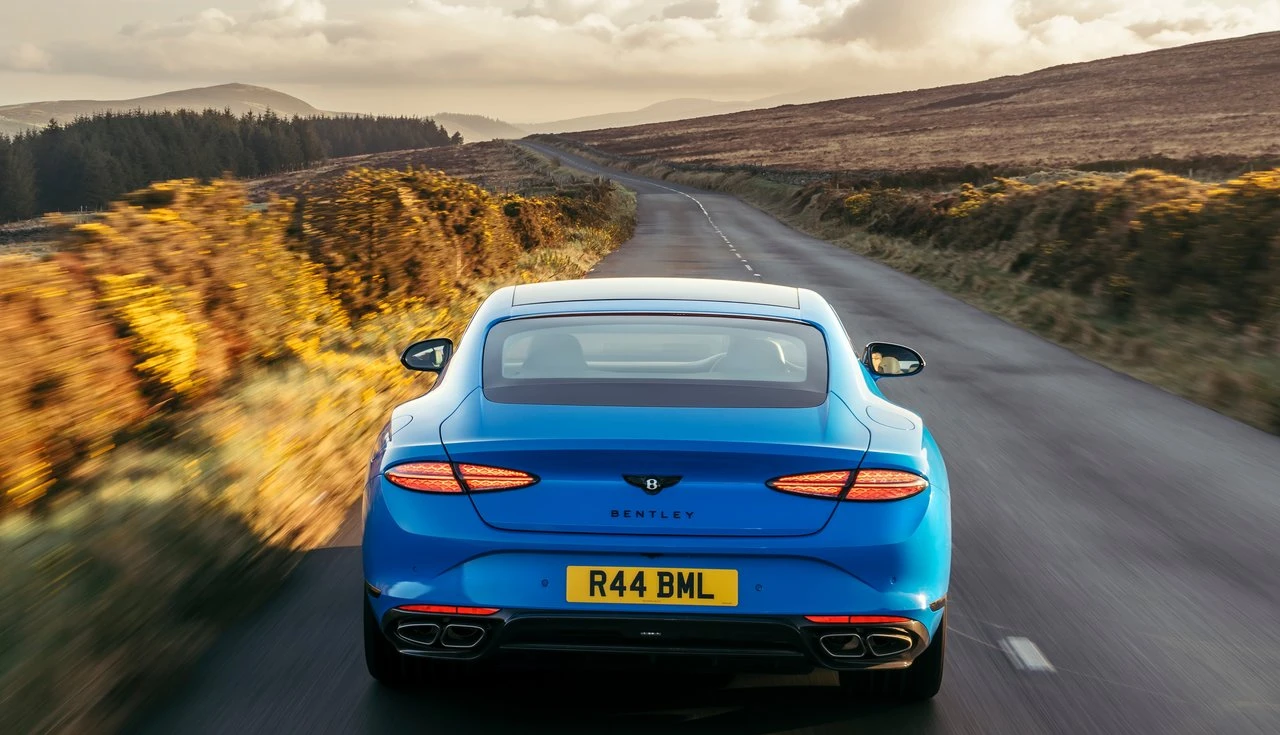
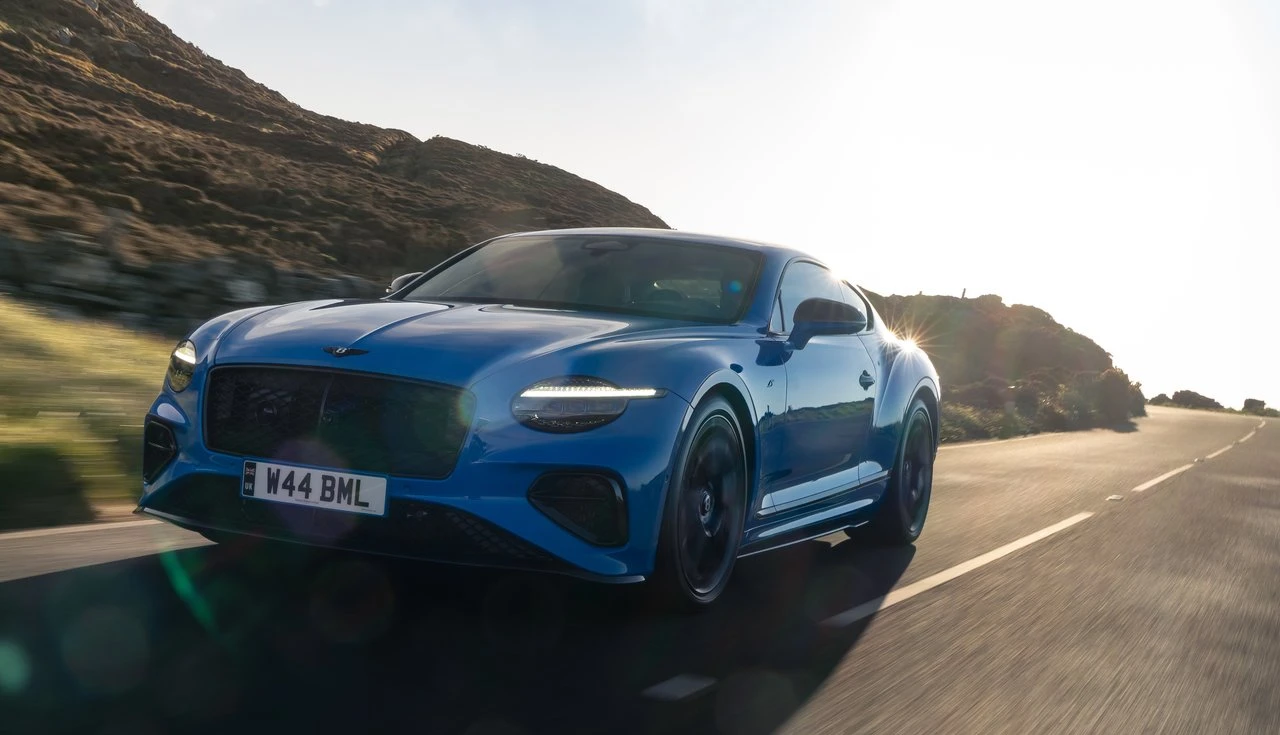
Mirror caps and lower side skirts follow the Beluga Styling Specification in deep black. The rear fenders carry the signature Bentley “powerline” — a muscular crease running the length of the body that the brand has used since the 1950s.
Slashed-oval taillights receive the same Dark Tint finish. Four oval exhaust tips complete the rear without unnecessary visual noise.
Wheels and Brakes
The GT S rides on exclusive 22-inch alloy wheels with a 10-spoke swept design not found on any other variant. Buyers choose from satin silver, gloss black, or two-tone machined finish. Standard cast-iron ventilated brakes are available; optional carbon-ceramic (CSiC) rotors reduce unsprung mass and improve suspension response on rough pavement.

A Cabin Designed for Drivers, Not Passengers
Step inside the GT S and the intent is clear. Traditional wood veneers are gone, replaced by deep-gloss Piano Black lacquer across the dashboard and center console. Carbon fiber weave is available as an alternative.
The heated steering wheel, gear selector, and seat center panels are wrapped in Dinamica — a technical microfiber with grip characteristics similar to Alcantara. It stays cooler in summer heat and does not stiffen in cold weather, both practical advantages during spirited driving.
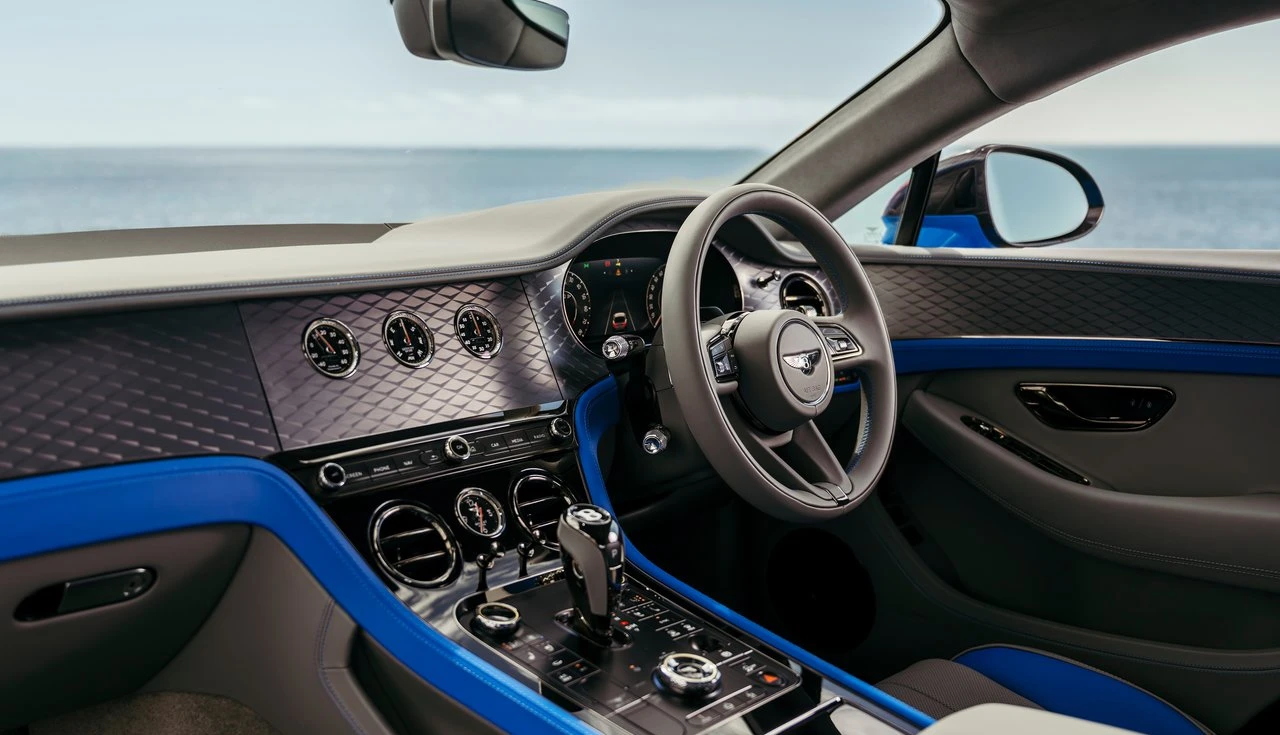
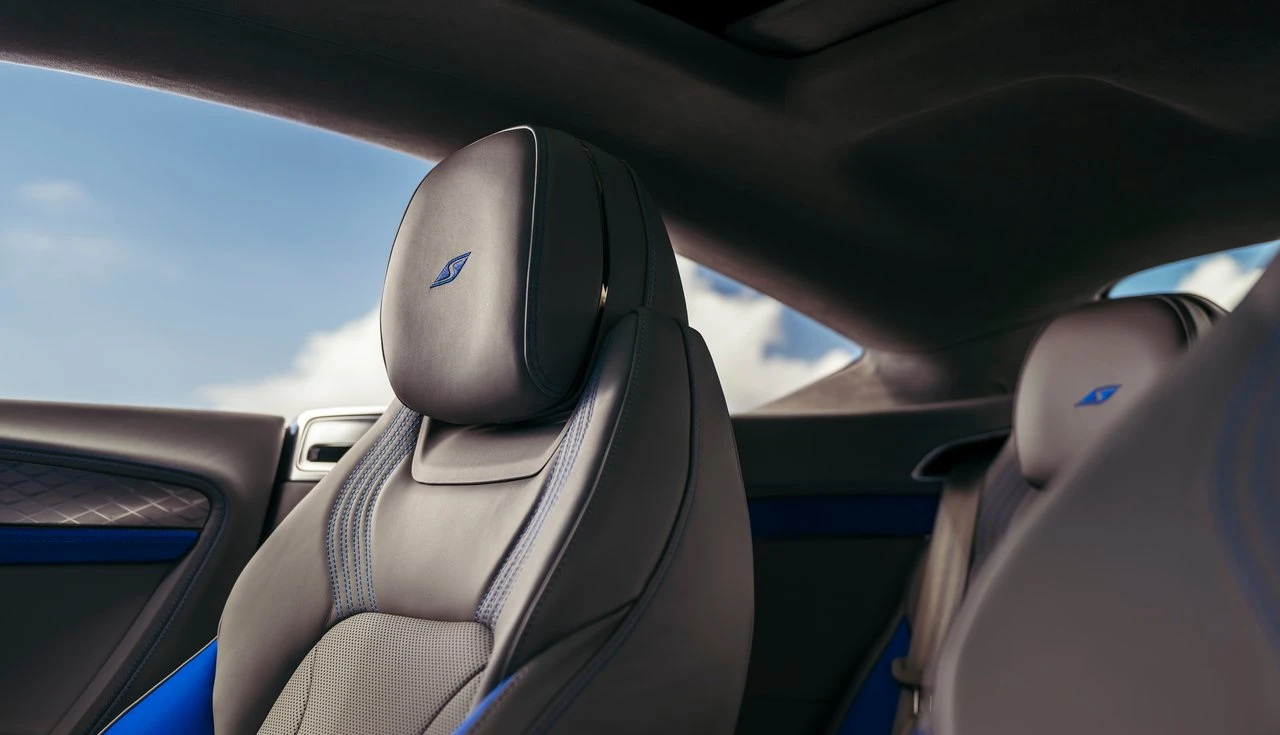
Front seats feature fluted quilting with hand-stitched “S” shield embroidery on the headrests. The interior uses a colour-split two-tone arrangement, dividing upholstery sections into contrasting colors — exclusive to the S family.
Screens and Connectivity
A fully digital instrument cluster displays performance data using Swiss chronograph-style graphics. The central 12.3-inch touchscreen supports wireless Apple CarPlay and Android Auto, with a built-in Wi-Fi hotspot and access to the My Bentley App Studio.
The standout feature is the Bentley Rotating Display. One button press spins the entire screen on its axis, revealing three analog gauges — a thermometer, compass, and stopwatch. A third rotation presents a completely clean wood surface with zero screens visible. It is one of the few features in any modern luxury car that actively removes technology rather than adding it.
Space and Audio
Front occupants have generous room. Rear seat space, however, is limited for full-sized adults on longer trips — a known constraint in this 2+2 coupe format.
The optional Naim for Bentley audio system is consistently rated by automotive press as among the best factory-installed setups available anywhere. Bang & Olufsen is also on the options list.
The Hybrid Powertrain: V8 Plus Invisible Electric Motor
The High Performance Hybrid drivetrain pairs a 4.0-liter twin-turbo V8 with a synchronous electric motor mounted inside the transmission casing. The electric unit operates independently at up to 190 hp before the V8 takes over through the rev range.
Combined output: 680 hp (671 bhp / 680 PS) and 686 lb-ft of torque. That represents a gain of approximately 130 hp over the previous naturally-combustion GT V8 S.
Torque delivery is immediate — a direct benefit of the electric motor’s instant response. The system feeds all four wheels through an all-wheel-drive setup with torque vectoring, paired with active anti-roll bars calibrated specifically for the S variant.
The driver’s hip point sits lower than in previous generations, improving road feel through the seat without the compromised sightlines found in dedicated sports cars. The hood stretches long ahead of the driver, providing clear forward visibility over the V8 up front.
Official 0–60 mph and top speed figures have not been released by Bentley for the GT S at this time.
SPECS
| Item | Detail |
|---|---|
| Engine | 4.0L Twin-Turbo V8 + Electric Motor (High Performance Hybrid) |
| Combined Output | 680 hp (680 PS / 671 bhp) |
| Torque | 686 lb-ft (930 Nm) combined |
| Transmission | Not specified by manufacturer |
| Drivetrain | All-wheel drive with torque vectoring |
| 0–60 mph | Not disclosed |
| Top Speed | Not disclosed |
| Fuel Economy | Not disclosed |
| Curb Weight | Not disclosed |
| Length | 192.7 in (4,895 mm) |
| Width (w/ mirrors) | 86.1 in (2,187 mm) |
| Height | 55.0 in (1,397 mm) |
| Wheelbase | 112.2 in (2,851 mm) |
| Wheels | 22-inch alloy (S-exclusive design) |
| Optional Brakes | Carbon-ceramic (CSiC) rotors |
Read more
FAQ
1. Does the 2027 Bentley Continental GT S still have a combustion engine? Yes. It uses a twin-turbo V8 paired with an electric motor. It is a hybrid system — not fully electric.
2. What is the difference between the GT S and the GT Speed? The GT Speed produces 782 hp and 1,000 Nm — built for maximum performance. The GT S delivers 680 hp with a sport-tuned chassis aimed at daily usability.
3. Is the Rotating Display standard equipment? No. The Bentley Rotating Display is an optional feature. It allows the driver to replace the 12.3-inch touchscreen with analog gauges or a clean wood surface.
4. How practical is the rear seat for American buyers? Rear legroom is limited for adults on longer drives. The GT S is effectively a two-person grand tourer with occasional rear seating — common in this coupe class.
5. Is there a convertible version available? Yes. The GTC S is a soft-top convertible variant. The acoustic multi-layer roof opens in approximately 19 seconds.
Final Assessment
The 2027 Continental GT S makes a clear case for itself within a crowded segment. The hybrid system delivers meaningful real-world performance, not just on paper. The Blackline exterior, Dinamica interior, and sport-tuned chassis form a coherent package for buyers who prioritize driving over being driven.
The rotating display is more than a party trick — it reflects a genuine design philosophy: give the driver the option to remove distractions entirely.
The rear seat limitation is real. For a car nearly 193 inches long, back-seat passengers get noticeably less space than the exterior dimensions might suggest.
Against rivals, the GT S holds its ground on technology and driving dynamics. The Panamera E-Hybrid shares platform DNA but tilts sharper toward track-day precision. The Aston Martin DB12 leans into pure GT touring. The Bentley sits between both — technically advanced, visually distinct, and more driver-focused than anything else wearing the Flying B badge in 2027.

Share this article
Sources